

We use cookies to ensure our website works properly and to personalise your experience. Cookies policy
The integration of Artificial Intelligence (AI) into physical education (PE) and sports has evolved from early theoretical frameworks to sophisticated data-driven systems. This review traces AI's historical trajectory, highlighting key phases, technological advancements, applications, and ethical challenges. Early developments in cybernetics and rule-based systems laid the foundation for AI applications in biomechanics and performance analysis. The emergence of machine learning, deep learning, computer vision, and wearable technologies transformed injury prevention, performance optimization, talent identification, and pedagogy. While AI continues to revolutionize both elite sports and general physical education, challenges related to data privacy, algorithmic bias, interpretability, accessibility, and human-AI collaboration remain central. Addressing these through cross-disciplinary collaboration and ethical frameworks is essential for responsible AI integration in physical activity and sports science.
The intersection of Artificial Intelligence with physical education and sports represents a dynamic and rapidly evolving field. This convergence has fundamentally reshaped methodologies for training, performance analysis, injury prevention, and pedagogical approaches to physical activity. Understanding this evolution requires a historical perspective, tracing the foundational concepts that paved the way for current advancements. The convergence of AI and physical education represents one of the most transformative shifts in human movement science. Traditionally reliant on observational assessments, PE and sports have seen a radical shift with AI's ability to analyze large, complex datasets. This review presents a historical perspective of AI's evolution in sports and PE, emphasizing its technological milestones, practical applications, and emerging challenges.
PURPOSE AND SCOPE OF THIS HISTORICAL REVIEW
This paper provides a comprehensive historical overview of how Artificial Intelligence has been applied in physical education and sports. It traces the development of AI technologies from their early concepts to modern implementations, highlighting key technological advances, pedagogical innovations, and performance improvements over time. The review also discusses the challenges, complexities, and ethical issues associated with AI's integration into these fields. Overall, it aims to deepen understanding of AI's evolution and its future potential in shaping physical activity and athletic performance.
EARLY FOUNDATIONS (Pre-1990s)
AI's conceptual roots trace back to the field of cybernetics, introduced by Norbert Wiener in the 1940s, which emphasized control systems, feedback loops, and information processing in biological and mechanical entities. The 1956 Dartmouth workshop formally established AI as a distinct discipline.
During the 1960s and 1970s, AI research primarily focused on rule-based expert systems and deterministic algorithms that simulated human decision-making. Early computer-aided instruction (CAI) systems offered supplemental learning but were limited for psychomotor skills.
In the 1980s, biomechanical modelling emerged significantly. Researchers like Hay and Reid developed coaching models, while Wells introduced predictive motor skill models. These laid the groundwork for modern data-driven biomechanical analysis.
DIGITAL LEAP: 1990s-2000s
In the 1990s, machine learning (ML) began to be integrated into biomechanics, facilitating early classification of movement patterns and injury prediction. Advancements in computer vision significantly enhanced performance tracking:
Prozone (1997): Introduced player tracking technology for football.
Hawk-Eye (2001): Became a vital tool for officiating in tennis and cricket.
SportVU (2009): Enabled real-time tracking of basketball players’ movements.
Simultaneously, robotics showcased AI's capabilities with prototypes like Honda’s ASIMO and Sony’s QRIO, which could perform complex human-like locomotion. Educational technology also evolved with interactive video feedback systems and gamified tools such as Cyber Coach, designed for physical education. However, widespread adoption of these tools was limited due to resource constraints.
DATA-DRIVEN REVOLUTION: 2010s (FOCUSED ON PHYSICAL EDUCATION AND SPORTS)
The 2010s witnessed a significant expansion of AI technologies into physical education and sports practice. Deep learning, especially convolutional neural networks (CNNs), enabled marker less motion capture, allowing physical educators and coaches to assess student and athlete movements with precision outside traditional labs. This made real-time analysis of posture, joint angles, and movement quality possible in both classrooms and training fields, improving motor skill instruction and error correction in PE settings.
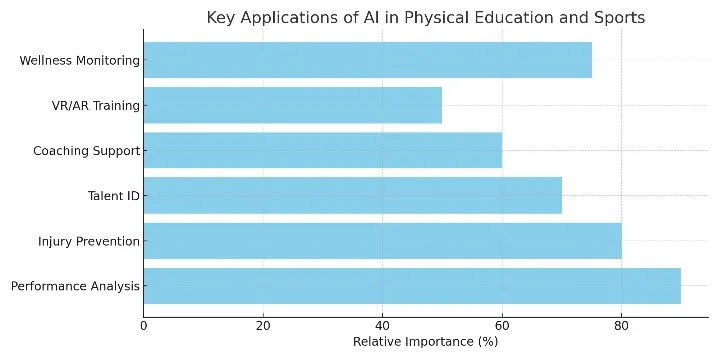
Predictive analytics allowed sports scientists to prevent injuries by forecasting risk factors based on students’ or athletes’ movement patterns, workloads, and biomechanics. Machine learning models accurately predicted injuries such as ACL tears, helping PE teachers and coaches design individualized corrective exercises even at early stages of training.
Wearable technologies (e.g., GPS, IMUs, heart rate monitors) became valuable tools for monitoring student physical activity, workload, and fatigue in school-based fitness programs and youth sports. These devices supported personalized fitness plans, promoted safe training intensity, and offered valuable data for PE teachers to adjust lessons based on student needs
PERSONALIZATION AND IMMERSION: 2020s (SUMMARY FOR PHYSICAL EDUCATION AND SPORTS)
The 2020s mark a new frontier in physical education and sports, where AI enables hyper-personalization and immersive training. Real-time decision-support tools allow coaches and educators to dynamically adjust training loads, techniques, and tactical decisions based on live data from wearables, GPS, and biometrics. AI-powered adaptive coaching refines motor learning by identifying subtle technique errors and providing immediate feedback, enhancing skill acquisition in both elite and school-level physical education.
Virtual Reality (VR) and Augmented Reality (AR) introduce interactive, gamified environments that simulate real-game scenarios and skill challenges, increasing student engagement, confidence, and coordination. AI-driven exergames combine physical activity with entertainment, offering customized fitness challenges that adapt to individual progress and motivation levels, particularly supporting youth, children, and students with special needs.
Wearable technology continues to expand with smart devices monitoring heart rate variability, sleep, stress, and recovery, allowing educators to create personalized wellness and fitness programs for students. These tools also support early detection of health issues, proactive injury prevention, and optimized recovery management.
CHALLENGES AND ETHICAL CONSIDERATIONS (SUMMARY FOR PHYSICAL EDUCATION AND SPORTS)
While AI offers great promise in physical education and sports, several ethical and practical challenges must be addressed:
Data Privacy: The collection of sensitive biometric and health data from students and athletes raises privacy concerns, particularly around consent, data ownership, and potential misuse.
Algorithmic Bias: If AI models are trained on limited or non-representative datasets, they may produce biased outcomes, disadvantaging certain student populations based on gender, socioeconomic status, or ability level.
Interpretability ("Black Box Problem"): Many advanced AI models lack transparency, making it difficult for educators and coaches to understand or trust how decisions and predictions are generated.
Over-reliance on AI: Excessive dependence on AI may reduce the role of human expertise, judgment, and the interpersonal coaching relationships essential for holistic student development.
Accessibility and Equity: The high costs of AI technologies may widen the gap between well-resourced and under-resourced schools, limiting equitable access to AI benefits in physical education.
Teacher Readiness: Many PE teachers currently lack adequate training in AI literacy, data interpretation, and technology integration, requiring new professional development programs.
FUTURE DIRECTIONS:
For AI to be responsibly and effectively integrated into physical education and sports, several strategic actions are needed:
Curriculum Integration: AI literacy, data science, and ethical education should be embedded into PE teacher education and sports science programs.
Affordable Solutions: Development of low-cost, scalable AI tools can make advanced technology accessible to schools, community programs, and developing regions.
Cross-Disciplinary Collaboration: Strong partnerships between educators, technologists, engineers, ethicists, and policymakers are essential for designing practical and ethically sound AI applications.
Explainable AI: Future AI systems should be transparent and interpretable to allow teachers, coaches, and students to understand and trust recommendations.
Ethical Governance: Comprehensive policies must address privacy, fairness, and accountability to ensure AI benefits are distributed equitably across all educational and sporting levels.
CONCLUSION
The evolution of Artificial Intelligence in physical education and sports reflects a remarkable journey—from its origins rooted in cybernetics and early computer-aided instruction to its current role in delivering highly personalized, real-time insights. This historical overview underscores AI's profound influence on enhancing performance, preventing injuries, and increasing student engagement, spanning from elite athletic training to general physical education.
Early efforts focused on biomechanical modeling and rule-based systems laid the foundational analytical groundwork. The digital revolution of the 1990s and 2000s, marked by the advent of machine learning and computer vision, accelerated progress—enabling objective player tracking and pioneering robotic demonstrations of complex movements. The subsequent decade, the 2010s, saw a data-driven surge with deep learning, facilitating sophisticated predictive analytics, injury risk assessment, and comprehensive athlete monitoring—ushering in an era of quantified performance.
Today, in the 2020s, immersive technologies such as virtual and augmented reality, AI-driven exergames, and advanced smart wearables are expanding personalized and adaptive training to wider populations. Despite these advancements, significant challenges remain. Concerns over data privacy, security, and algorithmic bias threaten to impede adoption. The "black box" nature of many AI systems raises issues of transparency and trust. Additionally, striking a balance between AI insights and human judgment is essential, emphasizing an augmented approach rather than outright replacement.
Systemic issues such as high implementation costs, accessibility disparities, and educators' readiness to adopt AI tools highlight the need for targeted strategies. Moving forward, fostering interdisciplinary collaboration, creating clear policy frameworks, and integrating AI literacy into educational curricula will be critical. Addressing these challenges responsibly can enable AI to serve as a powerful partner—enhancing human potential, promoting holistic well-being, and elevating standards in physical activity and competitive sports for all.
Figure 1: Timeline of AI Evolution in Physical Education and Sports
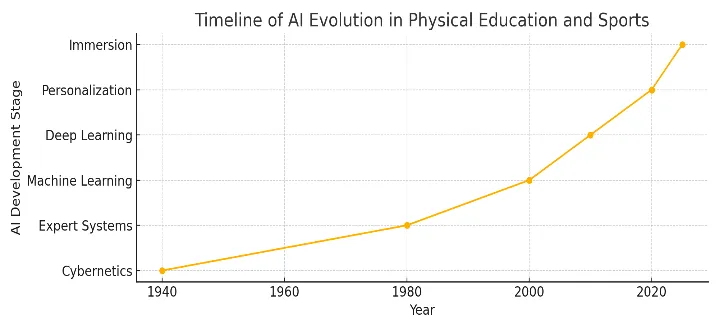
Figure 2: Key Applications of AI in Physical Education and Sports
REFERENCES


Tirtha Mondal1*, Malabika Biswas2, Application Of Artificial Intelligence In Physical Education And Sports: A Review, Int. J. Sci. R. Tech., 2026, 3 (5), 756-759. https://doi.org/10.5281/zenodo.20324615
 10.5281/zenodo.20324615