

We use cookies to ensure our website works properly and to personalise your experience. Cookies policy
RJS College Of Pharmacy Kokamthan
Cough is a fundamental defensive reflex mechanism that protects the respiratory tract from irritants, pathogens, and foreign particles. Despite its physiological importance, persistent cough is one of the most common clinical symptoms requiring therapeutic intervention. The management of cough involves both synthetic pharmacological agents and herbal remedies, each possessing distinct mechanisms of action and safety profiles. Synthetic antitussives such as Codeine and Dextromethorphan primarily act on the central nervous system, whereas herbal agents like Glycyrrhiza glabra and Zingiber officinale exhibit peripheral soothing, anti-inflammatory, and expectorant effects.
Coughing is a common defense mechanism of the respiratory system that helps remove foreign items, mucus, and irritants from the airways. It is an essential defense mechanism that prevents infection and maintains the cleanliness of the airways. Coughing occurs when sensory receptors in the respiratory system are triggered by irritants such as dust, smoke, allergies, or diseases. These impulses are received by the brain's cough region, which triggers the lungs to aggressively release air.
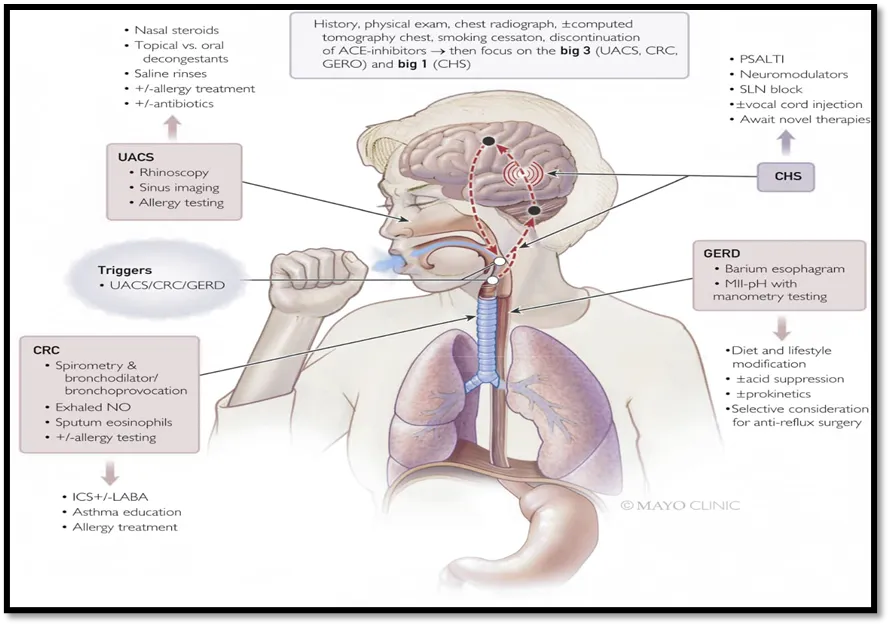
Fig.no 1 cough
Coughs can be classified into multiple groups based on their kind and duration:
1) Dry cough: (non-productive cough): Usually caused by inflammation or irritation of the throat, this kind of cough does not produce mucus.
2) Wet cough (productive cough): Usually associated with respiratory tract diseases, this cough produces mucus or phlegm.
3) Acute cough: Usually lasts less than three weeks and is brought on by a cold or other sickness.
4) Chronic cough: This kind of cough can be linked to asthma or bronchitis and lasts longer than eight weeks. Coughing is frequently brought on by smoking, allergies, asthma, pollution, and respiratory infections. Asthma, bronchitis, and the common cold are frequently associated with coughing. How to treat a cough depends on its type and origin? Conventional therapy includes expectorants and cough suppressants, though long-term use of these medications may have negative effects. Herbal remedies are growing in popularity due to their effectiveness and safety. An herbal cough-relieving tablet contains licorice, which has expectorant, anti-inflammatory, and relaxing properties. It eases sore throats, reduces coughing, and promotes mucus evacuation.
The physiology of the cough reflex:
Consists of three main components:
Risk Factors of Cough :
Several risk factors increase the likelihood of developing cough. Environmental exposure to pollutants, dust, and tobacco smoke is a major contributing factor. Smoking, both active and passive, significantly damages the respiratory lining and predisposes individuals to chronic cough. Occupational exposure to chemicals or irritants also plays a role. Pre-existing respiratory conditions such as asthma and chronic obstructive pulmonary disease increase susceptibility. Infections, weakened immunity, and seasonal variations can also contribute. Additionally, the use of certain medications, particularly ACE inhibitors, may trigger persistent cough. Lifestyle factors and poor air quality further exacerbate the risk.
Etiology of Cough :
Cough is a protective reflex that arises due to irritation or stimulation of the respiratory tract or associated structures. The causes of cough are diverse and can be broadly classified into infectious and non-infectious origins. Infectious causes include viral infections such as the common cold, influenza, and respiratory syncytial virus, as well as bacterial infections like pneumonia and tuberculosis. Non-infectious causes involve conditions such as asthma, chronic obstructive pulmonary disease (COPD), gastroesophageal reflux disease (GERD), and postnasal drip associated with allergic rhinitis or sinusitis. Environmental and occupational exposures, including air pollution, cigarette smoke, and chemical irritants, also play a significant role. Certain medications, particularly angiotensin-converting enzyme (ACE) inhibitors, are well known to induce persistent dry cough. In some cases, cough may also be psychogenic or idiopathic when no clear cause is identified.
Epidemiology of Cough :
Cough is one of the most common symptoms leading individuals to seek medical attention worldwide. It affects people of all age groups but is particularly prevalent in children and the elderly due to increased susceptibility to infections and chronic respiratory conditions. Acute cough, typically lasting less than three weeks, is most commonly associated with viral upper respiratory tract infections. Chronic cough, defined as lasting more than eight weeks, is more frequently observed in adults and is often linked to underlying conditions such as asthma, GERD, and chronic bronchitis. The prevalence of cough varies geographically and is influenced by environmental factors such as pollution levels, climate, and smoking habits. In developing regions, infectious diseases like tuberculosis remain a significant contributor, whereas in developed areas, lifestyle-related and allergic conditions are more common causes.
Pathophysiology of Cough :
The cough reflex is a complex physiological mechanism involving sensory receptors, neural pathways, and effector muscles. It begins with the stimulation of cough receptors located in the respiratory tract, including the larynx, trachea, and bronchi, as well as in extra-respiratory sites such as the ear canal and pleura. These receptors are sensitive to mechanical, chemical, and inflammatory stimuli. Once activated, sensory signals are transmitted via the vagus nerve to the cough center in the medulla of the brain. The brain then coordinates a response that involves a deep inhalation, closure of the glottis, contraction of respiratory muscles, and sudden opening of the glottis, resulting in a forceful expulsion of air. In pathological conditions, inflammation, mucus accumulation, or hypersensitivity of receptors can exaggerate this reflex, leading to persistent or chronic cough. Neurogenic factors and central sensitization may also contribute to chronic cough by lowering the threshold for activation of the cough reflex.
Evaluation of Cough :
The evaluation of cough involves a systematic approach to identify the underlying cause and determine appropriate management. A detailed medical history is essential, including the duration of cough (acute, subacute, or chronic), nature (dry or productive), associated symptoms (fever, weight loss, breathlessness), and exposure history such as smoking or occupational hazards. Physical examination focuses on the respiratory system but also includes assessment of the ear, nose, throat, and gastrointestinal system when relevant. Diagnostic investigations may include chest radiography to detect infections or structural abnormalities, spirometry to assess lung function in suspected asthma or COPD, and laboratory tests such as sputum analysis or blood investigations. In cases of suspected GERD, pH monitoring or endoscopy may be considered. When the cause remains unclear, further specialized tests such as bronchoscopy or CT scanning may be required. A thorough evaluation helps in distinguishing benign self-limiting conditions from serious underlying diseases.
Management of Cough :
The management of cough depends on its underlying cause and severity. For acute cough caused by viral infections, symptomatic treatment such as hydration, rest, and use of cough suppressants may be sufficient. Productive cough may require expectorants or mucolytic agents to facilitate mucus clearance. In cases of chronic cough, treatment is directed toward the underlying condition, such as bronchodilators for asthma or proton pump inhibitors for gastroesophageal reflux disease. Avoidance of triggers, including smoking and environmental irritants, is essential. Both herbal and synthetic medications are used in treatment, depending on patient preference and clinical condition. A rational approach ensures effective relief while minimizing unnecessary medication use.
Expectorant :
An expectorant is a pharmacological agent that facilitates the removal of mucus (sputum) from the respiratory tract by increasing the volume or reducing the viscosity of bronchial secretions. It helps make the mucus thinner and less sticky, thereby promoting its expulsion through coughing and improving airway clearance. Expectorants are commonly used in the management of productive cough associated with conditions such as bronchitis, respiratory infections, and other pulmonary disorders.
They do not suppress the cough reflex; instead, they make coughing more effective and productive by aiding in the elimination of accumulated secretions from the lungs and airways.
Antitussive activity:
The ability of a medication or substance to suppress coughing by acting on the peripheral receptors in the respiratory tract or the central nervous system (cough center in medulla) is referred to as antitussive action
Mechanism of action antitussive agent:
(Centrally Acting Antitussives) These substances have an effect on the brain’s medulla oblongata cough center.
➤ MOA: The Medulla Oblongata contains a center that regulates the cough reflex. Antitussive medications suppress or depress this cough center, which results in: Raising the cough stimulation threshold Coughing less frequently and with less force Additionally, they might alter the neurotransmitter pathways that control the cough reflex.
(Antitussives That Act Peripherally) The respiratory tract receptors are affected by these.
➤ MOA: Irritation of respiratory tract receptors, including: Trachea Bronchi Pharynx Larynx The way peripheral antitussives function is: decreasing cough receptor sensitivity Reducing irritation (demulcent action) Reducing inflammation in the area
Synthetic Formulation for Cough
Synthetic formulations for cough are pharmaceutical preparations developed using chemically derived active ingredients designed to relieve cough by acting on different mechanisms such as suppression of the cough reflex, enhancement of mucus clearance, or reduction of airway inflammation. These formulations typically include antitussives, expectorants, mucolytics, antihistamines, and bronchodilators, either alone or in combination to achieve a synergistic therapeutic effect. Common antitussive agents like Dextromethorphan act centrally on the medullary cough center to suppress non-productive cough, whereas expectorants such as Guaifenesin promote the expulsion of mucus by increasing bronchial secretions. Mucolytic agents like Bromhexine and Ambroxol reduce the viscosity of sputum, making it easier to eliminate from the respiratory tract.
These synthetic cough formulations are available in various dosage forms, including syrups, tablets, capsules, lozenges, and drops, allowing flexibility in administration depending on patient age and condition. The formulation process involves the selection of suitable excipients such as solvents, sweeteners, preservatives, and flavoring agents to enhance stability, palatability, and patient compliance. For example, cough syrups often contain sucrose or sorbitol as sweetening agents, along with preservatives like parabens to prevent microbial growth. In tablet formulations, binders, disintegrants, and lubricants are used to ensure proper tablet integrity and drug release.
Combination formulations are commonly used in clinical practice, where multiple synthetic drugs are incorporated to target different symptoms simultaneously. For instance, a typical cough syrup may contain an antitussive, an antihistamine, and a decongestant to provide comprehensive relief. However, rational use of such combinations is essential to avoid adverse effects such as drowsiness, gastrointestinal discomfort, or drug interactions. Regulatory guidelines ensure that these formulations meet safety, efficacy, and quality standards before being marketed. Overall, synthetic cough formulations play a vital role in modern therapeutics by providing rapid and targeted relief from various types of cough.
Herbal medicine:
Herbal medicine, one of the first medical systems, has long been used in both developed and developing countries. Many modern drugs, such as aspirin, morphine, digoxin, and quinine, were discovered following the scientific validation of ancient herbal remedies. The World Health Organization (WHO) defines herbal medicine as herbs, herbal materials, herbal preparations, and finished herbal products comprising plant parts or plant extracts as active ingredients. These products are made from a variety of plant parts, including as leaves, stems, roots, flowers, seeds, and bark. Saponins, flavonoids, glycosides, tannins, alkaloids, and terpenoids are examples of phytochemicals that are active chemical components in herbal remedies. These compounds produce a variety of pharmacological effects, such as antioxidant, antibacterial, and anti-inflammatory qualities.
Herbal Formulations:
To achieve desired nutritional, therapeutic, or cosmetic effects, a herbal formulation is a dosage form created by combining one or more herbs in certain ratios. These concoctions are meant to detect, prevent, or treat diseases in both humans and animals. Herbal formulations come in a range of dosage forms, such as pills, syrups, powders, capsules, and decoctions, depending on the mode of administration and intended application. Herbal Tablets: Using the right excipients, powdered herbs or herbal extracts are compressed into a certain size and shape to create a solid dosage form. These pills contain natural active compounds obtained from plants and are used to prevent, diagnose, or cure diseases Herbal pills combine the precision, stability, and ease of use of modern pharmaceutical dosage forms with the benefits of traditional herbal therapy.
REFERENCES

Harshada Satish Kahar*, Chaudhari Kaweri K., A Review Article On : Cough Reliving Activity, Int. J. Sci. R. Tech., 2026, 3 (5), 1079-1083. https://doi.org/10.5281/zenodo.20428340
 10.5281/zenodo.20428340