

We use cookies to ensure our website works properly and to personalise your experience. Cookies policy
MAM College of Pharmacy, Andhra Pradesh.
CARDAMYST (etripamil) nasal spray is an L-type calcium channel blocker indicated for the acute conversion of symptomatic paroxysmal supraventricular tachycardia (PSVT) episodes to sinus rhythm in adults. Formulated for patient self-administration at the onset of symptoms, it serves as a fast-acting, non-invasive alternative to emergency room intervention. The therapeutic administration consists of an initial dose delivered via a single-use, bi-dose device. If acute symptoms persist after a defined interval, a subsequent dose may be administered using a separate device. Prescribing constraints limit the maximum cumulative amount permitted within a specific timeframe. Clinical safety profiles necessitate administration in a sitting position to prevent injury from transient dizziness. Patients should refrain from nose-blowing immediately following administration to prevent drug loss and ensure optimal intranasal absorption.
CARDAMYST (etripamil) nasal spray is the first FDA-approved, self-administered calcium channel blocker designed to rapidly terminate acute symptomatic episodes of paroxysmal supraventricular tachycardia (PSVT) in adults. Approved on December 12, 2025, this novel treatment allows for on-demand control, shifting care away from emergency department visits. It works by rapidly acting on AV nodal cells to break re-entry circuits.
FULL PRESCRIBING INFORMATION
1. INDICATIONS AND USAGE
CARDAMYST is indicated for the rapid conversion of symptomatic episodes of paroxysmal supraventricular tachycardia (PSVT) to normal sinus rhythm in adult patients.
2. DOSAGE AND ADMINISTRATION
2.1 Recommended Administration
Treatment should begin as soon as symptoms of PSVT appear.
CARDAMYST is intended only for nasal administration.
Each disposable device provides two sprays containing a combined dose of 70 mg etripamil.
Recommended dosing:
Follow the approved Instructions for Use for proper spray technique.
If the full first dose is not delivered due to misuse or malfunction, wait at least 10 minutes before giving another dose if needed.
3. DOSAGE FORMS AND STRENGTHS
Nasal Spray: clear to pale yellow solution containing 70 mg etripamil per device.
4. CONTRAINDICATIONS
CARDAMYST should not be used in patients with:
5. WARNINGS AND PRECAUTIONS
5.1 Syncope and Hemodynamic Effects
Because CARDAMYST affects blood pressure, heart rate, and cardiac conduction, some patients may experience dizziness or fainting.
Higher-risk patients include those with:
Clinical studies showed a small number of patients developed clinically important hypotension during test dosing.
Patients prone to low blood pressure or cardiovascular instability should be monitored carefully during treatment initiation.
If fainting occurs, supportive measures and recumbent positioning are recommended.
Patients should administer CARDAMYST while seated and in a safe environment to reduce fall risk.
6. ADVERSE REACTIONS
The primary clinically significant adverse reaction associated with CARDAMYST is syncope related to cardiovascular effects.
6.1 Clinical Trial Experience
Safety data were pooled from randomized, placebo-controlled studies including NODE-1, NODE-301 Part 1, RAPID, and RAPID Extension.
A total of 321 patients received CARDAMYST in controlled trials.
Most treatment-related adverse events involved local nasal or throat irritation, including:
Most Common Adverse Reactions (≥5%)
|
Adverse Reaction |
Placebo |
CARDAMYST 70 mg |
CARDAMYST 2×70 mg |
|
Nasal discomfort |
6% |
28% |
23% |
|
Nasal congestion |
1% |
14% |
12% |
|
Rhinorrhea |
2% |
12% |
10% |
|
Throat irritation |
1% |
7% |
6% |
|
Epistaxis |
1% |
6% |
7% |
7. DRUG INTERACTIONS
Etripamil is metabolized mainly through CYP3A4 and CYP3A5 pathways and may interact with medications affecting these enzymes.
CARDAMYST was administered safely in clinical studies alongside beta blockers and calcium channel blockers, although caution is advised because of possible additive cardiovascular effects.
Etripamil may inhibit:
Healthcare providers should evaluate possible drug interactions before prescribing CARDAMYST.
8. USE IN SPECIFIC POPULATIONS
8.1 Pregnancy
There are no adequate human data regarding use during pregnancy.
Animal studies did not demonstrate fetal malformations at clinically relevant exposure levels, although maternal toxicity occurred at higher doses.
8.2 Lactation
Data regarding excretion into human milk are unavailable.
Because related calcium channel blockers are known to appear in breast milk and may potentially affect nursing infants, breastfeeding should be interrupted for 12 hours after treatment.
8.4 Pediatric Use
Safety and effectiveness have not been established in pediatric patients.
Related medications in the same class have been associated with severe cardiovascular complications in infants younger than one year.
8.5 Geriatric Use
No significant differences in safety or efficacy were observed between elderly and younger adult patients in clinical studies.
9. DRUG ABUSE AND DEPENDENCE
There is no evidence suggesting that CARDAMYST causes physical dependence, abuse, or withdrawal symptoms.
No controlled substance scheduling has been proposed for etripamil.
10. OVERDOSAGE
Excessive exposure to CARDAMYST may result in:
Management should be supportive and symptom-directed.
Potential interventions include:
Calcium administration or beta-adrenergic stimulation may help counteract calcium channel blockade effects.
The extent to which etripamil can be removed by dialysis is unknown.
11. DESCRIPTION
Etripamil, the active ingredient in CARDAMYST, is a calcium channel blocker.
Chemical name:
Benzoic acid, 3-[2-[[(4S)-4-cyano-4-(3,4-dimethoxyphenyl)-5-methylhexyl]methylamino]ethyl]-, methyl ester.
Etripamil is a colorless to slightly yellow oily substance.
Each CARDAMYST device contains 70 mg etripamil delivered in two sprays.
Inactive ingredients include:
12. CLINICAL PHARMACOLOGY
12.1 Mechanism of Action
Etripamil blocks L-type calcium channels, slowing calcium entry into AV nodal tissue and cardiac muscle.
By interrupting AV nodal reentry pathways, CARDAMYST can restore normal sinus rhythm in patients experiencing PSVT.
12.2 Pharmacodynamics
Cardiac Electrophysiology
A 70 mg intranasal dose causes temporary PR interval prolongation beginning within approximately 5 minutes.
No clinically relevant QTc prolongation has been observed at therapeutic doses.
Hemodynamics
Dose-dependent reductions in systolic blood pressure were observed during electrophysiology studies, with larger decreases occurring at higher doses.
12.3 Pharmacokinetics
Absorption
Peak plasma levels generally occur:
Distribution
Protein binding is approximately 50%.
Metabolism
Etripamil is metabolized by blood esterases and hepatic CYP3A enzymes.
Excretion
Approximately:
Most administered drug is recovered within 7–10 days.
13. NONCLINICAL TOXICOLOGY
13.1 Carcinogenesis, Mutagenesis, Impairment of Fertility
14. CLINICAL STUDIES
The RAPID trial (NCT #03464019) was a multicenter, randomized, double-blind, placebo-controlled Phase 3 study designed to evaluate the safety and effectiveness of CARDAMYST in adults with symptomatic PSVT.
A total of 692 patients were randomized in a 1:1 ratio to receive either CARDAMYST 70 mg or placebo. Patients self-administered the medication intranasally during a perceived PSVT episode outside of a supervised medical setting. If symptoms continued after 10 minutes, a second dose could be administered.
Electrocardiographic recordings collected during the episodes were independently reviewed to confirm PSVT events.
Primary Efficacy Endpoint
The primary endpoint evaluated the time required for conversion from confirmed PSVT to sinus rhythm lasting at least 30 seconds within 30 minutes following the first dose.
Among patients with confirmed PSVT episodes:
The estimated hazard ratio for conversion was 2.6 (95% CI: 1.7–4.2; p <0.001).
Median time to conversion:
|
Time After Dose (Minutes) |
CARDAMYST (%) |
Placebo (%) |
|
5 min |
18 |
8 |
|
10 min |
38 |
15 |
|
15 min |
52 |
23 |
|
20 min |
59 |
27 |
|
30 min |
64 |
31 |
Figure 1. Estimated Conversion to Sinus Rhythm Within 30 Minutes
Graphical Representation
Conversion to Sinus Rhythm (%)
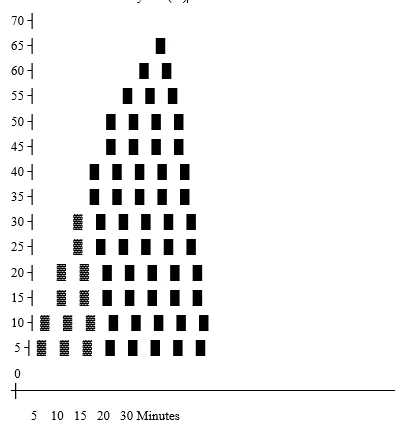
â–ˆ CARDAMYST
â–“ Placebo
Additional Findings
Among the 255 patients who self-administered treatment for perceived PSVT:
When these patients were included as non-converters:
The treatment effect remained statistically favorable for CARDAMYST with a hazard ratio of 2.6 (95% CI: 1.6–4.1).
|
Subgroup |
Hazard Ratio Favoring CARDAMYST |
|
Overall Population |
2.6 |
|
Age <65 Years |
2.5 |
|
Age ≥65 Years |
2.4 |
|
Female Patients |
2.7 |
|
Male Patients |
2.5 |
|
Beta Blocker Use |
2.3 |
|
Calcium Channel Blocker Use |
2.2 |
Figure 2. Subgroup Analysis — Hazard Ratios for Conversion to Sinus Rhythm
Simplified Forest Plot
Less Effective ←──────────────→ More Effective
Overall Population ─────â—───── 2.6
Age <65 Years ────â—────── 2.5
Age ≥65 Years ───â—─────── 2.4
Female Patients ─────â—───── 2.7
Male Patients ────â—────── 2.5
Beta Blocker Use ───â—─────── 2.3
CCB Use ───â—─────── 2.2
The efficacy outcomes were generally consistent across patient subgroups, including age, sex, geographic region, and use of concomitant cardiovascular medications.
15. HOW SUPPLIED/STORAGE AND HANDLING
15.1 Supply Information
CARDAMYST is available in cartons containing:
NDC: 83468-070-03
15.2 Storage and Handling
Store at:
Do not prime or test the spray before use.
Dispose of the device after administration.
17. PATIENT COUNSELING INFORMATION
Patients and caregivers should review the FDA-approved Patient Information and Instructions for Use before administering CARDAMYST.
Counsel patients regarding:
Patients should contact a healthcare provider or seek emergency assistance if symptoms remain unresolved 20 minutes after the second dose.
CONCLUSION
CARDAMYST (etripamil) is a fast-acting, self-administered nasal spray for the acute treatment of paroxysmal supraventricular tachycardia (PSVT) in adults. The protocol involves sitting before administration and using a single-use device to deliver one spray into each nostril, with a potential second dose if symptoms persist.
REFERENCES
Stambler BS, Dorian P, Sager PT, et al; RAPID Investigators. Etripamil nasal spray for the rapid conversion of paroxysmal supraventricular tachycardia to sinus rhythm (RAPID): a randomized, double-blind, placebo-controlled phase 3 trial. Lancet. 2023;401(10393):2043-2052. doi:10.1016/S0140-6736(23)00775-X
Stambler BS, Dorian P, Sager PT, et al; RAPID Investigators. Etripamil nasal spray for the rapid conversion of paroxysmal supraventricular tachycardia to sinus rhythm (RAPID): a randomized, double-blind, placebo-controlled phase 3 trial. Lancet. 2023;401(10393):2043-2052. doi:10.1016/S0140-6736(23)00775-X

M. Prasada Rao*, Y. Narasimha Rao, S. Rajaini, L. Sai Sathvika, A Review On Overview Of Cardamyst Prescribing Information And Clinical Profile, Int. J. Sci. R. Tech., 2026, 3 (6), 176-182. https://doi.org/10.5281/zenodo.20508859
 10.5281/zenodo.20508859