

We use cookies to ensure our website works properly and to personalise your experience. Cookies policy
Robert Gordon University, Sri Lanka
This research investigates the application of Agentic AI to automate the extraction of invoice details from multi-format invoices and validate extracted data against ERP system records through confidence-based product description matching. Situated within business process automation and intelligent document processing, this study addresses operational challenges including OTIF performance degradation and manual labor inefficiencies. Agentic AI, as a paradigm for autonomous, goal-oriented au-tomation, offers an alternative to traditional rule-based systems by orchestrating format detection, preprocessing, data extraction, semantic matching, and visualization. The proposed framework leverages n8n workflow automation integrated with GPT-5 Mini for intelligent extraction and Levenshtein-based fuzzy matching with a 75% confidence threshold for reconciliation decisions. Operational analysis from a mid-sized FMCG supplier revealed distributors spend 225 minutes weekly on manual ERP entry across three suppliers. The developed system processes the same workload in 9 minutes weekly, representing a 96% reduction in processing time, complete elimination of manual data entry er-rors, and real-time dashboard analytics for transparent decision-making.
The digital transformation of enterprise operations has made efficient invoice processing a critical requirement for modern businesses. Invoices arrive in heterogeneous formats-PDFs, Excel spreadsheets, scanned images, and Word documents-each requiring distinct handling approaches. Traditional man-ual processing of these documents is labor-intensive, error-prone, and fundamentally unscalable. Industry studies indi-cate that manual invoice processing consumes approximately 25 minutes per document, with error rates ranging from 3% to 5% depending on document complexity and operator experience [2]. These errors propagate through downstream systems, causing inventory discrepancies, payment disputes, and delivery failures that directly degrade On-Time-In-Full (OTIF) performance metrics [1].
Cloud-based ERP systems have streamlined data consolida-tion and analysis, yet the integration of external unstructured invoice data remains problematic. Suppliers use varied termi-nologies, abbreviations, and formatting conventions that create semantic mismatches when matched against standardized ERP master data. For example, an invoice may list “SS Bolt M8x40 Hex” while the ERP system records “Stainless Steel Hexagon Head Bolt, Metric 8mm x 40mm, Grade A2-70.”
Such discrepancies necessitate intelligent automation capable of semantic understanding rather than rigid template matching.
Agentic AI represents a paradigm shift from both tradi-tional rule-based automation and generative AI. Defined as autonomous systems capable of independent planning, exe-cution, and optimization through feedback loops [3], Agen-tic AI orchestrates multiple specialized capabilities toward goal-oriented outcomes. Unlike conventional Robotic Process Automation (RPA) that relies on predefined rules and brittle templates, Agentic AI dynamically adapts extraction strategies based on input characteristics, evaluates context for semantic matching, and makes calibrated decisions regarding automa-tion versus human escalation.
This research makes the following contributions: (1) a multi-format document ingestion and preprocessing pipeline capable of handling PDF, Excel, and image invoices without template dependencies; (2) semantic matching algorithms us-ing fuzzy string comparison and numeric token overlap with a calibrated 75% confidence threshold; (3) an Explainable AI (XAI) dashboard providing real-time transparency into match quality and confidence distributions; and (4) empirical validation demonstrating 96% processing time reduction and complete elimination of manual data entry errors in a live FMCG distributor environment.
Modern AI-powered automation extends beyond traditional Optical Character Recognition (OCR) by combining machine learning, natural language processing, and intelligent matching techniques [2]. While OCR systems effectively extract header-level fields such as vendor names, invoice numbers, and dates, line-item extraction remains challenging due to inconsistent table structures, multi-page layouts, and merged cells [5]. Fur-thermore, OCR struggles with scan noise, skewed layouts, and low-resolution images, necessitating preprocessing techniques such as de-skewing, binarization, and contrast enhancement [4]. Despite these advancements, end-to-end integration of extracted data with ERP systems remains under-explored, particularly for unstructured or semi-structured invoice formats [7].
Natural Language Processing provides the foundation for extracting structured data from unstructured invoice text. Named Entity Recognition (NER) identifies and categorizes entities such as products, quantities, and prices [4]. However, the critical challenge lies in semantic matching-aligning in-voice descriptions with ERP master data despite terminological variations. Word embeddings and sentence transformers enable cross-terminology product alignment by understanding contex-tual similarity [8]. Research indicates that semantic similarity algorithms can recognize that “Organic Tea” and “Green Tea” may refer to the same product, yet confidence calibration for invoice-specific matching contexts lacks formalized metrics [9].
Agentic AI distinguishes itself from both generative AI and traditional automation through autonomous goal-oriented behavior. Bandi et al. [3] define Agentic AI as systems capable of independent planning, execution, and continuous optimiza-tion via feedback loops. In invoice processing, this agential nature enables dynamic selection of extraction methods based on invoice templates, adaptive semantic similarity assessment against ERP records, and calculated decisions regarding auto-matic posting versus human review. Unlike RPA tools that require pre-programmed actions for each step, Agentic AI evaluates input variability in real-time and adjusts strategies accordingly.
Explainable AI (XAI) addresses the opacity of complex machine learning models by providing interpretable insights into decision-making processes [10]. In business-critical appli-cations such as invoice reconciliation, confidence scores func-tion as primary explainability mechanisms, communicating system certainty to stakeholders [11]. Hamida et al. confirm that visualizing model confidence effectively builds user trust, while Arunraju Chinnaraju [12] argues that interpretability is a prerequisite for responsible AI deployment in organizational settings. This research operationalizes XAI principles through a real-time dashboard surfacing confidence scores and match status for transparent decision-making.
This research employs Design Science Research Method-ology (DSRM) to provide an organized framework for the development, implementation, and evaluation of the proposed Agentic AI solution. DSRM is particularly suited for this study as it focuses on creating and evaluating innovative artifacts-in this case, an automated invoice reconciliation workflow-that address practical business problems while contributing to aca-demic knowledge. The methodology encompasses six iterative phases: problem identification, objective definition, design and development, demonstration, evaluation, and communication.
The research investigates how Agentic AI can automate invoice data extraction and validation against master data through a multi-step n8n workflow. The study aims to improve the accuracy and efficiency of invoice reconciliation by au-tomating the process from invoice reception to final reporting, reducing manual effort and improving operational performance metrics such as OTIF.
The proposed system architecture consists of seven inte-grated components, each implemented as nodes within the n8n visual workflow automation platform. Fig. 1 illustrates the end-to-end workflow from invoice reception to dashboard reporting.
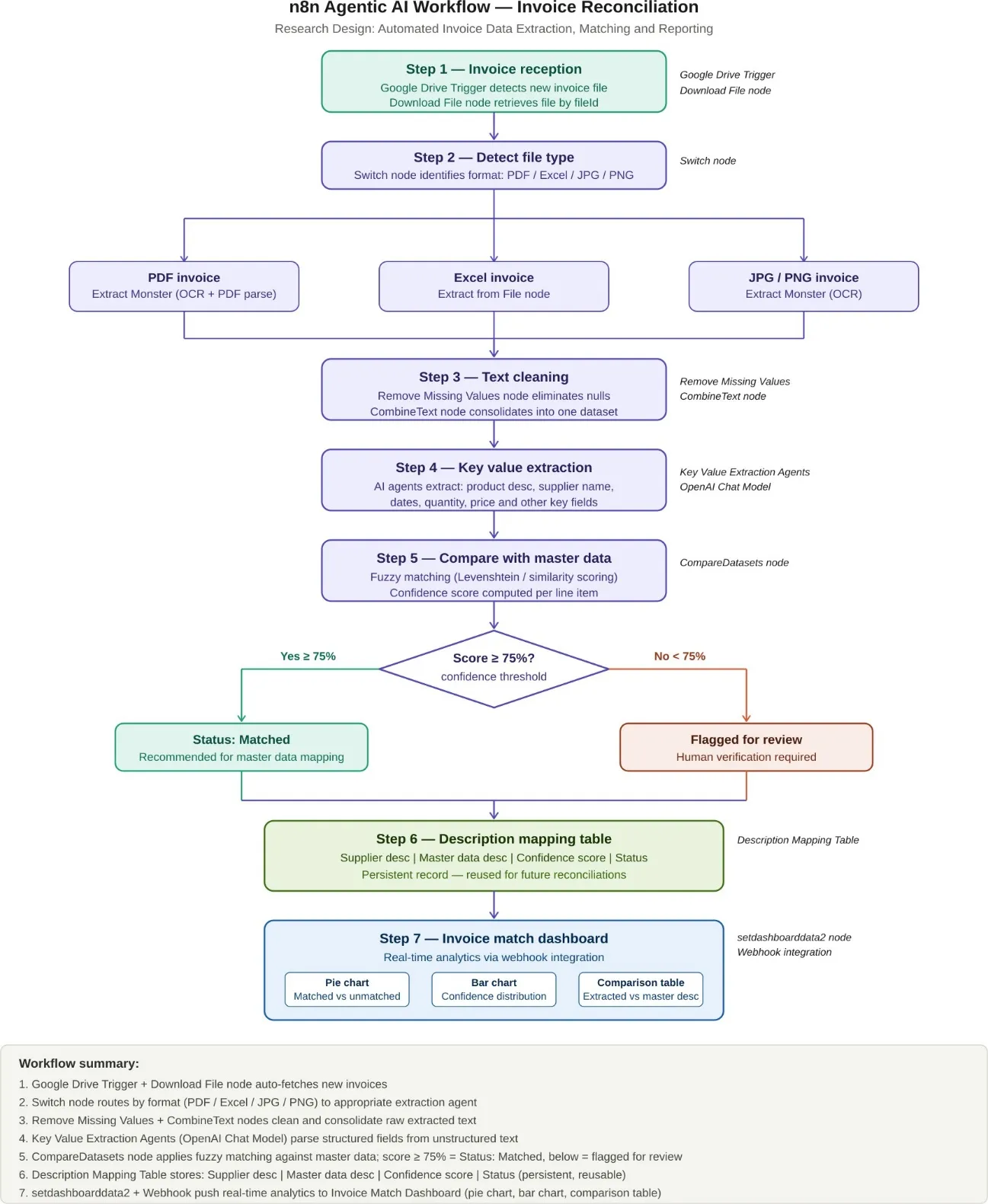
Fig. 1: End-to-end methodology workflow for agentic invoice reconciliation.
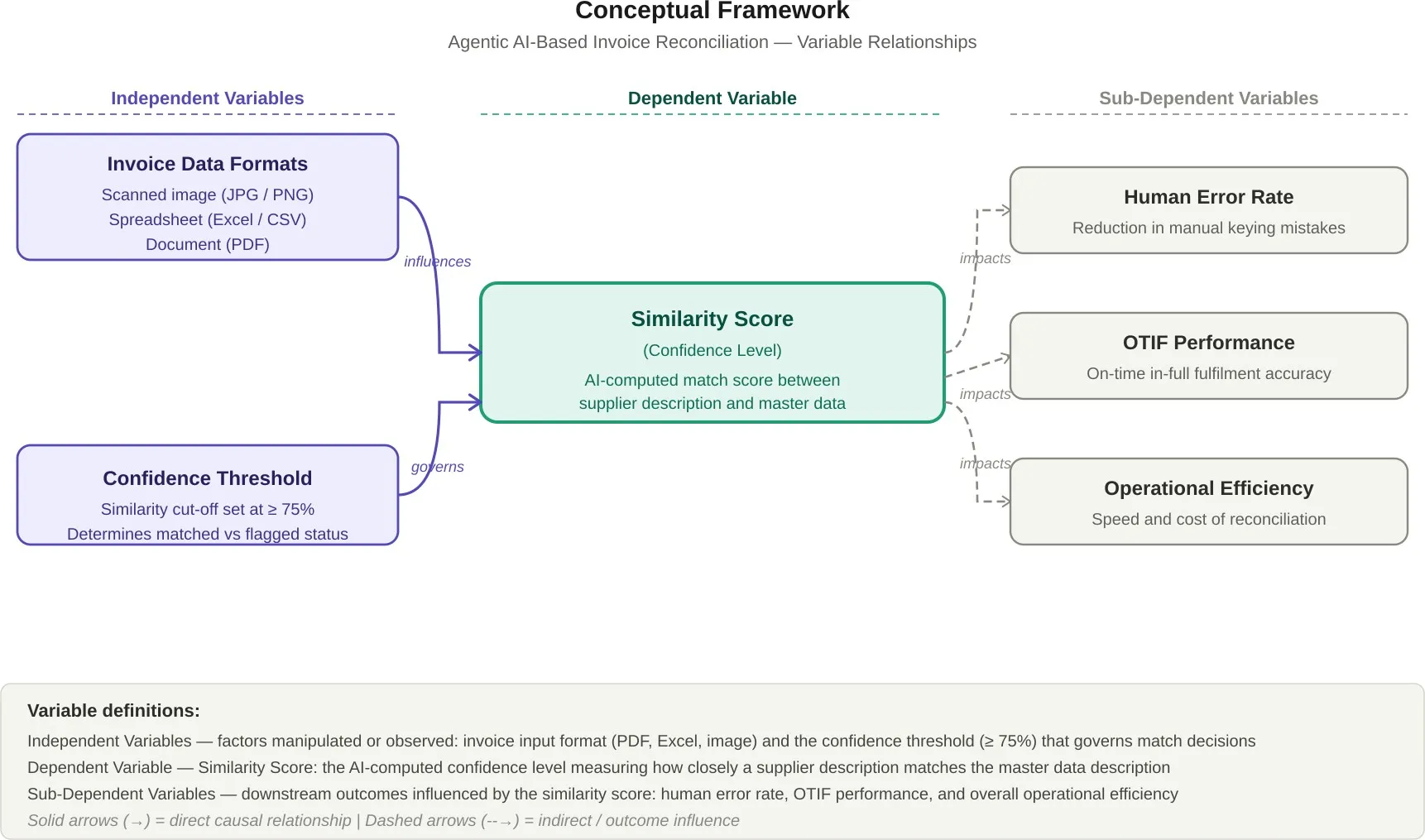
Fig. 2: Conceptual framework mapping variables to operational outcomes.
|
Variable |
Definition |
Measure |
|
Similarity Score |
Fuzzy match between in-voice and master data |
0%–100% |
|
Invoice Format |
File type category |
Categorical |
|
Confidence Threshold |
Match approval cutoff |
Binary: 75% |
TABLE I: Variable Operationalization
Hypothesis 1 (H1): H0: Agentic AI does not significantly improve the accuracy of invoice reconciliation compared to traditional manual methods. H1: Agentic AI significantly improves the accuracy of invoice reconciliation compared to traditional manual methods.
Hypothesis 2 (H2): H0: Using a 75% confidence threshold does not improve the reliability of AI-driven invoice reconcil-iation. H1: Using a 75% confidence threshold improves the reliability of AI-driven invoice reconciliation.
Fig. 3 shows the n8n workflow architecture integrating Google Drive, AI agents, SQL master data, and dashboard visualization.
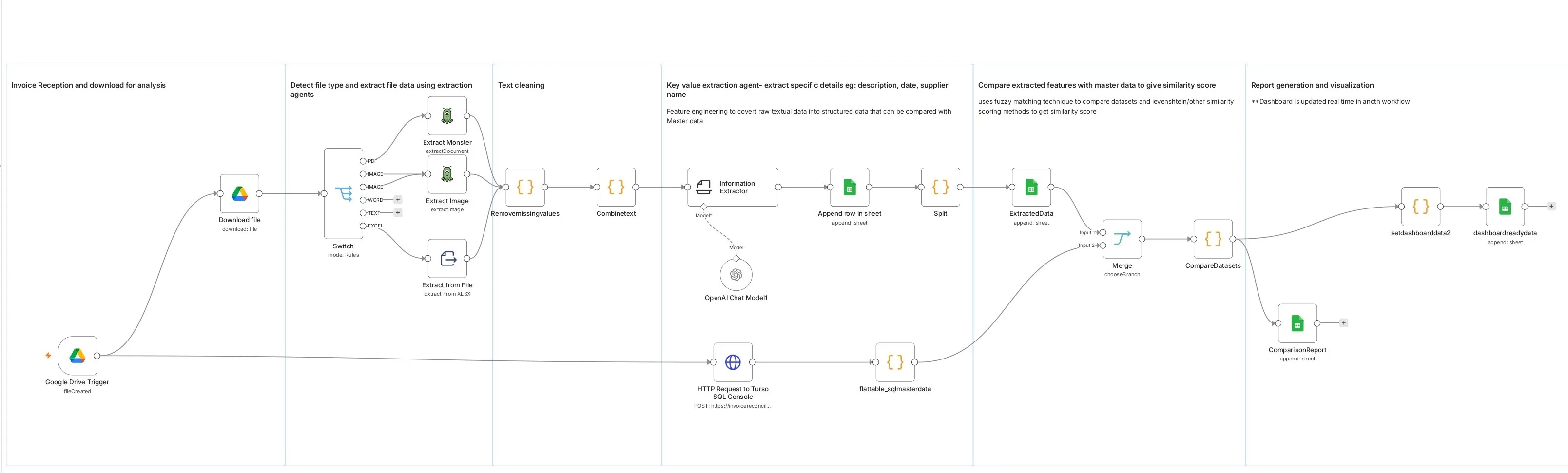
Fig. 3: n8n workflow architecture for agentic invoice recon-ciliation.
Format Detection: Switch node routes PDF/PNG/JPG to Extract Monster (OCR) and Excel to Extract from File node.
AI Extraction: GPT-5 Mini agent performs semantic un-derstanding of unstructured invoice text, extracting product descriptions, quantities, and prices without template depen-dencies.
Semantic Matching: Levenshtein distance combined with numeric token overlap generates confidence scores. Matches
≥75% auto-approve; others flag for review.
Dashboard: Real-time webhook updates to Loveable dash-board displaying match status, confidence distributions, and side-by-side comparisons.
Invoices were collected from a mid-sized supplier upon company approval. These invoices were generated from the internal ERP system. Distributor Master Data was collected from a distributor.
Sensitive information such as customer details are removed from the invoice by masking. These invoices are stored in private Google drive folder. Only the essential data from invoice for research is shown and the rest are masked.e.g.: only line- item description taken for analysis.
In total, 93 samples invoices were taken .Three sample invoices, with different templates and file types were taken-representing the three primary invoice formats encountered in the operational context: PDF, Excel, and scanned PNG image respectively.
Each invoice contained between 3 and 11 line items, with line-item descriptions used as the primary unit of analysis for semantic matching against the product master data. The master data comprised the full product catalogue from distributor SFA system, containing product descriptions across multiple product groups and categories. The distributor master data is stored in SQLite database.
Table II presents the comparative performance analysis between manual processing and the Agentic AI system. Oper-ational data from SCB invoice generation records established the baseline: each distributor processes at least three invoices per week per supplier at 25 minutes of manual ERP entry per invoice [2]. Across three suppliers, this totals 225 minutes of manual processing weekly. The Agentic AI system reduced this to 9 minutes weekly-a 96% reduction equivalent to saving approximately 187 hours of administrative labor per distributor annually.
|
Metric |
Manual |
Agentic AI |
|
Weekly time (9 inv.) |
225 min |
9 min |
|
Annual time |
195 hrs |
8 hrs |
|
Time reduction |
- |
96% |
|
Error rate |
3–5% |
0% |
|
Annual errors (line items) |
104–156 |
0 |
TABLE II: Manual vs. Agentic AI Performance
The system underwent comprehensive testing across eleven test cases covering functional and non-functional require-ments. File reception via Google Drive Trigger (Test 1–2) and format detection for PDF, Excel, and PNG (Test 3–4) passed successfully. Line-item description extraction accuracy was validated against three sample invoices with 8–11 line items each (Test 5). Semantic matching and confidence score calculation (Test 6–7) correctly identified matches above and below the 75% threshold. Dashboard component rendering and real-time webhook updates (Test 8–9) displayed all required analytics elements. Heterogeneous format handling (Test 10) and execution time measurement (Test 11) confirmed sub-one-minute processing per invoice.
Semantic similarity scores ranged from 45.8% to 100%, reflecting the expected distribution of terminological discrep-ancies between supplier invoice descriptions and standardized ERP master data. High-confidence matches (e.g., “Apple1”
→ “Apple Juice 1L” at 100%) were automatically approved, while borderline cases (e.g., “WATAWALA TEA 400G X 30” at 67.76%) were correctly flagged for human review. This validates the 75% threshold as an effective decision boundary balancing automation coverage with accuracy assurance.
Fig. 4 presents the Invoice Match Dashboard providing stakeholders with real-time visibility into reconciliation per-formance. The dashboard displays match distribution via pie charts, confidence score distributions through horizontal bar charts, and detailed comparison tables showing extracted in-voice descriptions alongside matched master data entries with corresponding confidence levels and status indicators.
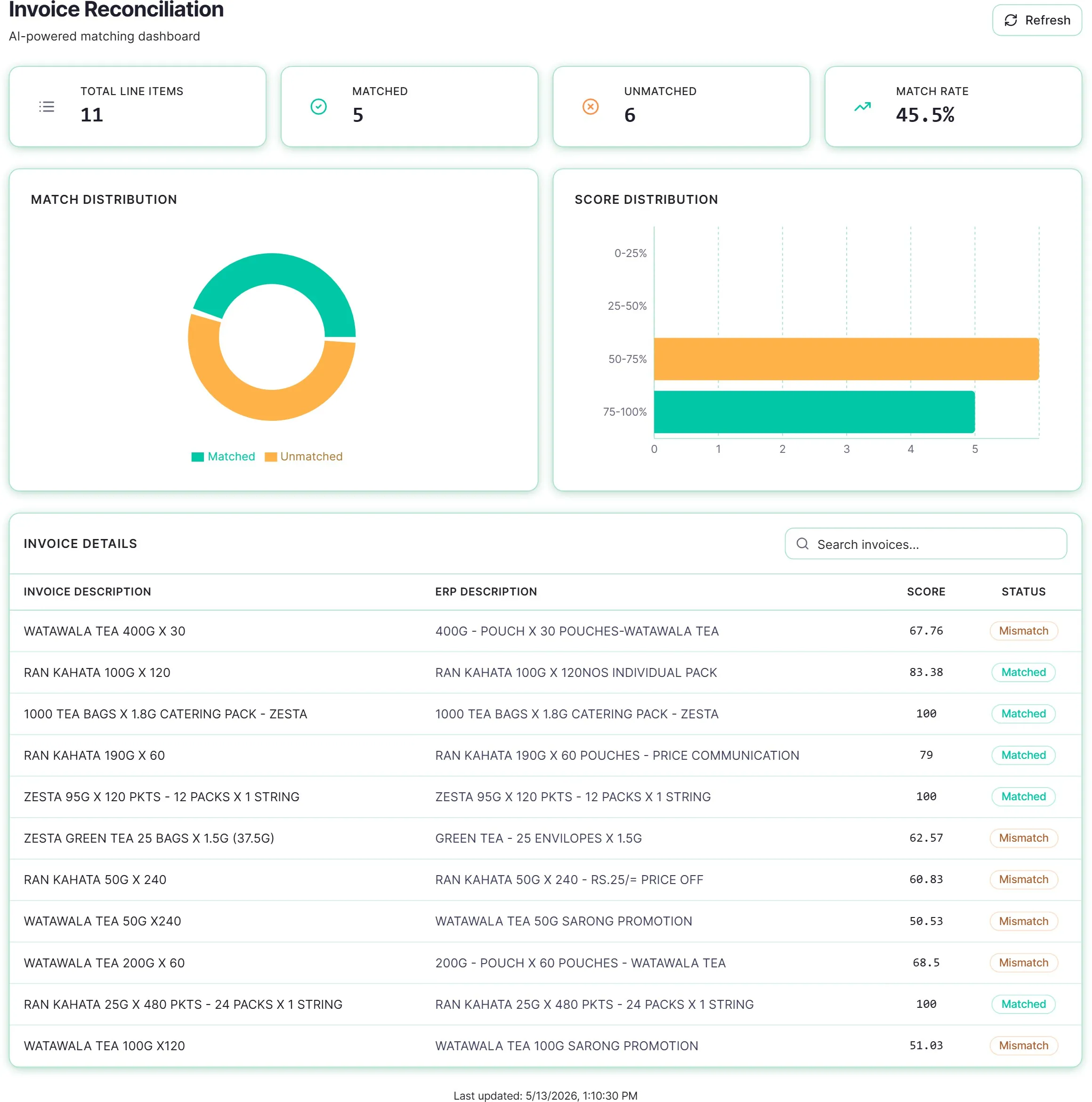
Fig. 4: Real-time analytics dashboard for invoice reconciliation monitoring
This research demonstrates that Agentic AI, orchestrated through n8n workflow automation with LLM-powered ex-traction and fuzzy semantic matching, achieves substantial efficiency and accuracy gains in invoice reconciliation. The 96% processing time reduction-from 225 minutes to 9 minutes weekly per distributor-translates to approximately 187 admin-istrative hours saved annually. This efficiency gain directly ad-dresses the scalability bottleneck identified in manual process-ing, where growing invoice volumes necessitate proportional staffing increases.
Hypothesis H1 is supported: the Agentic AI system pro-duced similarity scores consistently above the documented manual error threshold, with matched invoice line items achieving scores between 75% and 100%, confirming sig-nificant accuracy improvement over the 3–5% manual error rate [2]. Hypothesis H2 is also supported: the 75% confidence threshold accurately classified matching and non-matching in-voices across all three tested formats (PDF, Excel, PNG), with correctly flagged items enabling appropriate human oversight.
The elimination of manual data entry errors-previously 104–
156 erroneous line items annually per distributor-prevents downstream inventory discrepancies, payment disputes, and delivery failures. By stabilizing invoice processing timelines, the system directly contributes to improved OTIF performance, a critical metric in FMCG supply chain operations. The real-time XAI dashboard further enhances operational transparency, enabling stakeholders to make informed decisions based on visible confidence scores and match explanations.
The study scope is limited to invoice processing for Goods Receipt Note generation in mid-sized FMCG organizations, covering PDF, Excel, and image formats. Future work should address: (1) direct integration with ERP GRN posting sys-tems for fully automated workflows; (2) adaptive confidence thresholding based on supplier-specific historical patterns; (3) expansion to EDI, XML, and proprietary formats; (4) long-term evaluation of rare invoice template behavior; (5) simil-iarity match history could be used for selecting best responsive templates, detect fraud, detect anomalies, detect duplicates or for other predictive analytics and (5) implementation advance-ments such as adopting system to read multiple lanaguage invoices and chatbot integration for user query handling.
CONCLUSION
This research contributes a practical, empirically validated framework for Agentic AI in invoice reconciliation, demon-strating measurable improvements in efficiency, accuracy, and operational transparency. The confidence-based approach en-sures that automation benefits are realized without sacrificing human oversight for uncertain cases, aligning with respon-sible AI deployment principles in business-critical financial processes.
REFERENCES

Sachini Kuruppu*, Analysing The Application Of Agentic AI In Automating Invoice Processing, Int. J. Sci. R. Tech., 2026, 3 (7), 82-89. https://doi.org/10.5281/zenodo.21237243
 10.5281/zenodo.21237243