

We use cookies to ensure our website works properly and to personalise your experience. Cookies policy
Dr. Samuel George Institute Of Pharmaceutical Sciences, Andhra Kesari University, Markapur
Dry skin is a prevalent skin condition characterized by roughness, irritation, scaling, and reduced moisture content resulting from impaired skin barrier function. In recent years, herbal formulations have attracted considerable interest in cosmetic and pharmaceutical research due to their safety, effectiveness, and lower risk of adverse effects compared to synthetic products. The present study aims to formulate and evaluate a herbal moisturizing cream incorporating extracts of Withania somnifera (Ashwagandha) and Aloe barbadensis miller (ALOE VERA) for the management of dry skin. Ashwagandha is known for its antioxidant, anti-inflammatory, and skin-rejuvenating properties, whereas Aloevera possesses antimicrobial, soothing, and protective activities that contribute to maintaining healthy and well-hydrated skin.
Skin is the largest organ of the human body and acts as a protective barrier against environmental factors such as microorganisms, ultraviolet radiation, chemicals, and pollutants. Maintenance of adequate skin hydration is essential for preserving skin softness, elasticity, and overall health. Dry skin, also known as xerosis, is a common condition caused by reduced moisture content in the stratum corneum, leading to roughness, itching, irritation, flaking, and cracking. Factors such as climate changes, aging, excessive use of soaps and detergents, pollution, and nutritional deficiencies contribute significantly to skin dryness.
Moisturizing creams are widely used to restore skin hydration, improve barrier function, and protect the skin from further damage. Conventional moisturizing products often contain synthetic chemicals that may cause irritation, allergic reactions, or other side effects upon prolonged use. Therefore, there is increasing interest in herbal cosmetic formulations due to their natural origin, safety, effectiveness, and better patient compliance. Herbal ingredients have been traditionally used in skincare preparations because of their therapeutic and cosmetic benefits. Among these, Withania somnifera (Ashwagandha) and Aloe barbadensis miller (ALOE VERA)are important medicinal plants with significant pharmacological activities. Ashwagandha is well known for its antioxidant, anti inflammatory, rejuvenating, and anti-aging properties, which help in improving skin texture and protecting the skin from oxidative stress.
Aloevera possesses antimicrobial, antifungal, anti-inflammatory, and soothing properties that aid in maintaining healthy skin and preventing infections.
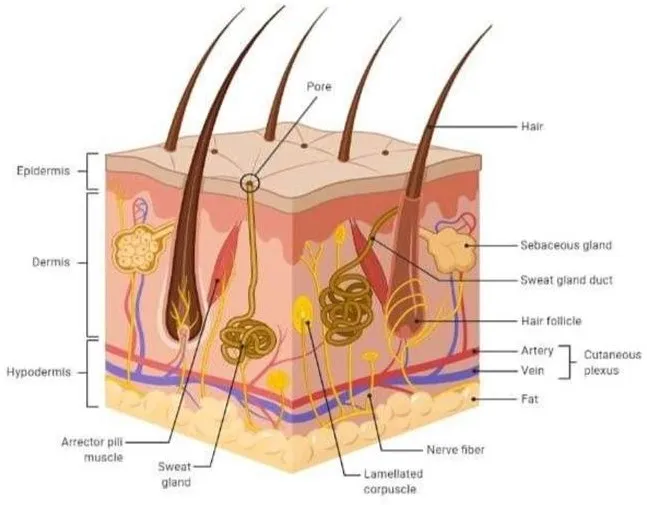
The epidermis is the most superficial layer of the skin and is composed of stratified keratinised squamous epithelium, which varies in thickness in different parts of the body. It is thickest on the palms of the hands and soles of the feet.
There are no blood vessels or nerve endings in the, but its deeper layers epidermis are bathed in interstitial fluid from the dermis, which provides oxygen.
2.1 Epidermis
The epidermis is the outermost layer of the skin and is composed primarily of keratinocytes. It is an avascular structure organized into five distinct layers: the stratum basale, stratum spinosum, stratum granulosum, stratum lucidum (present only in thick skin), and stratum corneum.
Barrier Function: The stratum corneum serves as the primary protective barrier of the skin, shielding the body from mechanical injury, pathogenic microorganisms, ultraviolet (UV) radiation, and chemical irritants.
Keratinization: Keratinocytes continuously proliferate and differentiate as they migrate toward the skin surface. This process results in the formation of keratin-rich corneocytes, which contribute to the strength, integrity, and protective function of the skin.
2.2 Dermis
The dermis is located beneath the epidermis and is a thick, vascularized, and elastic layer of connective tissue composed mainly of collagen and elastin fibers.
Support and Elasticity: Collagen fibers provide tensile strength and structural support to the skin, while elastin fibers maintain its flexibility, elasticity, and resilience.
Blood Supply: The dermis contains an extensive network of blood vessels that regulate body temperature, deliver oxygen and nutrients to the skin, and facilitate wound healing.
Immune Function: Various immune cells present in the dermis, including mast cells and macrophages, play a crucial role in defending against pathogens and responding to tissue injury and inflammation.
Hypodermis (Subcutaneous Layer)
The hypodermis, also known as the subcutaneous layer, is the deepest layer of the skin and is composed primarily of adipose (fat) tissue and loose connective tissue.
Insulation and Shock Absorption: The adipose tissue acts as an insulating layer that helps maintain body temperature and protects underlying tissues and organs from mechanical injury and shock.
Energy Storage: The hypodermis serves as an important energy reservoir by storing lipids, which can be utilized by the body when needed for metabolic processes.
a) Protective Barrier:
The skin acts as an anatomical barrier that protects the body from pathogens, physical damage, and harmful environmental factors. It serves as a defense mechanism between the internal and external environments. Langerhans cells present in the epidermis contribute to the adaptive immune response by recognizing and processing foreign antigens.
b) Sensation:
The skin contains various sensory receptors and nerve endings that detect stimuli such as touch, pressure, vibration, temperature (heat and cold), and pain resulting from tissue injury. These receptors play an important role in the somatosensory system.
c) Thermoregulation:
The skin helps regulate body temperature through its extensive blood supply. Heat can be lost through radiation, conduction, convection, and evaporation.
Dilation of blood vessels increases blood flow to the skin and promotes heat loss, while constriction of blood vessels reduces blood flow and conserves body heat.
The skin forms a relatively dry and semi-impermeable barrier that minimizes excessive fluid loss from the body. Impairment of this function, such as in severe burns, can result in significant dehydration and fluid imbalance.
The appearance of the skin contributes to an individual's physical attractiveness and serves as a means of nonverbal communication. Changes in skin color, texture, and expression can reflect a person's emotional state, health status, and overall well-being.
The skin functions as a storage site for water and lipids, helping to maintain the body's fluid and energy balance. It also plays a vital role in the synthesis of vitamin D, which is produced when ultraviolet (UV) radiation from sunlight acts on specific compounds present in the skin. Vitamin D is essential for calcium absorption, bone health, and various metabolic processes.
ASHWAGANDHA (WITHANIA SOMNIFERA)
Ashwagandha Extract:
Biological Name: Withania somnifera Category: Herbal active ingredient
Description:
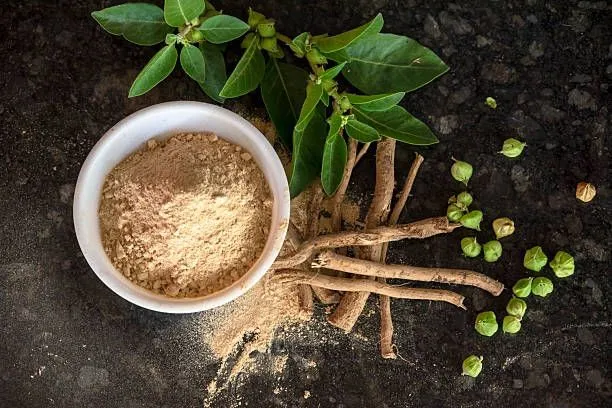
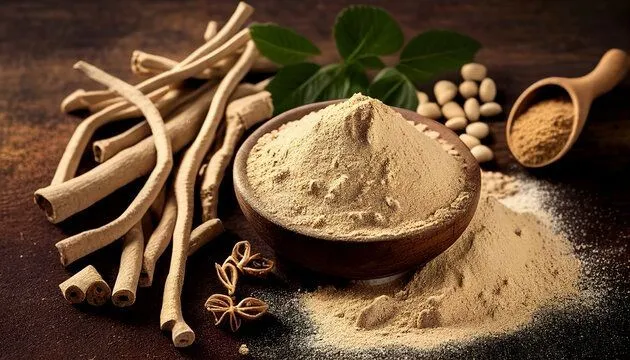
Ashwagandha (Withania somnifera) is one of the most widely used medicinal herbs in Ayurveda. It is renowned for its rejuvenating, adaptogenic, antioxidant, and anti-inflammatory properties. The plant contains several bioactive compounds, including withanolides, alkaloids, and flavonoids, which are responsible for its numerous therapeutic and pharmacological effects.
Role in Formulation:
Ashwagandha is incorporated into herbal cosmetic formulations due to its potent antioxidant and anti-inflammatory activities. It helps nourish and rejuvenate the skin, reduces dryness, improves skin texture, and protects the skin from oxidative stress and premature aging. Its bioactive constituents support skin health by promoting cellular protection and regeneration.
Benefits for Skin:
Ashwagandha
ALOEVERA:
Scientific name : Aloe barbadensis miller
Family: Asphodelaceae Synonym
Aloe indica Royle Aloe vulgaris Lam.
Aloe perfoliata var. vera Aloe
chinensis Baker
Chemical Constituents of Aloe vera:
Polysaccharides, Enzymes, Vitamins, Anthraquinones, Amino Acids, Amino Acids, Sterols.
Description:
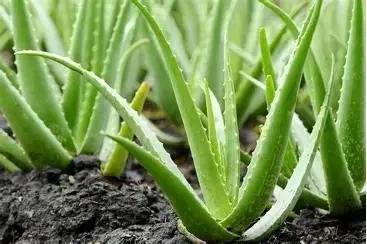
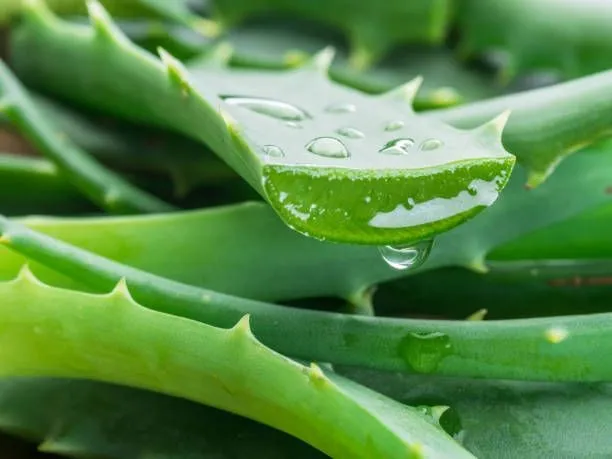
Aloe vera is a stemless or very short-stemmed plant growing to 60–100 centimeters (24–39 inches) tall, spreading by offsets.
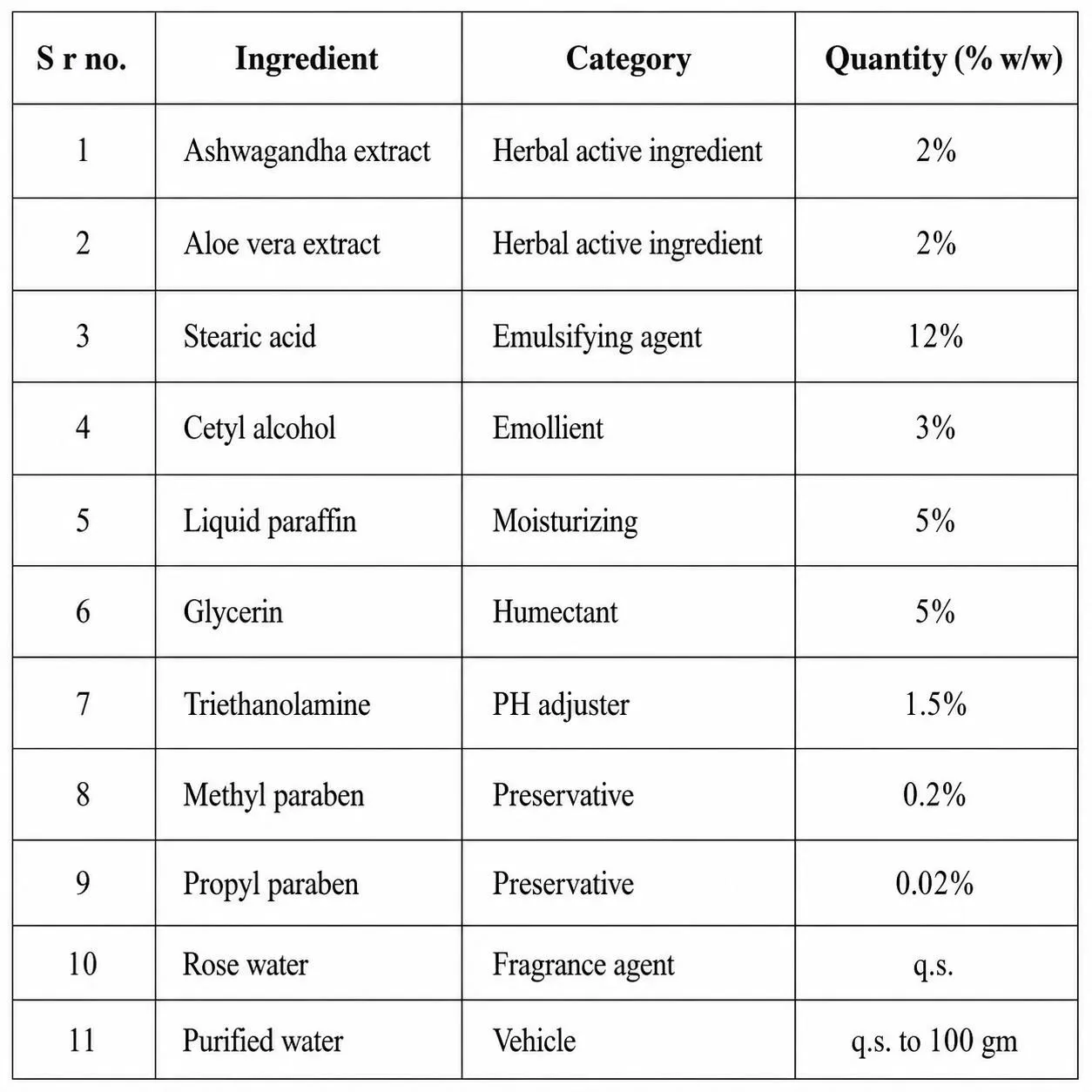
Formulation:
METHOD OF PREPARATION
The herbal moisturizing cream was formulated using the oil-in-water (O/W) emulsion technique. The preparation was carried out through a systematic process to ensure uniform mixing, stability, and effective incorporation of the herbal ingredients. The formulation procedure involved the following steps:
Step 1: Preparation of Oil Phase Stearic acid, cetyl alcohol, and liquid paraffin were weighed accurately and melted together in a beaker at 70–75°C with continuous stirring.
Step 2: Preparation of Aqueous Phase In another beaker, purified water was heated to the same temperature (70–75°C). Glycerin, methyl paraben, propyl paraben, and triethanolamine were dissolved in the heated water phase.
Step 3: Incorporation of Herbal Extracts Ashwagandha extract and aloevera extract were dispersed separately in a small quantity of purified water and added slowly to the aqueous phase with continuous stirring.
Step 4: Emulsification The aqueous phase was added slowly into the oil phase with constant stirring to obtain a smooth and uniform oil-in water emulsion.
Step 5: Cooling and Addition of Fragrance The prepared cream was stirred continuously during cooling until room temperature was reached. Rose water was added at the final stage to provide fragrance and soothing effect.
Step 6: Packaging The prepared herbal cream was transferred into suitable airtight containers and stored at room temperature for further evalua tion studies.
The prepared cream was evaluated for its organoleptic characteristics, including color, odor, appearance, texture, and consistency. Visual inspection was carried out to assess the overall quality of the formulation. A cream exhibiting a uniformcolor, smooth texture, pleasant odor, and consistent appearance was considered acceptable and indicative of good formulation characteristics.
The pH of the cream was determined using a calibrated digital pH meter. Approximately 1 g of the cream was dispersed in 10 mL of distilled water, and the pH was measured at room temperature. The pH value was recorded to ensure compatibility with the skin. An acceptable pH range for topical skin preparations is generally between 5.5 and 7.0.
Homogeneity of the formulation was evaluated by visual inspection and tactile examination after the cream was transferred into suitable containers. The cream was examined for uniform distribution of ingredients and checked for the absence of lumps, aggregates, grittiness, and phase separation. A homogeneous formulation indicates proper mixing and stability.
Spreadability is an important parameter that determines the ease with which a cream can be applied to the skin. It was evaluated by placing a small quantity of cream between two glass slides and applying a specified weight on the upper slide. The time required for the upper slide to move a certain distance was recorded, and spreadability was calculated using the following formula:
S=M×L/T
Where:
S = Spreadability (g·cm/s)
M = Weight tied to the upper slide (g)
L = Length moved by the glass slide (cm) T = Time taken to separate the slides (s)
Viscosity of the formulation was measured using a Brookfield viscometer at room temperature. Appropriate viscosity ensures easy application and good consistency of the cream.
Washability was evaluated by applying the cream on skin and washing with tap water. The formulation should be easily washable without leaving excessive oily residue
7. Irritancy Test:
The irritancy test was carried out by applying a small amount of cream on the dorsal surface of the skin and observing for redness, edema, itching, or irritation for 24 hours. No irritation indicates safety of the formulation for topical application.
8. Stability Study:
The prepared cream was subjected to stability studies at different storage conditions such as room temperature and accelerated conditions for a specified period. The formulation was observed for changes in color, odor, pH, consistency, and phase separation
9. Moisturizing Activity:
Moisturizing activity was evaluated by topical application of the cream on dry skin areas for a specified period. Improvement in skin hydration, smoothness, and softness was observed and compared before and after application.
The cream formulation was stored at different temperatures and centrifuged to evaluate phase separation. Absence of phase separation indicates stability of the emulsion system.
The after-feel property including emolliency, slipperiness, and residual film on skin was assessed after topical application of the cream.
The dye test was performed using a water-soluble dye to confirm the type of emulsion. Uniform distribution of dye confirmed the oil-in-water (O/W) type cream.
CONCLUSION
The present study successfully developed and evaluated a herbal moisturizing cream containing Withania somnifera(Ashwagandha) and ASPHODELACEAE
(aloevera) extracts for the management of dry skin. The formulated cream exhibited satisfactory physicochemical properties, including an appropriate pH, good homogeneity, smooth texture, excellent spreadability, acceptable viscosity, and stability without any evidence of phase separation. Furthermore, the formulation demonstrated effective moisturizing activity and did not produce any signs of skin irritation during the evaluation studies, indicating its suitability and safety for topical application.
The incorporation of Ashwagandha and Neem extracts provided significant therapeutic benefits owing to their antioxidant, anti-inflammatory, antimicrobial, and skin-protective properties. The synergistic action of these herbal ingredients contributed to improved skin hydration, enhanced softness, and overall skin health while reducing the likelihood of adverse effects commonly associated with synthetic skincare products.
Based on the results of the evaluation studies, the formulated herbal moisturizing cream can be considered a safe, effective, stable, and cost-effective topical preparation for the management of dry skin. The findings of this study emphasize the increasing importance of herbal cosmetic formulations in modern skincare and demonstrate the potential of natural ingredients as suitable alternatives to conventional synthetic moisturizers. Further clinical investigations and long-term stability studies are recommended to validate the efficacy of the formulation and expand its commercial and therapeutic applications.
REFERENCES



Y. Suneetha*, Ch. Koushik Neeraj, G. Ranga Prasad, G. Srinivasulu, B. Mastan, Development And Characterization Of A Herbal Anti-Aging Cream Using Ashwagandha And Aloevera Extracts, Int. J. Sci. R. Tech., 2026, 3 (7), 1179-1185. https://doi.org/10.5281/zenodo.21715954
 10.5281/zenodo.21715954