

We use cookies to ensure our website works properly and to personalise your experience. Cookies policy
Channabasweshwar Pharmacy College (Degree), Latur
Polycystic Ovary Syndrome (PCOS) is one of the most common endocrine and metabolic disorders affecting women of reproductive age prominently. It is associated with hormonal imbalance, irregular menstrual cycles, obesity, insulin resistance, inflammation, and infertility commonly. The present study was aimed at formulating and evaluating a polyherbal suspension containing Shatavari, Tribulus terrestris, Cinnamon, and Flaxseed for supportive management of PCOS related symptoms. Shatavari contains steroidal saponins and phytoestrogens that help in hormonal regulation and reproductive health. Tribulus possesses saponins and flavonoids that may improve ovarian function and hormonal balance. Cinnamon contains cinnamaldehyde and polyphenols which exhibit antioxidant and insulin-sensitizing activity, while flaxseed is rich in omega-3 fatty acids and lignans that help reduce inflammation and support endocrine balance. The combined action of these constituents provides synergistic therapeutic benefits in PCOS management. The polyherbal suspension was prepared using suitable suspending agents, sweetening agents, preservatives, and purified water to obtain a stable and palatable formulation. The prepared formulation was evaluated for organoleptic properties, pH, viscosity, sedimentation volume, re-dispersibility, particle size, and stability studies. The results indicated satisfactory physical stability, acceptable viscosity, good re- dispersibility, and absence of phase separation. The study concluded that the formulated polyherbal suspension possesses desirable pharmaceutical characteristics and may serve as a promising herbal dosage form for supportive management of PCOS.
Polycystic Ovary Syndrome (PCOS) is a complex endocrine and metabolic disorder commonly observed in women of reproductive age which is characterized by hormonal imbalance, irregular menstrual cycles, ovarian cyst formation, insulin resistance, obesity, acne, and infertility. The increasing cases of PCOS has made it a significant public health concern due to its impact on reproductive, metabolic, and psychological health generally as not treated it show long-term complications such as type 2 diabetes mellitus, cardiovascular disorders, and endometrial hyperplasia. 10,14
PCOS pathophysiology is complex and not completely understood but it is mainly associated with hyperandrogenism, insulin resistance, and dysfunction of the hypothalamic–pituitary–ovarian (HPO) axis mostly. Hyperinsulinemia lead to raises the ovarian androgen production, which mainly disrupts follicular maturation prominently and results in anovulation which leads to the accumulation of immature follicles in the ovaries which responsible for generation of characteristic polycystic appearance. Even the chronic low-grade inflammation and oxidative stress are also considered the most important contributing factors in disease progression.11,15,16
Most of conventional treatment approaches include hormonal therapy, insulin-sensitizing agents, and lifestyle modifications but these therapies are effective in symptom control and if used long-term result may be associated with adverse effects, reduced patient compliance, and limited acceptability mainly. So, these reasons are encouraged the exploration of alternative and complementary therapeutic approaches for treatment. 17
Herbal formulations has advantage as it is safer and cost-effective alternatives for the supportive management of PCOS. It is possible to achieving synergistic effects by targeting different physiological pathways such as hormonal regulation, antioxidant defense, and metabolic balance in polyherbal formulations, which combine multiple medicinal plants, exhibit.6,18
Suspensions mainly the biphasic liquid dosage forms in which finely divided solid particles are dispersed in a liquid medium and most commonly classified into oral, topical, parenteral, and ophthalmic suspensions. Among these, oral suspensions are most widely used for herbal formulations because of their suitability for poorly water-soluble drugs. Suspensions offer some advantages such as improved patient compliance, ease of administration, dose uniformity, and enhanced bioavailability of poorly soluble compounds.
In the present study, a polyherbal suspension was formulated and evaluated for its pharmaceutical characteristics to ensure its stability, quality, and therapeutic effectiveness. This work aims to integrate traditional herbal knowledge with modern pharmaceutical dosage form design for the supportive management of PCOS.21,31
METHODS AND MATERIALS
Plant profile:
SHATAVARI (Asparagus racemosus)
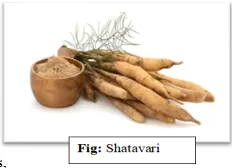
Shatavari is derived from the dried tuberous roots of Asparagus racemosus which is belonging to the family Asparagaceae. It has contains bioactive compounds like as steroidal saponins (shatavarins), flavonoids (quercetin, kaempferol, rutin), isoflavones, alkaloids, and essential oils. It is a rich source of vitamins (A, B-complex, C, E, folic acid) and minerals including calcium, magnesium, and iron. It is traditionally used for hormonal regulation and may help in balancing reproductive hormones in PCOS [20,21].
GOKHRU (Tribulus terrestris)
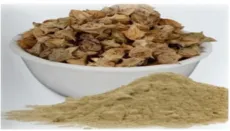
Fig: Tribulus
Tribulus terrestris, belonging to the family Zygophyllaceae and commonly used for its fruit and root parts. It contains steroidal saponins such as protodioscin and diosgenin, along with flavonoids, alkaloids, and essential fatty acids. These constituents are reported to exhibit anti-androgenic, diuretic, and reproductive regulatory effects, making it useful in improving ovulatory function in PCOS conditions [22].
CINNAMON (Cinnamomum verum)
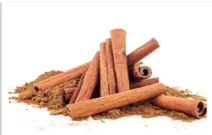
Fig. Cinnamon
Cinnamon is obtained from the dried inner bark of Cinnamomum verum commomly. It contains active compounds such as cinnamaldehyde, cinnamic acid, eugenol, and several polyphenols including caffeic and vanillic acids. These compounds are known to enhance insulin sensitivity and help in regulating glucose metabolism, which is beneficial in PCOS-associated insulin resistance.[23]
FLAXSEED (Linum usitatissimum)
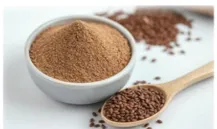
Figure: Flaxseed
Flaxseed is obtained from the plant Linum usitatissimum and is rich in omega-3 fatty acids, particularly alpha-linolenic acid (ALA), along with phytoestrogenic lignans such as secoisolariciresinol diglucoside (SDG). These constituents exhibit hormonal modulation effects and may help reduce androgen levels by increasing sex hormone-binding globulin (SHBG) [24]
Table 1:
| Ingredient | Category | Role |
|---|---|---|
| Acacia gum | Suspending agent | Maintains uniform dispersion |
| Honey syrup | Sweetening agent | Improves palatability |
| Methyl paraben | Preservative | Prevents microbial growth |
| Propyl paraben | Preservative | Enhances preservation |
| Glycerin | Humectant, wetting agent | To ensure the uniform distribution of insoluble drug particles. |
| Purified water | Vehicle | Preparation of suspension |
| Colour and flavour | Organoleptic enhancer | Improves appearance and taste |
Excipients Used
Preparation of Polyherbal Suspension
The herbal powders were accurately weighed and triturated to obtain a uniform mixture. Acacia gum was separately dispersed in purified water to form a mucilage. Preservatives were dissolved in a small quantity of warm water. The herbal blend was gradually incorporated into the suspending medium under continuous stirring. Glycerin was added to improve wetting of particles, followed by honey for sweetness and flavour enhancement. The final volume was adjusted with purified water, and the formulation was stored in amber-colored containers.
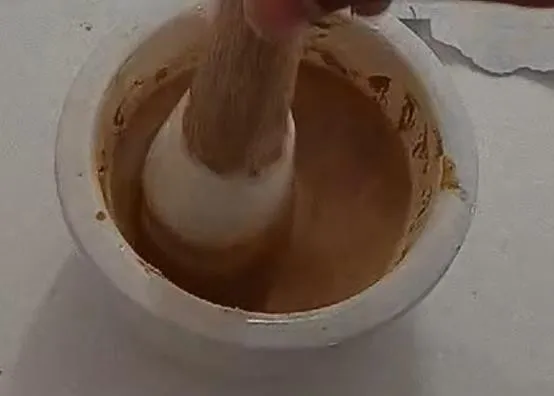
Figure: Herbal Mixture
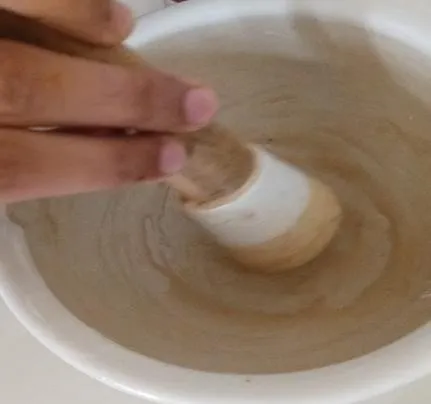
Figure: Dispersion of Suspending
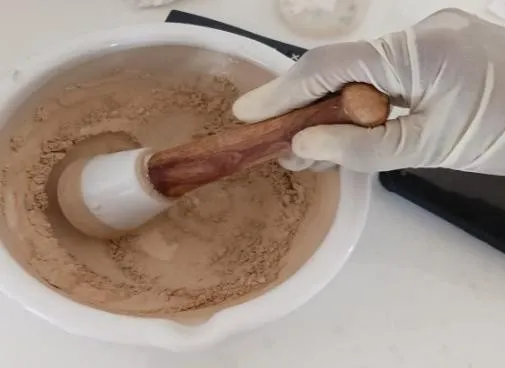
Figure: Powered Triturated in Mortar
Formula Table for Different Batches (40 mL)
Table 2: Formula Table
| Ingredients | F1 | F2 | F3 | F4 |
|---|---|---|---|---|
| Shatavari | 600 mg | 800 mg | 1000 mg | 1200 mg |
| Tribulus | 600 mg | 800 mg | 1000 mg | 1200 mg |
| Cinnamon | 300 mg | 400 mg | 500 mg | 600 mg |
| Flaxseed | 600 mg | 800 mg | 1000 mg | 1200 mg |
| Acacia gum | 0.20 g | 0.40 g | 0.40 g | 0.50 g |
| Honey | 10 mL | 10 mL | 10 mL | 10 mL |
| Methyl paraben | 0.08 g | 0.08 g | 0.08 g | 0.08 g |
| Propyl paraben | 0.02 g | 0.02 g | 0.02 g | 0.02 g |
| Glycerin | 5 mL | 5 mL | 5 mL | 5 mL |
| Purified water | q.s. to 40 mL | q.s. to 40 mL | q.s. to 40 mL | q.s. to 40 mL |
RESULT AND DISCUSSION
Table 3: Phytochemical Screening
| Sr. No. |
Phytochemical Test | Observation | Herbal Drug Showing Result |
Inference / Active Constituent Indicated |
|
|---|---|---|---|---|---|
| 1 | Dragendorff’s reagent Test |
Reddish-brown precipitate |
Shatavari, Flaxseed | Presence Alkaloids |
of |
| 2 | Keller–Killiani Test | Characteristic brown-green ring formation |
Cinnamon | Presence of Cardiac Glycosides | |
| 3 | Ferric chloride Test | Dark coloration obtained |
Cinnamon | Presence of Tannins | |
| 4 | Foam Test | Stable persistent foam observed |
Shatavari, Tribulus | Presence of Saponins | |
| 5 | Alkaline reagent Test |
Yellow coloration developed |
Shatavari, Cinnamon, Tribulus |
Presence of Flavonoids | |
| 6 | Salkowski Test | Reddish brown colour observed |
Shatavari | Presence of Steroidal Compounds |
|
| 7 | Ferric Chloride Test | Dark green colour observed | Polyherbal suspension / herbal extract |
Presence of Phenolic Compounds | |
| 8 | Molisch’s Test | Purple ring formed at junction |
Flaxseed | Presence of Carbohydrates | |
| 9 | Oil Spot Test | Permanent oily stain produced |
Flaxseed | Presence of Fixed Oils / Lipids |
Interpretation of Phytochemical Screening
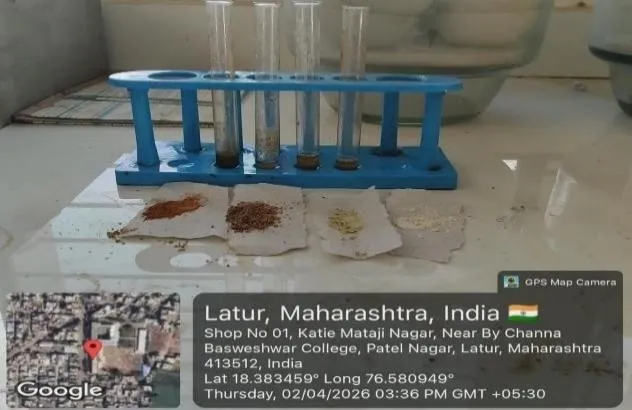
Figure 17: Phytochemical Screening
Phytochemical investigation confirmed the presence of several biologically active constituents, including alkaloids, flavonoids, tannins, phenolic compounds, saponins, glycosides, carbohydrates, and fixed oils. The presence of these metabolites may contribute to the antioxidant, anti-inflammatory, and endocrine-modulating properties of the formulation [28,29].
Flavonoids and phenolic compounds are known for their antioxidant potential and may help reduce oxidative stress associated with PCOS [5,15]. Saponins present in Shatavari and Tribulus may contribute to hormonal regulation and reproductive health [20,22]. Tannins and polyphenols from cinnamon possess antioxidant and antimicrobial activities [23]. The lignans present in flaxseed exhibit phytoestrogenic effects that may help in maintaining hormonal balance [24].
Organoleptic Evaluation Analysis Observation:
The prepared suspension exhibited a brown colour and a pleasant aromatic odour due to cinnamon. No phase separation or aggregation was observed. Among all formulations, batch F2 showed the best uniformity and stability.
Table 4: Observation of PH
| Batch | pH |
|---|---|
| F1 | 5.064 |
| F2 | 6.21 |
| F3 | 5.134 |
| F4 | 5.092 |
pH Determination Analysis Observation:
The pH values of the formulations ranged between slightly acidic to near neutral. Batch F2 showed an optimal pH of 6.21, indicating better compatibility and stability.
Sedimentation Volume Analysis Observation Table
Batch F2 demonstrated the most favorable sedimentation behavior, indicating a balanced concentration of suspending agent and improved stability against particle settling..
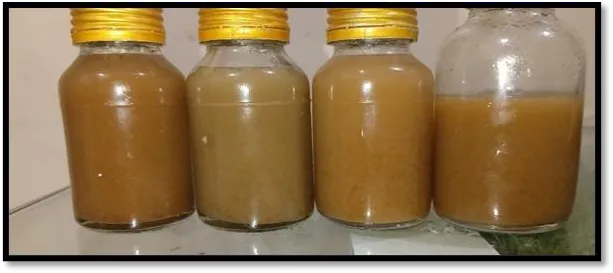

Table 5: Sedimentation Volume
| Batch | Initial Volume (mL) | Sediment Volume (mL) | Sedimentation Volume (F) |
|---|---|---|---|
| F1 | 40 | 35 | 0.92 |
| F2 | 40 | 37 | 0.88 |
| F3 | 40 | 32 | 0.81 |
| F4 | 40 | 29 | 0.74 |
Re-dispersibility Analysis Observed Findings:
All formulations showed acceptable redispersibility. However, batch F2 required the least number of shakes, indicating better physical stability and reduced sediment compaction.
Observation Table:
Table 6: Re-dispersibility
| Batch | Number of Shakes Required |
|---|---|
| F1 | 3 |
| F2 | 2 |
| F3 | 4 |
| F4 | 5 |
Viscosity Analysis
Viscosity was observed to decrease from F1 to F4. Batch F2 exhibited optimal viscosity, ensuring both stability and good pourability.
Table 7: Observation Table:
| Batch | Viscosity (cps) |
|---|---|
| F1 | 1350 |
| F2 | 1180 |
| F3 | 980 |
| F4 | 760 |
Particle size:
All batches showed acceptable particle size distribution suitable for oral suspension. Batch F2 exhibited the most favorable particle size, contributing to better uniformity.
Table 8: Particle Size
| Batch | Average Particle Size |
|---|---|
| F1 | 10 µm |
| F2 | 5 µm |
| F3 | 12µm |
| F4 | 10 µm |
Flow Property / Pourability Analysis
Batch F2 showed an optimum balance between viscosity and flow, ensuring ease of administration without compromising stability.
Accelerated Stability Study Analysis
The formulated polyherbal suspension was subjected to an accelerated stability study according to ICH guidelines. The formulation was stored at 40 ± 2°C and 75 ± 5% relative humidity (RH) for a period of 30 days. Samples were evaluated periodically for changes in colour, pH, viscosity, sedimentation, re-dispersibility, and any signs of phase separation.
Observation Table
Table 10: Observation of Accelerated Stability Study
| Parameter | Initial | After 30 Days |
|---|---|---|
| Colour | Brownish | No significant change |
| pH | 6.21 | 6.3 |
| Viscosity | 1350 cps | 1325 cps |
| Sedimentation | Slight | Slight |
| Re-dispersibility | Good | Good |
Conclusion of Stability Study: The prepared polyherbal suspension remained stable under accelerated storage conditions (40 ± 2°C and 75 ± 5% RH) for 30 days, demonstrating acceptable physicochemical stability and shelf-life characteristics. The results demonstrated no significant change in colour, absence of microbial growth, minimal variation in pH, a slight decrease in viscosity, and no evidence of phase separation throughout the study period. These observations indicate that the formulation maintained its integrity and stability during storage.
Degree of Flocculation
Controlled flocculation was observed in all batches. Batch F1 showed the highest flocculation value, while F4 showed the lowest.
Table 11: Degree of Flocculation
| Batch | Degree of Flocculation |
|---|---|
| F1 | 1.32 |
| F2 | 1.25 |
| F3 | 1.18 |
| F4 | 1.10 |
Overall Comparative Evaluation of Batches:
Table 12: Overall Comparative Evaluation
| Parameter | F1 | F2 | F3 | F4 |
|---|---|---|---|---|
| Homogeneity | Excellent | Excellent | Good | Fair |
| pH Stability | Good | Excellent | Good | Good |
| Sedimentation | Good | Excellent | Moderate | Poor |
| Redispersibility | Excellent | Excellent | Good | Fair |
| Viscosity | High | Optimum | Moderate | Low |
| Flow Property | Moderate | Good | Good | Very fast |
| Stability | Good | Excellent | Moderate | Fair |
| UV Absorbance | High | High | Moderate | Low |
CONCLUSION:
The formulated polyherbal suspension containing Shatavari, Tribulus, Cinnamon, and Flaxseed demonstrated satisfactory physicochemical and phytochemical properties. Among all formulations, batch F2 was identified as the optimized batch due to its superior sedimentation behaviour, optimal viscosity, good re-dispersibility, stable pH, and overall physical stability.
Phytochemical analysis confirmed the presence of bioactive compounds such as flavonoids, tannins, phenolics, saponins, lignans, and glycosides, which may contribute to therapeutic effects in PCOS management. The formulation remained stable under accelerated conditions, indicating acceptable shelf-life potential.
Overall, the developed polyherbal suspension is stable, pharmaceutically acceptable, and suitable for oral administration. It represents an effective integration of traditional herbal knowledge with modern pharmaceutical formulation techniques for PCOS management.
REFERENCES





Mundhe Neha P., Jadhav Aishwarya O., Jadhav Rutuja B., Jadhav Sakshi R., Jadhav Sanket S., Development and Evaluation of a Novel Polyherbal Suspension for the Management of Polycystic Ovary Syndrome, Int. J. Sci. R. Tech., 2026, 3 (10), 1190-1197. https://doi.org/10.5281/zenodo.23659077
 10.5281/zenodo.23659077