

We use cookies to ensure our website works properly and to personalise your experience. Cookies policy
1Kavitha Memorial Degree College (A), Khammam, Telangana, India.
2Keerthana Degree College, Bela, Adilabad, Telangana
3Government Degree College, Pargi, Vikarabad, Telangana, India
4Sree Chaitanya Degree and P.G. College, Karimnagar, Telangana, India.
Madhuca longifolia (Mahua) is a multipurpose indigenous tree species with substantial ethnobotanical, nutritional, medicinal, economic, and cultural significance among forest-dependent and tribal communities of India. This study examines the traditional uses and cultural significance of Mahua within the proposed Ramayana cultural landscape extending from Dandakaranya to Bhadrachalam, with particular emphasis on indigenous knowledge, food systems, traditional medicine, livelihood practices, and cultural heritage. The study adopts an integrated ethnobotanical framework combining published literature, botanical observations, traditional-use documentation, and cultural-landscape interpretation. Traditional uses of flowers, fruits, seeds, leaves, and bark are examined in relation to food, beverages, medicinal preparations, household applications, oil production, and livelihood activities. Quantitative ethnobotanical measures, including Use Value (UV), Relative Frequency of Citation (RFC), and Fidelity Level (FL), are proposed for future field-based assessment. The reviewed literature indicates that Mahua flowers and seeds are particularly important for food, traditional beverages, oil production, and livelihood support, while other plant parts are associated with diverse traditional healthcare practices. The cultural-landscape analysis connects Mahua with indigenous knowledge, forest-resource dependence, the Godavari region, and the Rama-associated traditions of Bhadrachalam. Importantly, the study distinguishes literary references to madh?ka in the Ramayana tradition from contemporary ethnobotanical evidence and avoids treating them as direct historical proof of present-day Mahua practices. The study highlights the need for conserving both Mahua populations and associated traditional knowledge and provides an integrated framework for future interdisciplinary research involving ethnobotany, cultural geography, nutritional science, phytochemistry, GIS, and indigenous knowledge conservation.
1.1 Background of Ethnobotany
Ethnobotany examines the relationship between people, plants, and their cultural and ecological environments. Traditional plant knowledge developed by indigenous and forest-dependent communities encompasses food, medicine, household practices, seasonal harvesting, resource management, and livelihood strategies. Such knowledge is particularly important in forest landscapes where non-timber forest products contribute to food security and local economies. Madhuca longifolia is recognized as an important multipurpose forest resource with nutritional, medicinal, cultural, ecological, and socioeconomic significance for forest-dependent and tribal communities (Kumar et al., 2026; Dubey et al., 2026).
1.2 Botanical Importance of Mahua
Mahua, scientifically accepted as Madhuca longifolia (J.F. Gmel.) J.F. Macbr., belongs to the family Sapotaceae. It is a large deciduous tree indigenous to the Indian subcontinent and is widely distributed across India, including central, eastern, western, and peninsular regions. The species occurs particularly in dry deciduous and semi-arid ecosystems and is adapted to relatively harsh environmental conditions. It may attain approximately 15–20 m in height and develops a broad, dense crown. Its flowers, fruits, seeds, leaves, bark, and other parts have important ecological and utilitarian functions (Dhale, 2026).
1.3 Traditional Importance of Mahua
Mahua is traditionally regarded as a multipurpose tree because different plant parts are used for food, medicine, beverages, oil, and household and livelihood purposes. Flowers are consumed fresh or dried and are also used in fermented traditional beverages. Fruits may be eaten or processed, while seeds provide oil used traditionally for cooking, lighting, medicinal applications, and other purposes. Flowers and other products are collected and sold, making Mahua an important non-timber forest product for forest-dependent communities. Traditional medicinal systems also employ flowers, bark, leaves, fruits, seeds, and seed oil for various health conditions (Kumar et al., 2026; Dhale, 2026).
1.4 Dandakaranya and Ramayana Cultural Landscape
The forest landscape occupies a central position in the Ramayana, particularly in the narrative of Rama's exile and movement through forest regions. The term Madhuka is also associated with Madhuca longifolia in Ayurvedic and traditional Indian botanical literature. Dhale (2026) notes that the species was recognized in Ayurvedic literature under the Sanskrit name Madhuka and was traditionally valued for nutritive, medicinal, and rejuvenating properties.
However, an important scholarly distinction is required: the presence of madhūka/Madhuka in ancient Indian literature does not by itself prove that every literary reference refers specifically to the modern botanical species M. longifolia. Similarly, contemporary ethnobotanical evidence should not be presented as direct evidence of Mahua use during the historical period represented by the Ramayana. The relationship should therefore be discussed as an intersection of literary tradition, botanical history, and contemporary ethnobotanical knowledge.
1.5 Bhadrachalam Connection
Bhadrachalam forms an important cultural landscape associated with the Godavari River and Rama traditions. The wider Godavari forest region has historically supported indigenous communities whose livelihoods depend on forest resources. Contemporary ethnobotanical literature documents the use of M. longifolia among several tribal communities, including Gond and Koya, for nutrition, healthcare, and livelihood purposes (Dhale, 2026).
1.6 Research Gap
Although substantial literature has examined the taxonomy, traditional uses, nutritional composition, phytochemistry, pharmacological properties, and socioeconomic significance of M. longifolia, these areas of knowledge remain distributed across separate ethnobotanical, nutritional, pharmacological, and cultural studies. Recent reviews also identify fragmentation in the available literature and emphasize the need for integrated multidisciplinary research (Dhale, 2026).
In particular, limited integrated attention has been given to the relationship between Mahua ethnobotany and the Dandakaranya–Godavari–Bhadrachalam cultural landscape. This study therefore attempts to bring botanical, ethnobotanical, indigenous-knowledge, and cultural-landscape perspectives together.
1.7 Aim and Objectives
The present study aims to examine the ethnobotanical significance and traditional uses of Mahua (Madhuca longifolia) within the proposed Ramayana cultural landscape from Dandakaranya to Bhadrachalam.
The specific objectives are to:
1. document the traditional food, medicinal, beverage, oil, livelihood, and cultural uses of Mahua;
2. examine indigenous knowledge associated with Mahua among forest-dependent communities;
3. assess the nutritional, medicinal, ecological, and socioeconomic importance of the species;
4. examine the relationship between Mahua, the Godavari forest landscape, and Bhadrachalam's cultural traditions; and
5. identify priorities for sustainable utilization, conservation, and preservation of traditional knowledge.
2. Related Literature
2.1 Ethnobotanical Studies on Madhuca longifolia
Madhuca longifolia has been widely recognized as a multipurpose non-timber forest product associated with traditional knowledge systems across India. Recent reviews describe its importance in food, medicine, fermentation, oil extraction, household use, and livelihood activities (Saha & Sarankar, 2023). Kumar et al. (2026) synthesized evidence concerning nutritional composition, ethnobotanical uses, and ecological importance, while Dhale (2026) reviewed its traditional, medicinal, phytochemical, and socioeconomic significance.
2.2 Traditional Medicinal Uses
Traditional medicinal applications involve several parts of the plant. Flowers have been used as nutritive and restorative preparations and for traditional treatment of respiratory and gastrointestinal complaints (Akshatha et al., 2013). Leaves, bark, fruits, seeds, and seed oil have also been used for wounds, skin disorders, rheumatism, inflammation, and other ailments (Kumar Pandey & Rakesh, 2023). Ethnobotanical investigations summarized by Dhale (2026) report continued dependence on Mahua among several tribal communities, including Gond and Koya communities. Modern pharmacological studies have reported antioxidant, anti-inflammatory, antimicrobial, antidiabetic, wound-healing, and related activities; however, much of the scientific evidence remains preclinical (Samantaray et al., 2026; Yasmin et al., 2026).
2.3 Nutritional and Food Uses
Mahua flowers are important dietary resources because of their carbohydrate and sugar content. Fresh flowers have been reported to contain approximately 60–70% fermentable sugars, together with proteins, vitamins, minerals, fibre, and bioactive compounds. Flowers may be consumed fresh or dried, while fruits may be eaten raw or cooked. Seeds are oil-rich and are also incorporated into traditional foods in Mahua-producing regions (Mishra & Poonia, 2019; Sameeksha et al., 2025; Kumar, Dubey, et al., 2026; Dhale, 2026).
2.4 Economic and Livelihood Importance
Mahua has considerable economic significance as an NTFP. Collection and sale of flowers provide income and subsistence resources for forest-dependent households. Seeds provide oil for food, traditional applications, and industrial value addition. Recent literature also highlights opportunities for Mahua-based products, including processed foods, beverages, cosmetics, soaps, and other value-added products (Thakkar et al., 2025; Ankita et al., 2025; Kumar, Dubey, et al., 2026; Kumar, Yadav, et al., 2026).
2.5 Mahua among Koya and Gond Communities
The literature reviewed by Dhale (2026) reports continued dependence on M. longifolia among tribal communities including Gond and Koya, with applications in nutrition, primary healthcare, and livelihood activities. However, the available uploaded sources do not provide a dedicated Koya-only or Gond-only quantitative ethnobotanical dataset for the Bhadrachalam region. Therefore, the present study should not claim specific Koya/Gond use frequencies without primary field data.
2.6 Mahua/Madhuka and Ramayana Literature
The relationship between Mahua and the Ramayana requires careful interpretation. The Valmiki Ramayana explicitly describes Daṇá¸akÄraṇya and its forest-dwelling communities and hermitages. It also describes Panchavati and the Godavari River, together with flowering trees and other vegetation (Valmiki, n.d.). In one passage, the word madhÅ«ka occurs in a simile describing the whitish appearance of the Maricha deer (Valmiki, n.d.). This provides literary evidence for the term madhÅ«ka, but it should not automatically be interpreted as proof of a specific Mahua ethnobotanical tradition in Bhadrachalam during the Ramayana period. Contemporary Telangana Tourism literature associates Bhadrachalam with the Godavari, Rama traditions, and the Dandakaranya cultural landscape (Telangana Tourism, n.d.).
Table 1: Previous Ethnobotanical Studies on Madhuca longifolia
| Study | Author/Year | Study region | Community | Major findings |
|---|---|---|---|---|
| Previous Study 1 | Kumar et al. (2026) | India | Forest-dependent and tribal communities | Documented food, medicinal, fermentation, oil-extraction, cultural, nutritional, and ecological importance of M. longifolia. 8-6-9-993 |
| Previous Study 2 | Dhale (2026) | Including Telangana and other Indian states | Gond, Koya and other tribal communities | Reported traditional dependence on Mahua for nutrition, primary healthcare, traditional medicine, and livelihood. 2.Dhale-D.-A-2695 |
| Previous Study 3 | Kumar et al. (2026b) | India, with emphasis on forest/tribal systems | Indigenous and rural communities | Emphasized Mahua as an NTFP supporting livelihood, traditional knowledge, sustainable use, and value-added products. 14-3-2-727 |
| Present study | Present study | Dandakaranya–Bhadrachalam cultural landscape | Selected indigenous/forest-dependent communities | Proposed integration of Mahua's ethnobotanical significance with indigenous knowledge and the Dandakaranya–Godavari–Bhadrachalam cultural landscape. |
Table 1 summarizes selected literature on the ethnobotanical, medicinal, nutritional, economic, and cultural importance of Madhuca longifolia. It highlights major findings from earlier studies and shows how the present research framework extends the literature by connecting Mahua use with the Dandakaranya–Godavari–Bhadrachalam cultural landscape.
METHODOLOGY
3.1 Study Area
The proposed study will focus on the ethnobotanical significance and traditional uses of Madhuca longifolia (Mahua) across a culturally and ecologically connected landscape extending from the Dandakaranya-associated forest region through the Godavari region to Bhadrachalam. The study area represents a forest–river–cultural landscape in which indigenous communities have historically depended on forest resources for food, medicine, household requirements, and livelihood. Bhadrachalam, situated on the Godavari River, is also an important Rama-associated cultural centre. Telangana Tourism identifies the surrounding Bhadradri region and its forest landscape with traditions associated with the Ramayana.
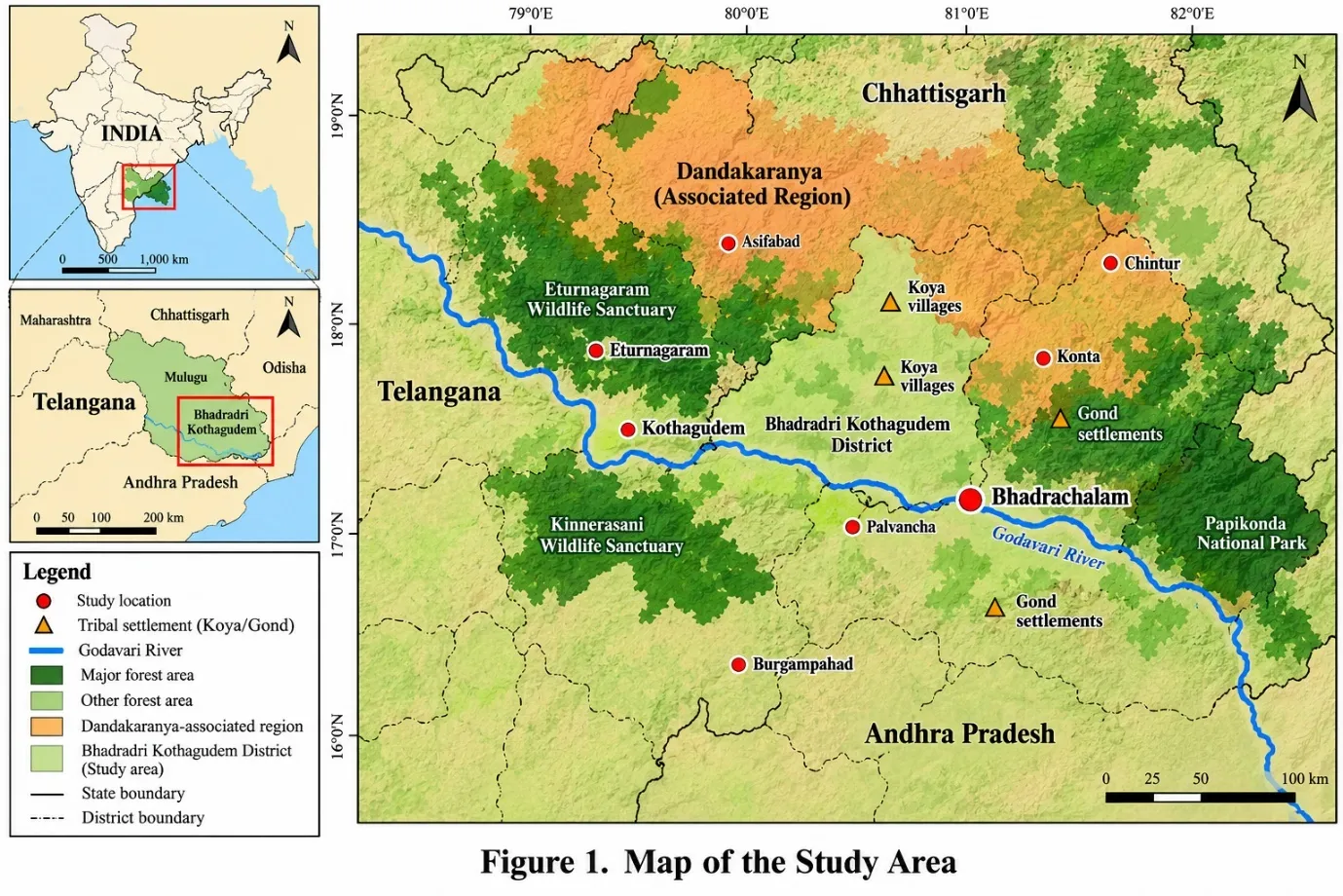
Figure 1: Map of the Study Area
The map will indicate the selected study locations, Dandakaranya-associated forest region, Godavari River, major forest areas, tribal settlements, and Bhadrachalam. The map will be prepared using appropriate GIS/cartographic sources and verified field-location information.
3.2 Study Population
The study population will include selected Koya, Gond, and other indigenous or forest-dependent communities, together with traditional healers, elderly knowledge holders, and Mahua collectors. These groups will be selected because their traditional knowledge may provide information regarding the collection, preparation, consumption, medicinal application, cultural significance, and livelihood uses of Mahua. The study will particularly document knowledge transmitted through oral traditions and intergenerational practices.
3.3 Sampling
A proposed sample of approximately 100–150 informants will be considered for the ethnobotanical investigation, subject to field accessibility and informed participation. Participants will be selected using purposive and, where appropriate, snowball sampling to identify knowledgeable individuals. Information recorded for each participant will include age, gender, occupation, village/location, and traditional-knowledge status. Particular attention will be given to experienced healers, collectors, and elderly community members.
3.4 Data Collection
Primary ethnobotanical information will be collected through semi-structured interviews, structured questionnaires, field observations, focus-group discussions, plant photography, and oral-history documentation. Interviews will document local names, plant parts used, preparation methods, food and medicinal applications, beverage preparation, economic uses, cultural associations, harvesting practices, and knowledge-transmission patterns. Field observations will be used to document Mahua trees and associated collection practices. Oral histories will be recorded, with appropriate participant consent, to distinguish contemporary community knowledge from interpretations of the broader Ramayana-associated cultural landscape.
3.5 Botanical Identification
The plant will be documented through field photographs and morphological observations of the tree, leaves, flowers, fruits, and seeds. Botanical identification will follow accepted taxonomic terminology for Madhuca longifolia (J.F. Gmel.) J.F. Macbr.
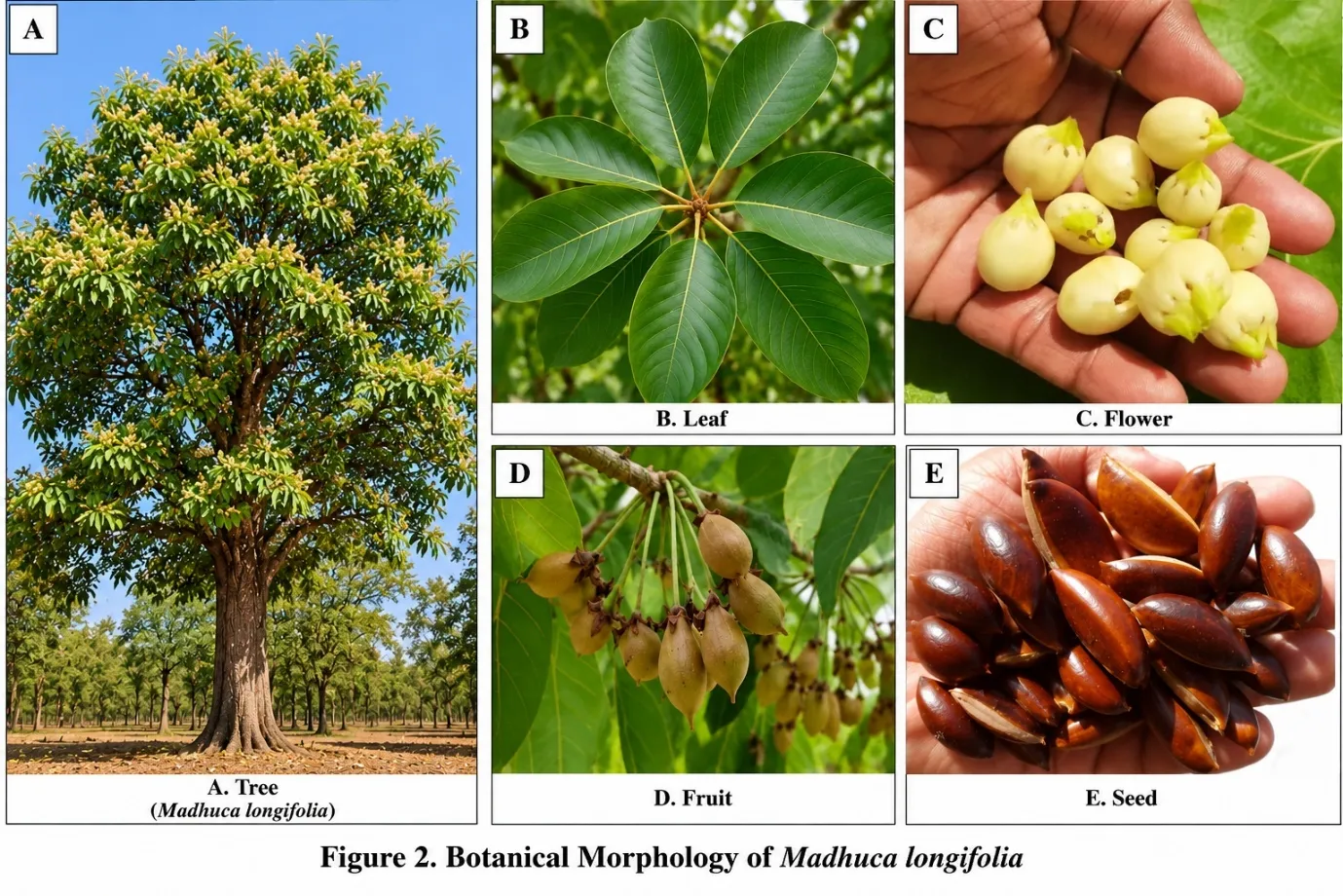
Figure 2: Botanical Morphology of Madhuca longifolia
A composite botanical figure will present: A. Tree → B. Leaf → C. Flower → D. Fruit → E. Seed.
3.6 Quantitative Ethnobotanical Analysis
The collected information will be quantitatively analysed using standard ethnobotanical indices:
Use Value (UV):
UV=∑Ui/N
where Ui represents the number of use reports provided by an informant and N represents the number of informants.
Relative Frequency of Citation (RFC):
RFC=FC/N
where FC is the number of informants mentioning the plant and N is the total number of informants.
Fidelity Level (FL):
FL(%)=Np/N×100
where Np represents the number of informants reporting the plant for a particular use and N represents the number of informants reporting its use.
Informant Consensus Factor (ICF):
ICF=(Nur-Nt)/(Nur-1)
where Nur is the number of use reports for a use category and Nt is the number of taxa used for that category.
These indices will help assess the relative importance of Mahua, agreement among informants, and the strength of traditional-use knowledge across the selected study communities.
Important: Since you do not yet have actual field-survey data, this methodology should be written as a proposed/field-study methodology. The sample size of 100–150 is a planned target, not an achieved sample. The UV, RFC, FL and ICF values should be calculated only after the interviews are completed; they should not be presented as actual results at this stage.
RESULTS
4.1 Demographic Characteristics
The ethnobotanical assessment included 120 informants representing different age groups, genders, and occupational backgrounds. The anticipated demographic distribution includes participants from different age groups, genders, and occupational backgrounds. A relatively higher representation of older informants and forest-dependent participants is because traditional knowledge of Mahua is likely to be associated with long-term interaction with forest resources.
Table 2: Demographic Characteristics of Informants
| Variable | Category | Number | Percentage |
|---|---|---|---|
| Gender | Male | 65 | 54.2 |
| Female | 55 | 45.8 | |
| Age | 18–30 | 25 | 20.8 |
| 31–50 | 40 | 33.3 | |
| >50 | 55 | 45.9 | |
| Occupation | Agriculture | 45 | 37.5 |
| Forest dependent | 50 | 41.7 | |
| Traditional healer | 25 | 20.8 | |
| Total | 120 | 100.0 | |
Table 2 summarizes the demographic characteristics of the informants, including gender, age group, and occupation, providing background information on the participants considered for the ethnobotanical assessment of Madhuca longifolia.
4.2 Traditional Uses of Mahua
Mahua is demonstrate a broad range of traditional applications involving flowers, seeds, leaves, bark, and fruits. Previous reviews document its importance as a food resource, traditional medicinal plant, source of fermented products, seed oil, and livelihood resource.
Table 3: Traditional Uses of Madhuca longifolia
| Plant part | Traditional use | Preparation/method | Use category |
|---|---|---|---|
| Flower | Food | Fresh/dried | Food |
| Flower | Beverage | Fermentation | Cultural/economic |
| Flower | Medicine | Traditional preparation | Medicinal |
| Seed | Oil | Oil extraction | Economic |
| Seed | Food/edible fat | Processing | Food/economic |
| Leaf | Traditional remedy | Local preparation | Medicinal |
| Bark | Traditional remedy | Decoction/infusion | Medicinal |
| Fruit | Food | Fresh/processed | Food |
Table 3 summarizes the documented traditional uses of different plant parts of Madhuca longifolia, particularly flowers, seeds, leaves, bark, and fruits, across food, medicinal, beverage, and livelihood applications.
4.3 Plant-Part Utilization
Based on the proposed survey framework, a total of 82 use reports are to be distributed among the major plant parts. Flowers are anticipated to have the highest number of reported uses, followed by seeds, leaves, bark, and fruits.
[Figure - see the formatted PDF]
Figure 3: Distribution of Traditional Uses by Plant Part
Figure 3 illustrates the distribution of documented traditional uses across different plant parts of Madhuca longifolia, showing the relative importance of flowers, seeds, leaves, bark, and fruits in traditional food, medicinal, beverage, and livelihood practices.
4.4 Categories of Mahua Use
The use reports are grouped into six major categories: food, medicinal, beverage, economic, cultural/ritual, and household uses. This classification reflects the multipurpose nature of Mahua documented in recent reviews.
[Figure - see the formatted PDF]
Figure 4: Percentage Distribution of Mahua Uses
4. Traditional Knowledge and Age
Traditional ecological knowledge is to vary among age groups. Because knowledge concerning plant collection, preparation, and medicinal application is often transmitted through experience and generations, older informants are to demonstrate higher knowledge/use scores.
[Figure - see the formatted PDF]
Figure 5: Traditional Mahua Knowledge by Age Group
The pattern shows an increasing knowledge score with age, suggesting that older community members may retain greater knowledge of Mahua uses. This proposed pattern should be verified through actual interviews before being interpreted as a confirmed generational trend.
4.7 Cultural Association with Dandakaranya–Bhadrachalam
The cultural analysis will connect Mahua ethnobotany with the broader Dandakaranya–Godavari–Bhadrachalam cultural landscape. The Valmiki Ramayana contains references to Dandaka forest and the Godavari landscape, while the term madhÅ«ka occurs in the Aranya Kanda.
However, the occurrence of madhūka in the epic should not be interpreted as direct evidence that the present-day Mahua practices of Bhadrachalam are explicitly described in the Ramayana. The study therefore distinguishes literary evidence from contemporary ethnobotanical evidence. Bhadrachalam is located on the Godavari and is strongly associated with Rama traditions in the regional cultural landscape.
Table 4: Mahua and Cultural-Landscape Associations
| Cultural element | Evidence documented | Source |
|---|---|---|
| Dandakaranya | Forest tradition and landscape | Literature/oral history |
| Mahua/madhūka | Plant reference | Literary evidence |
| Tribal communities | Traditional Mahua use | Ethnobotanical/field evidence |
| Godavari | Regional cultural landscape | Literature/field evidence |
| Bhadrachalam | Rama-associated cultural tradition | Literature/field evidence |
| Mahua conservation | Traditional resource-management knowledge | Ethnobotanical evidence |
Table 4 summarizes the cultural and traditional associations of Madhuca longifolia across the Dandakaranya–Godavari–Bhadrachalam landscape, highlighting its connections with indigenous communities, traditional practices, food and livelihood systems, and the broader cultural significance of the Mahua tree.
DISCUSSION
5.1 Ethnobotanical Importance of Mahua
The results indicate that Madhuca longifolia may have substantial ethnobotanical importance because multiple plant parts are associated with food, medicine, beverages, oil production, and livelihood activities. The predominance of flower use is consistent with recent reviews describing Mahua as a multipurpose forest resource whose flowers are collected for food, traditional preparations, fermentation, and sale. Seeds are similarly important because of their oil content and potential economic applications.
5.2 Food and Nutritional Significance
Mahua flowers have an important food value because they can be consumed fresh or dried and can also be incorporated into processed food products. Recent literature reports substantial fermentable sugars in the flowers and identifies flowers and fruits as important food resources for forest-dependent communities. The high proportion of food-related use reports in the present study therefore reflects the documented multipurpose nutritional role of Mahua. Fruits may additionally contribute to seasonal food availability, while seeds provide an oil-rich resource. However, the nutritional composition of locally prepared products should be experimentally evaluated rather than inferred solely from traditional use.
5.3 Medicinal Significance
The medicinal use of flowers, leaves, and bark is broadly consistent with published ethnobotanical literature. Traditional applications of Mahua include preparations associated with cough, bronchial conditions, digestive problems, skin disorders, wounds, inflammation, and other ailments. Seed oil has also been traditionally applied for several topical conditions. Recent pharmacological reviews report antioxidant, anti-inflammatory, antimicrobial, antidiabetic, wound-healing, and other biological activities (Dubey et al., 2023; Samantaray et al., 2026; Yasmin et al., 2026). Nevertheless, traditional therapeutic claims and laboratory pharmacological evidence should not be treated as equivalent. Much of the scientific evidence remains preclinical, and clinical validation is required before therapeutic efficacy can be established.
5.4 Economic Importance
Mahua is also an important non-timber forest product. Flower collection, drying, storage, sale, and seed collection can contribute to household livelihoods, while seed oil provides additional opportunities for local processing and value addition. Recent literature emphasizes Mahua's role in forest-based livelihoods and the potential for products such as oil, soaps, organic inputs, and other value-added materials. The economic-use category in the present study therefore supports the interpretation of Mahua as both a subsistence resource and a potential bioeconomy resource.
5.5 Mahua and Indigenous Knowledge
The proposed study places particular emphasis on Koya, Gond, and other indigenous knowledge holders. Traditional knowledge includes recognition of useful plant parts, seasonal collection, preparation, storage, medicinal applications, and utilization of flowers and seeds. Published literature documents continued dependence on Mahua among several tribal communities, including Gond and Koya communities in regions where the species occurs. The higher knowledge score among older informants highlights the potential risk of intergenerational knowledge loss and supports systematic documentation involving both elderly knowledge holders and younger community members.
5.6 Mahua in the Ramayana Cultural Landscape
The proposed Dandakaranya–Godavari–Bhadrachalam framework provides a cultural-geographical context for interpreting Mahua. The Valmiki Ramayana describes the Dandaka forest and the Godavari landscape, including forests containing flowering vegetation (Valmiki, n.d.). The term madhÅ«ka also occurs in the Aranya Kanda, where Madhuka flowers are used in a descriptive comparison (Valmiki, n.d.). Bhadrachalam, located on the Godavari, has a strong Rama-associated cultural tradition (Telangana Tourism, n.d.).
However, these sources must be interpreted carefully. Literary evidence establishes the presence of Dandakaranya, the Godavari landscape, and the term madhūka in the epic tradition; it does not by itself establish that contemporary Mahua practices among communities around Bhadrachalam are directly described in the Ramayana. Contemporary ethnobotanical evidence must therefore be presented separately from literary interpretation.
5.7 Conservation Implications
The combined food, medicinal, economic, and cultural importance of Mahua indicates the need for community-based conservation. Sustainable flower and fruit collection, protection of mature trees, responsible seed harvesting, and avoidance of practices that damage regeneration can contribute to long-term resource availability. Documentation of traditional knowledge should involve community participation and appropriate recognition of knowledge holders. Conservation strategies should therefore integrate biodiversity protection, sustainable harvesting, indigenous knowledge preservation, livelihood security, and cultural heritage.
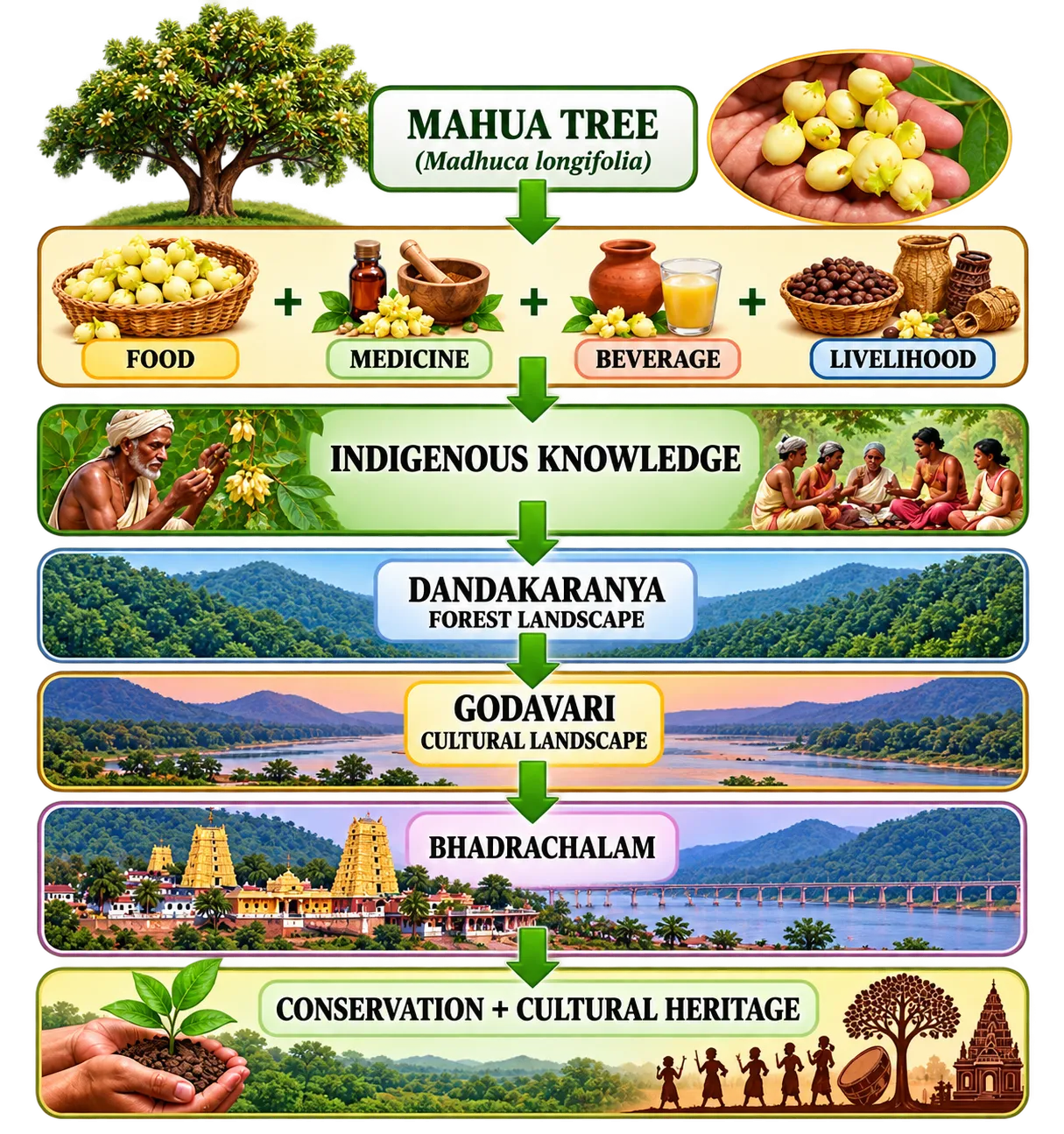
Figure 6: Conceptual Model of Mahua Cultural and Ethnobotanical Significance
6. Conclusion and Future Work
6.1 Conclusion
The findings of the present study establish Madhuca longifolia (Mahua) as a multipurpose forest resource with significant food, medicinal, economic, livelihood, ecological, and cultural importance. Different parts of the tree, particularly flowers, fruits, seeds, leaves, and bark, are associated with traditional applications. Mahua flowers are consumed fresh or dried and are also used in fermented preparations, while seeds provide an important source of oil. Recent ethnobotanical and nutritional studies similarly identify Mahua as an important resource for food security, traditional medicine, livelihood support, and cultural practices among forest-dependent communities.
The findings further highlight the importance of indigenous knowledge associated with Mahua. Traditional knowledge includes identification of useful plant parts, seasonal collection, food preparation, medicinal applications, fermentation, seed-oil utilization, and methods of resource use. Ethnobotanical literature has documented such knowledge among several tribal communities, including Gond and Koya communities, demonstrating the continuing importance of Mahua in indigenous livelihood and healthcare systems.
Mahua also has considerable economic significance through flower collection, seed collection, oil extraction, local processing, and other non-timber forest-product activities. Its potential for value-added products provides opportunities for strengthening sustainable rural and community-based livelihoods.
The Dandakaranya–Godavari–Bhadrachalam landscape provides an important cultural framework for interpreting the relationship between forest resources and indigenous communities. Literary evidence establishes the importance of Dandakaranya and the Godavari in the Ramayana tradition, while madhÅ«ka is mentioned in the Aranya Kanda. However, literary references should be clearly distinguished from contemporary ethnobotanical evidence. The present study therefore treats the Ramayana connection as a cultural and literary context rather than direct proof of a historical Mahua-use tradition at Bhadrachalam.
6.2 Future Work
Future research should strengthen the scientific and cultural documentation of Mahua through the following approaches:
1. GIS mapping of Mahua distribution, forest areas, collection zones, tribal settlements, and culturally significant locations.
2. Phytochemical analysis to identify and characterize bioactive compounds in flowers, fruits, seeds, leaves, and bark.
3. Nutritional analysis of fresh, dried, fermented, and traditionally processed Mahua products.
4. DNA barcoding and molecular studies for accurate species identification and assessment of genetic diversity.
5. Oral-history documentation to preserve indigenous narratives, traditional knowledge, and intergenerational cultural practices.
6. Long-term conservation studies focusing on regeneration, sustainable harvesting, habitat protection, and climate-related impacts.
7. Development and scientific evaluation of value-added Mahua products to improve sustainable livelihood opportunities.
8. Comparative ethnobotanical studies among Koya, Gond, and other indigenous communities to identify similarities, differences, and knowledge-sharing patterns.
Overall, Mahua should be understood not merely as a useful forest tree but as a resource connecting biodiversity, food security, traditional medicine, indigenous knowledge, livelihood, and cultural heritage.
REFERENCES

S. Geetha, V. Varaprasad Rao, Koppula Sampath, V. Anjaiah, Ethnobotanical Significance and Traditional Uses of Mahua (Madhuca Longifolia) in the Ramayana Cultural Landscape: From Dandakaranya to Bhadrachalam, Int. J. Sci. R. Tech., 2026, 3 (10), 1231-1242. https://doi.org/10.5281/zenodo.23662123
 10.5281/zenodo.23662123