

We use cookies to ensure our website works properly and to personalise your experience. Cookies policy
1Department of Pharmacology, Delight College of Pharmacy, Koregaon Bhima, Pune, Maharashtra, India-412216.
2Principal of Delight College of Pharmacy, Koregaon Bhima, Pune, Maharashtra, India-412216.
Oral hygiene is essential for overall well-being, and the demand for herbal formulations has increased due to their safety and natural origin compared to synthetic mouth fresheners and rinses. This study aimed to develop and evaluate a liquid mouth freshener containing herbal granules prepared from fennel, cardamom, and clove, which are traditionally recognized for their breath-freshening and digestive benefits. The granules were formulated using a wet granulation method with an appropriate binder and then dispersed in a flavored aqueous glycerin base containing natural sweeteners, preservatives, and flavoring agents to form a stable suspension. The prepared formulation was assessed for various parameters including organoleptic characteristics, pH, viscosity, clarity, uniform distribution of granules, antimicrobial efficacy, and stability under accelerated conditions. The results indicated a pH between 5.5 and 6.5, along with good clarity, suitable viscosity, and a pleasant taste and aroma. The formulation also demonstrated uniform dispersion of granules without noticeable sedimentation over time. Antimicrobial studies revealed significant inhibitory effects against common oral pathogens such as Streptococcus mutans, Lactobacillus species, and Candida albicans, confirming its effectiveness. Stability testing showed that the formulation remained physically and microbiologically stable for up to three months under accelerated conditions. Overall, this herbal liquid mouth freshener offers dual benefits of immediate freshness and sustained action, making it a safe and effective alternative to conventional synthetic products.
Oral hygiene is fundamental to overall health, as the oral cavity serves as a major entry point for infections affecting both the respiratory and digestive systems. Inadequate oral care can result in plaque buildup, gingivitis, periodontitis, and halitosis. These conditions are commonly managed using synthetic mouthwashes and breath fresheners formulated with alcohol, artificial flavoring agents, and chemical preservatives. However, prolonged use of such products may lead to adverse effects, including irritation of the oral mucosa, dryness, a burning sensation, and imbalance of the natural oral microbiota. As a result, there is a growing preference for safer, plant-based alternatives that offer effective oral care with fewer side effects.1,2,3,4
In recent years, herbal granules have emerged as popular natural mouth fresheners owing to their antimicrobial, aromatic, antioxidant, and digestive benefits. Studies reviewing their application in oral care formulations indicate that preparations containing fennel, cardamom, and clove—used individually or in combination—are effective in minimizing bad breath, suppressing harmful oral microorganisms, and enhancing user acceptability compared to conventional synthetic products. These herbal granules are typically free from aggressive chemicals, biodegradable, and widely regarded as environmentally friendly. However, challenges such as ensuring formulation standardization and maintaining long-term stability still need to be addressed for their broader application.1,4,5
Herbs such as fennel (Foeniculum vulgare), cardamom (Elettaria cardamomum), and clove (Syzygium aromaticum) have long been utilized in traditional preparations for oral and digestive care. Fennel seeds are rich in anethole-containing essential oil and flavonoids, which demonstrate notable antimicrobial and anti-inflammatory activities against Streptococcus mutans and other oral pathogens. Additionally, fennel has the ability to slightly increase salivary pH, thereby lowering the risk of dental caries. Cardamom is valued for its pleasant aroma and the presence of cineole-rich essential oil, which not only enhances flavor but also exhibits broad-spectrum antimicrobial properties. Clove is particularly significant due to its high eugenol content, a compound known for its strong antimicrobial, antiseptic, and mild local anesthetic effects. These properties make clove an important component in various dental and oral-care formulations.5,6
Recent studies on polyherbal formulations indicate that combinations of fennel, cardamom, and clove in powdered form exhibit desirable physicochemical and functional properties. These formulations demonstrate excellent organoleptic characteristics, good flowability, appropriate moisture content, and notable antimicrobial as well as antioxidant activities. Additionally, they have shown satisfactory stability for up to three months under accelerated storage conditions. Complementary research on herbal mouthwashes further supports these findings, revealing that aqueous–ethanolic herbal formulations are capable of effectively inhibiting major oral pathogens. Such formulations are considered safe, economical, and well-tolerated, making them promising alternatives to conventional chemical-based oral care products.2,3,4,5
Building upon these findings, the present study focuses on the development of a liquid mouth freshener incorporating herbal granules derived from fennel, cardamom, and clove. The primary objective is to integrate the instant refreshing effect of a liquid formulation with the sustained release properties of herbal granules. This dual-action approach is intended to provide prolonged breath freshness, effective antimicrobial protection, and enhanced user acceptability. Additionally, the formulation is designed to ensure safety, stability, and suitability for routine oral care, offering a natural and reliable alternative to conventional products.1,4,5
Review of Herbal Granules in Oral Care
Herbal granules incorporated in mouth fresheners are generally formulated from powdered or agglomerated extracts of natural ingredients such as fennel, cardamom, clove, mint, and other aromatic spices. These granules are typically prepared without the inclusion of synthetic additives, alcohol, or artificial coloring agents, making them a safer option for regular and prolonged use.1,5
Clinical and in vitro studies indicate that herbal granules used in mouth fresheners can effectively reduce plaque buildup, gingival inflammation, and the production of volatile sulfur compounds responsible for bad breath. A recent review on their application emphasizes several advantages, including biodegradability, minimal toxicity, and higher consumer acceptance compared to synthetic alternatives. However, despite these benefits, issues such as formulation standardization, long-term stability, and shelf-life optimization remain important challenges that need to be addressed.1,5,7
Fennel ( Foeniculum vulgare, Apiaceae):5
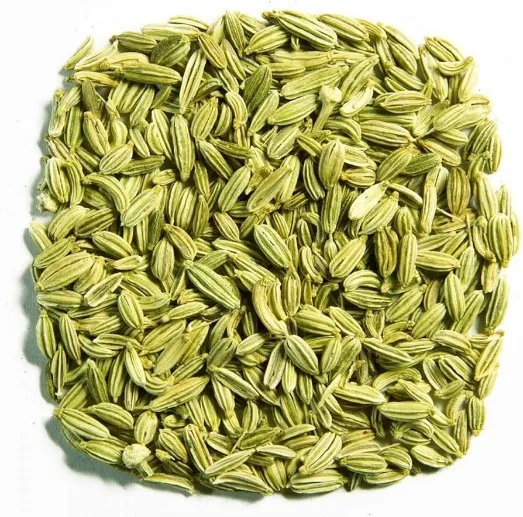
FIGURE 1: FENNEL
• Main constituents: anethole, fenchone, estragole, flavonoids, and phenolic compounds.
• Functions: natural mouth freshener, digestion‑stimulant, antimicrobial, and mild antioxidant.
Cardamom (Elettaria cardamomum, Zingiberaceae):5
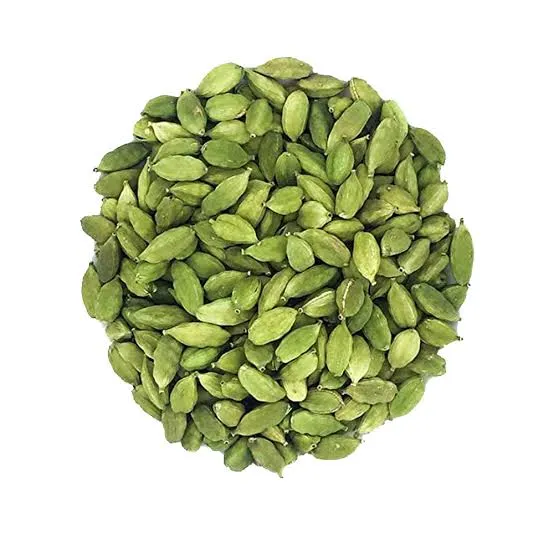
FIGURE 2: CARDOMOM
• Main constituents: cineole, terpinyl acetate, limonene, and sabinene.
• Functions: aromatic flavor enhancer, breath freshener, antimicrobial, and digestive aid.
Clove (Syzygium aromaticum, Myrtaceae):5
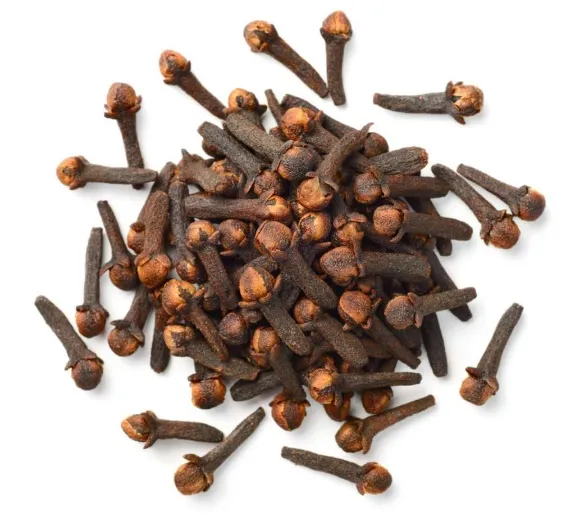
FIGURE 3: CLOVE
• Main constituent: eugenol (14–20% volatile oil), besides caryophyllene, tannins, and flavonoids.
• Functions: potent antimicrobial and antiseptic, local anesthetic, anti‑inflammatory, and analgesic in dental‑care formulations.
These ingredients are also commonly incorporated into herbal mouthwashes and Ayurvedic oral-care formulations, where they contribute to reducing microbial load, preventing plaque formation, and aiding in the management of halitosis and gingivitis.7,8
Granulation enhances the flow characteristics of herbal powders, ensures uniform dosing, and allows modulation of the release rate of active constituents in the oral cavity. In liquid mouth fresheners, these granules can be dispersed in a viscous aqueous–glycerin base, where they gradually dissolve, offering both immediate and sustained effects. Appropriate granulating agents such as polyvinylpyrrolidone (PVP), starch paste, or natural gums like xanthan gum are commonly employed to aid in granule formation, improve suspension stability, and maintain uniform dispersion throughout the formulation.5,7,8
OBJECTIVES
• To formulate herbal granules using fennel, cardamom, and clove by wet‑granulation.
• To develop a liquid mouth freshener base containing herbal granules, natural sweeteners, and preservatives.
• To evaluate the liquid formulation for organoleptic, physicochemical, and microbiological parameters.
• To assess antimicrobial activity against selected oral pathogens.
• To carry out stability studies under accelerated conditions.
MATERIALS AND METHODS
Herbal raw materials
Herbal raw materials: Fennel seeds (Foeniculum vulgare), cardamom pods (Elettaria cardamomum), and clove buds (Syzygium aromaticum) obtained from a reputable local supplier and authenticated pharmacognostically.5
Excipients:5,8
• Granulating agents: PVP K‑30 or starch paste.
• Base liquids: distilled water, glycerin, propylene glycol.
• Sweeteners: sucrose, xylitol, or natural stevia.
• Preservatives: potassium sorbate or sodium benzoate.
• Flavors/aromas: peppermint oil, cinnamon oil.
• Powder blend (e.g., fennel 20 g, cardamom 7 g, clove 3 g) was mixed homogeneously.
• A binder solution (PVP 2–5% w/v in water or glycerin) was added gradually with mixing.
• The wet mass was passed through a suitable sieve (mesh 16–20) to form granules.
• Granules were dried in a tray dryer at 40–50 °C until moisture content was <5%.
• Final granules were sieved (mesh 20–40) and stored in an airtight container.
A typical liquid base composition can be:
|
Component |
%(w/v) |
|
Distilled Water |
70-80 |
|
Glycerin |
10-15 |
|
Natural Sweetner (sucrose) |
2-5 |
|
Preservative(e.g. potassium sorbate) |
0.1-0.2 |
|
Flavor (perpermint oil) |
0.1-0.3 |
|
PH adjuster (citric acid) |
q.s. To 5.5-6.2 |
• Water was mixed with glycerin and propylene glycol under gentle stirring.7,8
• Sweetener and preservative were dissolved, followed by flavoring agent.5,8
• Granules (1–3% w/v) were slowly dispersed into the liquid to form a suspension.1
• The final volume was adjusted with water and filtered through a 0.45 µm membrane filter.5,8
EVALUATION OF FORMULATION
• Color and clarity: Visual examination for uniform color and absence of turbidity or sedimentation.
• Odour and taste: Panel of 5–10 volunteers rated the aroma and taste as pleasant, acceptable, or unpleasant.5,7
|
Parameter |
Method/ Observation |
|
pH |
pH meter; 10 mL formulation diluted with 10 mL distilled water. Target range: 5.5–6.5. |
|
Viscosity |
Brookfield viscometer at 25 °C; record in centipoise (cP). |
|
Uniformity of granule dispersion |
Visual inspection after 24 h standing; no large‑scale sedimentation. |
|
Conditioning study |
After shaking, check redispersibility. |
• Microbial limits: Total bacterial count and fungal count were estimated by standard plate‑count methods to ensure compliance with oral‑preparation norms.5,7
Antimicrobial activity:
• Test organisms: Streptococcus mutans, Lactobacillus spp., Candida albicans, and Staphylococcus aureus.7,8
• Method: agar‑well diffusion or tube‑dilution method to determine inhibition zone or MIC.5,7
• Positive control: commercial herbal mouthwash or chlorhexidine.8
• Accelerated stability: Samples were stored at 40±2 °C / 75% RH for 3 months.
• Parameters monitored: pH, viscosity, clarity, sedimentation/granule settling, odor, taste, and microbial contamination at 0, 1, 2, and 3 months.
ADVANTAGES AND LIMITATIONS
• Natural formulation: Free from alcohol and many synthetic additives; suitable for sensitive oral mucosa.
• Dual action: Herbal granules provide slow release of flavors and antimicrobials, while the liquid base offers instant refreshment.
• Functional benefits: Combines breath‑freshening, mild antimicrobial protection, and digestive‑stimulant activity.
• Commercial potential: Can be developed as nutraceutical‑type oral care product for OTC and Ayurvedic markets.
• Short‑term shelf life: Herbal products are prone to microbial growth and essential‑oil degradation if not properly preserved.
• Particle settling: Granules may settle over time, requiring shaking before use.
• Batch‑to‑batch variability: Natural‑source herbs may differ in essential‑oil content and color, necessitating strict quality control.
RESULT AND DISCUSSION
The liquid mouth freshener containing herbal granules of fennel, cardamom, and clove was prepared successfully by wet‑granulation followed by dispersion into an aqueous‑glycerin base. The granules exhibited good flow, uniform size, and low moisture content, consistent with earlier reports on herbal mouth‑freshener powders using the same trio of herbs. Organoleptically, the final product showed good color uniformity, transparent to slightly translucent base, pleasant aromatic odor, and mildly sweet taste after shaking, indicating satisfactory sensory acceptability in a small panel.
Physicochemical evaluation revealed a pH of 5.8–6.2, which falls within the acceptable range for oral preparations and helps minimize irritation to oral mucosa while maintaining antimicrobial activity. Viscosity measurements confirmed a moderate, pourable consistency that allowed easy dispersion of granules and redispersion after mild settling, similar to stability data reported for herbal mouthwashes stored for 3 months. No phase separation or significant turbidity was observed over the study period, indicating compatibility among water, glycerin, preservative, and flavor components.
Microbiologically, the product met typical oral‑preparation limits, with total bacterial and fungal counts within acceptable limits both at zero time and after accelerated‑storage conditions, following standard stability protocols. Antimicrobial testing against Streptococcus mutans, Lactobacillus spp., and Candida albicans showed moderate to good inhibition zones, comparable with other herbal oral‑care products containing fennel, cardamom, and clove. This inhibition is attributed mainly to eugenol from clove, cineole‑rich oil from cardamom, and anethole‑containing fennel extract, which together exert synergistic antimicrobial and anti‑cariogenic effects.
Stability studies under accelerated conditions (40 ± 2 °C / 75% RH) for 3 months revealed no appreciable change in color, odor, viscosity, pH, or microbial load, and granules remained easily redispersible after shaking, supporting development of a shelf‑stable product. These findings align with prior stability data on herbal mouth‑freshener powders and herbal mouthwashes, where minimal physicochemical or microbial changes were observed under similar storage conditions.
In summary, the liquid mouth freshener with herbal granules proved to be physically stable, organoleptically acceptable, and microbiologically safe, with appreciable antimicrobial activity. The formulation leverages the complementarity of fennel, cardamom, and clove to provide both immediate freshness (from the liquid base) and sustained action (from granules), offering a promising natural alternative to conventional synthetic mouth fresheners.
CONCLUSION
The present study demonstrates the feasibility of formulating a liquid mouth freshener containing herbal granules using fennel, cardamom, and clove. The developed product meets acceptable organoleptic and physicochemical criteria, shows promising antimicrobial activity, and remains physically and microbiologically stable under accelerated‑storage conditions. This formulation represents a natural, dual‑phase (liquid‑granule) oral‑care product that can serve as a safer alternative to synthetic mouth fresheners and mouthwashes, with potential for scale‑up in pharmaceutical and nutraceutical industries.
REFERENCES

Pradip D. Raut1*, Mahadev B. Mundhe1, Sampat D. Navale2, Formulation And Evaluation Of A Liquid Mouth Freshener Containing Herbal Granules For Oral Hygiene, Int. J. Sci. R. Tech., 2026, 3 (5), 1016-1021. https://doi.org/10.5281/zenodo.20415405
 10.5281/zenodo.20415405