

We use cookies to ensure our website works properly and to personalise your experience. Cookies policy
1Department of Pharmaceutics, Kasturi Shikshan Sanstha College of Pharmacy, Shikrapur, Pune – 412208, Maharashtra, India.
2Kasturi Shikshan Sanstha College of Pharmacy, Shikrapur, Pune - 412208, Maharashtra, India.
3Department of Pharmacology, Kasturi Shikshan Sanstha College of Pharmacy, Shikrapur, Pune – 412208, Maharashtra, India.
Herbal shampoo is a natural hair care formulation prepared from plant-derived ingredients that possess cleansing, therapeutic, and cosmetic properties. It is designed to effectively remove dirt, excess oil, and dandruff while supporting healthy hair growth, improving hair strength, and maintaining natural hair color. Unlike conventional shampoos that often contain synthetic chemicals such as sulfates and parabens, herbal shampoos offer a safer alternative with fewer adverse effects. Prolonged use of synthetic products may lead to scalp irritation, dryness, hair fall, itching, and other discomforts. The present study focused on the formulation and evaluation of a herbal shampoo using selected medicinal plants known for their beneficial effects on hair and scalp health. The formulation contained Reetha (Sapindus mukorossi), Shikakai (Acacia concinna), Aloe vera, Neem (Azadirachta indica), Hibiscus (Hibiscus rosa-sinensis), Amla (Phyllanthus emblica), and Yashtimadhu (Glycyrrhiza glabra). These ingredients were chosen for their natural cleansing, antimicrobial, conditioning, and hair-growth-promoting properties. The herbal extracts were prepared through aqueous extraction by soaking and boiling the plant materials, followed by incorporation of Aloe vera gel, glycerin, vitamin E, citric acid for pH adjustment, and sodium benzoate as a preservative. The final formulation was assessed for various physicochemical parameters such as appearance, odor, pH, viscosity, foam stability, wetting ability, surface tension, and dirt dispersion. Evaluation results indicated that the shampoo possessed acceptable cosmetic qualities, good cleansing ability, stable foam, and a scalp-friendly pH. Overall, the study demonstrated that herbal shampoo can serve as a safe, effective, and environmentally friendly alternative to synthetic hair care products.
Hair is an important aspect of human appearance and is often regarded as a symbol of beauty, health, and personal grooming. Healthy and well-maintained hair contributes significantly to an individual’s confidence and overall appearance. Shampoo is one of the most commonly used hair care products, designed to cleanse the hair and scalp by removing dirt, excess oil, sebum, and environmental impurities. Regular use of shampoo helps maintain scalp hygiene and promotes healthy hair. Owing to its essential role in daily personal care, the shampoo industry has become one of the largest and most significant segments of the global hair care market.1,2
Conventional shampoos often contain synthetic ingredients such as sulfates, parabens, and chemical detergents that may negatively affect hair and scalp health when used frequently. These chemicals can remove the natural oils from the hair, leading to dryness, loss of moisture, scalp irritation, and damage to the hair shaft. Excessive cleansing agents may also weaken the hair structure, making it more prone to breakage and reducing its natural strength and shine. Growing awareness of these potential side effects has encouraged consumers to seek safer and more natural alternatives, resulting in an increasing demand for herbal and plant-based hair care products.1,2
Herbal shampoos are cosmetic preparations using traditional Ayurvedic herbs for cleansing hair and scalp, offering pure organic ingredients without synthetic additives or harmful surfactants. They are biodegradable, earth-friendly, non-irritating to eyes, cost-effective, and provide natural antiseptic properties that protect hair and scalp from harsh UV radiation. Regular usage maintains optimal oil balance and prevents skin infections.1,2
Key herbal ingredients include Reetha (Sapindus mukorossi) with natural saponins for gentle cleansing and anti-dandruff properties, Shikakai (Acacia concinna) for conditioning, Aloe vera for moisturizing and reducing inflammation, Neem for antimicrobial action, Hibiscus for hair growth promotion, Orange peel for itchy scalp treatment, Ginger for pH balancing, and Curry leaves for antifungal properties. These herbs work synergistically to cleanse, condition, and promote hair health.1,2,3
The primary objective of herbal shampoo formulation is to eliminate harmful synthetic ingredients from anti-dandruff shampoo formulations and substitute them with safe natural ingredients while maintaining effective cleansing and conditioning properties. Modern formulation technology is combined with natural ingredients to develop shampoos with optimal pH, good foam stability, superior cleansing ability, low surface tension, and desirable conditioning effects suitable for daily use. However, further clinical studies are necessary to validate overall quality.1,2,3
2. DRUG PROFILE OF HERBAL SHAMPOO INGREDIENTS
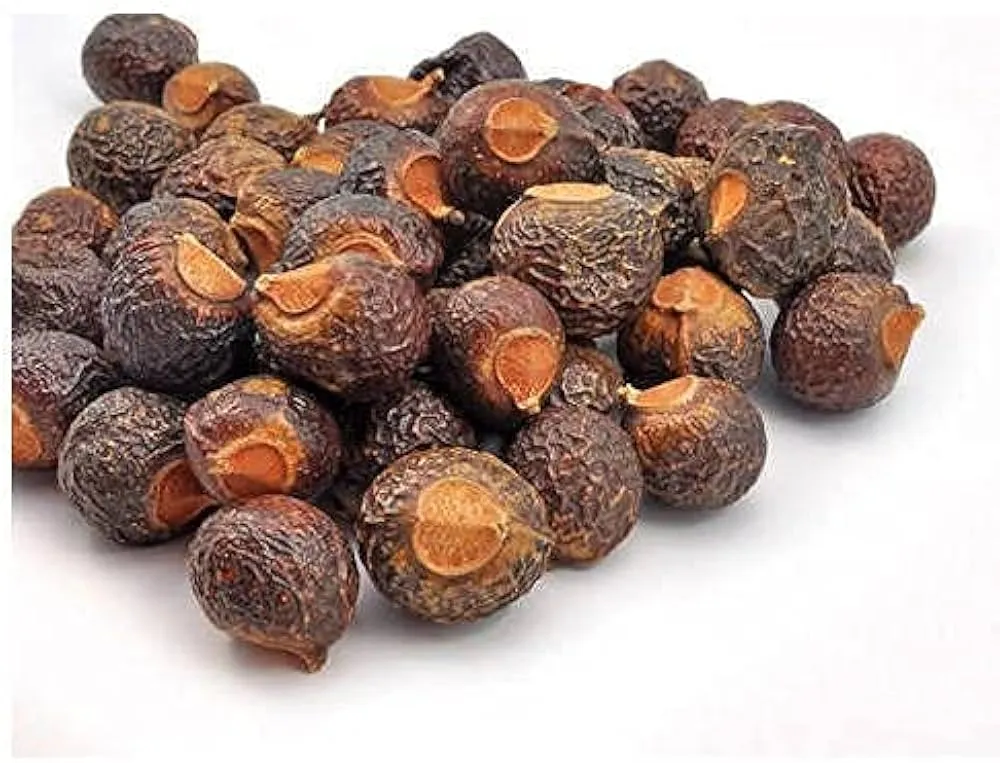
Fig 1: Sapindus Mukorossi (Reetha)
Reetha belongs to the family Sapindaceae and is commonly known as soapnut or Indian soapberry. The fruit peel contains saponins (sapindosides A and B) which are the primary active constituents responsible for its foaming and cleansing properties. Reetha acts as a natural surfactant and mild detergent that effectively removes dirt, grease, and sebum from hair and scalp without causing irritation. It exhibits antimicrobial, antifungal, and anti-dandruff properties that help prevent scalp infections and dandruff formation. The saponins in Reetha provide gentle cleansing while maintaining the natural moisture balance of the scalp. Clinical studies have demonstrated its efficacy as a natural alternative to synthetic surfactants in shampoo formulations.4,5,6
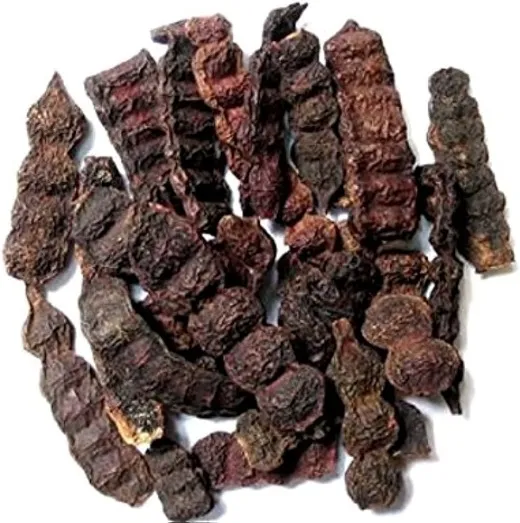
Fig 2: Acacia Concinna (Shikakai)
Shikakai belongs to the family Fabaceae and is commonly known as acacia or fruit pod. The fruit pods contain saponins, tannins, and flavonoids that provide gentle cleansing and conditioning properties. Shikakai acts as a natural cleanser that removes dirt without stripping the hair of its natural oils, making it suitable for daily use. It provides excellent conditioning effects that make hair soft, smooth, and manageable while preventing hair breakage and dryness. The herb has been traditionally used for centuries in Ayurvedic hair care for promoting healthy hair growth and preventing premature greying. Research shows that Shikakai enhances hair shine and reduces hair fall significantly.1,4,5
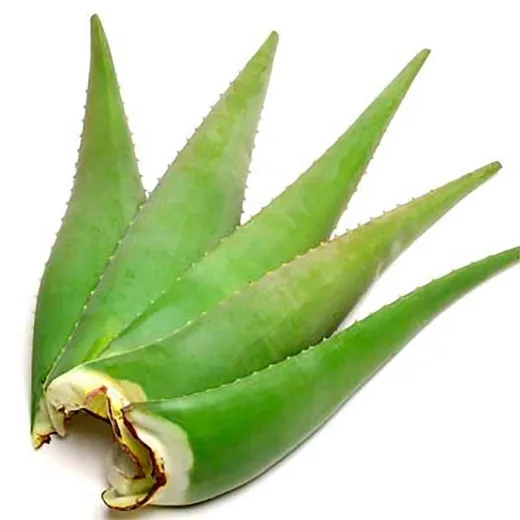
Fig 3: Aloe Vera
Aloe vera belongs to the family Asphodelaceae and the leaf gel contains aloin, polysaccharides, vitamins (A, C, E, B12), minerals, and enzymes. Aloe vera provides exceptional moisturizing, soothing, and anti-inflammatory properties that help calm irritated scalp and reduce inflammation. It acts as an excellent conditioner that hydrates hair follicles and roots, improving hair moisture content and reducing breakage. The polysaccharides in Aloe vera promote hair growth by stimulating hair follicles and improving scalp circulation. Clinical studies demonstrate its efficacy in treating dandruff, reducing scalp irritation, and promoting healthy hair growth. Aloe vera also protects hair from UV damage and environmental stressors.4,5,7
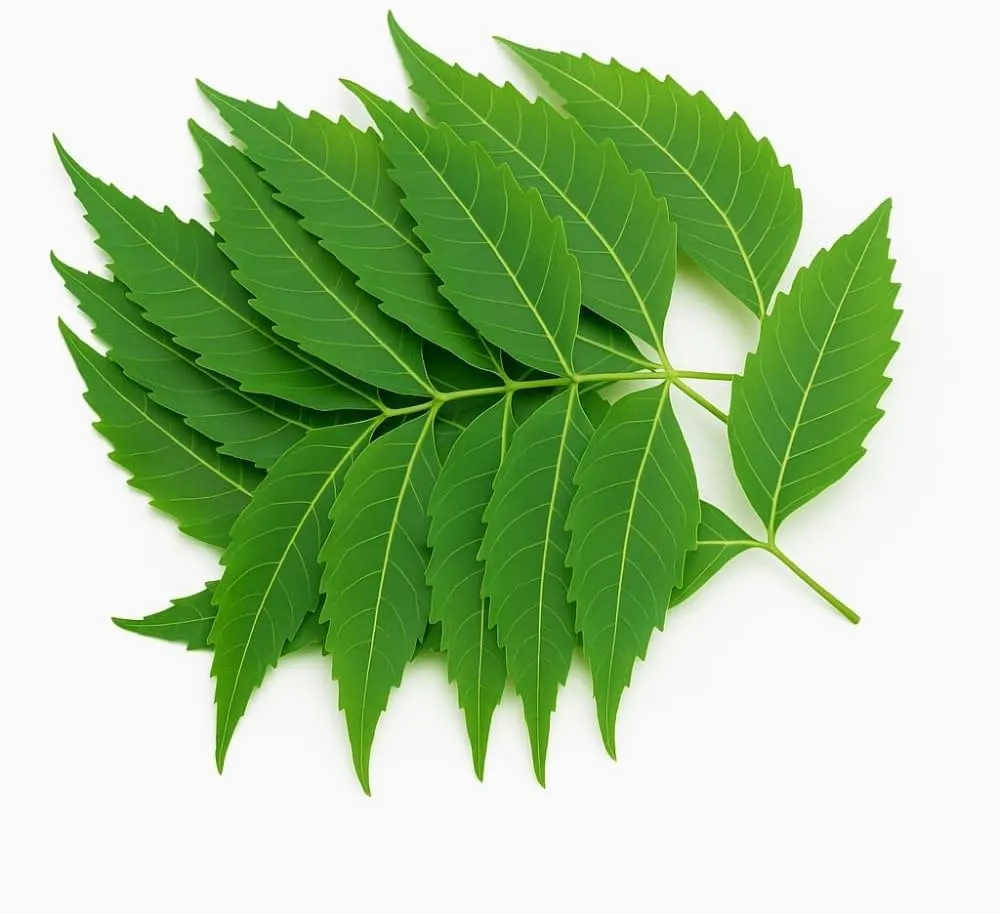
Fig 4: Azadirachta Indica (Neem)
Neem belongs to the family Meliaceae and leaves contain azadirachtin, nimbin, nimbidin, and quercetin. Neem exhibits potent antimicrobial, antifungal, antibacterial, and anti-inflammatory properties that make it highly effective against dandruff-causing microorganisms and scalp infections. It helps control scalp itching, reduces dandruff formation, and prevents fungal infections. Neem oil and extract have been clinically proven to treat scalp conditions including seborrheic dermatitis and psoriasis. The herb strengthens hair roots and promotes healthy hair growth while preventing hair loss. Research confirms its efficacy as a natural anti-dandruff agent in shampoo formulations.4,6
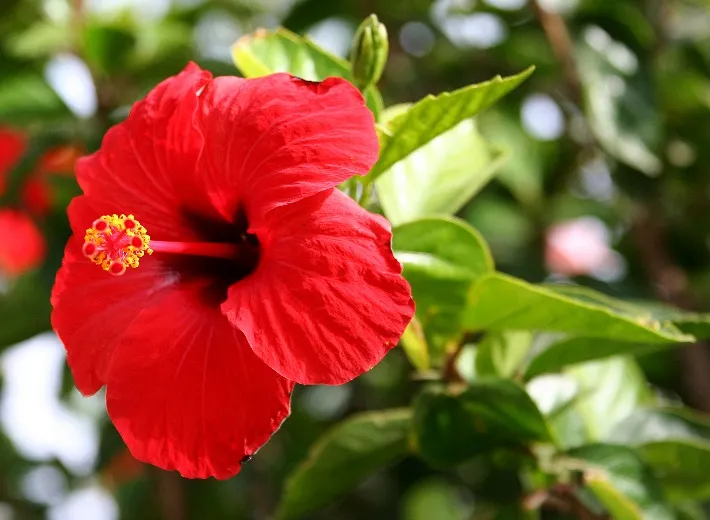
Fig 5: Hibiscus Rosa-Sinensis
Hibiscus belongs to the family Malvaceae and flowers contain mucilage, flavonoids, anthocyanins, and organic acids. Hibiscus provides excellent hair growth promotion properties by stimulating hair follicles and improving scalp blood circulation. It acts as a natural conditioner that makes hair soft, smooth, and shiny while preventing premature greying and hair loss. The mucilage content provides conditioning effects that improve hair texture and manageability. Clinical studies demonstrate that Hibiscus extract significantly increases hair growth rate and reduces hair fall. The herb also helps maintain hair color and adds natural luster to hair.4,5,6
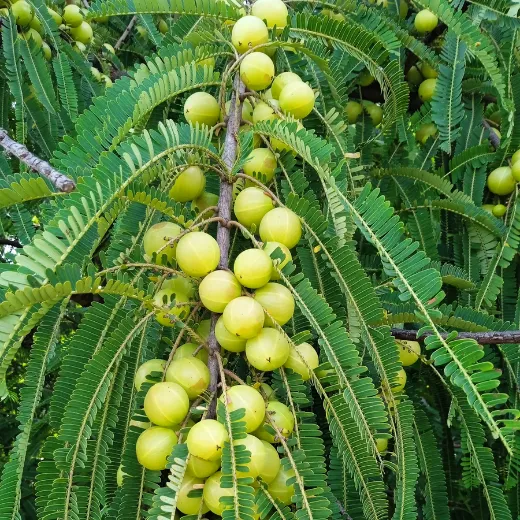
Fig 6: Phyllanthus Emblica (Amla)
Amla belongs to the family Phyllanthaceae and fruit contains high levels of vitamin C (ascorbic acid), tannins (emblicanin A and B), flavonoids, and polyphenols. Amla is a powerful antioxidant that strengthens hair follicles and prevents premature greying by inhibiting melanin oxidation. It provides excellent conditioning effects that make hair soft, smooth, and shiny while improving hair texture. The high vitamin C content promotes collagen synthesis which strengthens hair shafts and reduces breakage. Clinical studies confirm Amla’s efficacy in promoting hair growth, preventing hair loss, and maintaining natural hair color. Amla also balances scalp pH and reduces dandruff formation.4,5,8
3. MATERIAL AND METHODS
3.1 Materials Required
3.1.1 Herbal Materials
• Reetha (Sapindus mukorossi) – 50g
• Shikakai (Acacia concinna) – 50g
• Amla (Phyllanthus emblica) – 50g
• Hibiscus flowers – 20 flowers
• Neem leaves – ½ cup
• Fresh Aloe vera leaves – 2-3 leaves
• Fenugreek seeds – 2 tbsp
|
Component |
Quantity |
Function |
|
Aloe vera gel |
2-3 tbsp |
Moisturizer, conditioning |
|
Glycerin |
1-2 tbsp |
Humectant, viscosity modifier |
|
Citric acid |
q.s. |
pH adjuster (5.5-6.0) |
|
Sodium benzoate |
0.1-0.2% |
Preservative |
|
Essential oil (Lavender/Rosemary) |
5-6 drops |
Fragrance |
|
Distilled water |
q.s |
Solvent |
3.2 Method of Preparation
Step-by-Step Formulation Process
Step 1: Extraction of Herbal Ingredients
• Wash amla, shikakai, reetha, fenugreek seeds thoroughly
• Soak them overnight in 1.5 liters of filtered water
• Next morning, add curry leaves, neem leaves, rosemary, dry rose petals, and flax seeds
• Bring to a boil on high flame
• Once boiling, add fresh aloe vera pieces and cook on medium flame for 15-20 minutes until water reduces by half
Step 2: Mixing
• Combine all herbal extracts in a beaker and heat mildly (~40°C)
• Strain the mixture and mash well to extract all goodness
• Strain again and combine the liquid
Step 3: Addition of Base
• Add Aloe vera gel and glycerin
• Mix until homogeneous
• Add 5 vitamin E capsules and mix well
Step 4: pH Adjustment
• Add citric acid slowly to adjust pH between 5.5-6.0 (ideal for scalp)
• The ideal pH range for shampoo should be 5.5-6.5
Step 5: Preservation
• Add sodium benzoate (0.1-0.2%) as preservative
Step 6: Fragrance Addition
• Add perfume or essential oil (e.g., lavender, rosemary) when mixture is cooled
Step 7: Filtration and Packing
• Filter the final shampoo through muslin cloth
• Store in clean amber-colored bottles
4. EVALUATION PARAMETERS
4.1 Physicochemical Evaluation
The shampoo was evaluated for key physicochemical parameters including pH, viscosity, foam stability, dirt dispersion, wetting ability, solid content, and surface tension.
4.1.1 Organoleptic Properties
|
Parameter |
Expected Result |
|
Appearance |
Smooth, brownish-green liquid |
|
Color |
Brownish-green |
|
Odor |
Pleasant, herbal |
|
Texture |
Smooth, viscous |
4.1.2 pH Determination
• Method: pH meter measurement of 1% shampoo solution
• Acceptable Range: 5.5-6.5
• Rationale: This pH range is ideal for scalp compatibility
4.1.3 Foam Test / Foam Stability
|
Parameter |
Expected Result |
|
Foam height |
Moderate and stable |
|
Foam persistence |
> 5 minutes |
|
Foam quality |
Creamy, fine bubbles |
• Method: Shake 5ml shampoo with 15ml water in graduated cylinder, measure foam height immediately and after 5 minutes
4.1.4 Viscosity Measurement
• Instrument: Viscometer (Brookfield or Oswald viscometer)
• Expected Range: 2000-5000 cPs at 25°C
• Method: Measure at 25°C using appropriate spindle
4.1.5 Dirt Dispersion Test
• Result: Evenly disperses dirt
• Method: Add dirt to shampoo solution, observe dispersion pattern
4.1.6 Surface Tension
• Expected: Lower than water (water = 72 dynes/cm)
• Method: Du Noüy ring method or stalagmometer
• Rationale: Lower surface tension indicates better wetting and cleansing
4.1.7 Wetting Ability
• Method: Drop time method using fabric or hair strand
• Expected: Quick wetting (<30 seconds)
4.1.8 Total Solid Content
• Method: Gravimetric analysis (drying at 105°C to constant weight)
• Expected Range: 10-15%
4.1.9 Powder Characteristics (for herbal powder shampoo)
For herbal shampoo powder formulations:
• Organoleptic properties
• Powder characteristics (angle of repose, bulk density, tapped density, compressibility index)
4.2 Comparative Evaluation
The formulation was compared with marketed synthetic and herbal shampoos.
|
Parameter |
Herbal Formulation |
Marketed Synthetic |
Marketed Herbal |
|
pH |
5.5-6.0 |
6.5-7.5 |
5.5-6.5 |
|
Foam Quality |
Moderate, stable |
High, harsh |
Moderate |
|
Scalp Irritation |
None |
Possible |
Minimal |
|
Conditioning Effect |
Soft, manageable hair |
Variable |
Good |
5. RESULT AND DISCUSSION
5.1 Formulation Characteristics
All prepared formulations exhibited desirable characteristics suitable for cosmetic use. Among them, one formulation demonstrated superior performance in terms of:
• Cleansing efficiency
• Consistency
• Aesthetic appeal
• Stability
5.2 Key Results
|
Evaluation Parameter |
Observed Result |
Acceptance Criteria |
|
pH |
5.5-6.0 |
5.5-6.5 |
|
Foam Height |
Moderate and stable |
Adequate |
|
Dirt Dispersion |
Evenly disperses |
Good |
|
Surface Tension |
Lower than water |
< 72 dynes/cm |
|
Appearance |
Smooth, brownish-green |
Homogeneous |
|
Conditioning Effect |
Soft, manageable hair |
Good |
5.3 Comparison with Synthetic Shampoos
From the results and discussion, it was concluded that the formulation was better in all aspects when compared to synthetic shampoos. The marketed shampoos often contain harsh chemicals that cause side effects, while the herbal formulation is free from such adverse effects.
5.4 Therapeutic Benefits Observed
6. ADVANTAGES AND DISADVANTAGES
6.1 Advantages
|
Advantage |
Description |
|
No Side Effects |
Free from hair loss, scaling, and irritation |
|
Natural Ingredients |
Plant-based and eco-friendly |
|
Multi-functional |
Cleanses, conditions, and promotes hair growth |
|
Cost-effective |
Uses easily available ingredients |
|
Biodegradable |
Environmentally safe |
|
Antimicrobial |
Provides natural protection from scalp infections |
6.2 Disadvantages
|
Limitation |
Description |
|
Shorter Shelf Life |
Requires preservatives or refrigeration |
|
Lower Foam |
Natural saponins produce less foam than sulfate-based shampoos |
|
Preparation Time |
Requires extraction and processing steps |
7. STABILITY STUDIES
7.1 Storage Conditions
• Store in amber-colored bottles
• Refrigeration recommended for homemade preparations
• Keep at room temperature (25°C) for formulated products
7.2 Shelf Life
• Herbal shampoo with preservatives: 3-6 months
• Homemade without preservatives: 1-2 weeks (refrigerated)
CONCLUSION
The present study successfully formulated and evaluated a herbal shampoo incorporating multiple natural ingredients (Shikakai, Aloe vera, Neem, Hibiscus, Amla, Reetha) known for their therapeutic and cosmetic benefits.
Key findings:
FUTURE SCOPE
REFERENCES

Vaibhav Narwade1*, Pradnya D. Mane2, Shubham B. Kolape2, Vijaykumar Kale3, Mahesh Thakare1, Formulation And Evaluation Of Herbal Shampoo, Int. J. Sci. R. Tech., 2026, 3 (6), 997-1004. https://doi.org/10.5281/zenodo.20718005
 10.5281/zenodo.20718005