View Article

Abstract

The GradeFlow System represents a significant advancement in academic examination management, addressing critical challenges in traditional paper-based evaluation processes through innovative digital solutions. This comprehensive review examines the architecture, implementation, and functionality of this full-stack web application designed to digitize and streamline the academic assessment workflow for educational institutions. The system successfully integrates modern web technologies with pedagogical best practices to provide a robust solution for examination evaluation and result management. In contextualizing GradeFlow’s development, this paper examines the broader discourse on digital trans formation in organizations, especially within academia, referencing recent systematic reviews and studies on enabling factors and outcomes of digital transformation. The analysis situates GradeFlow within the current academic and technological landscape, identifying both its strengths and avenues for future enhancement.

Keywords

Academic examination systems, digital transformation, full stack development, educational technology, examination evaluation, web applications.

Introduction

× Popup Image

The digital transformation of educational processes has become an imper active in the wake of rapid technological evolution and the exigencies posed by global events such as the COVID-19 pandemic. Educational institutions worldwide persistently grapple with the inefficiencies inherent in traditional paper-based examination evaluation systems. These include manual processing of answer sheets, cumbersome physical storage requirements, delayed result declarations, and limited collaboration opportunities for educators. Such challenges not only impede the academic assessment process but also undermine the broader objectives of educational quality and efficiency. The urgency for digital transformation in education is echoed in the wider organizational landscape, where digital technologies are recognized as catalysts for unprecedented operational and strategic change (Egodawele etal., 2022; Lokuge & Duan, 2021). In the context of higher education, the integration of digital platforms offers a pathway to improved data accuracy, enhanced collaboration, and substantial reductions in administrative over head (Bruersetal.,2023;Höhl,2021). However, the adoption of digital solutions is often constrained by legacy systems, resource limitations, and the need for robust security and compliance frameworks.

The GradeFlow System emerges as a comprehensive digital platform designed to transform the entire academic assessment lifecycle, from student enrollment to result generation. By leveraging a modern technology stack and adhering to best practices in full-stack web development, GradeFlow seeks to address the multifaceted challenges faced by educational institutions. This review paper provides a detailed analysis of the GradeFlow System’s architecture, functionality, and implementation, situating it within the broader context of digital transformation research. The discussion incorporates insights from recent systematic reviews and empirical studies, critically examining the system’s potential for scalability, security, and sustainability.

SYSTEM OVERVIEW

  1. Project Purpose and Objectives

The primary objective of the GradeFlow System is to digitize and streamline traditional paper-based examination processes within educational institutions. Key goals include:

    • Digitizing answer sheet management and evaluation processes.
    • Providing intuitive interfaces tailored to distinct user roles (administrators, teachers, students).
    • Enabling detailed marking with visual annotations.
    • Automating report generation and data synchronization.
    • Ensuring data security and privacy compliance in line with contemporary best practices.

These objectives align with the broader aims of digital transformation in organizations, which seek not only to enhance operational efficiency but also to foster innovation, agility, and value creation (Egodawele etal., 2022).

  1. Target Audience

GradeFlow        serves multiple           stakeholders     within educational institutions, including:

      • Educational administrators seeking digital transformation.
      • Academic           administrators  managing examination processes.
      • Teachers involved in the evaluation of student answer sheets.
      • Students accessing academic information and results.

This multi-stakeholder approach is consistent with the literature on digital transformation, which emphasizes the importance of inclusive strategies that address the needs and capabilities of diverse organizational actors (Lokuge & Duan,2021).

  1. Key Benefits

The system delivers measurable value through:

    • Time Efficiency: Reduces manual grading time by upto 60%.
    • Cost Reduction: Eliminates physical storage needs.
    • Enhanced Collaboration: Enables real-time collaboration between educators.
    • Improved Data Accuracy: Enhances data accuracy through digital workflows.
    • Better       Accessibility: Provides           secure, role-based access to academic records.

These benefits resonate with findings from recent literature, which identify efficiency, cost savings, and improved collaboration as key outcomes of successful digital transformation initiatives (Bruers et al., 2023; Egodawele et al., 2022).

TECHNOLOGY STACK AND ARCHITECTURE

  1. Backend Technologies

GradeFlow’s backend is implemented using FastAPI (Python 3.11+), selected for its high performance, ease of development, and production readiness. The database layer utilizes MongoDB, interfaced through the Motor driver to enable asynchronous operations. Authentication is managed via JSON Web Tokens (JWT), ensuring secure session management. File storage for answer sheets (PDFs) is handled by GridFS, optimizing for efficient storage and retrieval. Additional backend functionalities include Excel processing with the openpyxl library and data validation using Pydantic models.

This choice of technologies aligns with best practices in scalable, modular, and maintainable system design, as recommended in the literature on digital transformation and software engineering(Bruersetal.,2023;Egodawele et al., 2022).

  1. Frontend Technologies

The frontend stack is centered on React, with React Router facilitating single-page application navigation. TailwindCSS, combined with shadcn/ui components, ensures a responsive and aesthetically consistent user interface. State management is accomplished through React Hooks, while Axios is employed for API communication. The react-pdf library enables robust PDF  viewing  and  annotation  capabilities,  and react-hook-form is used for efficient form validation. These technologies reflect contemporary trends in frontend development, emphasizing responsiveness, usability, and            maintainability—key    enablers           for successful digital transformation (Lokuge & Duan, 2021).

  1. Infrastructure and DevOps

Infrastructure is managed through Docker and Docker Compose, ensuring consistent environments across development, testing, and production. The frontend is configured for deployment via Vercel, while environment variables are managed using dotenv for both frontend and backend. Package management utilizes Yarn (frontend) and pip (backend).

Such infrastructure choices support scalability, portability, and efficient resource utilization critical factors for sustainable digital transformation (Bruers et al., 2023).
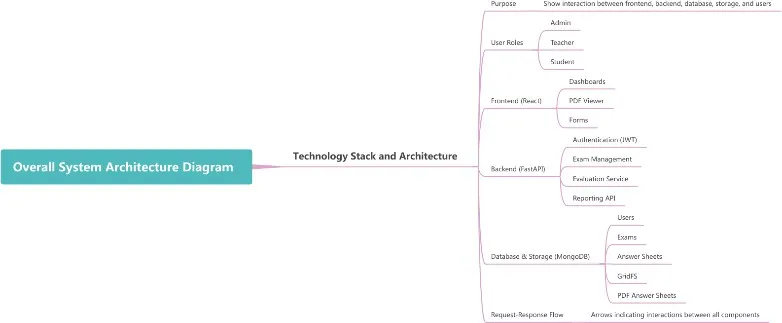
Figure 1. High level architecture of the GradeFlow System.
  1. Core Features and Functionality

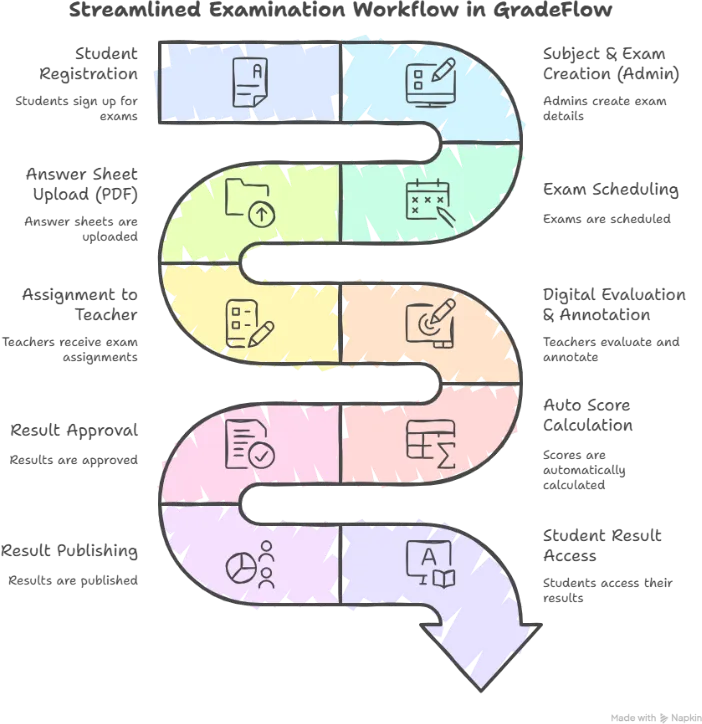
Figure 2. End to end examination lifecycle in the GradeFlow System.

  1. Role-Based Dashboards

GradeFlow provides three distinct user interfaces, each tailored to the needs of specific user roles:

  • Admin Dashboard
    • System statistics overview (students, teachers, subjects, exams).
    • User management interface (CRUD operations for students and teachers).
    • Subject and exam management.
    • Answer      sheet    monitoring       and assignment.
  • Teacher Dashboard
    • Answer sheet evaluation interface with PDF annotation tools.
    • Class performance analytics.
    • Exam scheduling and management.
    • Report export capabilities.
  • Student Dashboard
    • Personal     academic          information display.
    • Examination schedule access.
    • Result viewing when published.

The emphasis on role-based access and tailored interfaces reflects the importance of user-centric design in digital transformation projects (Lokuge & Duan, 2021).

  1. Examination Management
      • Creation of exams with detailed question structures.
      • Subject-exam      mapping           with     class/year associations.
      • Exam      scheduling        with     date      and      time management.
      • Question bank management with maximum marks allocation.
  2. Answer Sheet Processing
      • PDF upload functionality with GridFS storage
      • Support for multiple annotation types(correct, incorrect, half/quarter marks, comments, circles, freehand drawing).
      • Drag-&-drop interface for intuitive evaluation.
  3. Evaluation System
      • Interactive PDF annotation interface.
      • Question-wise marking capabilities.
      • Real-time score calculation.
      • Comment and feedback system.
      • Grading history tracking.

Figure 3. Digital answer sheet evaluation workflow

  1. Reporting and Analytics
      • Real-time dashboard statistics.
      • Excel export functionality for marksheets.
      • Automated data synchronization to result sheets.
      • Performance analytics and insights.
      • Professional report formatting.
  2. User Management
      • Multi-role authentication system.
      • Secure password hashing with bcrypt.
      • Comprehensive CRUD operations for all entities.
      • Bulk import functionality via JSON files.

The breadth and depth of these features exemplify the comprehensive approach advocated in digital transformation literature, where platforms are expected to not only digitize existing processes but also enable new forms of collaboration, transparency, and insight (Egodawele et al., 2022; Lokuge & Duan,2021).

  1. Database Design

GradeFlow employs a NoSQL database design using MongoDB, with the following collections:

      • Users Collection: Stores user identity, role, and authentication information.
      • Students Collection: Captures student specific data, including academic details.
      • Teachers Collection: Manages teacher profiles, including subject associations.
      • Subjects Collection: Defines academic subjects and associated metadata.
      • Exams Collection: Structures exam data, including questions and scheduling details.
      • Answer Sheets Collection: Stores answer sheet metadata, marking annotations, and evaluation outcomes.

Such a design provides the flexibility needed to accommodate varying institutional requirements and evolving educational practices, an important consideration identified in recent studies of digital transformation in education (Egodawele et al., 2022).

API SPECIFICATION

GradeFlow offers a comprehensive REST API with authentication and role-based access control. Key endpoint categories include:

  • Authentication: User registration and login.
  • Student, Teacher, and Subject Management: CRUD operations.
  • Exam Management: Creation, retrieval, updating, and deletion of exams.
  • Answer Sheet Management: Upload, evaluation, annotation, and download of answer sheets.
  • Reporting: Retrieval of dashboard statistics and export of marksheets and results.

The API-first approach aligns with the modular and extensible architectures recommended for digital transformation initiatives (Lokuge & Duan, 2021).

SECURITY IMPLEMENTATION

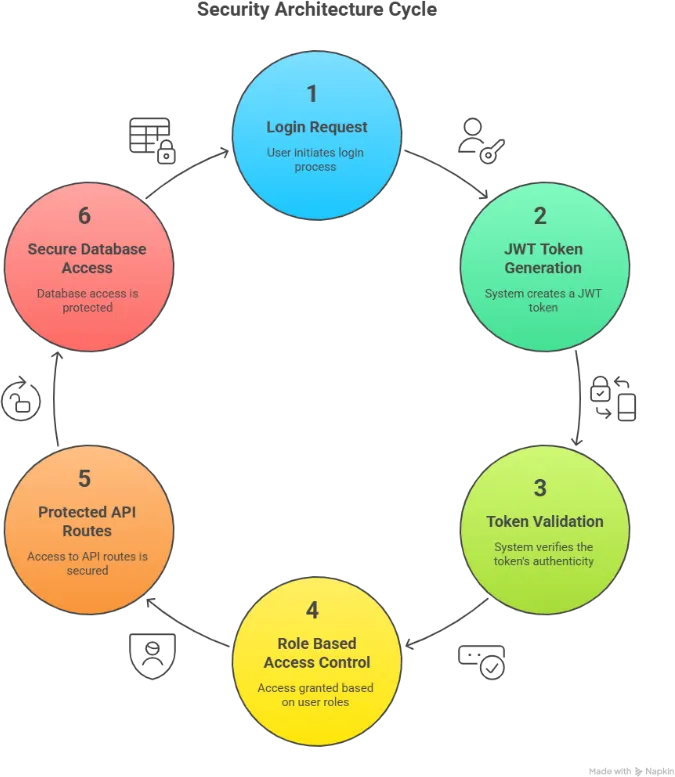
    1. Authentication System
  • JWT tokens for secure session management with expiration.
      • Password hashing with bcrypt for secure password storage.
      • Role-based access control with fine-grained permission management.
      • Session management with token refresh and invalidation.
  1. Authorization Controls
      • Route protection via frontend route guards.
      • API         endpoint           security through backend authorization middleware.
      • Data filtering with role-based data access restrictions.
      • Action permissions with granular permission checks.
  2. Data Protection
      • Input validation using Pydantic models.
      • CORS     configuration    for       controlled cross-origin access.
      • Environment variables for secure secret management.
      • Database security leveraging MongoDB Atlas features.
  3. Security Best Practices
      • HTTPS   enforcement     for       secure communication.
      • Rate limiting for API request throttling.
      • Audit logging for action tracking.
      • Secure error handling to prevent information leakage.

The GradeFlow System’s comprehensive security implementation demonstrates adherence to best practices, addressing concerns about data privacy, integrity, and access control that are central to the discourse on digital transformation in sensitive domains like education (Bruers et al., 2023).

IMPLEMENTATION QUALITY

  1. Backend Implementation

GradeFlow’s backend demonstrates modern software engineering practices:

    • Asynchronous Operations: Utilizes Motor for MongoDB with async/await for non-blocking I/O.
    • Error Handling: Comprehensive error management with appropriate HTTP status codes.
    • Logging: Detailed logging system for debugging and monitoring.
    • Configuration Management: Environment variable management with dotenv.
    • Data Validation: Pydantic models for request/response validation.
    • Security: Robust JWT authentication and token management.
  1. Frontend Implementation

The frontend embodies contemporary React development principles:

  • Component Architecture: Well-structured component hierarchy.
    • State Management: Effective use of React hooks for state control.
    • Routing: React Router for seamless navigation across roles.
    • API Integration: Axios enables robust communication with the backend, including error handling.
    • UI Components: Reusable and accessible components via shadcn/ui.
    • Responsive Design: TailwindCSS ensures adaptability across devices.
  1. Code Quality
  • Consistent naming conventions.
  • Comprehensive documentation.
  • Proper separation of concerns.
  • Rigorous error handling and validation.
  • Security       considerations implemented throughout.

Such implementation quality is critical for ensuring the sustainability and extensibility of digital transformation projects (Bruers et al., 2023; Egodawele et al., 2022).

PERFORMANCE CONSIDERATIONS

  1. Backend Optimization
  • Asynchronous operations with the Motor driver.
  • Database indexing strategies for efficient querying.
  • Connection pooling for database operations.
  • Caching strategies for frequently accessed data.
  1. Frontend Optimization
      • Code splitting with React lazy loading.
      • Bundle optimization through minification.
      • Efficient state management and memorization.
      • Proper caching strategies for static assets.
  2. Database Performance
      • Proper indexing strategies.
      • Query optimization techniques.
      • Efficient data modeling.
      • GridFS optimization for file storage.
  3. File Handling Performance
      • Streaming for large PDF files.
      • Chunked uploads for large files.
      • Compression for API responses.

These optimizations are vital for achieving the scalability and responsiveness demanded by digital platforms serving large educational institutions (Bruers et al., 2023).

DEPLOYMENT ARCHITECTURE

  1. Development Environment
      • Local Python virtual environment for backend.
      • React development server for frontend.
      • MongoDB   Atlas   or         local     instance           for database.
      • GridFS within MongoDB for file storage.

2. Production Deployment Options

  • Containerized deployment with Docker.
  • Cloud deployment with Vercel for frontend.
  • Backend hosting on cloud platforms (AWS, GCP, Azure).
  1. Environment Configuration

Figure 4. Deployment architecture of the GradeFlow System.

    • Backend environment variables for database connection.
    • Frontend environment variables for API endpoints.
    • Scaling considerations for multiple instances.

Load balancing strategies for high availability. Deployment flexibility and scalability are recognized as critical success factors in digital transformation literature, especially in contexts characterized by variable loads and usage patterns (Egodawele et al., 2022; Bruers et al., 2023).

STRENGTHS OF THE SYSTEM

    1. Technical Strengths
    • Modern Technology Stack: Utilizes cutting-edge technologies (FastAPI, React, MongoDB).
    • Scalable Architecture: Designed for horizontal scaling and modular expansion.
    • Security-First             Approach:   Comprehensive security implementation at all layers.
    • Performance              Optimized:    Asynchronous operations and efficient data handling.
    • Well-Documented: Extensive documentation for both users and developers.
  1. Functional Strengths
    • Role-Based Access: Clear separation of user roles and permissions.
    • Comprehensive Feature Set: Covers the entire examination lifecycle.
    • User-Friendly Interface: Intuitive dashboards tailored for different user roles.
    • Real-Time Updates: Enables immediate data synchronization.
    • Flexible Export Options: Supports multiple report and data export formats.
  2. Architectural Strengths
    • Separation of Concerns: Distinct frontend and backend layers.
    • Modular             Design:   Facilitates independent development and maintenance.
    • API-First Design: Promotes extensibility and integration.
    • Efficient   NoSQL Database          Schema: Accommodates evolving data requirements.

These strengths echo the enablers and best practices identified in systematic reviews of digital transformation in organizations (Lokuge&Duan,2021; Egodawele et al., 2022).

AREAS FOR IMPROVEMENT

  1. Potential Enhancements
    • Mobile Responsiveness: Further enhancement of the mobile user experience.
    • Advanced Analytics: Integration of chart-based data visualizations and insights.
    • Bulk Operations: Batch upload and processing capabilities for large datasets.
    • Notification System: Email/SMS alerts for result updates and system events.
  2. Future Development Opportunities
    • AI Integration: Automated answer checking for objective questions, leveraging machine learning.
    • LMS Integration: Connection with popular learning management systems.
    • Multi-Language Support: Internationalization to accommodate diverse user populations.
    • Offline Capabilities: Progressive web app features for limited connectivity scenarios.
    • Advanced Reporting: Custom report builder for tailored analytics.
  3. Technical Improvements
    • Testing  Coverage: Enhanced unit and integration test suites.
    • Monitoring: Comprehensive system monitoring and alerting.
    • CI/CD: Automated deployment pipelines for rapid iteration.
    • Performance Testing: Rigorous benchmarking under varying loads.
    • Security Testing: Penetration testing and regular security audits.

These suggested improvements correspond to areas commonly highlighted as critical for sustaining and scaling digital transformation projects (Bruers et al., 2023; Egodawele et al., 2022).

IMPACT AND BENEFITS

  1. Institutional Benefits
  • Reduced Administrative Overhead: Automation reduces manual processes by upto60%.
  • Improved Data Accuracy: Digital workflows minimize human error.
  • Enhanced Collaboration: Real-time updates enable coordinated action.
  • Cost-Effective Solution: Eliminates physical storage and associated costs.
  • Compliance Tracking: Centralized digital records support regulatory requirements.
  1. Teacher Benefits
      • Streamlined Evaluation Process: Interactive PDF annotation accelerates grading.
      • Detailed Marking Capabilities: Various annotation tools support comprehensive feedback.
      • Time Savings: Automated calculations and reporting.
      • Mobile-Friendly Interface: Access from arrange of devices.

3. Student Benefits

  • Faster Result Delivery: Digital processing shortens turnaround times.
  • Secure Access: Personalized dashboards for academic records.
  • Transparent Evaluation: Clear marking and feedback mechanisms.
  • Convenient Access: Information available anytime, anywhere.

These impacts align with broader findings on the benefits of digital transformation, including improved efficiency, enhanced transparency, and greater stakeholder engagement (Egodawele et al., 2022; Lokuge & Duan, 2021).

CONCLUSION

The GradeFlow System represents a significant advancement in academic examination management, successfully addressing the persistent challenges of traditional paper-based evaluation processes through innovative digital solutions. With its comprehensive feature set, robust security implementation, and scalable architecture, GradeFlow exemplifies the technical and functional excellence advocated in the literature on digital transformation (Egodawele et al., 2022; Lokuge & Duan, 2021). The system not only digitizes existing assessment workflows but also lays the groundwork for ongoing innovation, collaboration, and institutional agility.

  1. Key Accomplishments
  1. Technical Excellence: Adoption of modern web technologies and development best practices.
  2. User-Centered       Design:  Intuitive interfaces tailored to the needs of administrators, teachers, and students.
  3. Scalable         Architecture: Modular      design supporting future growth and enhancement.
  4. Security Focus: Comprehensive protection of sensitive academic data.
  5. Performance Optimization: Efficient handling of large datasets and files.
  1. Business Impact

The system delivers measurable value to educational institutions by reducing administrative overhead, improving data accuracy and accessibility, enabling real-time collaboration, providing actionable insights through analytics, and ensuring compliance with data protection regulations.

  1. Sustainability

GradeFlow is built with long-term sustainability in mind, characterized by modular architecture, comprehensive documentation, use of industry standard technologies, extensible design, and automated testing. These qualities ensure the platform’s ongoing relevance and adaptability within an evolving educational and technological landscape.

The successful implementation of GradeFlow demonstrates the transformative potential of technology in educational assessment, providing a foundation for further innovation in academic management and evaluation.

FUTURE RESEARCH DIRECTIONS

The development and deployment of GradeFlow open several avenues for future research and system enhancement:

  1. AI Integration: Exploring the implementation of machine learning algorithms for automated grading of objective questions and pattern recognition in subjective answers (Egodawele et al., 2022).
  2. User Experience Optimization: Investigating interface improvements for educators with varying levels of digital literacy (Lokuge & Duan, 2021).
  3. Scalability Studies: Evaluating system performance under varying institutional loads and exploring optimization strategies (Bruers et al., 2023)
  4. Educational Impact Assessment: Longitudinal studies assessing the impact of digital examination systems on educational outcomes and institutional efficiency (Egodawele et al., 2022).
  5. Integration Capabilities: Researching interoperability with broader educational technology ecosystems, such as learning management systems and digital resource repositories (Lokuge & Duan, 2021).

These directions are consistent with the broader research agenda in digital transformation, which emphasizes sustainability, inclusivity, and the ongoing adaptation of technological platforms to meet evolving educational needs(Bruers et al., 2023; Höhl, 2021).

REFERENCES

  1. Bruers, B., Cruces, M., Demleitner, M., Duckeck, G., Düren, M., Eich, N., ⋯&Zhou, K. (2023). Resource-aware research on Universe and Matter: Call-to-Action in Digital Transformation. arXiv preprint     arXiv:2311.01169v1. https://arxiv.org/pdf/2311.01169v1
  2. Egodawele, M., Sedera, D., & Bui, V. (2022). A Systematic Review of Digital Transformation Literature (2013-2021) and the development of an overarching apriori model to guide future research. Australasian Conference          on           Information                Systems. https://arxiv.org/pdf/2212.03867v1
  3. Höhl, W. (2021). COVID-19 and Digital Transformation– Developing an Open Experimental Testbed for Sustainable and Innovative Environments (ETSIE) using Fuzzy Cognitive Maps. arXiv preprint arXiv:2101.07509v2. https://arxiv.org/pdf/2101.07509v2
  4. Lokuge, S., & Duan,S.X.(2021). Towards Understanding Enablers of Digital Transformation in Small and Medium-Sized Enterprises. Australasian Conference  on Information Systems. https://arxiv.org/pdf/2111.05989v1
  5. Wu, G.-z., & You, D.-m. (2021). Will enterprise digital transformation affect diversification strategy? Working Paper. https://arxiv.org/pdf/2112.06605v5

Reference

  1. Bruers, B., Cruces, M., Demleitner, M., Duckeck, G., Düren, M., Eich, N., &Zhou, K. (2023). Resource-aware research on Universe and Matter: Call-to-Action in Digital Transformation. arXiv preprint     arXiv:2311.01169v1. https://arxiv.org/pdf/2311.01169v1
  2. Egodawele, M., Sedera, D., & Bui, V. (2022). A Systematic Review of Digital Transformation Literature (2013-2021) and the development of an overarching apriori model to guide future research. Australasian Conference          on           Information                Systems. https://arxiv.org/pdf/2212.03867v1
  3. Höhl, W. (2021). COVID-19 and Digital Transformation– Developing an Open Experimental Testbed for Sustainable and Innovative Environments (ETSIE) using Fuzzy Cognitive Maps. arXiv preprint arXiv:2101.07509v2. https://arxiv.org/pdf/2101.07509v2
  4. Lokuge, S., & Duan,S.X.(2021). Towards Understanding Enablers of Digital Transformation in Small and Medium-Sized Enterprises. Australasian Conference  on Information Systems. https://arxiv.org/pdf/2111.05989v1
  5. Wu, G.-z., & You, D.-m. (2021). Will enterprise digital transformation affect diversification strategy? Working Paper. https://arxiv.org/pdf/2112.06605v5

Photo
Pranita G. Bais
Corresponding author

MSPM’s Shri Shivaji Institute of Engineering and Management Studies Basmat Road, Parbhani – 431401, Maharashtra, Indi

Photo
Syed Asif Syed Gaffar
Co-author

MSPM’s Shri Shivaji Institute of Engineering and Management Studies Basmat Road, Parbhani – 431401, Maharashtra, Indi

Photo
Arpita Mukund Jondhale
Co-author

MSPM’s Shri Shivaji Institute of Engineering and Management Studies Basmat Road, Parbhani – 431401, Maharashtra, India

Photo
Gayatri Shriram Bharose
Co-author

MSPM’s Shri Shivaji Institute of Engineering and Management Studies Basmat Road, Parbhani – 431401, Maharashtra, Indi

Photo
Vinod K. Pawar
Co-author

Head, Dept. of CSE, SSIEMS, Parbhani Parbhani (M.S), India

Photo
Anand K. Pathrikar
Co-author

Professor and Director SSIEMS, Parbhani Parbhani (M.S), India

Pranita G. Bais¹*, Syed Asif Syed Gaffar1, Arpita Mukund Jondhale1, Gayatri Shriram Bharose1, Vinod K. Pawar2, Anand K. Pathrikar3, Grade Flow System, Int. J. Sci. R. Tech., 2026, 3 (6), 131-141. https://doi.org/10.5281/zenodo.20503500