

We use cookies to ensure our website works properly and to personalise your experience. Cookies policy
Dr R.G. Bhoyar Institute of Pharmaceutical Education and Research, Wardha, Maharashtra.
This study investigates the influence of pharmacy marketing on healthcare choices among young mothers, with a focus on the Wardha and Sewagram regions. The increasing role of marketing strategies in the healthcare sector, particularly through pharmacies, has significantly impacted decision-making processes related to maternal and child health. The research aims to evaluate how various promotional tools such as digital media, advertisements, pharmacist recommendations, and social influences affect the awareness, preferences, and purchasing behaviour of young mothers. A questionnaire-based survey was conducted among 150 young mothers from diverse socio-economic and geographical backgrounds. Data were collected through both online and offline methods, including hospital visits and home interactions. The study assessed factors such as awareness of healthcare products, trust in pharmacy promotions, influence of social media and influencers, and the role of pharmacists in guiding healthcare decisions. The results indicate that pharmacy marketing plays a substantial role in shaping healthcare choices, with many mothers relying on doctors, pharmacists, and promotional activities for product selection. While a significant proportion of respondents showed moderate confidence in choosing products independently, many still preferred professional consultation. Promotional strategies such as discounts, free samples, and health awareness programs were found to be highly influential. The study concludes that pharmacy marketing positively contributes to improving maternal and child health by enhancing awareness and promoting safe use of healthcare products. However, it also highlights the need for better education and differentiation between promotional content and professional medical advice to ensure informed decision-making among young mothers.
Marketing strategies are becoming increasingly important in healthcare, especially in pharmacies.1 By 2024, India's maternal and child healthcare market is expected to reach USD 29.60 million.2 In India, pharmacy marketing influences young
mothers' healthcare choices through digital media, TV advertisements, social media, and pharmacist advice. Young mothers frequently use healthcare services for pregnancy and childcare, making crucial decisions that affect their health and their children's well-being while navigating complex systems.3 Influencers on Instagram and YouTube shape healthcare product choices through branding and advertising, increasing awareness but risking inappropriate use of medicine. Baby care products include shampoo, diapers, soaps, and baby food, with baby food becoming increasingly popular as it meets children's nutritional needs, such as calories, protein, and vitamins.4
Pharmacy marketing improves maternal and child health by promoting the safe use of medicines and education.5,6 Pharmacies provide vital supplements to pregnant women. Deficiencies in folic acid, iron, and calcium can cause birth defects and other complications. Pharmacists guide mothers by recommending prenatal vitamins and addressing their medication concerns.7 In rural and semi-urban India, where access to doctors is limited, pharmacy marketing influences mothers' health decisions through pharmacist communication.8
Factors Affecting Young Mothers' Attitudes:
LITERATURE REVIEW:
Liam Fitria, (2024), In this study pharmacy-based initiatives significantly improve maternal and child health, providing safe medication use, guidance on pregnancy and breastfeeding, vitamins, family planning, and health education. They also address child health issues, with community programs and telepharmacy expanding these essential services.
Nigel Rollins, et al., (2023), In this study Community programs and telepharmacy enhance services that ensure safe medication use, guide pregnancy and breastfeeding, address health concerns, and manage child health issues. They also offer vitamins, family planning services, and health education.
Kavitha Pakkala, & K. Shivashankar Bhat, (2022), In this study Pharmacists support family planning, reproductive health, and maternal mental health, while overseeing medication use and children's health. A study indicates that Johnson & Johnson and Himalaya are preferred baby care brands due to their reputation, affordability, and availability, with consumers valuing quality over price.
Asnakew Achaw Ayele, et al., (2021), In this study review explored the role of community pharmacists in maternal and child health (MCH) services. Eight studies highlight pharmacists providing advice on breastfeeding, vitamins during pregnancy, emergency contraception, and illness symptoms. The review concludes that pharmacists influence healthcare decisions among mothers and offer various MCH services, though not in line with International Pharmaceutical Federation/World Health Organization guidelines.
Dr. V. Palanisamy, et al., (2020), In this study the baby care market encompasses Apparel, Toys, Cosmetics, Food, Accessories, and Diapers. In India, this market is expanding owing to increased spending power on luxury items and urbanization. India presents a large, untapped market for baby care products.
Zuzana Kusynová, (2018), In this study Women manage family health responsibilities, often visiting pharmacies, and make up 75% of family caregivers in the U.S. Pharmacists can support these women by providing information, helping them understand health issues, and empowering them in caregiving roles. The document also discusses gender-based policies and initiatives related to this topic.
Priya Anant, Prabal Vikram Singh, et al., (2012), In this study These sixteen case studies from Indian maternal and child healthcare providers showcase effective service delivery methods and innovative approaches to child care. Selected from over 300 organizations, they serve as educational resources for medical and public health schools, contributing to the international health curriculum.
Boonyaprapa Sathon, (2010), In this Pregnancy and breastfeeding significantly impact women's health in Thailand, where many seek advice from community pharmacists. Most pregnant women modify their behaviors to ensure their health, preferring medical consultations to self-medication. The study indicates that some self-care practices could be detrimental, highlighting the need for health professionals to reconcile traditional beliefs with contemporary health systems. Ongoing education and current information can bolster pharmacists' confidence in providing guidance.
Carolyn B Sufrin, Joseph S Ross, (2008), In this study The article analyzes the pharmaceutical industry's influence on healthcare, specifically regarding women's health, through drug development and marketing practices. It highlights the impact of pharmaceutical marketing on healthcare decisions and provides guidelines for physicians to navigate exposure to such marketing.
AIM:
Influences of Pharmacy Marketing on Healthcare Choices among Young Mothers.
OBJECTIVE:
PLAN OF WORK:
METHODOLOGY:
We conducted the survey by visiting hospitals, home visit and by online data collected from young mothers. The survey was done by using a structured questionnaire which contained both multi-choice and open-ended questions. The survey covers the topic- mother knowledge about new baby care products and postnatal/personal care products and importance of selecting good supplements, nutrients, food, and certain medication for themselves and their child.
Study design: - The questionnaire-based survey which is undertaken in hospital and home visits in Wardha region. The questionnaire which is used is developed by using earlier reports and knowledge of related topic.
Survey Population: - Among 150 young mothers from various age group geographical location and Socioeconomic backgrounds.
Data Collection: -A structured questionnaire was distributed both online & face to face interactions.
Survey Areas: Survey was conducted in various locations in ruler & urban area including Wardha, and Sewagram, etc.

Fig 1: Data collection at kelkarwadi, Wardha.

Fig 2: Data collection at sudampuri, Wardha.
QUESTIONNAIRE:
1) Do you feel pharmacy marketing considers the real need of mother?
2) Are you aware of digital tools (apps or websites) provided by pharmacies to manage your child health needs?
3) How do you usually learn about new pharmacy product for your child?
4) What kind of healthcare product do you most often purchase due to pharmacy promotions?
5) What do you expect from a pharmacy when buying products for your child?
6) What type of pharmacy promotions attract your attention the most as a mother?
7) Do you feel confident in choosing health products for your child based on pharmacy marketing alone?
8) Have pharmacy promotions ever made you change your preferred product for your child?
9) As a mother, how important is the role of pharmacist in guiding you about child health products?
10) Have you ever received parenting or health advice from a pharmacist? If yes, did it influence your product choice?
11) Have you ever chosen a health product for your child because of an influencer, celebrity mom or parenting blog post?
12) How often do you consult a pharmacist for advice before giving medicines to your child?
13) Do you feel pharmacies provide enough child–
friendly options for health and personal care
products?
14) Do pharmacy promotions make you more aware of health products for your child (eg, Immunity booster, vitamin drop, hygiene products)?
15) How confident are you in identifying safe and suitable pharmacy products for your child without a doctor’s advice?
16) When you see a health product marketed as “mother– approved” or “safe for babies” how much does it influence your trust in the product?
17) What emotions do pharmacy ads or posters targeting mother usually evoke in you?
18) When a pharmacy advertisement says things like ‘every mother trusts us’ or ‘because your baby deserve the safest care’, how do these massage affects your trust and buying decisions?
19) How helpful are pharmacy promotions [eg. Combo packs, buy one get one free] in reducing your monthly health expenses?
20) Do you feel that pharmacy marketing focuses more on affordability or brand image?
21) What is your monthly budget for pharmacy related health expenses [for yourself and your child]?
22) Would you attend a free pharmacy hosted session on child health, nutrition or parenting if offer in your area?
23) If a pharmacy introduce a monthly “mother and child health kit’’ with curated products, how likely are you to subscribe or try it?
24) Did this survey make you reflect on or become more aware of how pharmacy marketing influence your health care choices as a mother?
25) Any final thoughts or suggestions about how pharmacist can better support young mother? (Open ended)
RESUST AND RESPONSE:
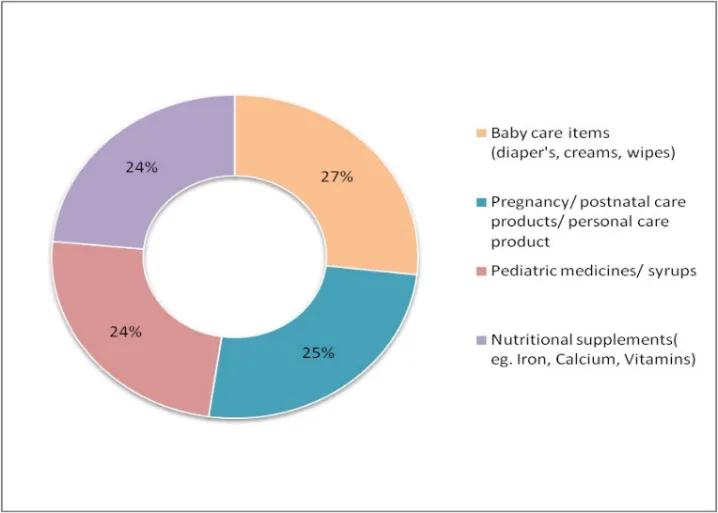
Graph No 1: The above data shows that due to pharmacy promotions this healthcare product are often purchase with their purchase rate.
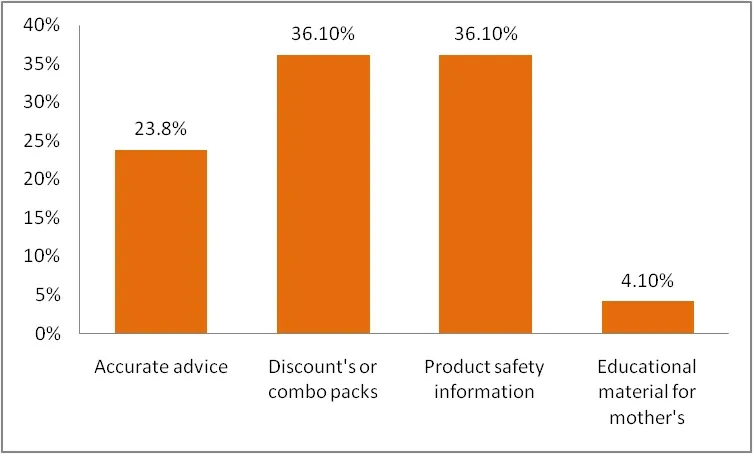
Graph No 2: The above graph shows the expectation of mothers from pharmacy when buying child-products in percent.
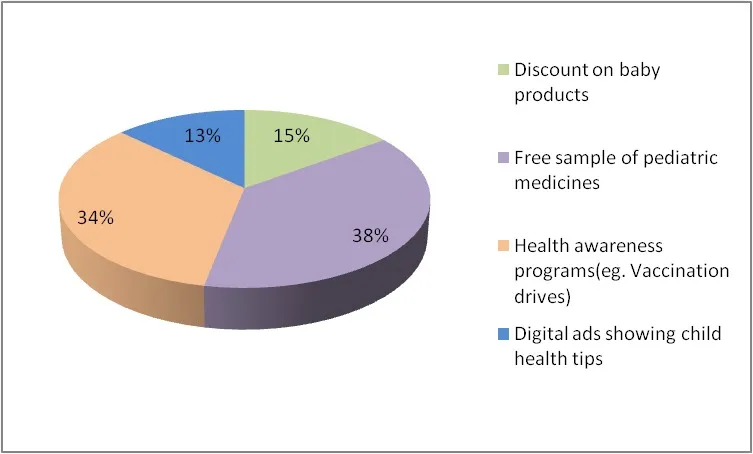
Graph No 3: The pia chart shows the pharmacy promotion type which attracts the mothers attention the most and their attraction rate.
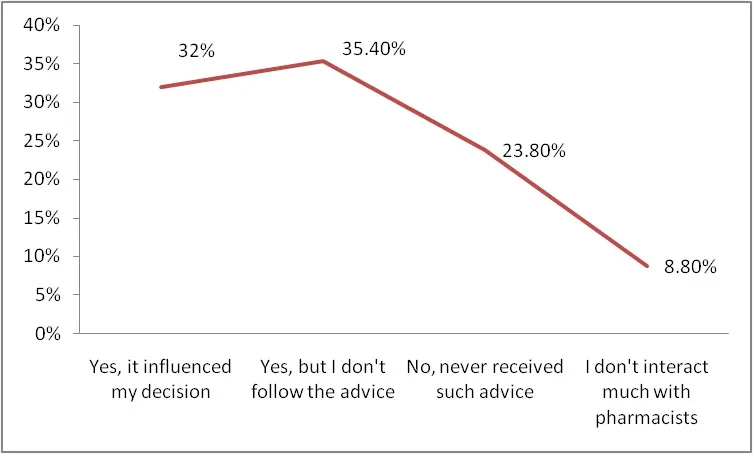
Graph no 4: the above line chart shows that significant proportion of mothers exposed to parenting or health advice and percent influenced and non influenced rate through it.
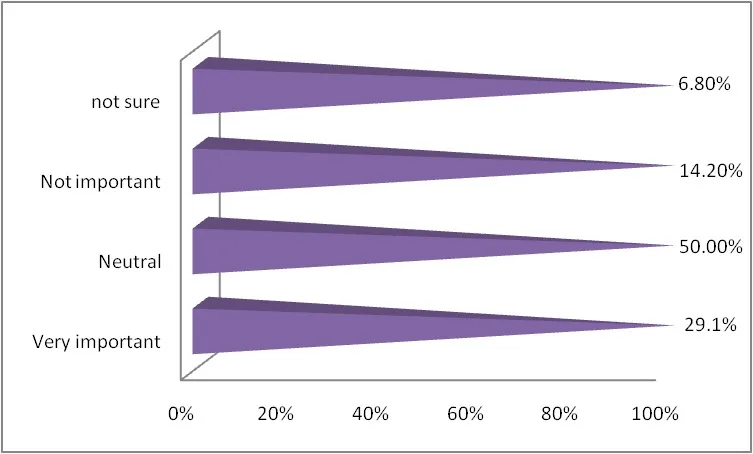
Graph No 5: The above data shows percent of mothers thought about importance of role of pharmacist in guiding them.
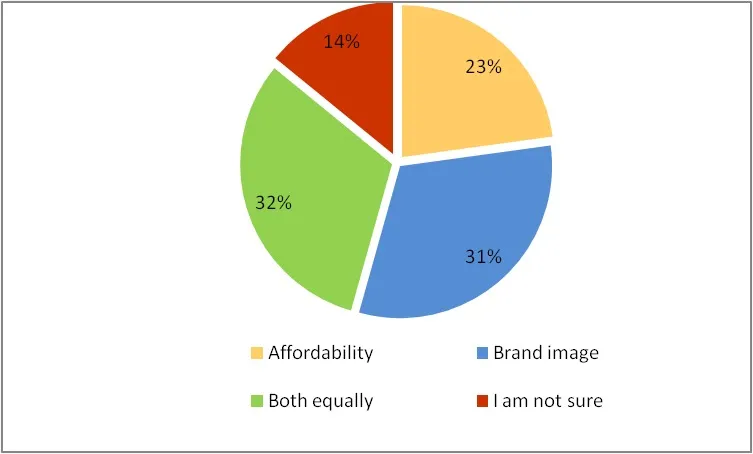
Graph No 6: The above pia chart shows mothers feeling about marketing focuses by pharmacies.
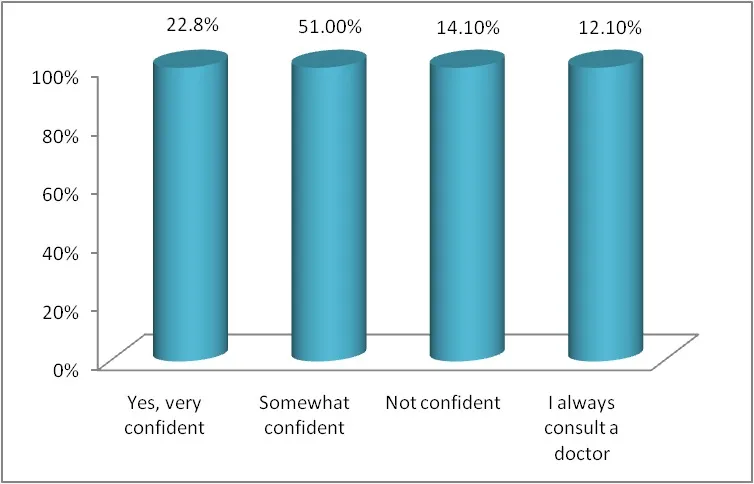
Graph No 7: The graph represents the confidence of mother choosing child product based on pharmacy marketing.
DISCUSSION:
Young mothers frequently use health care services for pregnancy and childcare, making crucial divisions that affect their health and their children’s well-being while navigating complex systems. This study highlights various factors influencing young mother healthcare choices, including awareness, accessibility, and preference of young mother’s in Wardha and Sewagram.
In India, pharmacy marketing influence young mother’s healthcare choices through digital media, TV advertisements, social media, and pharmacist advice.
The findings highlight the importance of pharmacy marketing in improving maternal and child health by promoting the safe use of medicines and education. Pharmacists provide vital supplements to pregnant women. This study highlights the factors affecting such as deficiencies in folic acid, iron, and calcium, which can cause birth defects and other complications. Pharmacists guide by recommending prenatal vitamins and addressing medication concerns.
In rural and semi-urban India, where access to doctors is limited, pharmacy marketing influences mother’s health decisions through pharmacist communications.
CONCLUSION:
Thus, it is concluded that ‘pharmacy marketing influences young mother’s healthcare choices and improves maternal and child health by promoting the safe use of medicine and education.
REFERENCES

Komal M. Kawale*, Dhanashree N. Hiwanj, Pavan M. Mandaokar, Pooja P. Hulke, Pratiksha S. Hanmante, Nitin H. Indurwade, Impact Of Pharmacy Marketing On Healthcare Decision-Making Among Young Mothers: A Cross-Sectional Survey, Int. J. Sci. R. Tech., 2026, 3 (5), 795-801. https://doi.org/10.5281/zenodo.20340505
 10.5281/zenodo.20340505