

We use cookies to ensure our website works properly and to personalise your experience. Cookies policy
Adarsh College of Pharmacy, Vita, Sangli Road, near MIDC
Innovative drug delivery systems (NDDS) for herbal remedies have gained importance in recent years, addressing the limitations of conventional methods. These systems can enhance drug targeting, efficacy, and reduce toxicity, benefiting patients and pharmaceutical companies alike. The integration of Ayurvedic knowledge with modern drug delivery technologies is crucial for improving the effectiveness of herbal treatments. Phytosomes, a novel drug delivery method, complex herbal extracts with phospholipids to enhance bioavailability and absorption. They are particularly effective in delivering lipophilic compounds and are used for various applications, including targeted drug delivery, antioxidant and anti-inflammatory effects, and cancer treatment. Phytosomes offer advantages such as improved stability, solubility, and safety, but also face challenges like rapid elimination and stability issues. Several preparation methods exist for phytosome formulation, including solvent evaporation and mechanical dispersion techniques. The evaluation of phytosomes is essential to ensure their effectiveness, with techniques like particle size determination, zeta potential measurement, and spectroscopic analysis being utilized for characterization.
Throughout the past century, important standards have been maintained and focused on the development of innovative drug delivery systems (NDDS) for herbal remedies. Scholars have affirmed the innovative medication delivery's potential benefits in offering significant improvements in drug delivery and targeting. Patients stand to gain greatly from improved delivery methods, less toxicity, and increased efficacy, which also opens up new markets for pharmaceutical and medicine companies. The new carriers should route the active ingredient of the herbal medication to the site of action and supply the medication at a rate determined by the body's needs during the course of treatment.[1]
A unique drug delivery system is an innovative method of delivering drugs that overcomes the drawbacks of conventional drug delivery systems. The potential of the extensive Ayurvedic knowledge base in our nation has only just come to light. The treatment's effectiveness is diminished, nevertheless, because the drug administration method employed to give the patient the herbal remedy is antiquated and conventional. The use of innovative medication delivery technology in herbal medicine may improve the effectiveness and lessen the negative effects of different herbal compounds and herbs. This is the fundamental concept underlying the use of innovative drug delivery techniques in herbal remedies. To tackle more serious ailments, it is crucial to combine Indian Ayurvedic remedies with innovative drug delivery systems. Due to a lack of scientific support and processing challenges, including standardization, extraction, and identification of specific medicinal components in intricate polyherbal systems, herbal medicines were long disregarded for development as innovative formulations. Nonetheless, contemporary phytopharmaceutical research can address the scientific requirements (e.g., pharmacokinetics, mechanism of action, site of action, precise dosage needed, etc.) for herbal medicines to be integrated into innovative drug delivery systems, including solid dispersions, liposomes, solid lipid nanoparticles, microemulsions, matrix systems, nanoparticles, and so forth. This page provides examples and a summary of several drug delivery strategies that can be applied to herbal active ingredients.[2]
The majority of the polar or water-soluble biologically active components found in plants are limited in their use because of absorption issues, which eventually lowers their bioavailability.Herbal products must have the right balance between hydrophilic (for absorption) and hydrophilic components in order to increase bioavailability. into the fluid of the gastrointestinal system) and lipophilic (to break the balance of lipid biomembranes). Both ancient and modern medical systems make extensive use of plant preparations. Many plant extracts and their constituents have been the subject of numerous pharmacological research throughout history to examine their potential for medicinal use. The creation of innovative drug delivery systems (NDDS) for different plant extracts and their active ingredients has advanced significantly during the last 12 months. Innovative drug delivery methods, such targeted drug delivery, which directly channels the active ingredient to the site of action, may provide tailored and sustained drug release, enabling pharmacological effects at lower dosages. Herbal medicine began to advance earlier in order to treat human illnesses with fewer adverse effects.[3]
"Some" refers to a structure that resembles cells, whereas "phyto" refers to a plant. This invention was created and introduced with a patent by Nutraceuticals®, a top producer of herbal medications. The low oral bioavailability of many plants, particularly those with polyphenolic rings in their structures like flavonoids and other water-soluble constituents like terpenoids and tannins, has raised concerns among researchers and scholars regarding the bioavailability of plant active principles. These compounds' poor bioavailability can be attributed to a number of fundamental factors, including low lipid or water solubility, high molecular. low permeability of the plasma membrane and weight/size. In order to address these issues and make herbal therapy more Due to their effectiveness, these medications have recently been added to a number of innovative delivery systems. Creating nanoparticles at the nanoscale, binding with lipids to form liposomes or herbosomes/phytosomes, delivering the drug as a prodrug, modifying chemical structures, and complexing with cyclodextrins are a few methods for increasing bioavailability.[4]
One innovative method of drug administration is phytosomes, which are useful for administering herbal medications at a fixed rate. at the scene of the incident, reduces harmful effects, increases a drug's absorption, medication distribution can be controlled by either adding the medication to a carrier system or altering the drug's molecular structure. Because of its uses and safety features, herbal drugs are growing in popularity in the modern world. (Awasthi and others, 2011) Phytosomes are recently produced and incorporated standardized plant extracts using patented technology from India. (Awasthi and others, 2011) A tiny cell is created during the phytosomes process, and as a result, the important components of the Herbal extracts are shielded from gut microbes and digestive fluids. Phytosomes are more adept in moving from a hydrophilic environment into the enterocyte cell membrane's lipid-friendly environment, and then into the cell until it reaches the blood. The pharmacokinetic and pharmacological parameters of phytosomes have been enhanced. Because of their improved ability to pass through lipid-rich biomembranes and eventually enter the bloodstream, phytosomes have a higher bioavailability than herbal extracts. Phospholipids are phosphatidylcholine. It is essential to the process of phytosomes. Phospholipids are used as carriers for lipid- and water-soluble nutrients as well as natural digestion aids.[5]
PROPERTIES OF PHYTOSOMES
PHYSICOCHEMICAL PROPERTIES
As was previously mentioned, a standardized plant extract is used as the substrate in a reaction with a stoichiometric amount of phospholipid to create phytosomes. As demonstrated by the spectroscopic data, the phospholipid-substrate contact results from the polar head (phosphate and ammonium group) and the polar characteristics of the substrate. Phytosomes range in size from 50 nm to a few hundred µm. When phytosomes are exposed to water, they take on a micellar shape that resembles a liposome. These liposomal structures are visible by Photon Correlation Spectroscopy (PCS). The fatty chain provides unaltered signals in both the complex and free phospholipid, according to the 1HNMR and 13CNMR data. This suggests that lengthy aliphatic chains are encircling the active principle to form a lipophilic envelope. The complexes are frequently easily soluble in aprotic solvents, moderately soluble in lipids, insoluble in water, and somewhat unstable in alcohol, according to the solubility of phytosomes. However, as will be covered later in this study, the phytosomes of some lipophilic phytoconstituents, such as curcumin, have demonstrated enhanced water solubility upon complexation with phospholipids.[3]
CHEMICAL PROPERTIES
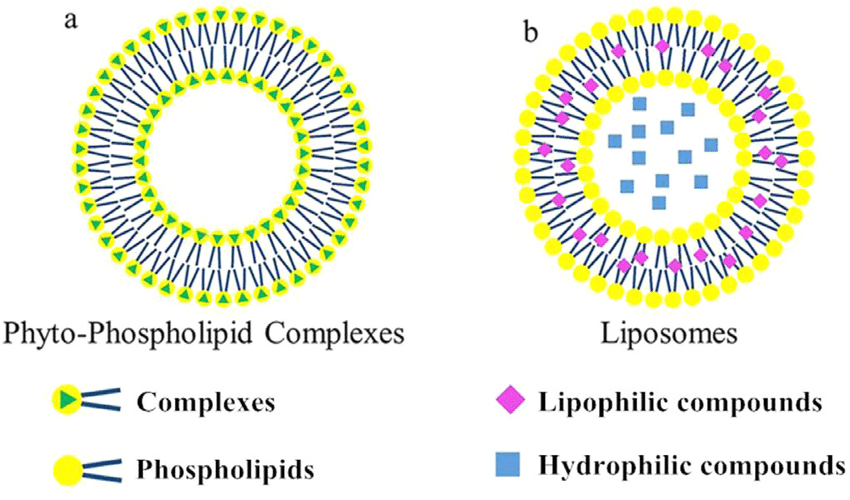
A natural substance and natural phospholipids, such as soy phospholipids, combine to form phytosomes. The stoichiometric reaction produces such a complex quantities of phospholipid in a nonpolar solvent along with the chosen polyphenol (such as simple flavonoids). It has been demonstrated that the primary phospholipid-substrate interaction results from the creation of hydrogen bonds between the polar functional groups of the substrate and the polar head of phospholipids, or phosphate and ammonium groups, based on their physicochemical and spectroscopic data. These molecules are lipophilic, have a clear melting point, are moderately soluble in fats, and are easily soluble in nonpolar solvents (whereas the hydrophilic moiety was not). Phytosomes take on a micellar shape and form structures resembling liposomes when exposed to water. The active ingredient in liposomes either floats in the layer membrane or dissolves in an interior pocket. In contrast, the active principle in phytosomes is linked to the phospholipids' polar head and forms an essential component of the membrane. Certain spectroscopic techniques can show that molecules are linked to the polar head of the phospholipids by chemical bonds.[6]
BIOLOGICAL PROPERTIES
The biological behavior of phytosomes has been demonstrated through pharmacokinetic and pharmacodynamic studies conducted on human subjects and experimental animals. These studies have assessed the phytosomes' higher bioavailability compared to the non-complexed botanical derivatives.[6]
PHOSPOLIPIDS
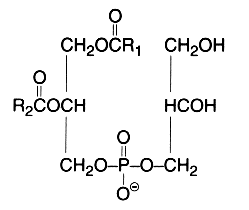
Plant seeds and egg yolks are rich sources of phospholipids. Phospholipids made in an industrial setting are currently accessible. Glycerophospholipids are a subset of phospholipids. and, depending on the backbone, sphingomyelins. Phosphatidylcholine (PC), phosphatidylethanolamine (PE), phosphatidylserine (PS), phosphatidic acid (PA), phosphatidylinositol (PI), and phosphatidylglycerol (PG) are further examples of glycerophospholipids.[8] The majority of cell membranes include phospholipids, also known as complex lipids, which are amphiphilic molecules that contain both hydrophilic and hydrophobic fatty acid chains. The capacity of polar moieties to interact is significantly influenced by PH. Phospholipids get hydrated and take on lamellar or hexagonal phases when they come into contact with water. Additionally, the phospholipids serve as an emulsifier. Phospholipids oxidize more quickly because they contain unsaturated fatty acids. Phospholipids are composed of an amino-alcohol sphingosine/glycerol backbone, a phosphate group, and a hydrophilic residue. Phosphatidyl serine and phosphatidylcholine are examples of phospholipids. The lipid bilayer is made up of phospholipids. Micelles are created when phospholipids are exposed to a lipid-based environment; the phospholipid head and tail self-assemble during this process. The ability of phytosomes to aggregate was one of their unique characteristics.[9]
|
Name of phospolipids |
Role of phospolipid |
Structure |
|
Phosphatidylcholine (PC) |
More unsaturated fatty acids operate to promote fluidity, and phosphatidylcholine, a fatty acyl composition, is essential for controlling the physical characteristics of membernes. |
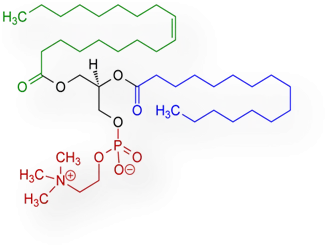
|
|
Phosphatidylethanolamine(PE) |
It is crucial for the assembly of other membrane proteins, including lactose permease. It serves as a "chaperone," assisting membrane proteins in appropriately retaining their tertiary structures for optimal activity. |
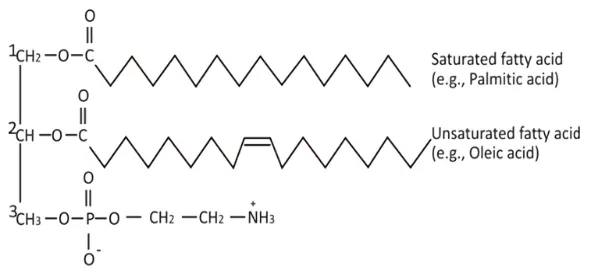
|
|
Phosphatidylserine(PS) |
Up to 10% of the total cellular lipid is made up of phosphatidylserine (PtdSer), the most prevalent anionic phospholipid in eukaryotic cells and a crucial component of eukaryotic membranes. The role that exofacial PtdSer plays in blood coagulation and apoptosis accounts for a large portion of our knowledge about PtdSer. |
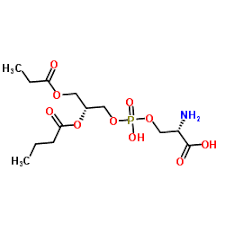
|
|
Phosphatidic acid(PA) |
An established second messenger with direct biological effects, phosphatidic acid is the most basic (diacyl)glycerophospholipid found in cells. In all eukaryotes, it is crucial for membrane fluidity and cellular signaling and is particularly recognized by a variety of proteins. |

|
|
Phosphatidylinositol(PI) |
as a modulator of membrane function and structure. as a source of arachidonic acid for the synthesis of eicosanoid. as a modulator of the reactions of cells to outside stimuli. The modulation of membrane-associated enzymes and transport mechanisms has been suggested to be an active function of phosphatidylinositol. |
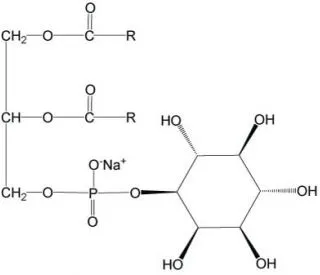
|
|
Phosphatidylglycerol(PG) |
Apart from facilitating photosynthesis in cyanobacteria like Synechocystis sp., phosphatidylglycerol plays a crucial function in controlling enzymes involved in respiration, metabolism, transport, transcription, and translation. |
|
MERITS OF PHYTOSOMES
DEMERITS OF PHYTOSOMES
APPLICATION[13]

MECHANISM OF FORMATION OF PHYTOSOME:
When combined with phosphatidylcholine, the polyphenolic components of herbal essence proved to be reasonably beneficial. A stoichiometric amount of the phospholipid-like phosphatidylcholine reacts with the polyphenolic components, such as simple aprotic solvent containing flavonoids (Bombardelli et al. 1989).
With the phosphatidyl component being lipophilic and the choline component being hydrophilic, phosphatidylcholine is a multifunctional compound. The lipid-soluble phosphatidyl portion, which has a body and tail, covers the choline-bound material after the choline head of the phosphatidylcholine conjugates to these molecules. Thus, a lipid-soluble chemical compound known as the phyto-phospholipid complex is produced by the phytomolecules and phospholipids. Precise spectroscopic techniques can verify that phytomolecules are chemically bonded to the polar choline head of phospholipids (Bombardelli et al. 1991). Often, thorough chemical analysis indicates that a flavonoid molecule linked to at least one phosphatidylcholine molecule is usually the unit phytosome. According to Murray et al. (2008), the result is the formation of a microscopic microsphere or cell. The orange spectrum from phosphatidylcholine obscures the red spectrum from the polyphenol in the blue phytosome spectrum. This is in keeping with the polyphenol being physically trapped by the phosphatidylcholine molecule.[14]
METHOD OF PREPARATION:
COMMON METHOD:
Phospolipid dissolve in organic solvent
Solution of phospholipid contains organic solvent + drug extract
Drying
Thin film formation
Hydration of thin film
Formation of phytosomes complex
Isolation by precipitation with non solvent
Drying (by lyophilization or spray drying)[15]
A 100 ml round-bottom flask containing the precise amount of medication and polymer was refluxed with an appropriate organic solvent between 50 and 60 degrees for two hours. To acquire the precipitate, which was filtered and collected, the mixture is concentrated to 5–10 ml. The amber colored glass bottle containing the dried precipitate phytosome complexes was kept at room temperature.[16]
The particular quantity of drug, polymer and phospholipids can be dissolved in specific solvent in a rotary spherical bottom flask followed by stirring for 3 hours at a temperature not exceeding 40oC. Thin film of the sample can be obtained to which n-hexane is added and continuously stirred using a magnetic stirrer. The precipitate phytosome loaded obtained can be collected, placed in amber colored glass bottle and stored at room temperature.[17]
Under particular experimental settings, a specific amount of phospholipids and herbal extract is refluxed with 20 milliliters of organic solvents, such as acetone, for two to three hours below 50°C. After the reaction mixture has been reduced to a minimum volume of 10 milliliters, a solvent is added with low Stirring precipitates with polarity similar to n-hexane are produced. Desiccators are used to hold filtered precipitates. The involute powder is kept at room temperature in a dark amber glass bottle once the dry precipitates have been ground up.[12]
The lipids that have been dissolved in an organic solvent come into contact with the drug-containing aqueous phase during this process. Diethyl ether is first used to dissolve the phytoconstituents to be encapsulated, and then it is gradually added to a water-based solution. The organic solvent is then removed under lower pressure, which results in the synthesis of the phytophospholipid complex. New methods for creating phospholipid complexes include supercritical fluids (SCF), which include the gas anti-solvent technique (GAS), supercritical anti-solvent method (SAS), and compressed anti-solvent process (PCA).[18]
An aprotic solvent, like acetone or dioxane, is used to dissolve phosphatidylcholine and phytoconstituents, and the mixture is stirred overnight. After that, the produced complex is precipitated out of a non-solvent, like n-hexane.[18][12]
Following the addition of a medication to soy lecithin (both natural and synthetic phospolipid and phytoconstituent), the mixture refluxes with 20 ml dichloromethane at 60 C, concentrates to 5–10 ml, and then adds 20 ml of hexane to produce the precipitate after filtering. Dry, compress, and run through a hundred sieves.[19]
Some patented technology related to phytosome formation:
|
Title of patent |
Innovation /novelty |
Patented number (year of grant) |
Ref |
|
Treatment of skin, and wound repair, with thymosin beta 4 |
Ingredients and techniques for thymosin β4 skin therapy |
US/2007/0015698 |
[13] |
|
Compositions comprising Ginkgo biloba derivatives for the treatment of asthmatic and allergic conditions. |
substances containing derivatives of ginkgo biloba that are used to treat allergies and asthma. |
EP1813280 |
[20] |
|
Complex compounds of bioflavonoids with phospholipids, their preparation and use, and pharmaceutical and cosmetic -compositions containing them. |
Complex flavonoid-phospholipid complexes are distinguished by high Enhanced bioavailability, lipophilia, and therapeutic qualities in comparison to free, non-complex flavonoids. |
EP0275005(1993) |
|
|
Phospholipid complexes of olive fruits or leaves extracts having improved bioavailability |
Extracts or mixtures of olive fruits or leaves that include phospholipid complexes have better bioavailability. |
EP/1844785(2007) |
[21] |
|
Fatty acid monoesters of sorbityl furfural and compositions for cosmetic and dermatological |
Two distinct series of compounds were used to select the fatty acid monoesters of sorbityl furfural, with the side chain consisting of a linear or branched C3–C19 alkyl radical that may or may not include at least one ethylenic unsaturation. |
EP1690862(2006) |
|
|
Cosmetic and dermatological composition for the treatment of aging or photo-damaged skin. |
A chemical that promotes collagen formation and another that improves the interaction between fibroblasts and extracellular matrix make up the composition for topical skin therapy. or component of dermatology for topical therapy |
EP1640041(2006) |
|
EVALUATION OF PHYTOSOME:
The NANO ZS Malvern instrument's Dynamic Light Scattering was used to measure the phytosomes' particle size, and electrophoretic mobility in an electric field was used to estimate the zeta potential. The determination of particle size was carried out after the phytosomal suspension was diluted 1/100 (v/v) in redistilled water at 25°C. Using the same device, zeta potential was determined at 25°C after the same dilution in a 1 mM NaCl solution.[22]
Transmission electron microscopy (TEM) and scanning electron microscopy (SEM) are two methods for seeing phytosomes.
Using a direct manner, the resulting phytosomes' entrapment efficiency was assessed 16. Using a centrifuge tube, one milliliter of the phytosome suspension was centrifuged for 60 minutes at 13,000 rpm 4 oC. The supernatant and sediment were separated. After being dissolved in 1.0 milliliter of methanol, the sediment was passed through filters with a pore size of 0.45 microns. The following formula was used to calculate the entrapment efficiency (EE), [24]

The phytosome's surface charge is measured by its zeta potential. It is an important parameter that affects the final product's performance and stability. An argon laser is used in a zeta sizer. To determine the phytosome's zeta potential, dilute the sample with the solvent before mounting it onto the zeta sizer intricate. Phytosome stability over time is indicated by a larger zeta potential value. The unit of measurement is millivolts (mV).[25]The most significant element influencing the physical stability of phytosomes is zeta potential. As the electrostatic repulsion between the particles grows, so does the stability. A scientific analyzer such as the Zetasizer Nano S90 and SZ-100 HORIBA can be used to measure the optimized phytosome's zeta potential.[26]
SPECTROSCOPIC CHARACTERIZATION TECHNIQUE OF PHYTOSOME:
|
Sr no |
Characterization |
Technique used |
|
1. |
Chemical composition. |
1 H-NMR |
|
2. |
Chemical structure of carbon either, alkene aliphatic, aromatic. |
13 C-NMR |
|
3. |
Molecular interaction between formulation component. |
FTIR |
|
4. |
Analyzing the thermal behavior of a broad range of materials |
DSC |
This technique can be used to evaluate the complex formation between the phosphatidylcholine molecule and the active phytoconstituents. Bombardelli investigated the phytosome complex's NMR spectra in nonpolar liquids. Without any accumulation of the signal specific to individual molecules, there is a noticeable shift in the 1H NMR signal coming from the atoms involved in complex formation. The signals originating from the phytoconstituents' protons are expanded. Signals in phospholipids expand, and the singlet that corresponds to choline's N-(CH3)3 experiences an upfield shift.[27]
When recorded in C6D6 at room temperature, the 13C NMR of the phytoconstituents and the stoichiometric compound with the phosphatidylcholine. All of the carbons in the phytoconstituents were invisible at this temperature. While the majority of the fatty acid chains' resonance retains their original sharp line shape, the signals related to the glycerol andcholine part are broadened and some are displaced.[27]
The infrared spectra of free extract, phospholipid, a mixture of extract and phospholipid, and their phytosome complex are obtained using the potassium bromide method (KBr) in order to ascertain the molecular interactions between the extract and phospholipids. A sample was mixed to KBr at a 1:100 ratio to create KBr pellets ratio, and between 4000 and 400 cm-1, the sample pellets were examined.[25]
One well-known method for analyzing the thermal behavior of a broad range of materials is differential scanning calorimetry. Information about the melting process can be obtained by measuring changes material properties as a function of regulated temperature changes. stability, compatibility, deterioration, and other relevant test material characteristics. Enthalpy alterations, peak appearance/disappearance, and modifications to a peak's start time, shape, and relative area are all examples of these changes in DSC thermograms. It also offers details on interactions between drugs and excipients as well as the emergence of novel entities.[28]
ROLES OF PHYTOSOMES IN CANCER:
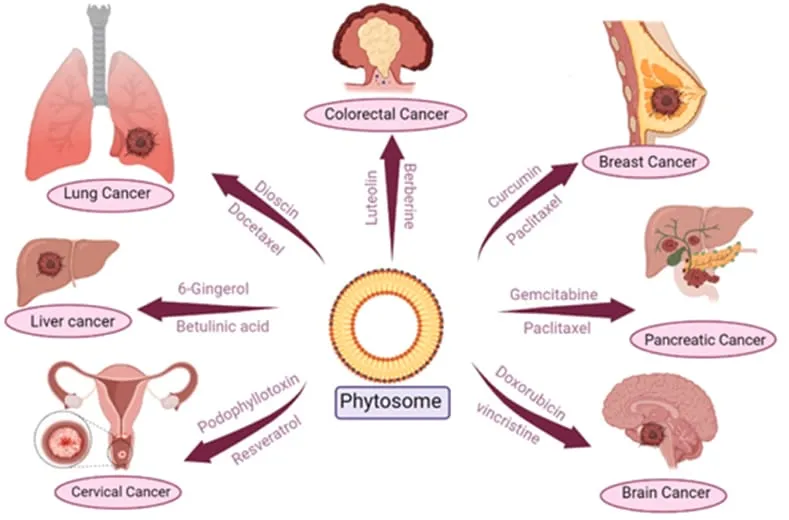
Demir et al. created Calendula officinalis augmented phytosomes and assessed their capacity to promote wound healing. Compared to Calendula officinalis and ordinary phytosomes, phytosomes enhanced wound closure in normal human dermal fibroblasts by more than 50%. In a different study, Onosma echioides phytosomes (gel) significantly accelerated wound healing (>98%) in the Wistar rat excision models as compared to the control and standard. Phytosomes also significantly boosted the amount of collagen in comparison to the control group. Successful collagen production is indicated by increases in hydroxyproline levels.In both excision and incision wound models, it is clear that phytosomes enhance the wound-healing capabilities of phytochemicals (both in vivo and in vitro). Because of their enhanced bioavailability, phytopharmaceuticals are the subject of intense research, particularly the creation of phytosomes from plant extract and its constituents. Some of the most current studies on phytosomes in medication delivery were compiled by Susilawati et al.[29]
One of the most popular flavonoids, rutin (Ruta graveolens), was researched by Malay K. Das et al. in 2004. It is used to treat blood and liver problems, capillary fragility, hypertension, and UV-induced cutaneous oxidative stress. cardiovascular disease, cholesterol, cataracts, and possesses anti-inflammatory, antithrombotic, antiplatelet, antioxidant, and antitumor qualities. It was demonstrated that rutin phytosomes were more effective than their free form at penetrating the impenetrable stratum corneum. The skin absorbed 33 ± 1.33 percent of rutin phytosomes and 13 ± 0.87 percent of rutin. 27 The phytosomal complex of saponins and plant extracts (Panax ginseng M.) was shown to improve vasal protection, capillary permeability, and UV radiation protection.
Additionally useful in the creation of pharmaceutical formulations for dermatology and cosmetics, it has a moisturizing effect on the epidermis, increasing its elasticity through dermal fibroblastic stimulation that promotes the synthesis of collagen and proteoglycan. In particular, the aforementioned compositions can be used orally as tablets, capsules, syrups, granules, and solutions (containing a dose of the complex ranging from 1 to 500 mg) to treat inflammation, altered capillary fragility and permeability, and generally in any field where saponin activity is currently known.[30]
Role of phytosome in Diabetics: After 15 days, the polyherbal phytosomal formulation treatment showed exceptional glycemic control in diabetic rats, as evidenced by a significant drop (p < 0.001) in fasting blood glucose levels, which is comparable to metformin treatment.100 mg/kg body weight was administered to rats. When administered to diabetic rats at a dose of 250 mg/body weight, the methanolic mixed extract of all plants dramatically lowers blood glucose levels. Interestingly, the polyherbal phytosomes demonstrated comparable efficacy to the reference medication. However, because there can be a trace quantity of active ingredient in the extract, the larger concentration of the extract was used versus the reference medication. Diabetic rats also showed a considerable rise in body weight. As the formulation of phytosomes increases over time, the weights of diabetic rats rise noticeably.[31]
CONCLUSION
Phytosome technology bridges the gap between novel drug delivery system and traditional delivery system of phytoconstituent. Phytosomes, which are made up of herbal extract and phytoconstituents that are encased and bound by lipid, are the technology used in phytopharmaceuticals. NDDS primarily uses phytosomes to improve the solubility and bioavailability of phytoconstituents. A new and improved type of botanical and phytoconstituent, phytosomes are absorbed orally, tropically, and transdermally. The pharmacokinetic and pharmacological characteristics are also enhanced by phytosomes. Phytosomes' chemical, biological, and physicochemical characteristics are beneficial to the body.Phytosomes have significant anti-inflammatory, anti-cancer, anti-dermal, antioxidant, and anti-hypertensive properties. When phosphatidycholne and phytoconstituents like flavonoids react in a solvent, a compound known as a phytosome is created. The phytosome preparation process is easy to use, repeatable, and readily scaled up to at commercial level. Numerous patents for creative phytosome composition, methods, and applications have already been granted.The methodology for characterization and assessment using analytical techniques like FTIR, DSC, and NMR is well-established for this kind of innovative delivery system. Diabetes mellitus, cardiovascular disease, skin disorders, and other gastrointestinal disorders should all be treated with phytosome technology. In terms of phytosome technology's potential, it has been agreed to be used in the formulation of hydrophilic plant constituents in the future.
REFERENCES

Mayuri L. Pawar*, Pratiksha K. Mohite, Yogita H. Pimple, Ashish Pardeshi, Innovative Phytosomal Carriers: Transforming Herbal Extracts Into High-Performance Therapeutics, Int. J. Sci. R. Tech., 2026, 3 (6), 922-935. https://doi.org/10.5281/zenodo.20701564
 10.5281/zenodo.20701564