

We use cookies to ensure our website works properly and to personalise your experience. Cookies policy
Women’s College Of Pharmacy Peth Vadgaon, Kolhapur, Maharashtra-416112, India
Drug development is a complex and highly regulated process that transforms a potential therapeutic compound into a safe and effective medica on of human use. The process involves several stages including drug discovery, preclinical research, and mul ple phases of clinical trials before regulatory approval and marke ng. Each stage of drug development is designed to evaluated the safety, efficacy pharmacokinetics, and pharmacodynamics of a poten al drug. Despite technological advancements, drug development remains me-consuming, costly, and associated with high failure rates. The review paper examine the major phases of drug development, including drug discovery, preclinical studies, clinical trial phases I- IV, regulatory approval, and post-marke ng surveillance. The paper also discusses the challenges and future prospects in pharmaceutical research and development. Understanding the phases of drug development is essen al for researchers, healthcare professionals, and regulatory agencies, to ensure that the new medica on are safe effective, and beneficial for patient
Drug development is a scien fic and regulatory process used to bring new pharmaceu cal products from the laboratory to the market. The main objec ve of this process is to ensure that newly developed medica ons are safe, effec ve, and of high quality before they are made available to the public. The development of a new drug requires extensive research, tes ng, and regulatory evalua on.
The process of drug development typically takes between 10 and 15 years and involves significant financial investment. According to pharmaceu cal industry es mate, the cost of developing a new drug can exceed billions of dollars due to extensive research, clinical tes ng, and regulatory requirements.
Drug development consists of several sequen al phases, including drug discovery, preclinical research, clinical trials (phase I, II, III), regulatory approval, and post-marke ng surveillance 9 phase (IV). Each stage plays a cri cal role in evalua ng the poten al benefits and risks associated with new medica on.
The aim of this review paper is to provide a comprehensive overview of the phases of drug development, their objec ve, methodologies, and importance in ensuring pa ent and therapeu c effec veness.
2. DRUG DISCOVERY
Drug discovery represents the first step in the drug development process. During this stage, scien fic a5empt to iden fy biological targets that are associated with specific disease. These targets may include enzyme, receptors, proteins, or genes that play a role in disease progression.
Once a biological target is iden fied, researchers begin searching for chemical compound or biological molecule that can interact with the target in a beneficial way. This stage involves the screening of thousands of compounds to iden fy poten al drug candidates.
Several modern technologies have improved the efficiency of drug discovery including
These technologies allow researchers to analyze large numbers of compounds rapidly and iden fy molecule with therapeu c poten al
Despite these advancements, the success rate during the discovery stage remains low. Out of the thousands of compounds, iden fied, only a few are selected for further inves ga on during preclinical studies.
3. PRECLINICAL STUDIES
Preclinical research is conducted before tes ng a drug in humans. This stage involves laboratory experiments and animal studies designed to evaluate the biological ac vity, safety, and toxicity of a poten al drug candidate.
The primary objec ve of preclinical studies
Pharmacokine c studies examine how the drug is absorbed, distributed, metabolized, and excreted by the body. Pharmacodynamic studies focus on the biological effect of the drug and its mechanism of ac on
Animal tes ng is commonly used during preclinical research to evaluate the safety profile of drug before human tes ng begins. These studies help researches iden fy poten al toxic effect and determine whether the drug candidate is safe enough the proceed to clinical trial.
If the result from preclinical researchers submit an inves ga onal new drug (IND) applica on to regulatory authori es reques ng permission to begin human clinical trials
4. CLINICAL TRIAL PHASES
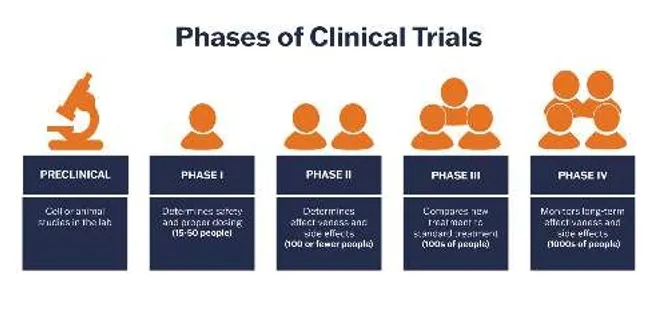
Clinical trials are research studies conducted on human par cipate to evaluate the safety and effec veness of new drug. Clinical trials are typically divided into four phases, each with specific objec ve and study designs.
There are four type of clinical trial phases, they as following;
4.1 Phase I Clinical trials
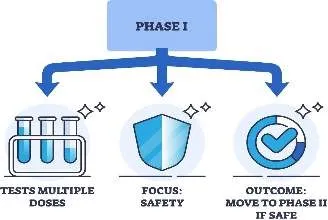
Phase I clinical trials represent the first stage of tes ng a new drug in humans. These trials are usually conducted with a small group of 20 to 100 healthy volunteers, although in some case pa ents with the targets disease may par cipate.
The primary objec ve of phase I trials include;
Researches gradually increase the drug dosage to determine the maximum tolerated dose and observe hoe the body respond to the drug
Phase I trials provide important informa on about how the drug behave in the human body. However, the primary focus of this phase is safety rather than effec veness.
4.2 Phase II Clinical Trials
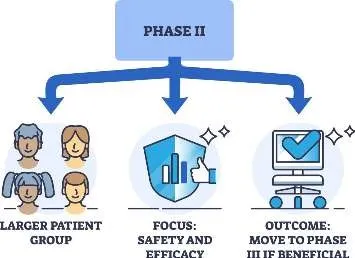
Phase II clinical trials involve a large group of par cipants, typically 100 to 300 pa ents who have the disease or condi on that the drug is intended to treat.
The main objec ve of phase II trials are;
Phase II trials help researchers determine whether the drug has therapeu c benefits and whether it should proceed to large clinical studies.
This phase is oBen divided into two subcategories;
Phase IIa - focus on dosing requirements
Phase IIb – Evaluate drug effec veness
Many drug candidates fall during phase II trials due to lack of effec veness or unacceptable side effect.
4.3 Phase III Clinical trials
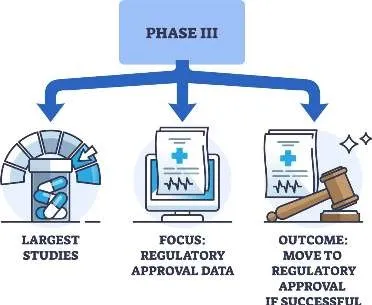
Phase III clinical trial are large-scale studies involving 1000 to 3000 pa ents or more across mul ple clinical research centers.
The objec ve of phase III trials include:
These are typically randomized and controlled, meaning that par cipants may receive either the experimental drug or a placebo or standard treatment.
The data collected during phase III trials provide strong scien fic evidence regarding the safety and effec veness of the drug. If the result are posi ve, pharmaceu cal companies submit this date to regulatory agencies for marke ng approval.
REGULATORY APPROVAL
ABer the successful comple on of clinical trials, the pharmaceu cal company submits a regulatory applica on reques ng approval to market the drug.
This submission includes comprehensive data related to:
Regulatory authority carefully review this informa on to determine whether the drug meets safety and effec veness standards.
If the regulatory authority determine that the benefits of the drug outweigh its risks, the drug is approved for marke ng and can be prescribed to pa ents.
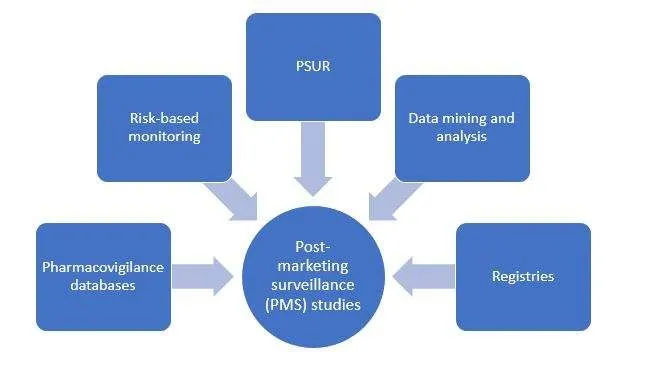
PHASE IV CLINICAL TRIALS (POST-MARKETING SURVEILLANCE)
Phase IV trials occur aBer the drug has been approved and introduced to the market these studies monitor the drug’s performance in the general popula on,
The objec ve of phase IV studies include:
Some adverse effect may only become apparent when the drug is used by thousands or millions of pa ents. Therefore, post-marke ng surveillance plays an essen al role in maintaining drug safety.
In certain cases, regulatory authori es may withdraw a drug from the market if serious safety concerns arise during phase IV monitoring.
CHALLENGES IN DRUG DEVELOPMENT
Despite technological advancement, drug development faces several major challenges
High development costs
Developing a new drug requires extensive financial investment. Research, clinical trials, and regulatory processes contribute to the high cost of pharmaceu cal development.
Long development meline
The drug development process can take more than a decade to mul ple tes ng stages and regulatory reviews.
High failure rate
Many poten al drug candidates fail during clinical trials due to safety issues or lack of effec veness.
Regulatory requirements
Strict regulatory guideline ensure pa ent safety but also increase the complexity of the drug development process.
Ethical considera on
Clinical trials must follow strict ethical guideline to protect par cipant and ensure informed consent
8. FUTURE PERSPECTIVE IN DRUG DEVELOPMENT
Avance in science and technology re transforming the drug development process
Some promising innova on include;
Ar ficial intelligence and machine learning are increasingly used to analyze large datasets and iden fy poten al drug candidate more efficiently.
Personalized medicine focuses on tailoring treatments based on individual’s gene c profile, improving treatment outcome and reducing adverse effects.
These innova ons may help reduce development me, improve success rates, and create more effec ve therapies in the future.
CONCLUSION
Drug development is a complex and mul -stage process that ensure the safety, quality, and effec veness of new medica ons before they reach pa ents. Each phase-from drug discovery and preclinical tes ng to clinical trial and post-marke ng surveillance-plays a crucial role minimizing risk and maximizing therapeu c benefits.
Although the drug development process is lengthy and expensive, it remains essen al for protec ng public health. Con nued advancements in biotechnology, clinical research methodologies, and regulatory science are expected to improve the efficiency of drug development and accelerate the availability of new treatments for pa ents worldwide.
Understanding the phases of drug development is essen al for healthcare professional, researchers, and regulatory agencies involved in pharmaceu cal innova on and pa ent care
REFERENCES

Rupali Keshav Waghmare*, Sindhu. S. Shedbale, Phases of Drug Development : A Comprehensive Review, Int. J. Sci. R. Tech., 2026, 3 (6), 142-147. https://doi.org/10.5281/zenodo.20503939
 10.5281/zenodo.20503939