

We use cookies to ensure our website works properly and to personalise your experience. Cookies policy
Department of Pharmacognosy and phytochemistry, K. V. N. Naik S. P. Sanstha’s, Institute of Pharmaceutical Education & Research, Canada Corner, Nashik, 422002, Maharashtra, India.
Citrus sinensis (L.) Osbeck, commonly known as the sweet orange, is one of the most widely consumed fruits globally. Its peel, which is typically discarded as waste, contains an array of bioactive phytoconstituents including hesperidin, narirutin, polymethoxylated flavones, vitamin C, and essential oils. This study was undertaken to prepare and evaluate herbal gummies using orange peel powder as the primary active ingredient, with gelatin as the gelling base, along with sugar, honey, citric acid, distilled water, and orange colouring agent. Three formulations (F1, F2, and F3) were prepared by varying the concentration of orange peel powder at 1 g, 2 g, and 3 g respectively, while keeping all other excipients constant. The prepared gummies were evaluated for organoleptic properties, solubility, weight variation, pH measurement, swelling index, and qualitative phytochemical tests. All three formulations exhibited acceptable organoleptic properties, uniform shape, mild citrus aroma, and a sweet flavour with slight bitterness. Weight variation analysis yielded average weights of 6.53 g, 7.17 g, and 7.64 g for F1, F2, and F3 respectively. pH values ranged from 4.05 to 4.36, consistent with citric acid-adjusted mildly acidic formulations. Solubility testing showed progressive dissolution delay with increasing orange peel powder concentration. The swelling index was recorded at 16.25%, indicating moderate hydrogel-like behaviour of the gelatin matrix. Qualitative phytochemical screening confirmed the presence of flavonoids by the lead acetate test and carbohydrates by the Molisch test. The results suggest that orange peel based herbal gummies represent a practical, palatable, and scientifically rational alternative dosage form for delivering plant-derived bioactive compounds, particularly for paediatric and geriatric populations.
The pharmaceutical and nutraceutical sectors have witnessed a growing shift away from conventional tablets and capsules toward more patient-friendly, orally acceptable dosage forms. Gummy-based formulations, originally developed for paediatric use, have now gained acceptance across age groups due to their ease of administration, pleasant taste, and improved patient compliance [1]. Gummies belong to the broader category of chewable soft dosage forms and are prepared primarily using hydrocolloids such as gelatin or pectin as structural matrices. Their ability to incorporate diverse bioactive agents, including herbal extracts and powders, makes them particularly attractive for nutraceutical product development [2].
Among the plant materials investigated for use in such formulations, citrus peel has attracted considerable scientific attention. The peel of Citrus sinensis, which constitutes roughly 20 to 40% of the total fruit weight, is largely treated as an agricultural by-product. Yet this fraction is biochemically rich. It contains substantial concentrations of flavonoids, particularly hesperidin and narirutin, which have been studied for antioxidant, anti-inflammatory, antimicrobial, and cardioprotective activities [3]. It also contains limonoids, pectin, carotenoids, and vitamin C, compounds that contribute to its pharmacological relevance. Several investigators have pointed out that the antioxidant capacity of orange peel significantly exceeds that of the orange pulp [4], making it an underutilised ingredient in functional food and pharmaceutical formulation.
From a traditional medicine perspective, citrus peel has been used in Ayurvedic, Unani, and Chinese medicinal systems for management of digestive complaints, bronchitis, and infections [5]. Contemporary pharmacological studies have largely validated these traditional uses. Benavente-García and Castillo, in a widely cited review, documented the anticancer, anti-inflammatory, and cardiovascular benefits of citrus flavonoids and noted the potential of these compounds for nutraceutical applications [3]. Tripoli et al. further elaborated on the molecular mechanisms underlying the bioactivities of citrus flavonoids, including their role in modulating enzyme activity, scavenging reactive oxygen species, and inhibiting lipid peroxidation [6].
Despite this pharmacological background, very few studies have attempted to incorporate orange peel powder directly into a gummy-based dosage form using food-grade excipients. Most formulation work involving citrus has focused on encapsulated extracts, tablets, or syrups. Gummies as a delivery platform for orange peel have the advantage of masking the inherent bitterness of the peel through sweeteners and flavouring agents, while simultaneously providing a pleasant chewable texture.
The present study was therefore designed to prepare herbal gummies using orange peel powder in three concentration levels and evaluate the physical, chemical, and qualitative properties of the resulting formulations. The study also aimed to assess the feasibility of using simple, food-safe excipients such as gelatin, honey, sugar, and citric acid to produce an acceptable, stable, and efficacious oral dosage form. A systematic evaluation was conducted to select the optimum formulation based on the quality parameters assessed.
2. MATERIALS AND METHODS
2.1 Materials
Orange peel powder was obtained from dried peels of mature Citrus sinensis fruits. The peels were washed thoroughly with clean water to remove surface impurities, sun-dried for two to three days, and subsequently ground to a fine powder using a mechanical grinder. The powder was sieved through mesh 60 and stored in a labelled airtight container away from direct sunlight until use. Pharmaceutical-grade gelatin (bloom strength approximately 200-250) and other ingredients was obtained from college laboratory, K. V. N. Naik S. P. Sanstha’s, Institute of Pharmaceutical Education & Research, Nashik. Sugar, honey, citric acid, distilled water, and orange food colouring agent were all of food-grade purity. Silicon moulds of uniform shape were used to ensure consistent gummy dimensions across batches.
2.2 Formulation Design
Three formulations were developed, designated F1, F2, and F3. The concentration of orange peel powder was varied across the three batches at 1 g, 2 g, and 3 g respectively, while the quantities of all other excipients remained constant. The formulation table is presented below.
|
Ingredient |
F1 |
F2 |
F3 |
Role |
|
Orange peel powder |
1 g |
2 g |
3 g |
Active herbal ingredient |
|
Gelatin |
8.5 g |
8.5 g |
8.5 g |
Gelling agent |
|
Sugar |
20 g |
20 g |
20 g |
Sweetening agent |
|
Honey |
7.5 g |
7.5 g |
7.5 g |
Natural sweetener and humectant |
|
Citric acid |
0.4 g |
0.4 g |
0.4 g |
Acidulant and flavour enhancer |
|
Distilled water |
30 mL |
30 mL |
30 mL |
Solvent/vehicle |
|
Orange colour |
q.s. |
q.s. |
q.s. |
Colouring agent |
Table 1. Formulation Table for Orange Peel Based Herbal Gummies (per batch)
This approach of varying only one variable at a time allowed for a direct comparison of how increasing orange peel powder concentration affected the physicochemical and sensory attributes of the final product.
2.3 Method of Preparation
All ingredients were accurately weighed using a calibrated digital analytical balance prior to the start of preparation. A clean glass beaker was placed on a heating mantle, and 30 mL of distilled water was added. Gelatin was sprinkled slowly into the water and allowed to bloom undisturbed for approximately five minutes, a step that permits the protein chains to hydrate adequately before heating [7]. The mixture was subsequently heated at 60 to 70°C under gentle and continuous stirring until a clear, lump-free gelatin solution was obtained. Sugar was then added and stirred until fully dissolved. Honey was incorporated next and mixed uniformly into the solution. Orange peel powder was gradually added with constant stirring to ensure homogeneous dispersion and to prevent agglomeration. Citric acid was then added to adjust the pH and enhance the citrus flavour profile of the formulation. The required quantity of orange colouring agent was incorporated and mixed thoroughly. The heat source was then removed, and the mixture was allowed to cool slightly to reduce viscosity without allowing premature solidification. The semi-liquid mass was carefully poured into pre-cleaned silicone moulds of a defined shape. The filled moulds were kept undisturbed at room temperature until the gummies had solidified completely. The solidified gummies were carefully demoulded and transferred to labelled airtight containers for evaluation.
2.4 Evaluation Parameters
2.4.1 Organoleptic Evaluation
Organoleptic properties including colour, aroma, flavour, shape, texture, and stickiness were assessed visually and by tactile and olfactory examination by trained observers. Gummies from all three batches were evaluated independently and the observations recorded.
2.4.2 Solubility Test
One gummy from each batch was placed in a beaker containing a specified volume of distilled water at room temperature. The sample was observed at regular intervals for swelling behaviour, degree of dispersion, and eventual dissolution. The approximate time required for complete dissolution or loss of structural integrity was noted.
2.4.3 Weight Variation Test
Ten gummies were randomly selected from each batch and weighed individually using a calibrated digital balance. The mean weight of each batch was calculated. Percentage deviation of each individual gummy from the mean was determined to assess batch uniformity.
2.4.4 pH Measurement
A gummy from each batch was dissolved in 10 mL of distilled water, and the resulting solution was subjected to pH measurement using a calibrated digital pH meter. The electrode was immersed in the solution, and the stable pH reading was recorded.
2.4.5 Swelling Index Test
One gummy was selected and weighed (W1) prior to immersion in distilled water. It was then placed in distilled water and allowed to swell for one hour at room temperature. After removal, the surface water was gently blotted with filter paper, and the gummy was reweighed (W2). The swelling index was calculated using the formula:
Swelling Index (%) = [(W2 - W1) / W1] × 100
2.4.6 Phytochemical Screening
Lead Acetate Test (Flavonoids): A small quantity of the dissolved gummy preparation was treated with a few drops of lead acetate solution. Formation of a yellow precipitate was taken as indicative of flavonoid presence.
Molisch Test (Carbohydrates): A few drops of Molisch reagent (alpha-naphthol in alcohol) were added to the sample solution, followed by careful addition of concentrated sulphuric acid along the walls of the test tube. Formation of a violet or purple ring at the interface was considered a positive result for carbohydrates.
3. RESULTS
3.1 Organoleptic Properties
All three formulations produced gummies with a characteristic orange colour attributable to the colouring agent and the natural pigmentation from orange peel powder. The aroma was mild and pleasant, described as characteristic citrus across all batches. The flavour was predominantly sweet with a slight underlying citrus bitterness, which became subtly more pronounced in F3 owing to the higher concentration of orange peel powder. Shape uniformity was satisfactory for F1, F2, and F3, with the silicone moulds producing well-defined gummies in all batches. Texture was soft and elastic in F1 and F2, while F3 showed a noticeably firmer consistency and reduced elasticity, an expected consequence of increasing the solid herbal load. A slight stickiness was observed in F1 and F2 at room temperature, with F3 displaying slight to moderate stickiness. The results are summarised in Table 2.
|
Parameter |
F1 |
F2 |
F3 |
|
Colour |
Orange |
Orange |
Orange |
|
Aroma |
Mild citrus |
Mild citrus |
Mild citrus |
|
Flavour |
Sweet with slight citrus bitterness |
Sweet with slight citrus bitterness |
Sweet with slight citrus bitterness |
|
Shape |
Uniform, well-defined |
Uniform, well-retained |
Uniform, well-retained |
|
Texture |
Soft and elastic |
Soft and elastic |
Firm and less elastic |
|
Stickiness |
Slightly sticky |
Slightly sticky |
Slight to moderate stickiness |
Table 2. Organoleptic Evaluation of Formulations F1, F2, and F3
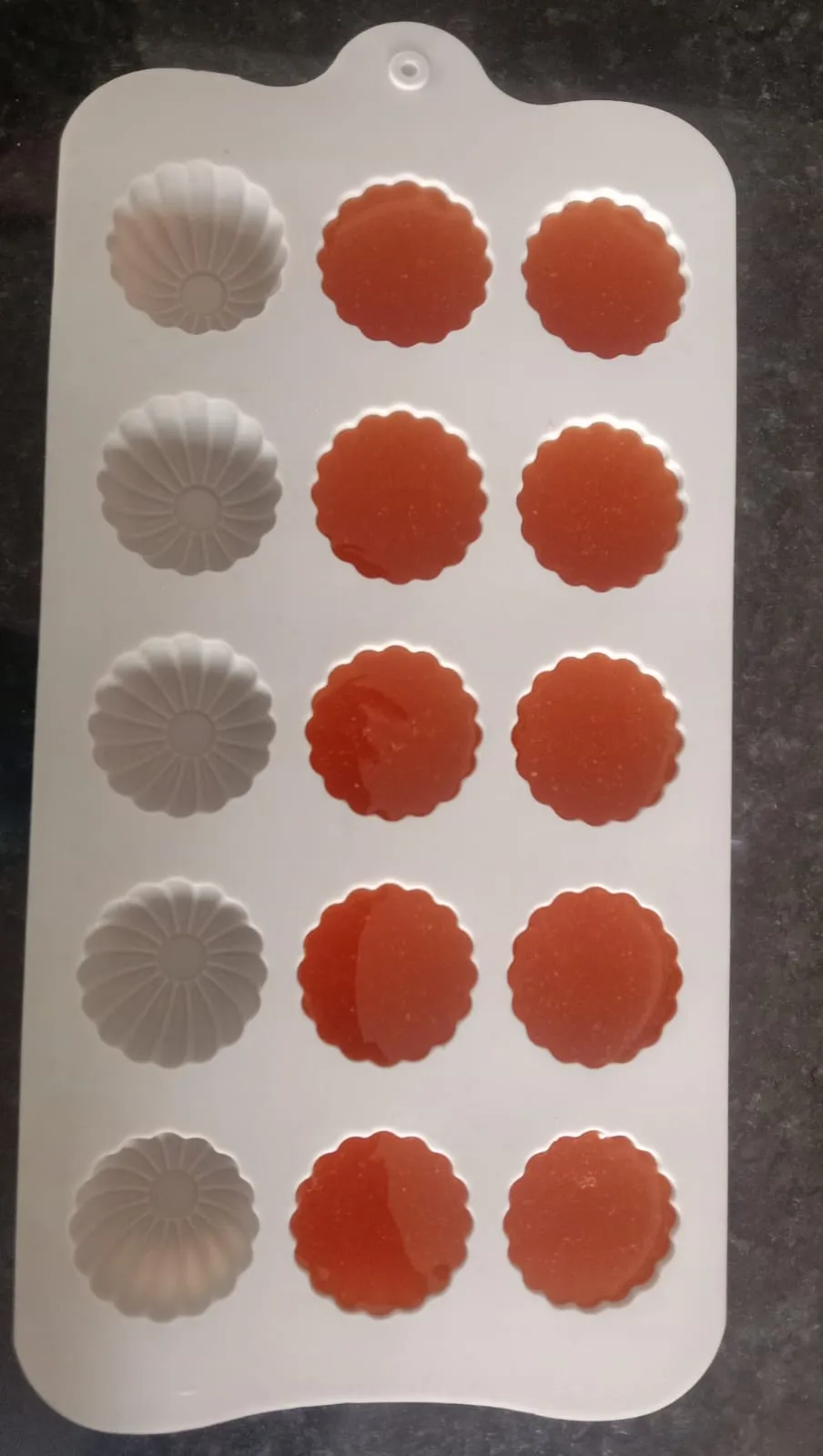
Figure 1. Physical appearance of orange peel herbal gummies
3.2 Solubility
All formulations swelled progressively before undergoing dissolution in distilled water at room temperature. F1 swelled and dissolved within 15 to 20 minutes. F2 required 20 to 25 minutes, and F3 took 25 to 30 minutes for complete dissolution. The gradual increase in dissolution time with higher orange peel powder content is consistent with the increased solid matrix density resulting from the higher dose of powdered herbal material. The gelatin network at fixed concentration was required to accommodate a greater mass of particulate matter in F3, which likely impeded water penetration and slowed the hydration process [8]. These results are presented in Table 3.
|
Batch |
Observation |
|
F1 |
Swelled and dissolved within 15 to 20 minutes |
|
F2 |
Swelled and dissolved slowly within 20 to 25 minutes |
|
F3 |
Swelled and dissolved slowly within 25 to 30 minutes |
Table 3. Solubility Observations for Herbal Gummy Formulations
3.3 Weight Variation
The individual weights of ten gummies from each batch, along with the calculated mean values, are summarised in Table 4. The mean weight of F1 was 6.53 g (sum = 65.343 g), that of F2 was 7.17 g (sum = 71.77 g), and F3 had a mean weight of 7.64 g (sum = 76.492 g). The progressive increase in mean weight across batches directly reflects the increasing quantity of orange peel powder added per batch, given that all other ingredients were held constant. Variability within each batch was attributable to minor differences in volume dispensed during pouring, an inherent limitation of manual mould filling without automated dispensing equipment.
|
Gummy No. |
F1 (g) |
F2 (g) |
F3 (g) |
|
1 |
6.770 |
7.650 |
7.210 |
|
2 |
6.350 |
7.052 |
7.650 |
|
3 |
5.250 |
7.418 |
7.111 |
|
4 |
6.960 |
6.418 |
7.850 |
|
5 |
6.480 |
7.227 |
7.950 |
|
6 |
6.310 |
7.024 |
7.910 |
|
7 |
7.210 |
7.510 |
7.720 |
|
8 |
7.050 |
7.324 |
7.212 |
|
9 |
7.760 |
6.762 |
7.880 |
|
10 |
5.203 |
7.380 |
7.999 |
|
Mean |
6.53 g |
7.17 g |
7.64 g |
Table 4. Weight Variation Data for Formulations F1, F2, and F3
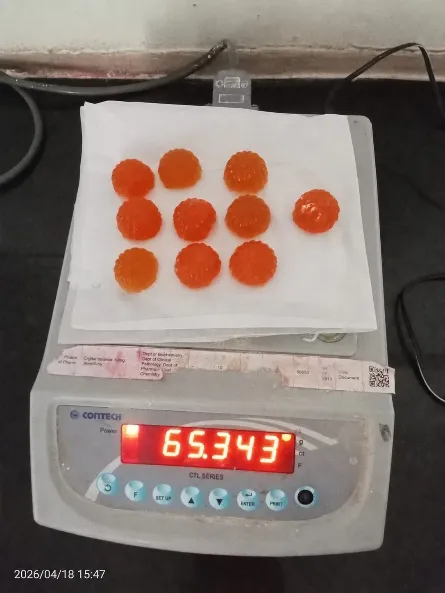
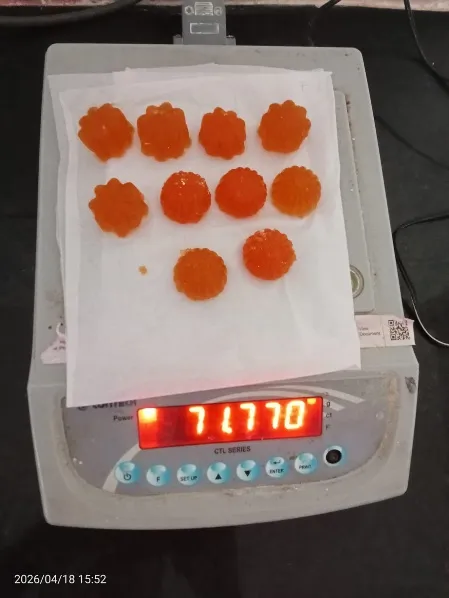
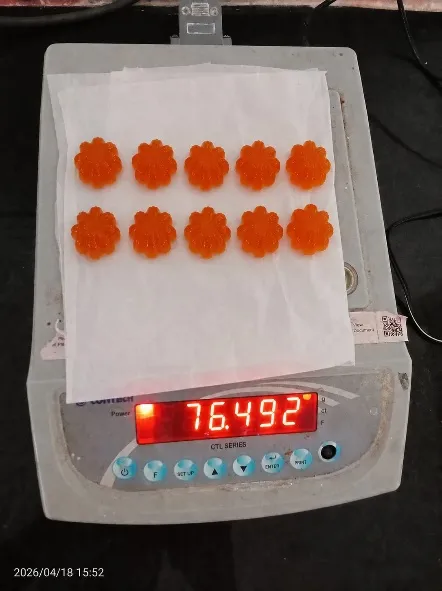
Figure 2. weight variation of formulations F1, F2, and F3.
3.4 pH Measurement
The pH of F1 was 4.09, F2 measured 4.05, and F3 had a pH of 4.36. All three values fall within the mildly acidic range, which is expected given the inclusion of citric acid as an acidulant at 0.4 g per batch. The marginally higher pH in F3 may be attributed to the greater amount of orange peel powder, which, despite its intrinsic acidity, contributed additional buffering capacity to the formulation through its pectin and flavonoid content [9]. These pH values are within an acceptable range for oral dosage forms, as they are unlikely to cause irritation to the oral mucosa and are compatible with the degradation kinetics of the flavonoid compounds present in orange peel.
|
Batch |
pH |
|
F1 |
4.09 |
|
F2 |
4.05 |
|
F3 |
4.36 |
Table 5. pH Values of Formulations F1, F2, and F3
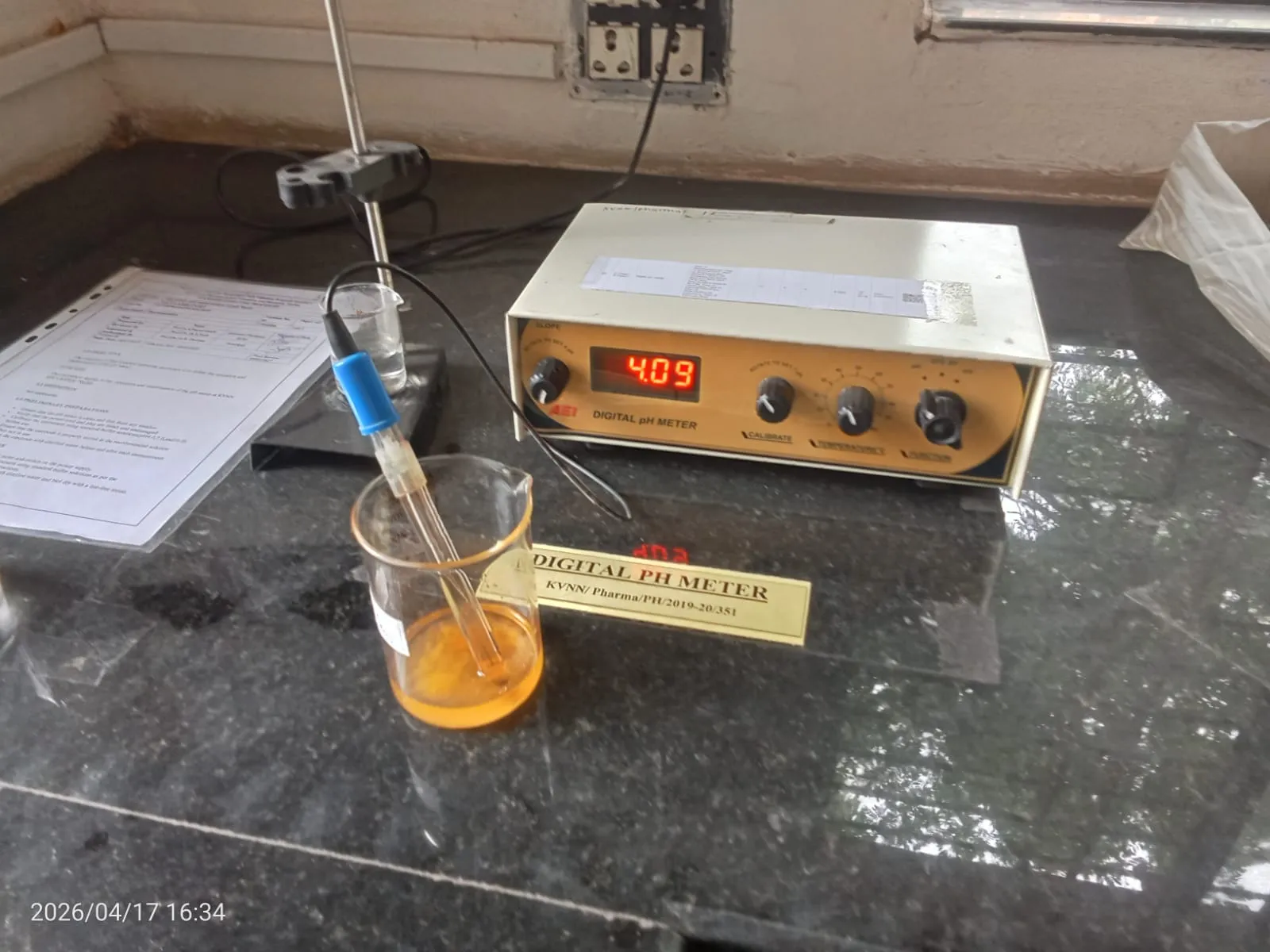
Figure 3. pH of herbal gummy formulation (F1).
3.5 Swelling Index
The swelling index was calculated from an initial weight (W1) of 5.230 g and a post-immersion weight (W2) of 6.080 g after one hour in distilled water at room temperature.
Swelling Index = [(6.080 - 5.230) / 5.230] × 100 = 16.25%
A swelling index of 16.25% indicates moderate hydrophilic behaviour of the gummy matrix, attributable primarily to gelatin's capacity to absorb water and swell before dissolution. This is a desirable property for an oral dosage form as it facilitates progressive disintegration within the gastrointestinal environment while preventing rapid dissolution that might compromise the retention of active constituents for adequate absorption. The observed swelling behaviour is consistent with reported values for gelatin-based hydrogel systems [7].
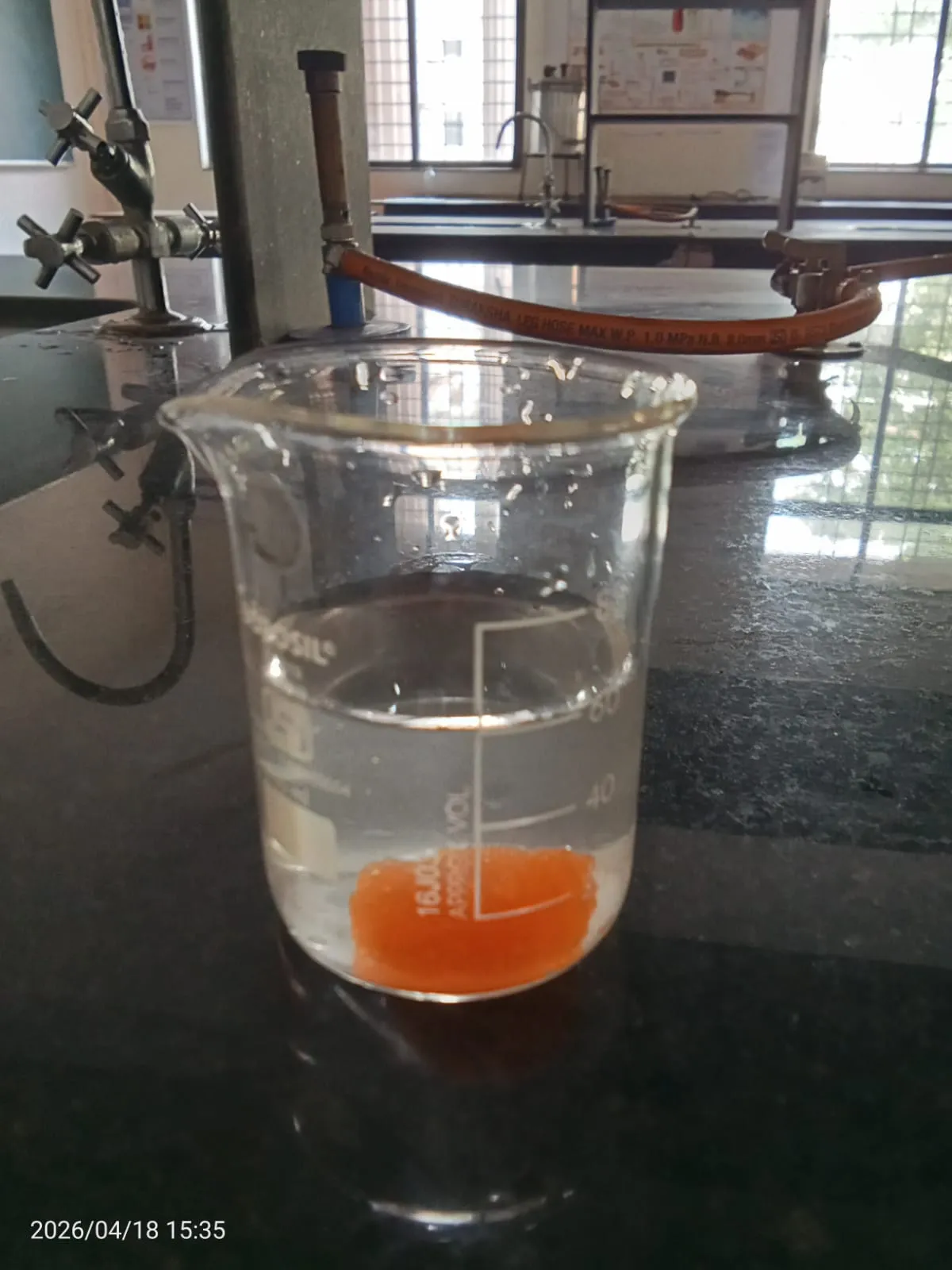
Figure 4. Swelling and dissolution behaviour of gummy formulations in distilled water.
3.6 Phytochemical Screening
The lead acetate test produced a distinct yellow precipitate upon treatment of the dissolved gummy solution with lead acetate reagent, confirming the presence of flavonoids. This result is consistent with the well-documented flavonoid profile of Citrus sinensis peel, particularly hesperidin and narirutin [3,6]. The Molisch test yielded a clear violet ring at the junction of the two layers following addition of concentrated sulphuric acid, confirming the presence of carbohydrates in the formulation. The carbohydrate presence is expected, given the inclusion of sugar and honey as sweetening agents, and the pectin naturally present in orange peel [10]. These qualitative results are presented in Table 6.
|
Test |
Reagent |
Observation |
Inference |
|
Lead acetate test |
Lead acetate solution |
Yellow precipitate formed |
Flavonoids present |
|
Molisch test |
Molisch reagent + conc. H2SO4 |
Violet ring at junction |
Carbohydrates present |
Table 6. Qualitative Phytochemical Tests
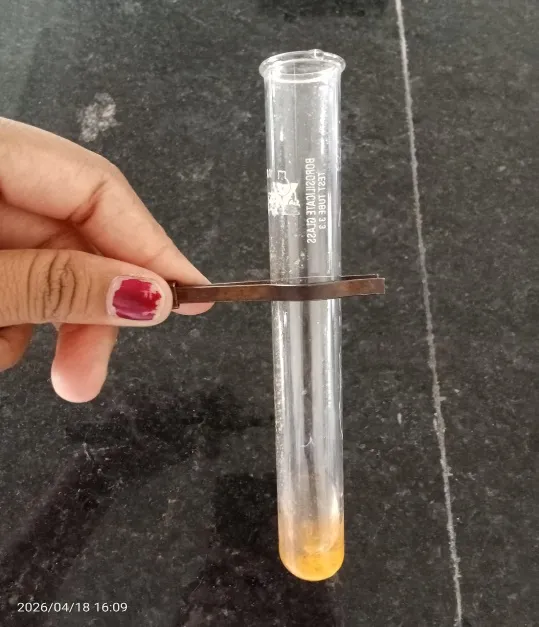
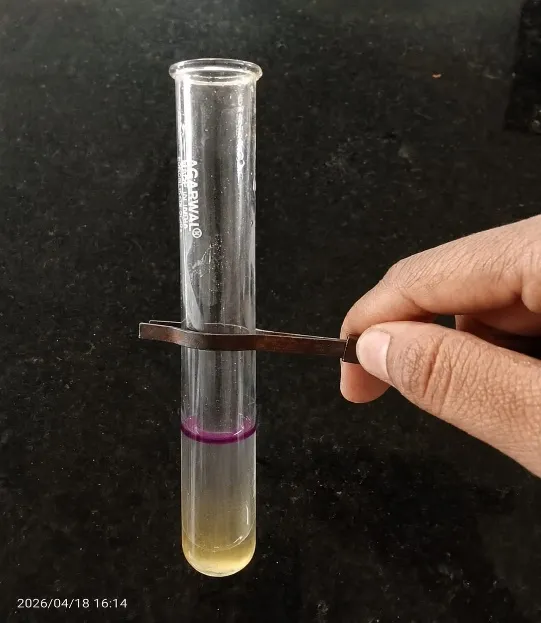
Figure 5. Lead acetate test showing yellow precipitate confirming flavonoids and Molisch test showing violet ring indicating carbohydrates.
4. DISCUSSION
The preparation of herbal gummies using orange peel powder as the active constituent was feasible with simple, widely available food-grade excipients. The three formulations differed only in the quantity of orange peel powder incorporated, which allowed for a controlled assessment of how increasing herbal load influences the physicochemical and sensory attributes of the gummy matrix.
Organoleptic evaluation is among the most practically relevant quality assessments for chewable dosage forms, since patient acceptability determines whether a formulation will be consumed as intended. All three formulations were visually attractive, with a consistent orange colour that consumers would associate with the citrus flavour profile. The mild citrus aroma and the predominantly sweet taste with background bitterness observed in this study are characteristic of orange peel-containing preparations. Prior work by Londoño-Londoño et al. has confirmed that the bitterness associated with citrus peel is largely due to limonin and naringenin, and that this can be modulated by sweetening agents without compromising the bioactive content [11]. The transition from soft elastic texture in F1 and F2 to a firmer consistency in F3 can be explained by the displacement effect of increased particulate matter within the gelatin network. As orange-peel powder concentration rises, it occupies a larger fraction of the gel volume, reducing the space available for water and disrupting the continuity of the protein network, thus stiffening the matrix.
The solubility data reflect a similar trend. F1, with the lowest solid load, allowed faster water penetration and complete dissolution within 15 to 20 minutes. F3 required nearly twice that time. While slow dissolution may be a limitation in terms of immediate release, it could be an advantage if sustained retention of the flavonoids in the oral cavity or upper gastrointestinal tract is desired, since hesperidin has been found to undergo partial absorption from the small intestinal epithelium over extended contact times [12].
Weight variation within each batch showed some scatter, particularly in F1, which had an individual reading as low as 5.203 g and as high as 7.760 g. This level of variability is common in manually prepared laboratory-scale gummies and is attributable to uneven pouring rather than formulation instability. Standardisation of mould filling using a calibrated dispenser or syringe would likely reduce this variation substantially in a scaled-up or semi-automated preparation process. The increasing mean weight from F1 to F3 is simply a function of the added mass of herbal powder, since all liquid components were identical.
The pH values measured across the three formulations (4.05 to 4.36) are consistent with citric acid-buffered systems and are important for two reasons. First, they indicate that the formulation is unlikely to irritate the oral or gastric mucosa. Second, flavonoids are generally more stable at mildly acidic pH values. Studies on the stability of hesperidin have shown that degradation accelerates significantly at alkaline pH and is considerably slower in the pH range of 4 to 5 [13]. The acidic environment maintained by citric acid therefore serves a dual purpose of flavour enhancement and active ingredient stabilisation.
The swelling index of 16.25% is moderate and reflects the hydrophilic nature of the gelatin network. Gelatin, being a protein derived from partial hydrolysis of collagen, swells considerably in aqueous media through hydrogen bonding between water molecules and the polar amino acid residues of the gelatin chains [7]. A moderate swelling index implies that the gummy will not disintegrate instantly in the mouth or gastric fluid but will gradually soften and release its contents, an attribute that can be considered favourable for flavonoid bioavailability. Excessively high swelling could be unpleasant texturally, while very low swelling might indicate poor hydration and poor drug release.
The phytochemical confirmation of flavonoids by the lead acetate test is of direct relevance to the therapeutic rationale for this formulation. Hesperidin, the principal flavonoid in sweet orange peel, has been shown in numerous in vitro and in vivo studies to exert antioxidant, anti-inflammatory, and lipid-lowering effects [3,6]. Its inclusion in an accessible, consumer-friendly gummy format addresses a real gap in delivery of plant-derived bioactives, particularly to populations who struggle with conventional tablets or capsules. The positive Molisch test is a straightforward confirmation of the sugar and honey content, which also serves as indirect evidence that the formulation's physical structure arises from the expected saccharide-gelatin interactions. These interactions are fundamental to the texture and mouthfeel of gummy products and have been studied in the context of composite hydrogel formation [2,10].
Comparing the three formulations holistically, F2 appears to offer the best balance between adequate herbal content (2 g orange peel powder), acceptable texture, reasonable dissolution time, and weight uniformity. F1, while softer and faster dissolving, may deliver insufficient herbal dose per unit. F3, though rich in active ingredient, exhibited reduced elasticity and moderate stickiness that could affect consumer experience and storage performance. These observations suggest that F2 is the most suitable candidate for further development, including stability studies and in vitro release profiling.
CONCLUSION
Orange peel based herbal gummies were successfully prepared using three formulations with varying concentrations of orange peel powder while maintaining constant proportions of gelatin, honey, sugar, citric acid, and distilled water. The formulations were evaluated comprehensively for organoleptic properties, solubility, weight variation, pH, swelling index, and phytochemical composition. All three formulations demonstrated acceptable colour, aroma, and flavour. Increasing orange peel powder concentration from 1 g to 3 g progressively increased firmness, dissolution time, mean gummy weight, and stickiness, while pH values remained within the acceptable mildly acidic range of 4.05 to 4.36. The swelling index of 16.25% is consistent with gelatin-based hydrogel systems and indicates suitable hydrophilic behaviour. Phytochemical screening confirmed the retention of flavonoids and carbohydrates in the finished dosage form, supporting the therapeutic relevance of the formulation. Based on the overall evaluation, F2 was identified as the most balanced formulation. Future work should address accelerated stability studies, in vitro release testing, quantitative estimation of hesperidin content, and sensory panel evaluation to confirm consumer acceptability. The study establishes a sound scientific foundation for the development of orange peel based herbal gummies as a practical, palatable, and bioactive nutraceutical dosage form.
REFERENCES





Srushti Chandrakant Borade*, Shivani Bhausaheb Chavan, Prerana Tanaji Borade, Sakshi Laxman Bodke, Lalan Wagh, Avinash Darekar, Preparation And Evaluation Of Orange Peel Based Herbal Gummies, Int. J. Sci. R. Tech., 2026, 3 (6), 409-418. https://doi.org/10.5281/zenodo.20557546
 10.5281/zenodo.20557546