

We use cookies to ensure our website works properly and to personalise your experience. Cookies policy
RJS College Of Pharmacy Kokamthan
Asthma is a chronic inflammatory respiratory disorder characterized by bronchial hyper-responsiveness, airway obstruction, wheezing, coughing, and shortness of breath. Despite the availability of modern anti-asthmatic drugs, long-term use is often associated with adverse effects, leading to increased interest in herbal medicines. Ficus religiosa Linn., commonly known as Peepal tree, is a medicinal plant widely used in traditional systems of medicine for the treatment of respiratory disorders. The leaves of Ficus religiosa contain various phytoconstituents such as flavonoids, phenolic compounds, tannins, saponins, kaempferol, quercetin, catechin, and alpha-amyrin which contribute to its pharmacological activities. The present review focuses on the anti-asthmatic potential of Ficus religiosa leaves, including their bronchodilator, anti-inflammatory, antioxidant, and mast cell stabilizing properties. Experimental studies have demonstrated that leaf extracts reduce histamine-induced bronchospasm and improve airway function. The review also summarizes phytochemical screening, formulation approaches, evaluation parameters, and in-vitro anti-asthmatic studies using goat tracheal chain models. Based on available evidence, Ficus religiosa may serve as a promising herbal candidate for supportive management of asthma. However, further clinical and toxicological studies are required to establish its safety, efficacy, and therapeutic application in humans.
Ficus religiosa L, commonly known as the Peepal tree, is an important medicinal plant belonging to the family Moraceae. It is widely used in traditional systems of medicine such as Ayurveda for the treatment of respiratory disorders including asthma, cough, bronchitis, and other inflammatory diseases. The leaves of Ficus religiosa contain several bioactive constituents such as flavonoids, tannins, saponins, phenolic compounds, sterols, catechin, quercetin, kaempferol, arginine, and alpha-amyrin which are responsible for various pharmacological activities.
Asthma is a chronic inflammatory disorder of the airways characterized by bronchial hyper-responsiveness, reversible airway obstruction, excessive mucus secretion, wheezing, chest tightness, and difficulty in breathing. Medicinal plants possessing bronchodilator, anti-inflammatory, antioxidant, and expectorant activities are considered beneficial in asthma management. Extracts of Ficus religiosa leaves have shown promising anti-asthmatic activity through relaxation of bronchial smooth muscles, reduction of airway inflammation, and protection against oxidative stress.
Traditionally, fresh leaf juice mixed with honey is used to relieve cough and breathlessness. Decoctions prepared from the leaves are also used in chronic respiratory conditions. Scientific studies on animal models have demonstrated that ethanolic extracts of Ficus religiosa leaves exhibit bronchodilator and anti-asthmatic effects by reducing histamine-induced bronchospasm and improving respiratory function.
Although several studies support its medicinal potential, extensive clinical studies in humans are still limited. Therefore, Ficus religiosa may serve as a supportive therapy along with conventional anti-asthmatic treatment. Further research is required to establish its safety, efficacy, and clinical application.
ASTHMA
Asthma is a chronic inflammatory disorder of the respiratory airways characterized by reversible airway obstruction, bronchial hyper-responsiveness, inflammation, and increased mucus production. Narrowing of the airways makes breathing difficult and leads to symptoms such as wheezing, coughing, chest tightness, and shortness of breath.
TYPES OF ASTHMA
1. Allergic Asthma
2. Non-Allergic Asthma
3. Exercise-Induced Asthma
4. Occupational Asthma
5. Nocturnal Asthma
6. Drug-Induced Asthma
7. Cough Variant Asthma
CLASSIFICATION OF ANTI-ASTHMATIC DRUGS
1. Bronchodilators
These drugs relax bronchial smooth muscles and provide quick relief.
β2-Adrenergic Agonists
Anticholinergics
Methylxanthines
2. Anti-Inflammatory Drugs
These drugs reduce airway inflammation.
Corticosteroids
Mast Cell Stabilizers
3. Leukotriene Modifiers
4. Monoclonal Antibodies
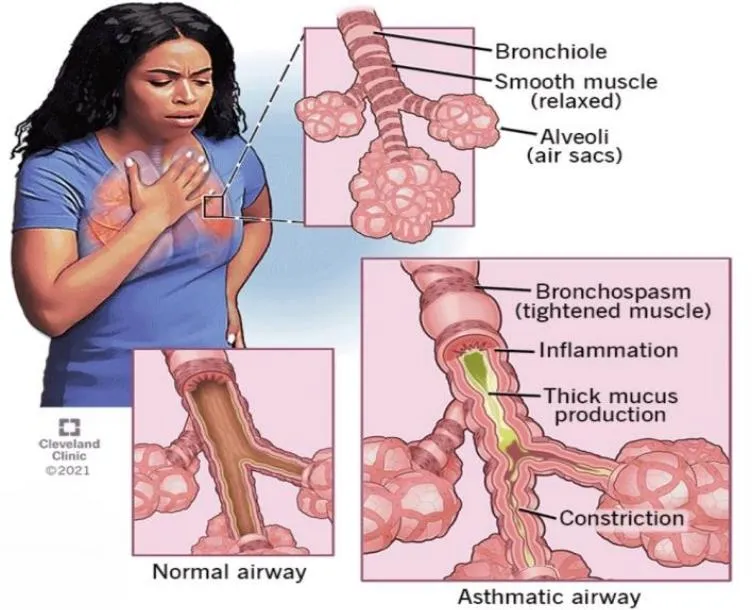
Fig no 1 : Asthma Attack
CAUSES OF ASTHMA
Genetic Factors
Allergens
Environmental Factors
Respiratory Infections
Exercise
Climatic Conditions
Occupational Exposure
PRECAUTIONS AND PREVENTION
MECHANISM OF ASTHMA
During asthma attack, the bronchial smooth muscles constrict causing narrowing of the airways. Inflammatory mediators increase swelling of airway lining and stimulate excessive mucus production. These changes obstruct airflow and lead to breathing difficulty.
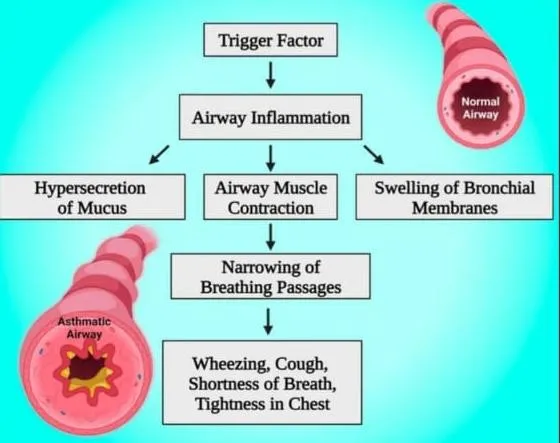
Fig no 2 : Mechanism Of Asthma
OBJECTIVES
PLANT PROFILE
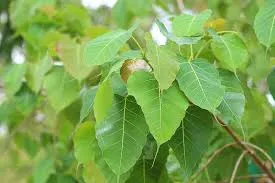
Fig no 3 : Ficus religiosa L.
MATERIALS AND METHODS
|
Sr. No |
Ingredients |
Role |
|
1 |
Ficus religiosa extract |
Anti-asthmatic agent |
|
2 |
Mannitol |
Diluent |
|
3 |
Crospovidone |
Superdisintegrant |
|
4 |
Microcrystalline cellulose |
Adsorbent |
|
5 |
Sucrose |
Sweetener |
|
6 |
Magnesium stearate |
Lubricant |
|
7 |
Talc |
Glidant |
Materials Used
METHOD :
PREPARATION OF TABLET FORMULATION
Step 1: Preparation of Extract : Dry the extract in hot air oven to obtain dry powder.
Step 2: Sieving : Pass all ingredients through sieve no. 60 to ensure uniform particle size.
Step 3: Mixing : Mix extract powder, microcrystalline cellulose, and mannitol. Add crospovidone and mix thoroughly for 10–15 minutes.
Step 4: Lubrication : Add magnesium stearate and talc. Mix gently for 2–3 minutes.
Step 5: Compression : Compress the blend using single punch or rotary tablet machine using low compression force.
Step 6: Packaging : Store tablets in airtight containers protected from moisture.
EVALUATION OF POWDER BLEND
Angle of repose is the maximum angle formed between the surface of powder heap and horizontal plane. It indicates flow property of powder blend.

Where:
|
Angle of Repose |
Flow Property |
|
<25° |
Excellent |
|
25–30° |
Good |
|
30–40° |
Passable |
|
>40° |
Poor |
Bulk density is the ratio of mass of powder to bulk volume before tapping.

Where:
Tapped density is the ratio of mass of powder to tapped volume after mechanical tapping.
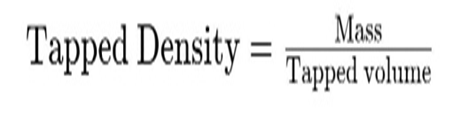
Where:
Carr’s index indicates compressibility and flow behavior of powder blend.
Calculated using bulk density and tapped density values.

Where:
|
Carr’s Index |
Flow Character |
|
5–15% |
Excellent |
|
16–20% |
Good |
|
21–25% |
Fair |
|
>25% |
Poor |
Hausner’s ratio indicates interparticle friction and flowability of powder.

|
Hausner Ratio |
Flow Property |
|
1.00–1.11 |
Excellent |
|
1.12–1.18 |
Good |
|
1.19–1.25 |
Fair |
|
>1.25 |
Poor |
Percentage Friability (F) = (Iw – Fw) / Iw x 100
Where:
Drug release study was performed using dissolution apparatus maintained at 37 ± 0.5°C and analyzed using UV spectrophotometer.
IN-VITRO ANTI-ASTHMATIC STUDY
Reduction in histamine-induced contraction indicated bronchodilator activity.
CONCLUSION
Ficus religiosa leaves possess significant anti-asthmatic potential due to the presence of flavonoids, phenolic compounds, saponins, and other phytoconstituents. The plant exhibits bronchodilator, anti-inflammatory, antioxidant, and expectorant activities which are beneficial in asthma management. Formulation of fast disintegrating tablets containing Ficus religiosa extract may provide rapid onset of action and improved patient compliance. Further clinical studies are necessary to establish its therapeutic efficacy and safety in humans.
REFERENCES

Bahirat Gayatri Nitin*, Utkarsha Lasure, Review On Anti-Asthmatic Activity Of Ficus Religiosa Leaves, Int. J. Sci. R. Tech., 2026, 3 (5), 1166-1175. https://doi.org/10.5281/zenodo.20454453
 10.5281/zenodo.20454453