

We use cookies to ensure our website works properly and to personalise your experience. Cookies policy
Soibugh, Budgam
Maladaptive Daydreaming (MD) is a psychological phenomenon characterized by excessive, immersive fantasy activity that interferes with daily functioning. This paper explores MD as an "internal theatre," where individuals construct elaborate narratives that provide temporary relief but ultimately disrupt concentration, productivity, and emotional regulation. Using qualitative and literature based methods, the study highlights the cognitive mechanisms, behavioural patterns, and psychosocial consequences of MD. Findings suggest that Maladaptive Daydreaming is distinct from normative imagination, requiring recognition as a clinical concern.
Daydreaming is a universal cognitive process, often serving adaptive functions such as creativity, problem solving, and emotional regulation. However, maladaptive daydreaming (MD), first conceptualized by Eli Somer (2002), represents a pathological variant. MD involves prolonged, vivid, and compulsive fantasy immersion, often triggered by music, media, or stress. Unlike ordinary imagination, MD disrupts academic performance, social relationships, and mental health.
This paper frames MD as an "internal theatre," where individuals act as both playwright and audience, trapped in cycles of narrative construction.
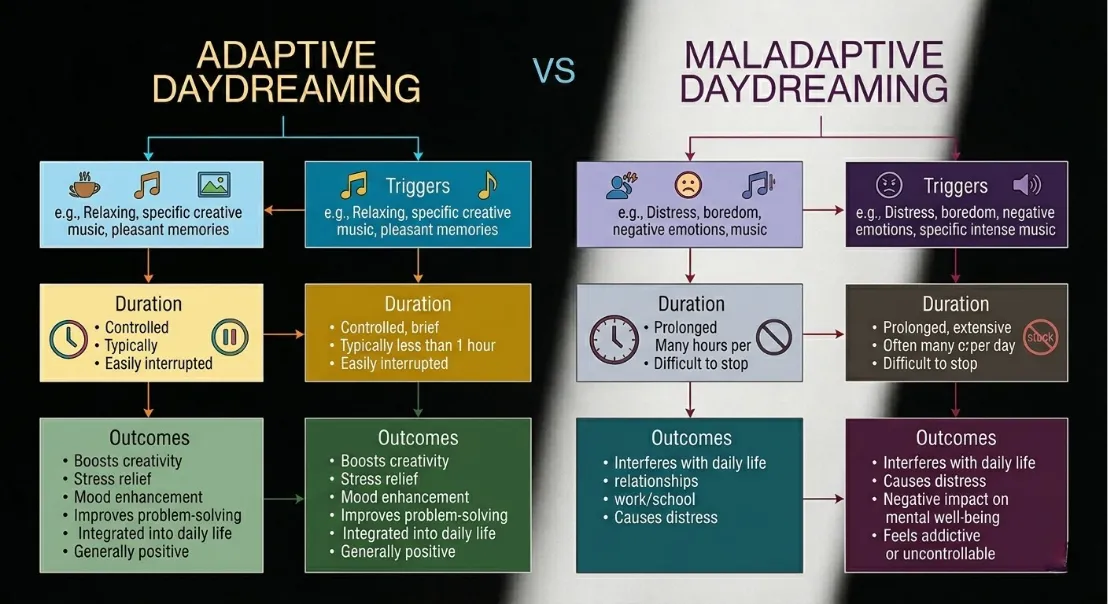
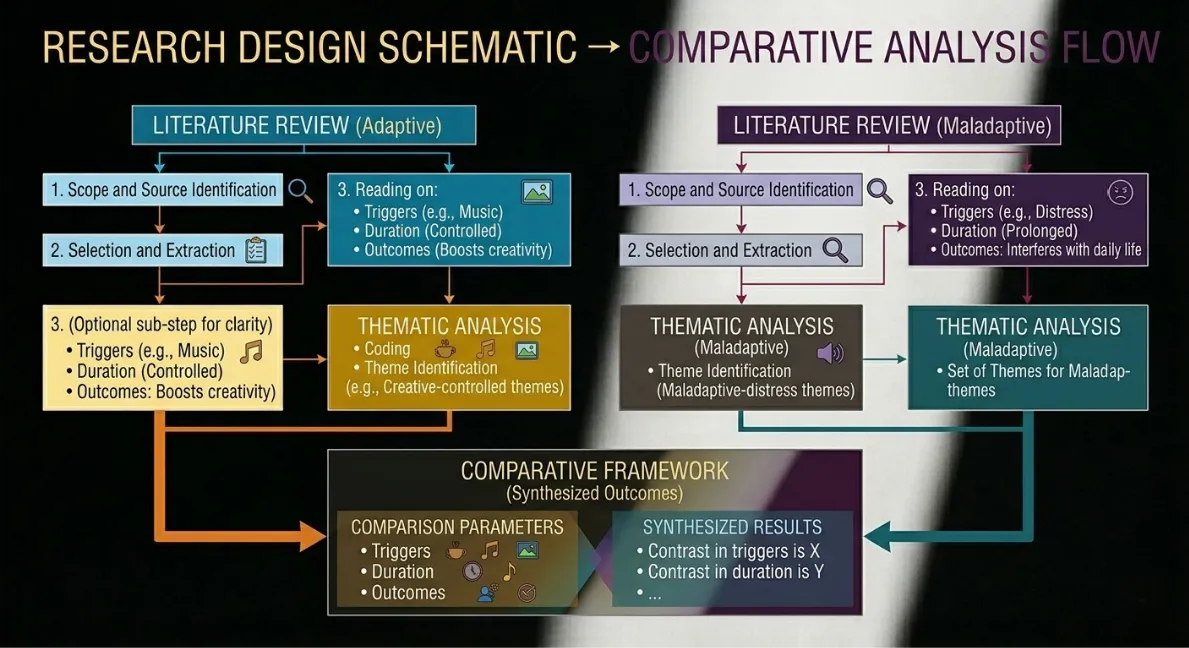
Fig.2. Research Design
LITERATURE REVIEW:
peer- reviewed articles, case studies, and psychological assessments on MD.
QUALITATIVE ANALYSIS:
thematic synthesis of reported experiences from MD communities and clinical observations.
COMPARATIVE FRAMEWORK:
differentiation between adaptive daydreaming and maladaptive patterns.
RESULTS:
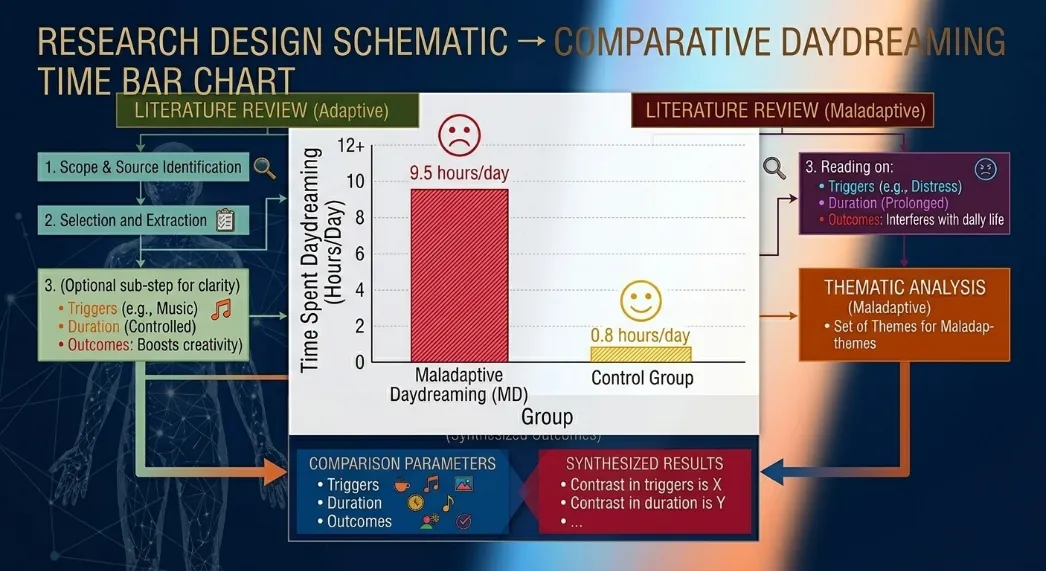
Fig.3. Bar Chart
DISCUSSION:
The metaphor of the "internal theatre" captures the immersive and performative nature of MD. While adaptative daydreaming fosters creativity, MD hijacks attentional resources, creating a paradox: individuals gain temporary emotional relief but suffer long term dysfunction. The compulsive quality suggests links to behavioural addictions, while the dissociative aspects align with trauma related coping mechanisms.
Recognition of MD as a distinct clinical entity is crucial for developing interventions. Cognitive behavioural therapy (CBT), mindfulness, and structured routines show promise in reducing maladaptive patterns.
CONCEPTUAL MODEL OF THE INTERNAL THEATRE CYCLE
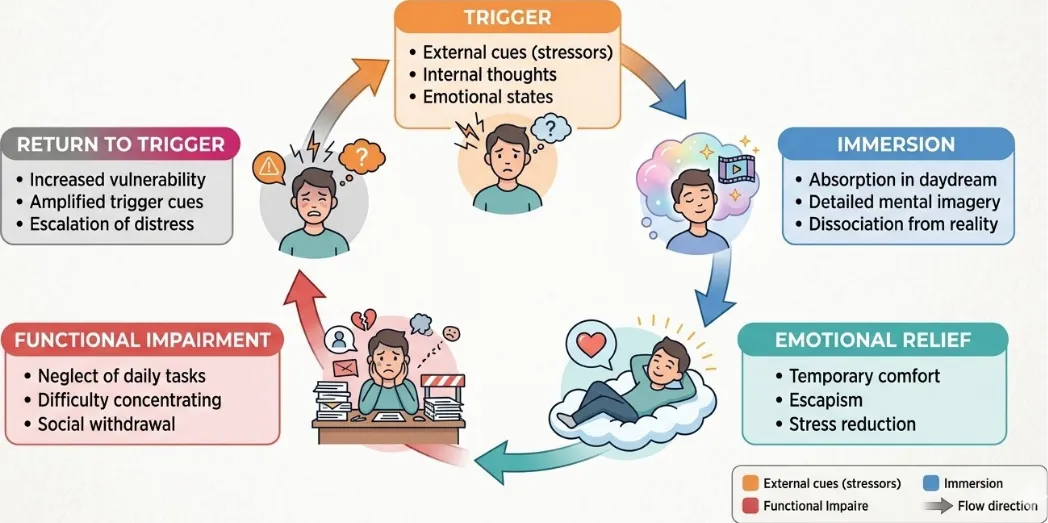
Fig.4. Internal Theatre Cycle
CONCLUSION
Maladaptive daydreaming is more than excessive imagination it is a disruptive psychological condition that transforms the mind into an " internal theatre," understanding it's mechanisms and impacts is essential for clinical recognition and treatment. Future research should focus on standardized diagnostic criteria, therapeutic approaches, and the neurocognitive basis of MD.
REFERENCES

Aaimah Hafiz*, The Internal Theatre, Int. J. Sci. R. Tech., 2026, 3 (6), 1142-1144. https://doi.org/10.5281/zenodo.20772034
 10.5281/zenodo.20772034