

We use cookies to ensure our website works properly and to personalise your experience. Cookies policy
Naval War College, Goa
The Arctic is undergoing rapid transformation, emerging from a frozen polar “cap” into a geopolitical and geoeconomic arena of global significance. Melting ice is unlocking new shipping routes, exposing abundant resources, and triggering strategic recalibrations among major powers. India, with its growing global stature and observer status in the Arctic Council, has taken initial steps through its 2022 Arctic Policy. However, its engagement remains largely science-driven, with limited traction across strategic, economic, and institutional domains. This article critically examines the gaps between policy intent and strategic execution, identifying key constraints, such as institutional inertia, lack of infrastructure, geopolitical caution, and limited expertise. It advocates for a calibrated shift from a research-oriented approach to a strategy-led Arctic engagement, anchored in four enablers. The article concludes with a call for a long-term, multi-stakeholder roadmap that aligns with India’s aspirations of global leadership and sustainable development.
“As new opportunities open up in the Arctic, India must enhance its capabilities and augment its capacities. From science and exploration to seafaring and economic cooperation, India’s engagement with the Arctic must be supported by development of a robust human, institutional and financial base in keeping with the philosophy of Aatma Nirbhar Bharat.”
Section 7.0.1 of India’s Arctic Policy, 2022.[1]
The Arctic region is commonly defined as the portion of land and water North of 66.5°N parallel which is also called as the Arctic Circle. It consists of about 6% of the earth surface and is approximately 1.5 times the size of USA.[1] The region is home to the Arctic Ocean, one amongst the five oceans of the world. Eight countries, known as the Arctic States, form part of the region. Often perceived as a remote and frozen expanse, the Arctic has emerged as a focal point of global attention in the recent decades due to melting of ice and shifting geopolitical dynamics. These changes have eased access to the region's abundant natural resources, including oil, gas, minerals, and fisheries. Importantly, it is becoming increasingly significant for global maritime trade with new navigational possibilities.
India and the Arctic
Although, India was linked to the Arctic with the signing of the Spitsbergen Treaty in 1920, the formal engagement with the Arctic began in 2007 with its first expedition to Svalbard.[2] Geopolitically, India's interest in the Arctic has evolved, with formal engagement intensifying in 2013 when India was granted observer status in the Arctic Council.[2] India's Arctic Policy, released in 2022, underscores its commitment to scientific research, climate protection, and sustainable development in the region, steering clear of contentious stances like those adopted by some other observer nations.[3]
Arctic Policy of India 2022
As a growing global power with a rapidly expanding economy, India recognizes the economic potential of the Arctic's resources and their trade routes. In addition to its economic interests, India has also identified strategic concerns in the Arctic, such as the potential impact on global climate patterns and the need to ensure peaceful and cooperative governance of the region. This is reflected in the Arctic Policy promulgated by India in 2022. India envisions a proactive role in the Arctic, balancing its economic aspirations with its commitment to environmental sustainability. India's strategic interests will focus on promoting peaceful cooperation in the region, advocating for responsible resource exploitation, and safeguarding the rights of indigenous Arctic communities. Economically, India aims to leverage its expertise in technology and renewable energy to contribute to sustainable development in the Arctic. One of India's primary strategic interests in the Arctic is to ensure that the region remains an area of peaceful cooperation recognizing international law.[4]
The Arctic Pillars
India’s Arctic Policy rests on six pillars namely Science and Research; Climate and Environmental Protection; Economic and Human Development; Transportation and Connectivity; Governance and International Cooperation; and National Capacity Building. India's sustained activity has been largely confined to Pillars 1 and 2, and the rest of the four pillars have been largely aspirational. Some of the reasons for India not quite developing an Arctic edge are as enumerated below and analysed later:
Science and not Strategy has been Pushing India to Newer Frontiers
India’s engagement with the polar regions, Antarctica since 1981 and the Arctic since 2007, has been driven primarily by scientific imperatives, rather than considerations of economics, diplomacy, or strategic power projection.[1] The lead agency for both regions has been the Ministry of Earth Sciences (MoES), rather than the Ministry of External Affairs (MEA). This institutional anchoring ensured that India’s polar initiatives developed with a strong scientific orientation right from the outset. Therefore, India’s early missions focused on research in glaciology, oceanography, meteorology, atmospheric sciences, and climate modelling.[4] The establishment of the Indian Antarctic Programme (1981) and the subsequent setting up of research stations like Maitri and Bharati in Antarctica, as well as Himadri (2008) in the Arctic (Svalbard, Norway), reflected this science-led trajectory.
The Arctic expeditions, in particular, were initiated in a spirit of global scientific collaboration to understand climate change and its implications for monsoonal and oceanic systems in the Indian subcontinent.[5] Moreover, by positioning itself as a neutral, research-oriented actor, India has managed to navigate the highly politicised and sensitive geopolitical environment of the Arctic without triggering regional or great power tensions. Science, being a relatively non-contentious and cooperative domain, has provided India with a diplomatically safe entry point into the Arctic, especially as an Observer State in the Arctic Council since 2013. While India's scientific contributions are well-regarded, this early focus on research has also led to a relative underdevelopment of the economic, strategic, and diplomatic dimensions of its polar engagement, particularly in the Arctic, where other major powers have begun asserting strategic and commercial interests. India therefore needs to make efforts on pillars other than Science and Research (Pillar 1), Climate and Environmental Protection (Pillar 2).
Lack of an Arctic Strategic Vision in India’s Maritime Policy
India’s maritime policy has traditionally focused on the Indian Ocean Region (IOR) as the primary area of interest and the South China Sea and the West Pacific as the secondary areas of interest, thus consuming India’s diplomatic and military bandwidth. Initiatives such as SAGAR (Security and Growth for All in the Region), also reflect a primarily regional outlook. Though India’s Maritime Doctrine (2009) – INBR 8 makes a passing reference to Antarctica as an area of maritime interest, the Arctic is conspicuously absent from any formal strategic maritime articulation.[6] This reflects a broader issue of Arctic’s strategic neglect, or what may be termed “Arctic blindness,” wherein India lacked a coherent vision or policy direction for the region until the release of its first Arctic Policy in 2022. Although the policy outlines six broad pillars mentioned earlier, it falls short of providing a concrete strategy, implementation roadmap, or institutional mechanism for translating these objectives into action. The vision of Arctic is seen as peripheral, not central to national security or foreign policy. MAHASAGAR (Mutual and Holistic Advancement for Security and Growth Across Region) signals strategic continuity also in the Indian Ocean just, expanding SAGAR’s scope to embrace trade, development, and security.[4] This venture once again fails to embrace a strategic vision for the Arctic. Therefore, India must promulgate a separate strategy as the Indo- Arctic Strategy to make efforts on pillars other than Science and Research (Pillar 1), Climate and Environmental Protection (Pillar 2).
Caution Amidst Geopolitical Tensions and Sanctions
The Arctic Council, established in 1996, has been the principal intergovernmental forum for fostering cooperation, coordination, and interaction among Arctic states and observer nations on issues such as environmental protection, sustainable development, and indigenous rights.[4] However, since the outbreak of the Russia–Ukraine war in February 2022, the Council has become functionally paralysed, with seven of the eight Arctic states (excluding Russia) suspending cooperation with Moscow.[5] This has significantly disrupted the Council’s working groups, projects, and consensus-based mechanisms, thereby limiting the scope for multilateral engagement in the region. For India, an Observer State in the Arctic Council since 2013, this institutional dysfunction has further complicated its efforts to deepen diplomatic and governance-oriented engagement in the region. India's Arctic Policy (2022) identifies Governance and International Cooperation (Pillar 5) as one of its key pillars, underscoring its commitment to uphold international law, contribute to rulemaking, and support indigenous communities. However, in practice, this remains one of the least developed pillars, largely due to the volatile geopolitical environment and India’s traditionally cautious and non-aligned posture in global affairs.
India has sought to avoid entanglement in great power rivalries in the Arctic, particularly given the increasing strategic assertiveness of China, which has declared itself a “near-Arctic state” and is rapidly expanding its economic and scientific footprint in the region.[1] Simultaneously, India remains mindful of its longstanding defence and energy ties with Russia, even as it maintains growing strategic cooperation with the United States and key Arctic NATO members. In this context, Pillar 5 becomes a diplomatically sensitive arena. India’s approach has been one of quiet diplomacy, cautious engagement, and scientific neutrality, designed to safeguard its observer status without provoking tensions with any major Arctic stakeholders. As a result, while India supports multilateral governance principles and cooperative frameworks in the Arctic, it has yet to articulate a clear diplomatic or strategic role for itself in the evolving architecture of Arctic governance.
Low Economic Stakes and Industry Interest
India’s lack of a coherent Arctic maritime vision is evident in its gaps in hard infrastructure. The country operates no polar‑class ships or icebreakers of its own and still charters foreign vessels for every polar expedition. Without a government‑owned, ice‑strengthened research platforms or an ice‑class commercial fleet, the private sector has little incentive to pursue High‑North ventures. Since summers are the best time to work in the poles and since the summers alternate in the poles, the ship can be put to use at both the poles. Indian conglomerates obtain quicker, higher‑margin returns from hydrocarbons in West Asia, minerals in Africa, or container transshipment in the Indo‑Pacific, and have shown no sustained appetite for Arctic mining, shipping, or energy projects beyond minority stakes such as ONGC Videsh’s frozen involvement in Russia’s Yamal LNG.[7] With industry sidelined, the Economic and Human Development (Pillar 3) remains an aspiration rather than a programme. The contrast with China is stark: Beijing brands itself a “near‑Arctic State,” already operates two indigenously built icebreakers (Xue Long and Xue Long 2) and is financing Yamal LNG, the Polar Silk Road, and deep‑water ports along the Northern Sea Route, giving it concrete assets and strategic leverage that India currently lacks.[5]
Absence of an External Inter-Ministerial Coordination Mechanism
Able administration is the sine qua non of an effective Arctic posture. India’s 2022 Arctic Policy therefore, set up an inter‑ministerial “Empowered Arctic Policy Group” (EAPG) as the governance and review mechanism for its Action Plan, bringing together officials from no fewer than 18 ministries and agencies and charging them with setting timelines, budgets and deliverables for every pillar of the policy. Therefore, internally under the aegis of NMSC, EAPG ensures co-operation, coordination and collaboration amongst various agencies. Externally, India still handles Arctic affairs piecemeal through its resident ambassadors in each circumpolar state; there is no single Arctic envoy who can speak for New Delhi across the region. Creating a dedicated “Arctic Ambassador‑at‑Large” would mirror the practice of several observer states and give India a thematic diplomatic focal point that could translate EAPG decisions into coherent outreach and negotiation. Until and unless India aligns this internal machinery with a single external voice, National Capacity Building (Pillar 6) will remain more rhetoric than reality.
Limited Knowledge Ecosystem in India on Arctic
respectively in 2024 India’s Arctic engagement continues to suffer from a limited institutional and intellectual ecosystem, with only a handful of Arctic-focused scholars, research institutions, or strategic think tanks addressing the region in any depth. Unlike some other major powers, India lacks a dedicated Arctic Centre (under either the MEA or MoD) to coordinate cross-disciplinary research, strategic forecasting, or policy innovation. The setting up of a Centre for Arctic Studies at NWC Goa in 2024 is, therefore, an important step, albeit not sufficiently recognised. This institutional void has led to significant knowledge and capability gaps, especially in areas like Arctic governance, economics, maritime law, and resource diplomacy, impeding the formulation of a long-term national strategy for the region. As a result, Arctic engagement remains a low budgetary and political priority when compared to India’s research in other sciences. NCPOR, which deals with the Arctic, the Antarctic and the Southern Ocean received about 24.75 crores, whereas the other institutes like Indian Institute of Tropical Meteorology and National institute of Ocean Technology received 85.5 Crores and 55 crores -25.[7]India has spent about Rs 39 Crores (about 4.3 Million Dollars) in Arctic research in the last 05 years.[5] Whereas, the expenditure towards Arctic by other countries is as given in the figure below. This highlights the urgent need for institutional reform and strategic vision if India is to be a serious stakeholder in the evolving Arctic order.
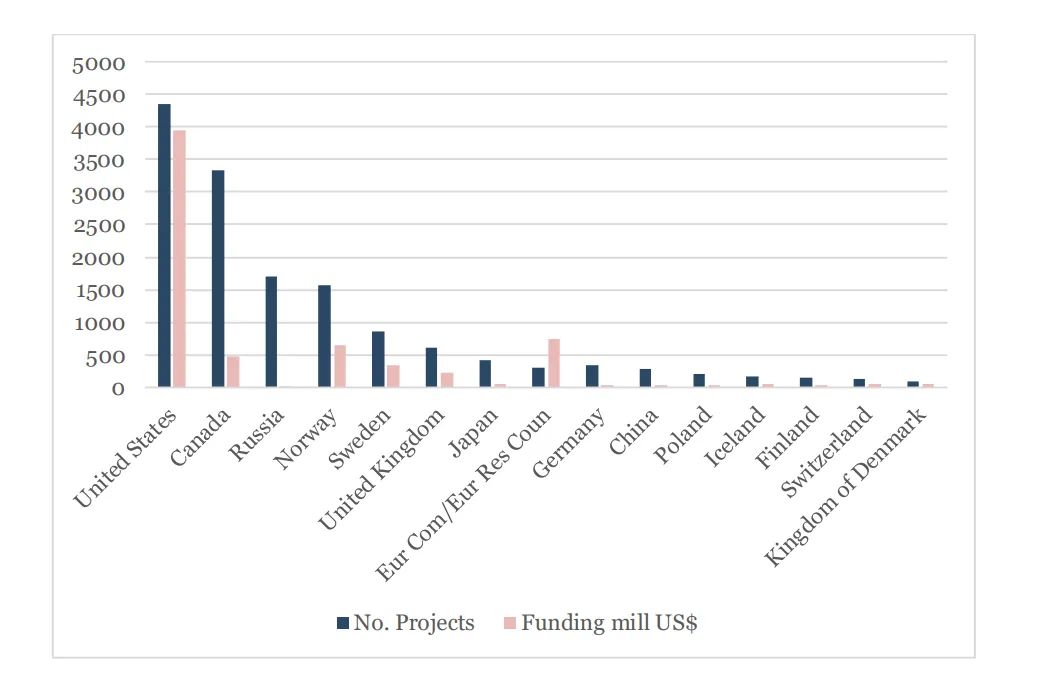
Fig.1. – Spendings by Countries in the Arctic - 2016-2023[2]
The Answer
To fully realize the intent and potential of the six pillars outlined in India’s Arctic Policy, the country must transition from a predominantly science-led approach to a comprehensive strategy-driven framework. This evolution, from policy to actionable strategy, requires the development of key operational enablers that can support long-term national interests in the Arctic. This transition can be understood through four critical enablers, which are robust administration; training and development of a pool of Subject Matter Experts (SMEs); infrastructure development and operational readiness for Polar Engagement. These are explained below.
Robust Administration
A coherent institutional architecture is indispensable for India’s Arctic engagement if it is to evolve from an aspirational strategy into a sustained operational capability. A strong inter‑ministerial framework, anchored domestically and interfaced through external diplomatic mechanisms ensures policy continuity, efficiency in resource allocation, and a streamlined voice in multilateral polar fora. Goa offers a uniquely favourable ecosystem to serve as the national convergence point of these efforts. The state already hosts the National Centre for Polar and Ocean Research (NCPOR), which functions as India’s official nodal agency for Antarctic and Arctic missions. It is supported by a robust scientific and maritime base that includes the CSIR‑National Institute of Oceanography (NIO), the National Institute of Hydrography (NIH), and the Naval War College (NWC), each contributing complementary expertise across the scientific‑strategic spectrum.
Branding Goa as India’s “Polar Capital” would institutionalize this synergy, enabling the following:
This approach does not dilute NMSC’s critical role; rather, it creates a structured domain of execution and expertise under their policy direction paralleling how space research operates through ISRO and Indo‑Pacific strategy through relevant maritime and diplomatic frameworks. In this sense, Goa would serve as the “Polar Implementation Node” under sovereign policy control, enhancing and not diffusing, strategic authority.
Training and Development of a Pool of Subject Matter Experts (SMEs)
For India to be recognized as a credible Arctic stakeholder, it must cultivate a deep bench of Arctic‑literate professionals spanning scientists, strategists, diplomats, mariners and legal experts, capable of articulating national interests in multilateral settings and translating them into actionable outcomes. At present, however, India’s institutional base remains shallow. As of mid‑2025, only five Indian universities are members of the University of the Arctic (UArctic), a strikingly low figure given India’s thousand‑plus higher‑education landscape.[3] This reflects a limited academic and training pipeline that must be rapidly expanded if India is to move from observer to influencer in polar governance.
Human capital is the strategic hinge of any future Arctic engagement. Training must be viewed not as a compliance requirement but as a strategic asset. Rapidly retreating sea ice is widening navigable windows across the Northern Sea Route and other trans‑Arctic corridors. Climate models do predict that standard vessels may operate in these waters for nearly twice as long by mid‑century.[7] As the global commercial and scientific spotlight shifts northward, India must be ready with officers certified under the IMO Polar Code, environmental and maritime lawyers familiar with polar jurisdictions, and negotiators proficient in indigenous rights, fisheries, and Arctic governance mechanisms.
Analogous precedents already exist. India painstakingly built domain expertise in international maritime law, disarmament diplomacy, cyber regulation, and treaty negotiations which were fields once dominated by external experts but now sustained by homegrown specialists across ministries and think tanks. The same model can be replicated for polar studies such as a structured pipeline of academic programmes, interdisciplinary certifications, and bilateral training partnerships coordinated through the proposed Goa “Polar Capital” cluster. In essence, just as India’s mastery of space technology or nuclear safeguards emerged from dedicated cadres of trained professionals, its Arctic engagement must rest on a sustained investment in people. Expertise, after all, is infrastructure! Without it, even the most ambitious polar policy will remain declaratory rather than operational.
The Ministry of Education should incentivise more Indian universities to join UArctic, create joint chairs with circumpolar partners, and embed polar modules across navigation, environmental science and the social sciences. Dedicated fellowships, naval staff courses with Arctic electives, and civilian–military exchange programmes could seed a nationwide cadre of Subject‑Matter Experts (SMEs). Given India’s rare ability to engage both Russia (a pivotal Arctic coastal state) and the United States and its allies, a well‑trained SME pool would let New Delhi position itself as a constructive, rules‑based alternative to China’s assertive “near‑Arctic” push.[8] These SMEs, drawn from academia, industry, government, and the naval community should be formally networked to the Empowered Arctic Policy Group (EAPG), providing cross‑disciplinary advice that turns policy aspirations into concrete, strategically balanced action. The dedicated Arctic Centre at Naval war College must aim to undertake Qualitative Research on Geostrategy and Geopolitics, Shipping and Maritime Studies and Security and military Implications.
Infrastructure Development
India undertook the first ever winter operations at Himadri research station at Svalbard in the Arctic in Dec 2023.[7] A credible, year‑round Arctic presence hinges first and foremost on hardware, India must acquire ice‑class research vessels, a dedicated polar‑class icebreaker, and shore‑side logistics hubs capable of handling fuel, stores, and helicopter operations in sub‑zero conditions. These physical assets must be matched by institutional infrastructure, an integrated Polar Data Centre, interoperable satellite links for ice‑charting, and a permanent Arctic coordination cell within the MoES and MEA. At present India owns no ice‑class ship or icebreaker; every Arctic expedition charters foreign tonnage, constraining sailing windows and inflating costs. Although the National Centre for Polar and Ocean Research (NCPOR) received cabinet clearance in 2023 for a Polar Research Vessel (PRV) with DP‑2 dynamic positioning, the project is still in pre‑contract negotiations, and the earliest delivery date is 2028–29.[8] (It may take longer since the keel is yet to be laid). To compress timelines and indigenise capability under the Aatmanirbhar Bharat banner, New Delhi should finalise a government‑to‑government MoU pairing a proven ice‑ship designer—such as Finland’s Aker Arctic or Russia’s Admiralty Shipyards, with an Indian yard (e.g., Cochin Shipyard Ltd. or Hindustan Shipyard Ltd.). A phased work‑share would allow transfer of hull‑form expertise, winterisation standards, and Polar Code compliance while keeping high‑value fabrication in India.
Complementing the vessel programme, India should establish a modular logistics node in Svalbard to support Himadri Station and future scientific outposts and upgrade the National Polar Data Centre at NCPOR into a real‑time, open‑access platform linked with the Arctic Data Committee. Together, these steps along with shipbuilding partnerships, forward logistics, and robust data architecture, would give India the hard infrastructure and institutional backbone required to translate its Arctic Policy from aspiration to sustained operational reality.
Operational Readiness for Polar Engagement
India can only translate its Arctic policy into real polar operations when it can crew, sail, and sustain its own ships north of the Arctic Circle. The fundamentals are still missing. India fields the world’s fifth‑largest seafaring workforce, about 285,000 active mariners in 2023, yet fewer than 600 hold the Polar Code certificates in basic or advanced ice‑navigation, well under 0.25% of the pool.[4] DG Shipping has therefore urged training institutes to expand IMO‑approved Polar Code courses, and in 2023 New Delhi signed an agreement with Russia’s Admiral Nevelskoy Maritime University to run simulator‑based Arctic modules for Indian deck officers.[8] Until that gap is closed, India must rely on foreign crews or ad‑hoc charters for every high‑latitude cruise.
The Navy can help bridge the transition. It already mans and supports vessels for ONGC, NPOL, DRDO, and NTRO. Once the Ministry of Earth Sciences takes delivery of its planned Polar Research Vessel (PRV), the Navy could provide the inaugural crew. That arrangement would give naval personnel hands‑on ice experience while ensuring scientists have a reliable, Indian‑flagged platform. Finally, Polar Code compliance is now mandatory under SOLAS and STCW for any officer navigating in ice waters. DG Shipping should therefore incentivise at least 2,000 Polar endorsements by 2030, embed ice‑navigation modules in higher‑level tickets, and publicise scholarships that funnel seafarers through the new Russia‑India training pipeline. Coupled with periodic naval deployments to northern ports and the commissioning of an indigenous ice‑class PRV, these steps would give India the skilled crews, operational credibility, and diplomatic visibility it currently lacks, allowing it to move from a policy of aspiration to a strategy of sustained, independent polar engagement. IN ship visits and port calls to Nordic countries and ports such as Tromso, Reykjavik in the Arctic regions would facilitate stronger diplomatic relations quietly projecting a tricolour presence in Arctic littorals. IN presence would also act as a small strategic counter lever to China in the Arctic.
CONCLUSION
At a time when the Arctic is rapidly transforming, the need for a strategic policy grounded in actionable points and clear accountability is more urgent than ever. India’s commitment to “One Earth, One Family, One Future” must now extend to the polar regions, ensuring that the nation plays a pivotal role in shaping the future of Arctic governance, trade, and environmental stewardship.
India's Arctic engagement remains science-led, climate-centric, and diplomatically cautious, primarily due to a legacy of research-first entry, glaring capacity and infrastructure gaps, low economic incentives, institutional fragmentation coupled with geopolitical caution. To better execute the six pillars of the Arctic Policy, India will need a multi-stakeholder approach, capacity augmentation, and a clear strategic roadmap for integrating Arctic into its global posture. India’s journey from a science-centric Arctic policy to a dynamic, strategy-driven engagement requires sustained effort and investment across multiple enablers. By establishing robust administrative mechanisms, investing in specialized training, developing critical infrastructure, nurturing a pool of SMEs, and enhancing operational capabilities, India can secure its strategic interests in the Arctic. This graduated, multi-pronged approach is essential not only for tapping into the economic and energy benefits of the NSR but also for ensuring that the region remains a zone of peaceful cooperation under international law.
Finally, India needs to adopt a fast-paced approach to engage with the Arctic region. Engagement with Arctic is a long- term investment which requires sustained efforts to build up capabilities. Hence, constant monitoring and recalibration of these efforts are essential to their success.
REFERENCES

S. Muthu Krishnan*, Why The Arctic Remains Elusive For India: From Policy To Strategy, Int. J. Sci. R. Tech., 2026, 3 (6), 785-793. https://doi.org/10.5281/zenodo.20660465
 10.5281/zenodo.20660465