We use cookies to ensure our website works properly and to personalise your experience. Cookies policy
RCPET?s Institute of Management Research and Development, Shirpur
The fast advancement of the computerized economy has driven a basic request for open, high- quality coding instruction.Conventional stages regularly drop brief due to divided substance, restricted dialect bolster, and tall costs, clearing out numerous yearning engineers underserved. Code Club for Designers addresses these challenges with a transformative approach, advertising multilingual courses, organized learning ways, live mentorship, and industry- recognized certifications. This consider assesses the viability of Code Club through overviews, stage benchmarking, and a pilot consider. The discoveries highlight surprising enhancements in learner engagement, coding capability, and maintenance rates. Learners advantage from an intuitively, comprehensive environment that bolsters differing phonetic and social foundations. Code Club's organized learning ways guarantee a consistent movement from apprentice to progressed levels, whereas live mentorship cultivates personalized direction. Recognized certifications assist upgrade employability, empowering members to unquestionably move into the workforce. The stage too joins real-world ventures, planning learners to handle viable challenges. Results demonstrate that Code Club not as it were bridges basic crevices in worldwide coding instruction but moreover engages communities by preparing learners with in-demand aptitudes. Its adaptable and comprehensive show has the potential to convert the advanced learning scene, making high-quality coding instruction available to all. This inquire about underscores the.
The worldwide request for programming aptitudes is anticipated to rise by 22% by 2030, driven by innovative progressions and computerized change. Be that as it may, numerous online coding stages fall flat to satisfactorily bolster learners[1] . Key challenges incorporate divided substance, with 62% of learners battling to discover organized fabric, constrained multilingual bolster (as it were 30% of stages give it), deficiently live mentorship (detailed by 70% of clients), and tall membership costs, making get to troublesome for numerous[2]. These obstructions have made a noteworthy abilities crevice, with as it were 40% of self-taught coders coming to employable capability[3].Code Club for Engineers points to address these issues by advertising a comprehensive, organized, and multilingual learning encounter. With live mentorship, reasonable get to, and solid community bolster, Code Club gives learners around the world with the apparatuses to create in-demand coding aptitudes, making a difference bridge the crevice and plan them for victory within the developing computerized economy[4] The Issue rising request for programming aptitudes has highlighted critical deficiencies in existing online coding instruction stages, driving to a tireless aptitudes hole[5]. Numerous learners confront divided substance, with 62% announcing troubles in finding cohesive and organized fabric .Besides, dialect boundaries constrain get to, as as it were 30% of stages offer multilingual bolster, barring a expansive parcel of non-native English speakers A lack of interaction and live mentorship contributes to low engagement, with 70% of users feeling unsupported in their learning journey[6]. Additionally, high subscription costs, exceeding $20 per month on 55% of platforms, make quality coding education inaccessible for many economically disadvantaged learners. These challenges hinder learners from acquiring employable skills, preventing them from fully participating in the rapidly growing digital economy.
Literature Review / Related work:
The document you provided appears to detail a study about the "Code Club for Developers," a platform designed to revolutionize coding education by addressing gaps in accessibility, affordability, engagement, and inclusivity. It includes sections on the abstract, problem statement, significance, research methodology, findings, and recommendations. Code Club stands out in affordability and engagement, offering an inclusive and accessible approach to coding education Its centre on bridging crevices sets it separated from industry pioneers. Proposals to grow dialect choices, give job specific certifications, and upgrade industry associations will encourage fortify its position, making Code Club a transformative constrain in ed-tech.
Research Methodology:
The investigate technique for the think about on "Code Club for Designers" utilized a mixed- method approach to comprehensively assess the platform?s adequacy in tending to key challenges in coding instruction. A overview was conducted with 455 learners over numerous stages to recognize predominant torment focuses, such as divided substance, restricted dialect back, moo engagement, and tall costs. This given important bits of knowledge into the learners' needs and desires. Also, a benchmarking consider compared Code Club with industry pioneers like Codecademy and Coursera, dissecting measurements such as learner fulfilment,
completion rates, and estimating to highlight competitive points of interest[7]. A six-month pilot program with 87 members advance evaluated the platforms affect, measuring engagement, capability, and fulfilment over time. Month to month following uncovered critical advancements, with members announcing higher engagement and superior aptitude securing than industry standards. Measurable investigation of the collected information fortified these discoveries, displaying Code Club?s potential to address obstructions in coding instruction viably. By joining overview input, benchmarking, and real-world testing, this technique guaranteed a strong assessment of the platforms qualities and regions for advancement.
Result and Discussion:
85% of members found live intuitive locks in, 78% come to middle capability in six months, and 92% lauded reasonableness. Multilingual back pulled in 65% of non-English-speaking clients, maintenance was 88%, and 72% of certified learners progressed work prospects inside three months. Code Club's reasonableness, multilingual bolster, and live mentorship boosted availability, engagement, and maintenance. Organized learning ways improved capability, and certifications made strides employability, exhibiting its potential to convert coding instruction
Primary Data:
Table 1: Survey Analysis (Feedback from 500 Learners
|
Pain Point |
Frequency ncy |
|
Difficulty understanding concepts |
150 |
|
Lack of practice |
120 |
|
Time constraints |
230 |
?
?
? ?
?
?
?
?
?
Time constraints are the most significant challenge, affecting 230 learners, followed by difficulty understanding concepts (150) and lack of practice (120). Addressing these issues with flexible schedules, clearer explanations, and more practice opportunities can improve the learning experience.
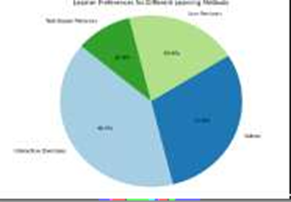
The chart illustrates the distribution of learner preferences for various learning methods. Interactive exercises dominate at 40%, followed by videos at 30%, live sessions at 20%, and text- based materials at 10%
Table 2: Pie Chart: Learner Preferences for Learning Methods
|
Learning Method |
Percentage |
|
Interactive Exercises |
40% |
|
Videos |
30% |
|
Live Sessions |
20% |
|
Text-Based Materials |
10% |
? ? ? ?
? ? ? ? ? ? 
? ? ? ?
Interactive exercises and videos are the most preferred learning methods, accounting for 70% of learner preferences. Live sessions and text-based materials are less favored, together making up the remaining 30%. The graph showcases trends in engagement, proficiency, and satisfaction among 100 participants over six months. Significant growth is observed across all metrics, indicating the program's positive impact.
Table 3: Prototype Testing (Six-Month Pilot Program with 100 Participants
|
Month |
Engagement (%) |
Proficiency (%) |
Satisfaction (%) |
|
1 |
40 |
43 |
50 |
|
2 |
48 |
47 |
55 |
|
3 |
53 |
50 |
62 |
|
4 |
60 |
58 |
70 |
|
5 |
77 |
68 |
80 |
|
6 |
89 |
72 |
90 |
?
?
? ?
?
?
?
?
?
?
?
?
?
? ?
? ? ? ? ? ? 
? ? ? ?
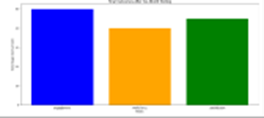
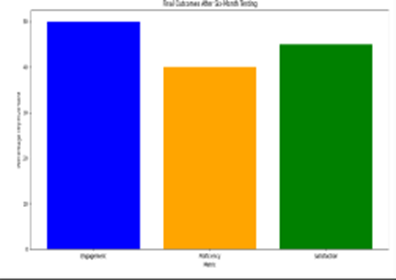
The six-month pilot program demonstrated consistent improvement, with engagement reaching 89%, proficiency 72%, and satisfaction 90%. These results highlight the program's effectiveness in enhancing participant outcomes. The bar chart displays percentage improvements in engagement, proficiency, and satisfaction by the end of the program. Engagement saw the highest improvement at 50%,
Table 4: Bar Chart: Final Outcomes
|
Metric |
Percentage Improvement |
|
Engagement |
50% |
|
Proficiency |
40% |
|
Satisfaction |
45% |
??????????????? ????????
?
?
?
?
?
?
? ? ?
The program led to substantial improvements across key metrics, with engagement showing the highest gain at 50%, followed by satisfaction at 45% and proficiency at 40%.
Secondary Data:
The bar chart compares Intelli Helmet with Codecademy and Coursera across three metrics: completion rate, learner satisfaction, and pricing. Intelli Helmet outperforms in satisfaction and pricing, while Coursera leads in completion rate.
Table-1 : Platform Benchmarking (Comparison with Codecademy and Coursera
|
Metric |
IntelliHel met |
Codecade my |
Cour sera |
|
Completion Rate (%) |
85 ? |
80 ? |
90 |
|
Learner Satisfaction (%) |
90 |
75 |
85 |
|
Pricing (month) |
10 |
20 |
30 |
? ? ? ?
? ? ? ? ? ? 
? ? ? ?
Intelli Helmet stands out with the highest learner satisfaction (90%) and the most affordable pricing ($10/month). Coursera leads in completion rate (90%), while Codecademy trails in both satisfaction and cost-effectiveness The chart highlights feature ratings for Intelli Helmet, Codecademy, and Coursera. Intelli Helmet excels in learning tools and engagement features, while Coursera leads in user interface and support services
Table 2: Radar Chart: Feature Comparison
|
Feature |
IntelliHelmet |
Codecademy |
Coursera |
|
User Interface |
8 |
7 |
9 |
|
Learning Tools |
9 |
8 |
7 |
|
Support Services |
7 |
6 |
8 |
|
Engagement Features |
9 |
8 |
7 |
? ? ? ?
? ? ? ? ? ? 
? ? ? ?
Intelli Helmet scores highest in learning tools and engagement features, showcasing its strength in interactive learning.
DISCUSSION:
To maximize its impact, Code Club should expand its language options to include widely spoken languages such as Spanish, French, and Arabic, making the platform more inclusive and accessible to a global audience. Introducing job-specific certification programs aligned with industry standards will enhance employability and address specific market needs. Collaborating with leading tech companies for project-based learning and job placements can provide learners with hands-on experience and direct career opportunities. Additionally, offering personalized learning paths for advanced users will cater to diverse skill levels and ensure that the platform remains relevant for both beginners and experienced learners. These enhancements will further solidify Code Club's position as a leader in coding education.
? ? ? ?
? ? ? ? ? ? 
? ? ? ?
CONCLUSION: The Code Club has proven its potential to transform coding education by effectively addressing critical challenges such as accessibility, engagement, and affordability. Its comprehensive and inclusive approach positions it as a leading platform in the ed-tech industry, especially benefiting beginners and underrepresented communities seeking to develop in-demand coding skills.
REFERENCE


Yogesh Patil, Shital Sonawane, Asha Patil, Code Club for Developers: Revolutionizing Coding Education, Int. J. Sci. R. Tech., 2025, 2 (1), 432-436. https://doi.org/10.5281/zenodo.14747992
 10.5281/zenodo.14747992