

 Arshin Solomon* 1
 Pragya Pandey 2
 Faith Ruth Dixon 3
 Meghna Singh 4
 Aaron Dogba Yassah 5
 Arnab Roy 6
The intricate relationship between humans and medicinal plants weaves a fascinating tapestry throughout our species' existence, crossing geographical boundaries and transcending temporal limits. This profound connection, deeply rooted in ancient wisdom and increasingly validated by modern scientific inquiry, represents one of humanity's earliest and most enduring approaches to healthcare and healing. Within this vast botanical pharmacopeia, Delonix regia emerges as a particularly captivating specimen, known commonly as the Flame Tree or Royal Poinciana ? names that hint at its majestic presence in both natural and cultivated landscapes. The story of D. regia is emblematic of how humans have long observed, documented, and utilized plants for their dual purposes of beauty and healing. This remarkable tree, with its flamboyant display of scarlet flowers and distinctive umbrella-shaped canopy, stands as a testament to nature's capacity to combine aesthetic splendor with therapeutic potential. Its presence in various traditional medicine systems has attracted increasing attention from the scientific community, which seeks to bridge the gap between ancestral knowledge and contemporary pharmaceutical research. The geographical journey of D. regia mirrors the complex patterns of human migration and botanical exchange that have shaped our world. Originally native to Madagascar's tropical forests, this species has found its way into diverse ecosystems across the globe, adapting to various climatic conditions while maintaining its essential characteristics. This widespread distribution has led to its incorporation into numerous cultural traditions and healing practices, each adding unique perspectives to our understanding of its properties. From a botanical standpoint, D. regia belongs to the family Fabaceae (Leguminosae), a classification that places it among some of the world's most economically and medicinally significant plant species. Its morphological features ? including its bipinnate leaves, broad spreading crown, and distinctive seed pods ? represent evolutionary adaptations that have enabled its survival and proliferation across different environments. These characteristics not only contribute to its ornamental value but also play crucial roles in its medicinal properties. The historical significance of D. regia extends beyond its medicinal applications. In many cultures, the tree has become deeply embedded in local folklore, religious practices, and social traditions. Its brilliant blooms have inspired artists, poets, and storytellers, while its shade has provided gathering places for communities across generations. This cultural importance adds another layer to our understanding of how botanical resources become integrated into human societies.
Scientific interest in D. regia has intensified in recent decades, as researchers explore its phytochemical composition and potential therapeutic applications. Modern analytical techniques have revealed a complex array of bioactive compounds within various parts of the tree ? from its bark and leaves to its flowers and seeds. These discoveries are particularly relevant in an era where the search for novel pharmaceutical compounds increasingly turns to natural sources. The study of D. regia also intersects with critical contemporary issues in conservation biology and sustainable resource management. As traditional habitats face mounting pressures from climate change and human development, understanding and preserving species like D. regia becomes increasingly important. This conservation imperative extends beyond preserving biodiversity to maintaining access to potentially valuable medicinal resources for future generations. In examining D. regia, we encounter a profound example of the interconnectedness between botanical diversity, human culture, and medical science. Its story encompasses not only its physical characteristics and potential therapeutic applications but also its role in human civilization's ongoing dialogue with the natural world. This exploration provides insights into both historical ethnobotanical practices and future possibilities in pharmaceutical research, while highlighting the importance of preserving our planet's botanical heritage. Through this comprehensive lens, D. regia stands as more than just another species in the vast catalog of medicinal plants. It represents a living chronicle of human-plant relationships, a source of potential therapeutic innovations, and a reminder of the profound connections between natural beauty, traditional wisdom, and scientific discovery.
- Structural and Morphological Characteristics [1, 2]
? ? ? ?
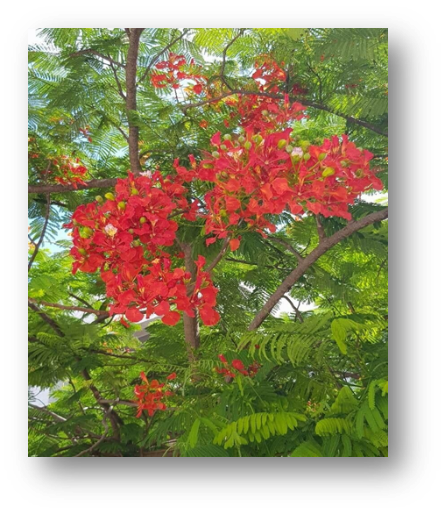
? ? ? ? ? ? 
? ? ? ?
Fig. 1.? Flowering plant of Delonix regia
Delonix regia, commonly known as the Flame Tree or Royal Poinciana, stands as a remarkable specimen in the botanical world, distinguished not only by its spectacular floral display but also by its complex biochemical composition. This subtropical flowering tree, belonging to the family Fabaceae, has emerged as a subject of significant scientific interest due to its diverse phytochemical profile and potential therapeutic applications. The tree's most striking feature is its brilliant red-orange blooms, which form a canopy of color during flowering seasons. These flowers, measuring 10-12 cm across, emerge in dense clusters, creating a spectacular display that has earned the species its common name. The bipinnate leaves, comprising numerous small leaflets, contribute to the tree's ornamental value while serving essential physiological functions.
- Comprehensive Phytochemical Profile [3-14]
- Primary Bioactive Compounds
The chemical composition of D. regia reveals a sophisticated array of bioactive compounds, each contributing to the plant's therapeutic potential:
-
-
- Flavonoid Complex
-
The flavonoid profile of D. regia is particularly noteworthy, featuring a diverse array of compounds including quercetin, rutin, and kaempferol derivatives. These compounds exhibit remarkable antioxidant properties, with the ability to neutralize free radicals and reduce oxidative stress at the cellular level. The presence of glycosylated flavonoids enhances their bioavailability and therapeutic efficacy.
-
-
- Alkaloid Distribution
-
The alkaloid composition extends beyond basic ?-sitosterol to include various quinoline and isoquinoline derivatives. These compounds demonstrate significant pharmacological activities, including analgesic and anti-inflammatory properties. The spatial distribution of alkaloids within plant tissues suggests evolved defensive mechanisms and potential therapeutic applications.
-
-
- Tannin Components
-
The astringent properties of D. regia are attributed to its complex tannin profile, which includes both hydrolyzable and condensed tannins. These compounds exhibit remarkable protein-binding capabilities, contributing to their antimicrobial and wound-healing properties. The concentration of tannins varies significantly across different plant parts, with highest levels typically found in the bark.
-
- Secondary Metabolites and Novel Compounds
The plant's secondary metabolism produces an intricate network of compounds:
-
-
- Saponin Architecture
-
The saponin profile encompasses both triterpenoid and steroidal variants, contributing to the plant's biological activities. These compounds demonstrate amphipathic properties, enabling interactions with cell membranes and potentially explaining their immunomodulatory effects.
-
-
- Terpenoid Diversity
-
Recent analytical studies have revealed a complex terpenoid profile, including monoterpenes, sesquiterpenes, and diterpenes. These compounds not only contribute to the plant's aromatic properties but also demonstrate potential anticarcinogenic and antimicrobial activities.
-
- Therapeutic Applications and Future Prospects
The diverse phytochemical composition of D. regia suggests multiple therapeutic applications:
-
-
- Immunological Applications
-
The synergistic interaction between flavonoids and saponins presents promising immunomodulatory potential, particularly in the context of inflammatory conditions and autoimmune disorders.
-
-
- Antimicrobial Potential
-
The combination of tannins and alkaloids demonstrates broad-spectrum antimicrobial activity, suggesting applications in developing novel antimicrobial agents, particularly against resistant strains.
-
-
- Antioxidant Properties
-
The complex flavonoid profile, combined with phenolic acids, presents significant antioxidant capacity, suggesting applications in preventing oxidative stress-related conditions.
-
- Future Research Directions
- ?Molecular Mechanisms
- Future Research Directions
Detailed studies of the molecular mechanisms underlying the therapeutic effects of D. regia compounds are essential for developing targeted therapeutic applications.
-
-
- Bioavailability Studies
-
Research into the bioavailability and pharmacokinetics of key compounds is crucial for developing effective therapeutic formulations.
-
-
- Clinical Applications
-
Controlled clinical trials are needed to validate the therapeutic potential and establish safety parameters for various applications.
Table 1: Comprehensive Phytochemical Profile of Delonix regia and Associated Therapeutic Potentials
|
Phytochemical Group |
Key Compounds |
Bioactivity |
Therapeutic Applications |
Notes |
|
Flavonoids |
Quercetin, Rutin, Kaempferol derivatives |
Antioxidant, Free radical neutralization |
Oxidative stress reduction, cardiovascular protection |
Glycosylation improves bioavailability and therapeutic efficacy |
|
Alkaloids |
Quinoline, Isoquinoline, ?-sitosterol |
Analgesic, Anti-inflammatory |
Pain management, anti-inflammatory agents |
Spatial distribution suggests defensive and therapeutic roles |
|
Tannins |
Hydrolyzable and Condensed Tannins |
Protein-binding, Antimicrobial, Wound healing |
Antimicrobial agents, wound healing |
High concentrations in bark; astringent properties |
|
Saponins |
Triterpenoids, Steroidal variants |
Amphipathic, Immunomodulatory |
Immune system modulation, potential in autoimmune disorders |
Interaction with cell membranes supports immunomodulation |
|
Terpenoids |
Monoterpenes, Sesquiterpenes, Diterpenes |
Anticarcinogenic, Antimicrobial |
Cancer prevention, broad-spectrum antimicrobial potential |
Aromatic properties contribute to plant's distinct scent |
|
Synergistic Effects |
Flavonoids and Saponins |
Immunomodulatory |
Inflammatory and autoimmune conditions |
Promising for immune health and therapeutic interventions |
|
Phenolic Acids |
N/A |
Antioxidant |
Oxidative stress-related condition prevention |
Significant contribution to antioxidant activity |
-
Therapeutic Frontiers of Delonix regia: A Comprehensive Analysis of Its Pharmacological Properties ?[15-49]
In the vast realm of medicinal botany, Delonix regia emerges as a remarkable specimen that transcends its ornamental reputation to present a compelling array of therapeutic possibilities. This comprehensive analysis delves into the multifaceted pharmacological properties of D. regia, examining its potential applications in modern medicine while exploring the scientific foundations that underpin its therapeutic efficacy.
-
- Fundamental Therapeutic Mechanisms
The therapeutic potential of Delonix regia stems from its intricate biochemical composition, which orchestrates a symphony of biological responses through multiple pathways. At its core, the plant's efficacy is attributed to the synergistic action of its bioactive compounds, each contributing to a broader therapeutic profile that spans multiple physiological systems.
-
- Anti-inflammatory Cascade Modulation
The anti-inflammatory properties of D. regia represent one of its most significant therapeutic attributes. The plant's active compounds demonstrate remarkable ability to modulate inflammatory cascades through multiple mechanisms:
The inhibition of pro-inflammatory cytokines forms the cornerstone of its anti-inflammatory action, with particular emphasis on the suppression of TNF-? and IL-6 production. This modulation extends to the regulation of cyclooxygenase enzymes, effectively reducing prostaglandin synthesis and subsequent inflammatory responses. The plant's capacity to influence NF-?B signaling pathways further reinforces its anti-inflammatory potential, suggesting applications in chronic inflammatory conditions.
-
- Oxidative Stress Mitigation
The antioxidant profile of D. regia presents a sophisticated defense mechanism against oxidative stress. This protection manifests through:
A multi-tiered antioxidant defense system, incorporating both direct free radical scavenging and the enhancement of endogenous antioxidant mechanisms. The plant's flavonoid compounds demonstrate particular efficacy in neutralizing reactive oxygen species, while simultaneously upregulating the expression of antioxidant enzymes such as superoxide dismutase and catalase.
-
- Clinical Applications and Therapeutic Domains
- Dermatological Applications
- Clinical Applications and Therapeutic Domains
The dermatological potential of D. regia extends beyond basic wound healing to encompass a broader spectrum of skin health applications:
The plant's wound healing properties are attributed to its ability to stimulate fibroblast proliferation and enhance collagen synthesis. This process is complemented by its antimicrobial properties, creating an optimal environment for tissue regeneration. The presence of astringent compounds further contributes to skin barrier function improvement and inflammation reduction.
-
-
- Metabolic Disease Management
-
In the context of metabolic disorders, particularly diabetes mellitus, D. regia demonstrates promising therapeutic potential:
The plant's ability to modulate glucose metabolism involves multiple mechanisms, including enhanced insulin sensitivity and reduced glucose absorption. These effects are complemented by the protection of pancreatic ?-cells and the regulation of hepatic glucose production, suggesting a comprehensive approach to glycemic control.
-
-
- Cardiovascular Protection
-
The cardiovascular benefits of D. regia manifest through multiple protective mechanisms:
Antioxidant protection of vascular endothelium combines with anti-inflammatory effects to reduce atherosclerotic risk. The plant's compounds demonstrate ability to modulate lipid metabolism and reduce platelet aggregation, contributing to overall cardiovascular health maintenance.
-
-
- Immunomodulatory Effects
-
The immunomodulatory properties of D. regia present particularly intriguing therapeutic possibilities:
The plant's ability to regulate immune response involves both innate and adaptive immunity modulation. This includes enhancement of natural killer cell activity and regulation of T-cell responses, suggesting applications in autoimmune conditions and immune system support.
-
- Novel Therapeutic Applications
- Oncological Potential
- Novel Therapeutic Applications
Recent investigations into D. regia's anti-cancer properties reveal promising mechanisms:
The plant's compounds demonstrate selective cytotoxicity against various cancer cell lines while showing minimal effect on normal cells. These effects are mediated through multiple pathways, including apoptosis induction, cell cycle arrest, and anti-angiogenic properties.
-
-
- Neurological Protection
-
The neuroprotective potential of D. regia extends to various neurological conditions:
The plant's ability to cross the blood-brain barrier, combined with its anti-inflammatory and antioxidant properties, suggests applications in neurodegenerative disorders. Particular emphasis lies on its potential to reduce neuroinflammation and protect against oxidative stress-induced neuronal damage.
-
- Clinical Translation
The translation of preclinical findings into clinical applications requires systematic investigation:
Standardization of extract preparation and quality control measures represents an essential step toward clinical application. Development of appropriate dosing regimens and identification of potential drug interactions require careful consideration in clinical trial design.
-
- Sustainable Development
Ensuring sustainable access to D. regia-derived therapeutics necessitates comprehensive planning:
Development of cultivation protocols that maximize the production of desired compounds while ensuring environmental sustainability. Implementation of good manufacturing practices in extract preparation and standardization of final products.
-
- Integration into Modern Healthcare
- Complementary Medicine Approach
- Integration into Modern Healthcare
The integration of D. regia-based therapeutics into modern healthcare requires careful consideration:
Development of standardized protocols for use in conjunction with conventional treatments. Establishment of evidence-based guidelines for specific therapeutic applications and patient populations.
-
-
- Safety and Regulatory Considerations
-
Ensuring the safe deployment of D. regia-based therapeutics requires comprehensive safety assessment:
Long-term safety studies and identification of potential contraindications and drug interactions. Development of quality control measures and standardization protocols for commercial products.
-
- Future Perspectives
The therapeutic potential of Delonix regia extends far beyond its traditional applications, presenting opportunities for innovative drug development and therapeutic interventions. The plant's diverse pharmacological properties, combined with its relatively favorable safety profile, suggest significant potential for development into standardized therapeutic agents.
Future research directions should focus on:
- Elucidation of molecular mechanisms underlying observed therapeutic effects
- Development of optimized delivery systems for enhanced bioavailability
- Conduct of well-designed clinical trials to validate therapeutic applications
- Implementation of sustainable production and standardization protocols
As our understanding of D. regia's therapeutic potential continues to evolve, the plant represents a promising source of novel therapeutic agents for addressing various human health challenges. The integration of traditional knowledge with modern scientific investigation may unlock new possibilities in drug discovery and development, potentially leading to innovative treatments for various diseases and conditions.
Table 2: Therapeutic Landscape of Delonix regia: Pharmacological Properties and Application
|
Category |
Key Findings |
Therapeutic Applications |
|
Fundamental Mechanisms |
Synergistic action of bioactive compounds targeting multiple physiological systems. |
Broad-spectrum therapeutic potential across biological pathways. |
|
Anti-inflammatory Properties |
Suppression of TNF-?, IL-6, and COX enzymes; regulation of NF-?B signaling. |
Chronic inflammatory conditions, including arthritis and autoimmune disorders. |
|
Antioxidant Potential |
Flavonoid-driven neutralization of ROS; upregulation of SOD and catalase enzymes. |
Oxidative stress mitigation, cellular protection, and anti-aging therapies. |
|
Dermatological Benefits |
Enhanced fibroblast proliferation, collagen synthesis, and antimicrobial activity. |
Wound healing, skin barrier enhancement, and inflammation reduction. |
|
Metabolic Disorder Management |
Modulation of glucose metabolism, enhanced insulin sensitivity, and pancreatic ?-cell protection. |
Diabetes mellitus management and glycemic control. |
|
Cardiovascular Health |
Antioxidant protection of endothelium, lipid metabolism modulation, and reduced platelet aggregation. |
Atherosclerosis prevention and cardiovascular health maintenance. |
|
Immunomodulatory Effects |
Regulation of innate and adaptive immunity; enhancement of NK cell activity and T-cell response. |
Autoimmune conditions and general immune system support. |
|
Oncological Potential |
Selective cytotoxicity against cancer cells via apoptosis induction and anti-angiogenic effects. |
Targeted cancer therapies and adjunctive oncological treatments. |
|
Neurological Protection |
Anti-inflammatory and antioxidant properties with BBB penetration; reduction of neuroinflammation and oxidative damage. |
Neurodegenerative disorder management, including Alzheimer?s and Parkinson?s diseases. |
|
Clinical Translation |
Standardization of extracts and quality control; clinical trial development. |
Evidence-based therapeutic protocols for safe integration into healthcare. |
|
Sustainability Considerations |
Development of eco-friendly cultivation protocols and GMP for extracts. |
Sustainable production of D. regia-derived therapeutics. |
|
Integration into Healthcare |
Development of complementary medicine approaches with standardized safety guidelines. |
Integration into modern medicine with regulatory compliance and patient-specific applications. |
-
CONCLUSION:
The comprehensive analysis of Delonix regia reveals a sophisticated phytochemical architecture that extends far beyond its ornamental significance. This species demonstrates remarkable therapeutic versatility through its complex matrix of bioactive compounds, including flavonoids, alkaloids, tannins, saponins, terpenoids, and phenolic acids. Each compound class contributes to a broader pharmacological profile, suggesting multiple mechanisms of action across various physiological systems. The pharmacological activities of D. regia operate through several well-documented pathways. Its anti-inflammatory effects manifest through the modulation of pro-inflammatory cytokines and the regulation of inflammatory cascades. The antioxidant properties demonstrate both direct free radical scavenging and enhancement of endogenous antioxidant systems. Additionally, its antimicrobial activity spans a broad spectrum of pathogens, while its wound-healing properties involve multiple tissue repair mechanisms. Looking forward, several critical research directions emerge. First, the elucidation of structure-activity relationships among its bioactive compounds could guide the development of optimized therapeutic agents. Second, pharmacokinetic studies are essential to understand the bioavailability and metabolism of these compounds in vivo. Third, the development of standardized extraction protocols and quality control measures will be crucial for consistent therapeutic applications. The translation of these findings into clinical applications requires a systematic approach. This includes conducting randomized controlled trials, establishing dosage guidelines, and investigating potential drug interactions. Furthermore, the sustainable cultivation and ethical sourcing of D. regia must be prioritized to ensure long-term availability for therapeutic applications. In conclusion, D. regia represents a promising intersection of traditional knowledge and modern pharmacology. Its diverse therapeutic properties, coupled with emerging scientific validation, position it as a valuable resource in the development of novel therapeutic strategies. Future research will likely uncover additional bioactive compounds and therapeutic applications, further establishing D. regia's role in modern medicine. This scientific journey exemplifies the ongoing potential for discovering new therapeutic agents from natural sources, while emphasizing the importance of rigorous investigation and evidence-based validation
REFERENCE
- Shabir, G., Anwar, F., Sultana, B., Khalid, Z. M., Afzal, M., Khan, Q. M., & Ashrafuzzaman, M. (2011). Antioxidant and antimicrobial attributes and phenolics of different solvent extracts from leaves, flowers and bark of Gold Mohar [Delonix regia (Bojer ex Hook.) Raf.]. Molecules, 16(9), 7302-7319.
- Kuppusamy, S., Thavamani, P., Megharaj, M., & Naidu, R. (2015). Bioremediation potential of natural polyphenol rich green wastes: a review of current research and recommendations for future directions. Environmental Technology & Innovation, 4, 17-28.
- Tungmunnithum, D., Thongboonyou, A., Pholboon, A., & Yangsabai, A. (2018). Flavonoids and other phenolic compounds from medicinal plants for pharmaceutical and medical aspects: An overview. Medicines, 5(3), 93.
- Ignat, I., Volf, I., & Popa, V. I. (2011). A critical review of methods for characterisation of polyphenolic compounds in fruits and vegetables. Food chemistry, 126(4), 1821-1835.
- Dillard, C. J., & German, J. B. (2000). Phytochemicals: nutraceuticals and human health. Journal of the Science of Food and Agriculture, 80(12), 1744-1756.
- Leizer, C., Ribnicky, D., Poulev, A., Dushenkov, S., & Raskin, I. (2000). The composition of hemp seed oil and its potential as an important source of nutrition. Journal of Nutraceuticals, functional & medical foods, 2(4), 35-53.
- Scalbert, A. (1991). Antimicrobial properties of tannins. Phytochemistry, 30(12), 3875-3883.
- Chhatre, S., Nesari, T., Somani, G., Kanchan, D., & Sathaye, S. (2014). Phytopharmacological overview of Tribulus terrestris. Pharmacognosy reviews, 8(15), 45.
- Francis, G., Kerem, Z., Makkar, H. P., & Becker, K. (2002). The biological action of saponins in animal systems: a review. British journal of Nutrition, 88(6), 587-605.
- Cai, Y., Luo, Q., Sun, M., & Corke, H. (2004). Antioxidant activity and phenolic compounds of 112 traditional Chinese medicinal plants associated with anticancer. Life sciences, 74(17), 2157-2184.
- Gulcin, ?. (2020). Antioxidants and antioxidant methods: An updated overview. Archives of toxicology, 94(3), 651-715.
- Croteau, R., Kutchan, T. M., & Lewis, N. G. (2000). Natural products (secondary metabolites). Biochemistry and molecular biology of plants, 24, 1250-1319.
- Edeoga, H. O., Okwu, D. E., & Mbaebie, B. O. (2005). Phytochemical constituents of some Nigerian medicinal plants. African journal of biotechnology, 4(7), 685-688.
- Saxena, M., Saxena, J., Nema, R., Singh, D., & Gupta, A. (2013). Phytochemistry of medicinal plants. Journal of pharmacognosy and phytochemistry, 1(6), 168-182.
- Kim, H. P., Son, K. H., Chang, H. W., & Kang, S. S. (2004). Anti-inflammatory plant flavonoids and cellular action mechanisms. Journal of pharmacological sciences, 96(3), 229-245.
- Garc?a-Lafuente, A., Guillam?n, E., Villares, A., Rostagno, M. A., & Mart?nez, J. A. (2009). Flavonoids as anti-inflammatory agents: implications in cancer and cardiovascular disease. Inflammation research, 58(9), 537-552.
- Levine, J. S., & Burakoff, R. (2011). Extraintestinal manifestations of inflammatory bowel disease. Gastroenterology & hepatology, 7(4), 235.
- Aqil, F., Ahmad, I., & Mehmood, Z. (2006). Antioxidant and free radical scavenging properties of twelve traditionally used Indian medicinal plants. Turkish journal of Biology, 30(3), 177-183.
- Del Rio, D., Rodriguez-Mateos, A., Spencer, J. P., Tognolini, M., Borges, G., & Crozier, A. (2013). Dietary (poly) phenolics in human health: structures, bioavailability, and evidence of protective effects against chronic diseases. Antioxidants & redox signaling, 18(14), 1818-1892.
- Zorofchian Moghadamtousi, S., Abdul Kadir, H., Hassandarvish, P., Tajik, H., Abubakar, S., & Zandi, K. (2014). A review on antibacterial, antiviral, and antifungal activity of curcumin. BioMed research international, 2014(1), 186864.
- Cushnie, T. T., & Lamb, A. J. (2005). Antimicrobial activity of flavonoids. International journal of antimicrobial agents, 26(5), 343-356.
- Wang, C., Wang, M., Xu, T., Zhang, X., Lin, C., Gao, W., ... & Mao, C. (2019). Engineering bioactive self-healing antibacterial exosomes hydrogel for promoting chronic diabetic wound healing and complete skin regeneration. Theranostics, 9(1), 65.
- Patel, D. K., Prasad, S. K., Kumar, R., & Hemalatha, S. (2012). An overview on antidiabetic medicinal plants having insulin mimetic property. Asian Pacific journal of tropical biomedicine, 2(4), 320-330.
- Krentz, A. J., & Bailey, C. J. (2005). Oral antidiabetic agents: current role in type 2 diabetes mellitus. Drugs, 65, 385-411.
- Kazatchkine, M. D., & Kaveri, S. V. (2001). Immunomodulation of autoimmune and inflammatory diseases with intravenous immune globulin. New England Journal of Medicine, 345(10), 747-755.
- Danhier, F., Feron, O., & Pr?at, V. (2010). To exploit the tumor microenvironment: Passive and active tumor targeting of nanocarriers for anti-cancer drug delivery. Journal of controlled release, 148(2), 135-146.
- Manoharan, S., Guillemin, G. J., Abiramasundari, R. S., Essa, M. M., Akbar, M., & Akbar, M. D. (2016). The role of reactive oxygen species in the pathogenesis of Alzheimer?s disease, Parkinson?s disease, and Huntington?s disease: a mini review. Oxidative medicine and cellular longevity, 2016(1), 8590578.
- Teleanu, D. M., Niculescu, A. G., Lungu, I. I., Radu, C. I., Vlad?cenco, O., Roza, E., ... & Teleanu, R. I. (2022). An overview of oxidative stress, neuroinflammation, and neurodegenerative diseases. International journal of molecular sciences, 23(11), 5938.
- Menon, V. P., & Sudheer, A. R. (2007). Antioxidant and anti-inflammatory properties of curcumin. The molecular targets and therapeutic uses of curcumin in health and disease, 105-125.
- Hussain, T., Tan, B., Yin, Y., Blachier, F., Tossou, M. C., & Rahu, N. (2016). Oxidative stress and inflammation: what polyphenols can do for us?. Oxidative medicine and cellular longevity, 2016(1), 7432797.
- Zhao, X., Wu, H., Guo, B., Dong, R., Qiu, Y., & Ma, P. X. (2017). Antibacterial anti-oxidant electroactive injectable hydrogel as self-healing wound dressing with hemostasis and adhesiveness for cutaneous wound healing. Biomaterials, 122, 34-47.
- Elson, C. O., Sartor, R. B., Tennyson, G. S., & Riddell, R. H. (1995). Experimental models of inflammatory bowel disease. Gastroenterology, 109(4), 1344-1367.
- 33.????? Jurenka, J. S. (2009). Anti-inflammatory properties of curcumin, a major constituent of Curcuma longa: a review of preclinical and clinical research. Alternative medicine review, 14(2).
- Reiter, R. J. (1995). Oxidative processes and antioxidative defense mechanisms in the aging brain 1. The FASEB journal, 9(7), 526-533.
- Rodrigo, R., Fernandez-Gajardo, R., Guti?rrez, R., Manuel Matamala, J., Carrasco, R., Miranda-Merchak, A., & Feuerhake, W. (2013). Oxidative stress and pathophysiology of ischemic stroke: novel therapeutic opportunities. CNS & Neurological Disorders-Drug Targets (Formerly Current Drug Targets-CNS & Neurological Disorders), 12(5), 698-714.
- Ghannoum, M. A., & Rice, L. B. (1999). Antifungal agents: mode of action, mechanisms of resistance, and correlation of these mechanisms with bacterial resistance. Clinical microbiology reviews, 12(4), 501-517.
- Pizzo, P. A., Robichaud, K. J., Gill, F. A., & Witebsky, F. G. (1982). Empiric antibiotic and antifungal therapy for cancer patients with prolonged fever and granulocytopenia. The American journal of medicine, 72(1), 101-111.
- Romay, C. H., Gonzalez, R., Ledon, N., Remirez, D., & Rimbau, V. (2003). C-phycocyanin: a biliprotein with antioxidant, anti-inflammatory and neuroprotective effects. Current protein and peptide science, 4(3), 207-216.
- Heaney, A., & Buggy, D. J. (2012). Can anaesthetic and analgesic techniques affect cancer recurrence or metastasis?. British journal of anaesthesia, 109(suppl_1), i17-i28.
- Jitschin, R., Braun, M., B?ttner, M., Dettmer-Wilde, K., Bricks, J., Berger, J., ... & Mougiakakos, D. (2014). CLL-cells induce IDOhi CD14+ HLA-DRlo myeloid-derived suppressor cells that inhibit T-cell responses and promote TRegs. Blood, The Journal of the American Society of Hematology, 124(5), 750-760.
- 41.????? Di Sotto, A., Vitalone, A., & Di Giacomo, S. (2020). Plant-derived nutraceuticals and immune system modulation: an evidence-based overview. Vaccines, 8(3), 468.
- Allen, O. N., & Allen, E. K. (1981). The Leguminosae, a source book of characteristics, uses, and nodulation. Univ of Wisconsin Press.
- Azab, S. S., Abdel-Daim, M., & Eldahshan, O. A. (2013). Phytochemical, cytotoxic, hepatoprotective and antioxidant properties of Delonix regia leaves extract. Medicinal Chemistry Research, 22, 4269-4277.
- Lemire, J. A., Harrison, J. J., & Turner, R. J. (2013). Antimicrobial activity of metals: mechanisms, molecular targets and applications. Nature Reviews Microbiology, 11(6),
 10.5281/zenodo.14729636