

We use cookies to ensure our website works properly and to personalise your experience. Cookies policy
Department of Pharmaceutics, SNJBs SSDJ College of Pharmacy, Chandwad, Nashik, Maharashtra, India
Oral hygiene plays a vital role in maintaining overall health, with toothpaste being one of the most widely used dentifrices for daily oral care. However, conventional toothpaste formulations are associated with certain limitations, particularly environmental concerns related to plastic packaging and challenges in dosage uniformity. In recent years, toothpaste tablets have emerged as an innovative and sustainable alternative, offering a solid dosage form designed to provide effective oral cleaning while minimizing ecological impact. This review provides a comprehensive overview of toothpaste tablets, focusing on their formulation strategies, composition, mechanisms of action, evaluation parameters, advantages, limitations, and future prospects. Toothpaste tablets are typically formulated using direct compression, wet granulation, or dry granulation techniques and consist of active ingredients such as fluoride and antimicrobial agents along with excipients including abrasives, binders, disintegrants, and flavoring agents. Upon chewing, the tablets rapidly disintegrate to form a paste-like consistency, enabling effective mechanical and chemical cleaning of teeth. Key advantages include portability, improved stability, accurate dosing, and reduced plastic waste, while challenges such as consumer acceptance, sensory optimization, and cost remain. With growing environmental awareness and advancements in formulation technology, toothpaste tablets are expected to play an increasingly important role in sustainable oral care. This review highlights their potential as a next-generation oral hygiene product that bridges pharmaceutical innovation with ecological responsibility
Oral health is an integral component of overall health and well-being, influencing not only physical conditions but also psychological and social aspects of life. Dental caries, periodontal diseases, and oral infections remain among the most prevalent global health problems, affecting individuals across all age groups [1]. According to the World Health Organization, oral diseases impact nearly 3.5 billion people worldwide, highlighting the urgent need for effective and accessible oral hygiene practices [2]. Among the various preventive measures, the use of dentifrices commonly known as toothpaste has played a central role in maintaining oral hygiene by aiding in plaque removal, reducing microbial load, and delivering therapeutic agents such as fluoride [3].
Conventional toothpaste formulations, typically available in paste or gel forms, consist of a complex mixture of abrasives, humectants, binders, surfactants, sweeteners, and active ingredients [4]. These formulations are designed to provide mechanical cleaning, improve aesthetic appeal, and deliver pharmacologically active agents to the oral cavity. Fluoride-containing toothpastes, for instance, have been extensively documented for their role in remineralizing enamel and preventing dental caries [5]. Despite their widespread use and proven efficacy, conventional toothpaste products are not without limitations. One of the major concerns is their environmental impact, particularly due to the extensive use of non-recyclable plastic tubes, which contribute significantly to global plastic waste [6]. In recent years, increasing awareness of environmental sustainability and eco-friendly consumer behavior has driven innovation in personal care products, including oral hygiene formulations. The concept of “zero-waste” and sustainable packaging has gained momentum, encouraging the development of alternative dosage forms that minimize environmental burden [7]. In this context, toothpaste tablets have emerged as a promising and innovative solution. These solid, compressed dosage forms are designed to be chewed or dissolved in the mouth prior to brushing, thereby offering a convenient and environmentally sustainable alternative to traditional toothpaste [8].
Toothpaste tablets represent a paradigm shift in oral care by combining the principles of pharmaceutical tablet formulation with cosmetic and dental applications. Typically formulated using direct compression or granulation techniques, these tablets incorporate key ingredients such as abrasives, binders, disintegrants, flavoring agents and active compounds like fluoride or herbal extracts [9]. Upon chewing, the tablet disintegrates rapidly, forming a paste-like consistency that facilitates effective brushing and cleaning of the teeth. This approach not only ensures precise dosing but also eliminates the need for water-based formulations, thereby enhancing product stability and shelf life [10].
Another significant advantage of toothpaste tablets lies in their portability and user convenience. Unlike conventional toothpaste tubes, which are prone to leakage and bulkiness, tablets are compact, lightweight, and travel-friendly. This makes them particularly suitable for individuals with active lifestyles, frequent travelers and those seeking minimalistic personal
care solutions [11]. Furthermore, the absence of water in the formulation reduces the risk of microbial contamination and the need for preservatives, thereby contributing to a cleaner and more stable product profile [12].

Figure 1: Toothpaste Tablets
From a clinical and pharmacological perspective, toothpaste tablets offer opportunities for incorporating a wide range of active agents, including antimicrobial compounds, desensitizing agents, and herbal extracts. Recent research has explored the use of natural ingredients such as neem, clove oil, and charcoal in tablet formulations to enhance therapeutic efficacy and consumer appeal [13]. Additionally, advancements in formulation technologies have enabled the development of tablets with optimized hardness, rapid disintegration, and acceptable sensory characteristics, addressing some of the initial challenges associated with this dosage form [14]. Despite these advantages, the adoption of toothpaste tablets is still in its early stages and faces several challenges. Consumer acceptance remains a critical factor, as the transition from a familiar paste format to a chewable tablet requires behavioral adaptation [15]. Moreover, issues related to taste, texture, and foaming ability must be carefully addressed to ensure user satisfaction. Economic considerations, including higher production costs and limited market availability, also pose barriers to widespread adoption [16].
In light of these considerations, there is a growing need to systematically review and analyze the formulation strategies, benefits, limitations, and future prospects of toothpaste tablets. This review aims to provide a comprehensive overview of this emerging oral care innovation, with a focus on formulation approaches, evaluation parameters, sustainability aspects, and recent advancements. By consolidating current knowledge and identifying research gaps, this article seeks to contribute to the advancement of sustainable and effective oral hygiene solutions [17].
History and Evolution of Oral Care Products
The practice of maintaining oral hygiene dates back thousands of years and reflects the evolving understanding of dental health across civilizations. Early humans recognized the importance of cleaning teeth not only for aesthetic purposes but also to prevent d iscomfort and disease. Historical records suggest that as early as 3000–5000 BCE, ancient civilizations such as the Egyptians and Babylonians used primitive forms of dentifrices made from crushed bones, eggshells, pumice, and ashes to clean their teeth [18]. These early formulations, although abrasive and rudimentary, laid the foundation for modern oral care practices. One of the most widely recognized early oral hygiene tools is the chewing stick, commonly derived from specific medicinal plants. In ancient India, the use of Neem (Azadirachta indica) and Babool (Acacia nilotica) sticks was prevalent due to their antimicrobial and anti-inflammatory properties [19]. Similarly, in other parts of the world, different plant species were used for oral cleaning based on their therapeutic benefits. The concept of chewing sticks is still practiced in many rural areas and has been scientifically validated for its role in reducing plaque and maintaining gingival health [20].
The transition from natural cleaning methods to formulated dentifrices began during the Greek and Roman periods. The Greeks and Romans developed more refined tooth powders by incorporating ingredients such as crushed oyster shells, charcoal, bark, and flavoring agents like mint [21]. These powders were applied using cloth or primitive brushes, marking an early attempt to improve both functionality and user experience. However, these formulations were often excessively abrasive, which could lead to enamel erosion over time.
The modern era of oral care began in the 18th and 19th centuries with the introduction of commercially prepared tooth powders. These products were composed of finely ground abrasives combined with soap and flavoring agents to enhance cleaning efficiency and palatability [22]. The invention of the collapsible toothpaste tube in the late 19th century, inspired by paint tubes, revolutionized oral hygiene by making toothpaste more convenient and hygienic to use. This innovation significantly contributed to the widespread adoption of toothpaste as a daily necessity [23]. A major milestone in the evolution of oral care products was the incorporation of fluoride into toothpaste formulations in the mid-20th century. Fluoride
has been extensively proven to enhance enamel remineralization and inhibit the progression of dental caries, thereby transforming preventive dentistry [24]. The introduction of fluoride toothpaste marked a shift from purely cosmetic cleaning to therapeutic oral care, establishing toothpaste as a critical component in public health strategies aimed at reducing dental diseases.
Over time, toothpaste formulations have undergone continuous refinement to improve their efficacy, safety, and consumer appeal. Modern toothpaste products include a wide range of functional ingredients such as antimicrobial agents, desensitizing compounds, whitening agents, and herbal extracts [25]. Additionally, advancements in formulation science have enabled the development of specialized products targeting specific oral health conditions, including gingivitis, hypersensitivity, and enamel erosion. In recent decades, growing environmental concerns have significantly influenced the direction of oral care product development. The widespread use of plastic packaging, particularly non-recyclable toothpaste tubes, has raised serious sustainability issues. It is estimated that billions of toothpaste tubes are discarded annually, contributing to environmental pollution and landfill accumulation [26]. This has prompted both consumers and manufacturers to seek eco-friendly alternatives that align with sustainable practices.
In response to these challenges, the concept of solid oral care formulations has re-emerged, leading to the development of innovative products such as toothpaste tablets. Unlike conventional paste formulations, toothpaste tablets are water-free, compact, and typically packaged in recyclable or biodegradable materials [27]. This shift represents a convergence of traditional solid dosage forms with modern sustainability goals. Interestingly, the idea of using solid dentifrices is not entirely new, as early tooth powders share conceptual similarities with contemporary toothpaste tablets. The evolution from tooth powders to toothpaste and now to toothpaste tablets reflects a dynamic interplay between scientific advancement, consumer preferences, and environmental awareness. Today’s oral care industry is not only focused on efficacy but also on sustainability, convenience, and personalization. The emergence of toothpaste tablets signifies a new phase in this evolutionary journey, where innovation is driven by the need to balance oral health benefits with ecological responsibility [28].
Concept and Mechanism of Toothpaste Tablets
Toothpaste tablets represent an innovative advancement in oral care formulations, designed as solid, unit-dose alternatives to conventional semi-solid toothpaste. These tablets are typically prepared using pharmaceutical tableting techniques such as direct compression, wet granulation, or dry granulation, incorporating both active ingredients and functional excipients required for effective oral hygiene [29]. Unlike traditional toothpaste, which contains a significant amount of water and requires preservatives for stability, toothpaste tablets are essentially anhydrous systems that offer improved physicochemical stability and reduced microbial contamination risk [30].
The fundamental concept behind toothpaste tablets lies in transforming a daily oral hygiene product into a solid dosage form that is convenient, precise, and environmentally sustainable. Each tablet is formulated to deliver a measured quantity of active agents such as fluoride, abrasives, and antimicrobial compounds, thereby ensuring dose uniformity and minimizing product wastage [31]. In addition, the solid nature of these tablets allows for eco-friendly packaging options such as glass containers, metal tins, or biodegradable pouches, addressing the growing concerns related to plastic pollution associated with conventional toothpaste tubes [32]. From a pharmaceutical perspective, toothpaste tablets can be viewed as chewable or rapidly disintegrating tablets tailored for oral cavity use rather than systemic drug delivery. The formulation design must therefore balance key parameters such as mechanical strength, disintegration behavior, mouthfeel, and sensory acceptability. This requires careful selection and optimization of excipients, including binders for structural integrity and disintegrants for rapid breakdown upon use [33].
Mechanism of Action
The mechanism of action of toothpaste tablets involves a sequence of well-coordinated steps that ultimately result in effective cleaning of the teeth and oral cavity. This process can be broadly described in three stages: chewing, foaming, and cleaning.
Upon placing the tablet in the mouth, the user chews it, which mechanically breaks down the compact structure into smaller particles. This process increases the surface area of the formulation, facilitating rapid interaction with saliva. Saliva plays a crucial role by hydrating the tablet matrix and activating disintegrants, which promote further breakdown of the tablet into a paste-like consistency [34]. The efficiency of this step depends on the tablet’s hardness and disintegration properties, which must be optimized to ensure ease of use without compromising structural stability during storage.
As the tablet disintegrates, surfactants present in the formulation such as sodium cocoyl isethionate or sodium lauryl sulfate begin to interact with saliva, producing foam. This foaming action helps in the uniform dispersion of active and inactive ingredients throughout the oral cavity [35]. The foam also aids in loosening food particles and plaque from the tooth surface, enhancing the overall cleaning efficiency. Unlike conventional toothpaste, where foaming begins immediately upon brushing, toothpaste tablets rely on the prior chewing step to initiate this process.
Following foam formation, brushing is carried out using a toothbrush, allowing abrasives such as calcium carbonate or silica to mechanically remove plaque, stains, and debris from the tooth surface [36]. Simultaneously, active ingredients exert their therapeutic effects. Fluoride promotes remineralization of enamel and inhibits demineralization, thereby preventing dental caries. Antimicrobial agents help reduce oral bacterial load, while other additives such as desensitizing agents may alleviate dentin hypersensitivity [37]. The combined mechanical and chemical actions result in effective oral cleaning comparable to conventional toothpaste. Overall, the mechanism of toothpaste tablets mirrors that of traditional toothpaste but incorporates an additional initial step (chewing), which is essential for activating the formulation. The success of this mechanism depends on achieving an optimal balance between rapid disintegration, adequate foaming, and efficient cleaning performance.
|
Aspect |
Toothpaste Tablets |
Conventional Toothpaste |
|
Formulation type |
Presented as solid, compressed tablets |
Available as semi-solid paste or gel |
|
Water content |
Typically water-free, which improves stability |
Contains water, requiring stabilizers and preservatives |
|
Mode of use |
Tablet is chewed first to form a paste, followed by brushing |
Applied directly onto a toothbrush and used for brushing |
|
Dose uniformity |
Provides a fixed, pre-measured dose per use |
Quantity varies depending on user preference |
|
Foaming behavior |
Foam is generated after chewing and mixing with saliva |
Immediate foaming during brushing |
|
Cleaning action |
Achieved after tablet disintegration, combining mechanical and chemical effects |
Direct mechanical and chemical cleaning during brushing |
|
Stability and shelf life |
Generally more stable with longer shelf life due to absence of moisture |
Moderate stability; moisture can affect product over time |
|
Need for preservatives |
Usually not required or minimal |
Necessary to prevent microbial growth |
|
Packaging |
Often packaged in eco-friendly materials such as glass or metal containers |
Commonly packaged in plastic tubes, contributing to waste |
|
Environmental impact |
Considered environmentally sustainable with reduced plastic usage |
Associated with significant plastic waste generation |
|
Portability |
Compact, lightweight, and ideal for travel |
Less convenient; risk of leakage and bulkiness |
|
Contamination risk |
Lower due to dry formulation |
Higher due to presence of moisture and repeated exposure |
|
Consumer acceptance |
Still emerging; requires adaptation to new usage method |
Widely accepted and part of daily routine |
|
Sensory experience |
May vary in taste and texture depending on formulation |
Well-established taste, texture, and user experience |
|
Cost and availability |
Relatively expensive and limited in availability |
Affordable and widely available |
|
Suitability for travel |
Highly suitable, especially for air travel (no liquid restrictions) |
Limited due to liquid handling and travel restrictions |
Table 1: Comparison between Toothpaste Tablets and Conventional Toothpaste [38-42]
Composition of Toothpaste Tablets
The formulation of toothpaste tablets is a carefully balanced combination of active ingredients and functional excipients designed to ensure effective oral cleaning, acceptable sensory properties, and adequate mechanical strength. Unlike conventional toothpaste, which relies on a hydrated base, toothpaste tablets are predominantly anhydrous systems. This fundamental difference significantly influences the choice of ingredients, their proportions, and overall formulation strategy [43].
In general, the composition of toothpaste tablets can be broadly categorized into active ingredients, which provide therapeutic benefits and excipients, which contribute to the physical integrity, stability, and performance of the formulation.
Active Ingredients
Active ingredients are responsible for the primary therapeutic functions of toothpaste tablets, such as prevention of dental caries, control of microbial growth and management of tooth sensitivity.
Fluoride Compounds
Fluoride remains one of the most critical components in oral care formulations due to its well-established role in enamel remineralization and caries prevention. Commonly used fluoride sources include sodium fluoride, sodium monofluorophosphate and stannous fluoride. These compounds enhance the resistance of enamel to acid attack and promote the repair of early carious lesions [44]. In toothpaste tablets, maintaining appropriate fluoride concentration is essential to ensure efficacy while avoiding toxicity.
Antimicrobial Agents
To control oral microbial flora and reduce plaque formation, antimicrobial agents are incorporated into the formulation. While traditional compounds like triclosan have been used in the past, there is a growing shift toward safer and more natural alternatives, including plant-derived extracts such as neem (Azadirachta indica), clove oil and tea tree oil [45]. These agents exhibit antibacterial and anti-inflammatory properties, contributing to improved oral health.
Desensitizing Agents
For individuals suffering from dentin hypersensitivity, desensitizing agents such as potassium nitrate or strontium salts may be included. These agents function by blocking nerve signals or occluding dentinal tubules, thereby reducing sensitivity to thermal and mechanical stimuli [46].
Whitening and Remineralizing Agents
Certain formulations may also incorporate whitening agents such as mild peroxides or polishing agents to improve tooth appearance. Additionally, calcium-based compounds and bioactive materials like hydroxyapatite are increasingly being used to support enamel repair and remineralization [47].
Excipients
Excipients play a crucial role in determining the physical properties, usability, and overall performance of toothpaste tablets. Their selection requires careful consideration to achieve a balance between mechanical strength and rapid disintegration.
Abrasives
Abrasives are essential for the mechanical removal of plaque, stains, and food debris from the tooth surface. Commonly used abrasives include calcium carbonate, dicalcium phosphate, and silica. The abrasive system must be optimized to ensure effective cleaning without causing damage to the enamel [48].
Binders
Binders are responsible for providing structural integrity to the tablet, ensuring that it remains intact during handling, packaging, and transportation. Common binders include microcrystalline cellulose (MCC), starch, and polyvinylpyrrolidone (PVP). These materials help in forming a cohesive tablet matrix during compression [49].
Disintegrants
Disintegrants facilitate the rapid breakdown of the tablet upon chewing and contact with saliva. This is a critical parameter in toothpaste tablets, as efficient disintegration ensures quick formation of a paste-like consistency. Examples include sodium starch glycolate, crospovidone, and croscarmellose sodium [50].
Sweeteners
Sweeteners are added to improve palatability and enhance user acceptance. Non-cariogenic sweeteners such as xylitol, sorbitol, and stevia are commonly used. Xylitol, in particular, offers additional dental benefits by inhibiting the growth of cariogenic bacteria [51].
Flavoring Agents
Flavoring agents such as peppermint oil, spearmint oil, and fruit flavors are incorporated to provide a refreshing taste and improve the overall brushing experience. These agents play a significant role in consumer compliance and product appeal [52].
Surfactants (Foaming Agents)
Surfactants are responsible for generating foam, which aids in the dispersion of ingredients and enhances cleaning efficiency. Common surfactants include sodium lauryl sulfate and sodium cocoyl isethionate. However, milder surfactants are increasingly preferred to reduce the risk of oral irritation [53].
Lubricants and Glidants
Lubricants such as magnesium stearate and glidants like colloidal silicon dioxide are used to improve powder flow properties and facilitate tablet compression. These excipients ensure uniform die filling and prevent sticking during manufacturing [54].
Coloring Agents and Aesthetic Additives
In some formulations, natural or approved coloring agents may be added to improve the visual appeal of the tablets. However, their use is typically minimal to maintain a clean-label and eco-friendly profile [55].
Special Considerations in Formulation Design
The formulation of toothpaste tablets requires a delicate balance between multiple competing factors. For instance, increasing binder concentration may improve tablet hardness but can negatively affect disintegration time. Similarly, excessive abrasiveness can lead to enamel damage, while insufficient abrasiveness may compromise cleaning efficiency [56]. Another important consideration is the sensory experience, including taste, texture, and mouthfeel. Since the tablet is chewed before brushing, any grittiness or unpleasant taste can significantly impact user acceptance. Therefore, formulators must carefully optimize ingredient selection and processing techniques to achieve a smooth and pleasant experience [57]. Additionally, the growing demand for natural and sustainable products has encouraged the use of herbal ingredients, biodegradable excipients, and eco-friendly packaging materials. This trend is shaping the future direction of toothpaste tablet formulation, aligning it with global sustainability goals [58].
Formulation Approaches for Toothpaste Tablets
The successful development of toothpaste tablets depends largely on the selection of an appropriate formulation technique. Since these tablets are intended to disintegrate rapidly in the oral cavity while maintaining sufficient mechanical strength during handling, the manufacturing method must ensure an optimal balance between hardness, porosity, and disintegration behavior.
In general, three primary approaches are employed in the formulation of toothpaste tablets: direct compression, wet granulation and dry granulation. Each method offers distinct advantages and limitations depending on the physicochemical properties of the ingredients and the desired product characteristics [59].
Direct Compression Method
Direct compression is one of the simplest and most widely used techniques for the preparation of toothpaste tablets. In this method, the powdered ingredients are blended uniformly and directly compressed into tablets without any prior granulation step. The success of direct compression largely depends on the flowability and compressibility of the powder blend. Excipients such as microcrystalline cellulose (MCC) are commonly used due to their excellent binding and compressibility properties. Additionally, disintegrants and lubricants are incorporated to facilitate rapid tablet breakdown and smooth manufacturing, respectively [60].
One of the major advantages of this method is its simplicity and cost-effectiveness. Since it involves fewer processing steps, it reduces manufacturing time, energy consumption, and potential degradation of heat- or moisture-sensitive ingredients. This is particularly beneficial for formulations containing volatile flavoring agents or sensitive herbal extracts [61]. However, direct compression also has certain limitations. Poor flow properties of powders can lead to issues such as weight variation and content non-uniformity. Furthermore, achieving an optimal balance between tablet hardness and rapid disintegration can be challenging, especially when working with highly porous or low-density materials [62]. Despite these challenges, direct compression remains a preferred method for toothpaste tablets due to its efficiency, scalability and suitability for anhydrous formulations.
Wet Granulation Method
Wet granulation is a widely used technique in pharmaceutical manufacturing, particularly when the powder blend lacks adequate flowability or compressibility. In this method, the powder mixture is granulated using a liquid binder solution to form larger, more cohesive granules, which are then dried and compressed into tablets. The process typically involves mixing the active ingredients with excipients, followed by the addition of a granulating fluid such as water or a hydroalcoholic solution. The wet mass is then passed through a sieve to form granules, which are subsequently dried and lubricated before compression [63].
The primary advantage of wet granulation lies in its ability to improve the flow properties and uniformity of the formulation. This ensures better die filling during compression, resulting in tablets with consistent weight and drug content. Additionally, the method enhances the mechanical strength of tablets, reducing issues such as friability and breakage [64]. However, the use of moisture and heat during the process can be a significant drawback, especially for toothpaste tablets. Since these formulations are ideally anhydrous, exposure to moisture may affect the stability of certain ingredients, including flavoring agents and effervescent components. Moreover, the process is relatively time-consuming and requires additional equipment, increasing production costs [65]. Therefore, while wet granulation offers improved tablet quality, its application in toothpaste tablet formulation must be carefully controlled to avoid compromising product stability and performance.
Dry Granulation Method
Dry granulation is an alternative technique used when the formulation is sensitive to moisture or heat, making wet granulation unsuitable. This method involves the compaction of powder blends into large aggregates (slugs or ribbons), which are then milled into granules and compressed into tablets. Two common approaches to dry granulation include slugging (using a tablet press) and roller compaction. In both cases, the objective is to improve the density and flow properties of the powder without the use of liquid binders [66].
One of the key advantages of dry granulation is its suitability for moisture-sensitive formulations, making it particularly relevant for toothpaste tablets. It eliminates the need for drying steps and reduces the risk of chemical degradation or loss of volatile components. Additionally, the process is relatively faster than wet granulation and requires fewer processing stages [67]. On the other hand, dry granulation may produce granules with less uniformity compared to wet granulation, which can affect tablet consistency. The tablets may also exhibit lower mechanical strength if the compaction force is not adequately optimized. Furthermore, the process may generate dust, leading to material loss and handling challenges [68,69]. Despite these limitations, dry granulation is considered a practical and efficient method for formulating toothpaste tablets, especially when maintaining anhydrous conditions is critical.
Evaluation Parameters of Toothpaste Tablets
The evaluation of toothpaste tablets is a critical step in ensuring their quality, performance and patient acceptability. Since these tablets function both as a pharmaceutical dosage form and a consumer oral care product, their assessment involves a combination of conventional tablet evaluation tests and specific functional parameters related to oral hygiene. Evaluation is generally divided into pre-compression parameters, which assess the properties of the powder blend before tablet formation and post-compression parameters, which evaluate the quality and performance of the final tablets [70].
Pre-compression Parameters [71-75]
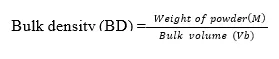
Bulk density
The precisely weighed powder was poured into a graduated cylinder to measure bulk density. The powder's weight (M) and bulk volume (Vb) were calculated. The following formula was used to get the bulk density:
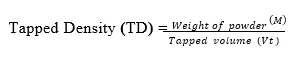
Tapped density
The 100 ml measuring cylinder was filled with the sample powder. A after that a fixed number of taps (100) where applied to the cylinder. Record the final volume and by the following equation the tapped density was calculated.
Carr’s index
One of the most crucial metrics for describing the characteristics of powders and granules is Carr's index. From the following equation it can be calculated and category of Carr’s Index is shown in the table 2.

|
% Compressibility Index |
Properties |
|
5-12 |
Free Flowing |
|
12-19 |
Good |
|
19-21 |
Fair |
|
23-31 |
Poor |
|
33-38 |
Very poor |
|
> 40 |
Extremely poor |
Table 2: Carr’s Index
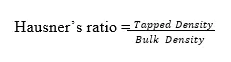
Hausner's ratio
The Hausner's ratio is an index of ease of flow of powder. The Hausner's ratio less than 1.25 indicates good flow. It is calculated by the formula:
|
Hausner's ratio |
Property |
|
0.1 - 1.25 |
Free flowing |
|
1.25 - 1.6 |
Cohesive powder |
Table 3: Hausner's ratio
Angle of repose
The fixed funnel method was used to calculate the angle of repose. A vertically adjustable funnel was used to pour the mixture until the desired maximum cone height (h) was reached. The following formula was used to determine the angle of repose and measure the heap's radius (r):
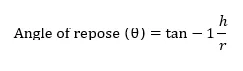
The radius of the base pile is denoted by r, the height of the pile by h, and the angle of repose by θ [75].
|
Angle of repose (θ) |
Type of flow |
|
< 25 |
Excellent |
|
25 - 30 |
Good |
|
30 – 40 |
Passable |
|
> 40 |
Very poor |
Table 4: Angle of repose
Post-compression Parameters
Post-compression evaluation focuses on the quality, strength and functional performance of the prepared toothpaste tablets. These parameters are essential to ensure that the tablets meet both pharmaceutical and consumer expectations.
Appearance and Organoleptic Properties
The tablets are evaluated for colour, shape, texture, odour and taste. Since toothpaste tablets are chewed before use, sensory attributes play a crucial role in consumer acceptance [76].
Weight Variation Test
This test ensures uniformity of tablet weight, which indirectly reflects dose uniformity. A specified number of tablets are weighed individually and compared with the average weight. Deviations must fall within pharmacopeial limits [77].
Hardness (Crushing Strength)
Tablet hardness indicates the mechanical strength required to withstand handling, packaging, and transportation. It is measured using a hardness tester. For toothpaste tablets, hardness must be optimized to ensure both durability and easy chewability [78].
Friability
Friability measures the ability of tablets to resist abrasion and breakage. It is evaluated using a friabilator, where tablets are subjected to mechanical stress.
Friability (%) = W0 / W0−W × 100
Where, Wâ‚€ is the initial weight and W is the final weight after testing. Values below 1% are generally considered acceptable [79].
Disintegration Time
Disintegration is a critical parameter for toothpaste tablets, as it determines how quickly the tablet breaks down in the oral cavity. Ideally, the tablet should disintegrate rapidly upon chewing and contact with saliva to form a smooth paste-like consistency [80].
Wetting Time
Wetting time indicates how quickly the tablet absorbs saliva and begins to disintegrate. It is particularly important for evaluating the initial user experience [81].
Foaming Ability
Foaming ability is assessed to evaluate the effectiveness of surfactants in the formulation. Adequate foam formation is essential for proper dispersion of ingredients and enhanced cleaning action [82].
pH of Solution
The pH of the solution formed after tablet dispersion should be within a suitable range (typically near neutral) to avoid irritation of oral tissues and ensure compatibility with enamel [83].
Content Uniformity
This test ensures that each tablet contains the intended amount of active ingredient, particularly fluoride. Uniform distribution is essential for consistent therapeutic efficacy [84].
Stability Studies
Stability studies are conducted under different environmental conditions (temperature and humidity) to assess the physical and chemical stability of the tablets over time. Parameters such as hardness, disintegration and active content are monitored [85,86].
Advantages of Toothpaste Tablets
Toothpaste tablets have emerged as a modern alternative to conventional toothpaste, offering several practical and environmental benefits. While they serve the same purpose of maintaining oral hygiene, their design and formulation provide unique advantages that are increasingly appealing to today’s consumers.
One of the most notable benefits of toothpaste tablets is their environmental friendliness. Unlike traditional toothpaste tubes, which contribute significantly to plastic waste, these tablets are usually packaged in reusable or biodegradable containers. This makes them a more sustainable option and aligns well with the growing demand for eco-conscious products [87].
Another important advantage is their improved stability. Since toothpaste tablets are generally water-free, they are less prone to microbial contamination and do not require extensive use of preservatives. This not only enhances shelf life but also makes the formulation simpler and cleaner [88].
Toothpaste tablets also provide accurate dosing, as each tablet contains a fixed quantity of ingredients. This helps in avoiding overuse, which is commonly seen with conventional toothpaste, and ensures consistent delivery of active agents such as fluoride [89].
From a practical perspective, these tablets are highly portable and travel-friendly. They are compact, lightweight, and eliminate issues like leakage or restrictions associated with carrying liquids during travel. This makes them especially convenient for individuals with active lifestyles [90].
In addition, toothpaste tablets offer better hygiene and reduced contamination risk. Since they are used individually, there is minimal chance of cross-contamination, unlike toothpaste tubes that are repeatedly exposed to the external environment [91].
Another advantage lies in their flexibility for innovation. These tablets can be easily formulated with herbal extracts, natural sweeteners, or specialized therapeutic agents, allowing for the development of customized oral care products [92]. Overall, toothpaste tablets combine functionality with sustainability and convenience. Although they are still gaining acceptance, their advantages suggest strong potential as a future alternative in oral care products [93].
Limitations and Challenges
Despite their growing popularity, toothpaste tablets are not without limitations. While they offer several advantages, certain challenges still restrict their widespread adoption. One of the primary concerns is consumer acceptance. Most people are accustomed to using conventional toothpaste, and the idea of chewing a tablet before brushing may feel unfamiliar or inconvenient at first. This behavioral shift can act as a barrier, especially among older or less experimental users [94]. Another important issue is related to taste and mouthfeel. Since toothpaste tablets are chewed, any unpleasant texture, grittiness, or delayed disintegration can negatively impact the user experience. Achieving a smooth, paste-like consistency after chewing remains a key formulation challenge [95]. Cost is also a significant factor. Currently, toothpaste tablets tend to be more expensive than conventional toothpaste, mainly due to smaller-scale production and specialized packaging. This can limit their accessibility, particularly in price-sensitive markets [96]. From a formulation perspective, maintaining a balance between tablet hardness and rapid disintegration is challenging. Tablets must be strong enough to withstand handling but also break down quickly in the mouth. Failure to achieve this balance can compromise both usability and effectiveness [97-100].
Future Prospects
Toothpaste tablets have strong potential to become an important part of future oral care, especially as consumers move toward more sustainable and convenient products. Although they are still developing, ongoing research and innovation are expected to improve their overall performance and acceptance. In the coming years, formulations may include advanced ingredients such as nano-hydroxyapatite, probiotics, and herbal actives, which can provide better protection, remineralization, and overall oral health benefits [101]. There is also growing interest in personalized oral care, where toothpaste tablets can be tailored for specific needs like sensitivity, whitening, or gum health [102]. Sustainability will continue to play a major role in their growth. With increasing environmental awareness, toothpaste tablets are likely to gain popularity due to their plastic-free packaging and low environmental impact [103]. At the same time, improvements in formulation techniques are expected to enhance taste, texture, and disintegration, making them more user-friendly [104]. As awareness increases and availability improves, toothpaste tablets may gradually move from a niche product to a more commonly used alternative in everyday oral hygiene [105]. Overall, with continued innovation and consumer acceptance, they hold promising potential for the future of oral care [106].
CONCLUSION
Toothpaste tablets represent a novel and evolving approach in oral care, combining the principles of pharmaceutical formulation with the growing demand for sustainability and convenience. As highlighted throughout this review, they offer several advantages over conventional toothpaste, including improved stability, accurate dosing, reduced contamination risk, and eco-friendly packaging. These features make them particularly appealing in the context of modern consumer preferences and environmental awareness. At the same time, certain challenges such as consumer acceptance, cost, and formulation-related issues like taste and disintegration still need to be addressed for their widespread adoption. However, continuous advancements in formulation science and increasing awareness of sustainable living are likely to overcome these limitations in the near future. Overall, toothpaste tablets hold significant promise as an alternative to traditional dentifrices. With ongoing research, technological improvements, and better market penetration, they have the potential to become an integral part of routine oral hygiene practices, contributing not only to effective dental care but also to a more sustainable future.
REFERENCES

Prapti Gundecha, Nayana Baste*, A Comprehensive Review On Toothpaste Tablets: Formulation, Benefits And Future Prospects, Int. J. Sci. R. Tech., 2026, 3 (6), 896-910. https://doi.org/10.5281/zenodo.20700194
 10.5281/zenodo.20700194