View Article

  • Formulation And Evaluation Of Polyherbal Orodispersible Tablets Containing Ginger (Zingiber Officinale) And Cinnamon (Cinnamomum Verum) Extracts For Primary Dysmenorrhea Management.

  • K.V.N.Naik S.P. Sanstha’s Institute of Pharmaceutical Education and Research,Canada Corner, Nashik -422002

Abstract

The present research work aimed to formulate herbal orodispersible tablets of ginger, cinnamon and cumin for primary dysmennorhea using various concentrations of natural superdisintegrant agents like banana powder and psyllium husk powder by wet granulation method. Three formulations were prepared with superdisintegrants at different concentration levels. The tablets were characterized for drug release, weight variation, hardness, wetting time and in-vitro disintegration time. Among the formulations, tablets of batch F3 with higher psyllium husk content exhibited better organoleptic properties, excellent in-vitro disintegration time and drug release than the other formulation batches. It was concluded that addition of natural superdisintegrants is useful in preparing herbal orodispersible tablets by reducing the side effects and for effective management of primary dysmennorhea.

Keywords

Orodispersible tablets(ODTs), ginger, cinnamon, primary dysmennorhea, natural superdisintegrants, banana powder, psyllium husk powder.

Introduction

× Popup Image

Primary dysmenorrhea is a common gynecologic problem encountered in adolescent girls and young women. It is characterized by painful menstrual cramps in the lower abdomen in the absence of any pelvic pathology; Primary dysmenorrhea adversely affects the quality of life, daily activities, academic performance and psychological well-being of the women around the globe. The conventional treatment includes mainly non-steroidal anti-inflammatory drugs (NSAIDs) and hormonal therapy. However, prolonged use of these medications may produce adverse effects such as gastric irritation, nausea, renal complications and hormonal imbalance.

In recent years, herbal medicines have attracted considerable attention due to their safety, efficacy and cost effectiveness with fewer side effects than synthetic drugs.  Ginger (Zingiber officinale) has active constituents, including gingerols and shogaols, that are anti-inflammatory, analgesic, antioxidant and antispasmodic.  Cinnamon (Cinnamomum verum or Cinnamomum zeylanicum) has analgesic, anti-inflammatory, antimicrobial and antispasmodic actions as well. Cinnamon contains cinnamaldehyde and eugenol, which are bioactive compounds that help in reducing menstrual pain and improve blood circulation.

Orodispersible tablets (ODTs) are solid dosage forms that disintegrate or dissolve rapidly in the mouth with little or no water and thus improve patient convenience and compliance. Rapid onset of action, ease of administration, accurate dosing, improved bioavailability and better patient acceptability particularly in pediatric, geriatric and dysphagic patients are the advantages of ODTs. Herbal ODTs have emerged as a promising approach for effective delivery of phytoconstituents with faster therapeutic response. Banana powder and psyllium husk powder are natural materials with good swelling and water absorption properties which favours fast tablet disintegration and drug release. Herbal excipients can be used in herbal formulations to improve the performance of the tablet with minimum use of synthetic excipients.

The present study was planned to formulate and evaluate herbal orodispersible tablets of ginger and cinnamon for management of primary dysmenorrhea using natural superdisintegrants like banana powder and psyllium husk powder. The prepared formulations were evaluated for different pre-compression and post-compression parameters such as weight variation, hardness, wetting time, in-vitro disintegration time and drug release to find an optimized formulation for better therapeutic efficacy and patient compliance.

MATERIALS AND METHODS:

All the ingredients like ginger, cinnamon, cumin, psyllium husk, corn starch, stevia were purchased from the local market of Nashik. Banana powder used as natural superdisintegrant was prepared in-house by drying raw bananas followed by pulverization and sieving to obtain a fine powder. All the materials used in the study were of food or pharmaceutical grade.

Preparation method:

Orodispersible tablets of ginger and cinnamon were prepared by wet granulation method according to the formula given in Table 1. Three formulations were prepared in total. Each ingredient was separately sieved through a 60-mesh sieve and collected. Small quantities of ginger powder, cinnamon powder and banana powder and psyllium husk were mixed at a time and mixed well to get uniform mixture. The other ingredients were accurately weighed and mixed in geometrical sequence. Preparation of granules, sufficient amount of granulating agent (gum acacia) was added to prepare a damp mass which was passed through the sieve to form granules. The prepared granules were dried, lubricated and compressed to get tablets of 500 mg weight using single punch tablet compression machine with the help of flat faced punches(Hardik tablet mini press). Before preparing the tablets, the powder blends of all the formulations were subjected to compatibility studies and pre-compression parameters such as bulk density, tapped density, angle of repose, percentage compressibility and Hausner’s ratio.

EVALUATION:

The prepared tablets were evaluated for various official and non-official specifications.

Pre-compression evaluation parameters:

1. Bulk Density:

Bulk density is the ratio of the mass of powder to its bulk volume before tapping. It indicates the packing ability and flow characteristics of the powder blend.

Bulk density = Mass of powder / Bulk volume

2. Tapped Density:

Tapped density is the ratio of the mass of powder to the volume occupied after mechanical tapping. It helps in assessing powder consolidation behavior.

Tapped density = Mass of powder / Tapped volume

3. Compressibility Index (Carr’s Index):

Compressibility index is calculated from bulk and tapped density values and is used to evaluate flowability of powder blends. Lower values indicate better flow properties.

Compressibility index(%) = Tapped density – Bulk density / Tapped density x 100

5 – 15%

Excellent

16 – 20%

Good

  1. – 25%

Fair

26– 31%

Poor

>32%

Very poor

4. Hausner Ratio:

Hausner ratio is the ratio of tapped density to bulk density. It provides information regarding interparticle friction and flowability of the powder mixture.

Hausner ratio = Tapped density / Bulk density


1.00-1.11

Excellent

1.12-1.18

Good

1.19-1.25

Fair

1.26-1.34

Poor

>1.35

Very Poor

5. Angle of Repose:

Angle of repose is the maximum angle formed between the surface of a pile of powder and the horizontal plane. It is used to determine the flow characteristics of powder blends.

                   Θ = tan-1( h / r )

            25-30o

Excellent

            31-35o

Good

            36-40o

Fair

            41-45o

Passable

            >45o

Poor

Post-compression evaluation parameters:

1.Weight variation:

Twenty tablets were randomly selected and weighed individually. The average weight of the tablets was calculated, and each individual tablet weight was compared with the average weight.

2.Hardness:

The hardness test was performed to determine the mechanical strength of the tablets. The hardness of randomly selected tablets was measured using a Monsanto hardness tester, and the results were expressed in kg/cm². This test ensures that the tablets possess sufficient strength to withstand handling and transportation.

3.Wetting time:

The wetting time is closely related to the inner structure of the tablets and the hydrophilicity of the excipient. Obviously, the size of the pores is reduced and the wetting time is extended with the increase of compression force or with the reduction of porosity. 6 ml of water was added to a petri plate in which a double folded tissue paper was placed. The tablet was placed on the paper and the time to complete wetting of the tablet was measured in seconds.

4.In-vitro disintegration time:

The in-vitro disintegration time was determined using disintegration test apparatus. The apparatus consisted of 6 tubes. A tablet was placed in each tube and a disc was placed in each tube . The time in seconds was noted for complete disintegration of the tablet with no palatable mass remaining in the apparatus.

5.In-vitro drug release study:

In vitro drug release study was performed by USP dissolution apparatus II (paddle method). The dissolution medium was 900 ml of phosphate buffer (pH 6.8) maintained at 37 ± 0.5°C stirred at 50 rpm. One tablet was added to the dissolution medium and samples were withdrawn at fixed time intervals (5,10,15,20,25). The withdrawn samples(5ml) were filtered and then analyzed by a UV-visible spectrophotometer (Labindia analyticals) at the selected wavelength(285nm). After each sampling an equal volume of fresh dissolution medium was replaced to maintain the sink conditions.

RESULTS AND DISCUSSION:

Herbal orodispersible tablets containing ginger, cinnamon and cumin powder were successfully prepared by wet granulation method and were evaluated for various pre-compression and post-compression parameters. All formulations exhibited acceptable characteristics and satisfactory performance of tablets.

The pre-compression test revealed that the granules had good flow properties. Bulk density values of 0.45 g/ml, 0.33 g/ml and 0.55 g/ml were obtained for F1, F2 and F3 respectively while tapped density values of 0.52 g/ml, 0.41 g/ml and 0.58 g/ml were obtained for F1, F2 and F3 respectively. The compressibility index values ranged between 13.36% and 19.51% indicating fair to good flowability. The Hausner’s ratio values were found to be in the range of 1.05-1.24 indicating acceptable flow properties of granules for compression. The angle of repose was in the range of 32.2° to 40.6° indicating good flow behavior.

 All the prepared tablets were light brown in colour, round in shape and had a characteristic aromatic odour of cinnamon with slightly rough surface. The weight variation test was same for all the formulations. The average weight variation values obtained for F1, F2 and F3 were 0.511 ± 0.038 g, 0.495 ± 0.011 g and 0.502 ± 0.021 g respectively, which were within the acceptable limits of pharmacopoeia. The wetting time and in-vitro disintegration time decreased gradually from F1 to F3. F1 showed maximum wetting time of 120 sec and disintegration time of 36.0 sec, while F3 showed minimum wetting time of 45.3 sec and disintegration time of 17.24 sec. The decreased wetting and disintegration time may be attributed to the increased banana powder concentration and psyllium husk powder as natural superdisintegrants and increased water absorption and breakup of tablet.

The in-vitro dissolution studies showed satisfactory release of drug from all the formulations. The percentage drug release was found to be 78.78 ± 0.85% for F1, 77.68 ± 1.12% for F2 and 79.58 ± 0.94% for F3.  Amongst all the formulations, F3 showed maximum drug release and disintegrated fast which resulted in improved performance of the tablet.

In conclusion, the present study proved that natural excipients like banana powder and psyllium husk powder can be successfully used for improving the disintegration and dissolution properties of herbal orodispersible tablets. Formulation F3 was selected as optimized formulation based on evaluation parameters viz. rapid disintegration, lower wetting time and maximum drug release.

Ingredients

F1(mg)

F2(mg)

F3(mg)

Ginger powder

100

100

100

Cinnamon powder

75

75

75

Cumin powder

50

50

50

Banana powder

80

100

120

Psyllium husk powder

40

60

80

Corn starch

120

80

40

Stevia

25

25

25

Gum acacia

8

8

8

Cardamon powder

2

2

2

Table no.1-Formulation design:

Sr.no.

Parameters

F1

F2

F3

1.

Bulk density(gm/ml)

0.45gm/ml

0.33gm/ml

0.55gm/ml

2.

Tapped density(gm/ml)

0.52gm/ml

0.41gm/ml

0.58gm/ml

3.

Car’s index(%)

13.36%

19.51%

5.17%

4.

Hausner’s ratio

1.15

1.24

1.05

5.

Angle of repose(°)

35.7°

32.2°

40.6°

Table no.2-Pre-compression evaluation:

Sr.no.

Parameters

F1

F2

F3

1.

Weight variation

0.511±0.038

0.495±0.011

0.502±0.021

2.

Hardness(kg/cm2)

2.5

2.6

2.5

3.

Wetting time (sec)

120sec

49.2sec

45.3sec

4.

In-vitro disintegration time (sec)

36.0sec

18.46sec

17.24sec

5.

In-vitro dissolution study (% drug release)

78.78±0.85%

77.68±1.12%

79.58±0.94%

Table no.3- Post-compression evaluation of tablets:
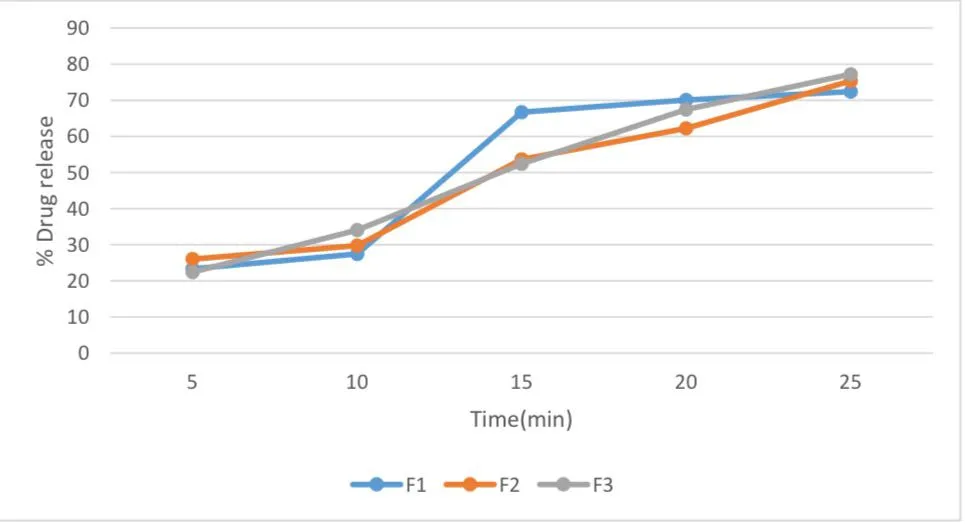
Fig no.1 % Drug release
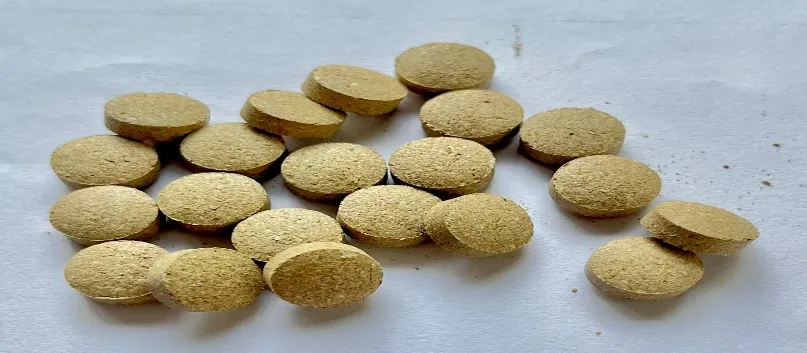
Fig no.2 Prepared Polyherbal orodispersible tablets

REFERENCES

  1. Swathi, S., Vineetha, A. N., Nitesh, M. K., Lakshmeesha, Ragavendrasamy, B., Prajwal, H. M., Vinaya Kumar, T., Shravya, C. N., Ranjini Murthy, P., & Yadav, A. R. (2023). Efficacy of ginger tea and cinnamon tea on primary dysmenorrhea among young adults: A comparative study. Indian Journal of Integrative Medicine, 3(4), 107-112.
  2. Harel, Z. (2008). Dysmenorrhea in adolescents. Annals of the New York Academy of Sciences, 1135(1), 185–195. https://doi.org/10.1196/annals.1429.007
  3. Núñez-Troconis J, Carvallo D, Martínez-Núñez E. Primary Dysmenorrhea: pathophysiology. Invest Clin. 2021;62(4):378-406. Available from: https://doi.org/10.22209/IC.v62n4a08
  4. Ferries-Rowe E, Corey E, Archer JS. Primary Dysmenorrhea: Diagnosis and Therapy. Obstet Gynecol. 2020 Nov;136(5):1047-58. doi: 10.1097/AOG.0000000000004096.
  5. Dey, P., & Maiti, S. (2010). Orodispersible tablets: A new trend in drug delivery. Journal of Natural Science, Biology and Medicine, 1(1), 2-5.
  6. Jassem, N. A. (2022). Orodispersible Tablets: A Review on Recent Trends in Drug Delivery. International Journal of Drug Delivery Technology, 12(1), 432-436.
  7. Itani R, Soubra L, Karout S, Rahme D, Karout L, Khojah HMJ. Primary Dysmenorrhea: Pathophysiology, Diagnosis, and Treatment Updates. Korean J Fam Med. 2022;43(2):101-108. doi:10.4082/kjfm.21.0103.
  8. Guimarães I, Póvoa AM. Primary Dysmenorrhea: Assessment and Treatment. Rev Bras Ginecol Obstet. 2020 Aug;42(8):501-507. doi: 10.1055/s-0040-1712131.
  9. Negi R, Sharma SK, Gaur R, Bahadur A, Prasuna J. Efficacy of ginger in the treatment of primary dysmenorrhea: a systematic review and meta-analysis. Cureus. 2021 Mar 6;13(3):e13743. doi: 10.7759/cureus.13743.
  10. Evayanti Y, Hidayat SA. The effect of cinnamon on pain among teenage girls with primary dysmenorrhea in Lampung-Indonesia. Malahayati Int J Nurs Health Sci. 2019 Sep;2(2):59-65.
  11. Gupta, D. K., Maurya, A., & Varshney, M. M. (2020). Orodispersible Tablets: An Overview of Formulation and Technology. World Journal of Pharmacy and Pharmaceutical Sciences, 9(10), 1406-1418.
  12. Pabari, R. M., & Ramtoola, Z. (n.d.). Effect of a Disintegration Mechanism on Wetting, Water Absorption, and Disintegration Time of Orodispersible Tablets. Journal of Young Pharmacists, 4(3), 157-163.
  13. Radke, R. S., Jadhav, J. K., & Chajeed, M. R. (2009). Formulation and Evaluation of Orodispersible Tablets of Baclofen. International Journal of ChemTech Research, 1(3), 517-521.
  14. Roy, A. (2016). Orodispersible tablets: A review. Asian Journal of Pharmaceutical and Clinical Research,9(1), 19-26.
  15. Patil, P. B., More, V. N., & Tour, N. S. (2015). Recent Trends in Orodispersible Tablets - An Overview of Formulation Technology and Future Prospects. International Journal of Pharma Sciences and Research,6(7), 1056-1066.
  16. Jesmeen, T., & Uddin, R. (2011). Orodispersible Tablets: A Short Review. Stamford Journal of Pharmaceutical Sciences, 4(1), 96-99.
  17. Jain, D., & Amul, M. (2014). A Review - Formulation & Development of Orodispersible Tablet.International Journal of Pharmaceutical Erudition, 4(1), 21-38.
  18. Panda, S., Latha, V., Pattnaik, S., Maharana, L., & Swain, R. P. (2015). An Update On Various Excipients Employed for Orodispersible Tablets with A Special Focus On Superdisintegrants. International Journal of Pharmaceutical and Clinical Research, 7(6), 440-449
  19. Khobragde D, Kotha A, Ravalika K, Gupta R, Kumar PV. Oro-dispersible tablets of ayurvedic powder for improving taste, compliance, ease and accuracy of administration. Int J Adv Sci Res. 2016;2(6):131–133.
  20. Sharma V, Philip AK, Pathak K. Modified polysaccharides as fast disintegrating excipients for orodispersible tablets of roxithromycin. AAPS PharmSciTech. 2008;9(1):87–94.
  21. Pathak T, Gehalot N, Jain V, Mahajan SC. A review on orodispersible tablet. Int J Pharm Sci Med. 2023;8(4):41–51.
  22. Islam, A., Haider, S. S., & Reza, M. S. (2011). Formulation and Evaluation of Orodispersible Tablet of Domperidone. Dhaka Univ. J. Pharm. Sci., 10(2), 117-122.
  23. Suresh Bandari, Rajendar Kumar Mittapalli, Ramesh Gannu, and Yamsani Madhusudan Rao, "Orodispersible tablets: An overview," Asian Journal of Pharmaceutics, January 2008, pp. 2–11.
  24. Rane, R., Gangolli, D., Panigrahy, S., Sarkar, S., & Kundalwal, S. (2013). Mouth dissolving tablets and candies prepared from popularly known spices. Research Journal of Chemical Sciences, 3(5), 57–62.
  25. Akhilesh, M. S., Rao, V., Rajarajan, S., & Baby, B. (2023). Factors influential on effects of fast disintegrating tableting with natural superdisintegrants - Review. Archives of Pharmaceutical Sciences and Research, 13(3), 164–174.
  26. Sharma, R., Ashawat, M. S., Verma, C. P. S., & Kumari, N. (2020). A fast release tablet containing herbal extracts (ginger, cinnamon, turmeric, long pepper and punarnava). Asian Journal of Pharmacy and Technology, 10(4), 231–240. https://doi.org/10.5958/2231-5713.2020.00039.2
  27. Budhi, N. G. M. A. A., Aticeh, Follona, W., & Elisya, Y. (2022). Effect of spice drinks (red ginger and cinnamon) on dysmenorrhea pain. International Journal of Science and Society, 4(4), 437–447. http://ijsoc.goacademica.com
  28. Rane R, Gangolli D, Panigrahy S, Sarkar S, Kundalwal S. Mouth Dissolving Tablets and Candies prepared from popularly Known Spices. Res J Chem Sci. 2013 May;3(5):57-62.
  29. Ebrahimi Azmoudeh B, Habibian M, Askari B. The Effectiveness of the Combination of Cinnamon and Ginger with Exercise Training in the Treatment of Dysmenorrhea and Premenstrual Syndrome. Iran Journal of Nursing. 2019;32(121):68-81. doi:10.29252/ijn.32.121.68.
  30. Mashhadi NS, Ghiasvand R, Askari G, Hariri M, Darvishi L, Mofid MR. Anti-oxidative and anti-inflammatory effects of ginger in health and physical activity: Review of current evidence. Int J Prev Med. 2013;4(Suppl 1):S36-42.
  31. 31.Singletary K. Ginger: An Overview of Health Benefits. Nutr Today. 2010 Jul-Aug;45(4):171-183. doi: 10.1097/NT.0b013e3181ed3543.
  32. 32.Morvaridzadeh M, Sadeghi E, Agah S, Fazelian S, Rahimlou M, Kern FG, et al. Effect of ginger (Zingiber officinale) supplementation on oxidative stress parameters: A systematic review and meta-analysis. J Food Biochem. 2021;45(3):e13612. doi:10.1111/jfbc.13612.
  33. Jalali M, Mahmoodi M, Moosavian SP, Jalali R, Ferns G, Mosallanezhad A, Imanieh MH, Mosallanezhad Z. The effects of ginger supplementation on markers of inflammatory and oxidative stress: A systematic review and meta-analysis of clinical trials. Phytotherapy Research. 2020. doi:10.1002/ptr.6638.
  34. Wu X, Deng Y, Zhang Y. Study on the active components and mechanism of Cinnamon in the treatment of dysmenorrhea based on network pharmacology. J Biotech Res. 2025;23:270-277.
  35. Effendy HV, Sari SM. The effect of giving cinnamon drink on reducing menstrual pain (dysminorea) in adolescents. Jurnal MIDPRO. 2025 Jun;17(1):10-15. Available from: http://jurnalkesehatan.unisla.ac.id/index.php/midpro

Reference

  1. Swathi, S., Vineetha, A. N., Nitesh, M. K., Lakshmeesha, Ragavendrasamy, B., Prajwal, H. M., Vinaya Kumar, T., Shravya, C. N., Ranjini Murthy, P., & Yadav, A. R. (2023). Efficacy of ginger tea and cinnamon tea on primary dysmenorrhea among young adults: A comparative study. Indian Journal of Integrative Medicine, 3(4), 107-112.
  2. Harel, Z. (2008). Dysmenorrhea in adolescents. Annals of the New York Academy of Sciences, 1135(1), 185–195. https://doi.org/10.1196/annals.1429.007
  3. Núñez-Troconis J, Carvallo D, Martínez-Núñez E. Primary Dysmenorrhea: pathophysiology. Invest Clin. 2021;62(4):378-406. Available from: https://doi.org/10.22209/IC.v62n4a08
  4. Ferries-Rowe E, Corey E, Archer JS. Primary Dysmenorrhea: Diagnosis and Therapy. Obstet Gynecol. 2020 Nov;136(5):1047-58. doi: 10.1097/AOG.0000000000004096.
  5. Dey, P., & Maiti, S. (2010). Orodispersible tablets: A new trend in drug delivery. Journal of Natural Science, Biology and Medicine, 1(1), 2-5.
  6. Jassem, N. A. (2022). Orodispersible Tablets: A Review on Recent Trends in Drug Delivery. International Journal of Drug Delivery Technology, 12(1), 432-436.
  7. Itani R, Soubra L, Karout S, Rahme D, Karout L, Khojah HMJ. Primary Dysmenorrhea: Pathophysiology, Diagnosis, and Treatment Updates. Korean J Fam Med. 2022;43(2):101-108. doi:10.4082/kjfm.21.0103.
  8. Guimarães I, Póvoa AM. Primary Dysmenorrhea: Assessment and Treatment. Rev Bras Ginecol Obstet. 2020 Aug;42(8):501-507. doi: 10.1055/s-0040-1712131.
  9. Negi R, Sharma SK, Gaur R, Bahadur A, Prasuna J. Efficacy of ginger in the treatment of primary dysmenorrhea: a systematic review and meta-analysis. Cureus. 2021 Mar 6;13(3):e13743. doi: 10.7759/cureus.13743.
  10. Evayanti Y, Hidayat SA. The effect of cinnamon on pain among teenage girls with primary dysmenorrhea in Lampung-Indonesia. Malahayati Int J Nurs Health Sci. 2019 Sep;2(2):59-65.
  11. Gupta, D. K., Maurya, A., & Varshney, M. M. (2020). Orodispersible Tablets: An Overview of Formulation and Technology. World Journal of Pharmacy and Pharmaceutical Sciences, 9(10), 1406-1418.
  12. Pabari, R. M., & Ramtoola, Z. (n.d.). Effect of a Disintegration Mechanism on Wetting, Water Absorption, and Disintegration Time of Orodispersible Tablets. Journal of Young Pharmacists, 4(3), 157-163.
  13. Radke, R. S., Jadhav, J. K., & Chajeed, M. R. (2009). Formulation and Evaluation of Orodispersible Tablets of Baclofen. International Journal of ChemTech Research, 1(3), 517-521.
  14. Roy, A. (2016). Orodispersible tablets: A review. Asian Journal of Pharmaceutical and Clinical Research,9(1), 19-26.
  15. Patil, P. B., More, V. N., & Tour, N. S. (2015). Recent Trends in Orodispersible Tablets - An Overview of Formulation Technology and Future Prospects. International Journal of Pharma Sciences and Research,6(7), 1056-1066.
  16. Jesmeen, T., & Uddin, R. (2011). Orodispersible Tablets: A Short Review. Stamford Journal of Pharmaceutical Sciences, 4(1), 96-99.
  17. Jain, D., & Amul, M. (2014). A Review - Formulation & Development of Orodispersible Tablet.International Journal of Pharmaceutical Erudition, 4(1), 21-38.
  18. Panda, S., Latha, V., Pattnaik, S., Maharana, L., & Swain, R. P. (2015). An Update On Various Excipients Employed for Orodispersible Tablets with A Special Focus On Superdisintegrants. International Journal of Pharmaceutical and Clinical Research, 7(6), 440-449
  19. Khobragde D, Kotha A, Ravalika K, Gupta R, Kumar PV. Oro-dispersible tablets of ayurvedic powder for improving taste, compliance, ease and accuracy of administration. Int J Adv Sci Res. 2016;2(6):131–133.
  20. Sharma V, Philip AK, Pathak K. Modified polysaccharides as fast disintegrating excipients for orodispersible tablets of roxithromycin. AAPS PharmSciTech. 2008;9(1):87–94.
  21. Pathak T, Gehalot N, Jain V, Mahajan SC. A review on orodispersible tablet. Int J Pharm Sci Med. 2023;8(4):41–51.
  22. Islam, A., Haider, S. S., & Reza, M. S. (2011). Formulation and Evaluation of Orodispersible Tablet of Domperidone. Dhaka Univ. J. Pharm. Sci., 10(2), 117-122.
  23. Suresh Bandari, Rajendar Kumar Mittapalli, Ramesh Gannu, and Yamsani Madhusudan Rao, "Orodispersible tablets: An overview," Asian Journal of Pharmaceutics, January 2008, pp. 2–11.
  24. Rane, R., Gangolli, D., Panigrahy, S., Sarkar, S., & Kundalwal, S. (2013). Mouth dissolving tablets and candies prepared from popularly known spices. Research Journal of Chemical Sciences, 3(5), 57–62.
  25. Akhilesh, M. S., Rao, V., Rajarajan, S., & Baby, B. (2023). Factors influential on effects of fast disintegrating tableting with natural superdisintegrants - Review. Archives of Pharmaceutical Sciences and Research, 13(3), 164–174.
  26. Sharma, R., Ashawat, M. S., Verma, C. P. S., & Kumari, N. (2020). A fast release tablet containing herbal extracts (ginger, cinnamon, turmeric, long pepper and punarnava). Asian Journal of Pharmacy and Technology, 10(4), 231–240. https://doi.org/10.5958/2231-5713.2020.00039.2
  27. Budhi, N. G. M. A. A., Aticeh, Follona, W., & Elisya, Y. (2022). Effect of spice drinks (red ginger and cinnamon) on dysmenorrhea pain. International Journal of Science and Society, 4(4), 437–447. http://ijsoc.goacademica.com
  28. Rane R, Gangolli D, Panigrahy S, Sarkar S, Kundalwal S. Mouth Dissolving Tablets and Candies prepared from popularly Known Spices. Res J Chem Sci. 2013 May;3(5):57-62.
  29. Ebrahimi Azmoudeh B, Habibian M, Askari B. The Effectiveness of the Combination of Cinnamon and Ginger with Exercise Training in the Treatment of Dysmenorrhea and Premenstrual Syndrome. Iran Journal of Nursing. 2019;32(121):68-81. doi:10.29252/ijn.32.121.68.
  30. Mashhadi NS, Ghiasvand R, Askari G, Hariri M, Darvishi L, Mofid MR. Anti-oxidative and anti-inflammatory effects of ginger in health and physical activity: Review of current evidence. Int J Prev Med. 2013;4(Suppl 1):S36-42.
  31. 31.Singletary K. Ginger: An Overview of Health Benefits. Nutr Today. 2010 Jul-Aug;45(4):171-183. doi: 10.1097/NT.0b013e3181ed3543.
  32. 32.Morvaridzadeh M, Sadeghi E, Agah S, Fazelian S, Rahimlou M, Kern FG, et al. Effect of ginger (Zingiber officinale) supplementation on oxidative stress parameters: A systematic review and meta-analysis. J Food Biochem. 2021;45(3):e13612. doi:10.1111/jfbc.13612.
  33. Jalali M, Mahmoodi M, Moosavian SP, Jalali R, Ferns G, Mosallanezhad A, Imanieh MH, Mosallanezhad Z. The effects of ginger supplementation on markers of inflammatory and oxidative stress: A systematic review and meta-analysis of clinical trials. Phytotherapy Research. 2020. doi:10.1002/ptr.6638.
  34. Wu X, Deng Y, Zhang Y. Study on the active components and mechanism of Cinnamon in the treatment of dysmenorrhea based on network pharmacology. J Biotech Res. 2025;23:270-277.
  35. Effendy HV, Sari SM. The effect of giving cinnamon drink on reducing menstrual pain (dysminorea) in adolescents. Jurnal MIDPRO. 2025 Jun;17(1):10-15. Available from: http://jurnalkesehatan.unisla.ac.id/index.php/midpro

Photo
Mrunal Sahebrao Wakchoure
Corresponding author

K.V.N.Naik S.P. Sanstha’s Institute of Pharmaceutical Education and Research,Canada Corner, Nashik -422002

Photo
Harshada Vilas Bodke
Co-author

K.V.N.Naik S.P. Sanstha’s Institute of Pharmaceutical Education and Research,Canada Corner, Nashik -422002

Photo
Avinash B. Darekar
Co-author

K.V.N.Naik S.P. Sanstha’s Institute of Pharmaceutical Education and Research,Canada Corner, Nashik -422002

Mrunal Sahebrao Wakchoure*, Harshada Vilas Bodke, Avinash B. Darekar, Formulation And Evaluation Of Polyherbal Orodispersible Tablets Containing Ginger (Zingiber Officinale) And Cinnamon (Cinnamomum Verum) Extracts For Primary Dysmenorrhea Management., Int. J. Sci. R. Tech., 2026, 3 (5), 1022-1028. https://doi.org/10.5281/zenodo.20415458

More related articles
A Review On Polyherbal Formulations For Immune Enh...
Nirmalkumar Nimba Bhadane , Sumaira Nasreen Tahir, Pawan Ashok Da...
Formulation And Evaluation Of Polyherbal Memory Bo...
Shivam Rathod, K.R. Biyani, Aijaz A. Shaikh, R. H. Kale ...
Review on Rhizomatous Aromatic Herb – Curcuma Am...
kavita sharma, Sayema beg, Archana Andhale , Dhanashri Bhoi...
Formulation and Optimization of Effervescent Tablets by Design Of Experiments...
Sudarshan Mirgal, Dr. Mohan Kale, Dr. Bharat Tekade...
Formulation, Development & Evaluation Of Polyherbal Sunscreen...
Markunde Onkar Ramu, Zanwar Vijaykumar Jugalkishor, Kale Ajwita Satishrao, Jadhav Pramod Ramrao, Yed...
Related Articles
A Contemporary Approach to The Medicate Conveyane Through Orodispersible Tablets...
Rahul Prajapati, Mahendrakumar Dubey, Sahilahmad Makarani, Sagar Patra, Himanshu Sharma...
Review -Phytomedicine (Ginger)...
Pragya Yadav, Tarkeshwar Prasad. Shukla, Sujeet Pratap Singh, Pramod Mishra...
A Review On Polyherbal Formulations For Immune Enhancement: Phytochemical Standa...
Nirmalkumar Nimba Bhadane , Sumaira Nasreen Tahir, Pawan Ashok Danghche , Sanket Bhausaheb Gangurde ...
A Review On Polyherbal Formulations For Immune Enhancement: Phytochemical Standa...
Nirmalkumar Nimba Bhadane , Sumaira Nasreen Tahir, Pawan Ashok Danghche , Sanket Bhausaheb Gangurde ...
More related articles
A Review On Polyherbal Formulations For Immune Enhancement: Phytochemical Standa...
Nirmalkumar Nimba Bhadane , Sumaira Nasreen Tahir, Pawan Ashok Danghche , Sanket Bhausaheb Gangurde ...
Formulation And Evaluation Of Polyherbal Memory Booster Syrup...
Shivam Rathod, K.R. Biyani, Aijaz A. Shaikh, R. H. Kale ...
Review on Rhizomatous Aromatic Herb – Curcuma Amada...
kavita sharma, Sayema beg, Archana Andhale , Dhanashri Bhoi...
A Review On Polyherbal Formulations For Immune Enhancement: Phytochemical Standa...
Nirmalkumar Nimba Bhadane , Sumaira Nasreen Tahir, Pawan Ashok Danghche , Sanket Bhausaheb Gangurde ...
Formulation And Evaluation Of Polyherbal Memory Booster Syrup...
Shivam Rathod, K.R. Biyani, Aijaz A. Shaikh, R. H. Kale ...
Review on Rhizomatous Aromatic Herb – Curcuma Amada...
kavita sharma, Sayema beg, Archana Andhale , Dhanashri Bhoi...