View Article

Abstract

Allergic rhinitis (AR) is a chronic inflammatory disorder of the nasal mucosa characterized by symptoms such as sneezing, nasal congestion, rhinorrhea, and nasal itching. Conventional nasal formulations often exhibit limited therapeutic efficacy due to rapid mucociliary clearance and short residence time within the nasal cavity. The present study was undertaken to formulate and evaluate a polyherbal mucoadhesive in-situ nasal gel containing Sida spinosa and Urtica dioica leaf extracts for the effective management of allergic rhinitis. The selected herbal extracts are known for their anti-inflammatory, antihistaminic, antioxidant, and immunomodulatory activities, making them suitable candidates for the treatment of allergic disorders. The extracts were prepared by hydroalcoholic Soxhlet extraction and incorporated into a thermoreversible in-situ gel system using Hydroxypropyl Methylcellulose (HPMC) and Carbopol 934 as mucoadhesive and gelling agents. The formulated nasal gels were evaluated for various physicochemical and performance parameters including gelling temperature, gelling time, pH, viscosity, spreadability, gel strength, drug content, mucoadhesive strength, and irritancy. The developed formulation exhibited satisfactory gelation characteristics, suitable viscosity, acceptable pH, good mucoadhesive properties, and was found to be non-irritant to the nasal mucosa. The prolonged residence time achieved by the in-situ gel system is expected to enhance local drug absorption and therapeutic effectiveness while minimizing dosing frequency. The study suggests that the polyherbal nasal in-situ gel may serve as a safe, effective, and patient-friendly alternative for the treatment of allergic rhinitis and other inflammatory nasal disorders.

Keywords

Allergic Rhinitis, Nasal Drug Delivery System, In-Situ Gel, Sida spinosa, Urtica dioica, Mucoadhesive Polymer.

Introduction

× Popup Image

Allergic rhinitis (AR) is a common chronic inflammatory disorder of the nasal mucosa caused by an immunoglobulin E (IgE)-mediated hypersensitivity reaction following exposure to allergens such as pollen, dust mites, animal dander, molds, and environmental pollutants. It is characterized by symptoms including sneezing, nasal congestion, rhinorrhea, itching of the nose, and watery eyes. Allergic rhinitis affects approximately 10–30% of the global population and its prevalence continues to increase due to rapid urbanization, industrialization, environmental pollution, and changes in lifestyle. Although allergic rhinitis is not a life-threatening disease, it significantly affects the quality of life, sleep patterns, daily activities, educational performance, and work productivity of affected individuals.

The pathophysiology of allergic rhinitis involves activation of mast cells and basophils upon exposure to allergens, resulting in the release of inflammatory mediators such as histamine, leukotrienes, prostaglandins, and cytokines. These mediators cause vasodilation, increased vascular permeability, mucus secretion, and infiltration of inflammatory cells into the nasal mucosa. Continuous exposure to allergens leads to chronic inflammation and persistent nasal symptoms. Conventional treatment options for allergic rhinitis include antihistamines, corticosteroids, decongestants, mast cell stabilizers, and immunotherapy. However, long-term use of synthetic drugs may produce adverse effects such as drowsiness, nasal irritation, dryness of the nasal mucosa, headache, and rebound congestion.

In recent years, herbal medicines have gained considerable attention as alternative therapeutic agents because of their safety, efficacy, affordability, and lower incidence of adverse effects. Medicinal plants contain a variety of bioactive constituents including alkaloids, flavonoids, glycosides, tannins, phenolic compounds, terpenoids, and saponins that possess anti-inflammatory, antioxidant, antihistaminic, antimicrobial, and immunomodulatory properties. These phytoconstituents have shown significant potential in the treatment and management of allergic and inflammatory disorders.

Sida spinosa, commonly known as Prickly Sida, belongs to the family Malvaceae and has been widely used in traditional systems of medicine for the treatment of inflammatory diseases, respiratory disorders, fever, and allergies. The leaves of Sida spinosa contain alkaloids, flavonoids, tannins, glycosides, and phenolic compounds which contribute to its anti-inflammatory, antioxidant, analgesic, and immunomodulatory activities. These pharmacological properties make the plant a promising candidate for the treatment of allergic rhinitis.

Urtica dioica, commonly known as Stinging Nettle, belongs to the family Urticaceae and is one of the most extensively studied medicinal plants for allergic disorders. The leaves contain flavonoids, lignans, sterols, phenolic acids, vitamins, and minerals that exhibit potent anti-allergic and anti-inflammatory activities. Studies have demonstrated that Urtica dioica can inhibit histamine release, suppress inflammatory cytokines, and reduce allergic symptoms. Therefore, it is widely used in herbal formulations for allergic rhinitis, asthma, and other respiratory disorders.

The nasal route has emerged as an attractive and effective pathway for both local and systemic drug delivery. The nasal cavity possesses a large surface area, extensive vascularization, porous endothelial membrane, and relatively high permeability, which facilitate rapid drug absorption. Furthermore, nasal drug delivery bypasses gastrointestinal degradation and hepatic first-pass metabolism, resulting in improved bioavailability and rapid onset of therapeutic action. Drugs administered through the nasal route can directly reach systemic circulation and, in some cases, the central nervous system through the olfactory pathway.

Despite these advantages, conventional nasal dosage forms such as solutions, sprays, and drops exhibit poor retention within the nasal cavity because of mucociliary clearance mechanisms. The nasal mucosa continuously removes foreign particles and formulations through coordinated ciliary movement, reducing the contact time between the drug and absorption surface. This limitation often results in decreased drug absorption and reduced therapeutic efficacy.

To overcome these challenges, in-situ gelling systems have been developed as advanced drug delivery platforms. In-situ gels are liquid formulations that undergo a sol-to-gel transition upon exposure to physiological conditions such as temperature, pH, or ionic concentration. These systems combine the ease of administration of liquid dosage forms with the prolonged retention characteristics of gels. Thermoreversible in-situ gels are particularly advantageous for nasal delivery because they remain in liquid form during administration and rapidly convert into gel at nasal temperature.

The incorporation of mucoadhesive polymers further enhances the performance of in-situ gels. Hydroxypropyl Methylcellulose (HPMC) and Carbopol 934 are widely used mucoadhesive polymers that improve adhesion to the nasal mucosa, prolong residence time, reduce mucociliary clearance, and enhance drug absorption. These polymers also provide controlled and sustained drug release, thereby improving therapeutic outcomes and reducing dosing frequency.

The combination of Sida spinosa and Urtica dioica extracts in a mucoadhesive thermoreversible in-situ nasal gel offers a novel and promising approach for the management of allergic rhinitis. The synergistic action of phytoconstituents from both plants may provide enhanced anti-inflammatory, antihistaminic, antioxidant, and immunomodulatory effects. In addition, the nasal in-situ gel system improves drug retention and absorption, leading to better therapeutic efficacy and patient compliance.

Therefore, the present study focuses on the formulation and development of a polyherbal mucoadhesive in-situ nasal gel containing Sida spinosa and Urtica dioica leaf extracts. The study aims to evaluate the physicochemical characteristics, gelling behavior, mucoadhesive properties, safety, and potential effectiveness of the developed formulation for the treatment of allergic rhinitis.

PLANT PROFILE
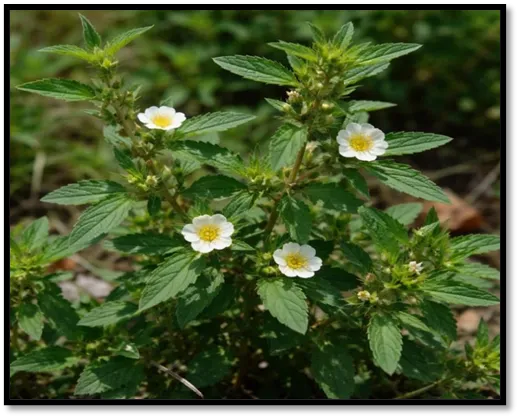
  1. Sida spinosa

Fig no 1 : Sida spinosa

  1. Scientific Classification
  • Kingdom: Plantae
  • Family: Malvaceae
  • Genus: Sida
  • Species: Sida spinosa
  1. Common Names
  • Prickly Sida
  • Bala
  • Country Mallow
  1. Morphological Features
  • Small erect herb.
  • Stem is branched and covered with fine hairs.
  • Leaves are simple, ovate and green.
  • Flowers are yellow in color.
  • Fruits contain several seeds.
  1. Chemical Constituents
  • Alkaloids
  • Flavonoids
  • Tannins
  • Glycosides
  • Phenolic compounds
  • Steroids
  1. Pharmacological Activities
  • Anti-inflammatory activity
  • Antioxidant activity
  • Antimicrobial activity
  • Analgesic activity
  • Immunomodulatory activity
  • Anti-allergic activity
  1. Uses
  • Allergic disorders
  • Fever
  • Asthma
  • Wound healing
  • Inflammatory conditions
  1. Urtica dioica

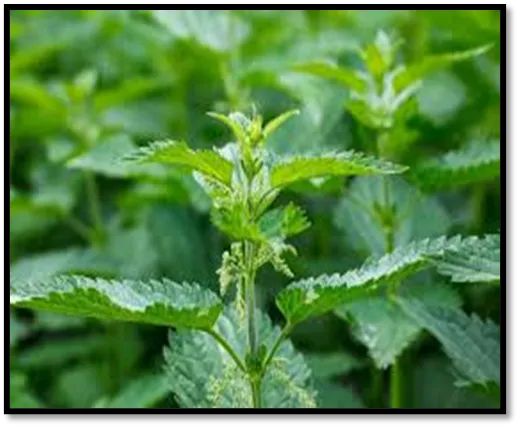
Fig no 2 : Urtica dioica

  1. Scientific Classification
  • Kingdom: Plantae
  • Family: Urticaceae
  • Genus: Urtica
  • Species: Urtica dioica
  1. Common Names
  • Stinging Nettle
  • Common Nettle
  1. Morphological Features
  • Perennial herbaceous plant.
  • Stem is erect and covered with stinging hairs.
  • Leaves are opposite and serrated.
  • Flowers are small and green.
  1. Chemical Constituents
  • Flavonoids
  • Phenolic acids
  • Sterols
  • Tannins
  • Glycosides
  • Vitamins A and C
  1. Pharmacological Activities
  • Anti-allergic activity
  • Anti-inflammatory activity
  • Antioxidant activity
  • Antihistaminic activity
  • Immunomodulatory activity
  1. Uses
  • Allergic rhinitis
  • Asthma
  • Arthritis
  • Respiratory disorders
  • Inflammatory diseases

MECHANISM OF NASAL DRUG ABSORPTION

  1. Transcellular Transport
    • Drug passes through epithelial cells.
  2. Paracellular Transport
    • Drug passes between adjacent epithelial cells.
  3. Carrier-Mediated Transport
    • Specialized carriers transport molecules.
  4. Endocytosis
    • Macromolecules enter cells through vesicle formation.

FACTORS AFFECTING NASAL DRUG DELIVERY

  1. Molecular weight of drug.
  2. Lipophilicity of drug.
  3. Drug concentration.
  4. Nasal mucociliary clearance.
  5. Nasal blood flow.
  6. pH of formulation.
  7. Viscosity of formulation.
  8. Presence of absorption enhancers.
  9. Nasal pathology.
  10. Residence time in nasal cavity.

MATERIALS AND METHODS

Materials

The materials used in the formulation and development of polyherbal nasal in-situ gel were:

  • Sida spinosa leaves extract powder
  • Urtica dioica leaves extract powder
  • Carbopol 934
  • Hydroxypropyl Methylcellulose (HPMC)
  • Distilled Water

METHODS

    1. Collection and Authentication of Plant Material

Fresh leaves of Sida spinosa and Urtica dioica were collected from local areas and authenticated by a qualified botanist. The leaves were washed thoroughly with water to remove dust and foreign particles and were shade-dried at room temperature for 10–15 days. The dried leaves were coarsely powdered using a mechanical grinder and stored in airtight containers until further use.

    1. Preparation of Plant Extracts

Hydroalcoholic Extraction

  1. About 500 g of dried and coarsely powdered leaves of Sida spinosa and Urtica dioica were weighed separately.
  2. The powdered material was packed into a Soxhlet extraction thimble.
  3. A hydroalcoholic solvent (Ethanol:Water, 70:30 v/v) was used as the extraction solvent.
  4. Extraction was carried out continuously for 48 hours using a Soxhlet apparatus.
  5. The obtained extract was filtered through Whatman filter paper.
  6. The filtrate was concentrated by evaporation of solvent.
  7. The concentrated extract was dried in a hot air oven at 40–45°C.
  8. The dried extract was collected, weighed, and stored in airtight containers for further studies.
    1. Soxhlet Extraction Procedure
  1. The powdered drug was placed inside a thimble made of filter paper.
  2. The thimble was placed inside the Soxhlet extractor.
  3. The round-bottom flask was filled with hydroalcoholic solvent.
  4. The assembly was connected to a condenser.
  5. The solvent was heated and allowed to reflux continuously.
  6. Vapors condensed and passed through the plant material repeatedly.
  7. The extraction process continued for approximately 48 hours.
  8. After completion, the solvent was recovered by distillation.
  9. The concentrated extract obtained was dried and preserved.
    1. Preliminary Phytochemical Screening

The extracts were subjected to various phytochemical tests for identification of active constituents.

      1. Test for Alkaloids (Dragendorff’s Test)
  • 2 mL of extract was taken in a test tube.
  • 1 mL of Dragendorff’s reagent was added.
  • Formation of orange-red precipitate indicated the presence of alkaloids.
      1. Test for Flavonoids (Lead Acetate Test)
  • 2 mL of extract was treated with a few drops of lead acetate solution.
  • Formation of yellow precipitate indicated the presence of flavonoids.
      1. Test for Glycosides (Borntrager’s Test)
  • 3 mL extract was mixed with dilute sulfuric acid.
  • The mixture was boiled and filtered.
  • Equal volume of benzene or chloroform was added to the filtrate.
  • The organic layer was separated and treated with ammonia solution.
  • Appearance of red coloration indicated the presence of glycosides.
      1. Test for Tannins (Lead Acetate Test)
  • 2 mL of extract was treated with 1% lead acetate solution.
  • Formation of yellowish precipitate confirmed the presence of tannins.
    1. Formulation of Polyherbal Nasal In-Situ Gel
  1. Accurately weighed quantities of Sida spinosa and Urtica dioica extracts were dissolved in distilled water.
  2. The solution was stirred continuously using a magnetic stirrer until complete dissolution.
  3. Hydroxypropyl Methylcellulose (HPMC) was added slowly with continuous stirring.
  4. The mixture was stirred until a uniform solution was obtained.
  5. Carbopol 934 was gradually incorporated into the solution under constant stirring.
  6. Stirring was continued until a homogeneous dispersion was formed.
  7. The prepared formulation was kept overnight at 4–8°C to remove entrapped air and obtain a clear gel.
  8. The final formulation was stored in airtight containers for further evaluation.

EVALUATION PARAMETERS

      1. Gelling Temperature

Principle : Gelling temperature is the temperature at which the formulation changes from liquid (sol) state to gel state. It is an important parameter for nasal in-situ gels because gelation should occur at nasal physiological temperature.

Procedure

  1. About 10 mL of formulation was taken in a beaker.
  2. The beaker was placed on a magnetic stirrer equipped with a temperature controller.
  3. The temperature was gradually increased at a constant rate.
  4. The formulation was continuously stirred.
  5. The temperature at which the magnetic bar stopped moving due to gel formation was recorded as the gelling temperature.

Significance

  • Ensures rapid gel formation after nasal administration.
  • Increases residence time of the formulation in the nasal cavity.
      1. Gelling Time

Principle : Gelling time is the time required for conversion of sol into gel at physiological temperature.

Procedure

  1. A specific quantity of formulation was transferred into a test tube.
  2. The test tube was placed in a water bath maintained at 37 ± 0.5°C.
  3. The time required for complete gel formation was recorded using a stopwatch.

Significance

  • Indicates the efficiency of gel formation.
  • Shorter gelling time is desirable for nasal delivery.
      1. Viscosity

Principle : Viscosity determines the resistance of the formulation to flow and influences drug retention and spreadability.

Procedure

  1. Viscosity was measured using a Brookfield Viscometer.
  2. Approximately 50 mL of formulation was placed in the sample container.
  3. Appropriate spindle was selected and operated at different rotational speeds.
  4. Readings were recorded in centipoise (cP).

Significance

  • Ensures easy administration before gelation.
  • Improves retention of formulation after gel formation.
      1. Determination of pH

Principle : The pH of the nasal gel should be compatible with the nasal mucosa to prevent irritation.

Procedure

  1. The pH meter was calibrated using standard buffer solutions.
  2. The electrode was immersed in the formulation.
  3. The pH was recorded after stabilization of the reading.
      1. Spreadability

Principle : Spreadability indicates the ease with which the gel spreads on the mucosal surface.

Procedure

  1. Excess gel was placed between two glass slides.
  2. A known weight was placed over the upper slide.
  3. The time required for the upper slide to move a specified distance was recorded.

Formula

Spreadability = M × L / T

Where:

  • M = Weight tied to upper slide (g)
  • L = Length moved by the slide (cm)
  • T = Time taken (sec)
    1. Irritancy Study

Principle : The irritancy study is performed to determine whether the formulation causes any irritation or damage to the nasal mucosa.

Procedure

  1. The prepared nasal gel was applied to the nasal mucosal membrane.
  2. The treated area was observed for redness, inflammation, swelling, or tissue damage.
  3. Observations were recorded over a specified period.

Significance

  • Ensures safety of the formulation.
  • Confirms suitability for nasal administration.

CONCLUSION

The present study successfully formulated and evaluated a polyherbal nasal in-situ gel containing Sida spinosa and Urtica dioica leaf extracts for the treatment of allergic rhinitis. The developed formulation exhibited satisfactory gelling properties, suitable pH, viscosity, spreadability, and was found to be non-irritant. The use of HPMC and Carbopol 934 enhanced mucoadhesion and prolonged residence time in the nasal cavity. The nasal drug delivery system may improve drug absorption, bioavailability, and therapeutic efficacy while reducing dosing frequency. Therefore, the formulated polyherbal nasal gel can be considered a promising and patient-friendly alternative for the management of allergic rhinitis.

REFERENCES

  1. Illum L. Nasal drug delivery possibilities, problems and solutions. Journal of Controlled Release. 2003;87(1-3):187-198.
  2. Djupesland PG. Nasal drug delivery devices: characteristics and performance in a clinical perspective. Drug Delivery and Translational Research. 2013;3(1):42-62.
  3. Costantino HR, Illum L, Brandt G, Johnson PH, Quay SC. Intranasal delivery: physicochemical and therapeutic aspects. International Journal of Pharmaceutics. 2007;337(1-2):1-24.
  4. Ugwoke MI, Agu RU, Verbeke N, Kinget R. Nasal mucoadhesive drug delivery: background, applications, trends and future perspectives. Advanced Drug Delivery Reviews. 2005;57(11):1640-1665.
  5. Hussain A. Intranasal drug delivery. Advanced Drug Delivery Reviews. 1998;29(1-2):39-49.
  6. Kumar M, Charyulu RN, Gaikwad S. Nasal drug delivery system: an overview. International Journal of Research in Pharmaceutical and Biomedical Sciences. 2013;4(2):630-638.
  7. Patil JS, Sarasija S. Pulmonary drug delivery strategies: a concise systematic review. Lung India. 2012;29(1):44-49.
  8. Ahmad N, Ahmad R, Alam MA, Ahmad FJ. Nasal drug delivery system: a review. International Journal of Pharmaceutical Sciences and Research. 2014;5(3):454-467.
  9. Vyas SP, Khar RK. Controlled Drug Delivery: Concepts and Advances. Vallabh Prakashan, New Delhi; 2012.
  10. Kokate CK, Purohit AP, Gokhale SB. Pharmacognosy. 56th Edition. Nirali Prakashan, Pune; 2021.
  11. Khandelwal KR. Practical Pharmacognosy: Techniques and Experiments. 30th Edition. Nirali Prakashan, Pune; 2019.
  12. Harborne JB. Phytochemical Methods: A Guide to Modern Techniques of Plant Analysis. Springer Publications; 2005.
  13. Trease GE, Evans WC. Pharmacognosy. 16th Edition. Saunders Elsevier; 2009.
  14. Upton R. Stinging Nettle Leaf (Urtica dioica L.): Extraordinary Vegetable Medicine. Journal of Herbal Pharmacotherapy. 2013;13(3):1-22.
  15. Chrubasik JE, Roufogalis BD, Wagner H, Chrubasik S. A comprehensive review on the stinging nettle effect and efficacy profiles. Phytomedicine. 2007;14(7-8):568-579.
  16. Mittal A, Sardana S, Pandey A. Herbal remedies used for the treatment of allergic rhinitis: a review. International Journal of Pharmaceutical Sciences Review and Research. 2015;30(2):120-126.
  17. Shah B, Seth AK. Textbook of Pharmacognosy and Phytochemistry. Elsevier Publication; 2014.
  18. Mukherjee PK. Quality Control of Herbal Drugs. Business Horizons Pharmaceutical Publishers; 2019.
  19. Patel VF, Liu F, Brown MB. Advances in oral transmucosal drug delivery. Journal of Controlled Release. 2011;153(2):106-116.
  20. Rao YM, Vani G, Bala R. Formulation and evaluation of mucoadhesive in-situ nasal gels. International Journal of Pharmaceutical Sciences and Nanotechnology. 2011;4(2):1458-1464.

Reference

  1. Illum L. Nasal drug delivery possibilities, problems and solutions. Journal of Controlled Release. 2003;87(1-3):187-198.
  2. Djupesland PG. Nasal drug delivery devices: characteristics and performance in a clinical perspective. Drug Delivery and Translational Research. 2013;3(1):42-62.
  3. Costantino HR, Illum L, Brandt G, Johnson PH, Quay SC. Intranasal delivery: physicochemical and therapeutic aspects. International Journal of Pharmaceutics. 2007;337(1-2):1-24.
  4. Ugwoke MI, Agu RU, Verbeke N, Kinget R. Nasal mucoadhesive drug delivery: background, applications, trends and future perspectives. Advanced Drug Delivery Reviews. 2005;57(11):1640-1665.
  5. Hussain A. Intranasal drug delivery. Advanced Drug Delivery Reviews. 1998;29(1-2):39-49.
  6. Kumar M, Charyulu RN, Gaikwad S. Nasal drug delivery system: an overview. International Journal of Research in Pharmaceutical and Biomedical Sciences. 2013;4(2):630-638.
  7. Patil JS, Sarasija S. Pulmonary drug delivery strategies: a concise systematic review. Lung India. 2012;29(1):44-49.
  8. Ahmad N, Ahmad R, Alam MA, Ahmad FJ. Nasal drug delivery system: a review. International Journal of Pharmaceutical Sciences and Research. 2014;5(3):454-467.
  9. Vyas SP, Khar RK. Controlled Drug Delivery: Concepts and Advances. Vallabh Prakashan, New Delhi; 2012.
  10. Kokate CK, Purohit AP, Gokhale SB. Pharmacognosy. 56th Edition. Nirali Prakashan, Pune; 2021.
  11. Khandelwal KR. Practical Pharmacognosy: Techniques and Experiments. 30th Edition. Nirali Prakashan, Pune; 2019.
  12. Harborne JB. Phytochemical Methods: A Guide to Modern Techniques of Plant Analysis. Springer Publications; 2005.
  13. Trease GE, Evans WC. Pharmacognosy. 16th Edition. Saunders Elsevier; 2009.
  14. Upton R. Stinging Nettle Leaf (Urtica dioica L.): Extraordinary Vegetable Medicine. Journal of Herbal Pharmacotherapy. 2013;13(3):1-22.
  15. Chrubasik JE, Roufogalis BD, Wagner H, Chrubasik S. A comprehensive review on the stinging nettle effect and efficacy profiles. Phytomedicine. 2007;14(7-8):568-579.
  16. Mittal A, Sardana S, Pandey A. Herbal remedies used for the treatment of allergic rhinitis: a review. International Journal of Pharmaceutical Sciences Review and Research. 2015;30(2):120-126.
  17. Shah B, Seth AK. Textbook of Pharmacognosy and Phytochemistry. Elsevier Publication; 2014.
  18. Mukherjee PK. Quality Control of Herbal Drugs. Business Horizons Pharmaceutical Publishers; 2019.
  19. Patel VF, Liu F, Brown MB. Advances in oral transmucosal drug delivery. Journal of Controlled Release. 2011;153(2):106-116.
  20. Rao YM, Vani G, Bala R. Formulation and evaluation of mucoadhesive in-situ nasal gels. International Journal of Pharmaceutical Sciences and Nanotechnology. 2011;4(2):1458-1464.

Photo
Rushabh Wandhekar
Corresponding author

RJS College Of Pharmacy Kokamthan

Photo
Sainath Kadam
Co-author

RJS College Of Pharmacy Kokamthan

Photo
Gaurav Batwal
Co-author

RJS College Of Pharmacy Kokamthan

Photo
Utkarsha lasure
Co-author

RJS College Of Pharmacy Kokamthan

Rushabh Wandhekar*, Sainath Kadam, Gaurav Batwal, Utkarsha Lasure, A Review On Formulation And Development Of Polyherbal Nasal Drug Delivery System Using Sida Spinosa And Urtica Dioica, Int. J. Sci. R. Tech., 2026, 3 (6), 565-573. https://doi.org/10.5281/zenodo.20576479

More related articles
A Review On Polyherbal Formulations For Immune Enh...
Nirmalkumar Nimba Bhadane , Sumaira Nasreen Tahir, Pawan Ashok Da...
Formulation And Evaluation Of Polyherbal Memory Bo...
Shivam Rathod, K.R. Biyani, Aijaz A. Shaikh, R. H. Kale ...
Related Articles
A Review: Nasopulmonary Drug Delivery System...
Chopade Pooja, Jagtap Puja, Patil Shreya, Shinde Reshma, Adhav Akanksha...
Formulation, Development & Evaluation Of Polyherbal Sunscreen...
Markunde Onkar Ramu, Zanwar Vijaykumar Jugalkishor, Kale Ajwita Satishrao, Jadhav Pramod Ramrao, Yed...
A Review On Polyherbal Formulations For Immune Enhancement: Phytochemical Standa...
Nirmalkumar Nimba Bhadane , Sumaira Nasreen Tahir, Pawan Ashok Danghche , Sanket Bhausaheb Gangurde ...
A Review On Polyherbal Formulations For Immune Enhancement: Phytochemical Standa...
Nirmalkumar Nimba Bhadane , Sumaira Nasreen Tahir, Pawan Ashok Danghche , Sanket Bhausaheb Gangurde ...
More related articles
A Review On Polyherbal Formulations For Immune Enhancement: Phytochemical Standa...
Nirmalkumar Nimba Bhadane , Sumaira Nasreen Tahir, Pawan Ashok Danghche , Sanket Bhausaheb Gangurde ...
Formulation And Evaluation Of Polyherbal Memory Booster Syrup...
Shivam Rathod, K.R. Biyani, Aijaz A. Shaikh, R. H. Kale ...
A Review On Polyherbal Formulations For Immune Enhancement: Phytochemical Standa...
Nirmalkumar Nimba Bhadane , Sumaira Nasreen Tahir, Pawan Ashok Danghche , Sanket Bhausaheb Gangurde ...
Formulation And Evaluation Of Polyherbal Memory Booster Syrup...
Shivam Rathod, K.R. Biyani, Aijaz A. Shaikh, R. H. Kale ...