

We use cookies to ensure our website works properly and to personalise your experience. Cookies policy
Department of Zoology, Deen Dayal Upadhyaya Gorakhpur University, Gorakhpur-273009, (U.P.), India
This review focuses on the medicinal and toxicological studies of the plant Thevetia peruviana. The tropical ornamental plant Thevetia peruviana, also referred to as ‘yellow oleander’, is well-known for both its poisonous qualities and colourful look. Although it is native to North America, it is extensively dispersed in India and other countries with warm climatic conditions. Despite its well-established toxicity, it has been used in traditional medicine for a very long time. This plant exhibits a wide range of biological activity due to its abundance of various phytochemicals, including sterols, flavonoids, triterpenoids, and cardiac glycosides. Key chemical constituents such as cardiac glycosides, thevetin a, thevetin b, peruvoside, apigenin, etc., due to their presence, have pharmacological characteristics that include anti-inflammatory, anti-cancer, antioxidant, and antibacterial activities. Interestingly, Thevetia peruviana has also shown anti-coagulation, anti-spermatogenic, and antifertility properties, indicating its potential for use in cardiovascular and reproductive studies. However, the plant's toxicity poses serious obstacles to medicinal use, mainly because of its high cardenolide content. Even small amounts can cause serious or even fatal poisoning if consumed. Therefore, strict extraction, purification, and toxicity testing procedures are required for its safe medical use. The botanical, chemical, and pharmacological characteristics of Thevetia peruviana are examined in this review, with a focus on the plant's possible medical benefits as well as the absolute necessity of using it with caution. By utilising its medicinal advantages while reducing the dangers of toxicity, new directions in phytopharmaceutical research may become possible.
Plants are regarded as a gift from God to humanity in the form of natural medicine. According to estimates from the World Health Organisation (WHO, 2003), 80% of people in underdeveloped nations use traditional medicines because they cannot afford modern pharmaceuticals [1]. India has amassed a plethora of knowledge on traditional and folk medicine because of its rich cultural legacy and comparatively abundant flora [2]. Plants have been used medicinally for thousands of years to cure a wide range of illnesses. Crude extract was used in many herbal formulations for ancient medicine, including decoctions, powders, teas, and tinctures [3], because medicinal plants have few or no negative effects on humans, and millions of people use them for primary healthcare worldwide. Numerous phytochemical elements are present in all of these medicinal plants. It is relatively simple to comprehend the plant's therapeutic significance based on the presence of phytochemical elements [4]. One such plant with a wide potential is Thevetia peruviana.
Thevetia peruviana, a member of the Apocynaceae family, is grown in Southeast Asia but comes originally from North America and Mexico. It can reach a height of 8 meters as a tree or shrub. The plant's flora includes yellow tubular flowers with five slightly scented petals, spirally arranged leaves, Glabrous branchlets that release white toxic latex, and a yellowish green fruit that resembles an obdeltoid shape and is a laterally compressed drupe with mericarps connected. Ashvaghna, Divya Pushpa, and Haripriya are the Sanskrit names for Thevetia peruviana that are listed in encyclopaedias of medicinal plants [5], in India it is referred to as “Pili Kaner” or yellow oleander because of its yellow-coloured funnel shaped flower and also grown as an ornamental plant [6]. All organs of these plants produce milky liquid, but they turn hazardous due to the presence of cardiac glycosides such neriifolin and peruvoside. One substance found in the fruit's milky sap is thevetin, which is utilized as a heart stimulant. All parts of the plant, and especially the seed, are highly poisonous in their organic form [7].
As the seeds of Thevetia peruviana contain cardiac glycosides, they have been utilized as a heart stimulant. Extracts from the plant have demonstrated anti-inflammatory properties, which may make them helpful in the treatment of inflammatory diseases. The plant's flavonoids and tannins are thought to be involved in its antibacterial properties, which may help fight off bacterial and fungal diseases. According to studies, Thevetia peruviana extracts have antibacterial activity against a range of bacterial strains, and this activity varies with dose. Herbal medicines are in high demand in both developed and developing nations, such as India, due to their many essential functions, lack of adverse effects like synthetic pharmaceuticals do, and lower prices [8]. The plant Thevetia peruviana may have toxicological effects because of the presence of triterpenoid glycosides and apigenin-5-methyl ether, a flavonoid [9,10,11,12] .Investigation of the chemical constituents of the seed extract of Thevetia peruviana using GC-MS and FT-IR in methanolic and aquous solvents reveals that the FT-IR spectra, of extract contains the following functional groups like: an -OH group, a -CH3 group and a - C=O group at different regions of spectra the finding of this research indicates that this plant contains some components that are thought to be lethal because they include some crucial fatty acids [13].
Thevetia peruviana extracts have demonstrated a notable improvement in wound breaking strength and granulation growth, suggesting that the plant may have an active role in wound healing. Through their potential to affect apoptosis and the cell cycle, extracts from Thevetia peruviana may have anticancer properties. Notably, Thevetia peruviana is toxic in all parts, particularly the seeds and latex.
Taxonomical classification
Kingdom: Plantae
Subkingdom: Tracheobionta
Super division: Spermatophyta
Division: Magnoliophyta
Class: Magnoliopsida
Subclass: Asteridae
Order: Gentianales
Family: Apocynaceae
Genus: Thevetia
Species: peruviana
Morphology (botanical features)
Thevetia peruviana is a flowering shrub or small tree that can withstand drought and most types of soil. They can withstand most types of soil as long as they are well-drained and kept in a protected spot with full sun. Because it is low maintenance and may be used as a landscaping plant, it is mostly favourable in warmer areas [14].
1. Stem: The stem of Thevetia peruviana is initially green in colour and becomes silver or grey as it ages (figure 01), it is woody, cylindrical, and dichotomously branched.
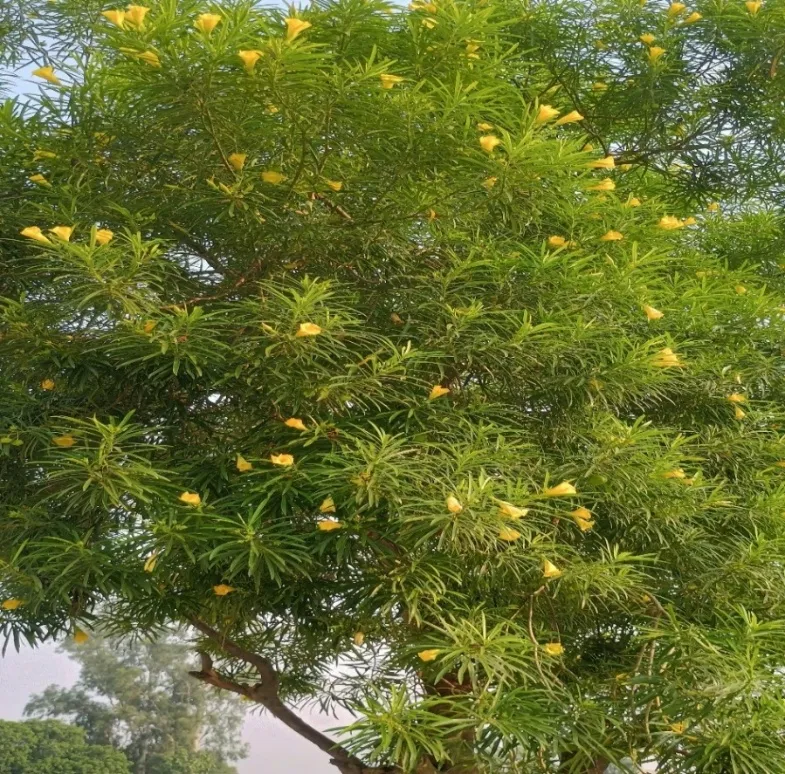
Figure 01: Thevetia peruviana
2. Leaves: The leaves are simple, lanceolate, narrow, spirally arranged, with a short petiole, with the upper surface dark green and lower surface light green in colour [15, 16] (figure 02).
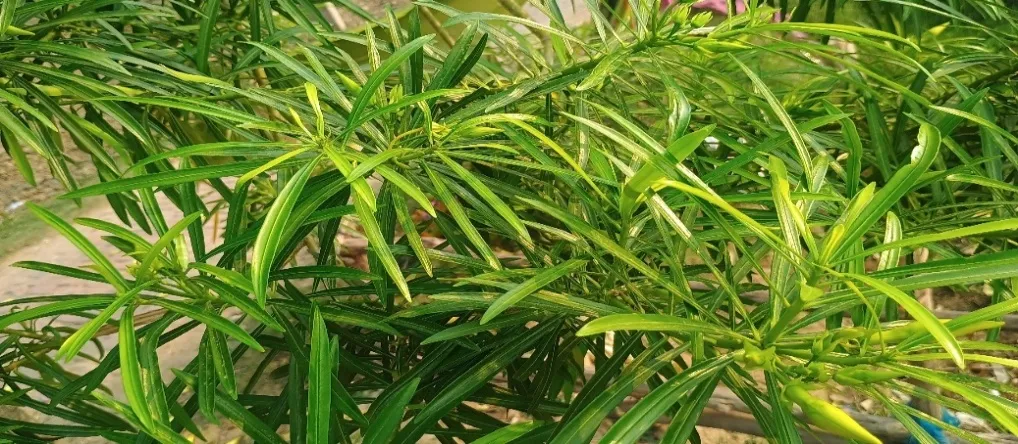
Figure 02: Leaves
3. Flowers: Thevetia peruviana flowers often have a narrow funnel-shaped structure with spiral & twisted petals, funnel-shaped, dark yellow or yellowish green with a pleasant smell, sweetish taste, and soft, smooth touch [15, 16] (figure 03).
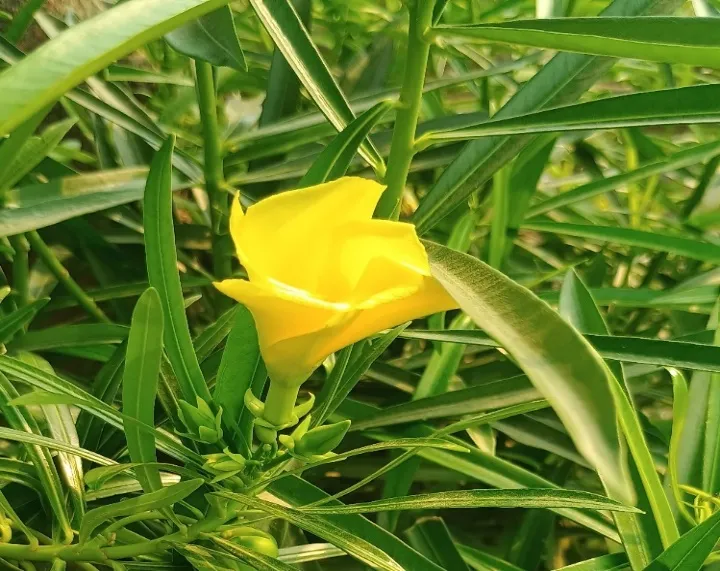
Figure 03: Flower
4. Fruit: The fruit is globular, green coloured, unpleasant, smooth & highly poisonous (figure 04).
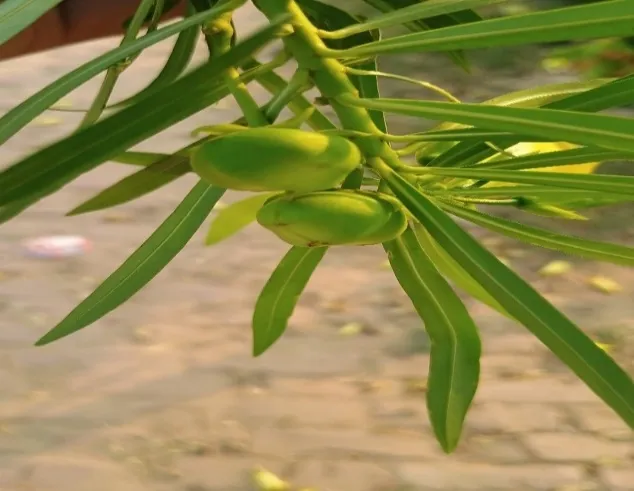
Figure 04: Fruit
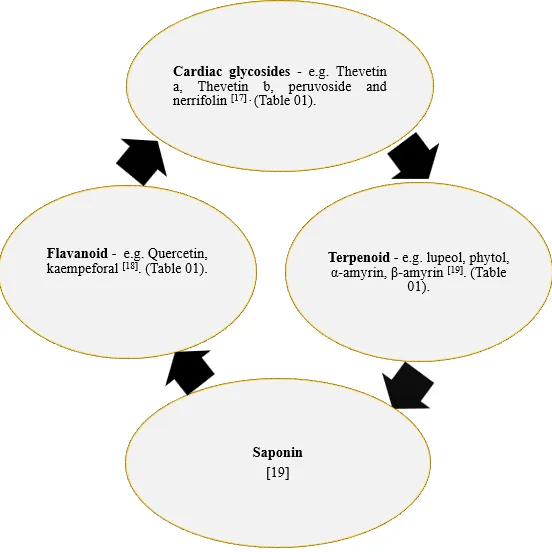
Figure 05: Different chemical constituents reported in Thevetia peruviana.
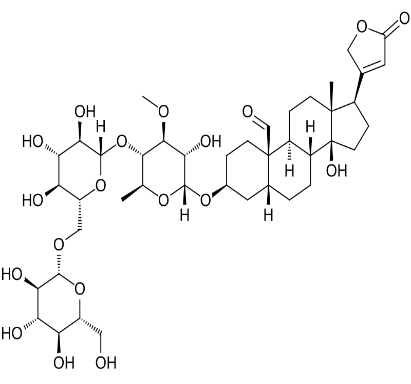
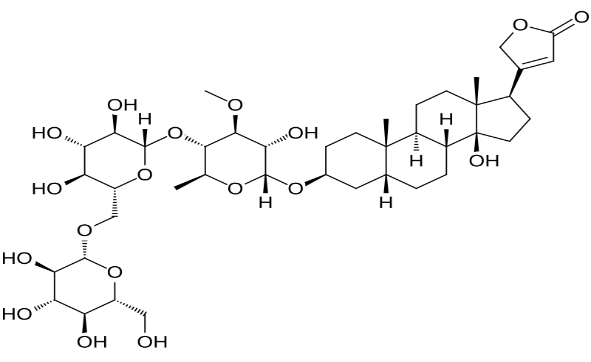
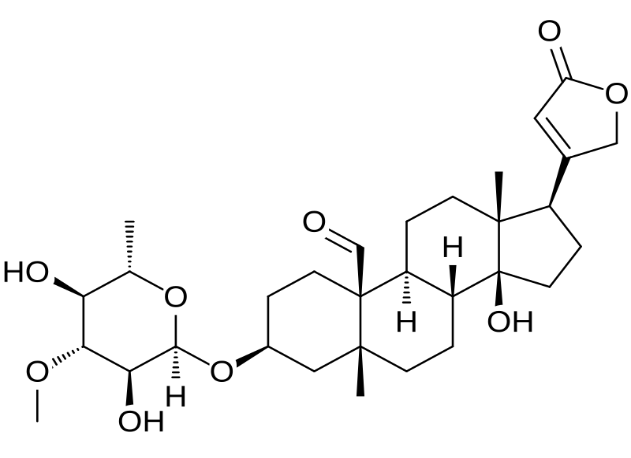
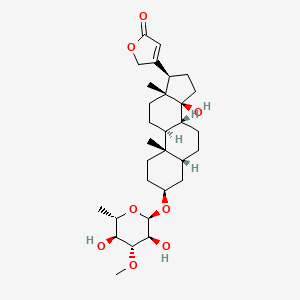
Thevetia peruviana comprises a variety of substances, including cardioactive glycosides, thevetin A, thevetin B (cerebroside), and neriifolin, thevenenin, and peruvosidic acid [17].
|
Phytoconstituent |
Molecular formula |
Structure |
|
Thevetin A |
C42H64O19 |
|
|
Thevetin B |
C42H66O18 |
|
|
Peruvoside |
C30H44O9 |
|
|
Neriifolin |
C30H46O8 |
|
|
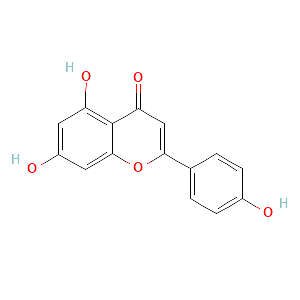
Apigenin |
C15H10O5 |
|
|
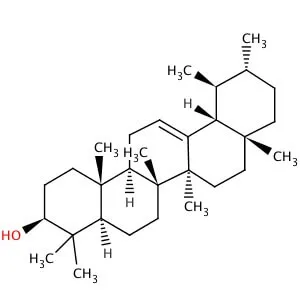
α-amyrin |
C30H50O |
|
|
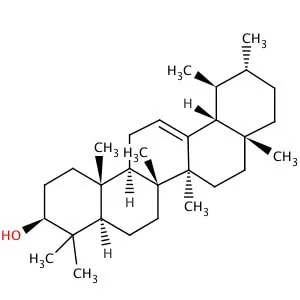
β-amyrin |
C30H50O |
|
|
Quercetin |
C15H10O7 |

|
|
Kaempferol
|
C15H10O6 |

|
Table 01: Shows the different phytoconstituents that have been reported to be found in Thevetia peruviana as secondary metabolites, along with their molecular formula and structure.
Traditional uses
The bark of Thevetia peruviana is traditionally used to treat amenorrhea, intermittent fever, emetic, febrifuge, purgative, malarial fever, and snake bites. The leaves are used to treat jaundice, fever, intestinal worms, and to make eye and nose drops to treat severe headaches and colds. The seeds are used as an abortifacient, emetic, for haemorrhoids, skin complaints, and a purgative while treating rheumatism.it is also reported to possess some other pharmacological properties like anti-inflammatory, molluscicidal, anticancer, etc. The plant's extracts and preparation, which are presumably harmless, showed many other biological benefits, including anti-oxidant, immunomodulatory, anti-cancerogenic, anti-microbial, anti-parasitic, and insect anti-fungal or repellent properties [20].
Anti-microbial activity
Using 95% alcohol as an organic solvent, the antibacterial activity of an extract from Thevetia peruviana leaves was tested against ten pathogenic microorganisms that are significant to medicine. Pseudomonas aeruginosa, Escherichia coli, and Klebsiella pneumoniae were all effectively inhibited by the extract, but Proteus vulgaris only became susceptible at higher dosages. Additionally, the extract demonstrated a moderate level of antimicrobial activity against species of Aspergillus niger, Rhizopus, Penicillium, Mucor, Candida albicans, and Staphylococcus aureus [21].
Extracts from seed kernels were tested for their antibacterial effectiveness against microorganisms that cause skin infections in humans. While lower concentrations of chloroform fractions had stronger sensitivity against Candida albicans, ethyl acetate exhibited more antimicrobial activity against Pseudomonas aeruginosa, Nocardia asteroids, and Candida albicans strains than did chloroform and methanol fractions [22].
Anti-inflammatory activity
Neriifolin, acetylneriifolin, and therein are glucosides found in Thevetia peruviana seeds. Thevetia peruviana seed oil distillates have been shown to have antibacterial properties. In this study, phytochemical analyses were performed on fresh Thevetia peruviana flowers. According to the study's findings, the flower contains quercetin, kaempferol, and quercetin-7-o-galactoside [23].
Thevetia peruviana (yellow oleander) has shown potential anti-inflammatory properties, with studies indicating its extracts may reduce pro-inflammatory cytokines. Its flavonoids and alkaloids are believed to modulate inflammatory pathways, offering possible benefits for chronic inflammation. Traditional medicine also supports its use, but due to the plant's toxicity, careful dosage and further research are necessary to ensure its safety and effectiveness [24].
Anti-fungal activity
The antifungal photoactivity of Thevetia peruviana seeds was assessed. Column chromatography was used to fractionate the extracts made with either n-hexane or dichloromethane, and thin-layer chromatography was used for additional analysis. To assess their photoactive inhibitory properties, all seed extracts and fractions were examined for their ability to suppress the fungus Cladosporium cucumerinum. To determine the components of the most photoactive fraction, capillary gas chromatography with mass spectrometry was used for analysis [25].
The bioactive components of Thevetia peruviana, such as cardiac glycosides, flavonoids, and alkaloids, have demonstrated strong antifungal action. By breaking down cell membranes and obstructing fungal development and reproduction, extracts from its seeds, leaves, and flowers suppress fungi like Candida albicans, Aspergillus niger, and Trichophyton species [26].
Anti- diabetic activity
When Thevetia peruviana bark was tested in streptozotocin-induced diabetic rats, it demonstrated notable and concomitant antidiabetic action [27].
Anti-cancer activity
In human gastric adenocarcinoma (AGS) cells, thevefolin from Thevetia peruviana overcame TRAIL resistance by promoting DR5 expression at the mRNA and protein levels. The activity of thevefolin may be influenced by the elevation of DR4 and DR5 mRNA expression, as demonstrated by real-time PCR. At 200 μg/mL, cytotoxicity studies on extracts from Thevetia peruviana demonstrated dose-dependent suppression of cell multiplication, particularly in HL-60 cells. Even though there was no evidence of dose dependence, HEP-G2 and PC-12 cells nevertheless showed notable inhibition [5].
The methanolic extract of Thevetia peruviana showed cytotoxicity against prostate, breast, colon, and lung cancer cell lines, with IC50 values of 1.91 ±â€¯0.76, 5.78 ±â€¯2.12, 6.30 ±â€¯4.45, and 12.04 ±â€¯3.43 μg/mL, respectively. It significantly reduced colony formation and cell motility across all lines. Morphological analysis showed cell shrinkage, membrane blebbing, and disintegration, while AO/EB staining and DNA fragmentation confirmed apoptosis. Fractions 4 and 5 had the strongest cytotoxic effects, with MS analysis revealing cardiac glycosides and thevetiaflavone as active compounds [28].
Anti-oxidant activity
The antioxidant properties of Thevetia peruviana have been investigated, and it was found that Thevetia peruviana’s methanolic extracts exhibit strong antioxidant properties. It is possible to further purify these crude extracts and use them to create medicinal molecules that have anti-oxidant properties [29].
Flavonoids are strong antioxidants, scavengers of free radicals, inhibitors of lipid peroxidation, and producers of metals. Thevetia peruviana contains quercetin, a flavonoid that is a potent antioxidant, natural anti-histamine, and anti-inflammatory. Quercetin may help prevent cancer, particularly prostate cancer, according to research [5].
Pesticidal effect
Aqueous extracts of Thevetia peruviana leaves were used to treat adults of Holotrichia serrata (Fab.). After 48 hours of bioassay, the examined aqueous leaf extract successfully caused 50% death of Holotrichia serrata (Fab.), and its toxicity was 0.025%. [21].
Anti-spermatogenic activity
A study using phytochemical analyses was carried out to assess Thevetia peruviana's potential for anti-fertility in male albino rats. According to phytochemical analysis, the plant is abundant in active ingredients such as thevetin, amyrin acetate, lupeol acetate, and amyrin (Table 1). Male rats given a dose level of 100 mg/rat/day of Thevetia peruviana stem bark methanol extract orally did not see a significant decrease in body weight, but the weight of their reproductive organs did. There was a notable decrease in the amount of sialic acid and total protein in the testes, epididymides, seminal vesicle, and ventral prostate, as well as in the amount of glycogen in the testes; however, there was a notable rise in cholesterol, which also contributed to the decrease in spermatogenic elements. To sum up, Thevetia peruviana prevented rats from developing sperm [30].
Thevetia peruviana, also referred to as yellow oleander, has been studied for its possible impact on male fertility due to its anti-spermatogenic action. According to studies, extracts from the plant's seeds, leaves, and other parts contain anti-spermatogenic qualities, which means they can lower the generation of sperm. These effects are usually ascribed to the plant's poisonous chemicals, like cardiac glycosides, which disrupt spermatogenesis via influencing hormone levels, the endocrine system, and testicular function. Studies have shown that when Thevetia peruviana extracts are administered to animal models, sperm motility, count, and overall fertility all decline. Although these results point to the possibility of creating male contraceptives, care must be taken because the plant is toxic and can cause serious adverse effects or poisoning in people [31].
Piscicidal activity
For twenty-four hours, Thevetia peruviana leaf and bark extracts were given. Various solvents, including acetone, diethyl ether, ethyl alcohol, chloroform, and carbon tetrachloride, were employed to assess the Piscicidal activity of the freshwater fish Catla catla (Hamilton) under laboratory and cemented pond conditions. In both cases, the plant's acetone leaf and bark extract outperformed other solvent extracts. Under laboratory conditions, the experimental fish's muscle, liver, and gonadal tissues showed significant (p<0.05) changes in total protein, free amino acids, DNA & RNA, protease, and acid and alkaline phosphatase activity after being exposed to sub-lethal doses (40% and 80% of LC50) of this plant's acetone leaf and bark extract for 24 hours [32].
Extracts from Thevetia peruviana were tested against the freshwater fish Labeo rohita in both laboratory and cemented pond conditions using a variety of solvents, including acetone, diethyl ether, ethyl alcohol, chloroform, and carbon tetrachloride. The toxicity of all the organic solvents of the plant was dose- and time-dependent against freshwater fish, and there was a significant (P<0.05) negative correlation between LC values and exposure times [33].
Molluscicidal activity
Lymnaea (Radix) acuminata (Lamarck), a freshwater target snail, was given the active compound apigenin (Table 1), which was isolated from Thevetia peruviana seeds, for 24 and 96 hours to assess its molluscicidal action. During every exposure period, apigenin's molluscicidal action was dose and time-dependent. With respect to the snail Lymnea acuminata, the LC50 values decreased from 3.65 mg/L (24 hours), > 2.98 mg/L (48 hours), > 1.63 mg/L (72 hours), and > 0.73 mg/L (96 hours) due to a significant (P < 0.05) negative corelation between apigenin LC values and exposure times [34].
The study used GC-MS to identify 33 components in the Thevetia peruviana ethanol extract. The LC90 value for molluscicidal tests was 43.79 ppm, indicating concentration-dependent sensitivity. After being treated with LC10 (4.78 ppm) and LC25 (14.02 ppm), Biomphalaria alexandrina snails showed increased expression of caspase-3, which had an impact on the levels of steroid sex hormones. Significant harm to the hermaphrodite and digestive glands was found by histological investigation, suggesting post-treatment reproductive abnormalities. Nitric oxide levels at LC10 ppm and LC25 ppm rose in comparison to the control group during the initial cercarial shedding stage (P < 0.001). Higher treatment concentrations also resulted in a higher proportion of DNA damage, with different reactions observed in Biomphalaria alexandrina snails infected with Schistosoma mansoni. Glycan Sialylated Tetraose Type-2 was found to be the most active compound in the in-silico investigation, showing the highest affinity and the most notable action against Caspase-3[35].
Larvicidal activity
The methanol leaf extract of Thevetia peruviana was tested for its larvicidal properties against Aedes aegypti aquatic stages. After 24 hours, the death rate against Aedes aegypti larvae and pupae in stages I, II, III, and IV was observed of various concentrations (500–700 ppm) of treatments. The study found that A. aegypti larvae in their IV instar were less susceptible than pupae and larval stages. As concentrations rose, the death rate rose as well, and the larvae slowly became melanized [36].
Thevetia peruviana leaf extracts were utilized to investigate their larvicidal qualities against dengue (Aedes aegypti) and malaria (Anopheles stephensi) vector larvae. After 24 hours, the mean LC50 values of the petroleum ether, chloroform, acetone, and methanol extracts of Thevetia peruviana leaves against Anopheles stephensi and Anopheles aegypti mosquito larvae were found to be 0.045, > 0.05, > 0.026, > 0041, and 0.038, > 0.05, > 0.021, > 0.036%, respectively. Chloroform extract's delayed effect after three days suggested that the larvicidal action was most likely caused by the inhibition of insect development [37].
|
S.N. |
Plant part |
Solvent system |
Pharmacological activity |
References |
|
1. |
Seeds |
Methanol |
Antifungal and antibacterial. |
[38] |
|
2. |
Leaves |
Methanol |
Antioxidant activity. |
[14] |
|
3. |
Leaves |
Methanol |
Antibacterial activity. |
[39] |
|
4. |
Leaves |
Methanol |
Antioxidant potential. |
[40] |
|
5. |
Barks |
Methanol |
Cytotoxic and Anthelmintic effect. |
[41] |
|
6. |
Leaves, fruits |
Ethanol, chloroform |
Antibacterial. |
[42] |
|
7. |
Stem bark |
Methanol |
As an anti-spermatogenic activity |
[23] |
|
8. |
Leaf bark |
Acetone |
As Piscicidal activity |
[23] |
|
9. |
Leaves |
Ethanol |
Antidiarrheal, antimicrobial and cytotoxic effects. |
[43] |
|
10. |
Leaf |
Petroleum ether, methanol |
As an anti-dermatophytic inter polar compound. |
[44] |
|
11. |
Leaf |
Ethanol |
Antioxidant and Anti-Lipidemic Activities |
[45] |
|
12. |
Seed |
Methanol |
Antifungal activity. |
[46] |
|
13. |
Leaves |
methanol |
Antifertility |
[47] |
|
14. |
Fruit |
Methanol |
Anticancer |
[48] |
|
15.
|
fruit |
Petroleum Ether |
Antifertility |
[49] |
|
16. |
Latex |
Aquous |
Anti-acetylcholinesterase activity |
[50] |
|
17. |
Leaf and stem bark |
Aquous |
Piscicidal |
[51] |
|
18. |
Seed |
Oil extract |
Anti-termite |
[52] |
|
19. |
Fruit |
Aquous |
Wound healing |
[53] |
Table 02: Plant Thevetia peruviana pharmacological activity.
CONCLUSION
Ethnobotanical and traditional uses of natural substances, particularly those derived from plants, have drawn a lot of interest recently since they have been proven to be effective and are usually regarded as safe for human usage. A comprehensive review of the literature on Thevetia peruviana revealed that it is widely used as a treatment for illnesses by traditional healers, Ayurvedic practitioners, and members of different ethnic groups.
Thevetia peruviana is an ornamental plant. It contains a wide range of active compounds, including cardiac glycosides, Thevetin a, Thevetin b, neriifolin, peruvoside, amyrin, quercetin, and apigenin, which have shown promising therapeutic properties in various scientific studies. These substances have been linked to advantageous biological processes, including antidiabetic, anti-inflammatory, spermatogenic, and possibly anticancer benefits. Despite these encouraging applications, the plant is also reported to be highly toxic and can lead to serious health risks such as poisoning or even death if not handled properly. The necessity of cautious preparation and use of Thevetia peruviana in medical applications is highlighted by the presence of these detrimental chemicals. The establishment of exact dosages and the controlled administration of the plant's extracts are essential for the safe utilization of its therapeutic qualities. In order to minimize or completely remove the presence of harmful substances and guarantee the proper concentrations of non-toxic, bioactive compounds, the therapeutic formulations must be strictly standardized. To further ensure the finished product's safety and efficacy, thorough toxicity testing should be a part of every preparation step. By using methods like solvent extraction, chromatography, and crystallization, the purification process should seek to separate and isolate the advantageous components from the harmful ones. To guarantee that only safe, non-toxic ingredients are utilized for therapeutic reasons, all of these procedures should be carried out under close observation by qualified experts.
Conflict of interest
Regarding this article's research, authorship, and/or publishing, we declared that there are no possible conflicts of interest.
REFERENCES

Utkarsh Kumar Mishra, Arpita Singh, Sunil Kumar Singh*, A Systematic Review Of Medicinal And Toxicological Aspects Of Plant Thevetia peruviana, Int. J. Sci. R. Tech., 2026, 3 (8), 143-155. https://doi.org/10.5281/zenodo.21790788
 10.5281/zenodo.21790788