View Article

Abstract

Artificial intelligence (AI) is increasingly being utilized in medical writing for literature searches, evidence synthesis, draft creation, summary, language editing, reference analyses, and manuscript preparations. Evidence on the relative performance, reliability, and maturity of different tools is often fragmented. This review aimed to present a function-based comparison of selected global and Indian or India-focused tools relevant to the medical-writing process. The applications, underlying technologies, benefits, limitations, evidence maturity, and contextuality in the Indian setting were described. The technologies include natural language processing, machine learning, generative artificial intelligence, large language models, retrieval-augmented generation, and AI-assisted evidence analysis tools. While the use of AI can enhance efficiency and reduce some burdensome processes, hallucination, fake references, biases, poor reproducibility, privacy concerns, limited contextual understanding, and lack of transparency hinder autonomous use. The novelty of this review includes the provision of a Global–Indian perspective. Thus, AI needs to be considered an assistant requiring human intervention, scientific and ethical safeguards, and further research to develop standardized tool-specific frameworks for evaluations.

Keywords

Medical writing, Artificial intelligence, Medical writing automation, AI tool benchmarking, evidence maturity, Global – Indian AI landscape

Introduction

× Popup Image

Medical writing is a field that involves presenting clinical and scientific data in various formats tailored to different audiences. The need and demand for medical writing have grown exponentially over the last few years. Pharmaceutical companies worldwide are investing in research for new drugs, medical devices, and diagnostic methods. A growing number of new drugs are undergoing the intricate process of clinical trials, which has in turn increased the demand for submitting documents to regulatory bodies. Strict regulatory requirements have made comprehensive documentation essential [1].

Medical writing in India developed gradually from the 1960s and expanded with the growth of the pharmaceutical, clinical research, CRO, IT/BPO, and KPO sectors following TRIPS implementation and patent reforms. The field later broadened into regulatory writing and pharmacovigilance, including safety documentation and reporting. Despite this growth, routine documentation continues to dominate, while more complex activities such as clinical protocols, regulatory submissions, benefit–risk assessments, risk-management plans, and international publications remain comparatively limited [2].

Medical writing plays a fundamental role in translating complex clinical and biomedical evidence into clear, accurate, and scientifically appropriate communication. Professional medical writing support has been associated with better adherence to clinical-trial reporting standards, improved quality of research reporting, and potentially faster dissemination of findings. Medical writers therefore contribute to the clarity, transparency, and quality of clinical research communication [3]. Medical writing encompasses a wide range of documents created for purposes such as healthcare journalism, medical education, product promotion, scientific presentations, publications, regulatory submissions, and research [4].

In India, the profession appears to be entering a promising phase, supported by the growing experience, expertise, and recognition of professionals working in this field [5].The exponential growth of biomedical literature has become a major challenge to researchers in efficiently searching, interpreting, and following the latest scientific evidence. This growing information burden highlights the need for machine-assisted approaches to improve the retrieval, organization, assessment, and interpretation of biomedical information providing an important rationale for the integration of AI into scientific communication and medical writing [6].

Integration of artificial intelligence in medical communication and scientific writing. They can help with literature searching, research support, data analysis, referencing, drafting, summarizing and language improvement, helping to reduce routine workload and freeing up time for more analytical work [7]. This language generation model is an effective tool for many NLP applications including medical writing . However, its application also raises serious ethical issues that must be carefully explored, such as plagiarism, bias, misinformation, privacy, and lack of transparency. Bias is a major area of Open AI’s ChatGPT language generation model is an effective tool for many natural language processing applications including medical writing [8].

The rapid rise in adoption of chatbots and their dual-use dilemma is a worrisome issue, because it could lead to a reduction in the value of medical research in the short and in the long run. The practice of medical research has been plagued by a significant amount of waste even before the advent of advanced AI tools [9]. Ahn analyzed the use of large language models in medical writing and publishing, reporting their use in activities including literature searches, research design, writing assistance, quality assessment, citation generation, data analysis, manuscript screening and peer-review support. The review also emphasized that as the use of LLMs proliferates, it is crucial that their information be verified, transparent and that humans work together with them [10].

India has developed SAHI (Strategic Action Framework for Harmonizing Artificial Intelligence), a national strategy for the responsible use of artificial intelligence in healthcare. The strategy is India’s contribution to becoming the first-ever country in the WHO South-East Asia Region to embrace AI for ethical, equitable and trustworthy healthcare. It works towards achieving universal health coverage and sustainable health systems through digital health, contributing to the Sustainable Development Goals [11].

Although existing studies have examined selected AI tools for scientific writing, much of the available evidence remains limited to individual platforms and general writing applications. Comparative evidence integrating global and Indian/India-focused tools according to their medical-writing applications, technological approaches, evidence maturity, limitations, and Indian relevance remains limited. Therefore, a structured Global–Indian comparison is warranted to provide a comprehensive evaluation of AI tools in medical writing [12].

The Comparative evidence integrating global and Indian/India-focused tools according to their medical-writing applications, technological approaches, evidence maturity, limitations, and Indian relevance remains limited. Therefore, a structured Global–Indian comparison is warranted to provide a comprehensive evaluation of AI tools in medical writing.

2. Evolution of AI in medical writing

Traditional medical writing:

Traditional medical writing depended on manual processes such as literature searching, evidence assessment, drafting, and editing, with quality determined by the skill and judgment of writers and researchers. As biomedical information expanded, computer-assisted and AI-driven methods were introduced to enhance the efficiency of medical writing [4, 13].

Computer assisted writing:

Computer-assisted writing shifted medical documentation from manual to digital processes. As AI advanced, these tools incorporated features like automated language correction, text generation, and manuscript assistance, laying the groundwork for NLP and modern AI-driven medical writing [14, 15].

Natural language processing:

Natural Language Processing (NLP) enables computers to interpret human language from unstructured medical text, supporting tasks like summarization, classification, and information extraction. However, issues such as data quality, privacy, bias, and interpretability remain key challenges for its use in healthcare [16, 17].

Machine learning and deep learning :

Machine learning made it possible to perform tasks like text classification, information extraction, and prediction in medical writing. Deep learning further enhanced the analysis of intricate biomedical and clinical language, establishing the basis for generative AI and large language models [18, 19].

Generative artificial intelligence :

In the field of medical writing, generative AI can help with drafting, rewriting, summarization, enhancing language, simplifying terminology, and other tasks related to content development [20].

Ai-assisted Medical writing:

The swift progress of artificial intelligence (AI) has reshaped many areas of scientific research, such as academic publishing and peer review. Guidelines of this kind are vital for maintaining the integrity and quality of academic work while taking advantage of AI’s efficiencies in editorial processes [21].

3. AI Technologies Used in Medical Writing

Natural Language Processing (NLP): NLP implementation in healthcare is hindered by the limited availability of extensive clinical datasets and accurately labeled data required for building dependable models [22]. It enables computers to understand language-based expressions that would otherwise be difficult to interpret. As unstructured medical information continues to expand, NLP tools are increasingly needed to help healthcare professionals manage, classify, and evaluate data effectively [23].

Machine learning (ML): Machine learning supports the analysis of clinical text through tasks such as classification, information extraction, and named-entity recognition [24]. It converts unstructured medical data into structured information, but its effectiveness depends on data quality, annotation, privacy, and generalizability [19].

Deep learning (DL): Deep learning uses multilayer neural networks to learn complex patterns and representations from clinical text [25]. It supports tasks such as classification, named-entity recognition, information and relation extraction, but its performance depends on suitable architectures, large annotated datasets, and sufficient computational resources. Limited interpretability also remains a challenge [18].

Generative artificial intelligence (Gen-AI): GenAI comprises AI systems that create new, human-like content by learning patterns from extensive datasets. In medical writing, it can assist with drafting manuscripts, summarizing and paraphrasing text, improving language, organizing content, and preparing preliminary scientific material [20]. Although GenAI can reduce routine work and enhance communication efficiency, its outputs may include inaccuracies, fabricated details, bias, or unsuitable information, making human review and expert supervision essential [26].

Large language models (LLM): Overall, the evidence suggests that LLMs can assist with medical writing and various healthcare information-processing tasks. However, expert review is necessary to maintain scientific accuracy, reliability, and ethical use [10, 27].

Retrieval- augmented generation (RAG): It enhances large language models by retrieving relevant information from external knowledge sources before generating responses [28]. In biomedical and healthcare applications, this approach enables more current and evidence-based outputs while reducing reliance on the model’s internal knowledge and minimizing hallucinations [29].

Ai-based literature and evidence analysis: AI tools aid literature searching, evidence retrieval, summarization, and synthesis in medical research. Tools like Elicit, Consensus, Scite, and ChatGPT help find relevant studies, extract key findings, and organize evidence from vast literature. Yet limitations exist: inaccurate summaries, contextual errors, and unreliable citations. So AI should support, not replace, human critical appraisal, with all evidence and references verified against original sources [30, 31].

4. Applications of AI in Medical writing:
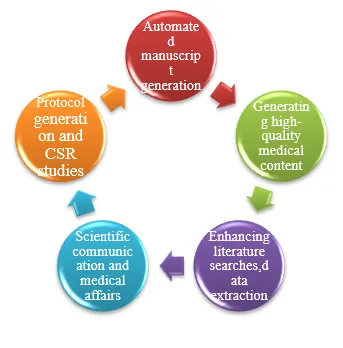
figure

5. Global and Indian/India-Focused AI Tool Landscape :

AI use in medical and scientific writing has been changed from general-purpose language models to specialized tools for literature search, evidence evaluation, academic editing, citation analysis, and manuscript preparation. LLM-based platforms such as ChatGPT, Claude, and Google Gemini can be used for drafting, summarizing, paraphrasing, and outlining, while Elicit, Consensus, and Scite can be applied for literature discovery and citation assessment. In addition, Grammarly and other similar software can be utilized to enhance grammar, clarity, readability, and style. As a result, it is evident that AI can be integrated into various stages of the scientific-writing process, not only content creation [10, 12, 14].

These tools are being increasingly adopted in different stages of the literature review such as searching, screening, data extraction, and synthesis. Bolaños et al. evaluated 21 systematic-review software in a bibliographic-database search and screening study that explored the role of each program’s AI-enabled screening and information extraction functions [32]. AI-assisted scientific writing covers a range of tools that have different functions. Some are used for finding and retrieving relevant literature and articles while others are aimed at summarizing, correcting grammar and language, restructuring or paraphrasing. As such, it is important to distinguish between the different roles played by these tools and not conflate them into one category of writing software [33].

AI tools are proven effective in different tasks associated with research, but the efficiency is determined by the particular functions utilized. Indeed, the AHRQ reviews note the emerging proof of the efficacy of utilizing such software for supporting the synthesis of evidence. However, since the studies have diverse approaches and are rarely validated independently, it cannot confirm that these features are scientifically valid. Moreover, there is a 2026 AHRQ surveillance report for those who want their reviews to feature the most recent evidence. It states that the topic will continue to be monitored in search of AI/ML tools that can semi-automate evidence synthesis since it is a developing field of science [34].

6.Comparative analysis of global and Indian/India-focused AI tools relevant to medical writing:

To enable comparisons, the key characteristics of the selected global and India-based artificial intelligence (AI) tools relevant to the domain of medical writing were compared in terms of the primary functions, the areas of application, the technologies utilized, and the limitations. The tools were identified to serve different purposes in the sphere of writing, including generating scientific content, retrieving the literature, analyzing the evidence, assessing citations, and enhancing academic languages. However, the tools varied in the extent and quality of evidence, which is why it is crucial to distinguish between the actual performance and the claims of the developers. The tools were summarized in Table below in terms of the primary functions and relevance to medical writing.

Table: Comparative Analysis of Selected Globally Developed and Indian-developed/Indian-origin AI Tools Relevant to Medical Writing :-

AI Tool Origin / Developer Primary Role in Medical Writing Major Applications AI Technology / Approach Advantages Limitations References
Grammarly Globally developed — Grammarly, Inc., (California) USA Improvement of academic and professional language Grammar, spelling correction, sentence refinement, clarity, readability, and style improvement NLP, machine learning, and generative AI Saves time during language editing and can make technical writing clearer and easier to read It evaluates language rather than scientific accuracy and may occasionally suggest changes that affect the intended meaning [35,36]
Claude Globally developed — Anthropic, USA Writing assistance and analysis of lengthy scientific documents Drafting, summarizing, reorganizing sections, and reviewing large documents LLM-based generative AI Handles lengthy text and can help organize and refine complex scientific content Scientific statements still need to be checked, and published evidence specifically evaluating its medical-writing use is limited [37-39]
Elicit Globally developed — Elicit, Inc., USA Literature search and evidence organization Finding relevant studies, screening papers, extracting information, comparing studies, and organizing evidence Semantic retrieval, natural language processing (NLP), and LLM-assisted analysis Helps researchers organize literature and obtain a structured overview of available evidence Relevant studies or extracted information may be missed or misinterpreted, so human review remains important [10,40,41]
ChatGPT Globally developed — OpenAI, USA General support for medical and scientific writing Developing outlines, drafting content, summarizing information, rewriting text, and preparing abstracts, titles, and keywords Large language model (LLM)-based generative AI Useful at different stages of manuscript preparation and can be adapted to a wide range of writing tasks May produce incorrect information or references that need to be checked against reliable sources [8,10,26]
Scite Globally developed — Scite, Inc., USA Citation checking and evidence assessment Examining citation contexts and identifying research that supports, contrasts with, or mentions a published claim NLP, machine learning, and citation analysis Provides additional context for understanding how research findings have been cited Its database may not include every relevant publication, and citation context still requires scientific judgment [42]
Paperpal Indian-origin and globally operated — Cactus Communications, India Academic and scientific writing support Drafting, paraphrasing, language editing, literature-related assistance, citation support, and manuscript checks NLP, AI, and generative-AI models Developed specifically around academic and scientific communication and combines several manuscript-support functions Independent medical-specific research evaluating all of its functions is still limited [43,44]
Trinka AI Indian-developed — Crimson AI, Crimson Interactive, India Academic, technical, and medical language editing Grammar checking, medical terminology, technical writing, readability improvement, and manuscript editing NLP, machine learning, and AI-assisted language processing Designed for technical and scientific writing and provides terminology-focused language support Independent peer-reviewed studies specifically assessing its medical-writing applications are limited [45]
SciSpace Indian-origin and globally operated — SciSpace (formerly Typeset) Scientific literature reading and research support Finding papers, analyzing documents, summarizing articles, answering questions, and provides citation-linked explanations NLP, LLMs, and retrieval-augmented generation (RAG) Makes scientific papers easier to explore and understand through interactive document analysis Results depend on available literature and may occasionally miss information or provide an incomplete interpretation [46]
Editage AI Indian-origin and globally operated — Editage, Cactus Communications Academic manuscript and publication support Language improvement, rewriting, manuscript preparation, and publication-related assistance AI, NLP, and generative AI Closely connected with academic editing and scholarly publishing workflows Independent peer-reviewed evidence evaluating its individual AI functions remains limited [47,48]

Abbreviations:

AI-Artificial Intelligence, LLM-Large Language Model, NLP-Natural Language Processing,

RAG-Retrieval Augmented Generation, USA-United States of America.

7. Benefits of AI in Medical Writing: Artificial intelligence can make the production of medical or scientific literature more efficient, accessible, organized. Its use can help at various stages: searching for relevant literature, extracting and presenting information, writing the text of an article, polishing it, and preparing it for publication. Such technologies can save time on routine operations associated with the creation and editing of large amounts of text [10, 14].

  • Enhancement of Efficiency and Productivity - Adopting artificial intelligence can free researchers, clinicians, and physician-scientists from many time-consuming and repetitive tasks, increasing their productivity in discovering breakthroughs and providing care. This, in turn, can improve healthcare systems and benefit communities. In addition to writing, AI can assist in a variety of research-related tasks to help advance medicine and other fields of science [9].
  • Improved Writing Efficiency - Such tools have also facilitated language acquisition and technical writing of the non-native English speakers – an incredibly advantageous tool for the students learning English as a second language [10].
  • Literature Search and Information Synthesis - AI tools can help researchers find, filter, organize, and synthesize scientific literature by quickly analyzing large sets of publications and identifying relevant studies, thus reducing time spent during the early stages of literature review and evidence synthesis. Recent studies have shown that AI can aid in multiple stages of an evidence-synthesis process, from searching for articles to screening titles and abstracts, extracting data, and synthesizing information [40, 51].
  • Summarization of Scientific Information - These are the neural-network based programs, which use an advanced statistical model of language to perform different tasks, such as generating text, summarizing, writing computer software, or making predictions [52].
  • Language and Readability Improvement – Depending on AI for language correction and writing enhancement, as well as strengthening the academic writing through skillful prompt engineering [53].
  • Support for Manuscript Organization and Drafting - AI can accelerate the drafting process, improve the clarity of scientific findings, and adhere to publication standards; ChatGPT’s content generation and summarization capabilities, allowing researchers to take advantage of multiple tools at various stages of writing in accordance with their needs [14].
  • Support for Researchers with Language Barriers – For language learning, it provides real-time translations and grammar correction, enabling students to improve their language skills by receiving instantaneous evaluations and corrections. It should not, however, be relied upon as an all-inclusive resource for writing improvement [54, 55].
  • Support Across the Research and Publication Workflow – AI tools can assist researchers at all stages of their work: Large language models (LLMs) such as ChatGPT and Claude can help plan, draft, summarize, and revise a paper; literature tools (Elicit, Scite, and SciSpace) can help find and analyze relevant literature; and language tools (Grammarly, Trinka, Paperpal, and Editage) can help edit and improve the language. Recently, a number of articles have described the use of these tools for finding literature, designing studies, writing the paper, citing, analyzing, screening, and peer-reviewing [9,10,14].

8. Limitations and Challenges:

  • Accuracy, Hallucination, and Factual Errors:- Although AI-generated medical text can appear fluent and scientifically credible, it may still contain factual errors, unsubstantiated claims, and hallucinated information. Research has shown that AI-generated medical responses and references often contain significant errors and fabricated citations. Consequently, such text should be validated against original scientific literature before being added to a manuscript.[56,57,58].
  • Bias and Incomplete Information:- AI systems can exhibit biases and gaps in the data they are trained on, which can affect the medical information they provide. Many reviews of healthcare LLMs report concerns about the models’ reliability and bias, even though their sources are unclear [59].
  • Reproducibility and Reliability:- The responses generated by AI can vary depending on the version of the model, prompts, sources, or time of use, thus making it impossible to reproduce. According to Ahn, one must remember that the reliability of large language models can vary during the research and publishing process, which is why human proofreading is still needed [10].
  • Data Privacy and Confidentiality:- Uploading unpublished, patient-related, proprietary, or peer-review content into an external AI tool can jeopardize privacy and confidentiality. Before uploading any data, researchers should take the time to learn how the tool processes, stores, or uses the data [60].
  • Lack of Contextual Understanding:- Although LLMs can handle complex medical language, they may miss broader scientific context, methodological limitations, clinical details, and the implications of findings. Key concerns include knowledge gaps, weak judgment, limited context, and insufficient nuance in AI-assisted biomedical writing [61].

9. Ethical and Regulatory Considerations of AI in Medical Writing: The issues of responsibility when using AI to write medical manuscripts can go beyond just accuracy. I believe that AI should be regarded as a tool, and the person using it should be held accountable for any inaccuracies, omissions, plagiarism, and other errors in the written work. According to the 2026 ICMJE recommendations, “the use of generative artificial intelligence (AI) technologies for writing or editing should be acknowledged in manuscripts, and these technologies should not be cited as authors.”

  • Authorship and Accountability – Authorship in medical writing is a responsibility that entails intellectual participation and accountability; thus, one must refrain from adding an AI as an author due to its incapability of committing to be responsible for the presented information’s accuracy, authenticity, and applicability. Human researchers that employ the program should ensure the validity of the generated content and hold authority over the produced manuscript, particularly when the AI contributes to its development, interpretation, or reorganization.
  • Transparency and Disclosure of AI Use – Transparency of the use of artificial intelligence can help maintain trust in the science communication system. ICMJE’s updated recommendations require authors to indicate whether they have used AI in the preparation of their manuscript and how they have applied it. In this way, journal editors and readers will be able to understand how AI tools were used in the creation of the manuscript, but human responsibility for the content will remain intact [62].
  • Responsible and Ethical Use – How should we use ethical AI in research? It is suitable for editing, summarizing, organizing, and planning work. However, generating unfounded ideas, providing false information, concealing the use of artificial intelligence, and substituting for experts should be considered inappropriate uses of it. Previous Studies make a difference between acceptable and unacceptable applications of AI [9].
  • Data Privacy and Confidentiality – Confidentiality plays a significant role in the context of using an AI for writing, peer reviewing, or editing the manuscript. Considering that the draft of a paper may contain the authors’ privileged information, it should be treated accordingly by the AI systems. To this extent, ICMJE’s policy is applicable to the authors, reviewers, editors, and publishers to ensure that the manuscript’s content is safe and confidential [62].
  • Overall Ethical Principle - I think all Medical writings should be human-made and AI-assisted if needed. The use of AI might make it easier and more efficient, but the onus of the interpretation of results, research, ethical issues, authorship, and responsibility still belongs to qualified researchers [9, 14, 60].

10. Human–AI Collaboration in Medical Writing:

AI should complement, not replace medical writers and researchers. It can assist with literature research, draft pieces, summarize, edit language, organize the manuscript, but it is humans that interpret the science and have accountability of the final work [14]. Role of AI as an Assistive Technology AI can streamline redundant tasks and improve efficiency during manuscript preparation. However, it should be a complementary tool, with researchers retaining control over the scientific content and writing choices [9].

Human Oversight and Scientific Verification Human supervision is required because texts generated by artificial intelligence may contain errors, false references, misinterpretations, and even incorrect information. One must be able to verify the correctness of the AI’s output by referring to the original sources of information [14,60]. Human Judgment in Scientific Interpretation AI can be used to organize and summarize information, but it cannot replace human evaluation, contextual analysis, or scientific judgment, and researchers should evaluate the evidence, properly interpret the results, and determine the validity of AI statements [9].

11. Research Gap and Contribution of the Present Review:

Evidence on the application of AI-assisted tools and technology is fragmented in terms of different tools, tasks, and methods of assessment. Individual studies confirm the growing use of artificial intelligence (AI) in literature searches, manuscript drafting, citation tracking, and research assistance. However, questions still linger about the accuracy, validation, and review of such processes. The current paper conducts a Global–Indian study comparison of the use of selected AI tools to identify their potential applications, procedures, limitations, and areas affecting medical writing [10,27].

12. Future Perspectives of AI in Medical Writing:

AI is likely to play an increasing role in medical writing, facilitated by advanced language models, evidence-based data retrieval, automated manuscript review, and improved human–AI collaboration [10].

Future research should focus on enhancing accuracy, context, transparency, reproducibility, standardized evaluation, and ethical guidance. Although challenges regarding bias and responsibility should be considered, 81% of medical journal editors expect AI to have a substantial impact on publishing in the next decade. As such, medical writing is likely to remain primarily human-driven but increasingly reliant on AI assistance [14,63].

CONCLUSION:

Artificial intelligence (AI) is a promising tool that is changing the way people do medical literature searches, synthesize, draft, summarize, edit, and evaluate references. This study compared the international and Indian tools based on their application/uses, technologies, advantages, disadvantages, evidence quality, and relevance to India. Due to the wide range of applications of AI tools, this review focused separately on individual uses. While AI tools may save time and reduce workload, there are several ethical and methodological concerns regarding the quality of information and the presence of bias, privacy, and contextuality issues. Thus, researchers and medical professionals should rely on AI tools as an assistant but remain critical in verifying the information and ensuring the ethical integrity of the results. Further studies are needed to establish evidence-based conclusions on the effectiveness of the tools. The assessment should be done independently and objectively using standardized and specific criteria for each tool. Overall, the best approach to utilizing AI tools is through a combination of human expertise and technology.

REFERENCES

  1. Shirke, S. (2015). Medical writing on an accelerated path in India. Perspectives in Clinical Research, 6 (3), 125–128. https://doi.org/10.4103/2229-3485.159934
  2. Sharma, S. (2017). Development of medical writing in India: Past, present and future. Perspectives in Clinical Research, 8 (1), 45–50. https://doi.org/10.4103/2229-3485.198556
  3. Evuarherhe, O., Gattrell, W., White, R., & Winchester, C. C. (2019). Professional medical writing support and the quality, ethics and timeliness of clinical trial reporting: A systematic review. Research Integrity and Peer Review, 4, 14. https://doi.org/10.1186/s41073-019-0073-7 ⁠
  4. Sharma, S. (2010). How to become a competent medical writer? Perspectives in Clinical Research, 1 (1), 33–37. https://doi.org/10.4103/2229-3485.71845 ⁠
  5. Bose, S. (2013). Medical writing in India at a crossroads. Medical Writing, 22 (2), 94–95. https://doi.org/10.1179/2047480613Z.000000000106
  6. ⁠Van Meenen, J., Leysen, H., Chen, H., Baccarne, R., Walter, D., Martin, B., & Maudsley, S. (2022). Making biomedical sciences publications more accessible for machines. Medicine, Health Care and Philosophy, 25 (2), 179–190. https://doi.org/10.1007/s11019-022-10069-0
  7. Ahaley, S. S., Pandey, A., Juneja, S. K., Gupta, T. S., & Vijayakumar, S. (2024). ChatGPT in medical writing: A game-changer or a gimmick? Perspectives in Clinical Research, 15 (4), 165–171. https://doi.org/10.4103/picr.picr_167_23 ⁠
  8. ⁠ Doyal, A. S., Sender, D., Nanda, M., & Serrano, R. A. (2023). ChatGPT and artificial intelligence in medical writing: Concerns and ethical considerations. Cureus, 15 (8), e43292. https://doi.org/10.7759/cureus.43292
  9. Ramoni, D., Sgura, C., Liberale, L., Montecucco, F., Ioannidis, J. P. A., & Carbone, F. (2024). Artificial intelligence in scientific medical writing: Legitimate and deceptive uses and ethical concerns. European Journal of Internal Medicine, 127, 31–35. https://doi.org/10.1016/j.ejim.2024.07.012
  10. Ahn, S. (2024). The transformative impact of large language models on medical writing and publishing: Current applications, challenges and future directions. The Korean Journal of Physiology & Pharmacology, 28 (5), 393–401. https://doi.org/10.4196/kjpp.2024.28.5.393
  11. World Health Organization. (2026, February 17). Launch of the Strategy for AI in Healthcare for India (SAHI). World Health Organization.
  12. Granjeiro, J. M., Del Bel Cury, A. A., Cury, J. A., Bueno, M., Sousa-Neto, M. D., & Estrela, C. (2025). The future of scientific writing: AI tools, benefits, and ethical implications. Brazilian Dental Journal, 36, e256471. https://doi.org/10.1590/0103-6440202564711
  13. Behzadi, P., & Gajdács, M. (2021). Writing a strong scientific paper in medicine and the biomedical sciences: A checklist and recommendations for early career researchers. Biologia Futura, 72 (4), 395–407. https://doi.org/10.1007/s42977-021-00095
  14. Singh, S., Kumar, R., Maharshi, V., Singh, P. K., Kumari, V., Tiwari, M., & Harsha, D. (2024). Harnessing artificial intelligence for advancing medical manuscript composition: Applications and ethical considerations. Cureus, 16 (10), e71744. https://doi.org/10.7759/cureus.71744
  15. Köhler, C. O., Wagner, G., & Wolber, U. (1979). Computer-assisted writing of medical reports—A bibliography. Methods of Information in Medicine, 18 (2), 98–102. https://doi.org/10.1055/s-0038-1636456
  16. Jerfy, A., Selden, O., & Balkrishnan, R. (2024). The growing impact of natural language processing in healthcare and public health. Inquiry, 61, 469580241290095. https://doi.org/10.1177/00469580241290095.
  17. Luo, X., Deng, Z., Yang, B., & Luo, M. Y. (2024). Pre-trained language models in medicine: A survey. Artificial Intelligence in Medicine, 154, 102904. https://doi.org/10.1016/j.artmed.2024.102904
  18. Wu, S., Roberts, K., Datta, S., Du, J., Ji, Z., Si, Y., Soni, S., Wang, Q., Wei, Q., Xiang, Y., Zhao, B., & Xu, H. (2020). Deep learning in clinical natural language processing: A methodical review. Journal of the American Medical Informatics Association, 27 (3), 457–470. https://doi.org/10.1093/jamia/ocz200.
  19. Harrison, C. J., & Sidey-Gibbons, C. J. (2021). Machine learning in medicine: A practical introduction to natural language processing. BMC Medical Research Methodology, 21, 158. https://doi.org/10.1186/s12874-021-01347-1
  20. Cohen, J. F., & Moher, D. (2024). Generative artificial intelligence and academic writing: Friend or foe? Journal of Clinical Epidemiology, 177, 111646. https://doi.org/10.1016/j.jclinepi.2024.111646
  21. Doskaliuk, B., Zimba, O., Yessirkepov, M., Klishch, I., & Yatsyshyn, R. (2025). Artificial intelligence in peer review: Enhancing efficiency while preserving integrity. Journal of Korean Medical Science, 40 (7), e92. https://doi.org/10.3346/jkms.2025.40.e92
  22. Fraile Navarro, D., Ijaz, K., Rezazadegan, D., Rahimi-Ardabili, H., Dras, M., Coiera, E., & Berkovsky, S. (2023). Clinical named entity recognition and relation extraction using natural language processing of medical free text: A systematic review. International Journal of Medical Informatics, 177, 105122. https://doi.org/10.1016/j.ijmedinf.2023.105122
  23. Masoumi, S., Amirkhani, H., Sadeghian, N., et al. (2024). Natural language processing (NLP) to facilitate abstract review in medical research: The application of BioBERT to exploring the 20-year use of NLP in medical research. Systematic Reviews, 13, 107. https://doi.org/10.1186/s13643-024-02470-y
  24. Spasić, I., & Nenadić, G. (2020). Clinical text data in machine learning: Systematic review. JMIR Medical Informatics, 8 (3), e17984. https://doi.org/10.2196/17984
  25. Pandey, B., Pandey, D. K., Mishra, B. P., & Rhmann, W. (2022). A comprehensive survey of deep learning in the field of medical imaging and medical natural language processing: Challenges and research directions. Journal of King Saud University–Computer and Information Sciences, 34 (8), 5083–5099. https://doi.org/10.1016/j.jksuci.2021.01.007
  26. Kacena, M. A., Plotkin, L. I., & Fehrenbacher, J. C. (2024). The use of artificial intelligence in writing scientific review articles. Current Osteoporosis Reports, 22 (1), 115–121. https://doi.org/10.1007/s11914-023-00852-0
  27. Meng, X., Yan, X., Zhang, K., Liu, D., Cui, X., Yang, Y., Zhang, M., Cao, C., Wang, J., Wang, X., Gao, J., Wang, Y.-G.-S., Ji, J.-M., Qiu, Z., Li, M., Qian, C., Guo, T., Ma, S., Wang, Z., … Tang, Y.-D. (2024). The application of large language models in medicine: A scoping review. iScience, 27 (5), 109713. https://doi.org/10.1016/j.isci.2024.109713
  28. Wang, C., Li, M., He, J., et al. (2025). A survey for large language models in biomedicine. Artificial Intelligence in Medicine, 170, 103268. https://doi.org/10.1016/j.artmed.2025.103268
  29. Amugongo, L. M., Mascheroni, P., Brooks, S., Doering, S., & Seidel, J. (2025). Retrieval augmented generation for large language models in healthcare: A systematic review. PLOS Digital Health, 4 (6), e0000877. https://doi.org/10.1371/journal.pdig.0000877
  30. Arhin, E. O., Ainoo, F. C., & Amponsah, K. (2025). Integration of artificial intelligence (AI) into academic literature reviews: An overview. World Journal of Advanced Science and Technology, 7 (1), 6–23. https://doi.org/10.53346/wjast.2025.7.1.0010
  31. Doneva, S. E., Qin, S., Sick, B., et al. (2024). Large language models to process, analyze, and synthesize biomedical texts: A scoping review. Discover Artificial Intelligence, 4, 107. https://doi.org/10.1007/s44163-024-00197-2
  32. Bolaños, F., Salatino, A., Osborne, F., & Motta, E. (2024). Artificial intelligence for literature reviews: Opportunities and challenges. Artificial Intelligence Review, 57, 259. https://doi.org/10.1007/s10462-024-10902-3
  33. Del Giglio, A., & Pereira da Costa, M. U. (2023). The use of artificial intelligence to improve the scientific writing of non-native English speakers. Revista da Associação Médica Brasileira, 69 (9), e20230560. https://doi.org/10.1590/1806-9282.20230560
  34. Adam, G. P., Davies, M. C., George, J., Caputo, E., Htun, J. M., Coppola, E. L., Holmer, H., Kuhn, E., Kooistra, O., Wethington, H., Ivlev, I., Balk, E. M., & Trikalinos, T. A. (2025). Machine learning tools to (semi-)automate evidence synthesis: A rapid review and evidence map, 2025 review update. Agency for Healthcare Research and Quality.https://doi.org/10.23970/AHRQEPCWHITEPAPERMACHINE2
  35. Abu Qub'a, A., Abu Guba, M. N., & Fareh, S. (2024). Exploring the use of Grammarly in assessing English academic writing. Heliyon, 10 (15), e34893. https://doi.org/10.1016/j.heliyon.2024.e34893
  36. Grammarly. (2026). Artificial intelligence (AI) at Grammarly. https://www.grammarly.com/ai
  37. Fakharifar, A., Beizavi, Z., Pouramini, A., & Haseli, S. (2025). Application of artificial intelligence and ChatGPT in medical writing: A narrative review. Journal of Medical Artificial Intelligence, 8, 52. https://doi.org/10.21037/jmai-24-342
  38. Lim, B., Seth, I., Maxwell, M., Cuomo, R., Ross, R. J., & Rozen, W. M. (2025). Evaluating the efficacy of large language models in generating medical documentation: A comparative study of ChatGPT-4, ChatGPT-4o, and Claude. Aesthetic Plastic Surgery, 49, 5846–5857. https://doi.org/10.1007/s00266-025-04842-8
  39. Anthropic. (2026). Anthropic: AI research and products that put safety at the frontier. https://www.anthropic.com
  40. Bernard, N., Sagawa, Y., Jr., Bier, N., Lihoreau, T., Pazart, L., & Tannou, T. (2025). Using artificial intelligence for systematic review: The example of Elicit. BMC Medical Research Methodology, 25, 75. https://doi.org/10.1186/s12874-025-02528- y
  41. Elicit. (n.d.).Elicit: AI for research & decision-making. https://elicit.com
  42. Nicholson, J. M., Mordaunt, M., Lopez, P., Uppala, A., Rosati, D., Rodrigues, N. P., Grabitz, P., & Rife, S. C. (2021). Scite: A smart citation index that displays the context of citations and classifies their intent using deep learning. Quantitative Science Studies, 2 (3), 882–898. https://doi.org/10.1162/qss_a_00146
  43. Cactus Communications. (n.d.). Paperpal: AI-powered academic writing assistant. Paperpal. https://paperpal.com/ai-writing-assistant
  44. Zadorozhna, I., Klymenko, A., Datskiv, O., & Matsiola, M. (2026). Artificial intelligence–powered writing tool Paperpal for engaging PhD students in academic writing. Advanced Education, 20 (28), 250–269. https://doi.org/10.20535/2410-8286.352314
  45. Barrot, J. S. (2025). Trinka: Facilitating academic writing through an intelligent writing evaluation system. Assessing Writing, 65, 100953. https://doi.org/10.1016/j.asw.2025.100953
  46. Roy, T., Kumar, A., Raghuvanshi, D., Jain, S., Vignesh, G., Shinde, K., & Tondulkar, R. (2024). SciSpace Copilot: Empowering researchers through intelligent reading assistance. Proceedings of the AAAI Conference on Artificial Intelligence, 38 (21), 23826–23828. https://doi.org/10.1609/aaai.v38i21.30578
  47. Editage. (n.d.). AI tools for researchers, AI for academic and scientific research. Cactus Communications. https://www.editage.com/ai-tools-for-research
  48. Khalifa, M., & Albadawy, M. (2024). Using artificial intelligence in academic writing and research: An essential productivity tool. Computer Methods and Programs in Biomedicine Update, 5, 100145. https://doi.org/10.1016/j.cmpbup.2024.100145
  49. Harahap, H. F., Fithriani, R., & Dewi, U. (2026). EFL students’ perceptions and challenges in using Paperpal as an AI feedback tool for research paper writing. IDEAS: Journal of Language Teaching and Learning, Linguistics and Literature, 14 (1), 78–97. https://doi.org/10.24256/ideas.v14i1.9394
  50. Swanberg, S. (2022). Online manuscript editing services for multilingual authors: A content analysis study. Science & Technology Libraries, 41 (1), 1–20. https://doi.org/10.1080/0194262X.2021.1932695
  51. Lau, O., & Golder, S. (2025). Comparison of Elicit AI and traditional literature searching in evidence syntheses using four case studies. Cochrane Evidence Synthesis and Methods, 3 (6), e70050. https://doi.org/10.1002/cesm.70050
  52. Hake, J., Crowley, M., Coy, A., Shanks, D., Eoff, A., Kirmer-Voss, K., Dhanda, G., & Parente, D. J. (2024). Quality, accuracy, and bias in ChatGPT-based summarization of medical abstracts. Annals of Family Medicine, 22 (2), 113–120. https://doi.org/10.1370/afm.3075
  53. Khalifa, M., & Albadawy, M. (2024). Using artificial intelligence in academic writing and research: An essential productivity tool. Computer Methods and Programs in Biomedicine Update, 5, 100145. https://doi.org/10.1016/j.cmpbup.2024.100145
  54. Li, J., Zong, H., Wu, E., Wu, R., Peng, Z., Zhao, J., Yang, L., Xie, H., & Shen, B. (2024). Exploring the potential of artificial intelligence to enhance the writing of English academic papers by non-native English-speaking medical students—the educational application of ChatGPT. BMC Medical Education, 24, 736. https://doi.org/10.1186/s12909-024-05738-y
  55. Kafipour, R., Khojasteh, L., & Pakdel, F. (2024). Is artificial intelligence for everyone? Analyzing the role of ChatGPT as a writing assistant for medical students. Frontiers in Education, 9, 1457744. https://doi.org/10.3389/feduc.2024.1457744
  56. Bhattacharyya, M., Miller, V. M., Bhattacharyya, D., & Miller, L. E. (2023). High rates of fabricated and inaccurate references in ChatGPT-generated medical content. Cureus, 15 (5), e39238. https://doi.org/10.7759/cureus.39238
  57. Gravel, J., D’Amours-Gravel, M., & Osmanlliu, E. (2023). Learning to fake it: Limited responses and fabricated references provided by ChatGPT for medical questions. Mayo Clinic Proceedings: Digital Health, 1 (3), 226–234. https://doi.org/10.1016/j.mcpdig.2023.05.004
  58. Athaluri, S. A., Manthena, S. V., Kesapragada, V. S. R. K. M., Yarlagadda, V., Dave, T., & Duddumpudi, R. T. S. (2023). Exploring the boundaries of reality: Investigating the phenomenon of artificial intelligence hallucination in scientific writing through ChatGPT references. Cureus, 15 (4), e37432. https://doi.org/10.7759/cureus.37432
  59. Wang, L., Wan, Z., Ni, C., Song, Q., Li, Y., Clayton, E., Malin, B., & Yin, Z. (2024). Applications and concerns of ChatGPT and other conversational large language models in health care: Systematic review. Journal of Medical Internet Research, 26, e22769. https://doi.org/10.2196/22769
  60. Doyal, A. S., Sender, D., Nanda, M., & Serrano, R. A. (2023). ChatGPT and artificial intelligence in medical writing: Concerns and ethical considerations. Cureus, 15 (8), e43292. https://doi.org/10.7759/cureus.43292
  61. Sharma, H., & Ruikar, M. (2024). Artificial intelligence at the pen’s edge: Exploring the ethical quagmires in using artificial intelligence models like ChatGPT for assisted writing in biomedical research. Perspectives in Clinical Research, 15 (3), 108–115. https://doi.org/10.4103/picr.picr_196_23 ⁠
  62. International Committee of Medical Journal Editors. (2026). Recommendations for the conduct, reporting, editing, and publication of scholarly work in medical journals. https://www.icmje.org/recommendations/
  63. Biondi-Zoccai, G., Lauretti, A., Agewall, S., Andres, E., Audisio, R. A., Bhatt, D. L., et al. (2025). Perspectives on artificial intelligence in medical publishing: A survey of medical journal editors. Journal of Cardiovascular Pharmacology, 86 (4), 374–383. https://doi.org/10.1097/FJC.0000000000001738

Reference

  1. Shirke, S. (2015). Medical writing on an accelerated path in India. Perspectives in Clinical Research, 6 (3), 125–128. https://doi.org/10.4103/2229-3485.159934
  2. Sharma, S. (2017). Development of medical writing in India: Past, present and future. Perspectives in Clinical Research, 8 (1), 45–50. https://doi.org/10.4103/2229-3485.198556
  3. Evuarherhe, O., Gattrell, W., White, R., & Winchester, C. C. (2019). Professional medical writing support and the quality, ethics and timeliness of clinical trial reporting: A systematic review. Research Integrity and Peer Review, 4, 14. https://doi.org/10.1186/s41073-019-0073-7 ⁠
  4. Sharma, S. (2010). How to become a competent medical writer? Perspectives in Clinical Research, 1 (1), 33–37. https://doi.org/10.4103/2229-3485.71845 ⁠
  5. Bose, S. (2013). Medical writing in India at a crossroads. Medical Writing, 22 (2), 94–95. https://doi.org/10.1179/2047480613Z.000000000106
  6. ⁠Van Meenen, J., Leysen, H., Chen, H., Baccarne, R., Walter, D., Martin, B., & Maudsley, S. (2022). Making biomedical sciences publications more accessible for machines. Medicine, Health Care and Philosophy, 25 (2), 179–190. https://doi.org/10.1007/s11019-022-10069-0
  7. Ahaley, S. S., Pandey, A., Juneja, S. K., Gupta, T. S., & Vijayakumar, S. (2024). ChatGPT in medical writing: A game-changer or a gimmick? Perspectives in Clinical Research, 15 (4), 165–171. https://doi.org/10.4103/picr.picr_167_23 ⁠
  8. ⁠ Doyal, A. S., Sender, D., Nanda, M., & Serrano, R. A. (2023). ChatGPT and artificial intelligence in medical writing: Concerns and ethical considerations. Cureus, 15 (8), e43292. https://doi.org/10.7759/cureus.43292
  9. Ramoni, D., Sgura, C., Liberale, L., Montecucco, F., Ioannidis, J. P. A., & Carbone, F. (2024). Artificial intelligence in scientific medical writing: Legitimate and deceptive uses and ethical concerns. European Journal of Internal Medicine, 127, 31–35. https://doi.org/10.1016/j.ejim.2024.07.012
  10. Ahn, S. (2024). The transformative impact of large language models on medical writing and publishing: Current applications, challenges and future directions. The Korean Journal of Physiology & Pharmacology, 28 (5), 393–401. https://doi.org/10.4196/kjpp.2024.28.5.393
  11. World Health Organization. (2026, February 17). Launch of the Strategy for AI in Healthcare for India (SAHI). World Health Organization.
  12. Granjeiro, J. M., Del Bel Cury, A. A., Cury, J. A., Bueno, M., Sousa-Neto, M. D., & Estrela, C. (2025). The future of scientific writing: AI tools, benefits, and ethical implications. Brazilian Dental Journal, 36, e256471. https://doi.org/10.1590/0103-6440202564711
  13. Behzadi, P., & Gajdács, M. (2021). Writing a strong scientific paper in medicine and the biomedical sciences: A checklist and recommendations for early career researchers. Biologia Futura, 72 (4), 395–407. https://doi.org/10.1007/s42977-021-00095
  14. Singh, S., Kumar, R., Maharshi, V., Singh, P. K., Kumari, V., Tiwari, M., & Harsha, D. (2024). Harnessing artificial intelligence for advancing medical manuscript composition: Applications and ethical considerations. Cureus, 16 (10), e71744. https://doi.org/10.7759/cureus.71744
  15. Köhler, C. O., Wagner, G., & Wolber, U. (1979). Computer-assisted writing of medical reports—A bibliography. Methods of Information in Medicine, 18 (2), 98–102. https://doi.org/10.1055/s-0038-1636456
  16. Jerfy, A., Selden, O., & Balkrishnan, R. (2024). The growing impact of natural language processing in healthcare and public health. Inquiry, 61, 469580241290095. https://doi.org/10.1177/00469580241290095.
  17. Luo, X., Deng, Z., Yang, B., & Luo, M. Y. (2024). Pre-trained language models in medicine: A survey. Artificial Intelligence in Medicine, 154, 102904. https://doi.org/10.1016/j.artmed.2024.102904
  18. Wu, S., Roberts, K., Datta, S., Du, J., Ji, Z., Si, Y., Soni, S., Wang, Q., Wei, Q., Xiang, Y., Zhao, B., & Xu, H. (2020). Deep learning in clinical natural language processing: A methodical review. Journal of the American Medical Informatics Association, 27 (3), 457–470. https://doi.org/10.1093/jamia/ocz200.
  19. Harrison, C. J., & Sidey-Gibbons, C. J. (2021). Machine learning in medicine: A practical introduction to natural language processing. BMC Medical Research Methodology, 21, 158. https://doi.org/10.1186/s12874-021-01347-1
  20. Cohen, J. F., & Moher, D. (2024). Generative artificial intelligence and academic writing: Friend or foe? Journal of Clinical Epidemiology, 177, 111646. https://doi.org/10.1016/j.jclinepi.2024.111646
  21. Doskaliuk, B., Zimba, O., Yessirkepov, M., Klishch, I., & Yatsyshyn, R. (2025). Artificial intelligence in peer review: Enhancing efficiency while preserving integrity. Journal of Korean Medical Science, 40 (7), e92. https://doi.org/10.3346/jkms.2025.40.e92
  22. Fraile Navarro, D., Ijaz, K., Rezazadegan, D., Rahimi-Ardabili, H., Dras, M., Coiera, E., & Berkovsky, S. (2023). Clinical named entity recognition and relation extraction using natural language processing of medical free text: A systematic review. International Journal of Medical Informatics, 177, 105122. https://doi.org/10.1016/j.ijmedinf.2023.105122
  23. Masoumi, S., Amirkhani, H., Sadeghian, N., et al. (2024). Natural language processing (NLP) to facilitate abstract review in medical research: The application of BioBERT to exploring the 20-year use of NLP in medical research. Systematic Reviews, 13, 107. https://doi.org/10.1186/s13643-024-02470-y
  24. Spasić, I., & Nenadić, G. (2020). Clinical text data in machine learning: Systematic review. JMIR Medical Informatics, 8 (3), e17984. https://doi.org/10.2196/17984
  25. Pandey, B., Pandey, D. K., Mishra, B. P., & Rhmann, W. (2022). A comprehensive survey of deep learning in the field of medical imaging and medical natural language processing: Challenges and research directions. Journal of King Saud University–Computer and Information Sciences, 34 (8), 5083–5099. https://doi.org/10.1016/j.jksuci.2021.01.007
  26. Kacena, M. A., Plotkin, L. I., & Fehrenbacher, J. C. (2024). The use of artificial intelligence in writing scientific review articles. Current Osteoporosis Reports, 22 (1), 115–121. https://doi.org/10.1007/s11914-023-00852-0
  27. Meng, X., Yan, X., Zhang, K., Liu, D., Cui, X., Yang, Y., Zhang, M., Cao, C., Wang, J., Wang, X., Gao, J., Wang, Y.-G.-S., Ji, J.-M., Qiu, Z., Li, M., Qian, C., Guo, T., Ma, S., Wang, Z., … Tang, Y.-D. (2024). The application of large language models in medicine: A scoping review. iScience, 27 (5), 109713. https://doi.org/10.1016/j.isci.2024.109713
  28. Wang, C., Li, M., He, J., et al. (2025). A survey for large language models in biomedicine. Artificial Intelligence in Medicine, 170, 103268. https://doi.org/10.1016/j.artmed.2025.103268
  29. Amugongo, L. M., Mascheroni, P., Brooks, S., Doering, S., & Seidel, J. (2025). Retrieval augmented generation for large language models in healthcare: A systematic review. PLOS Digital Health, 4 (6), e0000877. https://doi.org/10.1371/journal.pdig.0000877
  30. Arhin, E. O., Ainoo, F. C., & Amponsah, K. (2025). Integration of artificial intelligence (AI) into academic literature reviews: An overview. World Journal of Advanced Science and Technology, 7 (1), 6–23. https://doi.org/10.53346/wjast.2025.7.1.0010
  31. Doneva, S. E., Qin, S., Sick, B., et al. (2024). Large language models to process, analyze, and synthesize biomedical texts: A scoping review. Discover Artificial Intelligence, 4, 107. https://doi.org/10.1007/s44163-024-00197-2
  32. Bolaños, F., Salatino, A., Osborne, F., & Motta, E. (2024). Artificial intelligence for literature reviews: Opportunities and challenges. Artificial Intelligence Review, 57, 259. https://doi.org/10.1007/s10462-024-10902-3
  33. Del Giglio, A., & Pereira da Costa, M. U. (2023). The use of artificial intelligence to improve the scientific writing of non-native English speakers. Revista da Associação Médica Brasileira, 69 (9), e20230560. https://doi.org/10.1590/1806-9282.20230560
  34. Adam, G. P., Davies, M. C., George, J., Caputo, E., Htun, J. M., Coppola, E. L., Holmer, H., Kuhn, E., Kooistra, O., Wethington, H., Ivlev, I., Balk, E. M., & Trikalinos, T. A. (2025). Machine learning tools to (semi-)automate evidence synthesis: A rapid review and evidence map, 2025 review update. Agency for Healthcare Research and Quality.https://doi.org/10.23970/AHRQEPCWHITEPAPERMACHINE2
  35. Abu Qub'a, A., Abu Guba, M. N., & Fareh, S. (2024). Exploring the use of Grammarly in assessing English academic writing. Heliyon, 10 (15), e34893. https://doi.org/10.1016/j.heliyon.2024.e34893
  36. Grammarly. (2026). Artificial intelligence (AI) at Grammarly. https://www.grammarly.com/ai
  37. Fakharifar, A., Beizavi, Z., Pouramini, A., & Haseli, S. (2025). Application of artificial intelligence and ChatGPT in medical writing: A narrative review. Journal of Medical Artificial Intelligence, 8, 52. https://doi.org/10.21037/jmai-24-342
  38. Lim, B., Seth, I., Maxwell, M., Cuomo, R., Ross, R. J., & Rozen, W. M. (2025). Evaluating the efficacy of large language models in generating medical documentation: A comparative study of ChatGPT-4, ChatGPT-4o, and Claude. Aesthetic Plastic Surgery, 49, 5846–5857. https://doi.org/10.1007/s00266-025-04842-8
  39. Anthropic. (2026). Anthropic: AI research and products that put safety at the frontier. https://www.anthropic.com
  40. Bernard, N., Sagawa, Y., Jr., Bier, N., Lihoreau, T., Pazart, L., & Tannou, T. (2025). Using artificial intelligence for systematic review: The example of Elicit. BMC Medical Research Methodology, 25, 75. https://doi.org/10.1186/s12874-025-02528- y
  41. Elicit. (n.d.).Elicit: AI for research & decision-making. https://elicit.com
  42. Nicholson, J. M., Mordaunt, M., Lopez, P., Uppala, A., Rosati, D., Rodrigues, N. P., Grabitz, P., & Rife, S. C. (2021). Scite: A smart citation index that displays the context of citations and classifies their intent using deep learning. Quantitative Science Studies, 2 (3), 882–898. https://doi.org/10.1162/qss_a_00146
  43. Cactus Communications. (n.d.). Paperpal: AI-powered academic writing assistant. Paperpal. https://paperpal.com/ai-writing-assistant
  44. Zadorozhna, I., Klymenko, A., Datskiv, O., & Matsiola, M. (2026). Artificial intelligence–powered writing tool Paperpal for engaging PhD students in academic writing. Advanced Education, 20 (28), 250–269. https://doi.org/10.20535/2410-8286.352314
  45. Barrot, J. S. (2025). Trinka: Facilitating academic writing through an intelligent writing evaluation system. Assessing Writing, 65, 100953. https://doi.org/10.1016/j.asw.2025.100953
  46. Roy, T., Kumar, A., Raghuvanshi, D., Jain, S., Vignesh, G., Shinde, K., & Tondulkar, R. (2024). SciSpace Copilot: Empowering researchers through intelligent reading assistance. Proceedings of the AAAI Conference on Artificial Intelligence, 38 (21), 23826–23828. https://doi.org/10.1609/aaai.v38i21.30578
  47. Editage. (n.d.). AI tools for researchers, AI for academic and scientific research. Cactus Communications. https://www.editage.com/ai-tools-for-research
  48. Khalifa, M., & Albadawy, M. (2024). Using artificial intelligence in academic writing and research: An essential productivity tool. Computer Methods and Programs in Biomedicine Update, 5, 100145. https://doi.org/10.1016/j.cmpbup.2024.100145
  49. Harahap, H. F., Fithriani, R., & Dewi, U. (2026). EFL students’ perceptions and challenges in using Paperpal as an AI feedback tool for research paper writing. IDEAS: Journal of Language Teaching and Learning, Linguistics and Literature, 14 (1), 78–97. https://doi.org/10.24256/ideas.v14i1.9394
  50. Swanberg, S. (2022). Online manuscript editing services for multilingual authors: A content analysis study. Science & Technology Libraries, 41 (1), 1–20. https://doi.org/10.1080/0194262X.2021.1932695
  51. Lau, O., & Golder, S. (2025). Comparison of Elicit AI and traditional literature searching in evidence syntheses using four case studies. Cochrane Evidence Synthesis and Methods, 3 (6), e70050. https://doi.org/10.1002/cesm.70050
  52. Hake, J., Crowley, M., Coy, A., Shanks, D., Eoff, A., Kirmer-Voss, K., Dhanda, G., & Parente, D. J. (2024). Quality, accuracy, and bias in ChatGPT-based summarization of medical abstracts. Annals of Family Medicine, 22 (2), 113–120. https://doi.org/10.1370/afm.3075
  53. Khalifa, M., & Albadawy, M. (2024). Using artificial intelligence in academic writing and research: An essential productivity tool. Computer Methods and Programs in Biomedicine Update, 5, 100145. https://doi.org/10.1016/j.cmpbup.2024.100145
  54. Li, J., Zong, H., Wu, E., Wu, R., Peng, Z., Zhao, J., Yang, L., Xie, H., & Shen, B. (2024). Exploring the potential of artificial intelligence to enhance the writing of English academic papers by non-native English-speaking medical students—the educational application of ChatGPT. BMC Medical Education, 24, 736. https://doi.org/10.1186/s12909-024-05738-y
  55. Kafipour, R., Khojasteh, L., & Pakdel, F. (2024). Is artificial intelligence for everyone? Analyzing the role of ChatGPT as a writing assistant for medical students. Frontiers in Education, 9, 1457744. https://doi.org/10.3389/feduc.2024.1457744
  56. Bhattacharyya, M., Miller, V. M., Bhattacharyya, D., & Miller, L. E. (2023). High rates of fabricated and inaccurate references in ChatGPT-generated medical content. Cureus, 15 (5), e39238. https://doi.org/10.7759/cureus.39238
  57. Gravel, J., D’Amours-Gravel, M., & Osmanlliu, E. (2023). Learning to fake it: Limited responses and fabricated references provided by ChatGPT for medical questions. Mayo Clinic Proceedings: Digital Health, 1 (3), 226–234. https://doi.org/10.1016/j.mcpdig.2023.05.004
  58. Athaluri, S. A., Manthena, S. V., Kesapragada, V. S. R. K. M., Yarlagadda, V., Dave, T., & Duddumpudi, R. T. S. (2023). Exploring the boundaries of reality: Investigating the phenomenon of artificial intelligence hallucination in scientific writing through ChatGPT references. Cureus, 15 (4), e37432. https://doi.org/10.7759/cureus.37432
  59. Wang, L., Wan, Z., Ni, C., Song, Q., Li, Y., Clayton, E., Malin, B., & Yin, Z. (2024). Applications and concerns of ChatGPT and other conversational large language models in health care: Systematic review. Journal of Medical Internet Research, 26, e22769. https://doi.org/10.2196/22769
  60. Doyal, A. S., Sender, D., Nanda, M., & Serrano, R. A. (2023). ChatGPT and artificial intelligence in medical writing: Concerns and ethical considerations. Cureus, 15 (8), e43292. https://doi.org/10.7759/cureus.43292
  61. Sharma, H., & Ruikar, M. (2024). Artificial intelligence at the pen’s edge: Exploring the ethical quagmires in using artificial intelligence models like ChatGPT for assisted writing in biomedical research. Perspectives in Clinical Research, 15 (3), 108–115. https://doi.org/10.4103/picr.picr_196_23 ⁠
  62. International Committee of Medical Journal Editors. (2026). Recommendations for the conduct, reporting, editing, and publication of scholarly work in medical journals. https://www.icmje.org/recommendations/
  63. Biondi-Zoccai, G., Lauretti, A., Agewall, S., Andres, E., Audisio, R. A., Bhatt, D. L., et al. (2025). Perspectives on artificial intelligence in medical publishing: A survey of medical journal editors. Journal of Cardiovascular Pharmacology, 86 (4), 374–383. https://doi.org/10.1097/FJC.0000000000001738

Photo
Deore Pranjal
Corresponding author

Department of Pharmacy, JES’s SND College Of Pharmacy Babhulgaon (Yeola), India.

Photo
Ambardekar Saumitra
Co-author

Department of Pharmacy, JES’s SND College Of Pharmacy Babhulgaon (Yeola), India.

Photo
Chavan Nikita
Co-author

Department of Pharmacy, JES’s SND College Of Pharmacy Babhulgaon (Yeola), India.

Photo
Kulkarni Pranav
Co-author

Department of Pharmacy, JES’s SND College Of Pharmacy Babhulgaon (Yeola), India.

Deore Pranjal, Kulkarni Pranav, Ambardekar Saumitra, Chavan Nikita, “AI in Medical Writing: A Comparative Analysis of Global and Indian Tools”, Int. J. Sci. R. Tech., 2026, 3 (11), 313-325. https://doi.org/10.5281/zenodo.23975413