

We use cookies to ensure our website works properly and to personalise your experience. Cookies policy
Department of Agada Tantra, Sri Dharmasthala Manjunatheshwara College of Ayurveda and Hospital, Hassan, Karnataka, India
Vicharchika is a Kapha predominant Tridoshaja Vyadhi mentioned under Kshudra kushta characterized by itching, eruptions, discoloration and oozing. Clinically, based on similarity in presentation it can be correlated with eczema, which significantly affects the quality of life due to its chronicity. An 18-year-old male presented with complaints of multiple dark, raised skin lesions over neck, cheeks, both shoulders and arms for the past one and half years associated with severe itching, burning sensation, occasional pus discharge and intermittent powdery discharge. Around the same time of skin manifestation, he suffered from Hepatitis A and also exhibited psychological distress. As a preparatory procedure, patient was advised agni deepana line of management in OPD. After this the patient was admitted and underwent shodhana therapy followed by shamana aushadis internally and externally.There was significant improvement in the condition with reduction in itching, burning sensation and oozing. Lesions dried, discoloration over the affected area improved along with the mental well-being.This case shows the effectiveness of an Ayurvedic approach in management of Vicharchika using Shodhana and Shamana therapies. Alongwith, pathya sevana helped in maintaining the homeostasis of the body, providing a controlled environment for the treatment. This treatment approach not only improved dermatological symptoms but also enhanced the patient’s overall mental well-being. Further studies with larger samples are required for validation of these findings.
Vicharchika, is a common type of skin disorder described under Kshudra kushta in Ayurveda1. According to Charaka, it is a srava roga with symptoms like kandu (itching), pidaka (eruptions), syava (blackish discoloration) and bahu srava (excessive oozing)2. It is usually associated with increased kapha dosha3 along with the dushyas (pathogenic substances), which are twak, rakta, mamsa and ambu. Clinically, certain chronic skin conditions present with similar complaints which are relapsing in nature and affect the patient’s quality of life significantly. Conventional treatment usually includes topical steroids, oral antibiotics, immunosuppressants and procedures like laser therapy4. Long term dependence on these medications can cause adverse effects and even recurrence of the symptoms. In Ayurveda, Acharyas have mentioned specific treatment for Kushta roga including shodhana procedures followed by shamana aushadis along with proper diet and lifestyle modifications5. In the present case study, patient presented with symptoms of Vicharchika and underwent sodhana and shamana therapy. The symptoms reduced and overall condition of the patient improved showing effectiveness of Ayurveda treatment in the management of Vicharchika.
CASE REPORT
Details of the case
An 18-year-old male approached the Outpatient department of Visha Chikitsa at Sri Dharmasthala Manjunatheshwara College of Ayurveda and Hospital, Hassan with complaints of multiple dark, raised skin lesions over neck, cheeks, both shoulders and arms since the past one and half years. The lesions were associated with severe itching, burning sensation, occasional pus discharge and intermittent powdery discharge. He also mentioned feeling of stretching of skin over the cheeks. Patient was anxious regarding prognosis of this disease which was precipitated by depression due to demise of his father before 2 years.
History of the present illness
The patient was apparently healthy one and a half years back. Gradually, he started developing itching over the neck and bilateral shoulders, along with pus-filled eruptions. Around the same time, he was diagnosed with Hepatitis A and underwent allopathic treatment for the same.
During these months, itching increased and spread to his cheeks, shoulders and bilateral arms. The skin lesions were associated with burning sensation, pus formation, and a powdery type of discharge. He took allopathic treatment for these without any significant improvement. As the symptoms persisted, he approached our hospital for further management.
History of past illness:
History of Hepatitis A, one and half years back for which he underwent allopathic treatment. He also took extract of the leaves of bhoomyamalaki (Phyllanthus niruri) for 2 months following this.
Family history: Nothing significant
Personal history
Diet – Mixed
Appetite- Good
Bowel- Regular
Micturition- Regular
Sleep- Disturbed due to itching
General Examination
On general physical examination, there was no evidence of pallor, edema, clubbing, cyanosis, icterus or lymphadenopathy.
Vital Signs
Pulse: 74/min
Blood Pressure: 120/70mmHg
Respiratory Rate: 16/min
Temperature: 97 F
Weight: 59kg
Height: 174cm
Systemic examination
No abnormality on examination of central nervous system, cardiovascular system, respiratory system and gastrointestinal system
Integumentary system- examination of lesions
Distribution- Generalized
Number of lesions – Multiple
Type of lesion- Papulopustular
Pattern – Discrete to confluent
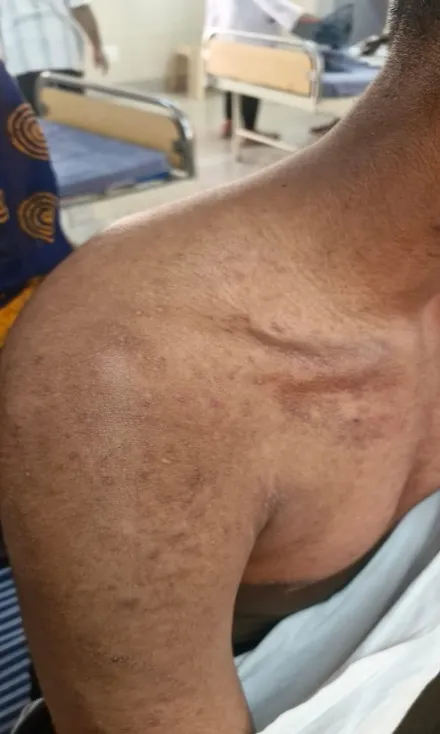
Areas involved – bilateral shoulder, arms, cheek, neck
Local examination (Representative lesion)
Site- Left shoulder
Size- Varying sizes (1-2mm)
Shape- Round to irregular
Surface- Rough
Margins- ill-defined
Color- Reddish black hyperpigmentation
Asta-Vidha Pareeksha:
Nadi: Vata pitta
Mala: Prakruta
Mutra: Prakruta
Jihwa: Alipta
Shabda: Spashta
Sparsha: Anushna-Sheeta
Drik: Prakruta
Akriti: Madhyama
Dashavidha pareeksha
Prakruti: Vata Pitta
Vikruti: Kapha Pitta
Saara: Madhyama
Samhanana: Madhyama
Pramana: Madhyama
Satva: Madhyama
Satmya: Madhura Katu
Ahara shakti: Madhyama
Vyayama shakti: Madhyama
Vaya: Madhyama
Investigations
In serology examination, IgE was elevated with a value of 700.1 IU/ml
Diagnosis – Vicharchika
Therapeutic Intervention
Medicines given in OPD before admission (for 1 week)
Apart from this, patient was educated regarding chronicity of the case and importance of timely shodana therapy. Whole procedure of virechana was explained and informed consent was obtained.
|
Treatment |
Dosage |
Duration |
|
|
1 |
Snehapana with MAHATIKTAKA GHRITA |
30ml, 50ml, 100ml, 100ml, 120ml |
5 days |
|
2 |
Sarvanga Abhyanga with ELADI TAILA followed by Bashpa Sweda |
- |
3 days |
|
3 |
Mukha Abhyanga with ELADI TAILA |
|
3 days |
|
4 |
Virechana with TRIVRIT LEHYA + DRAKSHA PANAKA |
60gm +100ml
|
1 day |
Tabie 1: Treatment modalities during the course of admission (8 days)
Discharge medicines (for 15 days)
On Follow UP (for 15 days)
|
Sl No. |
Symptoms |
Before treatment |
After treatment |
Follow up |
|
1 |
Itching |
+++ |
+ |
- |
|
2 |
Burning sensation |
++ |
+ |
- |
|
3 |
Pus discharge |
++ |
- |
- |
|
4 |
Powdery discharge |
++ |
- |
- |
Table 2: Observations And Results
|
BEFORE |
AFTER |
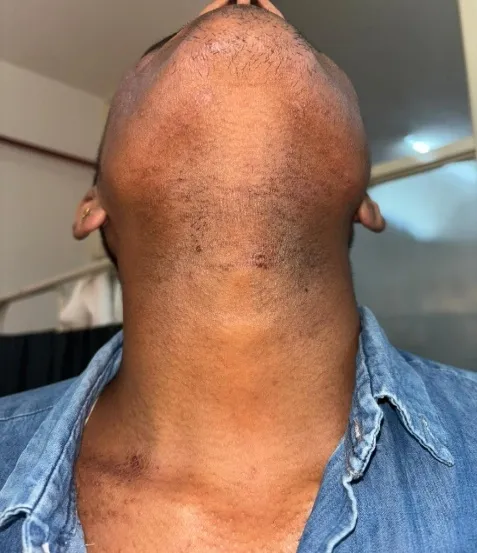
( Figure 1) |
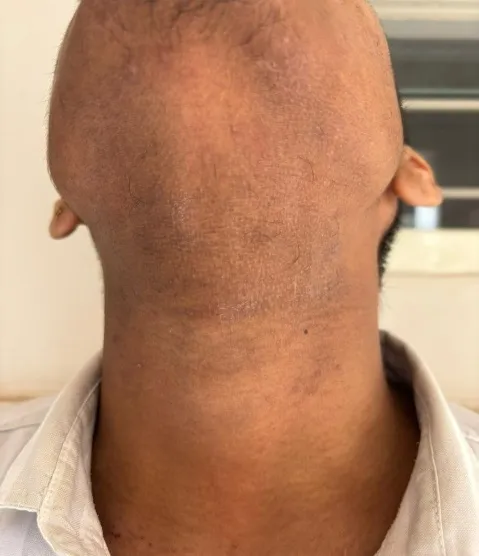
(Figure 2) |
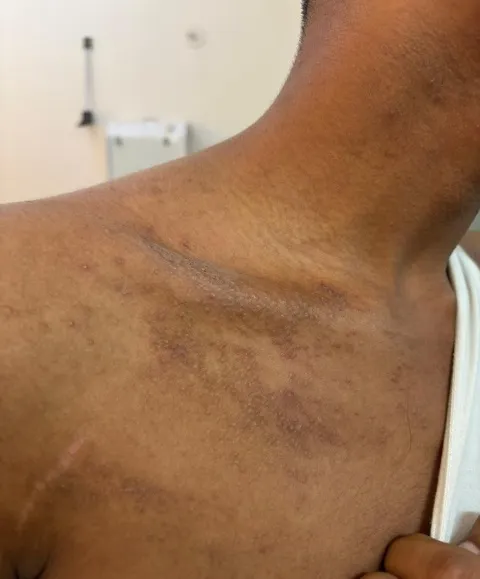
(Figure 3) |
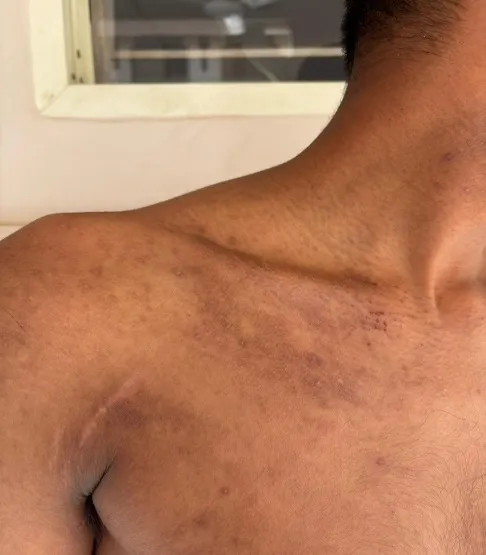
(Figure 4) |
(Figure 5) |
(Figure 6) |
DISCUSSION
About the disease
Vicharchika is one among the kshudra kushta and is a kapha predominant tridoshaja vyadhi involving Twak, Rakta, Mamsa and Ambu as dushyas. In the present case, severe itching (kandu), papulopustular eruptions (pidaka), blackish discoloration (syava) and profuse discharge (bahu srava) are the main symptoms which are similar to the classical features of Vicharchika mentioned by Charaka. In contemporary medicine, due to the chronic nature and similarity in clinical features it can be considered as eczema.
History of Hepatitis A could have altered the immune status of the patient triggering chronic skin conditions6. Additionally, stress and anxiety of the patient could have aggravated the condition7.
About the Interventions
Considering the pathogenesis, treatment approach was focused on the Kapha Pitta dosha, kleda vridhi and rakta dushti. As the condition was chronic, addressing the root cause by shodhana was essential rather than mere shamana aushadis. Along with this counselling and relaxation therapy was provided which assured the patient, and helped gaining his confidence in treatment.
Due to non-willingness for admission on the first day, the symptoms were addressed by prescribing Bringarajasava, Guduchi capsule, Laghusutashekara vati and Haridrakhanda8; Avipathikara churna9 to decrease the toxin-load and Triphala for external wash considering its kushtagna property. Chitrakadi vati was advised for preparing the body for snehapana.
After proper ama pachana, patient underwent shodhananga snehapana for 5 days with dosages 30ml, 50ml, 100ml, 100ml and 120ml respectively. Considering the indication of Mahatiktaka grita in kushta, kandu, daha, kamala and manasika vikaras, it was the best drug of choice for snehapana10.
After attaining samyak snigda lakshana, sarvanga abhyanga followed by Bashpa sweda was done aiming at channelizing the dosha from sakha to koshta. Eladi taila was preferred for abhyanga because of its vatakaphahara, varnaprasadana and kandu pidaka nasana property11.
Trivrit lehya being the best drug of choice, it was preferred as virechana aushadi12 along with Draksha panaka resulting in 28 vegas indicating proper elimination of aggravated doshas.
Strict samsarjanakrama (peyadi krama) and pathya was advised after the shodhana.
During discharge, Nimbadi kashaya and Guduchi13 capsules were prescribed considering its kushtahara property, along with Bhunimbadi kadha to address liver function and balancing Pitta dosha. For Bahya shodhana, nitya abhyanga with Eladi taila, and Pure soap (main ingredient - Sidharthaka churna14) was adviced.
As the dermatological symptoms reduced significantly during follow up, medicines further prescribed included Patolakaturohinyadi kashaya15, Avipathikara churna to address Pitta and liver function along with Laghusutashekara vati and Nimbadi guggulu to address skin complaints.
CONCLUSION
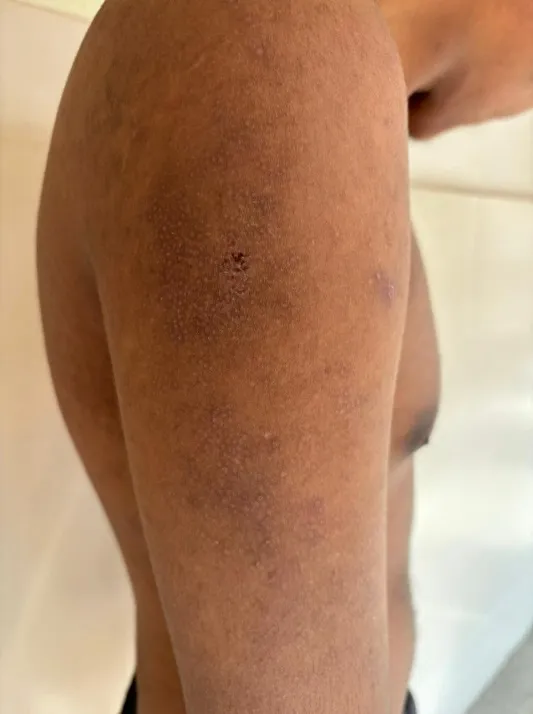
In this case there was a significant reduction in itching and burning sensation, along with complete stoppage of discharge, leaving the lesions dry. Shodhana and Shamana therapies helped in managing both the systemic and local aspects of the condition. Maintaining a healthy internal environment by pathya sevana supported the treatment. A psychosomatic approach contributed to the overall health of the patient. Since this is a single case study, the results cannot be generalized. Further research with larger sample sizes and longer follow-up is needed to validate the same.
REFERENCES

Arya Subhash*, Neethu M., Anjana R. Nath, Ayurvedic Management Of Vicharchika – A Case Report, Int. J. Sci. R. Tech., 2026, 3 (7), 145-151. https://doi.org/10.5281/zenodo.21240361
 10.5281/zenodo.21240361