

We use cookies to ensure our website works properly and to personalise your experience. Cookies policy
Institute for Social Transformation, School of Arts and Social Sciences, Tangaza University, Langata South Road, Karen, Nairobi, Kenya
Digital transformation is increasingly becoming an important component of primary healthcare service delivery. However, the contribution of information and communication technology (ICT) in small faith-based primary healthcare facilities depends not only on the availability of digital technologies but also on the organizational and infrastructural conditions within which they are used. This study explored how ICT integration influences healthcare service delivery in Catholic faith-based Level II dispensaries in Kajiado North and Kajiado East Sub-Counties, Kenya. A qualitative multiple-case study design was employed across five Catholic faith-based Level II dispensaries. Data were generated from 48 unique participants comprising five administrators and departmental heads, 23 clinical and support staff, 15 patients, and five community representatives. Semi-structured interviews were complemented by two focus group discussions drawn from the same participant pool. Thematic analysis generated three themes: ICT-enabled communication, ICT influence on access, and ICT communication and digital-service challenges. ICT-enabled communication was identified across 28 of the 48 participant cases (58.3%); ICT communication and digital-service challenges across 25 cases (52.1%); and ICT influence on access across 23 cases (47.9%). Participants associated ICT with record keeping, information retrieval, communication, reporting, coordination, patient follow-up, and service reminders. Unreliable internet connectivity, power interruptions, limited equipment, inadequate training, and technical-support needs constrained consistent digital use. The study concludes that ICT supports healthcare service delivery through communication, information management, coordination, and selected access mechanisms, but its contribution depends on infrastructure, staff capacity, technical support, and organizational conditions.
Digital transformation has become an increasingly important component of contemporary primary healthcare. The World Health Organization emphasizes that digital transformation involves more than the introduction of technological tools; it also requires integration with healthcare workflows, information systems, health-worker needs, and person-centred service delivery 1–3. Digital technologies can support communication, information management, reporting, coordination, continuity of care, and patient engagement when appropriately integrated into routine healthcare processes.
Kenya has also continued to pursue digital transformation within the health sector. The Ministry of Health has highlighted digital transformation, digital health systems, information exchange, and technology-enabled healthcare reforms as important components of improving health-service delivery and achieving universal health coverage 4,5. However, the effectiveness of digital transformation at national level depends partly on the capacity of primary healthcare facilities to use digital systems consistently within their everyday operations. The presence of ICT does not necessarily translate into effective digital utilization. Evidence from Kenya indicates that healthcare facilities may experience challenges related to connectivity, infrastructure, workflow integration, data use, and staff capacity 6. These challenges are particularly important in lower-level facilities where resources, staffing, equipment, and technical support may be more limited.
The Technology Acceptance Model provides a useful perspective for understanding ICT utilization. Davis 7 argues that perceived usefulness and perceived ease of use influence users’ acceptance of information technology. Within healthcare organizations, however, technology acceptance also occurs within broader organizational and infrastructural conditions. A system may be perceived as useful but remain difficult to use when internet connectivity is unreliable, electricity is interrupted, equipment is inadequate, or staff require additional training.
Faith-based health facilities constitute an important component of healthcare delivery in Kenya. Research on Catholic mission hospitals has demonstrated the importance of health-management information-system capabilities, digital infrastructure, information management, data storage, information security, and management support to organizational performance 8. However, evidence concerning ICT integration in small Catholic faith-based Level II dispensaries remains limited.
Digital transformation in primary healthcare is increasingly understood as an organizational process involving technology, people, information, and healthcare workflows. The World Health Organization emphasizes that digital technologies should be integrated into primary healthcare systems in ways that strengthen service delivery and support person-centred care 1–3. Digital transformation therefore requires attention not only to technological availability but also to the capacity of health workers and organizations to incorporate digital tools into routine practices.
The Technology Acceptance Model developed by Davis 7 explains technology acceptance through perceived usefulness and perceived ease of use. When users perceive technology as useful and easy to use, they are more likely to accept and utilize it. In healthcare organizations, however, actual use may also be affected by organizational structures, infrastructure, staff skills, and technical support. Recent evidence from Kenya demonstrates that the effective use of digital health information can be constrained by infrastructure, system-related factors, workflow issues, and capacity limitations 6. These challenges demonstrate the importance of distinguishing between the existence of digital systems and their practical use in healthcare service delivery.
Research concerning Catholic mission hospitals in Kenya has also demonstrated the relevance of health-management information-system capabilities to organizational performance. Gitahi and Kyalo 8 examined health-management information-system capabilities and performance in Catholic mission hospitals and identified areas including digital infrastructure, information management, data storage, information security, and management support.
Although such evidence demonstrates the importance of digital systems in faith-based healthcare, hospital-level evidence cannot automatically be generalized to Level II dispensaries. Smaller dispensaries operate with different staffing arrangements, equipment levels, infrastructure, and operational demands. There is therefore a need for context-specific research examining how ICT is experienced at the primary-care level. The present study addresses this gap by examining ICT integration across five Catholic faith-based Level II dispensaries in Kajiado North and Kajiado East Sub-Counties. It focuses on the operational mechanisms through which ICT supports healthcare service delivery and the conditions that influence sustained digital utilization.
This study therefore explored ICT integration in five Catholic faith-based Level II dispensaries in Kajiado North and Kajiado East Sub-Counties, Kenya. The study focused on how participants experienced ICT in relation to communication, access to healthcare services, information management, and digital-service challenges. The study further examined the organizational and infrastructural conditions that enabled or constrained ICT utilization. The objective of the study was to explore how ICT integration influences healthcare service delivery in Catholic faith-based Level II dispensaries in Kajiado North and Kajiado East Sub-Counties, Kenya.
MATERIALS AND METHODS
2.1 Study design and setting
The study used a qualitative multiple-case study design. The design was selected to understand participants’ experiences, interpretations, and practices within their natural organizational settings and to enable comparison across bounded facility cases. The unit of analysis was the Catholic faith-based Level II dispensary, while individual participants provided information about operational processes within and across cases 9,10. Five Catholic faith-based Level II dispensaries in Kajiado North and Kajiado East Sub-Counties were included in the study. To protect institutional confidentiality, the facilities are identified using the codes F1 to F5.
The facilities were: F1: St. Therese Catholic Dispensary; F2: St. Joseph Catholic Dispensary; F3: Embulbul Catholic Dispensary; F4: St. Christopher Catholic Dispensary; and F5: St. John’s Catholic Dispensary.
2.2 Participants and sampling
The study comprised 48 unique participants: five healthcare administrators and departmental heads, 23 clinical and support staff, 15 patients, and five community representatives. Purposive sampling was used for participants with direct knowledge or experience relevant to the study objectives, while patients were recruited using convenience sampling from eligible service users. Recruitment was guided by informational depth and repetition rather than a predetermined statistical target. Two focus group discussions were conducted as complementary sources of qualitative data. The discussions were held at F1 and F3. The participants were drawn from the same pool of 48 unique study participants and therefore did not constitute an additional sample.
Table 1: Distribution of Participants Across Study Facilities
| FACILITY | PARTICIPANTS |
|---|---|
| F1 | 13 |
| F2 | 9 |
| F3 | 10 |
| F4 | 8 |
| F5 | 8 |
| Total | 48 |
2.3 Data collection and analysis
Data were collected using semi-structured in-depth interviews and focus group discussions. The instruments were aligned with the study objective and included questions concerning ICT-enabled communication, information management, digital-system use, connectivity, and patient follow-up.
Data analysis involved organization, coding, retrieval, and comparison of qualitative material using QDA Miner Lite. The software supported systematic handling of the dataset; interpretation remained the responsibility of the researcher.
Thematic analysis followed systematic familiarization, coding, theme development, review, and interpretation 11. For this article, three ICT themes were examined: ICT-enabled communication, ICT influence on access, and ICT communication and digital-service challenges.
Counts refer to coded references, whereas participant-case coverage refers to the proportion of the 48 unique participants whose accounts contained the relevant theme. These figures are descriptive indicators of representation within the dataset; they are not statistical prevalence estimates and should not be interpreted as evidence of population-level generalizability.
RESULTS AND DISCUSSION
3.1 Overview of ICT findings
The researcher labelled the data based on the study objective, which examined how ICT integration influences healthcare service delivery in Catholic faith-based Level II dispensaries in Kajiado North and Kajiado East Sub-Counties, Kenya. The objective formed the main analytical category from which three themes emerged: ICT-enabled communication, ICT influence on access, and ICT communication and digital-service challenges. The themes were further examined according to the different dimensions described by participants concerning the use, contribution, and challenges of ICT in healthcare service delivery. ICT-enabled communication was identified across 28 of the 48 participant cases (58.3%) and had 31 coded references. ICT communication and digital-service challenges were identified across 25 participant cases (52.1%) and had 29 coded references, while ICT influence on access was identified across 23 participant cases (47.9%) and had 24 coded references.
Table 2: Participant-Case Coverage of the Three ICT Themes
| ICT THEME | CODED REFERENCES | PARTICIPANT CASES (N=48) | CASE COVERAGE |
|---|---|---|---|
| ICT-enabled communication | 31 | 28 | 58.3% |
| ICT communication and digital-service challenges | 29 | 25 | 52.1% |
| ICT influence on access | 24 | 23 | 47.9% |
Note: Participant-case coverage represents the proportion of unique participants whose accounts contained the relevant theme. These percentages are qualitative descriptive indicators and should not be interpreted as statistical prevalence or population-level estimates.
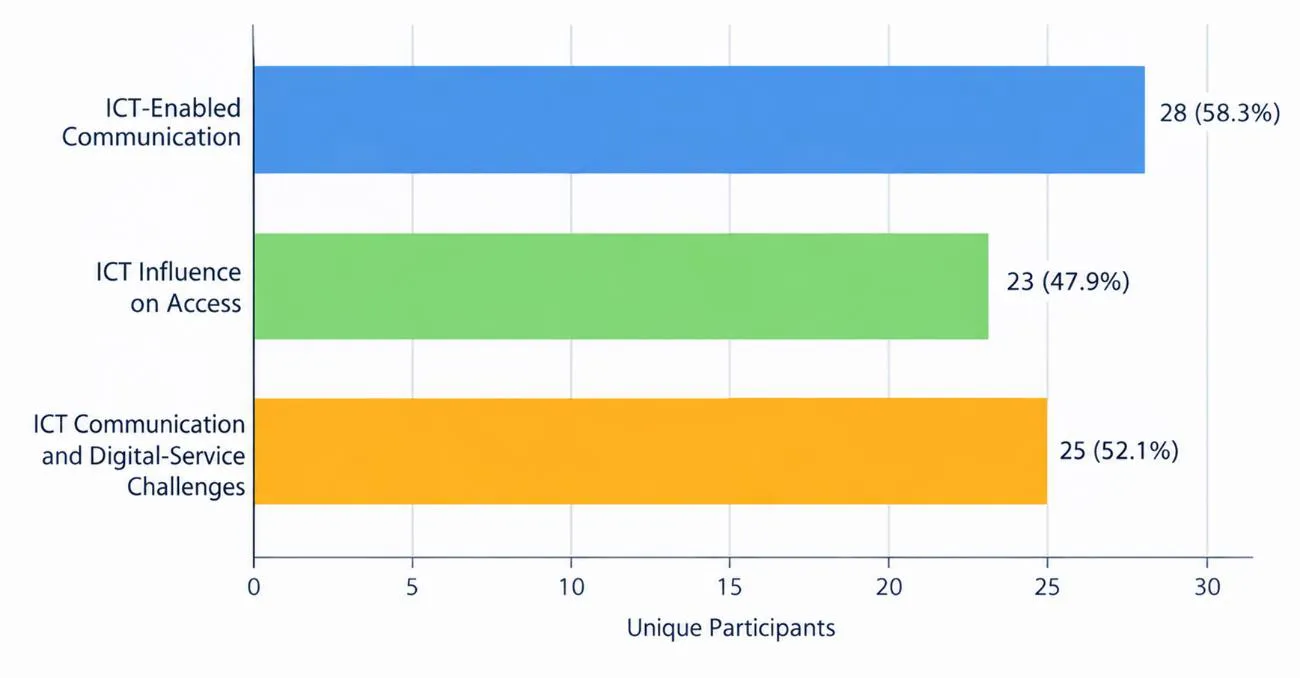
Figure 1: Participant-case Coverage of the Three ICT Themes
Note: Participant-case coverage represents the proportion of unique participants whose accounts contained the relevant theme. The themes are not mutually exclusive; therefore, the percentages should not be summed to 100%.
3.2 ICT-enabled communication
ICT-enabled communication was identified across 28 participant cases (58.3%) and had 31 coded references. Participants described ICT in relation to record management, information retrieval, communication, reporting, and coordination of routine activities. The findings indicate that participants experienced ICT primarily through the activities that digital tools enabled them to perform in their everyday work.
One important dimension of ICT-enabled communication was record keeping and information retrieval. Participants described electronic records as making information easier to retrieve and reducing reliance on manual record searching. A participant from F1 explained: “ICT has improved record keeping and communication. It is easier to retrieve information when we need it and to communicate with other staff. When information is recorded electronically, we do not have to spend as much time looking through manual records.” The participant's account demonstrates that the practical contribution of ICT was experienced through routine information-management processes. Electronic records supported information retrieval, while digital communication facilitated interaction among staff. ICT therefore functioned as an operational capability supporting information management and communication within the facility.
Participants also described ICT in relation to reporting and coordination of routine activities. These accounts suggest that ICT was integrated into everyday organizational processes through which information was shared, communicated, and coordinated. The finding therefore goes beyond the availability of digital devices and points to the operational functions that participants associated with ICT use.
3.3 ICT influence on access
ICT influence on access was identified across 23 participant cases (47.9%) and had 24 coded references. Participants described patient follow-up, appointment and service reminders, communication with healthcare workers, and access to health-related information as dimensions through which ICT could support healthcare access.
Patient follow-up and service reminders were particularly evident in participants' accounts. A patient participant from F5 stated: “It makes follow-up and receiving service reminders easier. Sometimes you may forget when you are supposed to return to the facility, so receiving a reminder helps you keep the appointment.” The account indicates that ICT could extend selected healthcare interactions beyond the immediate facility encounter. Service reminders provided a mechanism for maintaining contact with patients and supporting continuity of scheduled care.
Participants also described communication with healthcare workers and access to health-related information as mechanisms through which ICT could support access. However, the findings indicated that this contribution depended on functioning communication networks and patients being reachable through available communication channels. ICT therefore supported selected dimensions of healthcare access rather than guaranteeing access independently of infrastructure and patient circumstances.
3.4 ICT communication and digital-service challenges
ICT communication and digital-service challenges were identified across 25 participant cases (52.1%) and had 29 coded references. Participants identified infrastructure-related and user-related challenges affecting ICT utilization. Infrastructure challenges included unreliable internet connectivity, network interruptions, power interruptions, and limited equipment, while user-related challenges included inadequate training and the need for technical support.
Infrastructure limitations were evident in participants' descriptions of digital-service challenges. A participant from F3 explained: “The main challenges are unreliable internet connectivity, occasional power interruptions and limited equipment. Some staff also require additional training to use digital systems effectively.” The account indicates that the presence of digital technology was not sufficient to ensure consistent utilization. Internet connectivity, electricity, equipment, and staff capability affected whether digital systems could be used continuously in routine work.
Participants from other facilities similarly reported that network and power interruptions could disrupt digital operations and require temporary reversion to manual processes. Focus group discussions at F1 and F3 provided complementary accounts concerning connectivity problems, power interruptions, equipment limitations, and the need for user support.
The findings therefore demonstrate that ICT utilization was influenced by both technological and human conditions. Reliability of infrastructure, adequacy of equipment, staff capability, training, and technical support shaped whether digital tools could be integrated consistently into routine healthcare operations.
3.5 Overall summary of ICT findings
Overall, the findings demonstrate three interconnected dimensions of ICT integration. First, ICT supported communication and information management through record keeping, information retrieval, staff communication, reporting, and coordination. Second, ICT supported selected dimensions of healthcare access through patient follow-up and service reminders. Third, the actual utilization of ICT was shaped by infrastructure and human-capability conditions, including connectivity, electricity, equipment, training, and technical support. The findings therefore indicate that ICT integration was experienced not simply as the acquisition of technology but as an operational process in which digital tools, users, infrastructure, and organizational practices interacted.
3.6 Discussion of findings
The first major finding was that participants experienced ICT principally through communication and information-management functions. ICT-enabled communication was identified across 28 participant cases (58.3%), with accounts concerning record retrieval, communication, reporting, and coordination. This finding is consistent with evidence that digital transformation in primary healthcare requires integration with service workflows, information systems, and health-worker needs rather than isolated technology deployment 1–3. The finding provides a process-oriented interpretation of ICT in small faith-based facilities. Participants described specific operational mechanisms through which technology supported information retrieval, sharing, communication, and coordination rather than describing ICT merely as a modernization initiative. This distinction is important because healthcare service-delivery capability depends on what users are able to accomplish with technology within existing workflows rather than simply on the physical presence of digital devices. Similar concerns have been identified in Kenyan health facilities, where digital infrastructure and the capacity to use health data remain important to the operational value of available systems 6.
The second major finding concerned the role of ICT in maintaining contact with patients. ICT influence on access was identified across 23 participant cases (47.9%). Participants described follow-up communication and service reminders as mechanisms supporting continued engagement with healthcare services. Digital technologies can facilitate patient engagement and continuity when systems are designed around users and service processes 1,2. The present findings similarly demonstrate that digital communication could extend selected healthcare interactions beyond the immediate facility encounter. However, the findings indicate that digital communication did not automatically guarantee access. Patients needed to be reachable through available communication channels, and those channels needed to function reliably. The contribution of ICT to access was therefore conditional upon the technological and organizational environment in which digital communication occurred.
This finding is particularly relevant to Level II facilities because infrastructure limitations may affect the reliability of digital communication at the point of care. Digital access mechanisms should therefore be considered together with the infrastructure and organizational conditions required to sustain them.
The third major finding concerned the coexistence of perceived usefulness and implementation constraints. Participants identified practical benefits from ICT while also reporting connectivity, power, equipment, training, and technical-support challenges. This pattern can be interpreted through the Technology Acceptance Model, which emphasizes perceived usefulness and perceived ease of use as important factors influencing technology acceptance 7. However, the present findings indicate that actual utilization takes place within conditions that may enable or constrain the translation of perceived usefulness into routine practice. The findings therefore suggest that perceived usefulness alone does not explain effective ICT integration in small primary-care facilities. A digital system may be considered useful but remain intermittently usable when internet connectivity is unreliable, electricity is interrupted, equipment is limited, or staff require additional training and technical support.
This interpretation is consistent with guidance emphasizing user requirements, workflow mapping, health-worker participation, interoperability, training, and implementation support in primary-care digital transformation 2,3. Evidence from Catholic mission hospitals in Kenya similarly identifies digital infrastructure, data storage, information security, and management support as important components of health-information-system performance 8.
The organizational dimension is important in interpreting these findings. Communication, teamwork, leadership support, and problem-solving form part of the organizational environment in which staff respond to technological opportunities and constraints. The present study therefore supports a socio-organizational interpretation of ICT integration in which technology, users, infrastructure, and organizational practices interact. This interpretation complements the Technology Acceptance Model rather than replacing it. TAM helps explain why users may value technology when it is perceived as useful and easy to use, whereas the present findings draw attention to the organizational and infrastructural conditions required for those perceptions to become sustained use. Technology acceptance should therefore be treated as one component of a wider implementation process rather than as a complete explanation of digital service delivery.
This study contributes context-specific empirical evidence on how ICT is translated into healthcare service-delivery capability in small Catholic faith-based Level II dispensaries in Kajiado North and Kajiado East Sub-Counties, Kenya. The contribution is threefold. First, the findings show that ICT was experienced as an operational capability through communication, information retrieval, record management, reporting, coordination, and selected patient follow-up activities. Second, the findings show that ICT supported selected dimensions of access through mechanisms such as appointment reminders and follow-up communication, but these mechanisms depended on functioning communication channels and patients being reachable. Third, the findings identify the conditions that shaped sustained utilization, particularly connectivity, electricity, equipment, staff capability, training, technical support, and organizational support. Taken together, the findings extend a technology-adoption perspective by distinguishing between technology availability, actual utilization, and service-delivery capability. The study does not propose that infrastructure or organizational conditions replace user acceptance; rather, it shows that perceived usefulness and usability must be translated into sustained practice within a functioning service environment.
3.7 Limitations
This study has several limitations. First, some participants may have been hesitant to provide detailed information about operational challenges because of concerns about confidentiality, workplace relationships, or how their responses might be perceived. Confidentiality, voluntary participation, and the right to withdraw were emphasized to encourage open participation. Second, resource and time constraints limited the duration and resources available for fieldwork and analysis; careful scheduling and QDA Miner Lite were used to support efficient data management. Third, the researcher’s professional experience and positionality within Catholic healthcare contexts could have introduced preconceptions or influenced interactions with participants. Reflexive practices, an audit trail, and critical reflection on methodological and analytical decisions were used to mitigate this risk. Finally, as a qualitative multiple-case study, the findings are context-specific and are not intended to provide statistical generalization to all Catholic faith-based healthcare facilities or other healthcare settings. Triangulation across participant categories and data sources, cross-case comparison, and systematic thematic analysis were used to strengthen credibility, dependability, and confirmability.
CONCLUSION
ICT integration in the five Catholic faith-based Level II dispensaries supported healthcare service processes through communication, information retrieval, reporting, coordination, and selected patient follow-up activities. However, these contributions were not automatic. Unreliable connectivity, power interruptions, limited equipment, inadequate training, and technical-support needs constrained consistent digital use. The study therefore concludes that ICT integration in small faith-based primary-care facilities should be approached as a socio-organizational service-delivery process. Digital systems create potential service-delivery capability, but that potential is translated into routine value through staff capability, reliable infrastructure, technical support, and organizational conditions that enable continued use.
In practical terms, facility managers should prioritize reliable connectivity, appropriate ICT equipment, backup arrangements for power interruptions, and accessible technical support. Continuous practical training should accompany digital-system implementation, with attention to the specific tasks staff perform in routine service delivery. Digital systems should be aligned with facility workflows and patient follow-up processes rather than introduced as stand-alone tools. At health-system level, digital-health initiatives involving faith-based primary-care facilities should consider the infrastructure and capacity conditions of lower-level facilities. Interoperability, user participation, continuity between digital and manual processes, and implementation support should be incorporated into planning. Future research should compare ICT utilization across Catholic, other faith-based, and public Level II facilities and examine how connectivity, digital readiness, organizational conditions, and technical support interact over time.
ACKNOWLEDGMENT
The authors gratefully acknowledge the participating facilities and study participants for their cooperation and contributions to this research.
FUNDING
The study received no external funding.
CONFLICT OF INTEREST
No financial or non-financial conflict of interest related to this study.
ETHICAL STATEMENTS
Ethical approval was granted by the Tangaza University Institutional Scientific and Ethics Review Committee (TU-ISERC), reference number TU/ISERC/2026/01/00196, dated 16 July 2026.
Research authorization was also obtained from the National Commission for Science, Technology and Innovation (NACOSTI), licence number NACOSTI/P/26/4193822, before data collection.
STATEMENT OF INFORMED CONSENT
Before participation, all participants were informed about the purpose and procedures of the study, including the potential risks and benefits, voluntary nature of participation, and measures taken to maintain confidentiality. Written informed consent was obtained from all participants before data collection, and participants were informed that they could decline to answer any question or withdraw from the study without penalty. For the focus group discussions, participants were also reminded to respect the privacy and confidentiality of information shared by other participants.
DATA AVAILABILITY
The qualitative data contain participant accounts from a small set of identifiable facilities and are not publicly deposited with this article. Access to de-identified material, where ethically and institutionally permissible, should be considered through the relevant research governance processes.
REFERENCES


W. N. Mwanza, B. Ndiga, J. J. Soko, Beyond Digital Adoption: ICT And Healthcare Service Delivery in Catholic Faith-Based Level II Dispensaries in Kajiado North and Kajiado East Sub-Counties, Kenya, Int. J. Sci. R. Tech., 2026, 3 (10), 705-712. https://doi.org/10.5281/zenodo.23281119
 10.5281/zenodo.23281119