

We use cookies to ensure our website works properly and to personalise your experience. Cookies policy
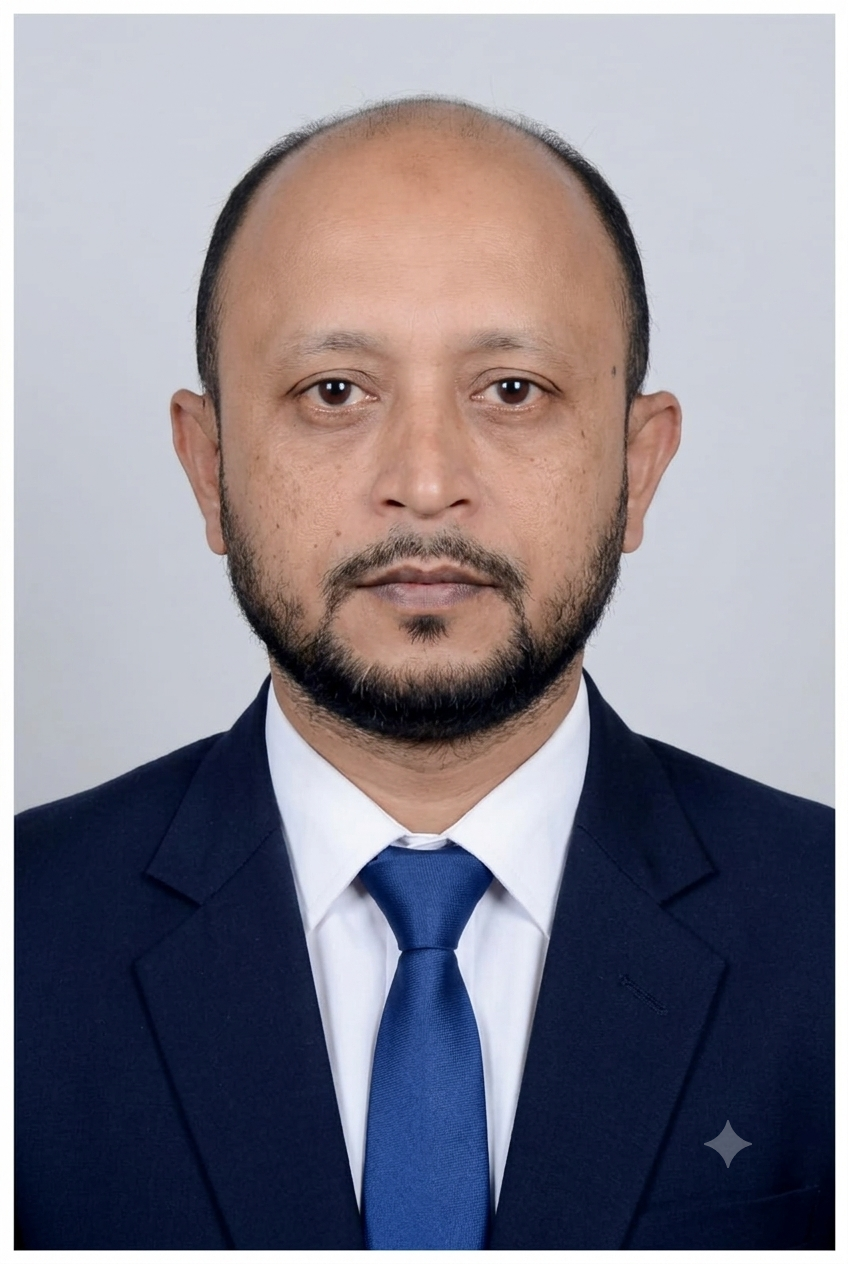
FCA, CA, FCPA, FCMA, ACCA, CPFA. Khustia Sugar Mills ltd, Jogoti, Khustia, Bangladesh-7002
State-owned autonomous industrial corporations constitute one of the principal institutional mechanisms for promoting industrialization, employment generation, and national economic development in Bangladesh. Despite their strategic importance, these organizations continue to suffer from structural discrimination, fragmented governance, administrative dualism, and excessive dependence on the deputation system. Permanent professionals recruited by these corporations perform critical managerial and technical functions under the National Pay Scale, yet they remain excluded from several statutory benefits and executive privileges available to members of the regular civil service. Simultaneously, senior administrative positions are predominantly occupied by officers on temporary deputation, creating disparities in career progression, organizational accountability, and institutional continuity. This paper argues that these long-standing governance deficiencies can be addressed through the establishment of a dedicated Industrial Cadre for Bangladesh. Drawing upon the historical experience of the Industrial Management Service (IMS) established after independence, the paper demonstrates that Bangladesh previously maintained a specialized professional service exclusively responsible for managing state-owned industrial enterprises. The subsequent abolition of IMS and the increasing reliance on generalist deputation have contributed to institutional inefficiency and weakened professional management. The article proposes a comprehensive administrative reform framework centred on merit-based recruitment, specialized industrial management training, career continuity, harmonized service benefits, and the gradual replacement of deputation in core administrative functions. Such reforms are expected to enhance institutional accountability, improve organizational performance, strengthen industrial governance, and promote sustainable economic development.
State-owned autonomous industrial corporations have historically played a vital role in implementing Bangladesh's industrial policy, promoting regional economic development, and supporting employment generation. Institutions such as the Bangladesh Sugar and Food Industries Corporation (BSFIC) and the Bangladesh Small and Cottage Industries Corporation (BSCIC) were established to operate with managerial flexibility while ensuring professional oversight of strategic industrial sectors.
Over time, however, the governance structure of these organizations has become increasingly characterized by administrative fragmentation and institutional inequality. Permanent officers recruited through competitive processes perform essential technical and managerial responsibilities throughout their careers. Nevertheless, many senior administrative positions are filled through temporary deputation from other civil service cadres, resulting in dual administrative structures and unequal career opportunities.
This governance model has produced several structural challenges, including weakened institutional memory, inconsistent accountability, reduced employee motivation, and diminished organizational efficiency. Moreover, disparities in retirement benefits, executive facilities, and promotion opportunities have widened the gap between permanent professionals and deputed officers.
Against this background, the present study proposes the establishment of a specialized Industrial Cadre to professionalize the management of Bangladesh's autonomous industrial corporations. Rather than introducing an entirely new administrative concept, the proposal seeks to revive and modernize an institutional model that previously existed in Bangladesh through the Industrial Management Service (IMS).
2. Historical Background of the Industrial Management Service (IMS) (1972–1982)
The proposal for establishing an Industrial Cadre is rooted in Bangladesh's own administrative history. Following the Liberation War of 1971, the Government undertook an extensive programme of industrial nationalization to restore production, rebuild the economy, and safeguard strategically important industries. Under the Bangladesh Industrial Enterprises (Nationalization) Order, 1972 (President's Order No. 27 of 1972), major industrial sectors—including jute, textiles, sugar, paper, engineering, and several manufacturing enterprises—were brought under state ownership.
To administer these newly nationalized enterprises effectively, the Government established the Industrial Management Service (IMS), a specialized professional service dedicated exclusively to industrial administration and corporate management. Unlike general administrative services, IMS was designed to produce career professionals possessing specialized knowledge of industrial operations, financial management, production planning, and public enterprise governance.
During 1972–1973, recruitment to IMS was conducted through a competitive examination organized by the Bangladesh Public Service Commission (BPSC). Following selection, officers received professional management training at the then Bangladesh Management Development Centre (BMDC), now the Bangladesh Institute of Management (BIM), before being assigned to major state-owned industrial corporations, including BSFIC, BJMC and BTMC.
The establishment of IMS represented one of Bangladesh's earliest attempts to professionalize industrial administration through a specialized public service. Officers developed long-term institutional expertise and ensured continuity in industrial management instead of serving on temporary administrative assignments.
During the early 1980s, however, national economic policy gradually shifted toward liberalization and privatization. Within this broader policy context, IMS was abolished in 1982, and its officers were absorbed into different Bangladesh Civil Service cadres. Although this administrative restructuring integrated IMS officers into the regular civil service, it also resulted in the disappearance of Bangladesh's only specialized industrial management service.
The historical experience of IMS demonstrates that Bangladesh has previously operated a dedicated professional cadre for industrial administration. Consequently, the proposal to establish a modern Industrial Cadre should be viewed not as an unprecedented reform but as the modernization of an institutional model that once contributed to the governance of state-owned industrial enterprises.
3. Structural Disparities and Institutional Inequality
One of the most persistent challenges confronting Bangladesh's state-owned autonomous industrial corporations is the existence of structural inequalities between permanent corporate professionals and officers serving on deputation from the regular civil service. Although both groups frequently perform comparable administrative responsibilities, they operate under markedly different service conditions, resulting in disparities in financial security, career progression, institutional authority, and professional recognition.
3.1 Pension and Retirement Security
Permanent officers employed in autonomous industrial corporations are generally recruited through competitive processes and are remunerated under the National Pay Scale. Despite performing long-term public responsibilities, they remain outside the statutory government pension framework. Instead, retirement benefits are primarily based on Contributory Provident Fund (CPF) schemes and gratuities, which provide comparatively limited long-term financial protection. By contrast, officers belonging to regular civil service cadres are entitled to government pension facilities, creating a significant disparity in retirement security.
3.2 Executive Benefits and Professional Motivation
In addition to pension disparities, differences exist in executive welfare benefits. Permanent officers of autonomous corporations generally do not enjoy the same access to concessional housing finance, vehicle financing, or executive maintenance facilities that are commonly available within the regular civil service. These differences contribute to declining professional motivation and weaken institutional commitment, particularly among experienced senior executives who spend their entire careers within the corporation.
3.3 Career Progression and Institutional Recognition
The coexistence of permanent professionals and deputed officers creates an uneven career structure. While permanent officers accumulate extensive institutional knowledge over many years, senior administrative positions are frequently occupied by officers serving temporarily on deputation. Consequently, promotion opportunities for experienced internal professionals become constrained, reducing incentives for long-term professional development and organizational leadership. This imbalance affects succession planning, institutional memory, and organizational morale.
4. The Deputation System and Governance Challenges
The extensive use of the deputation system has become one of the defining characteristics of administrative management within Bangladesh's autonomous industrial corporations. Deputation allows officers from other government services to occupy key executive and administrative positions for limited periods. While such arrangements may temporarily address staffing requirements, excessive reliance on deputation may generate unintended institutional consequences.
4.1 Institutional Continuity
Industrial corporations require administrators with detailed knowledge of production systems, industrial finance, procurement procedures, labour relations, and sector-specific regulations. Permanent officers gradually develop this expertise through long-term service. Frequent rotation of deputed officers may interrupt institutional continuity and reduce the accumulation of specialized organizational knowledge.
4.2 Administrative Accountability
Because deputation assignments are temporary, long-term institutional accountability may be weakened. Decisions relating to capital investment, procurement, modernization, or organizational restructuring often produce consequences extending beyond the tenure of individual deputed officers. Strengthening continuity in leadership may therefore contribute to improved accountability and more sustainable institutional planning.
4.3 Organizational Morale
Professional organizations function most effectively when career advancement is perceived as transparent and merit-based. Where senior leadership positions are routinely filled through external appointments, permanent professionals may perceive limited opportunities for advancement. Such perceptions can adversely affect motivation, organizational commitment, and long-term human resource development.
5. Rationale for Establishing a Modern Industrial Cadre
The foregoing analysis suggests that many governance challenges confronting Bangladesh's autonomous industrial corporations arise from structural rather than individual factors. Addressing these challenges therefore requires institutional reform rather than isolated administrative interventions.
A modern Industrial Cadre would provide a specialized professional service dedicated exclusively to industrial administration. Officers would be recruited through competitive national examinations, receive specialized industrial management training, and pursue career progression entirely within the industrial sector. Such specialization would strengthen institutional memory, improve administrative continuity, and facilitate evidence-based decision-making.
Unlike the existing dependence on temporary deputation, an Industrial Cadre would encourage long-term organizational accountability by aligning professional advancement with the sustained performance of industrial corporations. Career administrators possessing sector-specific expertise would be better positioned to formulate industrial policy, supervise modernization programs, strengthen financial governance, and enhance operational efficiency.
The proposed cadre would also promote greater equity by harmonizing service benefits, career opportunities, and executive facilities for professionals serving in autonomous industrial corporations. Such reforms would contribute to improved employee motivation, stronger organizational commitment, and enhanced institutional integrity.
Importantly, the proposal does not seek to replace the Bangladesh Civil Service; rather, it seeks to complement the existing administrative structure through the creation of a specialized service dedicated to industrial governance. In doing so, Bangladesh would revive a historical institutional tradition while adapting it to contemporary economic and administrative realities.
6. International Best Practices in Specialized Industrial Administration
International experience demonstrates that countries achieving sustained industrial transformation have generally relied upon professional institutions supported by specialized administrative expertise. While institutional arrangements differ across jurisdictions, a common feature is the appointment of technically competent professionals with long-term sectoral experience rather than frequent rotation of general administrative personnel.
6.1 Japan
Japan's post-war industrial development was supported by strong institutional coordination between government agencies and industrial enterprises. Long-term policy continuity, specialized administrative expertise, and close cooperation between policymakers and industry contributed significantly to rapid industrial modernization.
6.2 Republic of Korea
South Korea established highly professional industrial management institutions that coordinated export-oriented industrialization through specialized public administration. Career officials accumulated sector-specific knowledge, enabling consistent implementation of industrial development strategies over several decades.
6.3 Singapore
Singapore's public administration emphasizes merit-based recruitment, specialized professional development, and continuous leadership training. Public sector organizations responsible for economic and industrial development rely heavily on technically competent professionals with clearly defined career pathways.
6.4 Malaysia
Malaysia has strengthened industrial governance by integrating professional management practices with long-term institutional planning. Specialized agencies responsible for industrial promotion operate with considerable administrative continuity and performance-oriented management systems.
6.5 Lessons for Bangladesh
Although Bangladesh's constitutional and administrative context differs from these countries, several common principles are directly relevant:
These international experiences support the argument that specialized industrial administration can complement general public administration while improving governance within state-owned industrial enterprises.
7. Policy Recommendations
Based on the foregoing analysis, the following policy measures are recommended to strengthen governance within Bangladesh's autonomous industrial corporations.
1. Establish a Bangladesh Industrial Cadre through appropriate legislative and administrative reforms.
2. Gradually reduce dependence on routine deputation in core administrative and executive positions.
3. Introduce competitive national recruitment emphasizing engineering, finance, economics, business administration, industrial management, and public policy.
4. Establish specialized pre-service and in-service training programmes through BIM and other professional institutions.
5. Create a transparent career progression system based on merit, experience, and performance.
6. Ensure parity in retirement benefits between Industrial Cadre officers and comparable public service officials, subject to applicable laws and policy decisions.
7. Review executive welfare facilities to reduce unnecessary disparities between permanent industrial professionals and comparable public sector executives.
8. Develop specialized performance evaluation indicators focusing on productivity, financial sustainability, governance, and innovation.
9. Promote digital governance, financial transparency, and internal audit mechanisms across autonomous industrial corporations.
10. Strengthen institutional accountability by linking senior administrative responsibilities with long-term organizational performance.
11. Encourage continuous professional development through domestic and international industrial management training.
12. Introduce succession planning to preserve institutional memory and leadership continuity.
13. Strengthen collaboration between universities, research institutions, and industrial corporations.
14. Encourage evidence-based policy formulation through regular organizational performance reviews.
15. Establish a National Industrial Administration Reform Commission to examine long-term institutional reforms for state-owned industrial enterprises.
CONCLUSION
Bangladesh's autonomous industrial corporations continue to play an important role in national industrial development despite increasing governance challenges. Persistent disparities between permanent professionals and deputed officers, together with institutional discontinuity and fragmented administrative structures, have reduced organizational efficiency and weakened long-term accountability.
The historical experience of the Industrial Management Service (IMS) demonstrates that Bangladesh has previously recognized the importance of specialized industrial administration. Reintroducing this concept in a modernized form offers an opportunity to strengthen institutional professionalism while preserving the principles of merit, accountability, and administrative efficiency.
The proposed Industrial Cadre should therefore be viewed not as an alternative to the Bangladesh Civil Service but as a complementary specialized service designed to enhance governance within autonomous industrial corporations. Through specialized recruitment, professional training, equitable career development, and stronger institutional accountability, Bangladesh can improve the management of state-owned industrial enterprises and better support sustainable industrialization.
Future administrative reforms should build upon historical experience while adapting governance structures to contemporary economic realities. A professionally managed Industrial Cadre has the potential to strengthen organizational integrity, improve public sector performance, and contribute meaningfully to Bangladesh's long-term industrial development objectives.
REFERENCES
Mohammad Nazmul Huda*, Bridging The Gap: Eradicating Bureaucratic Disparities In State-Owned Autonomous Industrial Corporations Through A Dedicated Industrial Cadre, Int. J. Sci. R. Tech., 2026, 3 (8), 246-251. https://doi.org/10.5281/zenodo.21850272
 10.5281/zenodo.21850272