

We use cookies to ensure our website works properly and to personalise your experience. Cookies policy
Neemla, Ellenabad, Haryana, India
Human immunodeficiency virus (HIV) remains a major global public health concern, affecting millions of individuals worldwide. Despite significant progress in antiretroviral therapy (ART), HIV infection continues to require lifelong treatment and challenges such as drug resistance, viral diversity, and limited access to therapy persist. Consequently, there is a growing need for innovative strategies that can provide long-term viral control and effective prevention. In recent years, broadly neutralizing antibodies (bNAbs) have emerged as a promising approach for combating HIV infection. These antibodies possess the unique ability to recognize and neutralize a wide range of HIV strains by targeting conserved regions of the viral envelope glycoproteins. By preventing viral entry into host cells and suppressing viral replication, bNAbs offer potential applications in both therapeutic and preventive settings. Recent scientific advances have led to the identification of potent antibodies capable of neutralizing multiple HIV variants, including drug-resistant strains. In addition to their therapeutic potential, broadly neutralizing antibodies are being explored as key components in the development of next-generation HIV vaccines. This review article summarizes the current understanding of broadly neutralizing antibodies, their mechanism of action, recent research advancements, therapeutic applications, and future prospects in the fight against HIV infection.
Human Immunodeficiency Virus remains one of the most significant global public health challenges, affecting millions of individuals worldwide. Since its identification in the early 1980s, HIV has caused a widespread epidemic and continues to contribute to substantial morbidity and mortality, particularly in developing countries (1). The virus primarily attacks the immune system, especially CD4+ T lymphocytes, leading to progressive immune dysfunction and increased susceptibility to opportunistic infections and malignancies (2).
The introduction of antiretroviral therapy (ART) has significantly improved the life expectancy of people living with HIV by effectively suppressing viral replication and reducing disease progression (3). However, ART requires lifelong adherence and may be associated with drug resistance, adverse effects, and high treatment costs (4). Furthermore, the high genetic variability of HIV and its ability to evade immune responses make the development of a definitive cure or vaccine extremely challenging (5).
In recent years, immunotherapy has emerged as a promising strategy for combating HIV infection. Among these approaches, broadly neutralizing antibodies (bNAbs) have attracted considerable attention due to their ability to recognize and neutralize diverse strains of HIV (6). These antibodies target conserved regions of the viral envelope glycoproteins and can effectively block viral entry into host cells, thereby preventing infection and limiting viral spread (7).
Recent advances in antibody discovery and engineering have led to the identification of highly potent broadly neutralizing antibodies capable of neutralizing multiple HIV variants, including drug-resistant strains (8). In addition to therapeutic applications, these antibodies are also being explored for preventive strategies and vaccine development (9). Consequently, broadly neutralizing antibodies represent a promising avenue for the development of novel interventions aimed at controlling and potentially eliminating HIV infection.
This review article discusses the current understanding of broadly neutralizing antibodies, their mechanism of action, recent research advances, therapeutic applications, and future prospects in the prevention and treatment of HIV infection.
2. OVERVIEW OF HIV INFECTION
Human Immunodeficiency Virus is a retroviral infection that primarily targets the human immune system. The virus infects CD4+ T lymphocytes, macrophages, and dendritic cells, leading to progressive immune system damage. Over time, the depletion of CD4+ cells weakens the body's ability to fight infections and diseases, eventually resulting in Acquired Immunodeficiency Syndrome if untreated (10). Understanding the structure, life cycle, and global impact of HIV is essential for developing effective therapeutic and preventive strategies.
2.1 Structure of HIV
HIV is an enveloped RNA virus belonging to the Retroviridae family. The viral particle consists of a lipid envelope derived from the host cell membrane and contains several important structural proteins. Embedded in the envelope are glycoproteins known as gp120 and gp41, which play a critical role in viral attachment and entry into host cells (11). Inside the envelope lies the viral capsid composed of the p24 protein, which encloses two copies of single-stranded RNA along with essential viral enzymes such as reverse transcriptase, integrase, and protease (12). These components are necessary for viral replication and infection of host cells.
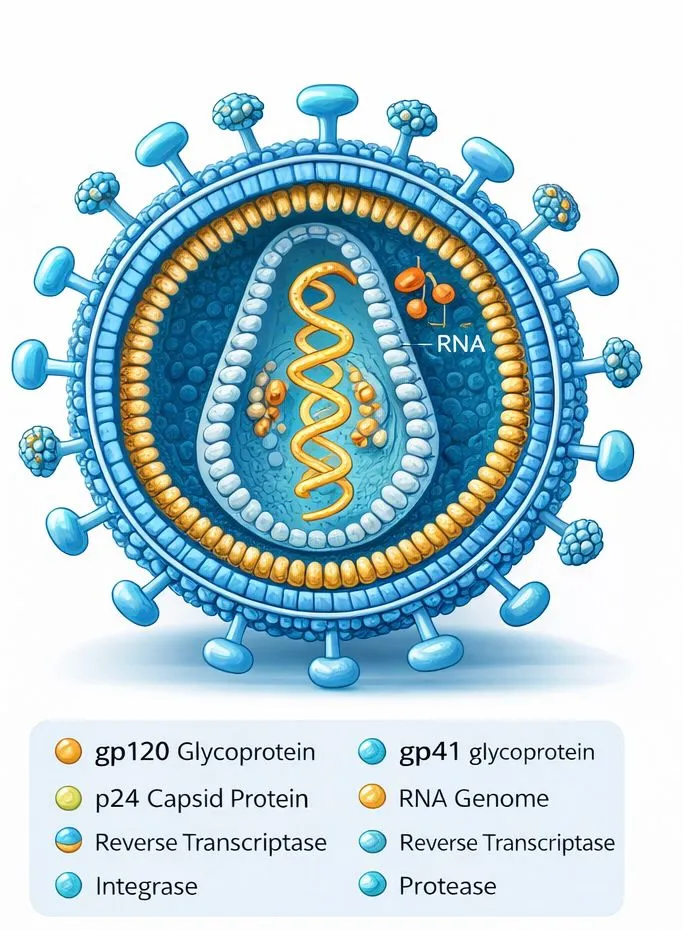
Figure 1. Structural components of Human Immunodeficiency Virus showing gp120, gp41 glycoproteins, RNA genome, p24 capsid protein, and viral enzymes.
2.2 HIV Life Cycle
The life cycle of HIV involves several sequential steps that enable the virus to replicate within host cells. The process begins when the viral gp120 protein binds to the CD4 receptor and co-receptors such as CCR5 or CXCR4 on the surface of target immune cells (13). Following attachment, the viral envelope fuses with the host cell membrane, allowing the viral RNA and enzymes to enter the cell.Once inside the host cell, reverse transcriptase converts the viral RNA into complementary DNA (cDNA), which is then integrated into the host genome by the viral enzyme integrase (14). The integrated viral DNA, known as the provirus, can then utilize the host cell machinery to produce viral proteins and new viral RNA. These components assemble into new viral particles that bud from the host cell membrane and mature through the action of the viral protease enzyme, leading to the production of infectious virions (15).
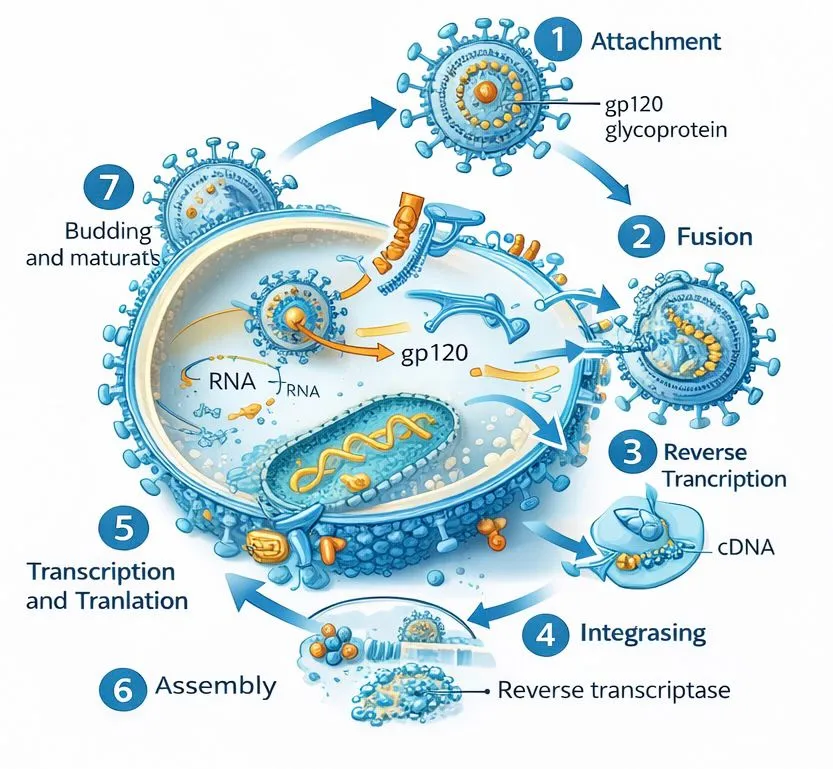
Figure 2. Life cycle of HIV including attachment, fusion, reverse transcription, integration, transcription, assembly, and budding.
2.3 Global Burden of HIV Infection
HIV infection continues to represent a major global health burden. According to the World Health Organization and Joint United Nations Programme on HIV/AIDS, millions of people worldwide are currently living with HIV, with a significant number of new infections reported each year (16). The burden of the disease is particularly high in low- and middle-income countries, where access to diagnosis, treatment, and preventive services may be limited (17).
In addition to its health impact, HIV infection also imposes substantial social and economic challenges. The disease affects individuals during their most productive years of life, leading to loss of workforce productivity and increased healthcare costs (18). Therefore, the development of innovative therapeutic and preventive strategies remains a global priority in HIV research.
3. BROADLY NEUTRALIZING ANTIBODIES AGAINST HIV
Broadly neutralizing antibodies (bNAbs) have emerged as a promising immunological approach for combating Human Immunodeficiency Virus. Unlike conventional antibodies that neutralize only specific viral strains, bNAbs have the unique ability to recognize and neutralize a wide range of genetically diverse HIV variants. These antibodies target conserved regions of the viral envelope glycoproteins, which remain relatively stable despite the high mutation rate of the virus (19). Because of this broad activity, bNAbs are being extensively studied for their potential use in HIV treatment, prevention, and vaccine development.
3.1 Definition and Characteristics of Broadly Neutralizing Antibodies
Broadly neutralizing antibodies are a specialized group of antibodies produced by the immune system that can neutralize multiple strains of HIV by targeting conserved epitopes on the viral envelope protein (20). These antibodies are typically generated in a small proportion of individuals living with HIV after several years of chronic infection.
bNAbs possess several important characteristics, including high binding affinity for viral envelope proteins and the ability to neutralize diverse viral variants. They are capable of preventing viral entry into host cells by blocking interactions between the virus and cellular receptors (21). Due to these properties, bNAbs are considered powerful tools for both therapeutic and preventive interventions against HIV.
3.2 Targets of Broadly Neutralizing Antibodies
Broadly neutralizing antibodies primarily target conserved regions on the HIV envelope glycoprotein complex, which consists of gp120 and gp41 proteins (22). These glycoproteins play a crucial role in viral attachment and fusion with host cells. Several important target sites have been identified, including the CD4 binding site on gp120, the V1/V2 glycan region, the V3 glycan supersite, the membrane-proximal external region (MPER) of gp41, and the gp120–gp41 interface (23).
Because these regions are essential for viral function, they tend to remain relatively conserved across different HIV strains. Targeting these conserved epitopes allows bNAbs to neutralize a wide range of viral variants, making them valuable candidates for therapeutic and vaccine research (24).
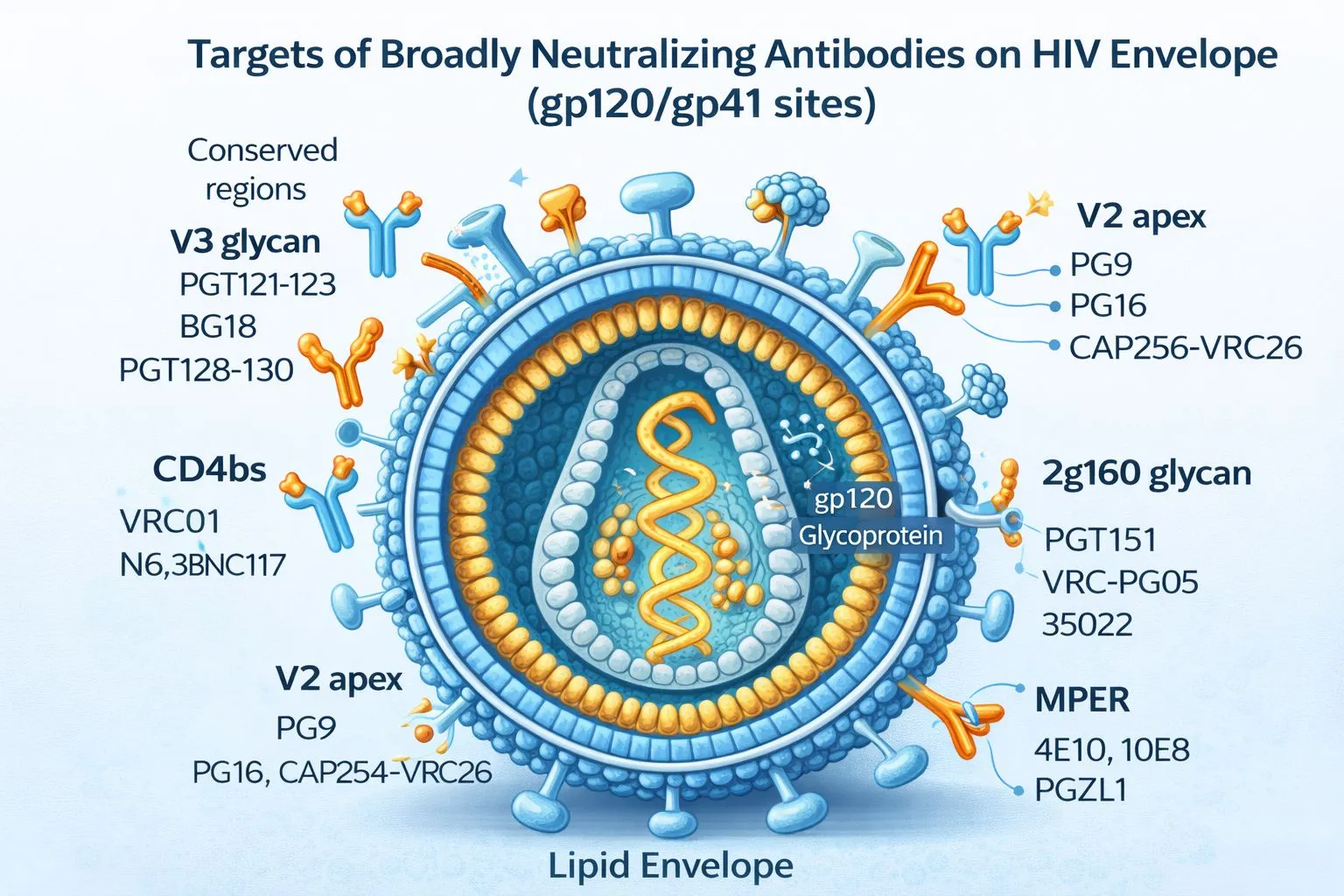
Figure 3. Major target sites of broadly neutralizing antibodies on the HIV envelope glycoproteins (gp120 and gp41), including the CD4 binding site, V1/V2 apex, V3 glycan supersite, and membrane-proximal external region (MPER).
3.3 Mechanism of Viral Neutralization
Broadly neutralizing antibodies inhibit HIV infection through multiple mechanisms. One of the primary mechanisms involves blocking the interaction between the viral envelope protein gp120 and the CD4 receptor on host immune cells, thereby preventing viral attachment and entry (25). Some bNAbs also interfere with the conformational changes required for viral fusion with the host cell membrane.In addition to directly neutralizing the virus, bNAbs can also enhance immune-mediated clearance of infected cells through mechanisms such as antibody-dependent cellular cytotoxicity (ADCC) and antibody-dependent cellular phagocytosis (ADCP) (26). These immune functions contribute to the elimination of virus-infected cells and further limit viral spread within the host.Recent studies have demonstrated that administration of broadly neutralizing antibodies can reduce viral load and delay viral rebound in experimental models and early clinical studies. These findings highlight the potential of bNAbs as a novel strategy for HIV therapy and prevention (27).
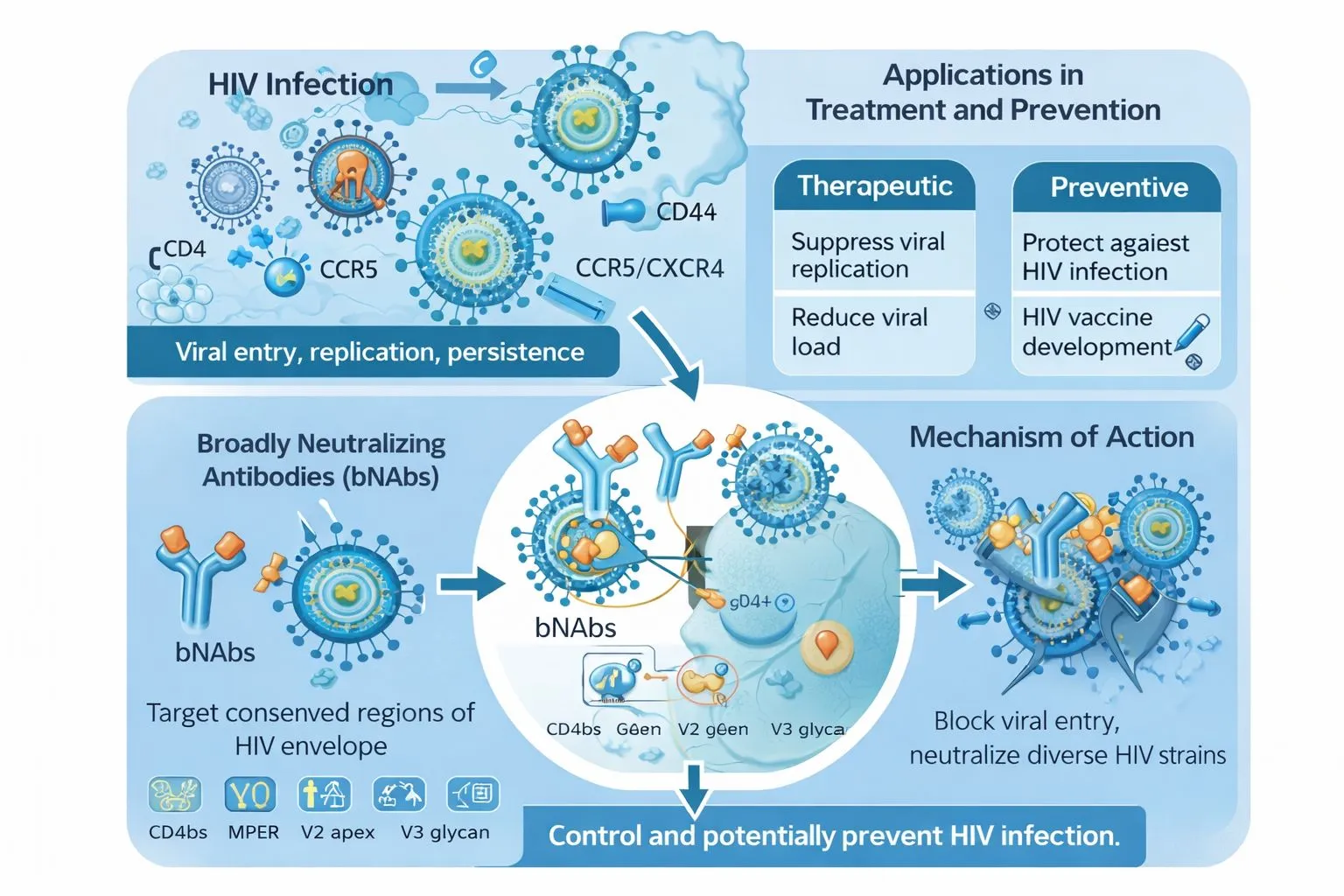
Figure 4. Mechanism and therapeutic applications of broadly neutralizing antibodies (bNAbs) in HIV infection. 4. Discovery and Development of Broadly Neutralizing Antibodies
4.1 Early Antibody Discoveries in HIV Research
Early research on Human Immunodeficiency Virus focused mainly on conventional antibodies that could neutralize only limited viral strains. However, due to the high mutation rate and genetic diversity of HIV, these early antibodies were often ineffective against different viral variants (28). As research progressed, scientists discovered that a small proportion of HIV-infected individuals naturally develop antibodies capable of neutralizing multiple viral strains. These antibodies were later identified as broadly neutralizing antibodies (bNAbs), which target conserved regions of the HIV envelope glycoproteins (29).
4.2 Modern Techniques for Antibody Isolation
Advances in biotechnology and immunology have significantly improved the identification and isolation of broadly neutralizing antibodies. Techniques such as single-cell sorting, high-throughput antibody screening, and next-generation sequencing have enabled researchers to identify potent antibodies from infected individuals (30). These modern approaches allow scientists to analyze B-cell responses and isolate highly specific antibodies that target conserved viral epitopes. The development of monoclonal antibody technology has further facilitated the large-scale production and characterization of these antibodies for research and therapeutic applications (31).
4.3 Notable Broadly Neutralizing Antibodies
Several broadly neutralizing antibodies have been identified and studied extensively in HIV research. Examples include VRC01, 3BNC117, PG9, and 10-1074, which target different conserved regions of the viral envelope glycoproteins (32). These antibodies have demonstrated strong neutralizing activity against multiple HIV strains in laboratory and experimental studies. Some of these antibodies have also progressed to early clinical trials, where they showed the ability to suppress viral replication and delay viral rebound in infected individuals (33).
5. THERAPEUTIC APPLICATIONS OF BROADLY NEUTRALIZING ANTIBODIES
5.1 Passive Immunotherapy
Broadly neutralizing antibodies can be administered directly to patients as a form of passive immunotherapy. In this approach, purified antibodies are delivered into the bloodstream to neutralize circulating virus particles and prevent infection of new cells (34). Passive immunotherapy using bNAbs has shown promising results in reducing viral load and improving immune control in experimental and clinical studies.
5.2 Prevention of HIV Infection
Broadly neutralizing antibodies are also being investigated for preventive strategies. Long-acting antibody formulations may provide temporary protection against HIV infection, particularly in high-risk populations (35). By neutralizing the virus before it establishes infection, these antibodies may serve as an effective prophylactic measure.
5.3 Role in Vaccine Development
One of the most important applications of broadly neutralizing antibodies is their role in guiding HIV vaccine development. Understanding how these antibodies recognize conserved viral epitopes helps researchers design vaccines that can stimulate similar immune responses in healthy individuals (36). This approach may lead to the development of vaccines capable of providing broad protection against diverse HIV strains.
6. CHALLENGES AND LIMITATIONS
Despite the promising potential of broadly neutralizing antibodies, several challenges remain. One major limitation is the high genetic variability of HIV, which allows the virus to evolve and escape immune recognition (37). In addition, the production of monoclonal antibodies at a large scale can be expensive and technically demanding.
Another challenge involves the relatively short half-life of some antibodies in the human body, which may require repeated administration to maintain protective levels (38). Furthermore, some viral variants may develop resistance to specific antibodies, highlighting the need for combination antibody therapies.
7. FUTURE PERSPECTIVES
Ongoing research aims to improve the effectiveness and accessibility of broadly neutralizing antibody therapies. Advances in antibody engineering are enabling the development of antibodies with longer half-lives, enhanced potency, and improved stability (39). Gene-based delivery systems are also being explored to allow the body to produce protective antibodies for extended periods.
In addition, combining broadly neutralizing antibodies with existing antiretroviral therapies may enhance viral suppression and reduce the likelihood of resistance. Continued research in immunology, molecular biology, and vaccine development is expected to further expand the therapeutic potential of these antibodies in the fight against HIV (40).
CONCLUSION
Human Immunodeficiency Virus continues to pose a significant global health challenge despite major advances in antiretroviral therapy. Broadly neutralizing antibodies have emerged as a promising strategy for combating HIV due to their ability to target conserved viral regions and neutralize diverse viral strains. These antibodies offer potential applications in treatment, prevention, and vaccine development.
Although several challenges remain, recent advances in antibody discovery, biotechnology, and immunotherapy have significantly accelerated progress in this field. Continued research and clinical studies are necessary to fully understand the therapeutic potential of broadly neutralizing antibodies and to translate these findings into effective clinical interventions. With further scientific advancements, broadly neutralizing antibodies may play a crucial role in the future control and possible eradication of HIV infection.
REFERENCES

Rahul Swami*, Broadly Neutralizing Antibodies In HIV Infection: Emerging Strategies For Treatment And Prevention – A Review, Int. J. Sci. R. Tech., 2026, 3 (8), 135-142. https://doi.org/10.5281/zenodo.21786243
 10.5281/zenodo.21786243