

We use cookies to ensure our website works properly and to personalise your experience. Cookies policy
Department of Pharmaceutics, C.L. Baid Metha College of Pharmacy, Chennai-600097, Tamil Nadu, India
Efavirenz (EFV), a widely used non-nucleoside reverse transcriptase inhibitor for HIV therapy, exhibits poor aqueous solubility and dissolution-limited oral bioavailability due to its Biopharmaceutics Classification System (BCS) Class II nature. These limitations may result in variable plasma concentrations, reduced therapeutic effectiveness, and dose-related adverse effects. Nanocrystal technology has emerged as a promising strategy to overcome these challenges by reducing particle size, increasing surface area, and enhancing saturation solubility and dissolution rate. This review summarizes the physicochemical and biopharmaceutical properties of efavirenz and discusses various formulation strategies employed in nanocrystal development, including stabilizer selection, solvent–antisolvent systems, and drying techniques. Major nanonization approaches such as wet media milling, high-pressure homogenization, antisolvent precipitation, and Nanoedge technology are comparatively evaluated. In addition, characterization methods, stability considerations, and in vitro and in vivo performance of efavirenz nanocrystals are discussed. Overall, nanocrystal-based delivery offers significant potential for improving oral bioavailability and therapeutic efficacy of efavirenz.
Overview of HIV and Antiretroviral Therapy
Human Immunodeficiency Virus remains a major global health concern, causing progressive immune system deterioration mainly by targeting CD4+ T lymphocytes. If untreated, HIV progresses to Acquired Immunodeficiency Syndrome, leading to opportunistic infections and increased mortality.[1] Antiretroviral therapy (ART) has transformed HIV into a manageable chronic condition by suppressing viral replication and improving immune function. As HIV treatment evolved, multiple drug classes targeting different stages of the viral life cycle were developed.[2]
ART commonly includes nucleoside reverse transcriptase inhibitors (NRTIs), non-nucleoside reverse transcriptase inhibitors (NNRTIs), protease inhibitors, and integrase inhibitors.[3] Among these, Efavirenz is widely used because of its potent antiviral activity and once-daily dosing. Efavirenz non-competitively inhibits reverse transcriptase, thereby blocking viral replication.[4]
Although combination ART effectively reduces viral load and improves CD4 count, challenges such as drug resistance, adverse effects, and pharmacokinetic variability still necessitate improved drug delivery approaches.[5]
Biopharmaceutical Challenges of Efavirenz
Efavirenz (EFV), a first-generation NNRTI, is widely used in first-line ART because of its strong antiviral efficacy and long half-life. However, its clinical performance is limited by poor biopharmaceutical properties. EFV is classified as a Biopharmaceutics Classification System Class II drug with very low aqueous solubility (<10 µg/mL) and high permeability, resulting in dissolution-limited absorption and variable oral bioavailability.[6]
EFV is highly lipophilic and extensively bound to plasma proteins (>99%), which complicates its pharmacokinetic behavior. It is mainly metabolized by CYP2B6 and CYP2A6 enzymes, causing significant interindividual variability in plasma drug levels.[7]
Major clinical challenges of EFV include poor and inconsistent bioavailability, high dose requirement (600 mg daily), CNS-related adverse effects, and the risk of drug resistance due to suboptimal plasma concentrations.[8] These limitations highlight the need for formulation strategies that improve solubility, dissolution, and therapeutic consistency.
Need for Advanced Drug Delivery Systems
Efavirenz, a Biopharmaceutics Classification System (BCS) Class II drug, exhibits low aqueous solubility and high permeability. Its poor solubility results in dissolution-limited absorption, leading to variable oral bioavailability and inconsistent plasma drug concentrations, which may compromise therapeutic efficacy.
The inherent limitations of conventional efavirenz oral dosage forms—including high dose requirements, large tablet size, variable bioavailability, and dose-related adverse effects—necessitate the development of advanced drug delivery systems. These challenges highlight the critical need for formulation strategies capable of enhancing solubility, improving dissolution kinetics, and ensuring reproducible pharmacokinetic profiles.[9]
One of the major challenges in pharmaceutical development is designing innovative formulations that can overcome solubility-related barriers associated with poorly water-soluble drug candidates. In this context, nanotechnology-based drug delivery systems have emerged as a promising approach.
Emergence of Nanocrystal Technology
Nanotechnology-based drug delivery systems have emerged as effective strategies for improving the performance of poorly water-soluble drugs. By reducing particle size and increasing surface area, these systems enhance dissolution, saturation solubility, and oral bioavailability. Among them, nanocrystals and polymeric nanoparticles are widely studied for improving the pharmacokinetic behavior of poorly soluble drugs.[10]
Drug nanocrystals are carrier-free nanosized crystalline particles composed mainly of the active drug itself. Their reduced particle size increases dissolution velocity and drug absorption while minimizing the need for excess excipients.[11] For Efavirenz (EFV), which is crystalline and dissolution-rate limited, nanocrystal technology represents a particularly suitable and promising formulation approach.
Scope and Objectives of the Review:
The present review was undertaken with the following objectives:
Physicochemical and Biopharmaceutical Profile of Efavirenz:
Chemical Structure and Properties
Efavirenz [(S)-6-chloro-4-(cyclopropylethynyl)-1,4-dihydro-4-(trifluoromethyl)-2H-3,1-benzoxazin-2-one] is a benzoxazinone derivative with molecular formula C14H9ClF3NO2 and molecular weight 315.68 g/mol. Its (S)-configuration is essential for NNRTI activity, while the cyclopropylacetylene, trifluoromethyl, and chlorine groups contribute to high lipophilicity (ClogP ≈ 4.6). EFV is a white to pale yellow crystalline powder with a melting point of 136–141°C and pKa of ~10.2, remaining largely unionized in the GI pH range.[12] It exists in three polymorphic forms, with Form I being the most stable and commercially marketed. Nanocrystal processing may alter polymorphic form and stability.[13]
BCS Classification and Solubility Issues
Efavirenz (EFV) is a Biopharmaceutics Classification System Class II drug with low aqueous solubility and high intestinal permeability. Its poor solubility (≈ 3–10 µg/mL) makes dissolution the rate-limiting step in oral absorption. Although EFV readily permeates biological membranes due to its lipophilic nature (log P ≈ 4.5–5.4), poor wettability and particle aggregation further hinder dissolution in gastrointestinal fluids.[14]As a result, EFV exhibits variable and dissolution-dependent bioavailability influenced by factors such as gastric pH and bile salt concentration.[15]Conventional formulations often require high doses to compensate for incomplete dissolution, which may increase adverse effects and reduce patient compliance.To address these limitations, several formulation strategies have been investigated, including solid dispersions, lipid-based systems, and nanocrystal technology. Among these, nanocrystals are especially promising because they enhance surface area, saturation solubility, and dissolution rate according to the Noyes–Whitney equation.[16,17]
Pharmacokinetic Limitations
Efavirenz exhibits favorable pharmacokinetics with a long half-life of 40–55 hours, allowing once-daily dosing. After a 600 mg oral dose, peak plasma concentration is reached within 3–5 hours, but marked interindividual variability occurs mainly due to genetic polymorphisms in CYP2B6.[18] Individuals with the CYP2B6 516G>T TT genotype may show 3–4 times higher plasma levels, increasing the risk of CNS-related adverse effects.
Efavirenz also induces CYP2B6 and CYP3A4 enzymes during the initial weeks of therapy, leading to changes in drug exposure and potential drug interactions over time. A significant food effect is observed, as high-fat meals increase Cmax and AUC, which may elevate toxicity risk.[19] Therefore, Efavirenz is usually administered under fasting conditions, preferably at bedtime. Lower doses have also shown comparable efficacy with improved safety in clinical studies such as ENCORE1.[20,21]
Fundamentals of Nanocrystal Technology:
Definition and Characteristics of Drug Nanocrystals
Drug nanocrystals are colloidal dispersions of nanosized pure drug particles (100–1000 nm) stabilized using small amounts of surfactants or polymers, with drug content usually above 95%.[22] Unlike carrier-based systems such as liposomes or polymeric nanoparticles, nanocrystals contain no carrier matrix, enabling high drug loading and reduced excipient use.[23] They can be formulated as nanosuspensions or converted into solid dosage forms such as tablets and capsules.[24]
Mechanism of Solubility and Dissolution Enhancement
The improvement in solubility and dissolution of Efavirenz nanocrystals is mainly explained by two fundamental principles: First, according to the Noyes–Whitney equation, the dissolution rate increases with surface area. When drug particles are reduced from micrometre size to nanometre size, their surface area increases drastically (up to ~1000-fold). This allows more drug to come into contact with the dissolution medium, leading to a much faster dissolution rate.[25]
Second, the Ostwald–Freundlich equation explains that smaller particles also show higher saturation solubility. At very small sizes (<1 µm), surface energy becomes significant, increasing the drug’s apparent solubility. As a result, efavirenz nanocrystals (≈200–400 nm) show ~5–10-fold higher solubility compared to the bulk drug.[26]
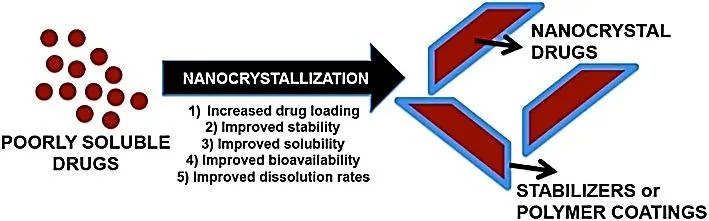
Figure 1: Schematic Representation of Nanocrystallization for Enhancement of Poorly Soluble Drugs [27]
Advantages of Nanocrystals in Drug Delivery:
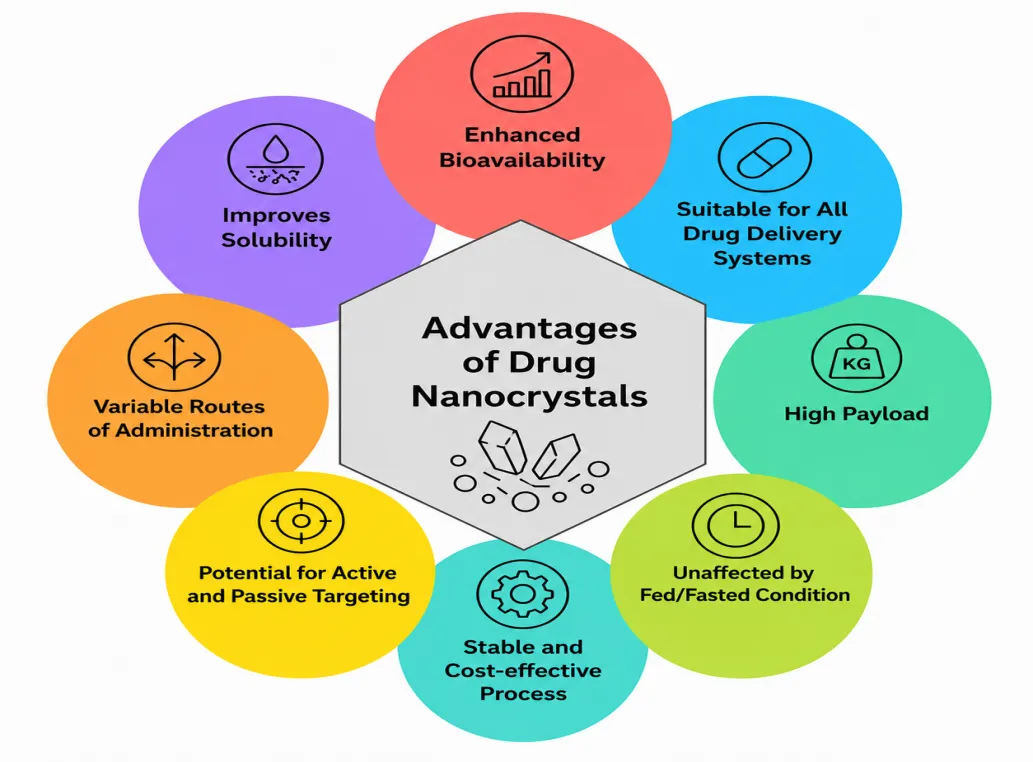
Figure 2: Advantages of Nanocrystals[28]
Limitations and Challenges:
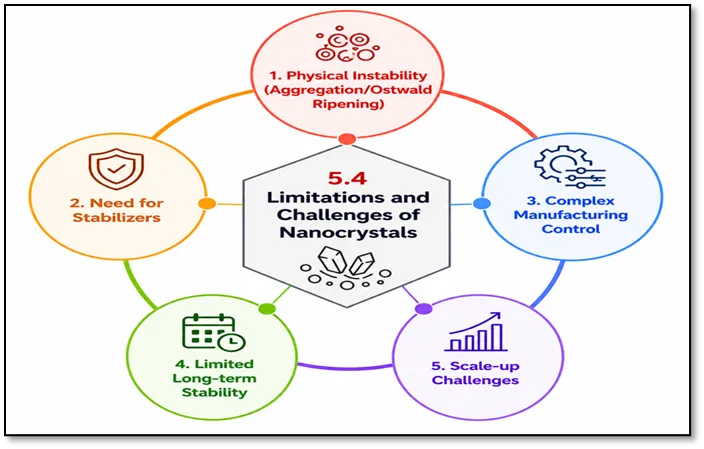
Figure 3: Limitation and Challenges of Nanocrystals[29]
Formulation Strategies for Efavirenz Nanocrystals:
Selection of Stabilizers and Surfactants
Stabilizers and surfactants are essential in the formulation of Efavirenz nanocrystals because they prevent particle aggregation and maintain physical stability. Due to the hydrophobic nature of Efavirenz, particle size reduction increases surface free energy, promoting agglomeration. Common stabilizers include PVP, HPMC, poloxamers, Tween 80, SLS, and Soluplus®.[30] Poloxamers improve wettability and reduce interfacial tension, while HPMC provides steric stabilization by forming a protective hydrophilic layer around nanocrystals. Surfactants such as Tween 80 enhance dispersion stability and inhibit crystal growth during storage. Stabilizer concentration greatly affects particle size, zeta potential, solubility, and dissolution behavior. Insufficient stabilizer levels may cause aggregation, whereas excessive amounts can increase viscosity. Optimized stabilizer systems significantly improve the dissolution rate and oral bioavailability of Efavirenz nanocrystals compared with the pure drug suspension.
Role of Solvents and Antisolvents
Generally, the bottom-up approach of solvent–antisolvent precipitation has been employed to prepare efavirenz nanocrystals. Efavirenz is dissolved in an organic solvent, and then quickly mixed with an antisolvent, creating supersaturation and a rapid rate of nucleation of nanocrystals. Common solvents used are ethanol, methanol, acetone and DMSO, and water is a common antisolvent because it is safe and compatible. The ratio of solvent to antisolvent, mixing speed, temperature, and rate of addition all have a strong effect on particle size and crystallinity. Since too much crystal growth, polymorphic changes and Ostwald ripening will result, controlled precipitation is necessary. The removal of trace amounts of solvents is also crucial for formulation stability and safety.[31,32]
Optimization of Drug–Excipient Interactions
Drug–excipient interactions strongly influence the stability, dissolution, and therapeutic performance of Efavirenz nanocrystals. Appropriate excipient selection improves drug compatibility and minimizes physicochemical instability during formulation and storage. Polymers such as PVP and HPMC stabilize nanocrystals through hydrogen bonding, hydrophobic interactions, and van der Waals forces, forming a protective hydrophilic layer that prevents aggregation and crystal growth. Optimizing excipient concentration is important, as insufficient amounts may cause instability, while excessive levels can reduce dissolution and drug loading. Proper excipient design enhances saturation solubility, dissolution rate, and storage stability. Techniques such as FTIR, DSC, PXRD, and zeta potential analysis are commonly used to evaluate compatibility and crystallinity changes during processing.[33,34]
Process Parameters Affecting Nanocrystal Formation
Process parameters strongly influence the particle size, morphology, crystallinity, and dissolution of Efavirenz nanocrystals. In top-down methods, factors such as milling speed, homogenization pressure, cycle number, and temperature affect size reduction, while excessive processing may cause degradation. In bottom-up methods, supersaturation, stirring speed, and solvent ratio control crystal growth. FTIR, DSC, PXRD, and zeta potential analysis help evaluate compatibility and stability.[35]
Solidification and Drying Techniques
Solidification of Efavirenz nanocrystal suspensions improves long-term stability, storage, and patient compliance. Spray drying is widely used because it is rapid, scalable, and cost-effective, while freeze drying is preferred for thermolabile formulations. Excipients such as mannitol, trehalose, and sucrose help prevent aggregation during drying. Drying methods influence crystallinity, moisture content, dissolution, and redispersibility. The redispersibility index (RDI) is an important parameter used to evaluate the ability of dried nanocrystals to regain their original nanosize.[36]
Nanonization Techniques for Efavirenz Nanocrystals:
Nanonization techniques are employed to reduce efavirenz particle size into the nanometer range in order to improve dissolution rate, saturation solubility, and oral bioavailability. Since efavirenz is a poorly water-soluble BCS Class II drug, reduction of particle size significantly enhances surface area and dissolution velocity according to the Noyes–Whitney equation. Nanonization methods are broadly classified into top-down, bottom-up, and combination approaches. Among these, top-down techniques are the most extensively investigated for efavirenz nanocrystal production because of their scalability, reproducibility, and industrial applicability.
1. Top-Down Approaches
Top-down approaches involve mechanical size reduction of coarse drug particles into nanocrystals using external forces such as shear, impact, cavitation, or pressure. These techniques generally avoid the use of organic solvents and are suitable for large-scale pharmaceutical manufacturing. Wet media milling and high-pressure homogenization are the most commonly used top-down methods for efavirenz nanocrystal preparation [37]
Wet Media Milling
Wet media milling is a widely used top-down method for preparing Efavirenz nanocrystals. In this technique, coarse drug particles are milled in an aqueous stabilizer solution using zirconium oxide or glass beads. Particle size reduction occurs through collision, shear stress, and attrition between beads and drug particles. Stabilizers are added to prevent aggregation and maintain colloidal stability. Factors such as bead size, milling speed, milling time, drug concentration, and stabilizer type significantly influence the process. Smaller beads generally produce finer particles, though excessive milling may cause contamination or thermal degradation. Wet media milling is scalable, solvent-efficient, and improves the dissolution rate, wettability, and saturation solubility of poorly soluble Efavirenz..[38]
High-Pressure Homogenization
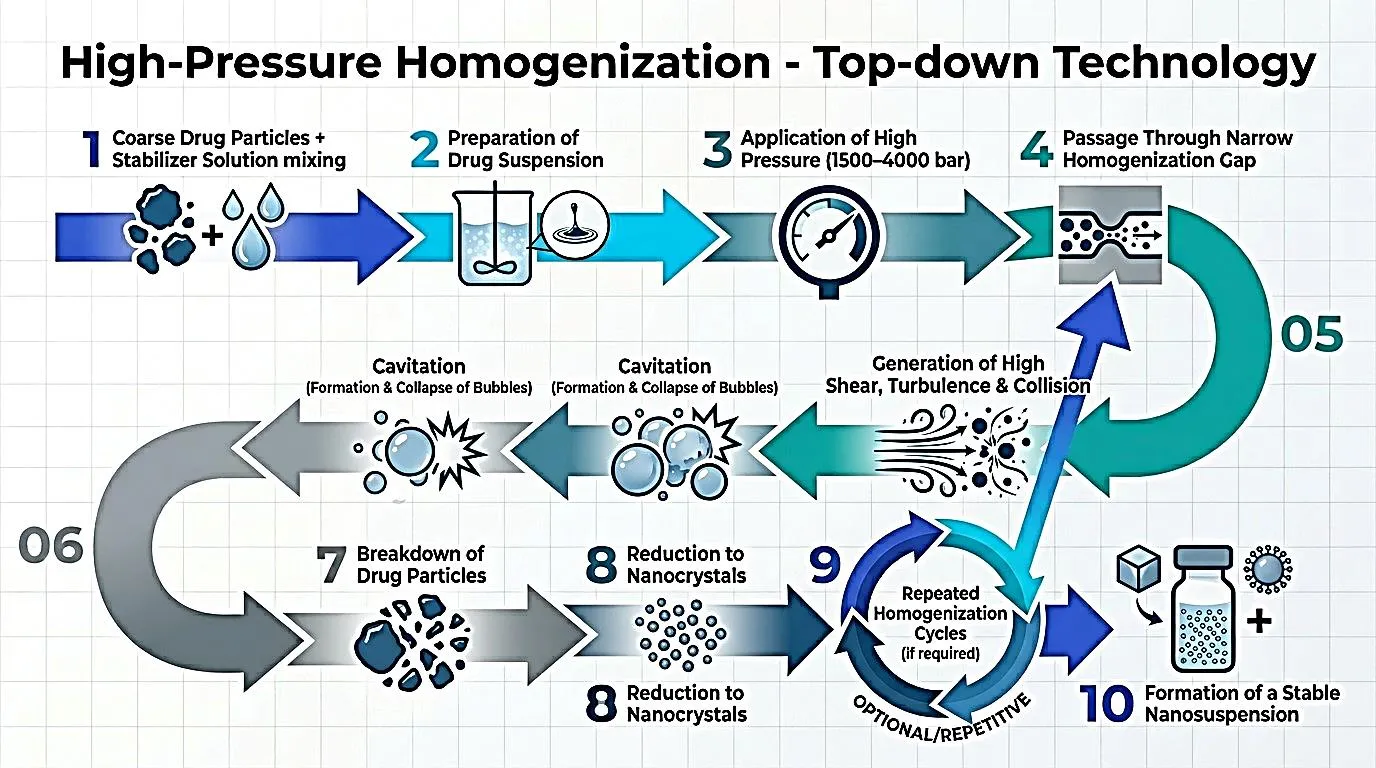
Figure 4: Schematic representation nanocrystals formation by High-pressure Homogenization
Nanocrystals, relying on the application of intense mechanical forces such as shear, cavitation, and particle collision to achieve nanoscale size reduction. Three major technologies in this category include Microfluidizer technology (Nanojet), piston-gap homogenization in aqueous media (Dissocubes®), and homogenization in nonaqueous media (Nanopure®)
Microfluidizer Technology (Nanojet Technology)
Microfluidization, also called Nanojet or opposite-stream technology, is a high-pressure homogenization method used to produce drug nanocrystals. In this technique, a drug suspension is forced through microchannels at very high pressure, where opposing streams collide in an interaction chamber. The resulting shear forces, turbulence, and cavitation reduce particles to the nanometer range. Stabilizers such as surfactants or phospholipids are added to prevent aggregation. Multiple processing cycles are usually required to achieve uniform particle size. Common equipment used includes Microfluidizers M110L and M110S.
Piston-Gap Homogenization in Aqueous Media (Dissocubes® Technology)
Dissocubes® technology is a high-pressure homogenization technique used to produce drug nanocrystals. A drug suspension containing stabilizers is forced through a narrow gap under high pressure, causing a sudden pressure drop and cavitation. The collapse of cavitation bubbles generates shock waves that break drug microparticles into nanocrystals. Process variables such as homogenization pressure, cycle number, temperature, and power density influence the final particle size. APV Micron Lab 40 is a commonly used homogenizer for this method.
Homogenization in Nonaqueous Media (Nanopure® Technology)
Nanopure® technology is a high-pressure homogenization method performed in nonaqueous or water-restricted media at very low temperatures. This “deep-freeze homogenization” reduces thermal degradation and is suitable for thermolabile drugs. Although cavitation is lower in nonaqueous systems, controlled processing still achieves effective particle size reduction comparable to Dissocubes® technology.[39,40]
2. Bottom-Up Approaches:
Antisolvent Precipitation
Principal of this technology is based on precipitation by dissolving the drug in a solvent and adding the solvent to a non-solvent that cause precipitation of the fine drug particle.
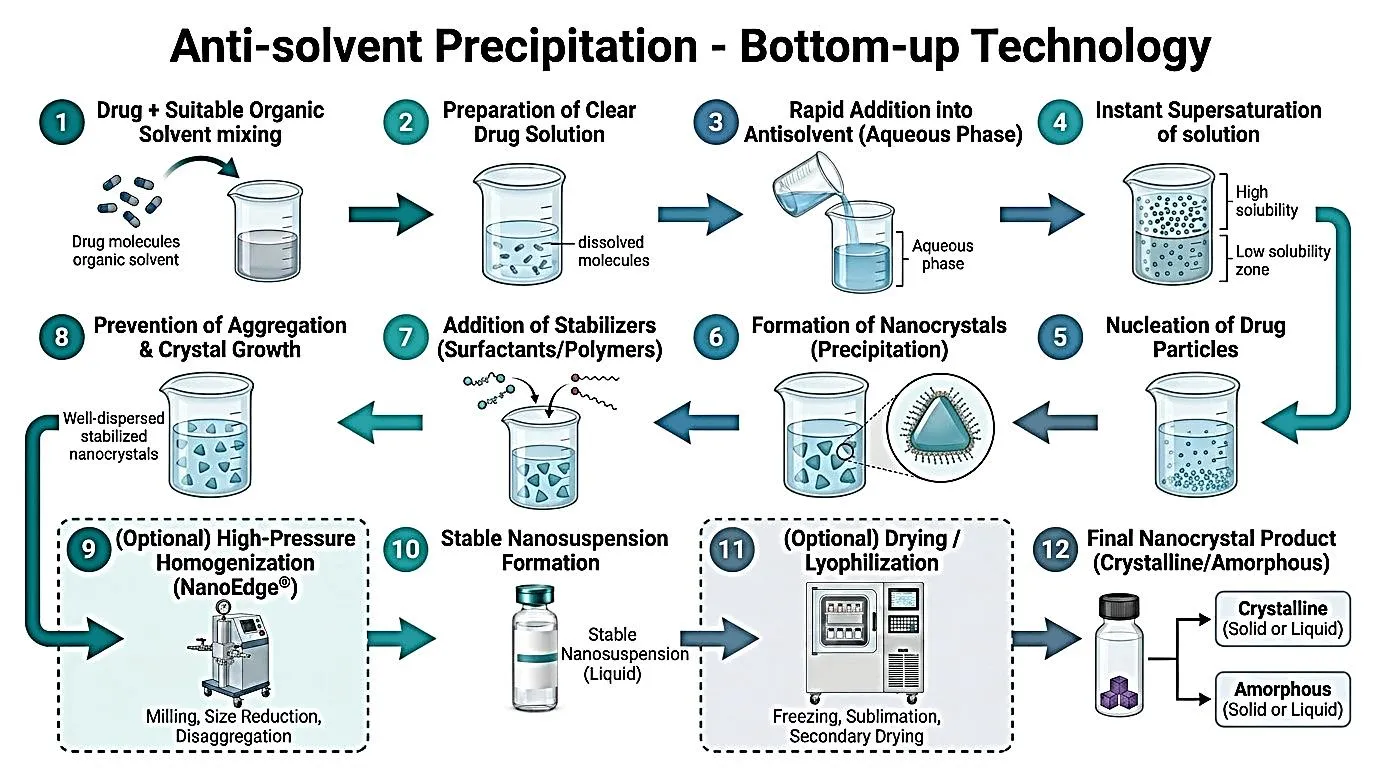
Figure 5: Schematic representation nanocrystals formation by Anti-solvent precipitation[41]
Solvent Evaporation Techniques
Solvent evaporation is a bottom-up technique used for preparing Efavirenz nanocrystals. Efavirenz is dissolved in an organic solvent, which is later evaporated to form nanocrystalline dispersions. Particle size depends on solvent type, drug concentration, and evaporation rate. The method supports controlled crystallization and heat-sensitive stabilizers, but has lower scalability. Residual solvents must be removed according to ICH Q3C guidelines.[42]
3. Combination (Top-Down + Bottom-Up) Techniques:
Nanoedge Technology
NANOEDGE technology, developed by Baxter International, is a combination approach used for the preparation of drug nanosuspensions. It combines antisolvent microprecipitation with high-pressure homogenization. This technique improves particle size reduction efficiency due to the formation of friable and defect-rich particles during precipitation..
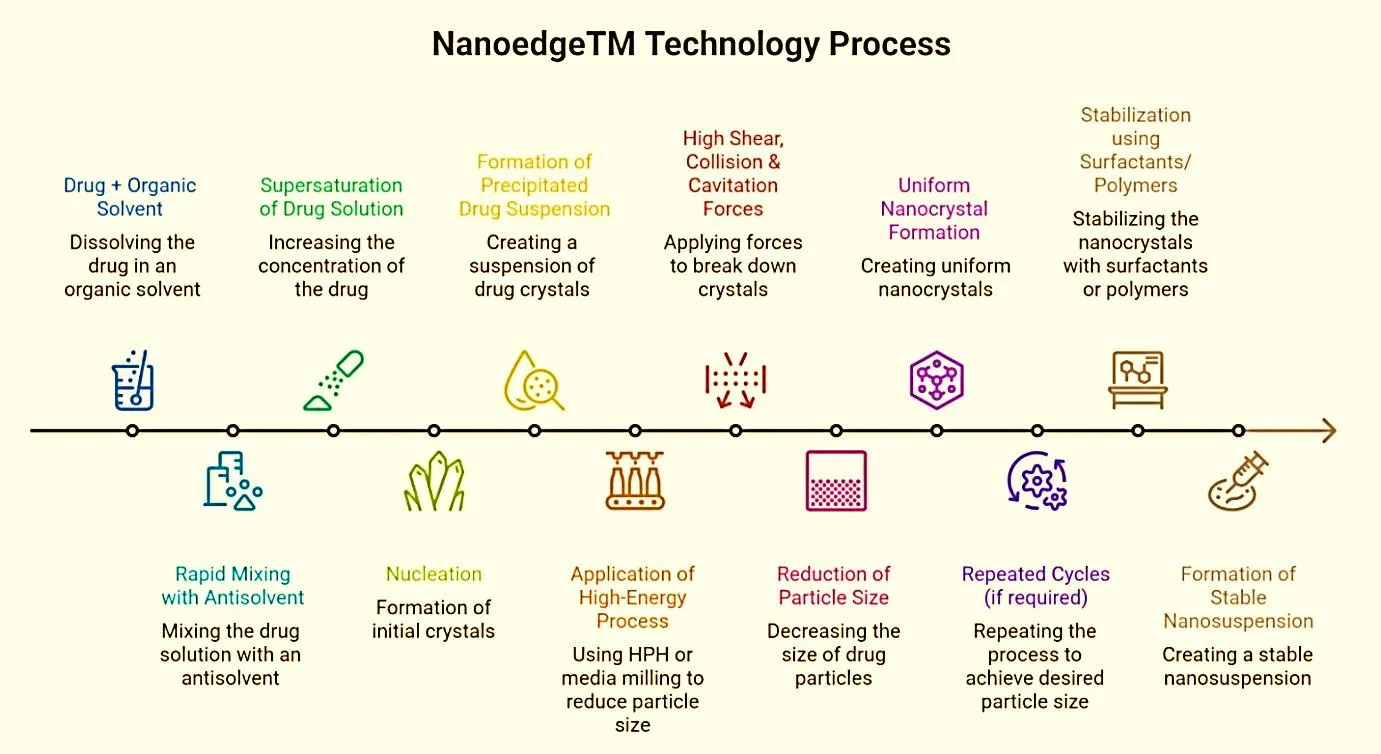
Figure 6: Schematic representation nanocrystals formation by Nanoedge technology [43]
Emerging and Advanced Techniques:
Spray Flash Evaporation
Spray flash evaporation (SFE) is a continuous nanonization method used for Efavirenz preparation. A concentrated drug solution is sprayed into a vacuum chamber, causing rapid solvent evaporation and nanoparticle formation. Ethanol is commonly used with stabilizers such as HPMC and PVP to maintain stability. SFE generally produces particles of 200–500 nm and is suitable for thermolabile drugs. Compared with wet milling and high-pressure homogenization, it applies lower mechanical stress and reduces the risk of crystal damage or polymorphic changes. [44]
Microfluidization
Microfluidization is a top-down method used to prepare Efavirenz nanocrystals by forcing a drug suspension through microchannels at high pressure. Shear forces, collision, and cavitation reduce particle size to the nanometer range. Stabilizers prevent aggregation and improve stability. The technique provides narrow particle size distribution, improved dissolution, and better bioavailability, but requires high energy and expensive equipment. [45]
Supercritical Fluid Techniques
Supercritical fluid (SCF) techniques such as RESS and SEDS are emerging methods for Efavirenz nanosizing. In these methods, supercritical COâ‚‚ promotes rapid nanoparticle formation through pressure reduction or antisolvent precipitation. SCF techniques offer low residual solvent content, controlled particle size, and possible polymorphic modification. However, poor Efavirenz solubility in supercritical COâ‚‚ and high processing costs limit large-scale industrial application.[46]
Characterization of Efavirenz Nanocrystals [47,48,49]:
Particle Size and Polydispersity Index (PDI)
Particle size directly affects the dissolution rate and bioavailability of Efavirenz nanocrystals. Dynamic Light Scattering (DLS) is commonly used to measure particle size and polydispersity index (PDI). Smaller particles provide larger surface area and faster dissolution, while PDI values below 0.3 indicate uniform distribution. Stabilized Efavirenz nanocrystals generally exhibit nanosized particles with narrow size distribution.
Zeta Potential
Zeta potential measures the surface charge of nanocrystals and predicts nanosuspension stability. High positive or negative values help prevent particle aggregation, while values above ±20 mV generally indicate good stability. Stabilizers such as HPMC and PVP provide steric stabilization. Stable Efavirenz nanocrystals show suitable zeta potential values that minimize sedimentation and particle growth during storage.
Morphological Analysis (SEM/TEM)
Scanning Electron Microscopy (SEM) and Transmission Electron Microscopy (TEM) are used to evaluate the shape and morphology of Efavirenz nanocrystals. SEM provides information on surface characteristics and aggregation patterns, while TEM reveals detailed nanoscale structure. Studies show that Efavirenz nanocrystals generally appear as discrete and uniformly distributed particles.
Crystallinity (XRD)
X-ray Diffraction (XRD) analysis is used to evaluate the crystalline nature of Efavirenz nanocrystals. Sharp diffraction peaks confirm crystallinity, while reduced peak intensity may result from particle size reduction. XRD helps determine whether crystallinity is retained after nanonization, and studies show that Efavirenz nanocrystals generally maintain their crystalline form after processing.
Thermal Behavior (DSC)
Differential Scanning Calorimetry (DSC) is used to evaluate thermal behavior, crystallinity, and possible drug–excipient interactions. The melting endotherm confirms the crystalline nature of Efavirenz, while slight shifts in melting peaks may indicate nanosizing effects or stabilizer interactions. DSC also helps assess the physical stability of nanocrystal formulations.
Saturation Solubility Studies
Saturation solubility studies evaluate the improvement in drug solubility after nanocrystal formation. Due to reduced particle size and increased surface area, Efavirenz nanocrystals exhibit markedly higher saturation solubility than the pure drug when tested under equilibrium conditions in distilled water or dissolution media.
In Vitro Dissolution Studies
In vitro dissolution studies assess the rate and extent of drug release from nanocrystals using USP dissolution apparatus. Due to improved wettability and increased surface area, Efavirenz nanocrystals show significantly faster dissolution and higher drug release within minutes compared with the pure drug, potentially enhancing oral bioavailability.
In Vitro and In Vivo Performance of Efavirenz Nanocrystals [50]:
Dissolution Enhancement Studies
Efavirenz is a poorly water-soluble BCS Class II drug that exhibits slow dissolution in aqueous media. Reduction of particle size into the nanometer range significantly increases surface area and improves wettability, resulting in enhanced dissolution rate. In vitro dissolution studies of Efavirenz nanocrystals demonstrated rapid drug release compared to pure drug and conventional formulations. Stabilizers such as PVP, HPMC, and Poloxamers further improve dispersion and dissolution behavior. Faster dissolution enhances the amount of drug available for absorption in the gastrointestinal tract.
Bioavailability Improvement
Nanocrystal technology markedly improves the oral bioavailability of Efavirenz by enhancing saturation solubility and dissolution velocity. Due to reduced particle size, nanocrystals provide greater adhesion to the intestinal surface and improved drug diffusion across biological membranes. Several studies reported increased plasma drug concentration and enhanced absorption following oral administration of Efavirenz nanocrystal formulations compared to coarse drug suspensions. Improved bioavailability may also reduce dose variability and enhance therapeutic effectiveness.
Pharmacokinetic Evaluation
Pharmacokinetic studies are performed to evaluate parameters such as maximum plasma concentration (Cmax), time to reach peak concentration (Tmax), and area under the curve (AUC). Efavirenz nanocrystals generally show higher Cmax and AUC values than conventional formulations, indicating enhanced systemic drug exposure. Reduced Tmax suggests faster absorption due to rapid dissolution. These improvements confirm that nanocrystal formulations can enhance the pharmacokinetic performance of poorly soluble antiretroviral drugs.
|
Parameter |
Nanocrystals |
Polymeric Nanoparticles |
Solid Lipid Nanoparticles (SLN) |
Liposomes |
|
Composition |
Pure drug with stabilizer |
Polymer-based system |
Solid lipid matrix |
Phospholipid vesicles |
|
Drug Loading |
Very high |
Moderate |
Moderate |
Low to moderate |
|
Particle Size |
Nanosized crystalline particles |
Nanosized polymeric particles |
Lipid-based nanoparticles |
Vesicular nanoparticles |
|
Solubility Enhancement |
Excellent |
Good |
Good |
Moderate |
|
Stability |
High physical stability |
Polymer degradation possible |
Lipid polymorphic changes possible |
Less stable during storage |
|
Manufacturing Process |
Simple and scalable |
Complex |
Moderate complexity |
Complex preparation |
|
Cost |
Economical |
Expensive polymers required |
Moderate cost |
High cost |
|
Residual Toxicity |
Minimal |
Possible polymer toxicity |
Generally safe |
Possible leakage issues |
|
Dissolution Rate |
Very rapid |
Controlled release |
Sustained release |
Variable release |
|
Suitability for Efavirenz |
Highly suitable |
Suitable |
Suitable |
Limited suitability |
Table 1 : Comparative Perspective with Other Nanocarriers [51]
Stability Considerations [52] :
Physical Stability (Aggregation, Ostwald Ripening)
Physical stability is a major concern in Efavirenz nanosuspensions. Due to their high surface energy, nanocrystals tend to aggregate, leading to increased particle size and reduced dissolution rate. Another important instability phenomenon is Ostwald ripening, where smaller particles dissolve and redeposit onto larger particles because of differences in saturation solubility. This results in gradual crystal growth and sedimentation during storage.It is evaluated by monitoring particle size, polydispersity index (PDI), and zeta potential under accelerated stability conditions such as 40°C/75% RH. Stabilizers like HPMC, PVP, SDS, and Poloxamers are widely used to prevent aggregation through steric and electrostatic stabilization.
Chemical Stability
Efavirenz is relatively stable under normal storage conditions, but nanocrystal formulations possess larger surface area, increasing exposure to oxidation and hydrolytic degradation. Factors such as moisture, light, oxygen, and extreme pH can affect chemical stability.Forced degradation and stress studies based on ICH guidelines are performed to evaluate degradation behavior. Protective measures such as nitrogen flushing, antioxidant incorporation, and amber-colored packaging help improve formulation stability and reduce oxidative degradation.
Strategies for Stability Enhancement
Several approaches are used to improve long-term stability of Efavirenz nanocrystals:
These strategies help maintain particle size, prevent aggregation, and preserve dissolution performance during storage.
Applications and Future Perspectives [53,54]:
1. Clinical Relevance of Efavirenz Nanocrystals
Efavirenz nanocrystals improve dissolution and oral bioavailability, which may help reduce dose requirements and CNS-related side effects. Enhanced absorption can also decrease food-dependent variability and improve patient adherence, particularly in resource-limited settings where consistent HIV therapy is essential.
2. Potential for Combination Therapy
Efavirenz nanocrystals can be incorporated into fixed-dose combinations with drugs such as Lamivudine and Tenofovir disoproxil fumarate to simplify treatment and improve compliance. They also show potential in long-acting injectable systems capable of sustained drug release and reduced dosing frequency.
3. Emerging Trends in Nanocrystal Technology
Current research focuses on scalable manufacturing, targeted delivery, and patient-friendly dosage forms. Surface-modified nanocrystals, pediatric formulations, and 3D-printed personalized systems are emerging approaches that may further enhance the effectiveness and convenience of HIV therapy.
CONCLUSION
Efavirenz is an important antiretroviral drug widely used in HIV treatment, particularly in low- and middle-income countries. However, its poor aqueous solubility and dissolution-limited absorption reduce oral bioavailability and therapeutic efficacy. Nanocrystal technology has emerged as a promising strategy to overcome these limitations by reducing particle size, increasing surface area, and enhancing dissolution and saturation solubility.
Techniques such as wet media milling, high-pressure homogenization, and antisolvent precipitation have successfully produced stable Efavirenz nanocrystals with improved dissolution and bioavailability. Stabilizers like HPMC, PVP, and Poloxamer 188 help maintain stability and prevent aggregation.
Characterization studies confirmed the quality and crystalline nature of the nanocrystals. Compared with other nanocarrier systems, nanocrystals offer advantages including high drug loading, simple formulation, scalability, and cost-effective production. Overall, Efavirenz nanocrystals represent an effective and practical approach for improving oral delivery, therapeutic performance, and patient compliance in HIV therapy.
REFERENCES



G. Krithika Shri, Selvi Arunkumar*, Nivethitha Gogarneeswaran, Nanocrystal-Based Delivery Of Efavirenz: Formulation Strategies, Nanonization Techniques, And Comparative Insights, Int. J. Sci. R. Tech., 2026, 3 (8), 912-925. https://doi.org/10.5281/zenodo.22076949
 10.5281/zenodo.22076949