

We use cookies to ensure our website works properly and to personalise your experience. Cookies policy
Department of Geography, Bhattadev University, Bajali, Assam, India
Climate change is now a prominent driver of biodiversity loss, especially in ecologically fragile areas. One such fragile ecosystem with rich floral and faunal diversity is the Manas National Park, a World Heritage site declared by the UNESCO, situated in the northeastern part of India. This study is to look at the effect of changing climatic conditions on the biodiversity of the park. The research applies a descriptive and analytical approach to evaluate ecological transformations over time using secondary data sources such as government reports, academic articles and conservation databases Rising temperatures, erratic rainfall and increased frequency of floods have significantly changed habitat structures, particularly grassland ecosystems important for herbivores, according to the results. These environmental changes have resulted in species migration, disruption of ecological balance and increased vulnerability of endangered fauna. In addition, the degradation of habitats due to climate change has intensified human-wildlife conflicts and has promoted the spread of alien species. The study finds that climate change is a major driver of accelerating biodiversity loss in the park. It underscores the urgent need for climate-resilient conservation approaches, such as habitat restoration, systematic scientific monitoring and community-based resource management. E. Strengthening the policy framework and transboundary cooperation is also vital to ensure long-term ecological sustainability in the region.
Climate change is now a major global environmental problem that affects natural ecosystems and biodiversity in profound and multidimensional ways. It refers to long-term changes in temperature regimes, precipitation patterns, and the frequency and intensity of extreme climatic events, largely driven by anthropogenic activities such as deforestation, land-use change, and greenhouse gas emissions. Its impacts are particularly severe in biodiversity hotspots, where ecological systems are highly sensitive to environmental variability and have limited adaptive capacity.
While protected areas have traditionally been viewed as strongholds of biodiversity conservation, they are now increasingly exposed to climate-related stressors that jeopardise ecological integrity. In this context, Manas National Park is an important case to study the complex interaction of climate change and biodiversity loss. A UNESCO World Heritage Site, the park is recognised for its outstanding biodiversity and high level of endemism, and is situated in the foothills of the Eastern Himalayas within a transboundary conservation landscape shared with Bhutan. It is home to a wide variety of flora and fauna including globally threatened species like Bengal tiger, Indian rhinoceros, Pygmy hog and Golden langur.
The park has a very heterogenous landscape comprising of alluvial grasslands, tropical semi-evergreen forests, moist deciduous forests and dynamic riverine ecosystems influenced by the hydrological regime of the Manas River. The ecological importance of the park is strongly linked with all these. However, more recent observations suggest that the region is undergoing major climatic changes, such as increasing mean temperatures, increased variability of rainfall and an increased frequency of extreme flood events. These are systemic changes over the long term, not isolated events, and have implications for ecosystem structure and functioning on a broad scale.
Climate change is a threat multiplier, exacerbating existing anthropogenic pressures such as habitat fragmentation, encroachment and the spread of invasive species. Ecological stability was affected by changes in habitat conditions which caused alterations in species distribution, phenology and food webs. Species with a narrow ecological niche and low dispersal ability are particularly vulnerable, with a higher risk of population decline and local extinction. In addition, habitat degradation and fragmentation have increased human–wildlife interactions, often leading to conflict situations, complicating conservation efforts further.
Even though there are many conservation efforts going on, such as restoring habitats, fighting poaching, and managing the park with the help of the community, the park's resilience is still under a lot of stress because climate change is happening faster than ever. There is an immediate necessity for integrative research that evaluates the magnitude of biodiversity loss and elucidates the mechanisms connecting climatic variability to ecological transformation.
In light of this context, the current study seeks to rigorously analyze the effects of climate change on biodiversity within Manas National Park. By combining secondary data and existing research, the study aims to look at how habitats change over time, how vulnerable species are, and what causes ecological disruption. The results are anticipated to aid in the development of adaptive, climate-resilient conservation strategies to guarantee the enduring sustainability of this ecologically significant landscape.
LITERATURE REVIEW
Climate change has become one of the most important environmental challenges of the twenty-first century, presenting serious threats to biodiversity, ecosystem stability and sustainable development. The scientific community has become more and more aware that changes in temperature, in patterns and in frequency of extreme climatic events are modifying ecological processes at a global, regional and local level. The Intergovernmental Panel on Climate Change (IPCC) (2023) summarises that climate change has already brought about widespread impacts on terrestrial, freshwater and marine ecosystems. Habitat degradation, species migration and biodiversity loss have been accelerated by rising temperatures, changing rainfall regimes and increased frequency of floods, droughts and heatwaves. The report points out that regions with high biodiversity are particularly susceptible, with many species having limited ability to adapt to rapid changes in the environment.
The link between climate change and biodiversity has been widely debated in ecological literature. Thomas E. Lovejoy and Lee Hannah (2019) have called climate change a “threat multiplier” which exacerbates existing environmental pressures such as habitat fragmentation, land-use change, pollution, and biological invasions. Their research indicates climate-related environmental changes erode the resilience of ecosystems and accelerate the extinction of species, especially in protected areas where the ecological balance depends on stable climatic conditions.
Similarly, Camille Parmesan (2006) offered strong evidence that climate change has already altered species distributions, migration patterns, reproductive cycles and phenological events in a variety of ecosystems. The research found that many plant and animal species have shifted their geographical ranges towards higher elevations and latitudes as temperatures have risen. Such changes disrupt ecological interactions between predators and prey, between plants and pollinators, and other interdependent species, resulting in ecological imbalance.
Terry L. Root et al. (2003) also documented that global warming has influenced hundreds of species globally, changing breeding behaviour, flowering periods, migration timing and population dynamics. These findings were among the first scientific evidences of observed biological changes being directly linked with climate change. Similarly, Chris D. Thomas et al. (2004) predicted that climate change could lead to a substantial proportion of global species being at risk of extinction if current warming trends persist.
Protected areas have historically been refuges for biodiversity conservation, but recent studies have shown that they are increasingly vulnerable to climatic perturbations. James Watson et al. (2014) have argued that the effectiveness of protected areas is being diminished by climate change, as species distributions shift beyond current conservation boundaries. Thus, conservation planning must move beyond static protected-area management to adaptive, landscape-level approaches.
In the Indian context, climate variability, rapid land use changes and anthropogenic pressures increasingly challenge biodiversity conservation. The Himalayan region and the Northeastern part of India are known to be the most sensitive regions to climatic changes due to their ecological complexity and rich biological diversity. The Eastern Himalayan biodiversity hotspot harbours many endemic and threatened species, but is increasingly exposed to environmental perturbations associated with climate change.
Several studies have indicated that Northeast India has witnessed unprecedented rise in average temperature, change in rainfall variability and more frequent occurrence of extreme weather events in the last few decades. Such climate changes have had profound effects on forest ecosystems, wetlands, river systems and agricultural landscapes. Researchers have documented shifts in vegetation make-up, habitat quality, river hydrology and wildlife distribution, indicating increasing ecological vulnerability across the region.
Conservation challenges for protected areas in Assam like Manas National Park, Kaziranga National Park, Orang National Park, and Dibru-Saikhowa National Park are increasing due to floods, habitat fragmentation, invasive species and human–wildlife conflicts. Of these protected areas, Manas National Park is unique in that it lies in the Indo-Bhutan transboundary landscape and has a very rich diversity of habitats.
Manas National Park has attracted a lot of scientific attention due to its global conservation importance. The park is a UNESCO World Heritage Site, a Project Tiger Reserve, an Elephant Reserve and a Biosphere Reserve. It supports tropical semi-evergreen forests, moist deciduous forests, alluvial grasslands, wetlands and riverine ecosystems. These habitats are home to many endangered species like Bengal Tiger, Indian Rhinoceros, Asian Elephant, Pygmy Hog, Golden Langur, Wild Water Buffalo, Bengal Florican and a number of endemic plant species.
Previous ecological studies have revealed that the alluvial grasslands of Manas are one of the most climate sensitive ecosystems in the park. Historically, these grasslands have been maintained by seasonal flooding of the Manas River, but recent changes in rainfall intensity and frequency of flooding have altered sediment deposition, erosion processes and vegetation succession. As a result, habitat degradation has led to a reduction in suitable grazing areas for herbivorous species, as well as a breakdown of predator-prey interactions throughout the ecosystem.
A number of researchers have also looked at the ecological implications of altered hydrological conditions in Manas National Park. Irregular flooding has changed wetland ecosystems, aquatic biodiversity, nutrient cycling and breeding habitats for fish, amphibians, reptiles and waterbirds. The impact of habitat fragmentation has been compounded by increased sedimentation and river-channel migration, leading to reduced ecological connectivity between habitat patches.
Another important research area is the response of species to climate change. Studies show that many species in Manas National Park have undergone change in geographical distribution, breeding seasons, feeding behaviour and migration patterns. Species with narrow niches and low powers of dispersal, such as the Pygmy Hog and Golden Langur, are especially vulnerable to habitat alteration and climatic stress. These types of ecological responses raise extinction risks and lower overall ecosystem resilience.
“Invasive alien plant species have also spread across the protected areas in Northeast India, with the help of climate change. Warmer temperatures, changes in rainfall patterns and disturbed habitats create good conditions for invasive species to establish and spread rapidly. Invasive plants compete with native vegetation, change nutrient cycling, prevent natural regeneration and degrade habitat quality for wildlife. Thus, biological invasions further accelerate the rate of biodiversity loss and ecological degradation.
Another key research focus is human-wildlife conflict in relation to climate change. Habitat degradation, diminishing food resources and changing wildlife movement patterns are forcing animals to leave protected areas and enter agricultural fields and settlements nearby more and more often. Crop damage, livestock depredation and retaliatory killings have gone up, creating a major problem for biodiversity conservation as well as for local livelihoods. Recent conservation studies point out that climate-induced human-wildlife conflict management needs to be integrated with ecosystem management and active participation of local communities.
Despite the extensive literature on climate change, biodiversity conservation and protected area management, there are comparatively lesser studies that holistically study the interconnected relationships between climatic variability, habitat transformation, biodiversity loss, hydrological changes, invasive species and human-wildlife conflict especially in the setting of Manas National Park. Most previous studies have focused on the ecological dynamics of individual species, forest ecology or flood dynamics without combining multiple ecological dimensions in a single analytical framework.
In this context, the present study seeks to address this research gap by providing a detailed geographical appraisal of climate change and biodiversity loss in Manas National Park. It integrates evidence from climate trends, ecological changes, habitat transformation, biodiversity responses and conservation challenges to understand better the mechanisms through which climate change is impacting one of India’s most important protected areas. The results are expected to aid climate-resilient conservation planning, ecosystem-based management, and sustainable biodiversity conservation in the Eastern Himalayan region.
OBJECTIVES OF THE STUDY
To examine the trends and patterns of climate change in and around Manas National Park, with particular reference to temperature variation, rainfall irregularities, and the occurrence of extreme climatic events.
To analyze the impact of climate change on biodiversity, with a focus on changes in species composition, distribution, and ecological interactions within the park.
To assess habitat transformation and degradation, especially in critical ecosystems such as alluvial grasslands, forests, and wetlands.
To evaluate the vulnerability of key faunal species, including endangered and endemic species, in response to changing climatic conditions.
To investigate the relationship between climate change and human–wildlife conflict in the surrounding regions.
To identify the major drivers accelerating biodiversity loss, including both climatic and anthropogenic factors.
METHODOLOGY
Research Design and Approach. This research design is a combination of descriptive, analytical and inferential research design. This study is a mixed analytical research design to study the impact of climate change on biodiversity loss in Manas National Park.
The research is set within a systems-based ecological approach that recognises the interdependence between climatic variables, habitat conditions and species dynamics. It is a deductive research strategy in which existing theories on climate change and biodiversity are used to a specific region and context to generate findings relevant to that context.
Conceptual Framework The study is framed on a Climate–Ecosystem–Biodiversity Interaction Framework, which conceptualises climate change as a key driver influencing:
Climatic Stressors Rise in temperature, change in rainfall, floods and extreme events
Ecosystem Responses Habitat degradation, fragmentation and hydrological changes
Biodiversity Outcomes: Species migration, population decline and increased risk of extinction
This framework provides a systematic analysis of the cause–effect connection, guaranteeing theoretical consistency and analytical richness.
Data Sources and Data Acquisition. The research draws on multi-source secondary data sets, meticulously chosen for their reliability and academic rigour. Main sources include:
Intergovernmental Panel on Climate Change (IPCC) assessment reports and climate data sources biodiversity databases of the International Union for Conservation of Nature World Wide Fund for Nature. Ecological reports.
Official publications of Government of Assam (Forest Department and environmental reports)
Articles from peer-reviewed journals indexed in Scopus, Web of Science and Google Scholar.
Only recent, peer-reviewed, high impact publications were included (preferably post-2000) to ensure methodological robustness.
Data Selection Criteria A systematic screening process was employed based on the following criteria:
Relevance to climate change and biodiversity in NE India
Empirical and evidence based findings
Reliability and methodological transparency
Citations and journal quality impact
To maintain data quality control and analytical validity, irrelevant, outdated, and non-peer-reviewed sources were eliminated.
Analysis Techniques
The study employs a set of qualitative and quantitative analytical tools:
(a) Trend Analysis
Used to analyse temporal variations of climatic parameters like temperature and precipitation.
(b) Comparative Study
Studies changes in patterns of biodiversity over time , both past and present . Includes species composition and habitat size .
(c) Thematic analysis of content
Applied to analyse qualitative data on ecological impacts, conservation challenges, and policy responses.
(d) Modelling cause and effect
Climatic stressors are linked to biodiversity outcomes logically and based on evidence.
(e) Risk assessment.
Evaluates species and ecosystems for exposure, sensitivity and adaptive capacity.
STUDY AREA
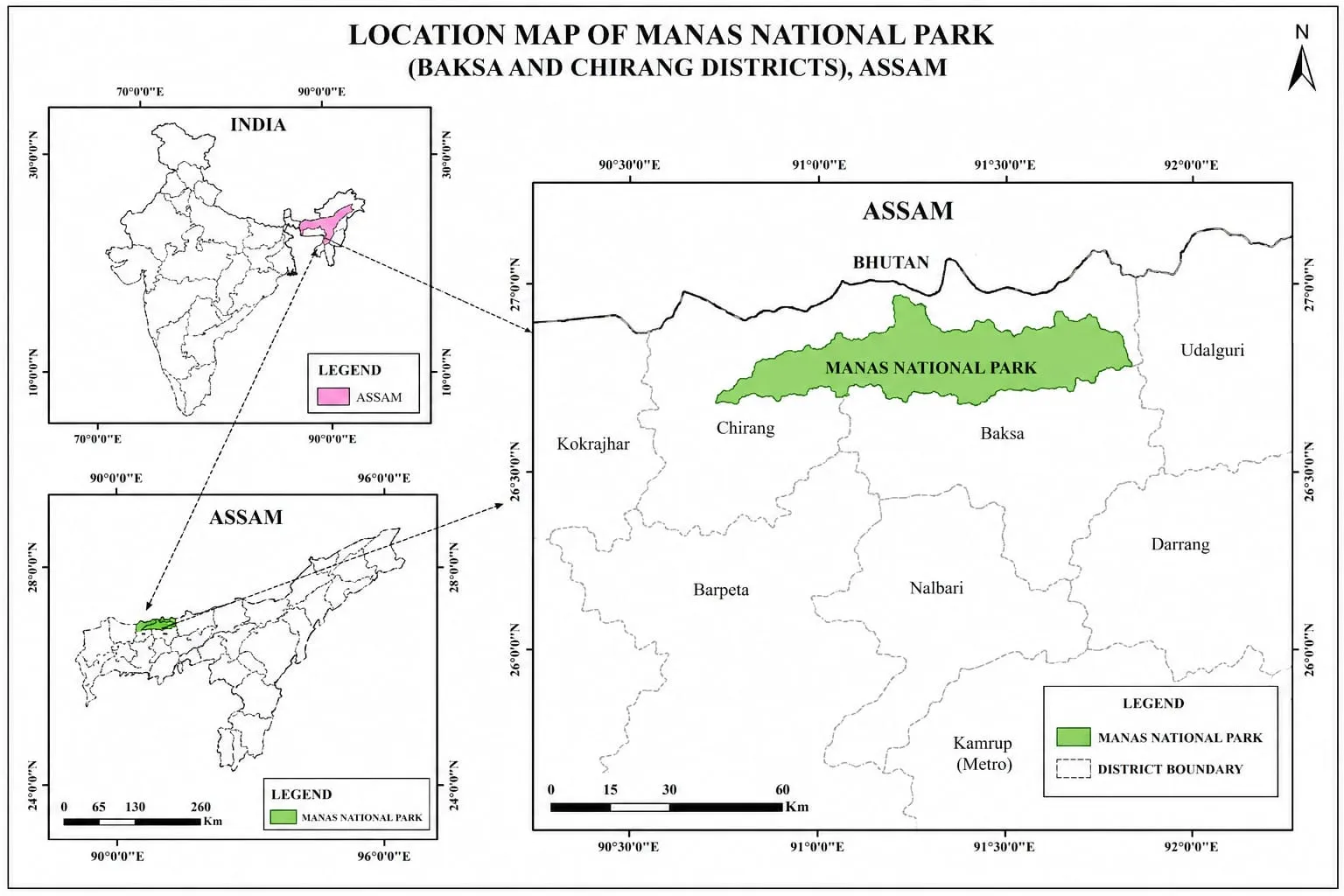
Manas National Park is situated in the northeastern part of India in the state of Assam, on the border with Bhutan. The park lies between latitude 26°35′N and 26°50′N and longitude 90°45′E and 91°15′E. It constitutes an important part of the Eastern Himalayan biodiversity hotspot, one of the most ecologically sensitive and species-rich regions on the planet.
The park extends over some 950 km2 and is contiguous with Royal Manas National Park in Bhutan, creating a transboundary conservation landscape of great ecological importance. The park is also a UNESCO World Heritage Site, Project Tiger Reserve, Elephant Reserve and Biosphere Reserve, highlighting its global conservation significance.
PHYSIOGRAPHY AND GEOMORPHOLOGY
The physiography of the park is characterised by broad alluvial floodplains, gently sloping Bhabar–Terai and foothills of the Eastern Himalayas. The elevation ranges from ca. 60 m to 1,100 m above mean sea level, resulting in a high habitat heterogeneity. The active river systems contribute to deposition, channel migration and erosion, which are the main processes acting in shaping the geomorphology of the landscape.
HYDROGEOLOGY
The Manas River and its many tributaries, which rise in the Bhutan Himalayas, traverse the park. The river systems are important for ecological balance, as they are the basis for wetland ecosystems, replenish soil nutrients and are important for grassland dynamics. However, the hydrological regime is still very dynamic with seasonal flooding being a dominant feature especially during monsoon period.
WEATHER
Manas National Park has a tropical monsoon climate with hot and humid summers, heavy monsoonal rainfall (May to September) and mild winters. Average annual rainfall varies from 3000 mm to 4000 mm with high interannual variability. The recent climatic trends indicate the increase in temperature, erratic precipitation pattern and increase in extreme weather conditions especially floods. These changes greatly impact on habitat stability and biodiversity.
ECOSYSTEMS AND VEGETATION
The park supports a mosaic of a variety of vegetation types, including tropical semi-evergreen forests, moist deciduous forests, alluvial grasslands and riparian and wetland ecosystems. Among these, the alluvial grasslands are of particular ecological importance because they provide critical habitat for large herbivores and several endangered species. These ecosystems are very sensitive to climatic variability and hydrological fluctuations.
BIODIVERSITY OF MANAS NATIONAL PARK
Biodiversity of Manas National Park is complex and dynamic ecological system with outstanding species richness, habitat diversity and ecological interaction. Tropical forests, alluvial grasslands, wetlands and riverine ecosystems exist side by side to create a mosaic of habitats that harbour a diverse range of flora and fauna including several endangered, endemic and globally significant species. This ecological diversity contributes to the conservation value of the park and helps to maintain key ecosystem functions such as nutrient cycling, carbon sequestration, habitat regulation and trophic stability.
The presence of flagship species such as the Bengal Tiger, Asian Elephant, Pygmy Hog, Golden Langur and Bengal Florican, signifies the global significance of Manas as a biodiversity hotspot and an important conservation landscape in the Eastern Himalayan region. Nevertheless, the ecological integrity of the park remains vulnerable to natural and anthropogenic pressures, especially climate change, habitat fragmentation, invasive species and changes in hydrological regimes.
The conservation of Manas National Park’s biodiversity, therefore, requires a holistic and adaptive conservation strategy that integrates habitat protection, ecosystem-based management, scientific monitoring and community participation. Protecting the park’s unique biological heritage and ensuring continued provision of ecosystem services that are vital for local communities and regional environmental stability is crucial for the park’s ecological resilience.
CLIMATE CHANGE
│
┌──────────────────┼──────────────────â”
│ │ │
â–¼ â–¼ â–¼
Rising Temperature Rainfall Variability Extreme Events
│ │ │
└──────────┬───────┴───────┬──────────┘
│ │
â–¼ â–¼
Habitat Degradation Hydrological Changes
(Grasslands, Forests, (Floods, Droughts,
Wetlands) River Alteration)
│
┌──────────┼──────────â”
│ │ │
â–¼ â–¼ â–¼
Species Phenological Invasive Species
Distribution Shifts Expansion
Changes (Breeding, │
Migration) â–¼
│ │ Native Species Loss
└──────┬───┴──────────┬──────┘
│ │
â–¼ â–¼
Biodiversity Decline Ecosystem Instability
│
┌────────┼────────â”
│ │
â–¼ â–¼
Human-Wildlife Trophic Disruption
Conflict (Herbivores → Predators)
│ │
└────────┬────────┘
â–¼
Reduced Ecological Resilience
│
â–¼
Long-Term Ecosystem Degradation
│
â–¼
Need for Climate-Resilient
IMPACT OF CLIMATE CHANGE ON BIODIVERSITY
One of the key drivers of global biodiversity loss is climate change, via the alteration of ecological processes, habitat characteristics and species interactions. Climate-induced changes are increasingly posing a threat to the ecosystem integrity and ecological resilience in Manas National Park, a UNESCO World Heritage Site in the Eastern Himalayan biodiversity hotspot. These impacts are multi-dimensional and result from complex interactions between existing anthropogenic pressures and climatic stressors.
The park’s ecological regime has been significantly altered by rising temperatures and greater variability in rainfall. One of the most dramatic effects is the degradation of alluvial grasslands, which are highly sensitive to changes in the water table. The changing pattern of monsoon and changes in climate at the catchment level has increased the frequency and intensity of floods which has led to accelerated soil erosion, excessive sediment deposition and habitat fragmentation. Such processes reduce the extent and quality of grassland ecosystems, and negatively affect grazing herbivores such as the Indian Rhinoceros and the Pygmy Hog. Declines in populations of these key herbivores disrupt trophic interactions and impact higher trophic levels, including apex predators such as the Bengal tiger.
Climate change has also changed how species are distributed and their ecological behaviour. Rising temperatures and changing habitat conditions force many species to move to new parts of the world in search of more favourable environmental conditions. But habitat fragmentation in and around the park constrains species movement, resulting in greater competition for scarce resources, less genetic interchange and localised population declines. Species such as the Golden Langur having narrow ecological niches and low adaptive capacity are especially vulnerable to such climatic disturbances.
Another important consequence is the alteration of phenological events. Many species experience shifts in seasonal temperature and rainfall due to climate change, which affects flowering periods, fruiting cycles, breeding seasons and migratory behaviour. Such phenological shifts often result in temporal mismatches between interacting species, such as plants and their pollinators, predators and prey, and seed dispersers and fruiting plants. These disruptions compromise ecological synchronisation, diminish reproductive efficiency and eventually reduce ecosystem resilience.
Invasive alien species are also spread by changing climatic conditions. Increased temperatures, altered habitats, and changed moisture regimes create ideal conditions for invasive plant species to flourish and reproduce rapidly. These invasive species can out-compete native vegetation, decrease habitat quality, alter the cycling of nutrients, and impede natural regeneration processes. This results in a loss of native biodiversity, ecological homogenisation and a slow erosion of the unique biological identity of the park.
Climate change is a threat multiplier because of the increase in human-wildlife conflict. Increasingly, habitat degradation, decreasing food resources and changing movement patterns push wildlife out of protected area boundaries into agricultural lands and human settlements. This results in increased crop raiding, livestock predation and property damage, often leading to retaliatory killings and negative perceptions towards wildlife conservation. These conflicts not only threaten biodiversity, but also community involvement in conservation.
Another important aspect of biodiversity loss in Manas National Park is Hydrological changes. Changes in the flow regime of the Manas River and its tributaries have altered floodplain processes, wetland ecology and aquatic habitats. Irregular flooding patterns disturb breeding sites for fish, amphibians, and aquatic birds while altering nutrient cycling and sediment transport processes. These hydrological changes affect the ecosystem productivity and ecological balance by reducing the habitat suitability for a lot of aquatic and semi-aquatic species.
The impact of climate change on the biodiversity in Manas National Park is not an isolated one as a whole but is systemic in nature. Climatic stressors interact with habitat fragmentation, land use change, invasive species, and anthropogenic disturbances, resulting in cascading ecological effects across multiple trophic levels. Together the effects of these activities threaten the stability of the ecosystem, the conservation of biodiversity and the long-term ecological integrity of the park. Thus, effective conservation requires integrated climate-resilient management strategies, including habitat restoration, ecological corridor development, invasive species control, adaptive floodplain management, long-term biodiversity monitoring and active participation of local communities. Such measures are crucial for enhancing ecosystem resilience and for the sustainable conservation of Manas National Park under future climate change scenarios.
DISCUSSION
The results of this study strongly suggest that climate change is not an external stressor but a systemic driver of ecological transformation in Manas National Park. The observed patterns of biodiversity loss are the result of complex interactions between climatic variability, habitat dynamics, and species-specific responses, rather than isolated environmental changes.
A key finding of the study is the disproportionate susceptibility of grassland ecosystems, the park’s ecological backbone. These ecosystems are very sensitive to hydrological fluctuations and the increasing frequency of extreme flood events has exceeded their natural regenerative capacity. In the past, the seasonal flooding helped replenish nutrients and renew habitats, but the current regime of intensified and erratic flooding has resulted in habitat instability, fragmentation and long-term degradation. This change in disturbance regimes from regenerative to destructive is a critical ecological threshold.
The consequences of such habitat alteration are visible in the declining suitability of ecological niches for important herbivore species such as Indian Rhinoceros and Pygmy Hog. These species are primary consumers and are key to maintaining the structure and function of grassland. Their decline initiates trophic cascades and eventually impacts higher-order predators such as the Bengal Tiger. This further reinforces the idea that biodiversity loss in the park is not a linear process but a cascading and multiplicative one, with impacts across the whole food web.
The study also brings out another important dimension, the spatial and behavioural response of species to climatic stressors. Climate change is modifying habitat suitability and forcing species to move or change their ecological behaviour as a consequence of changes in temperature and precipitation regimes. However, such adaptive movements are constrained by the fragmented landscape matrix surrounding the park, leading to increased interspecific competition and reduced survival probabilities. The Golden Langur is an example of a species with limited dispersal ability and narrow ecological tolerance . Such species are particularly at risk , highlighting the uneven distribution of climate vulnerability across taxa .
The study also highlights the increasing importance of phenological mismatch as a little understood but important mechanism of biodiversity loss. Changes in seasonal cycles, such as the timing of flowering, breeding and migration, disrupt the ecological synchrony between species. Such temporal mismatches disrupt functional relationships, particularly between plants and pollinators, and between predators and prey, decreasing ecosystem resilience.
In addition, the expansion of invasive species under changing climate conditions is a significant ecological concern. Warmer temperatures and disturbed habitats favour invasive flora that outcompete native species and change community composition. This process causes biotic homogenisation, eliminates the park’s unique biodiversity, and decreases its conservation value at regional and global scales.
Crucially, the results demonstrate that climate change is a threat multiplier, amplifying existing anthropogenic pressures like habitat encroachment, resource exploitation, and land-use change. As natural habitats shrink, human-wildlife conflict has risen as species venture further out of protected boundaries to find food and shelter. This not only threatens wildlife populations but also undermines local livelihoods, presenting a complex socio-ecological problem.
More broadly, the study highlights the shortcomings of conventional conservation approaches that depend heavily on protection and restoration, without properly considering climate variability. Climate change is dynamic and uncertain and calls for a shift to adaptive, climate-resilient conservation paradigms that include continuous monitoring, ecosystem-based management, and landscape-level planning.
Overall, the discussion reinforces the conclusion that the loss of biodiversity in Manas National Park is a result of interlinked ecological processes driven by climate change and mediated by local environmental and anthropogenic conditions. Addressing these challenges necessitates a comprehensive approach that combines ecological science, policy intervention, and community participation to improve the adaptive capacity and long-term sustainability of the ecosystem.
Conservation effort:
In Manas National Park, the conservation interventions have shifted from conventional protection-based approaches to more integrated and adaptive strategies to address the increasing climatic and anthropogenic pressures. Given the complexity and dynamism of biodiversity loss, current efforts reflect a mix of ecological restoration, species-focused conservation, community engagement and transboundary cooperation.
Restoration of habitat and ecosystem management, particularly for degraded alluvial grasslands and forest ecosystems, is an important pillar of conservation in the park. Restoration actions include controlled burning, removal of invasive species and assisted natural regeneration. These efforts will help in restoring the ecological balance and improve the habitat suitability for grassland dependent species like the Pygmy Hog and the Indian Rhinoceros. However, the growing unpredictability of climatic conditions threatens the long-term effectiveness of such interventions, which must be accompanied by continued ecological monitoring and adaptive management.
Specialised conservation programs have been important in the restoration of biodiversity as well. Targeted initiatives for endangered fauna (Bengal Tiger, Golden Langur) involving anti-poaching measures, habitat protection and scientific monitoring have contributed to stabilising populations. The scientific approach especially the reintroduction and conservation breeding programmes of critically endangered species especially the pygmy hog is restoring ecological integrity.
Another important dimension is improvement of protected area governance and anti-poaching mechanisms. More effective surveillance systems – including forest patrols and technological monitoring – have reduced illegal hunting and extraction of resources. Protection measures have been further reinforced through institutional support under national conservation frameworks such as Project Tiger and Biosphere Reserve management. However, enforcement is uneven because of resource constraints and challenging terrain.
The realisation that local communities have a role to play has led to the increased importance of community based conservation and participatory management.
Eco-development programmes, livelihood diversification and awareness campaigns have been introduced to reduce reliance on forest resources and foster stewardship among local populations. These initiatives are especially important in addressing human–wildlife conflict, which has increased with climate-related habitat pressures. But these programs can only be successful if there is continued participation, a fair sharing of the benefits, and institutional support.
Considering the transboundary nature of the ecosystem, cross-border conservation cooperation between India and Bhutan has become an important strategy. The ecological connectivity between Manas National Park and adjacent protected areas in Bhutan facilitates wildlife movement and gene flow, and enhances resilience at the landscape scale. Joint conservation efforts, information sharing and coordinated management efforts are helping to maintain this important ecological corridor.
Recently, there has been an increasing emphasis on climate-resilient conservation planning. This includes integrating climate projections into management plans, promoting ecosystem-based adaptation and strengthening biodiversity monitoring systems. Vulnerability assessments and early warning systems can be used to improve forecasting of ecological shifts and allow for proactive decision making.
These efforts notwithstanding, some challenges remain, including limited financial resources, increasing anthropogenic pressures, and the unpredictable nature of climate change. These constraints underscore the need for a more integrated and adaptive conservation approach that combines scientific inquiry, policy creativity, and community involvement.
In conclusion, the conservation efforts in Manas National Park are gradually shifting towards multidimensional and climate sensitive approaches. But for increasing their effectiveness there is a need for better coordination among institutions, long-term monitoring of ecological parameters and the integration of climate adaptation strategies to guarantee the sustainability of biodiversity under the pressure of growing environmental change.
A number of structural, ecological and institutional challenges constrain the long-term sustainability of biodiversity in Manas National Park despite ongoing conservation initiatives. These challenges do not occur in isolation but interact across scales, compromising the effectiveness of existing management strategies in the context of accelerating climate change.
A major challenge is the uncertainty and unpredictability of the impacts of climate change. Variability in temperature regimes, erratic monsoonal patterns and increasing frequency of extreme flood events complicate the ecological forecasting and management planning.
Conservation strategies often relying on historical climate stability are increasingly inadequate in changing, dynamic and non-linear environmental environments.
Another critical constraint is habitat fragmentation and discontinuity of the landscape. Despite the protected park, the surrounding landscape remains vulnerable to agricultural expansion, settlement growth and infrastructure development. This fragmented matrix impairs species movement, reduces gene flow and limits the capacity of wildlife to adapt to changing climatic conditions. This is especially the case for species with large home ranges, such as the Bengal Tiger and the Asian Elephant.
Another major ecological challenge is the persistence and spread of invasive species. Invasive flora often outcompete native vegetation and alter habitat structure . Climate change creates favourable conditions for invasive flora . Managing invasive species is resource-intensive and requires ongoing intervention that is difficult to sustain given current institutional constraints.
Degradation of habitat and lack of resources have increased human-wildlife conflict. Wildlife are increasingly crossing protected boundaries into human-dominated landscapes, resulting in crop damage, predation of livestock and threats to human safety. This is not only counterproductive to conservation efforts, but also drains community support that is critical to the long-term protection of biodiversity.
Conservation outcomes are also constrained by institutional and governance-related issues. These include constraints on financial resources, inadequate technical capacity and gaps in policy implementation. There are several conservation programs but the agencies lack coordination and the management frameworks lack climate considerations. Also, monitoring systems tend to be fragmented, real time data, and long term ecological indicators.
Another major challenge is the poor integration of local communities into conservation planning. Although community based initiatives have been introduced, the effective participation is hindered by issues like unequal distribution of benefits, lack of awareness and socio-economic dependence on forest resources.
Conservation measures risk being socially unsustainable without inclusive and equitable engagement.
Moreover, there are other problems due to the complexities of transboundary management. Although ecological connectivity with Bhutan presents opportunities for landscape-level conservation, differences in policy frameworks, administrative priorities and coordination mechanisms may limit the effectiveness of joint initiatives.
And finally, the larger issue of knowledge gaps and data limitations. High resolution, site-specific data on climate variables, species response and ecosystem dynamics are still lacking. This limits evidence-based decision-making and reduces the capacity to develop targeted, adaptive conservation strategies.
CONSERVATION STRATEGIES
One of the key drivers of global biodiversity loss is climate change, via the alteration of ecological processes, habitat characteristics and species interactions. Climate-induced changes are increasingly posing a threat to the ecosystem integrity and ecological resilience in Manas National Park, a UNESCO World Heritage Site in the Eastern Himalayan biodiversity hotspot. These impacts are multi-dimensional and result from complex interactions between existing anthropogenic pressures and climatic stressors.
The park’s ecological regime has been significantly altered by rising temperatures and greater variability in rainfall. One of the most dramatic effects is the degradation of alluvial grasslands, which are highly sensitive to changes in the water table. The changing pattern of monsoon and changes in climate at the catchment level has increased the frequency and intensity of floods which has led to accelerated soil erosion, excessive sediment deposition and habitat fragmentation. Such processes reduce the extent and quality of grassland ecosystems, and negatively affect grazing herbivores such as the Indian Rhinoceros and the Pygmy Hog. Declines in populations of these key herbivores disrupt trophic interactions and impact higher trophic levels, including apex predators such as the Bengal tiger.
Climate change has also changed how species are distributed and their ecological behaviour. Rising temperatures and changing habitat conditions force many species to move to new parts of the world in search of more favourable environmental conditions. But habitat fragmentation in and around the park constrains species movement, resulting in greater competition for scarce resources, less genetic interchange and localised population declines. Species such as the Golden Langur having narrow ecological niches and low adaptive capacity are especially vulnerable to such climatic disturbances.
Another important consequence is the alteration of phenological events. Many species experience shifts in seasonal temperature and rainfall due to climate change, which affects flowering periods, fruiting cycles, breeding seasons and migratory behaviour. Such phenological shifts often result in temporal mismatches between interacting species, such as plants and their pollinators, predators and prey, and seed dispersers and fruiting plants. These disruptions compromise ecological synchronisation, diminish reproductive efficiency and eventually reduce ecosystem resilience.
Invasive alien species are also spread by changing climatic conditions. Increased temperatures, altered habitats, and changed moisture regimes create ideal conditions for invasive plant species to flourish and reproduce rapidly. These invasive species can out-compete native vegetation, decrease habitat quality, alter the cycling of nutrients, and impede natural regeneration processes. This results in a loss of native biodiversity, ecological homogenisation and a slow erosion of the unique biological identity of the park.
Climate change is a threat multiplier because of the increase in human-wildlife conflict. Increasingly, habitat degradation, decreasing food resources and changing movement patterns push wildlife out of protected area boundaries into agricultural lands and human settlements. This results in increased crop raiding, livestock predation and property damage, often leading to retaliatory killings and negative perceptions towards wildlife conservation. These conflicts not only threaten biodiversity, but also community involvement in conservation.
Another important aspect of biodiversity loss in Manas National Park is Hydrological changes. Changes in the flow regime of the Manas River and its tributaries have altered floodplain processes, wetland ecology and aquatic habitats. Irregular flooding patterns disturb breeding sites for fish, amphibians, and aquatic birds while altering nutrient cycling and sediment transport processes. These hydrological changes affect the ecosystem productivity and ecological balance by reducing the habitat suitability for a lot of aquatic and semi-aquatic species .
The impact of climate change on the biodiversity in Manas National Park is not an isolated one as a whole but is systemic in nature. Climatic stressors interact with habitat fragmentation, land use change, invasive species, and anthropogenic disturbances, resulting in cascading ecological effects across multiple trophic levels. Together the effects of these activities threaten the stability of the ecosystem, the conservation of biodiversity and the long-term ecological integrity of the park. Thus, effective conservation requires integrated climate-resilient management strategies, including habitat restoration, ecological corridor development, invasive species control, adaptive floodplain management, long-term biodiversity monitoring and active participation of local communities. Such measures are crucial for enhancing ecosystem resilience and for the sustainable conservation of Manas National Park under future climate change scenarios.
CHALLENGES
RECOMMENDATIONS AND SUGGESTIONS
Addressing biodiversity loss in a changing climate demands a move from traditional conservation to integrated, adaptive and climate-resilient strategies. Based on the results of this study, the following recommendations are suggested to improve the ecological sustainability of Manas National Park.
1. Developing Conservation Frameworks for Climate Resilience
Climate projections and uncertainty need to be explicitly incorporated into conservation planning.
Develop adaptive management plans to be updated periodically based on climate trends.
Climate modelling and scenario analysis in biodiversity management.
Promote the use of ecosystem-based adaptation (EbA) approaches to enhance resilience.
Justification: Static conservation models are not appropriate in the context of rapidly changing climatic conditions.
2. Habitat Restoration and Landscape Connectivity
Priority must be given to the restoration of degraded ecosystems and improving ecological connectivity.
Scientific restoration methods to restore alluvial grasslands and wetlands.
Create ecological corridors to facilitate species migration and gene flow.
Develop long-term monitoring and management programs for controlling invasive species.
Rationale Connectivity improves species’ adaptive capacity and reduces extinction risk.
3. Enhancing Species-Specific Conservation Approaches
“Vulnerable and endangered species such as the Pygmy Hog, Golden Langur and Bengal Tiger need targeted interventions.
Expand conservation breeding and reintroduction programmes.
Improve population viability analysis and genetic monitoring.
Develop climate risk-informed species recovery-plans.
Rationale: Species with narrow ecological niche require focused and scientific interventions.
4. Conservation that is Community-Based and Inclusive
2. Active engagement of local communities in conservation frameworks.
Encourage eco-tourism and sustainable livelihoods.
Develop equitable benefit-sharing arrangements.
Awareness programs on climate change and biodiversity conservation.
Rationale: Successful conservation depends on community participation and support.
5. Enhancing Human-Wildlife Conflict Mitigation
We need to develop proactive strategies to reduce conflict and enhance coexistence.
Develop monitoring networks and early warning systems.
Affected communities should be provided with timely compensation and insurance schemes.
Promote land use planning and buffer zone management.
Rationale: Less conflict is good for biodiversity conservation and for socio-economic stability.
6. Strengthening Institutional Capacity and Policy Coherence
Effective conservation requires good governance and coordination.
Boost financial investment and technical capacity of conservation agencies.
We must mainstream climate change issues into our forest and wildlife policies.
Enhance inter-agency coordination at local, regional and national levels.
Institutional strength is required to implement long-term conservation strategies.
7. Encouraging transboundary conservation cooperation
The ecological connectivity with Bhutan also has to be looked at in a collaborative manner.
Strengthen joint monitoring and information sharing mechanisms.
Develop regional plans for the conservation of shared ecosystems.
Support international research partnerships.
Rationale: Ecosystem processes are not limited to political boundaries.
8. Strengthening Research, Monitoring and Data Systems
The focus should be on scientific research and data-driven decisions.
Set up long-term monitoring stations in ecological zones.
Remote sensing and GIS based tools for habitat assessment.
Encourage interdisciplinary research on climate-biodiversity interactions.
Rationale: Evidence-based policies improve the effectiveness and flexibility of conservation.
FINDINGS
The present study reveals climate change as a major and multidimensional driver of biodiversity loss in Manas National Park. These findings are part of an analysis of climate trends, habitat conditions and species responses, and reveal both direct and indirect ecological effects.
The most important finding of the study is that temperatures are steadily rising and rainfall patterns are becoming more variable in the region. Changes in climate have altered the natural hydrological regime resulting in an increased frequency and severity of flood events. Flooding in the park is a natural ecological process but the increasing irregularity and magnitude of flooding has exceeded the ecological tolerance limits resulting in habitat instability and degradation especially in the grassland ecosystems.
The study also shows a significant decline in alluvial grassland habitats which are important for supporting herbivorous species. This decrease is chiefly due to long-term flooding, sediment deposition and changes in vegetation structure. This has negatively affected the suitability of habitats for species such as the Pygmy Hog and the Indian Rhinoceros. The loss of these primary consumers has also disrupted the trophic relationships suggesting a cascading effect down the food chain.
Another important result is the change in the distribution and behaviour of species . Many species are increasingly altering their ecological patterns or shifting their ranges due to changing climatic conditions. Such adaptive responses are, however, limited by habitat fragmentation and landscape barriers, leading to increased competition, reduced reproductive success and local population declines. Species with low ecological plasticity, such as the Golden Langur, are found to be especially vulnerable.
The study also points to the emergence of phenological changes, such as changes in breeding cycles, flowering times and migration timing. These temporal disruptions have caused ecological mismatches between interdependent species, thereby reducing ecosystem functionality and resilience.
Besides, the study highlights the increasing proliferation of invasive species due to changing climatic conditions and disturbance of habitats. Invasive plants are increasingly replacing native vegetation, reducing species richness and changing the composition of ecosystems. This process results in long-term ecological homogenisation and loss of habitat specialisation.
The main socio-ecological finding is the emergence of human-wildlife conflict in the areas surrounding the park. The wildlife is increasingly invading human settlements with the loss of natural habitats and food resources. This has led to damage to crops, loss of livestock and increased tensions between local communities and conservation authorities.
The study also found that hydrological changes, particularly irregular flow patterns in the river systems, are affecting wetland ecosystems and aquatic biodiversity. These changes disrupt the breeding grounds, the cycling of nutrients and the productivity of the ecosystem as a whole.
Finally, the results suggest that climate change acts as a threat multiplier, intensifying existing anthropogenic pressures such as land-use change, habitat fragmentation and resource exploitation. Climate change and human activities together have accelerated the loss of biodiversity and decreased the capacity of ecosystems to adapt.
CONCLUSION
The present study reveals that climate change has emerged as a major and pervasive driver of biodiversity loss in Manas National Park with significant impacts on ecological structure, species composition and ecosystem functionality. The analysis reveals that increasing temperatures, erratic rainfall patterns and increasing frequency of extreme flood events have severely impacted habitat conditions, particularly for the park’s alluvial grasslands and riverine systems.
These environmental changes have resulted in habitat degradation, changes in the distribution of species and increasing ecological vulnerability, especially for habitat-specialist and endangered species, such as the Pygmy Hog and the Golden Langur.
The disruption of trophic interactions and ecological processes further suggests that the loss of biodiversity in the region is not an isolated event, but rather systemic and cascading, impacting the overall stability and resilience of the ecosystem.
The study also notes that climate change acts as a threat multiplier, magnifying existing anthropogenic pressures such as habitat fragmentation, invasive species proliferation, and human–wildlife conflict. These interrelated challenges highlight the limitations of traditional conservation approaches that insufficiently consider climate variability and uncertainty.
This research calls for urgent action on integrative, adaptive, and climate-resilient conservation solutions.
Ecosystem resilience can be improved through habitat restoration, species-specific interventions, community engagement and transboundary approaches. Furthermore, effective long-term conservation planning requires strengthening institutions, supporting scientific research and integrating climate projections into policy frameworks.
In conclusion, biodiversity conservation in Manas National Park requires a paradigm shift from static conservation models to dynamic, ecosystem-based management approaches that are able to respond to ongoing environmental change. Concerted and urgent action at ecological, social and policy levels is needed to secure the long-term sustainability and conservation of this global biodiversity hotspot.
REFERENCES

Bhagyashree Pathak*, Climate Change And Biodiversity Loss In Manas National Park, Int. J. Sci. R. Tech., 2026, 3 (7), 939-955. https://doi.org/10.5281/zenodo.21641420
 10.5281/zenodo.21641420