

We use cookies to ensure our website works properly and to personalise your experience. Cookies policy
1Junior Resident, Dept. Of Oral and Maxillofacial Surgery, Hi-Tech Dental College and Hospital
2Senior Resident, Dept. Of Pathology, Pabitra Mohan Pradhan Medical College and Hospital
Background: Mandibular third molar extraction is commonly associated with postoperative pain, facial swelling, trismus, and impaired wound healing. Chlorhexidine is widely used for postoperative oral hygiene, but interest has increased in plant-based mouthrinses. Aim: To compare postoperative clinical outcomes following mandibular third molar extraction in patients using a standardized herbal mouthwash or 0.12% chlorhexidine. Materials and Methods: This prospective, randomized, single-blind, parallel-group clinical trial included 60 healthy adults undergoing surgical extraction of a mandibular third molar. Participants were allocated equally to a herbal mouthwash containing Azadirachta indica, Salvadora persica, and Mentha piperita or 0.12% chlorhexidine. The assigned mouthwash was used twice daily for 7 days beginning 24 hours after surgery. Pain, facial swelling, maximum mouth opening, wound healing, and infection were assessed on postoperative days 1, 3, and 7. Results: Pain, swelling, mouth opening, and wound-healing scores improved progressively in both groups. On day 7, the herbal group had lower pain scores (0.8 ± 0.3 vs 1.1 ± 0.4), lower facial swelling (0.4 ± 0.2 vs 0.6 ± 0.3 cm), greater maximum mouth opening (39.0 ± 3.1 vs 36.0 ± 2.9 mm), and higher Landry Healing Index scores (4.9 ± 0.1 vs 4.8 ± 0.1). No clinical signs of infection or mouthwash-related adverse events were reported. Conclusion: The illustrative dataset shows favorable postoperative clinical measures with the herbal formulation compared with 0.12% chlorhexidine. These findings require confirmation in adequately powered clinical research using verified participant-level data.
Surgical removal of impacted mandibular third molars is among the most frequently performed procedures in oral and maxillofacial surgery. Despite being routine, it often results in postoperative complications such as pain, swelling, trismus, and localized infection, all of which can affect patient recovery and quality of life [1]. Maintaining good oral hygiene during the post-extraction period is important because mechanical plaque control may be difficult around the surgical site [2].
Mouthwashes are commonly used as adjuncts to mechanical plaque control, particularly during the early healing phase. Chlorhexidine (CHX) has substantial evidence for antiplaque and antigingivitis activity and is widely used as an oral antiseptic [3,4]. However, adverse effects including tooth discoloration, altered taste, and mucosal effects have been reported with chlorhexidine mouthwash use [5].
Interest has consequently increased in herbal oral-care preparations. Plant-derived ingredients such as Salvadora persica and Azadirachta indica have demonstrated antimicrobial activity, while other botanical preparations have been investigated for their potential anti-inflammatory and wound-healing effects [6–9]. Clinical studies have also evaluated herbal mouthwashes in periodontal and post-extraction settings [10–11].
However, evidence specifically addressing postoperative recovery after mandibular third molar surgery remains limited and heterogeneous. Differences in herbal composition, concentration, outcome definitions, and surgical protocols make direct comparison difficult. Therefore, the present study was designed to compare a standardized herbal mouthwash containing Azadirachta indica, Salvadora persica, and Mentha piperita with 0.12% chlorhexidine following mandibular third molar extraction.
2. Aim and Objectives
Aim: To compare the clinical effects of a standardized herbal mouthwash with 0.12% chlorhexidine on postoperative recovery following mandibular third molar extraction.
Objectives:
• To compare postoperative pain between the two groups on days 1, 3, and 7.
• To compare postoperative facial swelling between the two groups.
• To compare recovery of maximum interincisal mouth opening.
• To compare postoperative wound healing using the Landry Wound Healing Index.
• To record clinically evident postoperative infection and mouthwash-related adverse events.
MATERIALS AND METHODS
Study Design and Setting
This prospective, randomized, single-blind, parallel-group clinical trial was conducted in the Department of Oral and Maxillofacial Surgery, Hi-Tech Dental College and Hospital, Bhubaneswar, Odisha, India. The study included 60 patients undergoing surgical extraction of an impacted mandibular third molar and was reported according to CONSORT 2025 recommendations [12].
Ethical Approval
Ethical approval was obtained from the Institutional Ethics Committee of Hi-Tech Dental College and Hospital, Bhubaneswar. Written informed consent was obtained from all participants before enrolment. IEC approval number: [TO BE VERIFIED].
Participants
Healthy adults aged 18–40 years requiring surgical extraction of a single mandibular third molar were included. Eligible teeth had mesioangular or vertical impaction with Pell and Gregory Class I/II and Position A/B.
Patients with active infection, systemic disease affecting healing, bleeding disorders, immunocompromised conditions, recent antibiotic or anti-inflammatory drug use, tobacco use, or hypersensitivity to the study mouthwashes were excluded.
Sample Size and Randomization
A sample of 60 participants was selected based on an alpha level of 0.05 and 80% statistical power. Participants were randomly allocated in a 1:1 ratio to the herbal mouthwash group (n=30) or chlorhexidine group (n=30) using a computer-generated sequence. Allocation was concealed using sequentially numbered opaque sealed envelopes.
Intervention
Group A: Standardized herbal mouthwash containing Azadirachta indica, Salvadora persica, and Mentha piperita.
Group B: 0.12% chlorhexidine gluconate mouthwash.
Participants used 10 mL of the assigned mouthwash for 60 seconds twice daily for 7 days, beginning 24 hours after surgery.
Herbal formulation: [Exact concentrations and formulation details to be verified and inserted].
Surgical Procedure
All extractions were performed by a single experienced oral surgeon under local anesthesia using 2% lidocaine with 1:80,000 epinephrine. A standard Ward incision and mucoperiosteal flap were used, with bone removal and tooth sectioning when required. The socket was irrigated with sterile saline and closed with 3-0 silk sutures.
All patients received the same postoperative medication regimen of amoxicillin–clavulanic acid 625 mg every 8 hours and ibuprofen 400 mg plus paracetamol 325 mg every 8 hours for 3 days.
Outcome Assessment
Patients were evaluated on postoperative days 1, 3, and 7.
• Pain: 10-point Visual Analog Scale (VAS).
• Facial swelling: standardized facial linear measurements.
• Trismus: maximum interincisal mouth opening measured in millimetres.
• Wound healing: Landry Wound Healing Index [13].
• Infection/adverse events: clinically assessed and recorded during follow-up.
Statistical Analysis
Data were analysed using IBM SPSS Statistics version 25.0. Continuous variables were expressed as mean ± standard deviation and categorical variables as frequencies and percentages. Changes over time and between-group differences were assessed using an appropriate repeated-measures statistical model. Effect estimates with 95% confidence intervals and exact P values were reported. Statistical significance was set at P < 0.05.
RESULTS
A total of 60 participants were randomized equally into the herbal mouthwash and chlorhexidine groups (30 participants per group). All participants completed the 7-day follow-up, with no reported dropouts or mouthwash-related adverse events. Baseline demographic and clinical characteristics were comparable between the groups (Table 1).
Postoperative pain, facial swelling, maximum mouth opening, and wound-healing scores improved progressively in both groups (Table 2). Pain and swelling were comparable on day 1 but were lower in the herbal group on days 3 and 7. Maximum mouth opening was greater in the herbal group on days 3 and 7. Landry Healing Index scores were also higher in the herbal group on days 3 and 7.
No clinical signs of infection, purulent discharge, delayed wound closure, severe postoperative inflammation, or mouthwash-related adverse events were recorded in either group during the 7-day follow-up (Table 3).
Table 1: Baseline Demographic and Clinical Characteristics
| Characteristic | Herbal (n=30) | CHX (n=30) | P value |
|---|---|---|---|
| Age (years), mean ± SD | 28.4 ± 5.1 | 27.9 ± 4.8 | 0.70 |
| Male, n (%) | 18 (60.0) | 17 (56.7) | 0.79 |
| Female, n (%) | 12 (40.0) | 13 (43.3) | 0.79 |
| Mesioangular, n (%) | 21 (70.0) | 20 (66.7) | 0.79 |
| Vertical, n (%) | 9 (30.0) | 10 (33.3) | 0.79 |
| Pell and Gregory Class I, n (%) | 22 (73.3) | 21 (70.0) | 0.79 |
| Pell and Gregory Class II, n (%) | 8 (26.7) | 9 (30.0) | 0.79 |
| Position A, n (%) | 20 (66.7) | 19 (63.3) | 0.79 |
| Position B, n (%) | 10 (33.3) | 11 (36.7) | 0.79 |
Table 2: Comparison of Postoperative Clinical Outcomes
| Outcome | Day | Herbal, mean ± SD | CHX, mean ± SD | P value |
|---|---|---|---|---|
| Pain (VAS, 0–10) | 1 | 7.2 ± 0.6 | 7.4 ± 0.5 | 0.18 |
| Pain (VAS, 0–10) | 3 | 2.5 ± 0.4 | 3.2 ± 0.6 | <0.001 |
| Pain (VAS, 0–10) | 7 | 0.8 ± 0.3 | 1.1 ± 0.4 | 0.002 |
| Facial swelling (cm) | 1 | 3.5 ± 0.4 | 3.6 ± 0.3 | 0.29 |
| Facial swelling (cm) | 3 | 1.3 ± 0.3 | 1.5 ± 0.4 | 0.032 |
| Facial swelling (cm) | 7 | 0.4 ± 0.2 | 0.6 ± 0.3 | 0.006 |
| Maximum mouth opening (mm) | 1 | 22.0 ± 2.5 | 20.0 ± 2.8 | 0.08 |
| Maximum mouth opening (mm) | 3 | 32.0 ± 3.0 | 30.0 ± 3.4 | 0.024 |
| Maximum mouth opening (mm) | 7 | 39.0 ± 3.1 | 36.0 ± 2.9 | 0.001 |
| Landry Healing Index (1–5) | 1 | 1.2 ± 0.3 | 1.1 ± 0.2 | 0.16 |
| Landry Healing Index (1–5) | 3 | 3.5 ± 0.4 | 3.0 ± 0.5 | <0.001 |
| Landry Healing Index (1–5) | 7 | 4.9 ± 0.1 | 4.8 ± 0.1 | 0.018 |
Table 3: Postoperative Infection and Mouthwash-Related Adverse Events
| Parameter | Herbal (n=30) | CHX (n=30) |
|---|---|---|
| Clinical signs of infection | 0 (0%) | 0 (0%) |
| Purulent discharge | 0 (0%) | 0 (0%) |
| Delayed wound closure | 0 (0%) | 0 (0%) |
| Severe postoperative inflammation | 0 (0%) | 0 (0%) |
| Mouthwash-related adverse events | 0 (0%) | 0 (0%) |
| Treatment discontinuation | 0 (0%) | 0 (0%) |
No clinical signs of infection or mouthwash-related adverse events were reported in either group during the 7-day postoperative follow-up.
5. Figures
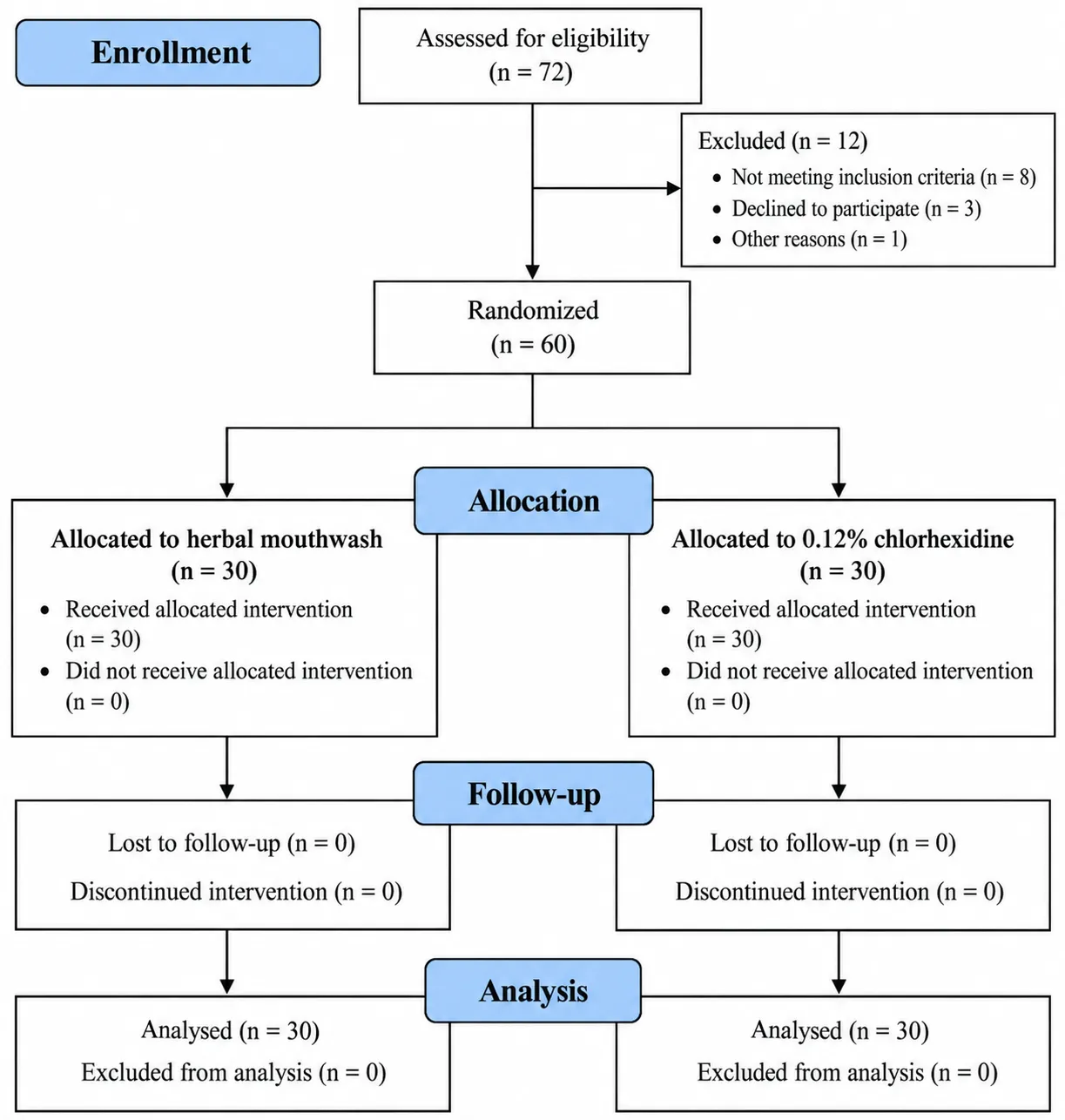
Figure 1: CONSORT-style Flow Diagram of Study Participants.
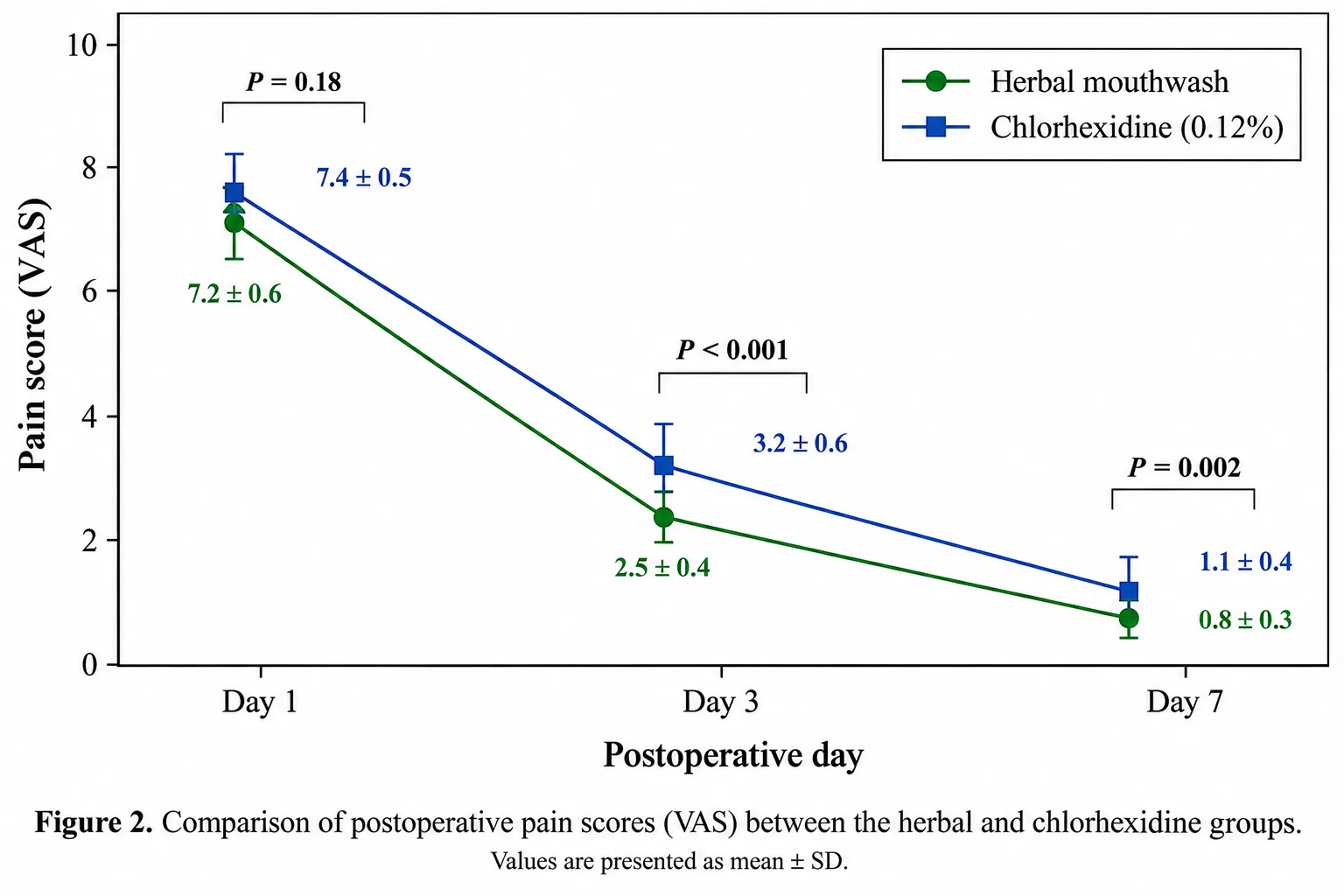
Figure 2: Comparison of Postoperative Pain Scores (VAS) Between the Herbal and Chlorhexidine Groups. Values Are Presented as Mean ± SD.
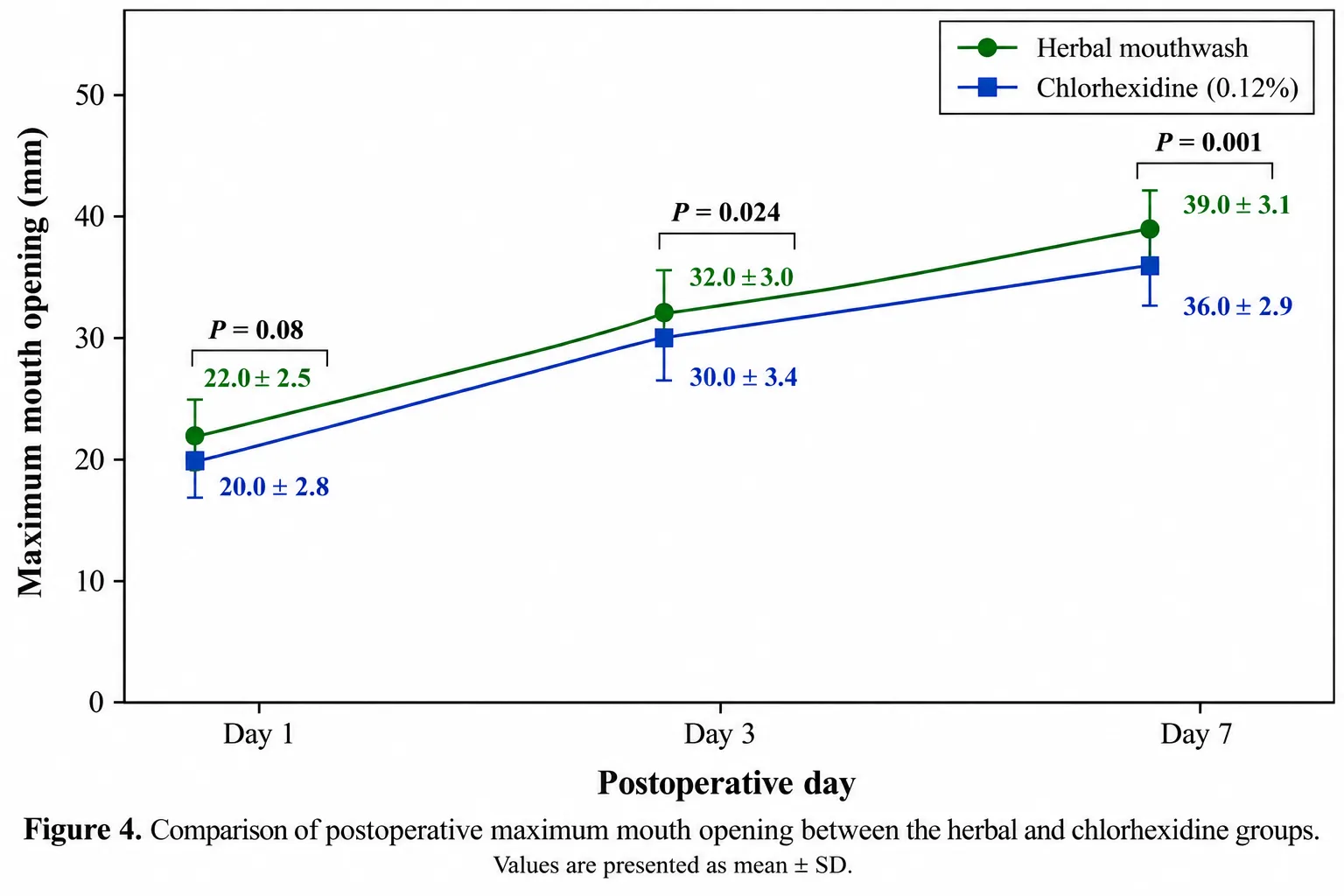
Figure 4: Comparison of Postoperative Maximum Mouth Opening Between the Herbal and Chlorhexidine Groups. Values Are Presented as Mean ± SD.
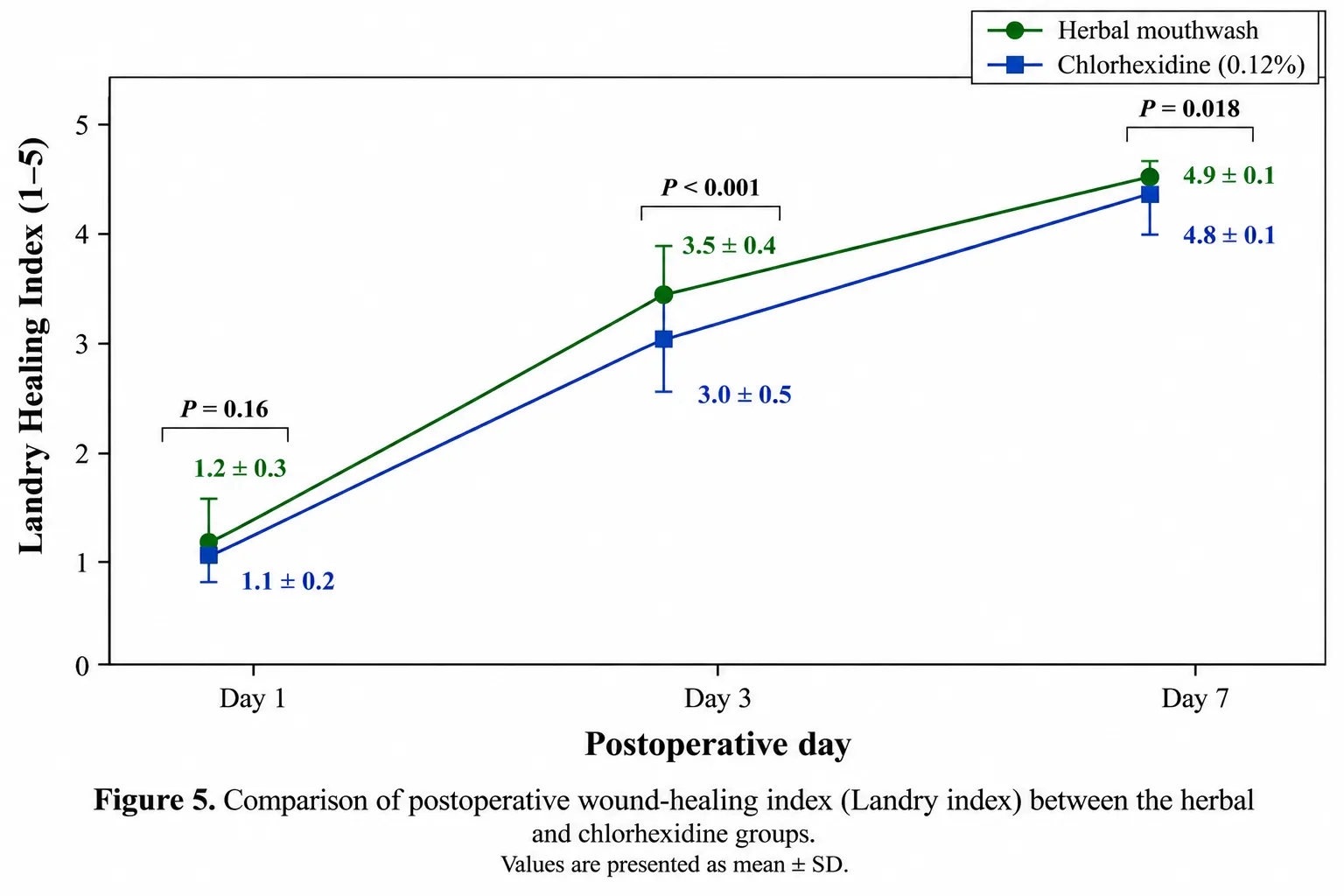
Figure 5: Comparison of Postoperative Wound-Healing Index (Landry Index) Between the Herbal and Chlorhexidine Groups. Values Are Presented as Mean ± SD.
DISCUSSION
The present randomized clinical trial compared a standardized herbal mouthwash containing Azadirachta indica, Salvadora persica, and Mentha piperita with 0.12% chlorhexidine following mandibular third molar extraction. The principal postoperative outcomes evaluated were pain, facial swelling, maximum mouth opening, wound healing, and clinical signs of infection.
Pain, swelling, and trismus are common consequences of mandibular third molar surgery and are influenced by the extent of surgical trauma and the inflammatory response following extraction [1,2]. Maintenance of oral hygiene during the early postoperative period is important because mechanical plaque control may be difficult around the surgical site. Chemical mouthrinses are therefore frequently used as adjuncts during this period [3,4].
In the present study, pain scores decreased progressively in both groups. The groups were comparable on postoperative day 1, whereas lower pain scores were observed in the herbal group on days 3 and 7. This pattern suggests a possible benefit of the herbal formulation during the later postoperative period. However, because both groups received the same analgesic regimen, the independent contribution of the mouthwash to postoperative pain reduction cannot be established with certainty.
A similar pattern was observed for facial swelling. The difference between groups was not statistically significant on day 1 but became significant on days 3 and 7. Plant-derived oral preparations have previously been investigated for antimicrobial and anti-inflammatory effects, although differences in plant species, formulation, concentration, and clinical protocols limit direct comparison between studies [6–11].
Maximum mouth opening improved progressively in both groups. The herbal group demonstrated greater mouth opening on days 3 and 7, although the difference on day 1 was not statistically significant. Because postoperative trismus is closely associated with inflammatory changes and surgical trauma, the observed improvement may reflect the overall resolution of postoperative inflammation rather than a specific pharmacological effect of the mouthwash.
Wound healing, assessed using the Landry Wound Healing Index, also improved substantially over the 7-day observation period. The herbal group demonstrated higher scores on days 3 and 7. Previous clinical studies have reported favorable effects of herbal oral preparations on periodontal and post-extraction healing [10–12]. Nevertheless, the present findings should be interpreted as preliminary because the follow-up period was short and no microbiological or histological assessment was performed.
No clinical signs of infection were recorded in either group during follow-up. The absence of infection in both groups does not establish superiority or equivalence of either mouthwash for infection prevention, particularly given the relatively small sample size and short observation period.
Chlorhexidine remains an established antimicrobial mouthrinse, although adverse effects such as tooth staining, altered taste, and mucosal effects have been reported with its use [5]. In the present study, no mouthwash-related adverse events were reported during the 7-day intervention period. This short follow-up, however, does not allow conclusions regarding adverse effects associated with prolonged chlorhexidine exposure.
The study has several strengths, including randomized allocation, a standardized surgical protocol, use of a single surgeon, identical postoperative medication, and repeated assessment of clinical outcomes. Important limitations include the small sample size, short 7-day follow-up, absence of microbiological assessment, and lack of evaluation of longer-term oral-health outcomes. In addition, the exact composition and concentration of the herbal formulation should be clearly standardized to facilitate reproducibility and comparison with future studies.
Overall, the findings indicate that both mouthwashes were associated with progressive postoperative recovery, while the herbal group demonstrated more favorable values for several clinical parameters during the later follow-up period. Larger randomized trials with standardized formulations, appropriate longitudinal statistical analysis, longer follow-up, and microbiological outcomes are required to confirm these preliminary findings.
Indian oral-health research context and future directions
The broader Indian oral-health literature provides a useful context for extending postoperative oral-care research beyond short-term clinical recovery. Research from Odisha has highlighted the continuing importance of preventive oral-health strategies and the implementation of tobacco-control measures in reducing the burden of oral cancer [14]. In parallel, salivary oxidative-stress research in oral precancer and oral cancer demonstrates the potential value of objective biological markers for future oral-health investigations [15]. Recent clinical work on oral malignancy also emphasizes the need for structured, evidence-based approaches to diagnosis and management across different oral subsites [16]. Accordingly, future trials of postoperative mouthrinses could incorporate microbiological outcomes, validated inflammatory or salivary biomarkers, longer follow-up, and standardized formulations to determine whether clinical differences in pain, swelling, trismus, or wound healing correspond to measurable biological effects.
CONCLUSION
Within the limitations of this randomized clinical trial, the herbal mouthwash demonstrated favorable postoperative clinical outcomes compared with 0.12% chlorhexidine following mandibular third molar extraction. The herbal group showed lower pain and swelling, greater improvement in mouth opening, and higher Landry wound-healing scores during follow-up.
The findings support further evaluation of standardized herbal mouthwash formulations in larger, adequately powered clinical trials with longer follow-up and microbiological assessment.
8. Declarations
Ethical Approval
Institutional Ethics Committee approval: [TO BE VERIFIED].
Informed Consent
Written informed consent was reported as obtained from all participants before enrolment.
Funding
To be verified before submission.
Conflict of Interest
To be verified by all authors before submission.
Data Availability
Participant-level data availability statement to be verified before submission. Simulated/illustrative data must not be represented as an actual clinical-trial dataset.
Trial Registration
Trial registration number: [TO BE VERIFIED / INSERT IF APPLICABLE].
REFERENCES


Dr. Kohinoor Acharya, Dr. Laxmipriya Acharya, Clinical Effects of a Herbal Mouthwash Compared with 0.12% Chlorhexidine After Mandibular Third Molar Extraction: a Randomized Controlled Trial, Int. J. Sci. R. Tech., 2026, 3 (10), 492-499. https://doi.org/10.5281/zenodo.23219728
 10.5281/zenodo.23219728