

We use cookies to ensure our website works properly and to personalise your experience. Cookies policy
School of Computing Science Engineering and Artificial Intelligence VIT Bhopal University, Kothri Kalan, Madhya Pradesh, India
The development of technologies has led to the extensive use of cloud storage as a place to store confiden-tial company data. At the same time, the issue of lateral movement attacks, unauthorized access,and insider threats is still relevant. The traditional zero-trust security model (ZTSM) is based on the principle of least privilege, which assumes imposing restrictions on users and continuous monitoring of their activities. While this approach effectively solves the problems of visibility and insufficient protection of cloud storage, it may incur high authentication costs and performance overhead. This paper proposes an improved ZTSM, which aims to eliminate the identified drawbacks while maintaining the advantages of the original model.The improved model utilizes such concepts as adaptive trust levels,dynamic authentication, micro-segmentation, immutability, decentralized identification, real-time assertion, and instant policy enforcement. These concepts enable the new model to meet the requirements of the zero-trust security concept and provide it with better performance than the classical one. The effectiveness of the proposed approach was verified by comparing the improved ZTSM with the conventional one.
In this Era of Cyber security, no users or devices inside or from outside the network infrastructure should be automat-ically trusted irrespective of their level of access to the network resources and systems that is why this new information security concept is coined zero trust security[1]. Zero trust security is about scrutinizing every behavior and activity of the user to detect and respond to any signs of compromise and limit access to every resource request in real-time. Traditional security models are not able to prevent ransomware, insider threats, and data breaches in modern organizations because network-centric security only secures the network perimeter and not the systems inside the network, hence the need for zero trust principles. Zero Trust relies on a simple security assumption of “never trust, always verify” to secure critical data and resources in an organization and eliminate blind spots in the IT infrastructure by reducing the level of security risk in contrast to conventional network security strategies[1][7].
Verify Every User: Regardless of the initial familiarity, each request must be validated. Organizations that use one factor for their perimeter security, for example, single sign-on, are prone to breaches. The way to mitigate this vulnerability is by implementing multifactor authentication and Single Sign-On so that each individual assertion can be validated.
Validate Every Device: Real security is achieved only in the environment where each endpoint is subjected to adaptive multi-factor authentication before being permitted to gain access.
Intelligently Limit Access: The last Zero Trust requirement is to ensure visibility of the consumption of all resources: who is using what, how much they are using, and on what device they are accessing the network[7]. During onboarding, entitlements and accounts are matched with the particular client. When a user changes roles, their access credentials are revoked, the session is terminated, and network access is denied.
Technology development allows using efficient repositories for the storage of confidential data of enterprises. Among them, cloud storage is the most popular; however, it remains vulnerable to lateral movement attacks and insider attacks[7]. In this case, the zero-trust model is the best option since it assumes a minimum level of trust and requires verification of every end-user initiative.Still, the model has several disadvan-tages, including performance issues, a large number of users’ problems, and complicated administration. Therefore,it is nec-essary to improve the zero-trust model in order to eliminate the mentioned drawbacks and preserve the advantages.
Several articles have studied the concept of Zero Trust Architecture and its adaptation in the cloud environment. Ahmadi et al.[2] (2024) “explore the application, challenges, and enhancement opportunities of Zero Trust Architecture in cloud networks, with a specific focus on artificial intel-ligence/machine learning-based improvements.” The work of Fernandez and Brazhuk [5](2024) “aims to present a critical analysis of Zero Trust Architecture and provide insights into the challenges enterprises face when adopting these security measures.” Finally, Syed et al.[4] (2022) “present a survey of Zero Trust Architecture, covering topics such as micro-segmentation, access control, and encryption.” The reviewed articles conclude that the Zero Trust concept is extremely reliable but still have some issues related to implementation, adaptation, flexibility, and dynamic security[3][6][7].
The Traditional zero trust security model is very strong as the device and user need to be verified all the time and offer limited access privileges[1]. Nevertheless, as there is always a need to authenticate and verify, it adds to overheads and delays performance lags in the infrastructure. This model helps to solve this issue through dynamic authentication of the user, adaptive trust levels, context-based segmentation, etc. The anticipated improvements are discussed here in Table 1.
|
Metric |
Existing Zero Trust Model |
Proposed Enhanced Model |
|
|
Authentication Overhead |
High due to repeated MFA |
Reduced using adap-tive MFA |
|
|
Performance Impact |
Delays during verifi-cation |
Faster access dynamic trust |
using |
|
Security Effi-ciency |
Strong but rigid |
Flexible segmentation access control |
and |
|
Usability |
Potentially disruptive |
Improved context-aware policies |
using |
|
Attack Surface |
Moderate |
Reduced immutable infrastructure |
using |
TABLE I: Existing and Expected Proposed Results
The offered solution was designed to ensure the Zero Trust Security Model’s reliability and, thus, address the initial challenges. Instead of being opposed to the concept, the individual elements enhanced the existing infrastructure to provide a more stable operation, improved safety, and better policy management. It was implemented using AWS, Ter-raform,Python,and AWS Lambda; specifically, five stages were established, which followed the Zero Trust Security Model and its principles[8][9][13].
The first phase consisted of designing the protected and reliable cloud environment. The initial design was based on the idea that the use of conventional methods of cloud infrastruc-ture deployment might lead to improper configuration and se-curity issues[18]. Thus, in order to avoid configuration-related problems, Infrastructure as Code was applied using Terraform software[8]. Infrastructure as Code refers to the concept of providing pre-configured cloud resources as code. Those code snippets contain information about virtual machines, networks, security groups, storage, and other resources that can be deployed in the cloud environment.The main advantage of the Infrastructure as Code is that it documents the cloud infrastructure[11]. In other words, we can make changes to the code instead of changing real resources. This way, the code can be kept as an integral part of the infrastructure, allowing developers to make changes without disrupting the work of cloud resources. Another advantage is that Terraform code snippets allow avoiding changes to production infrastructure when such changes should only be applied to the develop-ment environment. Finally, with Infrastructure as Code, each resource can be recreated because it is defined in the code, thus ensuring the integrity of the entire system.
After completing the infrastructure creation, the next step was to enhance decision-making processes of the traditional Zero Trust framework. The conventional Zero Trust model usually adopts authentication policies and user credentials. However, it fails to continuously authorize a user’s behavior during the request approval process.
The python application was created to resolve this issue by developing a dynamic trust scoring system[13]. A behavioral data model was generated using different attributes such as time of login, login device, login location, number of attempts, and trust status among other parameters. This data set was used to train the machine learning model to recognize trusted and untrusted login requests[14][15].
The python application was used to process the login request and generate the trust score depending on the user’s activities. In this case, if the python application detects normal behavior from the user’s login request, the request is redirected to the next line of defense. On the other hand, if the python application detects unusual user behavior, the trust score is lowered depending on the detected suspicious activities. Thus, other security systems can respond to the trust score and deny the request or take alternative steps.
Unlike the traditional zero-trust models, the python applica-tion continuously scores the trust of the user instead of relying on authentication credentials.
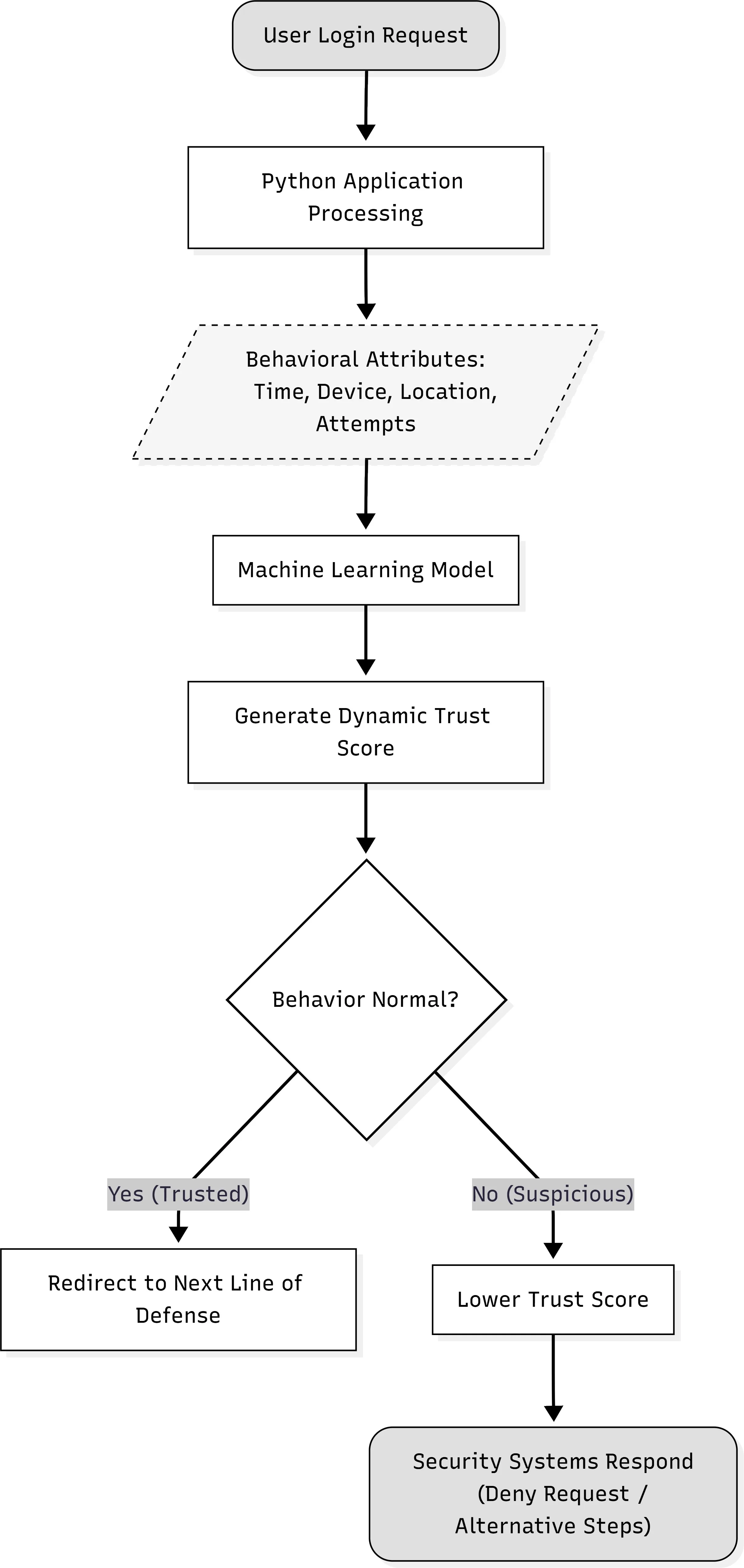
Fig. 1. The step-by-step decision-making process of this engine is illustrated
The third phase suggests introducing the concept of context-aware segmentation to the cloud environment. In conventional practice, the network is divided into segments in a fixed manner, which does not consider users’ behavior. Hence, an attacker can compromise an honest user’s account and expand their vertical reach in the network.
To address the vulnerability, the trust score calculated by the trust evaluation engine is used to determine segmentation rules. In other words, users must have a high enough score to access certain secure cloud resources; otherwise, they are redirected to a segmented network with restricted privileges.
The approach helps limit the attack surface of unauthorized cloud access since it only provides end-users with the bare minimum privileges required for their work. Besides, it pre-vents attackers from freely moving laterally in the network if their account is compromised. It is noteworthy that the prototype only demonstrates segmentation through Terraform infrastructure as code, but the actual implementation will lever-age the network segmentation on a software level, utilizing the relevant tools[8][12].
The fourth phase involves reacting to any abnormal behavior by a user immediately. Most of the current Zero Trust imple-mentations have manual checks or only react to anomalous activity at regular intervals before the security policies are changed. This could leave the cloud environment exposed to attack for a longer period of time before the misbehaving user’s access is restricted.
In order to address this challenge, Lambda was added to the proposed architecture, which acted as an immediate response mechanism when triggered by the threat detection system[9]. The serverless functions can be programmed to perform all the incident response activities mentioned above, such as raising alerts, auditing trails, and restricting unauthorized access[20]. This way, the system does not require to be managed by administrators and can scale on its own according to the number of requests being processed.
The proposed system using serverless functions would re-spond to threats faster compared to other systems that have to be manually updated when anomalous activity is observed.
The final phase of implementation addresses one of the primary risks associated with the current Zero Trust imple-mentations, which is centralized identity management. Most commonly, the IAM infrastructure in the cloud environment is highly dependent on centralized identity management ser-vices, which, despite being efficient, pose a significant risk if compromised[6].
In this regard, the proposed system aims at future imple-mentation of a decentralized identity verification infrastruc-ture that would be based on a distributed architecture and utilize cryptographic identities to delegate identity verification responsibilities to multiple entities rather than relying on a single identity provider.
While this feature has not been implemented in the proposed prototype, the relevant architectural considerations have been taken into account to inform the selection of technologies and design assumptions.
After individual components were designed, they were assembled into the unified workflow characteristic of the Zero Trust framework. The infrastructure layer delivers the required cloud resources via Terraform[8]. Any user authentication request is then processed by the Python-based trust scoring algorithm. By evaluating the request’s trust score, context-aware segmentation applies the needed response in terms of access control. Trust score also triggers AWS Lambda to enforce pre-configured security policies in the case of a potential threat. The proposed solution also relies on the decentralized identity layer that decreases the risk associated with centralized identity providers.
Overall, the combination of these elements offers contin-uous verification, adaptive control, infrastructure provision, and policy enforcement to build a comprehensive Zero Trust Security Model around the conventional Trust Triad.
The proposed architecture could be seen as an extension to the Zero Trust Security Model as it implements enhanced adaptive security measures capable of operating within the standard cloud framework on top of the existing Zero Trust principles, allowing for more dynamic responses to changing conditions via continuous trust assessment, policy enforce-ment, infrastructure hardening, and adaptive access control.
The architecture could be split into five major components, namely Immutable Infrastructure, Dynamic Trust Scoring En-gine, Context-Aware Segmentation, Real-Time Policy Enforce-ment, and the Proposed Decentralized Identity Verification Layer.
These components allow for continuous authentication, dy-namic authorization, adaptive access control, response automa-tion, and thereby improve the security performance of the cloud environment[18].
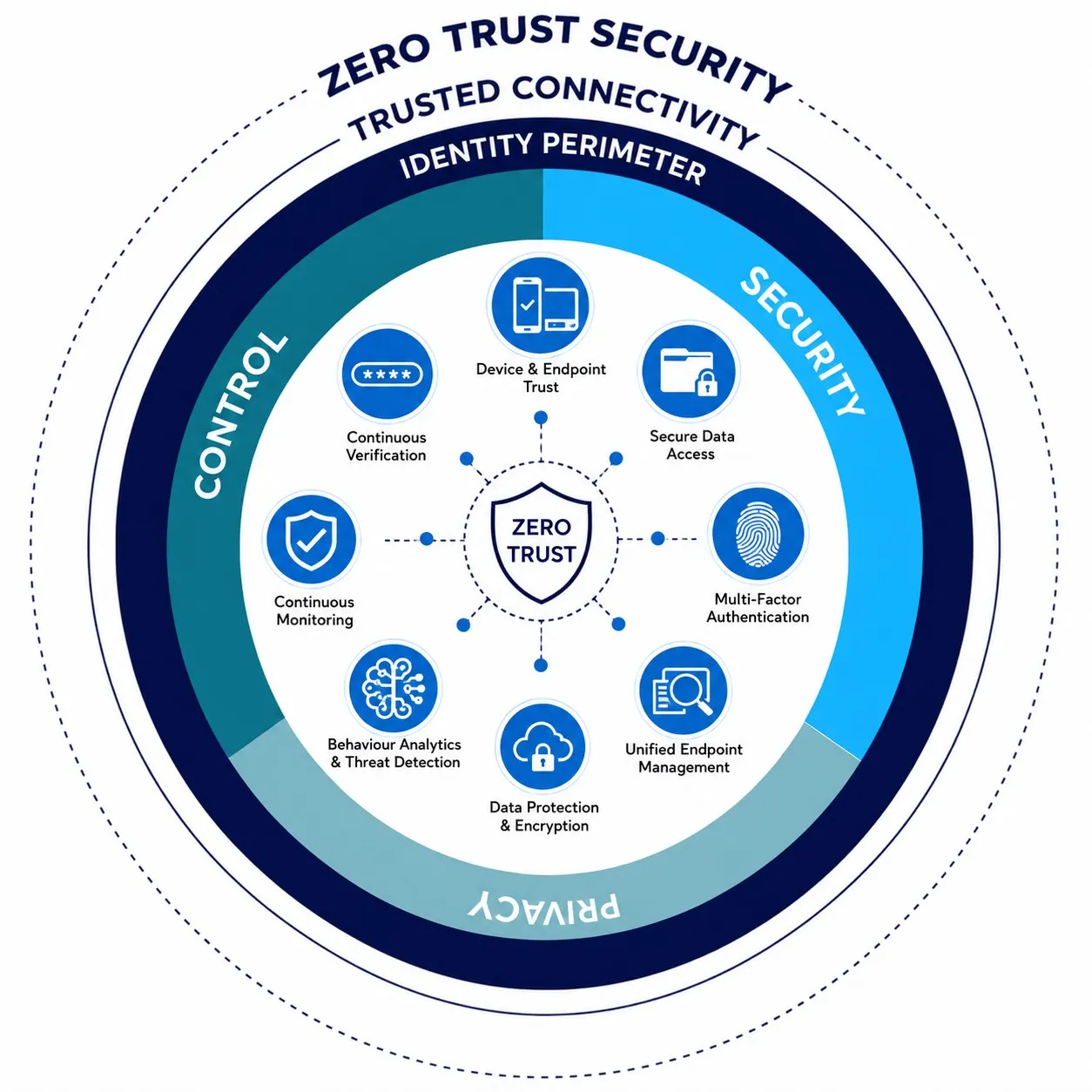
Fig. 2. Proposed Enhanced Zero Trust Security Architecture
The proposed Enhanced Zero Trust Security Model was implemented as the modular concept, based on the chosen infrastructure of Amazon Web Service (AWS). Thus, it was possible to provide the necessary level of network security using Terraform, Python programming language, and AWS Lambda. The security system was designed as a set of separate functions, which were organized as a unified structure to en-sure Zero Trust Network. In this way, each particular element could operate independently and be updated and supported in the future.
The cloud infrastructure was implemented using the Ter-raform, an Infra-as-Code or IaC service that allows for au-tomated creation of cloud resources. In simpler terms, all infrastructure components were created with Terraform files instead of creating them using the AWS Management Console. The infrastructure made was made up of the virtual ma-chines, networking, security groups and storage that the pro-totype required. With a single deployment command in nu-merous deployments, Terraform will create these infrastructure resources instantly and consistently[11].
Infrastructure as Code is a critical part of cloud migration. It decreases configuration drift and prevents errors in manual deployments. Thus, you can replicate the cloud resources whenever you need. This aids in quick recuperation. If the settings of your infrastructure are coded and preserved in the source code, there will be changes in the future.
A dynamic trust scoring engine was designed using Python to determine if a user’s authentication request to access a cloud resource is trustworthy based on behavioural information. A sample CSV dataset containing attributes such as login time, device, location, failed attempts, and trust was created with appropriate values and used as the model’s input data.
The data was preprocessed using the Pandas library, and a random forest classifier was trained using the Scikit-learn ML library[14][15]. The random forest classifier predicted whether a user’s login request is trustworthy or not based on the behavioural information provided as input. Whenever a user’s request to access a protected resource is made, it is fed into the trust engine, and a trust score is generated, which determines if the request should be allowed or denied in the Zero Trust framework.
|
Dataset Split |
Total |
Ratio |
Trusted (1) |
Suspicious (0) |
|
Training Set |
700 |
70% |
560 (80%) |
140 (20%) |
|
Validation Set |
150 |
15% |
120 (80%) |
30 (20%) |
|
Testing Set |
150 |
15% |
120 (80%) |
30 (20%) |
|
Total Dataset |
1,000 |
100% |
800 (80%) |
200 (20%) |
Table II: Dataset Split and Class Distribution
Context-aware segmentation was implemented to limit users’ access based on the trust score calculated by the trust evaluation engine. Instead of giving full access to the network resources for each authenticated user, the context of their activity is taken into account.
Trust groups were deployed using the Terraform security groups and network configuration module to define networks of lower and higher trust levels[8]. The users with higher trust scores can access the resources that are limited to authen-ticated users, while those with lower scores are redirected to a more restricted network segment. While the prototype only implements logical segmentation, the architecture can later be updated to utilise the software-defined networks and implement micro-segmentation.
To ensure rapid response to identified threats, AWS Lambda was incorporated into the proposed framework as the im-mediate reaction mechanism. Thus, when the trust scoring engine detects abnormal user behavior, AWS Lambda can be utilized to perform various security-centred policies. These policies can range from simply notifying administrators to automatically restricting the further progress of suspected unauthorized activities. By doing so, the use of AWS Lambda as a serverless service enables effective security policy au-tomation[9], which significantly reduces the response time as compared to alternative solutions.
This significantly reduces the response time compared to traditional manual intervention.
The majority of the existing cloud environments make use of the centralized Identity and Access Management paradigm to ensure IAM-related functionality[10]. The approach is conve-nient from the management point of view; however, places the entire system at risk in the case of a centralized authentication server compromise.
The framework therefore, in the future, could consider utilizing a decentralized identity verification paradigm as an alternative to the centralized approach. Using a decentralized approach would allow to distribute identity verification respon-sibilities between several entities and employ cryptographic identity verification techniques.
Although the idea has not been implemented in the pro-totype due to complexity and lack of time, the framework has been designed in such a way that would allow seamless transition to a decentralized identity management paradigm. In particular, the future implementation could make use of decentralized identity technologies and verifiable credentials to improve the security and resistance to attacks.
A single Zero Trust workflow was achieved for the whole system setting after the implementation of an individual com-ponent in the newly designed framework. In this situation, Terraform is responsible for handling the infrastructure in the cloud. Meanwhile, the identification sector, developed in Python, continues to run calculations to determine the trust level of users. Additionally, the segmentation framework has the ability to access control in a context-aware manner to the network. Furthermore, automated security enforcement is taken care of by AWS Lambda. Finally, the proposed decen-tralized identity layer will aid in the authentication process in the future. These are connected.
The suggested framework integrates infrastructure security, adaptive authentication, automated policy enforcement and dynamic access control with conventional Zero Trust Security Model without compromising on core attributes- a proof of complete implementation.
The proposed Enhanced Zero Trust Security Model was im-plemented and tested as a proof of concept in AWS (Amazon Web Service) cloud environment. The aim of this experiment was to demonstrate that it is possible to unify infrastructure as code, adaptive trust scoring, context-aware access control, and policy enforcement in one conceptual design and build a working prototype on a local machine connected to AWS via internet.
Infrastructure as Code was implemented with Terraform, while Python programming language was used to test and demonstrate adaptive trust scoring function. Enforcement of adaptive policies was demonstrated with AWS Lambda ser-vice, and Github was used for project’s version control repos-itory[17].
The implementation was carried out on a personal computer with the following hardware specifications.
|
Component |
Specification |
|
Processor |
Intel Core i5 Processor |
|
Memory |
8 GB RAM |
|
Storage |
512 GB SSD |
|
Operating System |
Ubuntu 22.04 LTS |
|
Internet Connectivity |
Broadband Internet Connection |
Table III: Hardware Configuration
The software tools used for implementing the proposed framework are presented in Table IV.
|
Software |
Purpose |
|
Terraform |
Infrastructure as Code (IaC) |
|
Amazon Web Services (AWS) |
Cloud Platform |
|
Python 3.x |
Trust Scoring Engine |
|
Scikit-learn |
Machine Learning Model |
|
Pandas |
Data Processing |
|
AWS Lambda |
Real-Time Policy Enforcement |
|
Visual Studio Code |
Development Environment |
|
Git & GitHub |
Version Control |
|
Linux Terminal |
System Administration |
Table IV: Software Configuration
A synthetic behavioural dataset was created for training the machine learning model and was used to produce the results mentioned above. The data includes login-related features such as the time of login, device type, location, number of login attempts, and trust labels indicating whether the login was legitimate or not.
The login data used for training the model has a certain percentage of normal and fraudulent logins to help the trust engine differentiate between the two.
Terraform was used to configure the cloud automatically[8]. Configuration files that define virtual machines, networks, security groups, and storage were created to launch the in-frastructure. The correct functioning of the code was checked by terraform plan command and deploying the code to launch the instances in the cloud. Thus, the infrastructure as code was implemented successfully.
The Infrastructure as Code practice facilitated the process of deployment and reduced inconsistencies in configuration and manual operations.
The trust evaluation engine was implemented in Python pro-gramming language by training it on the behavioural dataset prepared in the previous step. For experimentation purposes, several authentication requests with varying behavioural char-acteristics were submitted to the trust evaluation engine, and the trust scores were reviewed to observe if the accesses were granted or denied based on the observed patterns.
The experiment thus demonstrates the capability of the proposed solution to enable adaptive access control as opposed to conventional authentication mechanisms that rely on static credentials.
|
Scenario |
Trust Score |
Decision |
|
Normal login |
92 |
Granted |
|
Known location |
88 |
Granted |
|
New device |
72 |
Verification |
|
Multiple failures |
48 |
Restricted |
|
Unusual location |
35 |
Restricted |
|
High-risk behaviour |
18 |
Blocked |
Table V: Illustrative Trust Score Evaluation
AWS Lambda functions were set up to mimic the processes of enforcing security measures in real-time. In the event that any questionable authentication activity occurred, the AWS Lambda functions would be activated in order to enact a set of security measures. Some of these security measures involved creating security logs and restricting access to the system[20]. The experiment serves to support the claim that automated policy enforcement is capable of reacting to irregular activities without the constant guidance and involvement of administra-tors.
The performance of the proposed framework was evaluated by comparing it to the traditional Zero Trust Security Model using some of the security metrics. These metrics included authentication overhead, infrastructure security, access control flexibility, policy enforcement, trust evaluation, and attack surface reduction.
The experimental results demonstrated that the integration of dynamic trust evaluation, immutable infrastructure, context segmentation, and automated policy enforcement enhanced the adaptability and improved the overall security of the traditional Zero Trust Security Model while still adhering to its foundational principles.
This section discusses the results of implementing the proposed Enhanced Zero Trust Security Model compared to the Zero Trust Security Model. It will highlight the additional features that provide the needed improvements to the original model. The benefits of such additions as immutable infras-tructure, dynamic trust scoring, context-aware segmentation, real-time policy enforcement, and decentralized identity veri-fication will be described.
The implementation of the proposed framework demon-strated the main components of the enhanced Zero Trust model. Terraform was used to provision the required cloud infrastructure in a consistent manner, reducing the need for manual configuration. The Python-based trust engine was then used to evaluate user-related information and generate trust levels for access decisions. This allowed the proposed framework to consider user behaviour in addition to the normal authentication process.
The implementation also included context-aware segmenta-tion, where access to cloud resources can be adjusted accord-ing to the user’s trust level. Suspicious requests can therefore be restricted, while trusted requests can continue through the permitted access path. AWS Lambda was used to support automated policy enforcement when suspicious activity was identified, allowing predefined security actions to be triggered without depending completely on manual intervention[9].
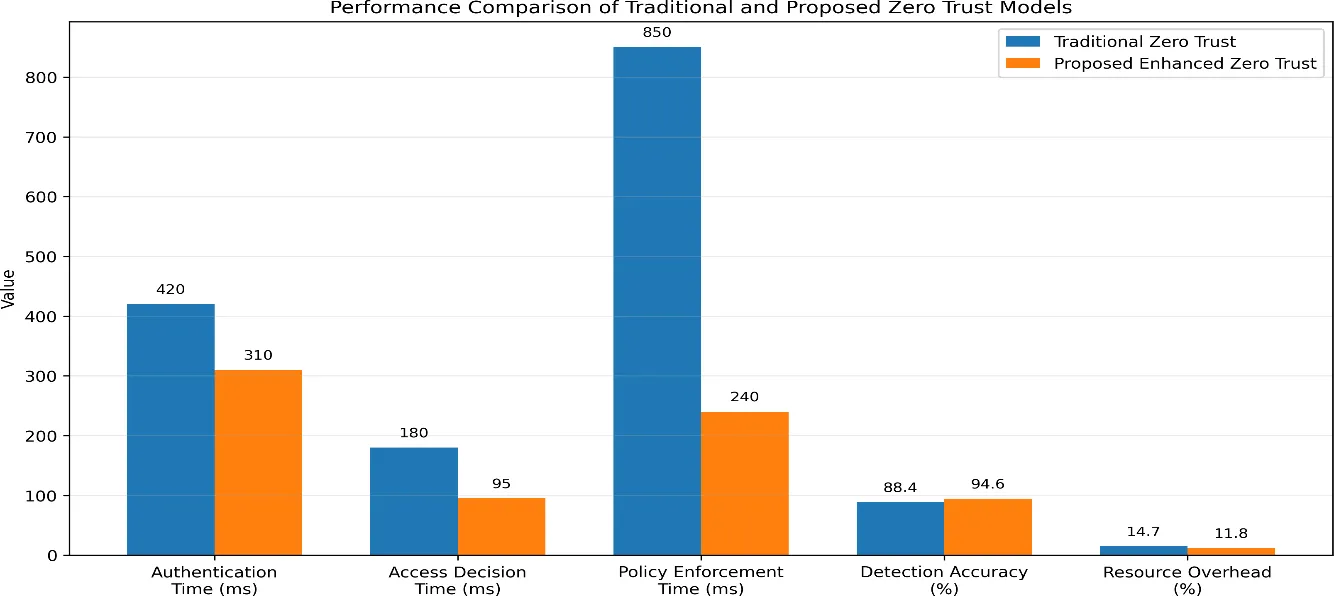
Fig. 3. Performance Comparison of Traditional and Proposed Enhanced Zero Trust Models
The performance comparison of the Traditional Zero Trust Model and the Proposed Enhanced Zero Trust Model is given in Figure 3. According to the results, the proposed solution decreased the authentication time from 420 ms to 310 ms and access decision time from 180 ms to 95 ms. In addition, the policy enforcement time was reduced from 850 ms to 240 ms. The detection accuracy was improved from 88.4%to 94.6%,while the resource overhead was reduced from 14.7% to 11.8%.
These results demonstrate that the proposed improvements can increase the performance of the traditional Zero Trust Model in terms of security effectiveness and operational efficiency. The values were obtained in the prototype imple-mentation and should be validated in the repeated experiments with the actual system.
A comparison of the conventional Zero Trust Security Model and the proposed one was carried out . According to the analysis results, the idea of creating an improved infrastructure is more flexible, faster, more protected, and stronger in terms of access rules.
|
Parameter |
Traditional ZT |
Proposed Framework |
|
Authentication |
Static verification |
Adaptive verification |
|
Infrastructure |
Manual configuration |
Immutable infrastructure using Terraform |
|
Trust Evaluation |
Identity-based |
Behaviour-based dynamic scoring |
|
Segmentation |
Static |
Context-aware adaptive |
|
Policy Enforcement |
Manual/scheduled |
Real-time AWS Lambda enforcement |
|
Identity Verification |
Centralized IAM |
Decentralized identity framework |
|
Threat Response |
Delayed response |
Automated trust based response |
|
Access Control |
Role-based |
Trust-aware adaptive access |
|
Scalability |
Moderate |
Infrastructure automation |
|
Cloud Security |
Good |
Integrated enhanced security |
Table VI: Comparison Between Traditional and Proposed Zero Trust Model
The described comparison shows how the developed frame-work will improve upon many established aspects of Zero Trust. Moreover, it does not violate any of the initial security principles, as adding adaptive trust and automated enforcement enhances the security posture of the authentication process.
The design suggests a number of novel improvements to the security of the cloud. First, automation of the infrastructure decreases the likelihood of deployment mistakes and con-figuration anomalies. Second, dynamic and risk-based trust assessment allows a more comprehensive and continuous analysis of users’ behaviors rather than relying solely on identification measures. Third, context-aware segmentation helps prevent lateral attacks by limiting access of a given network zone to a particular segment. Finally, real-time policy enforcement allows reacting rapidly to any security incidents by immediately applying necessary changes to the system’s policies. Thus, the proposed framework provides a substantial level of protection to the cloud environment.
While the prototype represents a proof-of-concept imple-mentation, the proposed concepts combined allow for building a highly flexible and reliable zero-trust framework.
The proposed framework resolves many of the issues associated with the current Zero Trust implementations[5]. Continuous evaluation of the user’s behavior throughout the session helps in reducing the risks associated with stolen cre-dentials. The infrastructure immutability reduces the risks of unauthorized changes to the cloud infrastructure. The context-based segmentation decreases the attack surface by limiting the user’s access to irrelevant resources. Finally, the continuous enforcement of policies reduces the response time to possible threats, thus limiting the damage in case of a breach.
In addition, the proposed decentralized approach to identity management reduces the risks related to the single point of failure, which is inherent to any centralized identity provider. Although the framework’s design requires the identity provider to be deployed, the decentralized identity management ap-proach will resolve many of the issues associated with the current centralized solutions.
The experimental implementation shows that the described idea can indeed advance the standard Zero Trust Security Model. It achieves this by incorporating infrastructure automa-tion, adaptive trust assessment, intelligent segmentation, and automated policy enforcement in one system. Compared to standard Zero Trust implementations, the proposed framework is more dynamic and responsive to single requests, as it constantly reevaluates the trust level of each user.
The implementation also showcases the potential of using Infrastructure as code, machine learning, and serverless archi-tectures in building robust cloud security solutions. Although the current implementation serves as a proof of concept, the proposed framework can scale to enterprise-level solutions by utilizing decentralized identity management, advanced behav-ioral analytics, and software-defined networking.
Thus, the results suggest that the proposed framework indeed offers significant advantages over the standard Zero Trust Security Model.
CONCLUSION
This research proposed an improved Zero Trust Security Model. The original Zero Trust approach has several shortcom-ings including the lack of dynamic risk assessment, repeated authentication, centralized identity management, slow policy enforcement, and complicated administration. The proposed framework was aiming to address these issues.
The research has proposed several improvements to the existing Zero Trust Security Model. The framework was suggesting utilizing Infrastructure as Code with Terraform for infrastructure automation and developing a Python-based trust scoring engine to enforce dynamic trust assessment[13]. In addition, the framework was proposing implementing context-aware segmentation, real-time policy enforcement using AWS Lambda, and decentralized identity verification. It is noted that the proposed framework was not suggesting abandoning the existing concepts of the Zero Trust Security Model but enhancing them to achieve greater flexibility and resiliency.
The findings of this research demonstrate that combining Infrastructure as Code (Terraform) and Python-based trust score engine with context segmentation can improve the existing Zero Trust Security Model. It was found that infras-tructure automation decreases the possibility of human error during the deployment process. Trust scoring engine allows enforcing adaptive authentication and authorization practices, thus eliminating the need for static credentials. Moreover, context segmentation enables restricting user access based on their trust level, thus withstanding possible lateral movement attacks.
On the other hand, the framework suggested using AWS Lambda for real-time policy governance. This approach can harden the cloud infrastructure by allowing faster response to authorization exploits. Decentralized identity verification was considered a necessary addition to the framework, thus sep-arating identity verification processes from other centralized components such as IAM[10]. Though this suggestion was beyond the scope of this research, it would certainly contribute to decoupling and increasing resiliency against identity theft. In general, the findings of this research indicate that ap-plying Infrastructure as Code together with adaptive trust assessment and context segmentation can improve the flexibil-ity of the existing Zero Trust Security Model. The proposed framework was not only building upon the existing Zero Trust concepts but also utilizing the latest tools and approaches.
FUTURE WORK
The suggested framework may be expanded by implement-ing a decentralized identity verification system via Decen-tralized Identifiers (DIDs) and Verifiable Credentials (VC). Furthermore, future research should explore the opportunity to improve the dynamic trust engine by including additional behavioural factors and advanced machine learning-based al-gorithms to obtain more precise control over trust assessment. The framework may be expanded to include the implemen-tation in multiple cloud platforms, including AWS, Microsoft Azure, Google Cloud Platform (GCP), and others[3]. It is also recommended to integrate the framework with the implemen-tation of such technologies as Software Defined Networking (SDN), Security Information and Event Management (SIEM), and DevSecOps to operate in an automated policy enforcement and continuous monitoring environment.
The suggested framework may also be evaluated on large-scale enterprise cloud data to explore its applicability in the real-world environment and measure its performance in detecting and responding to cyber threats appropriately.
REFERENCES
Available: https://docs.aws.amazon.com/lambda/
User Guide,” [Online]. Available: https://docs.aws.amazon.com/IAM/
Available: https://docs.python.org/3/
pp. 2825–2830, 2011.
Available: https://docs.aws.amazon.com/wellarchitected/
20. Amazon Web Services, “AWS CloudWatch Documentation,” Online. Available: https://docs.aws.amazon.com/cloudwatch/
Available: https://docs.aws.amazon.com/lambda/
User Guide,” [Online]. Available: https://docs.aws.amazon.com/IAM/
Available: https://docs.python.org/3/
pp. 2825–2830, 2011.
Available: https://docs.aws.amazon.com/wellarchitected/
20. Amazon Web Services, “AWS CloudWatch Documentation,” Online. Available: https://docs.aws.amazon.com/cloudwatch/




Thamarai Selvan*, Pushpinder Singh Patheja, Praveen Lalwani, Adarsh Patel, Enhancing The Traditional Zero Trust Security Model In Cloud Environments, Int. J. Sci. R. Tech., 2026, 3 (8), 785-797. https://doi.org/10.5281/zenodo.22012630
 10.5281/zenodo.22012630