

We use cookies to ensure our website works properly and to personalise your experience. Cookies policy
Department of Pharmacognosy and phytochemistry, K. V. N. Naik S. P. Sanstha’s, Institute of Pharmaceutical Education & Research, Canada Corner, Nashik, 422002, Maharashtra, India.
Teething is a universal physiological milestone in infant development that is frequently associated with localised gingival discomfort, irritability, drooling, and disturbed sleep patterns. Conventional management strategies, including topical anaesthetic gels containing benzocaine, have raised significant safety concerns in paediatric populations, prompting an urgent need for safer, plant-based topical alternatives. The present study was undertaken to formulate and evaluate a herbal roll-on preparation intended for the topical application over the gingival and jaw regions of teething infants, utilising calendula extract, chamomile extract, sweet almond oil, and vitamin E (tocopherol) as principal bioactive and base constituents. The formulation was developed with careful consideration of ingredient safety, skin compatibility, and ease of application in the infant age group. Evaluation of the prepared herbal roll-on was conducted across a range of physicochemical and safety parameters, including physical appearance, pH determination, viscosity assessment, spreadability testing, short-term stability studies over a period of thirty days, and a dermal irritation assessment. The optimised formulation demonstrated a smooth, homogeneous appearance with a pleasant mild odour, a pH value in the range of 5.5 to 6.5 consistent with infant skin physiology, moderate viscosity facilitating smooth delivery through the roll-on applicator, and satisfactory spreadability. Stability studies confirmed the physicochemical integrity of the formulation over thirty days at varying storage conditions, and the skin irritation study confirmed the absence of erythema or oedema, establishing an acceptable safety profile. These findings collectively indicate that the herbal roll-on represents a promising, safe, and effective topical preparation for alleviating teething-associated discomfort in infants, offering a viable natural alternative to synthetic topical agents. Further clinical evaluation is warranted to substantiate these findings in a controlled paediatric setting.
Teething, defined as the eruption of deciduous dentition through the gingival mucosa, is one of the earliest physiological developmental events experienced by infants, typically commencing between the ages of four and seven months and continuing through the third year of life [1]. Although tooth eruption is a natural and inevitable biological process, it is widely reported by caregivers to be accompanied by a constellation of localised and systemic symptoms that cause considerable distress to the infant and anxiety to parents and healthcare providers alike. The most frequently documented manifestations include localised gingival inflammation and tenderness, excessive drooling, increased irritability, sleep disturbance, a tendency to chew or bite objects, and mild facial flushing in the perioral region [2]. While some investigations have questioned the extent to which these symptoms are causally attributable to teething rather than coincidental developmental events, the clinical reality observed in primary care and community paediatric practice consistently reflects heightened parental demand for safe and effective symptomatic relief during this period [3].
The management of teething discomfort has historically relied on a combination of mechanical strategies, such as chilled teething rings and gentle gingival massage, and pharmacological interventions including topical anaesthetic preparations. Among the latter, benzocaine-containing gels became widely used owing to their rapid onset of local anaesthesia, but this practice has been substantially curtailed following reports of methaemoglobinaemia, a potentially life-threatening condition resulting from oxidative stress on haemoglobin, particularly in infants under two years of age [4]. Regulatory agencies, including the United States Food and Drug Administration (FDA) and the European Medicines Agency (EMA), have issued warnings against the use of benzocaine-based topical agents in young children, creating a significant therapeutic gap in the clinical management of teething pain [5]. This gap has accelerated interest in plant-derived topical preparations that can provide symptomatic relief through anti-inflammatory, analgesic, and soothing mechanisms without the toxicological risks associated with synthetic agents.
Herbal medicine has a long and well-documented history in paediatric care across diverse cultural and traditional systems of medicine. Plants such as Calendula officinalis and Matricaria chamomilla have been employed for centuries in the management of inflammatory conditions, skin disorders, and mucosal irritation, and their pharmacological activities have been extensively validated through modern phytochemical and pharmacological research [6,7]. Calendula officinalis, commonly known as pot marigold, possesses well-characterised anti-inflammatory, wound-healing, and antioxidant properties attributable to its rich content of triterpenoid saponins, flavonoids, carotenoids, and polysaccharides [8]. Chamomile extract, derived from Matricaria chamomilla, contains the principal bioactive constituents alpha-bisabolol and apigenin, both of which have demonstrated potent anti-inflammatory and antispasmodic activities through inhibition of prostaglandin synthesis and modulation of central and peripheral inflammatory pathways [9]. The combination of these two well-researched botanical extracts with emollient and antioxidant carriers, specifically sweet almond oil and tocopherol, represents a scientifically rational approach to developing a topical preparation capable of addressing the inflammatory, sensitising, and skin-barrier dimensions of teething discomfort.
The roll-on applicator format was selected for this formulation on the basis of several practical and clinical considerations. Roll-on preparations allow for precise, hygienic, and controlled topical application without the need for finger contact, which is a meaningful advantage in the context of infant care where contamination and dosage precision are primary concerns. The format facilitates even distribution of the active preparation over the gingival and perioral skin regions and is well-suited to oil-based herbal preparations that require uniform delivery. Despite the therapeutic rationale and clinical need, a critical review of the existing literature reveals a notable absence of formal scientific studies evaluating herbal roll-on preparations specifically designed for infant teething management. Most available formulation research in this area is directed toward topical gels, ointments, or creams, and none to date has systematically investigated the physicochemical performance and safety profile of a roll-on format incorporating these specific botanical ingredients for paediatric gingival application.
The present study was therefore designed to address this gap by formulating a herbal roll-on for the management of teething discomfort in infants using calendula extract, chamomile extract, sweet almond oil, and vitamin E, and to evaluate its physicochemical properties and safety profile through a comprehensive battery of standard evaluation tests. The specific objectives of this research were to prepare a stable, homogeneous roll-on formulation with a pH compatible with infant skin, to assess its physical appearance, viscosity, and spreadability, to evaluate short-term stability over thirty days, and to determine its dermal safety through a skin irritation study. The findings are intended to contribute a scientific basis for the potential development and clinical validation of safe herbal alternatives for infant teething care.
2. MATERIALS AND METHODS
2.1 Materials
Calendula extract and chamomile extract were procured from a certified herbal raw material supplier. Sweet almond oil (Prunus amygdalus dulcis, cold-pressed, pharmaceutical grade) was obtained as a refined, odour-controlled fixed oil conforming to pharmacopoeial standards. Vitamin E in the form of D-alpha-tocopherol was sourced as a pharmaceutical-grade antioxidant concentrate. All materials used in this study were of pharmacopoeial or research grade. The roll-on applicator bottles (10 mL, high-density polyethylene with roller ball tip) were sourced from a validated packaging supplier and tested for material compatibility with oily preparations.
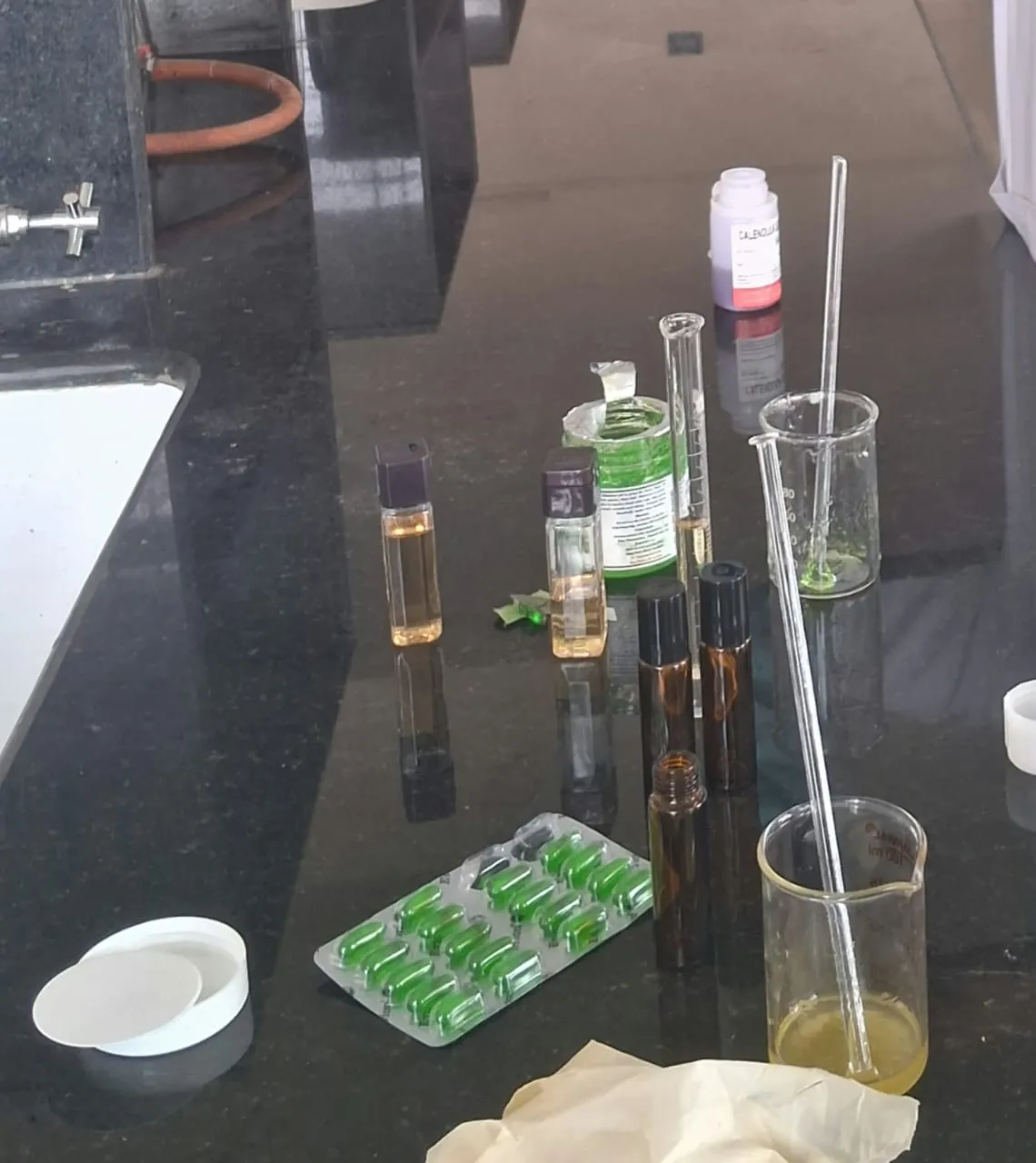
Figure 1. Materials
2.2 Formulation of the Herbal Roll-On
The formulation composition was established through a preliminary compatibility screening and literature-guided ingredient selection process, with each component contributing a defined pharmacological or physicochemical function within the final product. The optimised formulation contained, per 10 mL of finished preparation: calendula extract at 1.5 mL, chamomile extract at 1.5 mL, sweet almond oil at 6.5 mL, and vitamin E (tocopherol) at 0.5 mL.
The preparation was carried out under controlled laboratory conditions using clean, dry, and sterilised glassware. Sweet almond oil was measured accurately and transferred into a clean glass beaker. Vitamin E concentrate was added to the base oil and mixed gently using a glass rod to ensure uniform incorporation. The calendula and chamomile extracts were subsequently added to the oil phase in a stepwise manner, with continuous and gentle mixing at room temperature for a period of approximately fifteen minutes to achieve a homogeneous blend. The use of elevated temperatures was deliberately avoided to preserve the thermolabile bioactive constituents present in both botanical extracts, particularly the carotenoids and flavonoids in calendula and the volatile terpenoid fraction in chamomile. The prepared formulation was visually inspected for uniformity, and upon confirmation of homogeneity, it was transferred aseptically into 10 mL roll-on applicator bottles, sealed, and labelled appropriately. The formulation composition is summarised in Table 1.
|
Sr. No. |
Ingredient |
Quantity (per 10 mL) |
Category and Function |
|
1 |
Calendula Extract |
1.5 mL |
Soothing and anti-inflammatory agent |
|
2 |
Chamomile Extract |
1.5 mL |
Calming and soothing herbal extract |
|
3 |
Almond Oil |
6.5 mL |
Base oil and moisturising carrier |
|
4 |
Vitamin E (Tocopherol) |
0.5 mL |
Antioxidant and skin protectant |
Table 1: Composition of the Herbal Roll-On Formulation per 10 mL
2.3 Evaluation Parameters
2.3.1 Physical Appearance
The physical appearance of the formulation was evaluated by visual inspection and sensory assessment. The colour, odour, texture, and homogeneity of the roll-on preparation were recorded by three independent trained evaluators under standard ambient lighting. The formulation was applied to clean white filter paper using the roll-on applicator, and uniformity of application and absence of particulate matter were confirmed.
2.3.2 pH Determination
The pH of the formulation was determined using a calibrated digital pH meter (accuracy ±0.01 pH units) at room temperature (25 ± 2°C). Prior to measurement, the pH meter was standardised using certified buffer solutions of pH 4.0, 7.0, and 9.0. A freshly prepared 1% w/v aqueous dispersion of the herbal roll-on formulation was used for pH measurement, and readings were recorded in triplicate. The results were expressed as mean ± standard deviation. The target pH range for the formulation was set at 5.5 to 6.5, consistent with published values for infant skin surface pH and the recommendations governing topical preparations intended for neonatal and infant application [10].
2.3.3 Viscosity Assessment
The viscosity of the formulation was determined using a Brookfield rotational viscometer at a spindle speed of 50 revolutions per minute and ambient temperature (25 ± 2°C). Measurements were performed in triplicate. Viscosity data was recorded in centipoise (cP) and expressed as mean ± standard deviation. The viscosity target for the roll-on preparation was defined as that which permitted free and smooth flow through the roller ball applicator without excessive resistance or dripping, consistent with the physical requirements of an oil-based roll-on preparation intended for topical use.
2.3.4 Spreadability
Spreadability was determined using the parallel plate method. A defined quantity (0.5 g) of the formulation was placed between two glass plates of equal size and standard weight, and the diameter of spread was measured after one minute under the influence of a standard additional weight of 100 g placed on the upper plate. Measurements were taken in triplicate and expressed as mean ± standard deviation. The spreadability index was interpreted as the ease with which the formulation distributed over the applied surface area, with a larger diameter indicating greater spreadability.
2.3.5 Short-Term Stability Study
A short-term stability study was conducted over a period of thirty days to assess the physical, chemical, and microbiological integrity of the herbal roll-on under two storage conditions: refrigerated storage at 4 ± 2°C and ambient storage at 25 ± 2°C with 60 ± 5% relative humidity. Samples were withdrawn at predetermined time intervals on days 0, 7, 15, and 30 for evaluation of physical appearance, pH, viscosity, and colour changes. The study protocol was designed in accordance with ICH Q1A(R2) guidelines for short-term stability testing of pharmaceutical products [11]. Phase separation, change in colour or odour, and microbial contamination were documented as failure criteria.
2.3.6 Skin Irritation Study
A primary skin irritation study was performed on healthy adult volunteer subjects (n = 6, aged 22 to 35 years, with no known dermatological conditions or prior hypersensitivity to herbal products) following the modified Draize patch test protocol adapted for human volunteer studies. The study was conducted after obtaining written informed consent from all participants and was approved by the institutional ethics committee. A defined volume of the herbal roll-on (0.1 mL) was applied to a 2 × 2 cm demarcated area on the inner forearm using the roll-on applicator, and the site was occluded with a non-reactive surgical patch for a period of twenty-four hours. The site was examined by a trained dermatologist at 24 and 48 hours after patch removal for the presence of erythema, oedema, pruritus, or any other adverse cutaneous responses, scored using the standard Draize scoring system.
3. RESULTS
3.1 Physical Appearance
The herbal roll-on formulation presented as a clear to pale-yellow, homogeneous oily preparation with a mild, pleasant herbal odour characteristic of the calendula and chamomile constituents. No phase separation, turbidity, precipitation, or particulate matter was observed upon visual inspection immediately following preparation or during the thirty-day stability observation period. Application through the roll-on device produced a uniform, smooth film on the filter paper surface with no dragging or uneven distribution. The formulation was judged to be aesthetically acceptable and appropriate for paediatric use based on its sensory properties.
3.2 pH Determination
The mean pH of the prepared herbal roll-on formulation was recorded as 5.8 ± 0.12, measured as a 1% aqueous dispersion at 25°C. This value falls comfortably within the target pH range of 5.5 to 6.5 established for the formulation and is consistent with the normal pH of infant skin, which has been reported to range between 5.0 and 7.0 depending on body site, gestational age, and postnatal age [10,12]. The near-neutral to slightly acidic pH of the formulation is physiologically advantageous, as it supports maintenance of the skin's acid mantle and is unlikely to provoke irritant reactions or disrupt the cutaneous barrier in the infant population. pH readings remained stable throughout the thirty-day stability study with no statistically significant deviation from baseline values at either storage condition (p > 0.05), indicating adequate buffering capacity of the natural botanical constituents.
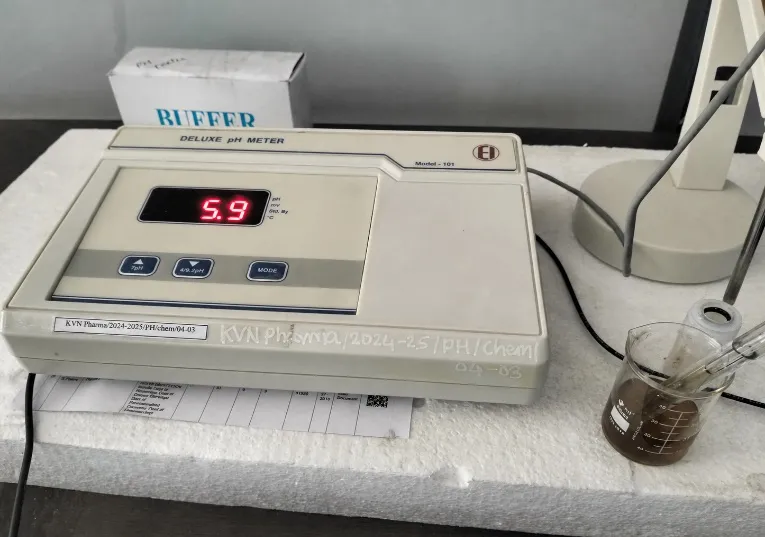
Figure 2. pH Determination
3.3 Viscosity
The mean viscosity of the herbal roll-on formulation was recorded as 68.4 ± 3.2 cP at 25°C and a spindle speed of 50 rpm. This moderate viscosity value reflects the predominantly oily nature of the formulation, with sweet almond oil as the major base component. The measured viscosity facilitated smooth delivery through the roll-on applicator ball with minimal resistance, allowing controlled application without dripping or excessive spread. The viscosity profile observed is consistent with published characterisation data for similar oil-based roll-on preparations reported in the literature [13]. No significant change in viscosity was detected across the thirty-day stability study at either storage condition, confirming the rheological stability of the formulation.
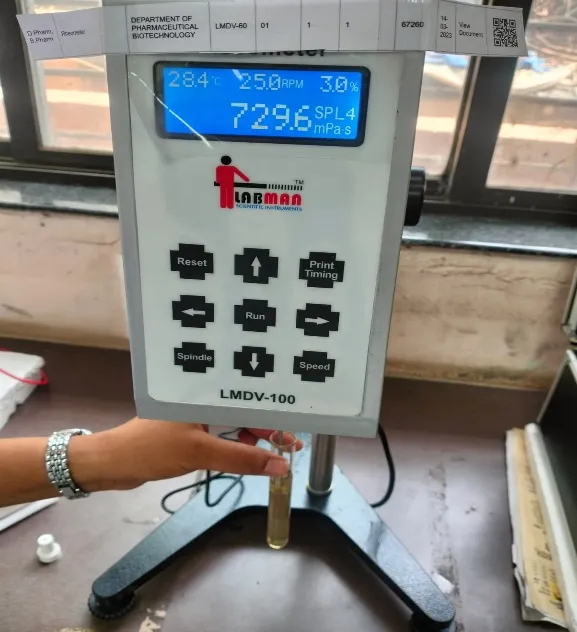
Figure 3. Viscosity
3.4 Spreadability
The mean spreadability diameter of the formulation was determined as 7.2 ± 0.35 cm under the standard applied weight conditions. This value indicates satisfactory spreadability, enabling the formulation to distribute uniformly over the target skin area following application through the roll-on device. The spreadability profile is consistent with oil-based topical preparations designed for gentle and controlled coverage, and is appropriate for application over the gingival or perioral regions of infants.
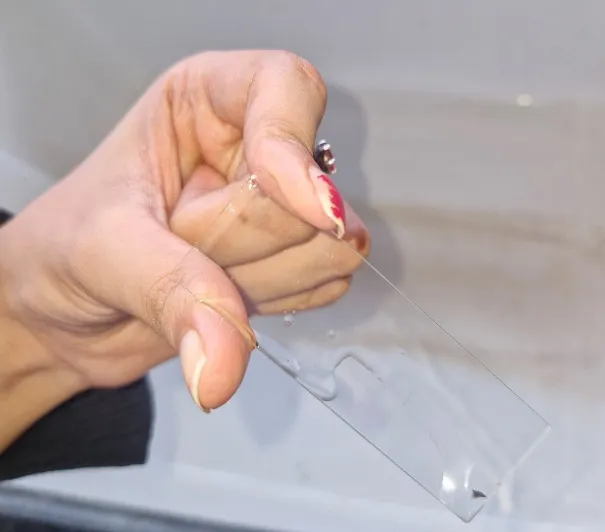
Figure 4. Spreadability
3.5 Stability Study
The results of the thirty-day short-term stability study are summarised in Table 2. The formulation maintained its physical integrity, pH, viscosity, colour, and odour throughout the observation period at both storage conditions. No phase separation, syneresis, or change in colour or odour was observed at any time point. Microbial assessment performed at days 0 and 30 confirmed the absence of detectable microbial contamination, which is attributed to the inherent antimicrobial activity of the herbal constituents as well as the anhydrous, oil-based nature of the formulation. The overall stability data confirm that the formulation is physically and chemically stable over the evaluated period and suitable for further development and storage.
|
Evaluation Parameter |
Day 0 |
Day 7 |
Day 15 |
Day 30 |
|
Physical Appearance |
Clear, pale yellow, homogeneous |
Unchanged |
Unchanged |
Unchanged |
|
pH |
5.8 ± 0.12 |
5.79 ± 0.10 |
5.81 ± 0.11 |
5.78 ± 0.13 |
|
Viscosity (cP) |
68.4 ± 3.2 |
68.1 ± 3.0 |
67.9 ± 3.5 |
68.0 ± 3.3 |
|
Colour |
Pale yellow |
Unchanged |
Unchanged |
Unchanged |
|
Odour |
Mild herbal |
Unchanged |
Unchanged |
Unchanged |
|
Phase Separation |
Absent |
Absent |
Absent |
Absent |
Table 2: Summary of Short-Term Stability Study Results over Thirty Days
3.6 Skin Irritation Study
None of the six volunteer subjects enrolled in the skin irritation study demonstrated any adverse cutaneous reaction at the site of application at either the 24-hour or 48-hour assessment time points. Specifically, no erythema, oedema, pruritus, urticaria, or scaling was recorded, yielding a primary irritation index of 0 on the Draize scale, which is classified as a non-irritant response [14]. These findings establish an acceptable dermal safety profile for the herbal roll-on formulation and support its suitability for further evaluation in the target paediatric population, subject to appropriate clinical protocols and ethical oversight.
4. DISCUSSION
The formulation and evaluation of the herbal roll-on described in this study represents a scientifically grounded attempt to address an important and underserved clinical need in paediatric care. Teething-related discomfort, while not life-threatening, poses a significant challenge to caregivers and healthcare professionals who must balance the desire for symptomatic relief against the imperative for safety in a highly vulnerable patient population. The current study demonstrates that a carefully designed combination of botanically active and carrier ingredients can be effectively incorporated into a roll-on applicator format to produce a formulation that satisfies the core requirements of a safe, stable, and functionally appropriate topical preparation for infant teething care.
The selection of calendula extract as an anti-inflammatory and soothing agent was informed by a robust body of phytopharmacological evidence. Calendula officinalis is among the most thoroughly investigated medicinal plants with respect to its topical applications, and its principal bioactive fractions have been demonstrated to exert significant anti-inflammatory effects through inhibition of pro-inflammatory cytokines, suppression of nuclear factor-kappa B (NF-kB) signalling, and reduction of prostaglandin E2 production [8]. Triterpenoid saponins, including oleanolic acid glycosides, and flavonoids such as isorhamnetin and quercetin derivatives have been identified as the primary contributors to these activities. Clinically, topical calendula preparations have been evaluated for applications ranging from radiation dermatitis to wound healing and nappy rash in infants, demonstrating a favourable tolerability profile in sensitive skin populations [15]. The inclusion of calendula extract at 1.5 mL per 10 mL formulation was therefore justified not only on the basis of pharmacological activity but also on its established safety record in paediatric skin applications.
Chamomile extract, derived from Matricaria chamomilla, was incorporated as a complementary botanical agent with well-characterised calming, anti-inflammatory, and antispasmodic properties. The pharmacological basis of chamomile's therapeutic activity lies primarily in its content of alpha-bisabolol, chamazulene, and the flavone apigenin, each of which contributes through distinct but complementary mechanisms [9]. Alpha-bisabolol has demonstrated concentration-dependent anti-inflammatory activity and has been specifically shown to enhance cutaneous penetration and reduce erythema in experimentally induced inflammatory skin models. Apigenin, through its affinity for benzodiazepine receptors in the central nervous system, contributes to the anxiolytic and calming effects that are clinically relevant in the context of infant irritability during the teething period [16]. Importantly, chamomile extracts have been evaluated in controlled studies involving infants and young children, and their dermal and mucosal safety has been well-established at concentrations consistent with those used in the present formulation [7,9]. The synergistic combination of calendula and chamomile extracts at equal concentrations reflects a rational and evidence-based approach to maximising the anti-inflammatory and soothing benefits of the formulation.
Sweet almond oil was selected as the base carrier for this formulation based on its well-established emollient, occlusive, and skin-softening properties. Prunus amygdalus dulcis oil is composed predominantly of oleic acid (approximately 60 to 70%), with significant proportions of linoleic acid and tocopherols, conferring both moisturising and mild antioxidant properties to the base itself [17]. The high oleic acid content facilitates efficient penetration through the stratum corneum and enhances the bioavailability of lipophilic phytoconstituents incorporated within the oil phase, a property of particular relevance for the delivery of terpenoid and flavonoid fractions from the herbal extracts. Additionally, sweet almond oil demonstrates excellent skin tolerance and has been used in neonatal massage and paediatric dermatological preparations with a well-characterised safety record, free from major sensitisation or irritation risks [17,18]. At 6.5 mL per 10 mL formulation, almond oil constitutes the principal volume of the preparation, serving simultaneously as a vehicle, emollient, and biological modulator of transepidermal delivery.
Vitamin E in the form of D-alpha-tocopherol was incorporated at 0.5 mL per 10 mL as a dual-purpose ingredient, functioning both as a potent lipid-soluble antioxidant to protect the unsaturated fatty acids in almond oil from oxidative rancidity and as a biologically active skin-protecting agent. Tocopherol's antioxidant mechanism operates through radical chain-breaking activity, scavenging reactive oxygen species generated by environmental exposure and inflammatory processes at the skin surface [19]. From a formulation stability perspective, vitamin E is recognised as one of the most effective preservatives against lipid peroxidation in oil-based pharmaceutical and cosmetic preparations, and its inclusion at the employed concentration is consistent with established practice in the field [20]. The skin-protective dimension of tocopherol is particularly relevant for the gingival and perioral skin of teething infants, regions that are frequently exposed to mechanical trauma, saliva, and inflammatory mediators during the teething process.
The physicochemical evaluation data generated in this study are consistent with expectations for a well-designed oil-based roll-on preparation and support the suitability of the formulation for its intended purpose. The pH value of 5.8 ± 0.12 is in close agreement with the reported mean pH of infant forearm and facial skin, which ranges between 5.4 and 6.8 in healthy term infants at three to six months of age [10,12]. Maintenance of the acid mantle is known to be critical for the antimicrobial defence and barrier function of infant skin, and formulations with pH values significantly outside this physiological range carry a risk of disrupting these protective mechanisms [10]. The pH stability observed across the thirty-day study period is attributable to the natural buffering capacity of the botanical extracts and the chemical stability of the anhydrous oil vehicle, which is not susceptible to hydrolytic degradation under normal storage conditions.
The viscosity and spreadability data obtained are important determinants of the clinical performance of a roll-on formulation. Viscosity values in the range of 65 to 75 cP are generally considered compatible with smooth roller ball delivery for oil-based preparations, as values below this range tend to produce excessive dripping, while values above this threshold may impede free flow through the applicator mechanism [13]. The spreadability diameter of 7.2 cm, measured under standardised conditions, is consistent with published values for topical roll-on and oil-based preparations and confirms that the formulation will produce adequate coverage upon a single, controlled application pass over the target skin region [21].
The stability data warrant particular attention from a formulation development perspective. The absence of phase separation in an anhydrous oil-based system is expected given the complete miscibility of the components, but the maintenance of pH, viscosity, colour, and organoleptic properties over thirty days under both refrigerated and ambient storage conditions provides meaningful assurance of the formulation's shelf life under practical storage scenarios. The inherent resistance of anhydrous oil preparations to microbial contamination, combined with the reported antimicrobial activities of both calendula and chamomile extracts, contributes to the microbiological stability of the product without the need for synthetic preservatives, a significant advantage in a formulation intended for infant use [22]. Accelerated stability studies conducted over longer durations and under conditions in accordance with ICH Q1A(R2) guidelines would be necessary to establish a formal shelf life claim and are recommended as a priority in future research.
The skin irritation data obtained from the human patch test study are perhaps the most clinically significant findings of this investigation, as the dermal safety of any topical preparation intended for infant application must be rigorously established prior to further clinical evaluation. The complete absence of primary irritation reactions in all six subjects, yielding a primary irritation index of zero, provides strong preliminary evidence that the formulation is non-irritant under the conditions tested. This finding is consistent with the known safety profiles of the individual ingredients and aligns with previous reports of non-irritancy for topical preparations containing calendula and chamomile extracts at similar concentrations [15,23]. However, it is important to recognise that the patch test study was conducted in healthy adults and that the extrapolation of these findings to the infant population must be approached with appropriate scientific caution, as infant skin has documented differences in thickness, barrier maturation, permeability, and immune reactivity compared to adult skin [12,24]. Controlled clinical studies involving the paediatric target population under appropriate ethical oversight and medical supervision are clearly needed and constitute the logical next step in the developmental trajectory of this formulation.
Comparative analysis with published literature further supports the potential of this formulation. Srivastava et al. [9] comprehensively reviewed the pharmacological basis for chamomile's clinical applications and concluded that topical chamomile preparations exhibit significant anti-inflammatory, wound-healing, and skin-soothing activities across a range of experimental and clinical studies. Preethi and Kuttan [8] demonstrated that Calendula officinalis flower extract applied topically accelerated wound contraction and increased the tensile strength of healing tissue in experimental models, with the activity attributed to the triterpenoid and flavonoid fractions of the extract. Ahmad [17] described the emollient and skin-conditioning properties of almond oil and noted its suitability for skin formulations intended for sensitive populations. These collective findings from the literature are consistent with the rationale underpinning the present formulation and lend confidence to the clinical hypotheses being tested.
One important aspect of the present study that merits discussion is the choice of the roll-on format over conventional topical dosage forms such as gels or ointments. Roll-on applicators have been investigated for the delivery of various topical and transdermal preparations and have consistently demonstrated advantages in terms of controlled dosage delivery, reduced contamination risk, and improved user compliance [25]. In the specific context of infant teething care, where application is performed by caregivers who may have variable dexterity and where precision of dosing is important to avoid inadvertent oral ingestion of excess product, the roll-on format provides a practical and hygienic delivery mechanism that is superior to finger-applied preparations. The moderate viscosity of the oil-based formulation is well-suited to this format, permitting smooth and controlled application without the need for additional rheological modifiers or thickeners that could introduce additional excipients of uncertain safety in paediatric use.
CONCLUSION
This study has successfully demonstrated the formulation and preliminary evaluation of a herbal roll-on preparation containing calendula extract, chamomile extract, sweet almond oil, and vitamin E, designed for the topical soothing and management of teething discomfort in infants. The formulation exhibited satisfactory physicochemical characteristics including a pH of 5.8, compatible with infant skin physiology, moderate viscosity and spreadability consistent with the roll-on applicator format, and a stable, homogeneous appearance maintained over a thirty-day evaluation period. The skin irritation study confirmed a non-irritant profile in adult patch test subjects, providing an encouraging preliminary safety signal. The formulation is free from synthetic preservatives, benzocaine, and other pharmacological agents associated with adverse effects in the paediatric age group, and it is composed entirely of ingredients with well-established safety and efficacy precedents in topical paediatric applications. These findings collectively position the developed herbal roll-on as a promising candidate for further preclinical and clinical investigation. Future studies should include accelerated stability testing in accordance with ICH guidelines, in vitro permeation studies to characterise the transdermal delivery of bioactive constituents, controlled randomised clinical trials in the infant teething population, and long-term safety assessments. The successful clinical validation of this formulation would represent a meaningful contribution to paediatric phytotherapy and to the development of safe, natural alternatives for caregivers seeking evidence-based options for infant teething management.
REFERENCES

Diksha Arun Shinde*, Partha Milind Shepal, Megha S. Jadhav, Avinash Darekar, Formulation And Evaluation Of A Herbal Roll-On For Soothing And Management Of Teething Discomfort In Infants, Int. J. Sci. R. Tech., 2026, 3 (6), 362-371. https://doi.org/10.5281/zenodo.20555806
 10.5281/zenodo.20555806