

We use cookies to ensure our website works properly and to personalise your experience. Cookies policy
Dr. RG Bhoyar Institute of Pharmaceutical Education and Research, Wardha
The human foot is vital but prone to issues such as cracking, primarily due to dryness, inadequate footwear, and insufficient hygiene. Common causes of cracked heels include dry skin, excessive pressure from factors like obesity or prolonged standing, open-back footwear, aging, and nutritional deficiencies. Proper foot care, including the use of a medicated foot crack cream, can alleviate these problems. Such creams help moisturize, heal, and prevent further damage by creating a protective barrier against infections. The Banyan tree's yellow leaves, rich in beneficial compounds, can enhance foot crack cream effectiveness through their wound healing, anti-inflammatory, and antibacterial properties. This study aims to formulate a herbal foot crack cream using these leaves, providing a natural alternative to synthetic products that often cause irritation. The formulation process includes extracting the leaves, creating the cream, and evaluating its quality, stability and therapeutic effectiveness to ensure safety and efficacy in treating cracked heels.
The human foot is a vital organ that is constantly exposed to friction & various external environmental factors. The absence of oil glands on the sole predisposes the foot to dryness, making it more susceptible to cracking & related disorder Neglect of foot care, often due to improper footwear or hygiene, can lead to a variety of conditions, including infections caused by the penetration of dust, fungi & bacteria through cuts & fissures. Cracking can happen for a variety of reasons, such as inadequate moisture or exposed Footwear. Understanding the causes of the condition can help you prevent further Relapses if you've noticed Symptoms like cracked skin, dry skin thickening around your heels or heel pain. One type of chemical reaction that undergoes thermal decomposition is cracking
Such as biochemical issues like flat feet, heel spurs, or prolonged standing and athlete's foot. Dryness of the skin caused cracking to occur. Cracked heels, also known as heel fissures, represent one of the most prevalent foot problems
Causes of Cracked Heels.
1) Dry Skin: The most common cause when the skin becomes too dry.
2) Excessive pressure on the heels: it happens if you are overweight, walk barefoot often or Stand for long periods.
3) Open-back footwear: - wearing sandals or slippers that leave the heels exposed can lead to cracked heels.
4) Aging: -As people get older, their skin tends to lose moisture & elasticity, making it more likely to crack.
5) Nutritional Deficiency: Not getting enough, omega fatty acids, Vitamin E and Vitamin A can contribute to cracked heels.
6) Poor foot hygiene: Not washing your feet regularly or not taking proper care of them can lead to cracked heels.
The aesthetic appeal of cosmetics with the action of Pharmaceutical agents. Thereby offering both skin nourishment & healing this study focuses on developing a herbal foot crack cream. For cracked heels, mostly natural treatment &claimed to be safe is the Ayurveda system of medicine which is one of the most important system that uses herbal Plants & Extracts for treatment of management of various disease &disease State.
Foot Healing Cream:- A foot crack cream is a topical semisolid preparation specially formulated to treat, heal & prevent cracks in the skin of the feet, especially heels. It is a medicated or cosmetic cream applied to the feet to repair cracked heels & keep the skin soft, smooth, & healthy. It works by:-Moisturizing & softening dry, thick Skin. Promoting healing of cracked or damaged skin. Reducing pain, irritation & inflammation. Forming a protective barrier to prevent further dryness and infection.
Key importance of foot crack cream in foot care: 1) Moisturization of dry skin: Deeply hydrates the skin, prevents dryness and roughness.2) Healing of cracked heels: Promotes repair of skin crack, speeds of regeneration of damaged skin 3) Pain relief: Reduced pain and discomfort caused by deep cracks, soothes irritation and burning sensation.4) Prevention of infections: Forms a protective barrier on skin, prevents entry of bacteria and fungi into cracks. 5) Softening and smoothing effect: makes hard, thickened heel skin soft and smooth, improve overall skin texture.6) Improve foot appearance: Removes dryness and roughness, gives healthy and attractive feet.7) Protection from environmental damage: Protects feet from dust, cold weather and dehydration
Introduction of Banyan yellow Leaf: The Banyan tree scientifically known as Ficus benghalensis, is a large evergreen tree widely founding tropical and subtropical region, especially in India. It holds great importance in traditional medicine. In Ayurveda, banyan leafs are considered to have high medicinal value, possessing astringent, anti-inflammatory and anti-microbial properties. It is anti-oxidant, anti-inflammatory and anti-bacterial properties of the tree to heel dry cracked skin.
Botanical source of Banyan leaf:
Scientific Name: Ficus Benghalensis
Family: Moraceae
Common Name: Banyan, Indian Banyan, Barged.
Source: Plant Kingdom.
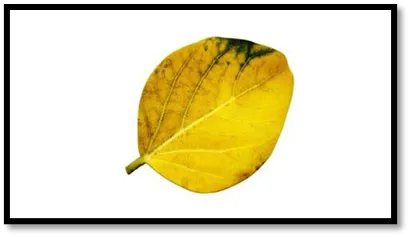
Fig.no.1 Banyan yellow leaf
Potential Benefits of Banyan yellow leaf Extract In cream. The Yellow leaf Extract of the banyan tree is rich in bioactive compounds like flavonoids, Tannins, antioxidants, which make it useful in foot crack cream,
1) Wound healing& crack repair: Banyan leaf Extract promotes faster healing of damaged skin and fissures. Helps regenerate skin tissue, making it ideal for foot crack cream .2) Anti-inflammatory action: Reduces swelling, redness and irritation in cracked or dry skin. Useful for soothing painful heel Cracks rough skin.3) Antibacterial Property: contains compounds like tannins & Saponin that inhibit microbial growth prevent infection in deep cracks or wounds.4) Moisturizing & soothing effect: Helps maintain Skin Hydration & Softens rough areas. Suitable for dry sensitive & damaged skin. 5) Astringent property: Tightens skin & helps reduce excessive dryness & open cracks. Improve skin texture & firmness. Banyan yellow leaf extract in cream shows wound healing, anti-inflammatory, astringent, and antibacterial, antioxidant, & moisturizing properties, making it beneficial for treating cracked dry skin, & Skin infections.
Why Banyan yellow leaf use in foot Crack cream? According to the Ayurveda, Banyan leaf is used in herbal foot crack creams primarily for its potent medicinal properties which help heal cracked soles, reduce inflammation, & soothe irritated Skin. Yellowing or mature leaves are often used because they are rich in bioactive compounds, including tannins, phenols & flavonoids contribute to their strong astringent & anti-inflammatory qualities. So, Banyan yellow leaf is used in-foot crack cream because it acts as a natural healer, antiseptic, & Skin Conditioner, making it very effective treating cracked heels.
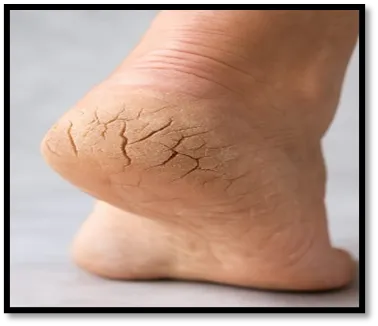
Fig. no.2: Foot Crack
AIM AND OBJECTIVE:
AIM: Formulation and Evaluation of Foot Crack Cream from Banyan Yellow Leaf Extract.
OBJECTIVE : 1) To formulate an herbal foot crack cream using a Banyan yellow leaves as a natural ingredient.
2) To utilize the medicinal properties of banyan tree leaves, such as wound healing and moisturizing effects.
3) To provide effective treatment for cracked heels, dryness, and rough skin.
4) To develop a safe and natural alternative to chemical base foot creams.
5) To evaluate the formulation for parameters like texture, spreadability, stability, and skin compatibility.
6) To enhance skin hydration and promote the healing of foot cracks.
7) To prepare a cost effective and easily applicable product for daily use.
NEED OF STUDY: The need for the study of formulation and evaluation of foot crack cream using extract of yellow leaves from the Banyan Tree arises due to the increasing incidence of cracked heels and dry skin problems. Most marketed creams contain synthetic ingredients that may produce irritation or side effects on long-term use. Banyan yellow leaf extract contains natural phytoconstituents with possible moisturizing, antimicrobial, anti-inflammatory, and wound-healing properties, which may help in the treatment of foot cracks.
PLAN OF WORK:
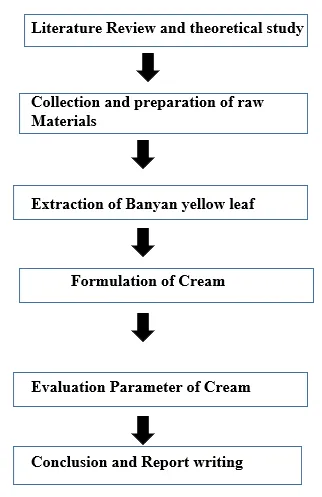
Materials and Method: 1.1 Raw materials for extraction
Banyan yellow leaf – collected fresh, cleaned and dried leaves.
Solvents for extraction: Ethanol (for dried banyan yellow leaves extraction)
Ingredients for foot crack cream formulation
A) Oil phase
B) Aqueous Phase
C) Preservatives and additives
Equipment and instrument:
1) Soxhlet Apparatus (For leafs Extraction)
2) Weighing balance (Accurate measurement of ingredients)
3) Water bath (for control heating of sensitive ingredients)
4) Grinder (To Fine powder for extract preparation)
5) Filter paper (To Filter the leaves extract)
6) Refrigerator (To storing leaves extract)
7) Viscometer (To measure viscosity if cream)
8) PH meter (Acidity or alkalinity of cream)
9) Sterile glassware & containers.
2) Methods: Extraction of Banyan yellow leafs
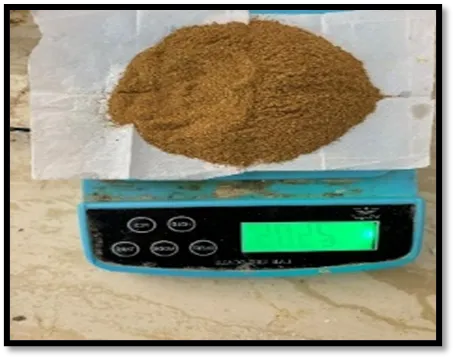
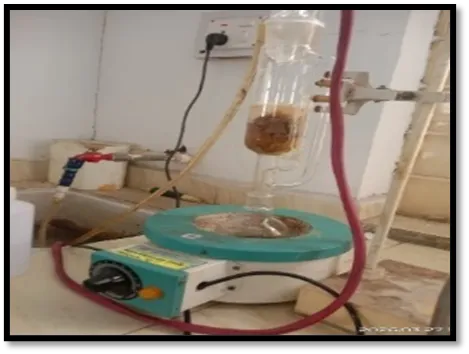
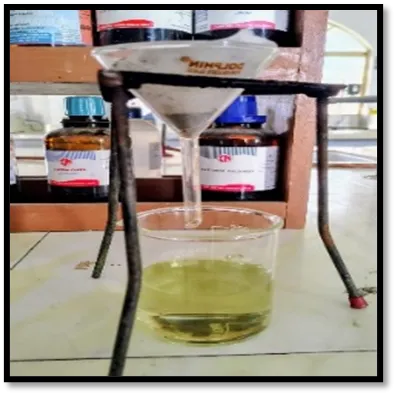
Fig. No. 3: Extraction Process
Experimental Work:
Requirements:
Apparatus: Beaker, stirrer, (Glass Rod) Spatula, Measuring cylinder, Pipettes& Dropper, Water bath, Funnel.
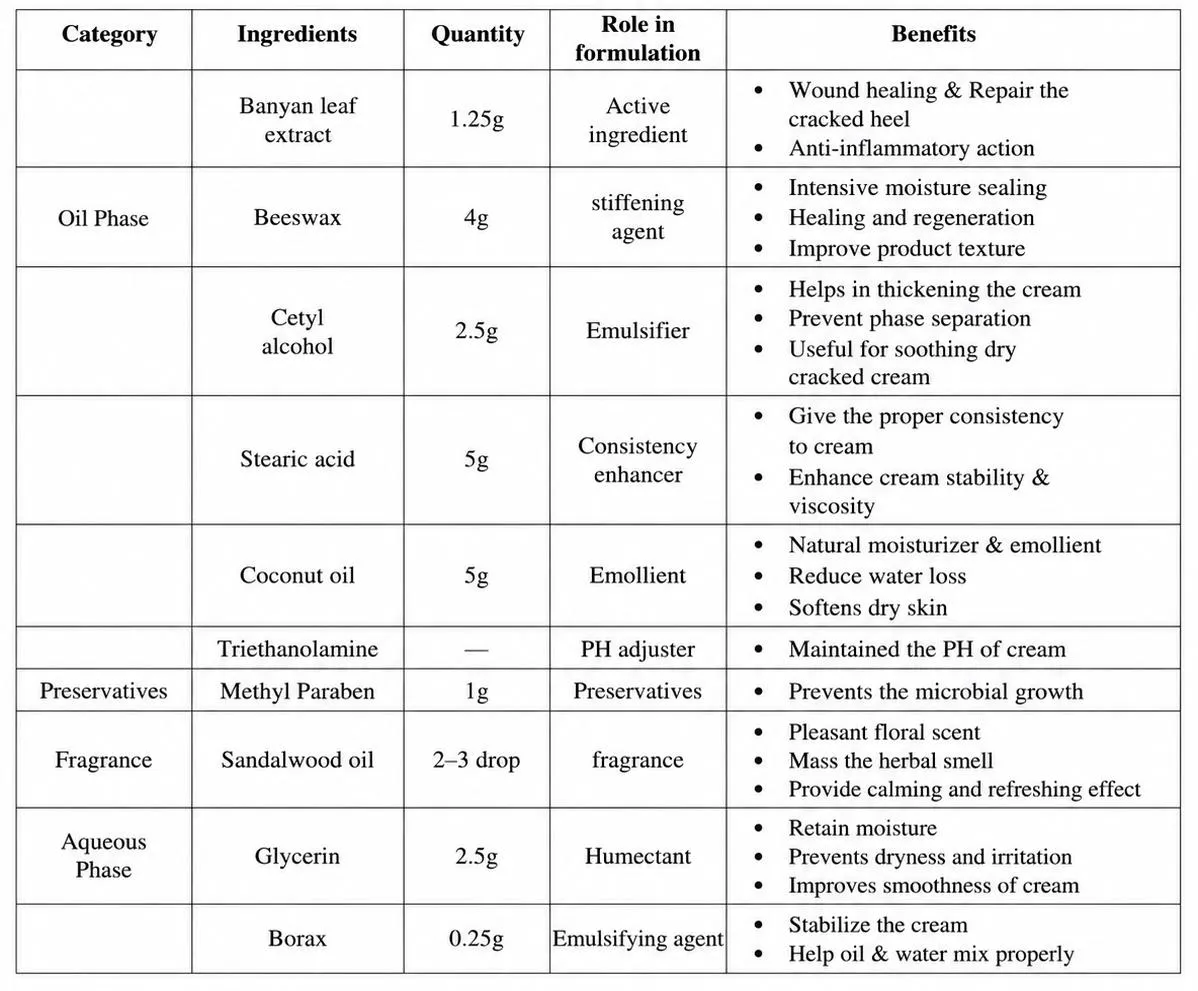
Chemicals: Yellow Beeswax, Cetyl alcohol, stearic acid , coconut oil, Glycerin, Borax, Methyl paraben .
Instruments: PH Meter, Thermometer, Magnetic stirrer, Viscometer.
Formulation Table:
PROCEDURE:
Step 1: Preparation of Oil Phase
Step 2: Preparation of Aqueous phase
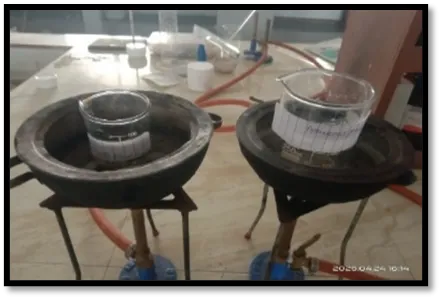
Step 3: Emulsification
Step 4: Cooling and final addition
Step 5: Filling and Packaging: Once the cream has cooled completely, transfer it into clean sterilized container. Store in cool dry place, away from direct sunlight.
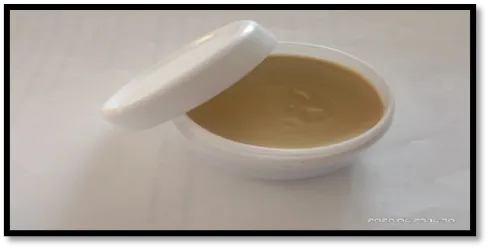
Fig.No.5 Foot crack cream
Evaluation parameter for Banyan yellow leaf extract cream:
To ensure the stability, effectiveness and quality of formulation, the following evaluation parameter can be assessed.
1. Physical Evaluation
2. PH Test: Measure using PH meter –Ideal Range: 5.6 -7.1 (6.07
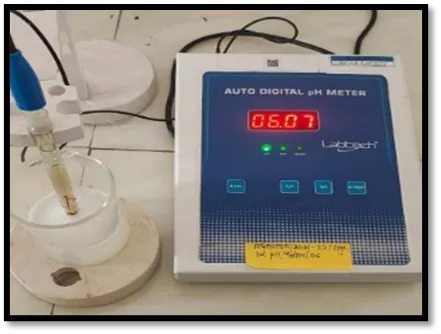
Fig.no. PH Meter
3. Stability testing Accelerated Stability- Storage at 4°C at Room temperature 25°C, 40°C observe for 30 days.
4. Microbial and Preservative efficacy test
Microbial growth test – Conduct plate testing to check bacterial / fungal contamination
1. Prepare agar medium by dissolving water and sterilized it 121°C for 15 minutes.
2. Pour the sterilized agar into petri dish allow it to solidify.
3. Inoculate microorganisms using the sterile loop, swab, or spreader.
4. Incubate the plate at 37 °C for 24-48 hours in an inverted position.
5. Observe bacterial growth and analyze colony characteristics or zone of inhibitions.
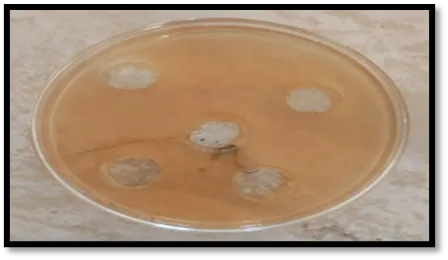
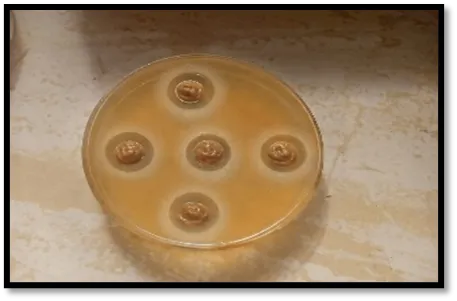
Fig No.7: Microbial test
5. Performing Test
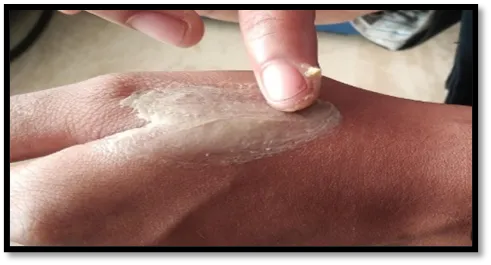
FigNo.8: Skin non irritation test
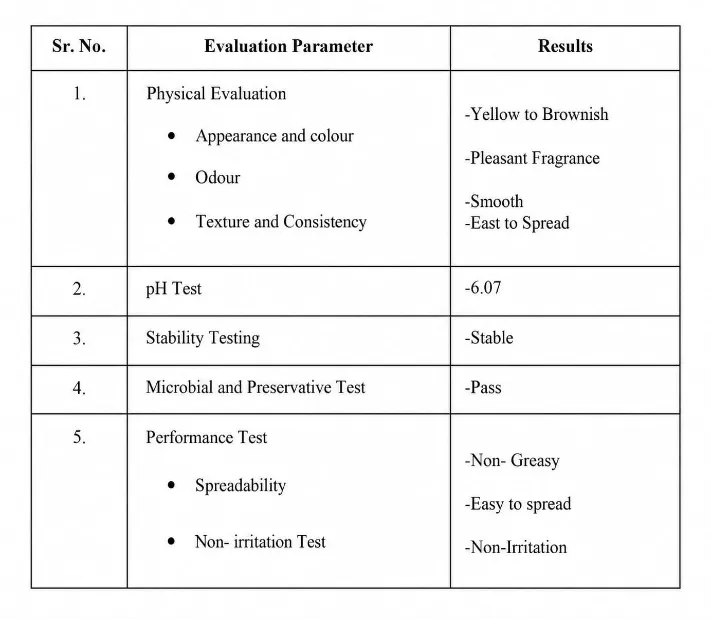
Result and Discussion: The herbal foot crack cream formulation with Banyan yellow leaves extract demonstrated stable physicochemical properties, characterized by a smooth and homogenous texture. Its pleasing odour and skin friendly PH of 5.6-7.1 enhances its suitability to topical application. The cream exhibited good spreadability, viscosity and wash ability ensuring effective application and compliance without irritation. Ingredients like Glycerin and coconut oil provided moisturizing benefits, while the Banyan leaf extract offered healing and anti-microbial effects. Stabilities studies conformed its effectiveness for treating cracked heels, with to no deterioration observed over time.
CONCLUSION
The present study concludes that the herbal foot crack cream prepared using Banyan yellow leaves extract was successfully formulated and evaluated. The cream showed good physical appearance, smooth texture, suitable pH, good Spreadability, and acceptable viscosity, making it suitable for topical application. The formulation was found to be stable, non-irritant, and easy to apply, with no phase separation observed during the stability study. The presence of Banyan yellow leaf extract contributed to wound healing, antimicrobial, and skin-repair activity, while glycerin and coconut oil provided moisturizing and emollient effects.
REFERENCES





Sakshi Gawalkar*, Tanvi Sharma, Sarvesh Rathod, Priyanka Deshpande, Nitin Indurwade, Formulation And Evaluation Of Foot Crack Cream From Banyan Yellow Leaf Extract, Int. J. Sci. R. Tech., 2026, 3 (6), 392-399. https://doi.org/10.5281/zenodo.20557161
 10.5281/zenodo.20557161