

We use cookies to ensure our website works properly and to personalise your experience. Cookies policy
Delight College of Pharmacy, Koregoan, Pune
The main goal of this research is to create and test a herbal foot crack cream made from Aegle marmelos leaf extract. The study aims to bring together all the healing benefits of aegle marmelos that have been discovered through recent scientific research and advanced technology. Herbal remedies have been used for a long time in many parts of the world to treat different health issues. In India, traditional systems like Ayurveda and Siddha are well-known for their medicinal approaches. Over the past few years, researchers have been working to discover and prove the effectiveness of plant-based medicines for treating various diseases. Studies have also shown that different parts of plants, such as leaves, fruits, and seeds, contain substances that help improve health and nutrition, and have traditionally been used to treat many conditions. In ethnomedicine, Aegle marmelos has been used for its astringent, antidiarrheal, antidysenteric, demulcent, antipyretic, and anti-inflammatory properties. Different phytochemicals such as alkaloids, coumarins, and steroids have been found and identified in various parts of the plant. Compounds like coumarins, marmelosin, marmesin, imperatorin, marmin, alloimperatorin, methyl ether, xanthotoxol, scopoletin, scoparone, umbelliferon, psoralen, and marmelide have been reported. Marmenol has also been reported.
The skin is the body's biggest organ, covering about 20 square feet. It has three layers. The outermost layer is called the epidermis, and it helps keep the body dry and determines the color of the skin. Cosmetics are products that people use to improve the look of their face and other parts of the body like the skin, eyes, hair, and hands. Herbal cosmetics are a type of cosmetic that includes natural ingredients with health benefits and sometimes even medicine-like effects. Cosmetics are mainly used to clean and make the skin look better. People have been using them for a long time, even as far back as ancient Egypt around 4000 B.C. On the other hand, pharmaceuticals are medicine-based products used to stop, treat, or cure diseases and to affect how the body works. The skin on the feet is more likely to become dry, rough, and cracked. Some common reasons for cracked heels include athlete's foot, eczema, psoriasis, thyroid problems, and diabetes. Keeping the skin healthy is important for overall health. Natural treatments are often seen as a cheaper and safer option. This review talks about different plants that are used to treat skin problems, and it covers the main scientific progress made in this area over the last 17 years. These plants are also useful for creating new medicines. Herbs used in cosmetics can help in many ways, like reducing free radicals, fighting inflammation, preventing infections, and killing bacteria. The skin is the biggest organ in the body, covering about 20 square feet. It has three layers. The top layer, called the epidermis, helps keep the body dry and gives skin its colour. Cosmetics are products used to make the face and other parts of the body look better, like the skin, eyes, hair, and hands. Herbal cosmetics are a type of beauty product that also has health benefits because they include natural ingredients and sometimes even medicine. People use cosmetics mainly to clean and make their skin look good. Using cosmetics has been around for a long time, starting in ancient Egypt about 4000 years ago. Pharmaceuticals are different because they are made from drugs and are used to stop, treat, or fix illnesses and help the body work properly. The skin on the feet is more likely to become dry, rough, or cracked. Problems like athlete's foot, eczema, psoriasis, thyroid problems, and diabetes can cause cracked heels. Taking care of the skin is important for overall health. Natural treatments are often seen as a cheaper and safer choice.
Definition:
Creams are semi-solid mixtures that look cloudy or not clear, different from ointments which are usually clear. They are made for use on the outside of the body and are meant to be spread on the skin and inside membranes like those in the nose or mouth.
Their consistence depends on whether the:
Skin care creams can be classified on different basis
1. Based on the function, like cleansing, applying foundation, massage, etc.
2. Based on the features, such as cold creams, vanishing creams, etc.
3. Based on the type of emulsion used.
4. Nourishing the skin is important to keep it healthy and normal, or to treat dry skin.
The skin on the feet does not have oil glands, so it tends to get dry and cracks more easily. If not taken care of and if you don't wear the right shoes, these cracks can get worse and lead to different skin problems. When dirt and bacteria get into the skin through cuts or wounds, they can cause infections. Creams and gels are products you apply directly to the skin. They can be used for beauty or for treating skin issues, and they often create a protective layer on the skin's surface. Herbal cosmetics are natural products made from parts of plants like flowers, fruits, leaves, and bark. These have been used for a long time and provide many benefits. The herbs in these products usually have properties that help kill bacteria and prevent infections.
What Are Cracks?
Cracks are breaks or splits in the skin, usually caused by very dryness. When the skin loses too much water, it feels rough and can start to split, especially around the heel. In some cases, a deep crack might form at the bottom of the heel. So it's important to be aware of your daily habits and notice any activities or situations that might be making the problem worse.
Common Risk Factors Include:
1. Obesity – Having extra weight puts pressure on the heel, causing the skin to stretch and crack.
2. Diabetes – Can lead to dry skin and slow healing of wounds.
3. Eczema and Psoriasis – Skin conditions that cause dryness and irritation.
4. Standing or Walking for Long Periods on Hard Surfaces – Increases pressure and friction on the heels.
5. Thyroid Disorders – Can slow down the body’s metabolism, affecting skin health and its ability to retain moisture.
6. Vitamin and Mineral Deficiencies – Especially lack of vitamin E, zinc, and omega-3 fatty acids.
7. Genetics – A family history of dry or thick skin can make someone more likely to get heel cracks.
8. Estrogen Deficiency – Especially in women after menopause, which can reduce skin elasticity.
9. Poor Circulation – Limits the skin’s ability to get nutrients and stay hydrated.
10. Constant Use of Footwear – Especially shoes that are open-backed or have hard soles that don’t support the heel.
â–ª Plant profil
Indian Beals
Aegle marmelos (L.) Correa, commonly known as Bael or Bilva, belongs to the Rutaceae family. It is widely used in traditional Indian medicine for its various health benefits. In Hindu culture, the Bael tree is considered sacred and is often worshipped as an offering to Lord Shiva and Goddess Parvati. Because of its association with Shiva, it is also called Shiva Duma, which means "the tree of Shiva." The Bael tree is native to the Eastern Ghats and central parts of India. It is naturally found in the Indian subcontinent and thrives in tropical and subtropical climates.

All parts of the Aegle marmelos plant, like the roots, bark, leaves, fruit, and seeds, have medicinal uses. The leaves are especially known for their ability to reduce inflammation, fight microbes, and help wounds heal. The leaves have a lot of beneficial chemicals that make them useful for medicine. Research has found many active compounds in the leaves, such as alkaloids, flavonoids, phenolics, tannins, saponins, coumarins, essential oils, and steroids or terpenoids. These chemicals are responsible for the plant's healing abilities and are used in many modern herbal products like creams for cracked feet, antimicrobial treatments, and antioxidant supplements.
Plant Details:
• Common Names: Wood Apple, Bengal Quince
• Kingdom: Plantae
• Order: Sapindales
• Family: Rutaceae
• Genus: Aegle
• Species: Aegle marmelos
• Botanical Name: Aegle marmelos
• Medicinal Uses: It has been used traditionally to help with infections and constipation.
Biological Source:
Aegle marmelos, also known as Bael or Bengal quince, is a plant in the Rutaceae family. It comes from different parts of the plant, including the dried or fresh leaves, fruit, bark, and root.
Geographical Source:
Aegle marmelos, also known as Bael, comes from India. It grows in many tropical and warm areas in Southeast Asia. You can find it in countries such as Sri Lanka, Myanmar, Bangladesh, Thailand, and parts of Malaysia. The plant is also grown in tropical regions of Africa, the Caribbean, and Australia, especially in dry and semi-dry places. It grows well in dry forests, near rivers, and on flat land. It can grow in different types of soil, especially those that are slightly salty and drain well.
Chemical Constituents:
Uses:
MATERIAL AND METHOD:
A. Materials:
Collection of Plant material:
Aegle marmelos leaves were identified and collected from the Koregaon Bhima area in Pune, Maharashtra, India-412216. The leaves were cleaned, dried at room temperature, ground into a moderately coarse powder, and stored in a tightly closed container before extraction. The chemical and reagents used were obtained from Delight College of Pharmacy, located in Koregaon Bhima, Pune, Maharashtra, India-412216.
Method of Bael leaf powder extract preparation:
• The Aegle marmelos leaf extract was made using the maceration method.
• We added 250 grams of Bael leaf powder to a mixture of 60% water and 40% ethanol in a big container.
• The mixture was left for 3 days with regular stirring.
• After that, the solution was filtered through a muslin cloth and then air-dried for 7 days.


|
SR.NO |
INGRIDENT |
QUANTITY |
FUNCTION |
|
1 |
Aegle marmelos leaf extract |
3g |
Active herbal agent |
|
2 |
Stearic acid |
4g |
Emulsifier, consistency builder |
|
3 |
Lanolin |
1g |
Emollient, stabilizer |
|
4 |
Beeswax |
2.5g |
Thickening and base component |
|
5 |
Coconut oil |
6ml |
Natural moisturizer and antimicrobial |
|
6 |
Liquid paraffin |
4g |
Softener and spreadability enhancer |
|
7 |
Triethanolamine |
0.5g |
pH adjuster, emulsifying aid |
|
8 |
Methyl paraben |
0.10g |
Microbial preservation |
|
9 |
Distilled water |
25.9g |
Aqueous phase to complete |
|
10 |
Glycerin |
3g |
Humectant |
METHODS :
Method of formulation of herbal foot crack cream:
The cream was prepared using two phases, namely phase A and phase B. Phase A was made by weighing and mixing acetyl alcohol, lavender oil, glycerol mono stearate, propylene glycol, kokum butter, liquid paraffin, salicylic acid, bees wax, and coco butter. This mixture was heated to 80°C. Phase B, which consisted of distilled water and sodium lauryl sulphate, was then added to phase A. Aegle marmelos leaf extract was incorporated using a mortar and pestle. The cream was allowed to cool and was then transferred into an airtight container.
Step-by-Step Preparation Method:
Step 1: Oil Phase Preparation:
1. In a beaker, add:
• Stearic acid (4.0 g)
• Lanolin (1 g)
• Beeswax (2.5 g)
• Coconut oil (6 ml)
• Liquid paraffin (4 g)
2. In a water bath, heat the mixture to 70–75°C until all the ingredients are melted and a clear oil phase forms.
Step 2: Aqueous Phase Preparation:
1. In another beaker, add:
• Distilled water (25.9 g)
• Glycerine (3.0 g)
• Aegle marmelos leaf extract (3.0 g)
• Triethanolamine (0.5 g)
• Methyl paraben (0.10 g)
2. Make sure the preservative is fully dissolved and the mixture is homogenous by heating it to 70–75°C.
Step 3: Emulsification:
Step 4: Finishing:
1. After the cream drops below 40°C,
2. Gently stir to ensure even mixing.
3. Examine the texture. For a finer finish, you can use a homogenizer at this point.
Step 5: Packaging:
Storage:
• Keep out of direct sunlight and store in a cool, dry location.
• Shelf-life: Assess stability for 30 to 60 days at room temperature and higher temperatures.
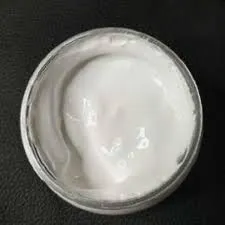
Evaluation of cream: -
|
Sr.no |
Evaluations test |
Result |
|
1. |
Physical evaluation test |
Colour: -Light white Odour: - pleasant Texture: - smooth |
|
2. |
Washability test |
Easily cleaned with water |
|
3. |
pH determination test |
5.5 – 6.5 (ideal for skin) |
|
4. |
Spreadability |
Uniform application that is easily spreadable |
|
5. |
Irritancy |
All skin types can use it without any irritation. |
|
6. |
Microbial test |
No microbial growth |
|
7. |
Homogeneity test |
Completely homogeneous |
|
8. |
Greasiness |
less oily and absorbs easily in the skin |
|
9. |
Phase separation |
No phase separation |
RESULT: -
The herbal cream, made with Aegle marmelos essential oil, looks like a smooth, light-yellow mixture and has a nice, pleasant smell. It washes off easily with water and has a skin-friendly pH level between 5.5 and 6.5. The cream spreads well on the skin, making it easy to apply. When tested for uniformity, all the ingredients were evenly mixed throughout the product. There was no oily feeling after putting it on. Also, after 24 hours at room temperature, the cream didn’t separate into different layers, which shows it's stable. A small skin test showed no irritation or bad reactions during the observation time. These results suggest that the cream was successfully made and could be a good base for a herbal cream using Aegle marmelos essential oil for use on the skin. The cream exhibited acceptable extrudability and required a moderate amount of pressure to be released from the tube, suggesting ideal viscosity. Under ambient settings, the cream remained stable for 30 days without changing in terms of color, texture, or odor. Volunteer individuals showed no signs of irritation, redness, or pain, indicating that the cream is safe to apply topically. Within seven to ten days of treatment, the subjects reported a discernible improvement in their heel cracks.
CONCLUSION
An effective herbal cream using the essential oil derived from Aegle marmelos leaves was created in this study. Promising physicochemical characteristics, such as a pH appropriate for topical administration, high spreadability, and homogeneity, were found in the examination of the prepared cream. Potential tolerability is shown by the early testing's lack of acute skin irritation. This study lays the groundwork for investigating Aegle marmelos essential oil's medicinal potential in a practical topical dose form. More thorough research is necessary to determine the cream's long-term stability, gauge its effectiveness for particular skin disorders, and carry out thorough safety evaluations. The creation of this herbal cream may provide a natural substitute and is in line with the increased interest in using traditional medicinal herbs for cosmetic uses. Aegle marmelos's antibacterial, anti-inflammatory, and wound-healing qualities were influenced by the presence of phytoconstituents such tannins, flavonoids, and alkaloids. The cream had encouraging results in quickly repairing cracked heels without irritating the skin, demonstrating its efficacy and safety for topical use. As a result, this herbal mixture offers a skin-friendly, economical, and natural substitute for traditional foot care products.
FUTURE SCOPE:-
The creation of a herbal foot cream based on Aegle marmelos creates new opportunities for the development of focused phototherapeutic skincare products. Future studies may concentrate on using nano-formulation techniques to improve the bioavailability and skin penetration of active ingredients. Bioactive indicators can be standardized and quantified for quality control using sophisticated analytical methods like LC-MS or HPTLC.
Investigating various extraction techniques might result in larger quantities of powerful chemicals, enhancing the effectiveness of treatment. The product's potential for large-scale manufacture and commercial introduction as a scientifically verified herbal cosmeceutical will be further supported by partnerships with dermatological clinics for long-term efficacy research and consumer acceptance trials.
REFERENCES


Abdulla Ajimuddin Sidhiki*, Vishaka B. Kasabe, Sampat. D. Navale, Alam Mahamad Mulani, Formulation And Evaluation Of Herbal Foot Crack Cream From Aegle Marmelos Leaf Extract, Int. J. Sci. R. Tech., 2026, 3 (5), 1055-1063. https://doi.org/10.5281/zenodo.20427470
 10.5281/zenodo.20427470