

We use cookies to ensure our website works properly and to personalise your experience. Cookies policy
RJS College Of Pharmacy, Kokamthan
The present study was carried out to formulate and evaluate a herbal ointment containing Tridax procumbens leaf extract for the treatment of atopic dermatitis and antibacterial activity. Herbal formulations are widely used due to their safety, effectiveness, affordability, and reduced side effects compared to synthetic drugs. Tridax procumbens is a medicinal plant known for its antibacterial, anti-inflammatory, and wound-healing properties and has been traditionally used for various skin disorders. Fresh leaves of Tridax procumbens were collected, shade-dried, powdered, and extracted with ethanol using the Soxhlet extraction method. Phytochemical screening confirmed the presence of flavonoids, alkaloids, tannins, saponins, glycosides, proteins, and carbohydrates, which contribute to its therapeutic activities. The herbal ointment was prepared by the fusion method using beeswax, petroleum jelly, liquid paraffin, methyl paraben, and lemon oil as excipients. The formulated ointment was evaluated for physicochemical parameters including color, odor, pH, consistency, spreadability, washability, viscosity, non-irritancy, and stability. The formulation showed a smooth texture, acceptable pH, good spreadability, easy washability, and satisfactory stability under different storage conditions. The non-irritancy study indicated that the ointment was safe for topical application. Antibacterial activity was assessed against Staphylococcus aureus using the agar well diffusion method. The herbal ointment exhibited a zone of inhibition of 32 mm, while the standard neomycin ointment showed 36 mm. These findings suggest that the formulated herbal ointment possesses significant antibacterial activity and may serve as a promising natural topical formulation for managing atopic dermatitis and related skin infections.
OINTMENT
Soft formulations applied to the skin are called ointments. They are utilized as cosmetics, moisturizers, and medications. They shield the skin from dust, dryness, and damaging environmental factors and remain on it for a longer period of time. Ointments also have a calming and restorative impact on the skin.
This project's primary goal is to use Tridax procumbens to make a herbal ointment. The therapeutic qualities of this herb are widely recognized. It is frequently used to halt bleeding, lessen inflammation, and promote wound healing. Additionally, it exhibits antibacterial activity, which aids in preventing bacterial and fungal infections.
Numerous advantages, including hydrating the skin, promoting wound healing, lowering skin infections, and enhancing general skin health, can be obtained from the prepared ointment. Additionally, it might be useful in treating minor skin infections, burns, rashes, and wounds.
Because they are safer and have fewer adverse effects than chemical-based medicines, herbal remedies are growing in popularity. Additionally, they give the skin hydration and natural nutrients.
This study's ointment has a water-in-oil formulation, which lets the medication stay on the skin longer and produces better outcomes. As a result, Tridax procumbens ointment may be a useful and all-natural choice for skin care.
Herbal ointment's advantages
The best qualities for herbal ointment
1) It must be stable both chemically and physically.
2) The finely split active ingredients should be evenly dispersed throughout the ointment base.
3) The ointment's basis shouldn't have any medicinal properties.
4) There should be no grit and the ointment should be smooth.
Atopic Dermatitis
Dry, itchy, and discolored skin patches are symptoms of atopic dermatitis, a chronic (long-lasting) illness. It can flare up or come and go throughout your life and affects both adults and children.
It can be painful and itchy when an atopic dermatitis rash appears. You might want to scratch it right away. Scaling, crusting, cracking, and swelling may result from this. A transparent fluid may "weep" from the rash.
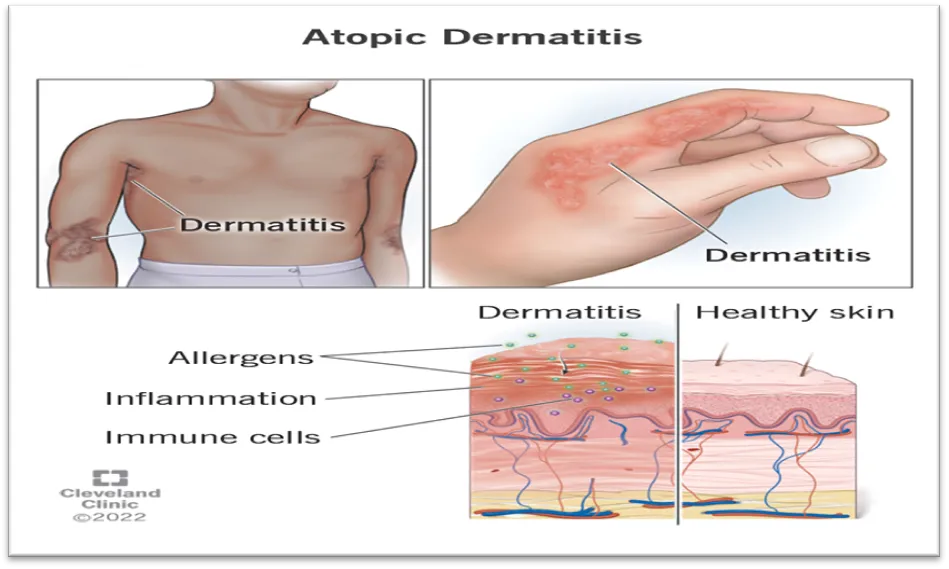
• Nummular (Discoid) Dermatitis: This condition is characterized by itchy, coin-shaped patches.
• Prurigo Nodularis: The skin may develop thick, leathery, irritating lumps.
• Follicular dermatitis: tiny skin pimples that resemble acne.
• Exfoliative dermatitis, also known as erythroderma, is characterized by extensive redness and inflammation throughout the majority of the body. • Small, itchy blisters on the hands or feet are known as dyshidrosis (Pompholyx).
• Lichenoid Dermatitis: Thickened, leathery, or "lichenified" skin as a result of persistent scratching
• Skin that is dry and cracked
• Skin irritation
• Skin discoloration that is red, purple, brown, or gray
• Swelling
Individual differences in symptoms can be substantial. Atopic dermatitis frequently appears in places where your skin flexes or bends, such as the inside of your elbow or behind your knees. But rashes can occur anywhere on your skin. Symptoms range from mild to severe.
MATERIAL AND METHOD
Plant profile
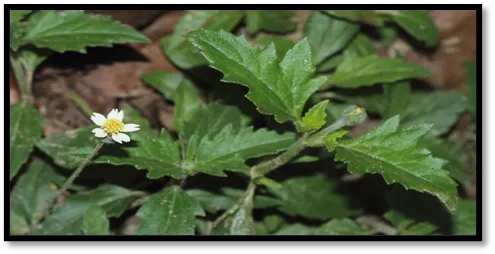
Synonyms: Jakhamjod (Marathi), coat buttons, and Tridax daisy
Asteraceae family
Biological Source: Tropical areas and India are home to the little medicinal herb Tridax procumbens. Flowers and leaves are mostly used medicinally for conditions including skin disorders and wound healing.
Flavonoids, alkaloids, tannins, saponins, terpenoids, and sterols are examples of chemical constituents.
Applications:
antimicrobial,
Antibacterial, antifungal,
anti-inflammatory,
Antioxidant
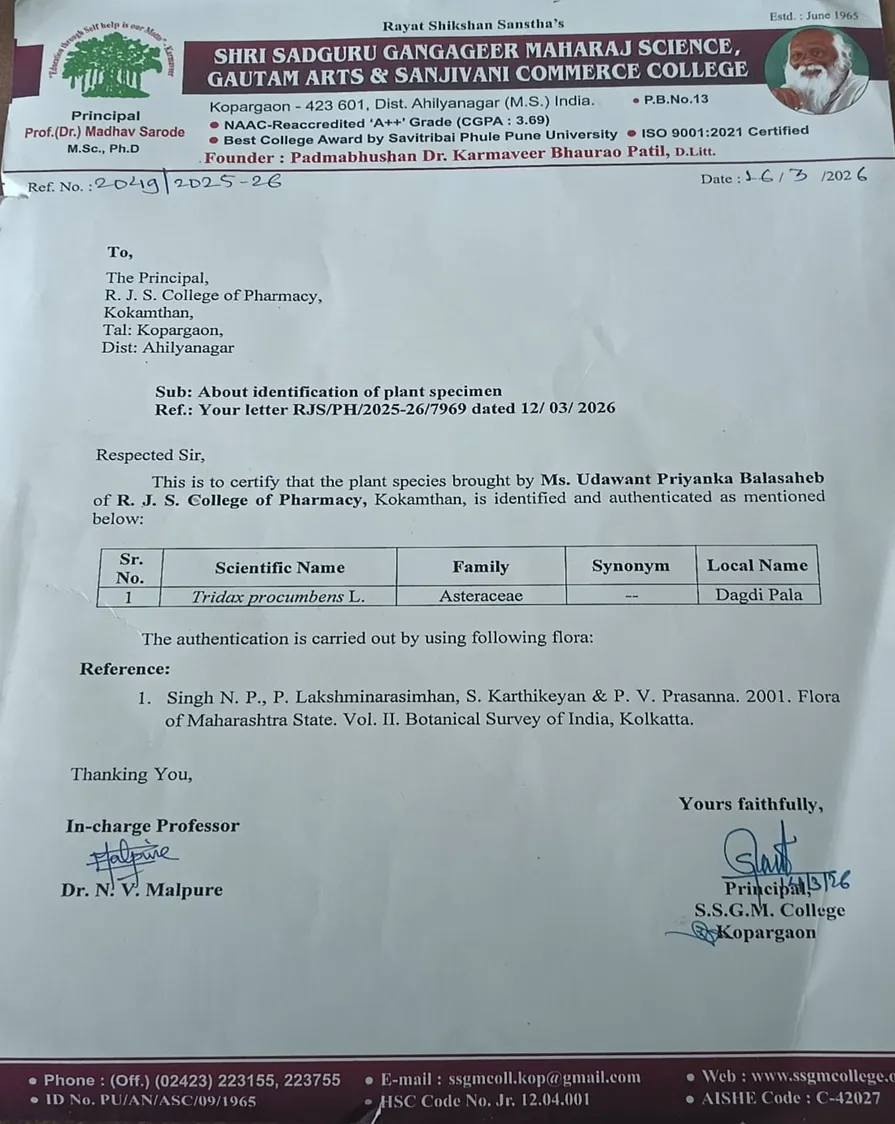
Collection and Authentication
INGREDIENTS PROFILE
Beeswax
Beeswax: Beeswax is utilized as an emulsifier, stiffening agent, and base for ointments. It contributes to the formulation's increased stability and consistency. Almost insoluble in water, mildly soluble in alcohol, and freely soluble in ether and chloroform. It blends well with fats and oils when melted.
• Description: Bee wax is a naturally occurring wax derived from bee honeycombs. It mostly consists of long-chain alcohols and fatty acid esters.
• Category: ointment base, stiffening agent, and pharmaceutical help
• The melting range is between 62°C and 65°C.
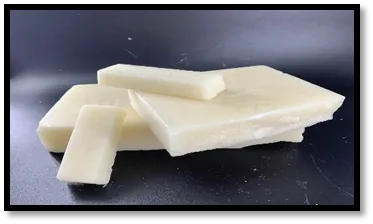
Petroleum jelly: Petroleum jelly is a semi-solid, frequently triple-purified blend of hydrocarbons (mineral oils and waxes) that acts as an occlusive moisturizer, creating a water-insoluble, protective barrier on the skin to retain moisture and promote healing.
Because it creates a barrier that stops moisture loss, it is frequently used as a skin protector, moisturizer, and basis in ointments.
Pharmaceutical category: Ointment base, emollient, and protectant
Chemical category: Hydrocarbon mixture (product generated from petroleum)
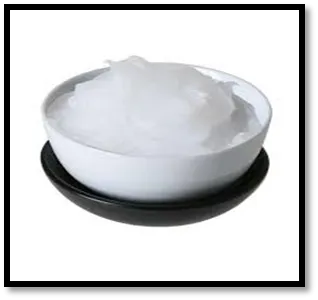
Paraffin in liquid
• Liquid paraffin: This substance is utilized as an ointment base, lubricant, and emollient. It enhances spreadability while calming and softening the skin. Water does not dissolve it; ether and chloroform do. miscible with fats and fixed oils.
• Description: Made from petroleum, liquid paraffin is a transparent, greasy, colorless, and odorless liquid.
• Type: Ointment base, emollient
The boiling point is more than 300°C.
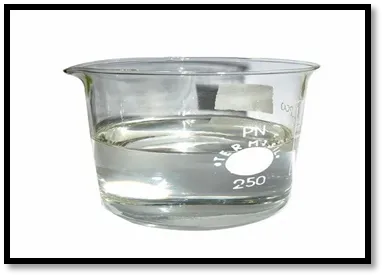
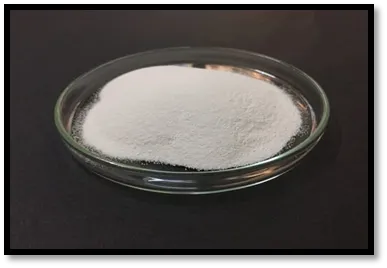
Paraben Methyl
• Methyl Paraben: This preservative stops microorganisms from growing in formulations. Slightly soluble in water; freely soluble in alcohol.
• Description: Methyl p-hydroxybenzoate is the chemical name for this white, crystalline powder.
Preservative is the category.
• The melting range is between 125°C and 128°C.
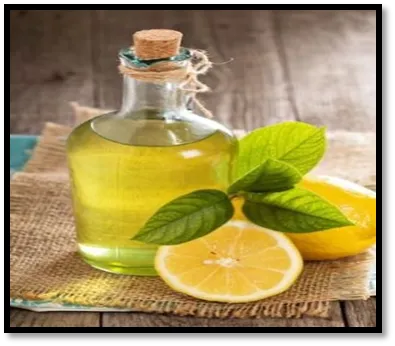
Lemon oil
A strong, natural antibacterial agent, lemon oil (Citrus limon) is being utilized more and more in ointment formulations to treat bacterial skin infections.
The peel of fresh lemons (Citrus limon) is the primary source of lemon oil, a volatile essential oil. Usually, cold pressing is used to obtain it, but steam distillation is also occasionally used.
Category: Flavoring and antimicrobial agents
Boiling point: 176 degrees Celsius
Material /Chemical used with suppliers
|
SR. NO |
INGRDIENT |
ROLE |
SUPPLIERS |
|
1 |
Beeswax |
Thickning agent |
Reserve lab fine industries |
|
2 |
Petroleum jelly |
Moisturizing agent |
Reserve lab fine industries |
|
3 |
Liquid paraffin |
Smoothness |
Reserve lab fine industries |
|
4 |
Methyle paraben |
Preservative microbial contamination |
Reserve lab fine industries |
|
5 |
Lemon oil |
Fragrance |
Reserve lab fine industries |
Instrument used in this study
|
SR. NO |
INSTRUMENT |
MANUFACTURER |
|
1 |
Soxhlet Apparatus |
Samtech |
|
2 |
pH meter |
Equiptronics |
|
3 |
Electronics balance |
Wensar |
EXPERIMENTAL METHOD
Plant material collection: gather fresh Tridax procumbens leaves and properly wash them with distilled water to get rid of any dirt. Triturated phytoconstituents are preserved by shade drying (not too fine, to allow solvent penetration).
Tridax Procumbens Extract Preparation
Take 50g of leaf powder. Use ethanol as the solvent (e.g., 50g powder + 300 ml 70% ethanol). Put the powder inside the Soxhlet apparatus. As a solvent, add ethanol. Heat to between 60 and 80 degrees Celsius for six hours. Use a water bath or a rotary evaporator to concentrate the extract. The extract is dried. incorporation into an organization.
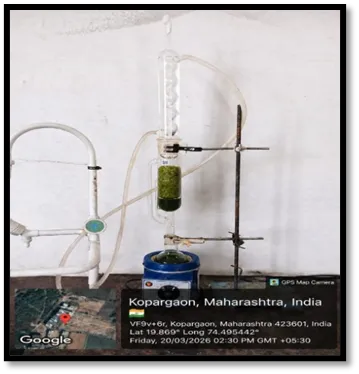
Fig :- Soxhlet Apparatus
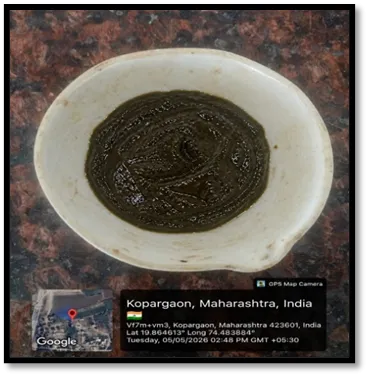
Fig :- Extract
PHYTOCONSTITUENT TEST
|
Phytoconstituent |
Reagents Test |
Short process |
Result |
|
Carbohydrate |
Molish test |
Take plant extract – Add2-3 drop of molish reagent (alpha- napthol ) |
Violet color carbohydrate present. |
|
Protein test |
Xanthoproteic test |
Add extract – Add conc HNO3 – Heat gently – Cool and add NaoH |
Yellow to orange color Protein present. |
|
Saponin Test |
Foam test |
Take extract – Add water – Shaken with water 1-2 min |
Foam present in 5 min Saponin present |
|
Alkaloids test |
Wagners test |
Take extract – Add Wagners reagent |
Reddish – Brown ppt Alkaloids present |
|
Flavonoid test |
Alkaline reagent test |
Add extract – Add few drop of NaoH |
Intense yellow color |
|
Glycoside test |
Keller – killiani test |
Take plant extract – add glacial acetic acid –few drop of FeCl3 – carefully add con.c H2SO4. |
Bluish –brown ring junction Bluish lower layer green upper layer glycoside present. |
Formula for Herbal Ointment
|
Ingredient |
Quantity |
Role |
|
Tridax procumbens extract |
3 gm |
Active ingredients Antimicrobial activity |
|
Beeswax |
3gm |
Hardness and Thickness |
|
Petroleum jelly |
18 gm |
Moisturizing and protective effect |
|
Liquid paraffin |
5 gm |
Smoothness |
|
Methyl paraben |
0.06 |
Preservative microbial contamination prevent |
|
Lemon oil |
0.3 gm |
Fragrance |
Procedures
Preparation Technique
Step 1: Preparing the extract using an appropriate extraction method (Soxhlet process).
Step 2: -Ointment preparation method
• Base preparation
Heat beeswax, petroleum jelly, and liquid paraffin in a water bath at around 70°C, stirring until all of the ingredients are uniformly melted.
• Preservative addition
Take a tiny amount of warm liquid paraffin and dissolve it with methyl paraben.
Mix thoroughly after adding this solution to the melted base.
• Drug Incorporation
Gradually add the extract of Tridax procumbens.
Make sure the mixing is uniform and free of lumps.
• Cooling
Take off the heat and whisk constantly while it cools.
• The addition of fragrance
When the temperature reaches about 40°C
Next, carefully stir in the lemon
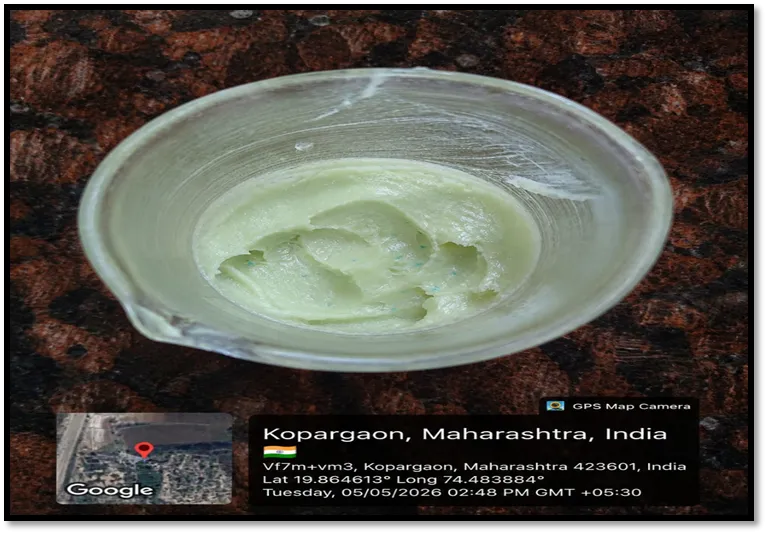
Fig – Formulation of Herbal Ointment
Evaluation of herbal ointment
1. Physical parameters, such as color, texture, and odor, were assessed visually.
2. Consistency: There is no indication of greed.
3.pH: A digital pH meter was used to measure the prepared herbal ointment's pH.
4. Solubility: Miscible with alcohol, ether, and chloroform; soluble in boiling water
5. Washability: After applying the formulation to the skin, the ease of washing with water was assessed.
6. Non-irritation test: A prepared herbal ointment was applied to a person's skin, and its effects were noted. A tiny amount of the sample is applied to the hand, and the results—such as redness, erythema, inflammation, etc. are monitored for a full day.Therefore, no such impact was seen, and it doesn't irritate the skin.
7. Viscosity: At room temperature, the viscosity of the prepared ointment was determined using a Brook field viscometer.
8. Physical stability: A four-week test of the ointment's physical stability was conducted at several temperatures, including 2, 25, and 37 degrees Celsius.
9. In vitro Antimicrobial Activity: The inhibitory zone diameter was measured using a zone reader, and antimicrobial activity was determined using the disk diffusion method.
COMPARATIVE STUDY EVALUATION PARMETERS FOR OINTMENT
|
Parameter |
Test (Tridax procumbens ointment ) |
Standard (Neomycin ointment ) |
|
Color |
Light green |
White |
|
Odor |
Pleasant herbal |
Mild medical |
|
pH |
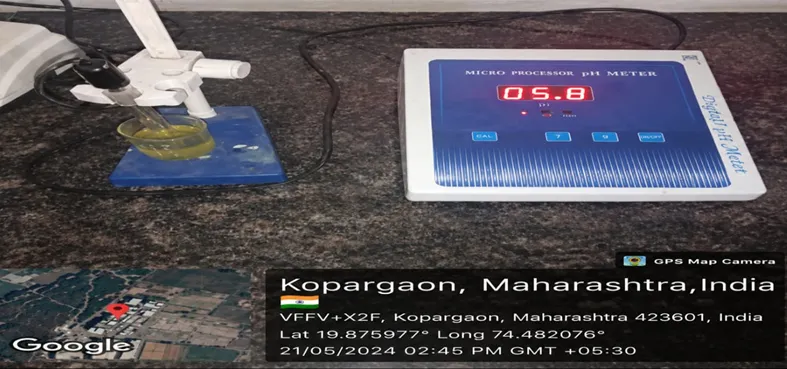
5.8 |
5.5 |
|
Consistency |
Smooth |
Smooth |
|
Spreadability |
Good |
Excellent |
|
Washability |
Good |
Moderate |
|
Irritation |
No irritation |
Mild irritation |
Tridax procumbens ointment Ph
|
Sr.no |
pH RANGE |
pH RANGE |
|
1. |
5.5 – 7.0 |
5.8 |
Neomycin ointment pH
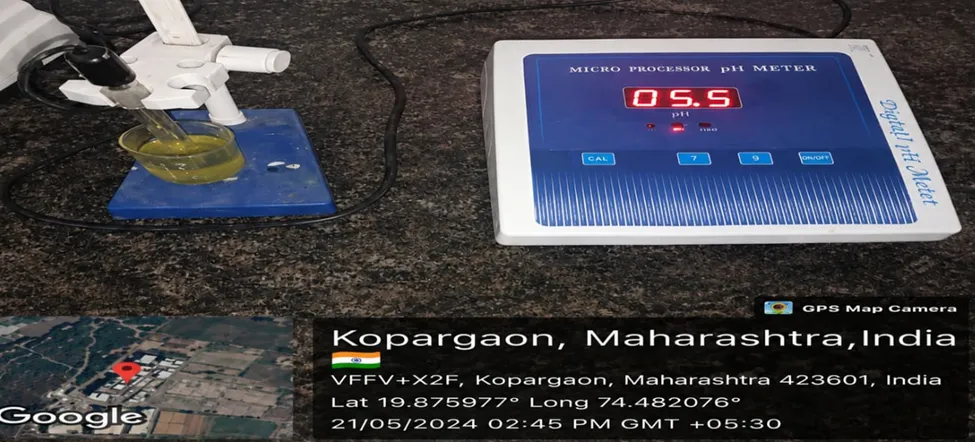
|
Sr.no |
pH RANGE |
pH RANGE |
|
1. |
5.0 – 7.5 |
5.5 |
Antimicrobial activity
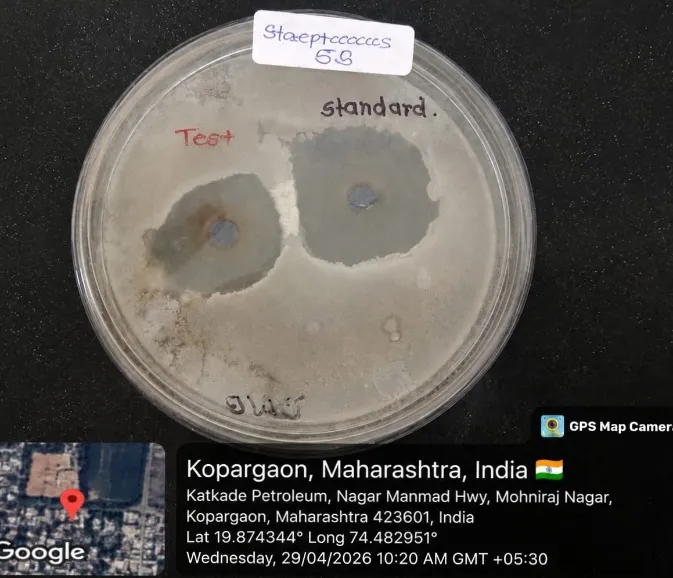
|
Sr.no |
sample |
Zone of inhibition |
|
1 |
Test |
32mm |
|
2 |
Standard |
36mm |
RESULT AND DISCUSSION
The goal of the current study was to create and assess the herbal ointment. The Soxhlet technique was used to create the herbal extract for this. to get a high extract yield without endangering the chemical components or their activity
The ointment was prepared using the Fusion process, which ensured that the herbal extract and ointment base mixed uniformly and remained stable throughout storage.
The physiochemical characteristics were examined, and the results for washability, spredability, and other aspects are excellent.
I made a herbal ointment formulation that has good color, texture, and consistency.
Using the agar well diffusion method, the antibacterial activity against Staphylococcus aureus was assessed. Effective antibacterial action was demonstrated by a distinct zone of inhibition surrounding the herbal ointment sample.
With a zone of inhibition of around 32–36 mm, the herbal ointment demonstrated strong antibacterial activity against Staphylococcus aureus and good physicochemical qualities. The herbal formulation has significant antibacterial action, according to a comparison study with Neomycin ointment.
CONCLUSION
The study examined the antibacterial activity of a herbal ointment made using extract from Tridax procumbens. Good consistency, spreadability, smooth texture, and sufficient stability for topical application were among the formulation's favorable physicochemical characteristics.
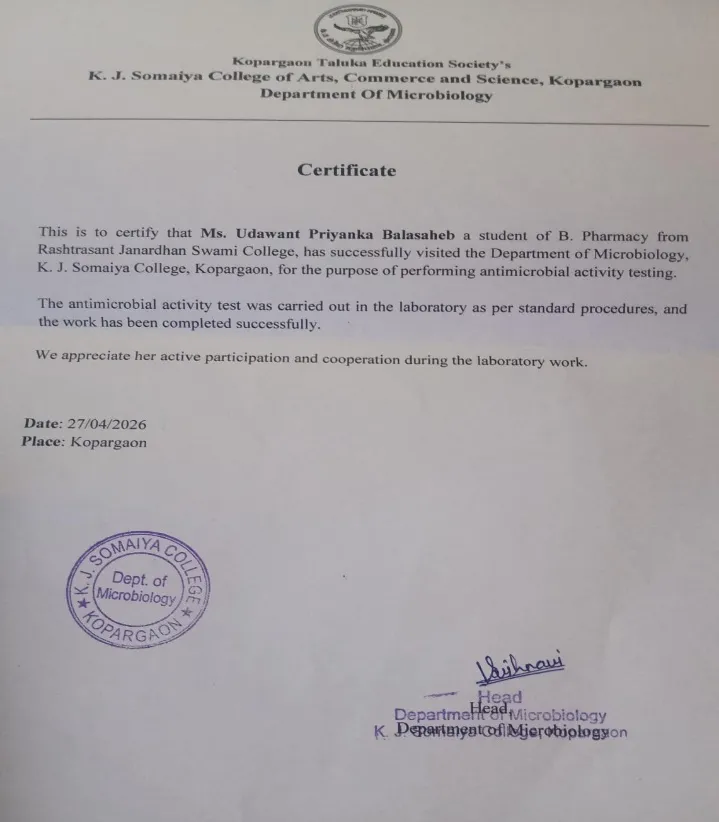
The herbal formulation's antibacterial potential was demonstrated by the antimicrobial activity research, which showed notable action against Staphylococcus aureus. The antibacterial activity of Tridax procumbens may be attributed to the presence of phytoconstituents such flavonoids, tannins, and alkaloids.
The antibacterial properties of a herbal ointment derived from Tridax procumbens extract were investigated in this study. The formulation's advantageous physicochemical properties included good consistency, spreadability, smooth texture, and enough stability for topical administration.
The antimicrobial activity study, which indicated significant action against Staphylococcus aureus, demonstrated the antibacterial potential of the herbal mixture. The presence of phytoconstituents such flavonoids, tannins, and alkaloids may be responsible for Tridax procumbens' antibacterial activity.
REFERENCES

Priyanka Balasaheb Udawant*, Meghana Rayjade, Formulation And Evaluation Of Herbal Ointment Containing Tridax Procumbens Leaves Extract For Antimicrobial Activity And Atopic Dermatitis Treatment, Int. J. Sci. R. Tech., 2026, 3 (6), 574-584. https://doi.org/10.5281/zenodo.20577332
 10.5281/zenodo.20577332