

We use cookies to ensure our website works properly and to personalise your experience. Cookies policy
Delight College of Pharmacy, Koregoan Bhima, Pune
Moringa oleifera is a plant that comes from the Indian subcontinent and has now grown naturally in tropical and subtropical areas around the world. It is a fast-growing tree that can survive with little water. It is also known by several names like the drumstick tree, horseradish tree, ben oil tree, or benzolive tree, and it can be eaten safely. For making Moringa leaf powder, fresh green leaves were collected from the campus. These leaves were first boiled in water at 100 degrees Celsius for five minutes, then cooled in cold water for two minutes. After that, they were dried in the shade to keep their nutrients. The Moringa leaf powder was tested for physical properties such as bulk density, swelling capacity and index, and hydration capacity and index. The results were bulk density of 179.6 g/ml, swelling capacity of 3.40 ml/g, swelling index of 0.09 g/ml, hydration capacity of 3.39%, and hydration index of 0.07. The nutritional content and anti-nutritional factors were also checked, based on moisture content of 6.33 g/100g, crude fibre of 9.53 g/100g, crude protein of 24.18 g/100g, crude fat of 3.43 g/100g, ash of 8.4 g/100g, carbohydrate of 48.22 g/100g, energy of 365.2 kcal, calcium of 94.52 mg/100g, iron of 12 mg/100g, and phytic acid of 0.48 mg/100g. In the lab, different products were made using powdered Moringa leaves. All products were made with 5%, 10%, and 15% of Moringa powder. These products were tested for sensory features like colour, flavour, taste, texture, appearance, and how much people liked them overall. The overall acceptability score for mathri was between 6.60 and 8.50. The scores for muffins ranged from 7.40 to 8.10, with the highest scores for the control product and the lowest for T3. The overall acceptability for multigrain bread ranged from 6.80 to 8.00. For idli, the scores ranged from 7.00 to 8.20, and for chapatti, from 6.40 to 8.10.
Pasta is eaten all over the world, and the World Health Organization (WHO) thinks it's a good way to add nutrients. Pasta is made from cereal, and it has good taste, nutrition, and can last a long time. Pasta like spaghetti and macaroni is usually made by mixing durum wheat semolina with water, and some kinds also use eggs. The structure of pasta comes from gluten, which gives it good qualities like not losing much solid content and being strong. Compared to gluten-free pasta made from sorghum, corn, or legumes, regular pasta has better qualities. More people are living with celiac disease or avoiding gluten for health reasons, so new healthy and nutritious pasta products are needed (Arribas et al., 2020) [4]. As lifestyles change and people become more health-conscious, instant food products are getting more popular. With industrialization and better technology, people's lifestyles have changed a lot. Ready-to-cook foods are becoming more important. In India, pasta is a big part of the diet. Adding value to pasta can improve its physical and taste qualities. This helps make it more nutritious and enjoyably tasty. Also, using high-value processed meals can help with feeding undernourished children (Gernah et al., 2011) [8]. Because of its nutrition and popularity, pasta is a good product for adding health benefits. Drumstick, or Moringa oleifera Lam., is a tree that belongs to the Moringaceae family. It’s also called sahjan, west Indian ben, horse radish tree, or ben oil tree. Its leaves, flowers, and young fruits are used as vegetables for their nutrition. The young fruits have a good taste and are rich in protein, minerals, and vitamins. The seeds are sometimes eaten like peanuts in Malaysia, and they contain ben oil. The oil cake from the seeds is used as fertilizer because it has a lot of saponin. All parts of the plant have good functional and health benefits (Singh et al., 2013) [17]. Drumstick is originally from the African tropics and Northwest India, and it grows wild in the sub-Himalayan regions. It is widely grown in places like Sri Lanka, Burma, Pakistan, Thailand, Malaysia, Singapore, the Philippines, the West Indies, Cuba, Jamaica, Egypt, and Nigeria. In India, it's mainly grown in Andhra Pradesh, Karnataka, and Tamil Nadu.
MATERIALS AND METHODS:
The ingredients and herbs used in the product included lactose (as a diluent, optional), sugar or jaggery (as a sweetener), starch (as a binder), cardamom powder (as a flavoring agent), ginger powder, and black pepper powder (as substances that help improve the body's ability to absorb the active ingredients). Fresh Moringa oleifera leaves were collected from local sources in Pune, Maharashtra, India, and checked to make sure they were the right type. The leaves were then cleaned thoroughly and dried before they were used. Before being used, the leaves were washed with distilled water to remove any unwanted substances that might stick to them. Lactose (as an optional diluent), sugar or jaggery (as a sweetener), starch (as a binder), cardamom powder (as a flavoring agent), ginger powder, and black pepper powder (as substances that help improve the body's ability to absorb the active ingredients) were among the ingredients and herbal components included in the product. All the ingredients were purchased from trusted suppliers and were of quality suitable for either cooking or medicinal use.
Composition of Formulation:
|
Ingredient |
Quantity |
|
Moringa leaf powder |
85g |
|
Lactose (optional) |
5-8g |
|
Sugar/Jaggery |
3g |
|
Starch |
2g |
|
Ginger powder |
0.5g |
|
Cardamom powder |
0.5g |
|
Black pepper powder |
0.5g |
Methodology:
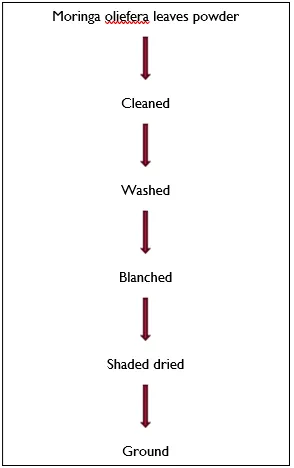
Formulation of Moringa oleifera leaves powder Drying of leaves:
Collection: The leaves were gathered from the campus of the institution.
Sorting: To create the highest-quality powder, fresh, green, undamaged leaves were gathered.
Cleaning and washing: To get rid of all the sticking dust and dirt particles, the leaf stalks were severed from the main branches and cleaned three to four times with plenty of water.
Blanching and Drying: For five minutes, moringa oleifera leaves were submerged in boiling water at 100 degrees Celsius After that, it spent two minutes submerged in cold water. Blanched leaves were dried at a temperature between 25 and 30 degrees in a clean, dust-free, dark shadow. The leaves took 24 to 38 hours to fully dry. The leaves were dried until they were brittle and readily crushed.
Grinding of leaves: A fine powder was made from dried leaves.
Storage: To prevent the establishment of Mold at room temperature, pow.
Instruments and Equipment:
Procedure:
Fresh, ripe Moringa oleifera leaves were collected from the herbal garden at XYZ College of Pharmacy in Pune, Maharashtra, India, in October and November of 2024. The plant's identify was confirmed by a qualified botanist. The Department of Pharmacognosy received a specimen from a herbarium. Taxonomic identification was confirmed using The Wealth of India and The Flora of British India (J.D. Hooker). The certificate of authenticity was supplied by the Regional Ayurvedic Research Institute in Pune.
Processing of Plant Material:
Drying:
Leaves are put in a single layer on trays composed of clean cotton fabric or stainless steel.Shade-dried at room temperature (25 ± 2°C) for seven to ten days. Steer clear of direct sunlight to avoid: degradation of minerals that are susceptible to heat, such vitamins A and C Loss of volatile phytochemicals Chlorophyll breakdown, or colour fading Every day, leaves are replaced to ensure even drying. When is drying complete? The leaves get crisp and easily crumble. The moisture content is less than 8%, according to the Loss on Drying test at 105°C.
Coarse Grinding:
Sieving:
Blending Procedure:
1. Each excipient is dried individually and then passed through Sieve No. 40.
2. The foundation of a stainless-steel mortar is moringa leaf powder.
3. The addition of excipients is done geometrically, beginning with the smallest quantity and gradually increasing it.
4. Thoroughly combined with a pestle and hand trituration for ten to fifteen minutes.
5. Further homogenization in a mechanical blender for 15 minutes at a low speed.
6. The combined powder is again passed through Sieve No. 40 to disperse any agglomerates.
7. The texture and color consistency of the finished powder are assessed.
Packing and Storage:
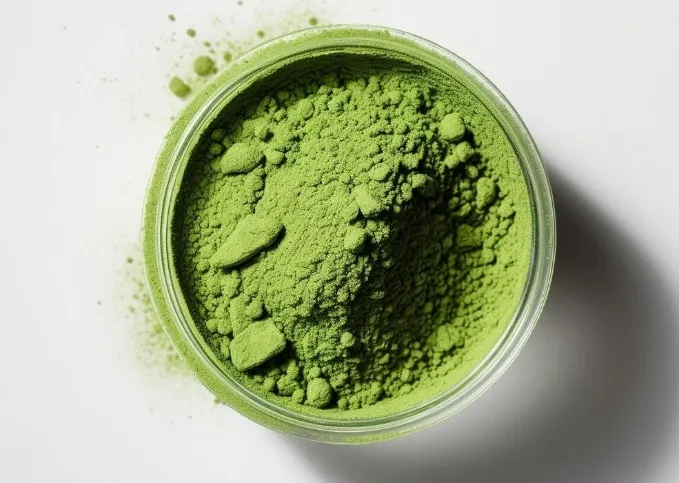
Fig 1
Application of churna:
1. Nutritional Supplement
• Because of its rich protein, vitamin, and mineral content, it is used as a natural health
supplement.
• Aids in preventing weakness and malnutrition.
2. Antioxidant Application:
• Packed in phenolic chemicals and flavonoids.
• Prevents oxidative stress and damage from free radicals.
3. Antidiabetic Application :
• Aids in blood glucose regulation.
• Applied to the treatment of diabetes as supportive therapy.
4. Immunity Booster :
• Strengthens the body's defenses against illnesses.
• Enhances immunity in general.
EVALUATION PARAMETERS:
To ascertain the physical attributes of the produced moringa leaf powder, organoleptic parameters were assessed.
|
Parameters |
Observation |
|
Colour |
Green |
|
Odour |
Characteristics |
|
Taste |
Slightly bitter |
|
Appearance |
Fine powder |
Discussion:
As is usual with moringa leaves, the resulting powder had a green color, a distinct smell, and a somewhat bitter taste. The powder had a homogeneous, fine appearance.
Moisture Content:
Moisture content of moringa leaf powder Moisture (%) = Initial Weight ÷ Final Weiglt × 100
|
Parameter |
Value (%) |
|
Moisture |
7.5 ± 0.2 |
Discussion:
The powder is sufficiently dried, as evidenced by the moisture level of 7.5%. Low moisture content extends the nutraceutical product's shelf life and aids in preventing microbial contamination. The shade drying technique eliminated extra water while preserving the phytoconstituents.
Ash Value:
Total ash of moringa leaf powder
Ash % = (Ash ÷ Sample) × 100
|
Parameter |
Value |
|
Total Ash |
Approx 10 % |
Discussion:
The total amount of inorganic material in the sample is represented by the ash value. Minerals including calcium, potassium, magnesium, and iron are present when the value is 10%. This demonstrates that moringa leaf powder is a reliable source of vital minerals for dietary supplements.
Particle size determination:
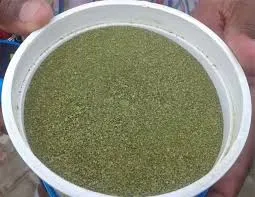
The produced churna powder was run through several standard sieves in order to determine the particle size. To ascertain the formulation's particle size, the powder retained on each screen was examined.
Loss on drying:
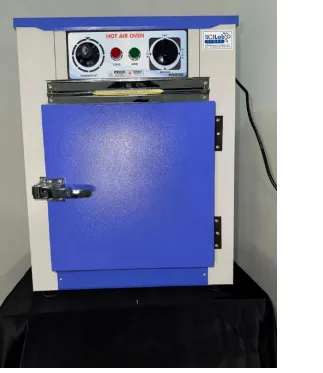
A tiny amount of the prepared churna was placed in a dry evaporating dish and dried in a hot air oven until a consistent weight was achieved. The amount of moisture in the formulation is indicated by the weight loss.
pH:
A calibrated digital pH meter (Systronics 335) was used to test the pH at 25°C after one gram of powder was dissolved in 100 milliliters of distilled water.
RESULTS AND DISCUSSION:
The prepared Moringa oleifera leaf churna was tested using several evaluation methods to check its physical and chemical properties, how well it flows, its stability, and its purity. The results of these tests are explained here. The Moringa oleifera leaf churna was checked in the lab using different physical and chemical tests. The formulation had good appearance, like a green color, a natural smell, and a smooth texture. The measurements for how tightly the powder can be packed and how easily it can be compressed were good, showing it can be handled well. The angle of repose showed that the powder flows smoothly. The size of the particles was consistent, which helps mix the powder well and keeps the formulation stable. The pH level of the churna solution was within safe limits, and the moisture content was low, as shown by the loss on drying test. The tests confirmed that the churna has good quality and remains stable. Lower moisture content helps prevent the growth of harmful microbes and increases how long the product stays safe. The good flow and compressibility make it easier to handle and package. Overall, the prepared Moringa oleifera leaf churna has acceptable pharmaceutical qualities and can be used as a good herbal formulation.
CONCLUSION
The current study was focused on creating and testing Moringa oleifera leaf churna using appropriate ingredients to make a stable and effective herbal powder. The process of making the formulation followed standard pharmaceutical methods to ensure even mixing, proper size reduction, and good flow of the powder.Testing the prepared churna showed good results across all the tested parameters.The appearance, smell, and taste of the formulation were acceptable, which showed that the raw materials were of good quality and the processing was done properly. The measurements of bulk density and tapped density suggested that the powder could be packed and compressed well, which is important for handling and packaging. This research successfully created and thoroughly tested Moringa oleifera leaf churna according to the guidelines of the Ayurvedic Pharmacopoeia of India.The formulation showed slightly better flow properties and a more balanced taste due to the optimized amount of Piper nigrum, which helps improve the absorption of other plant-based ingredients because of its piperine content. Piperine is known to reduce the breakdown of certain compounds and increase the absorption of other plant substances in the intestines. The antimicrobial tests showed that the extract has broad-spectrum activity, especially the ethanolic extract, which gives a scientific reason for using it in conditions involving infections. More research is needed, such as phytochemical analysis, microbial testing, and long-term stability studies, to confirm the effectiveness and shelf life of the formulation. With proper standardization and quality checks, this churna has the potential to become a reliable herbal product for health care. In summary, this study provides a scientific basis for setting quality standards for Moringa oleifera churna and supports its use as an Ayurvedic nutraceutical with proven safety and effectiveness.
REFERENCES



Alam Mahamad Mulani*, Vishakha B. Kasabe, Sampat D. Navale, Formulation And Evaluation Of Moringa Oleifera (Drumstick) Leaf Charna., Int. J. Sci. R. Tech., 2026, 3 (5), 1084-1090. https://doi.org/10.5281/zenodo.20428751
 10.5281/zenodo.20428751