View Article

Abstract

The present study was aimed at the formulation and evaluation of polyherbal oral dispersible tablets for relief from menstrual cramps. The formulation was prepared using natural herbal ingredients such as ginger powder, fennel powder, and turmeric powder, which are traditionally known for their analgesic, anti-inflammatory, and antispasmodic properties. Mannitol, microcrystalline cellulose, hydroxypropyl methylcellulose, talc, and magnesium stearate were used as excipients for tablet preparation by direct compression method. The prepared powder blend was evaluated for pre-compression parameters including angle of repose, bulk density, tapped density, Carr’s index, and Hausner ratio, which indicated good flow properties. The compressed tablets were further evaluated for physical appearance, weight variation, hardness, friability, wetting time, disintegration time, and in-vitro drug release. The formulated tablets showed acceptable hardness, low friability, rapid disintegration, and satisfactory drug release characteristics. The study demonstrated that the polyherbal oral dispersible tablets can provide quick onset of action and improved patient compliance. The synergistic effect of herbal ingredients may help in reducing menstrual pain naturally with minimal side effects. The formulation was found to be stable and suitable for oral administration.

Keywords

Polyherbal tablet, Oral dispersible tablet, Menstrual cramps, Ginger, Fennel, Turmeric, Dysmenorrhea, Herbal formulation, Direct compression, Anti-inflammatory activity.

Introduction

× Popup Image

Menstrual disorders are among the most common health problems experienced by women during their reproductive years. Dysmenorrhea, commonly referred to as menstrual cramps, is characterized by severe pain in the lower abdomen during menstruation. The pain may also extend to the lower back and thighs and is often associated with symptoms such as nausea, vomiting, headache, fatigue, diarrhea, and mood disturbances. Dysmenorrhea is generally classified into primary dysmenorrhea, which occurs without pelvic pathology, and secondary dysmenorrhea, which is associated with gynecological disorders such as endometriosis, pelvic inflammatory disease, or uterine fibroids.

Primary dysmenorrhea mainly occurs due to excessive production of prostaglandins in the endometrial lining during menstruation. Increased prostaglandin levels stimulate strong uterine muscle contractions, resulting in reduced blood flow to uterine tissues and causing ischemic pain. This condition affects a large percentage of adolescent girls and women worldwide and significantly interferes with educational performance, work productivity, social activities, and emotional well-being.
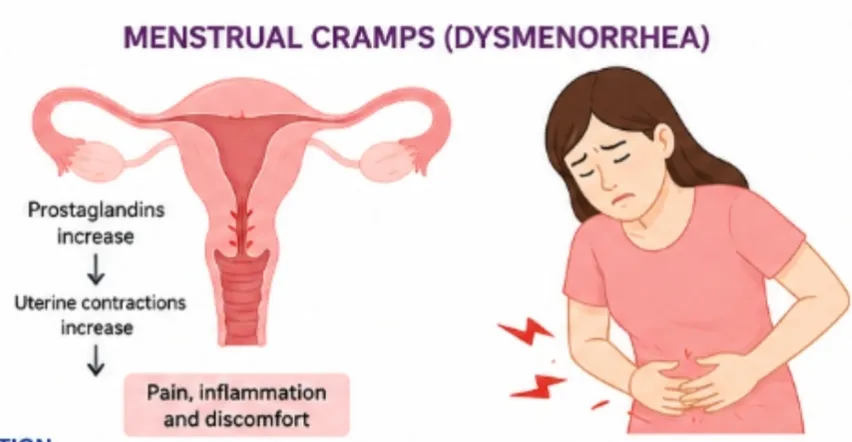
Fig no 1 : Menstrual cramps (dysmenorrhea)

Conventional therapies for menstrual cramps include non-steroidal anti-inflammatory drugs (NSAIDs), analgesics, and hormonal contraceptives. Although these treatments are effective in reducing pain, prolonged or excessive use may produce adverse effects such as gastric irritation, peptic ulcer, nausea, kidney dysfunction, dizziness, and hormonal imbalance. Therefore, there is growing interest in herbal medicines and natural products as safer alternatives for the management of dysmenorrhea.

Herbal medicines have been used in traditional systems of medicine for centuries due to their therapeutic efficacy and minimal side effects. Polyherbal formulations combine multiple medicinal plants to produce synergistic therapeutic action. In the present study, ginger, fennel, and turmeric were selected based on their traditional use and pharmacological properties related to menstrual pain management.

Ginger (Zingiber officinale) contains active constituents such as gingerols and shogaols that exhibit anti-inflammatory, analgesic, antioxidant, and antiemetic activities. Ginger inhibits cyclooxygenase and lipoxygenase pathways, thereby reducing prostaglandin synthesis and uterine contractions. It is widely used for relieving menstrual pain, nausea, and inflammation.

Fennel (Foeniculum vulgare) is a medicinal herb known for its antispasmodic and carminative properties. Fennel contains volatile oils such as anethole, which help relax smooth muscles and reduce uterine spasms. It also improves digestion and reduces bloating commonly associated with menstruation.

Turmeric (Curcuma longa) contains curcumin, a biologically active compound possessing strong anti-inflammatory and antioxidant activities. Curcumin inhibits inflammatory mediators and oxidative stress, thereby reducing pain and inflammation during menstruation. Turmeric also supports overall reproductive health.

The oral route remains the most preferred method for drug administration because of its convenience, safety, and patient acceptance. Among oral dosage forms, oral dispersible tablets (ODTs) have gained considerable attention due to their rapid disintegration in saliva without the need for water. These tablets dissolve quickly in the oral cavity, resulting in faster drug release and improved bioavailability. ODTs are especially useful for patients who experience difficulty swallowing conventional tablets and provide improved compliance due to ease of administration.

Oral dispersible tablets also offer several pharmaceutical advantages including rapid onset of action, accurate dosing, portability, stability, and better patient convenience. The use of herbal ingredients in ODT formulation combines the benefits of natural therapy with advanced drug delivery technology.

In the present research work, polyherbal oral dispersible menstrual cramp relief tablets were formulated using ginger powder, fennel powder, and turmeric powder by direct compression technique. Mannitol was incorporated as a diluent and sweetening agent to improve mouth feel, while microcrystalline cellulose acted as a binder and filler. Hydroxypropyl methylcellulose was used to enhance tablet integrity and disintegration properties. Talc and magnesium stearate were added as glidant and lubricant respectively.

The prepared formulation was evaluated for pre-compression parameters such as angle of repose, bulk density, tapped density, Carr’s index, and Hausner ratio to determine powder flow characteristics. Post-compression parameters including hardness, thickness, friability, weight variation, wetting time, disintegration time, and drug release study were also evaluated to assess tablet quality and performance.

The aim of this study was to develop a safe, effective, and patient-friendly herbal oral dispersible tablet capable of providing rapid relief from menstrual cramps with minimal side effects. The formulation may serve as a promising natural alternative to synthetic analgesics for the management of dysmenorrhea.

Objectives

  1. To formulate and evaluate polyherbal oral dispersible tablets for effective relief of menstrual cramps using natural herbal ingredients.
  2. To prepare oral dispersible tablets using ginger, fennel, and turmeric powders.
  3. To improve patient compliance through fast disintegration and ease of administration.
  4. To evaluate pre-compression parameters of the powder blend.
  5. To evaluate post-compression parameters of the prepared tablets.
  6. To study the disintegration and drug release characteristics of the formulation.
  7. To develop a herbal formulation with minimal side effects compared to synthetic drugs.
  8. To assess the stability and effectiveness of the prepared tablets.

Advantages

  1. Provides rapid relief from menstrual cramps.
  2. Fast disintegration in saliva without the need for water.
  3. Improved patient compliance and convenience.
  4. Herbal ingredients produce fewer side effects.
  5. Easy to administer and carry during travel.
  6. Better patient acceptability due to pleasant mouth feel.
  7. Reduced gastric irritation compared to conventional analgesics.
  8. Combines anti-inflammatory, analgesic, and antispasmodic effects.
  9. Suitable for women who have difficulty swallowing tablets.
  10. Natural and cost-effective treatment approach.

Disadvantages

  1. Herbal ingredients may show variability in potency.
  2. Bitter taste of herbal powders may affect palatability.
  3. Moisture sensitivity can affect tablet stability.
  4. Large doses of herbal powders may increase tablet size.
  5. Herbal formulations may have slower therapeutic response in some patients.
  6. Difficulty in maintaining uniformity of herbal extracts.
  7. Strong odor of herbs may reduce patient acceptance.

Limitations

  1. Limited clinical evidence compared to synthetic drugs.
  2. Variation in quality of raw herbal materials may affect formulation performance.
  3. Stability of herbal constituents may decrease during storage.
  4. Risk of microbial contamination in herbal products.
  5. Exact mechanism of combined herbal action may not be fully established.
  6. Short-term evaluation may not predict long-term safety and efficacy.
  7. Environmental conditions such as humidity and temperature may affect tablet quality.
  8. Standardization of polyherbal formulations is difficult.

Applications

  1. Management of primary dysmenorrhea (menstrual cramps).
  2. Reduction of abdominal pain and uterine spasms during menstruation.
  3. Relief from inflammation associated with menstrual discomfort.
  4. Supportive therapy for women preferring herbal treatment.
  5. Use as an alternative to NSAIDs and synthetic analgesics.
  6. Suitable for adolescent girls and women with swallowing difficulties.
  7. Convenient dosage form for rapid onset of action.
  8. Potential application in herbal gynecological therapy.
  9. Can be used in community healthcare and herbal medicine practice.
  10. Useful in improving quality of life during menstruation.

PLANT PROFILE

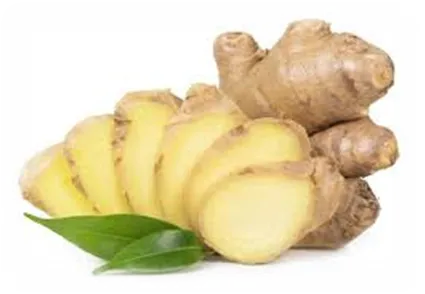
  1. Ginger

Fig no 2 : Ginger

  1. Biological Source :NGinger consists of the dried rhizomes of Zingiber officinale.
  2. Family : Zingiberaceae
  3. Common Names : Ginger, Adrak
  4. Scientific Name : Zingiber officinale
  5. Geographical Source : Cultivated widely in India, China, Nigeria, and Southeast Asian countries.
  6. Plant Description : Ginger is a perennial herb with thick branched rhizomes and narrow green leaves. The rhizome is aromatic, pale yellow internally, and possesses a pungent taste.
  7. Chemical Constituents
  • Gingerol
  • Shogaol
  • Zingerone
  • Essential oils
  • Oleoresins
  1. Uses
  • Anti-inflammatory
  • Analgesic
  • Antiemetic
  • Digestive stimulant
  • Relief from menstrual pain
  1. Medicinal Importance in Formulation

Ginger helps reduce prostaglandin synthesis and uterine contractions, thereby decreasing menstrual cramps and pain.
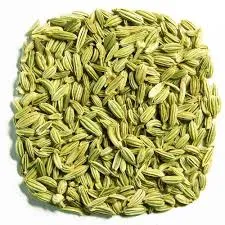
  1. Fennel

Fig no 3 : Fennel

  1. Biological Source : Fennel consists of dried ripe fruits of Foeniculum vulgare.
  2. Family : Apiaceae
  3. Common Names : Fennel, Saunf
  4. Scientific Name : Foeniculum vulgare
  5. Geographical Source :Cultivated in India, Mediterranean regions, Europe, and China.
  6. Plant Description : Fennel is an aromatic annual herb with feathery leaves and yellow flowers. The fruits are greenish-brown and possess a sweet aromatic odor.
  7. Chemical Constituents
  • Anethole
  • Fenchone
  • Estragole
  • Volatile oils
  • Flavonoids
  1. Uses
  • Antispasmodic
  • Carminative
  • Digestive aid
  • Anti-inflammatory
  • Relief from abdominal pain
  1. Medicinal Importance in Formulation

Fennel relaxes uterine smooth muscles and reduces spasms associated with dysmenorrhea.
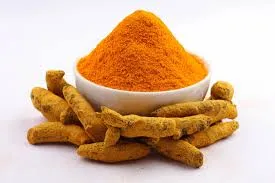
  1. Turmeric

Fig no 4 : Turmeric

  1. Biological Source : Turmeric consists of dried rhizomes of Curcuma longa.
  2. Family : Zingiberaceae
  3. Common Names : Turmeric, Haldi
  4. Scientific Name : Curcuma longa
  5. Geographical Source : Cultivated mainly in India, China, Indonesia, and Sri Lanka.
  6. Plant Description : Turmeric is a perennial herbaceous plant with underground rhizomes that are yellowish-orange in color and possess characteristic odor and bitter taste.
  1. Chemical Constituents
  • Curcumin
  • Demethoxycurcumin
  • Turmerone
  • Volatile oils
  • Proteins and carbohydrates
  1. Uses
  • Anti-inflammatory
  • Antioxidant
  • Antimicrobial
  • Wound healing
  • Pain relief
  1. Medicinal Importance in Formulation

Turmeric reduces inflammation and oxidative stress during menstruation and supports pain management.

MATERIAL AND METHOD

Materials

Ginger powder, fennel powder, turmeric powder, mannitol, microcrystalline cellulose, hydroxypropyl methylcellulose, talc, magnesium stearate, distilled water, phosphate buffer solution, and hydrochloric acid were used in the formulation of polyherbal oral dispersible menstrual cramp relief tablets.

Glassware

Beaker, measuring cylinder, glass rod, funnel, watch glass, volumetric flask, pipette, and petri dish were used during formulation and evaluation studies.

Formula

Sr. No.

Ingredients

Quantity

1

Ginger Powder

2 gm

2

Fennel Powder

2 gm

3

Turmeric Powder

1 gm

4

Mannitol

11.5 gm

5

Microcrystalline Cellulose

1.7 gm

6

Hydroxypropyl Methylcellulose

0.3 gm

7

Talc

0.6 gm

8

Magnesium Stearate

0.3 gm

Tab no 1 : Formula of tablet

Formulation Process
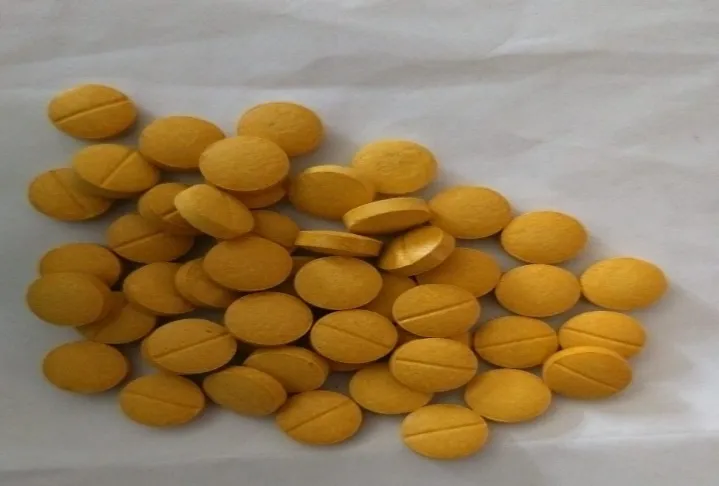
  1. All ingredients were collected and weighed accurately using a digital weighing balance.
  2. Ginger powder, fennel powder, and turmeric powder were dried properly to remove moisture content.
  3. All ingredients were passed through sieve no. 60 separately to obtain uniform particle size.
  4. Ginger powder, fennel powder, and turmeric powder were mixed uniformly in a mortar and pestle.
  5. Mannitol, microcrystalline cellulose, and hydroxypropyl methylcellulose were added to the herbal mixture and blended thoroughly for 10–15 minutes.
  6. Talc and magnesium stearate were added to the powder blend and mixed gently for proper lubrication.
  7. The prepared powder blend was evaluated for flow properties before compression.
  8. The blended powder was compressed into tablets using a tablet compression machine by direct compression method.
  9. Prepared tablets were collected and checked for physical appearance and defects.
  10. The formulated tablets were stored in airtight containers for further evaluation studies.

Fig no 5 : Formulation of tablet

EVALUATION PARAMETER

A) PRECOMPRESSION PARAMETERS

Precompression studies are performed to evaluate flow characteristics and compressibility of powder blend before compression.

  1. Angle of Repose

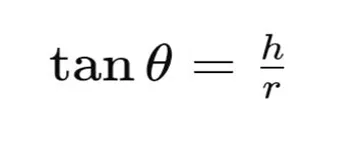
Angle of repose is the maximum angle formed between the surface of powder heap and horizontal plane. It indicates flow property of powder blend.
  1. Procedure
  1. Funnel was fixed at a suitable height.
  2. Powder blend was allowed to flow through the funnel freely onto graph paper.
  3. Powder formed a cone-shaped heap.
  4. Height (h) and radius (r) of heap were measured.
  5. Angle of repose was calculated.
  1. Formula

Where:

  • θ = Angle of repose
  • h = Height of powder cone
  • r = Radius of cone
  1. Interpretation

Angle of Repose

Flow Property

<25°

Excellent

25–30°

Good

30–40°

Passable

>40°

Poor

  1. Bulk Density

Bulk density is the ratio of mass of powder to bulk volume before tapping.

  1. Procedure
  1. Accurately weighed powder blend was transferred into graduated cylinder.
  2. Initial volume occupied by powder was noted.
  3. Bulk density was calculated.
  1. Formula

Where:

  • ρb = Bulk density
  • M = Mass of powder
  • V b = Bulk volume
  1. Tapped Density

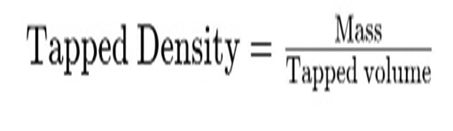
Tapped density is the ratio of mass of powder to tapped volume after mechanical tapping.
  1. Procedure
  1. Measuring cylinder containing powder was tapped mechanically for 100 taps.
  2. Final volume was recorded.
  3. Tapped density was calculated.
  1. Formula

Where:

  • ρt = Tapped density
  • M = Mass of powder
  • Vt = Tapped volume
  1. Carr’s Compressibility Index

Carr’s index indicates compressibility and flow behavior of powder blend.

  1. Procedure

Calculated using bulk density and tapped density values.

  1. Formula

Where:

  • TD = Tapped density
  • BD = Bulk density
  1. Interpretation

Carr’s Index

Flow Character

5–15%

Excellent

16–20%

Good

21–25%

Fair

>25%

Poor

  1. Hausner’s Ratio

Hausner’s ratio indicates interparticle friction and flowability of powder.

  1. Formula
  1. Interpretation

Hausner Ratio

Flow Property

1.00–1.11

Excellent

1.12–1.18

Good

1.19–1.25

Fair

>1.25

Poor

  1. Significance
  • Indicates flow efficiency
  • Predicts powder handling property

B) POSTCOMPRESSION PARAMETERS

Postcompression studies evaluate quality and performance of prepared tablets.

  1. Weight Variation Test
  1. Principle: This test ensures uniformity of tablet weight and dose.
  2. Procedure
  1. Twenty tablets were selected randomly.
  2. Individual tablet weights were measured using digital balance.
  3. Average weight was calculated.
  4. Individual weights were compared with average weight.
  1. Thickness Test
  1. Principle: Thickness determines uniformity in tablet size.
  2. Procedure
  1. Thickness of tablets was measured using Vernier caliper.
  2. Average value was calculated.
  1. Hardness Test
  1. Principle: Hardness indicates mechanical strength of tablets
  2. Procedure
  1. Tablets were placed between jaws of Monsanto hardness tester.
  2. Pressure required to break tablet was recorded.
  1. Friability Test
  1. Principle: Friability determines resistance of tablets to abrasion and shock.
  2. Procedure
  1. Preweighed tablets were placed in Roche friabilator.
  2. Apparatus rotated at 25 rpm for 4 minutes.
  3. Tablets were dedusted and reweighed.
  1. Formula

Percentage Friability (F) = (Iw – Fw) / Iw x 100

Where:

  • F = Friability
  • W1 = Initial weight
  • W2 = Final weight
  1. Disintegration Test
  1. Principle: Determines time required for tablet to break into small particles.
  2. Procedure
  1. Tablets were placed in disintegration apparatus containing distilled water at 37±0.5°C.
  2. Time required for complete disintegration was recorded.
  1. In-vitro Dissolution Study
  1. Principle: Determines rate and extent of drug release from tablets.
  2. Procedure
  1. USP dissolution apparatus type II (Paddle method) was used.
  2. Dissolution medium: 900 ml phosphate buffer pH 6.8.
  3. Temperature maintained at 37±0.5°C.
  4. Paddle speed maintained at 50 rpm.
  5. Samples withdrawn at predetermined intervals.
  6. Samples analyzed using UV spectrophotometer.

RESULT

  1. PRE-COMPRESSION RESULT TABLE

Sr. No.

Parameter

Result

Interpretation

1

Angle of Repose

28°

Good flow property

2

Bulk Density

0.52 g/ml

Acceptable

3

Tapped Density

0.61 g/ml

Acceptable

4

Carr’s Index

14.75 %

Good compressibility

5

Hausner Ratio

1.17

Good flow property

Tab no 2 : Pre-compression result

  1. POST-COMPRESSION RESULT TABLE

Sr. No.

Parameter

Result

Interpretation

1

Weight Variation

Pass (Average weight: 500 mg, within ± limit)

Uniform dose distribution

2

Thickness

3.2 mm

Uniform tablet size

3

Hardness

3.1 – 3.4 kg/cm²

Suitable for oral dispersible tablet

4

Friability

0.58 %

Within acceptable limit (<1%)

5

Disintegration Time

28 – 35 seconds

Rapid disintegration (ODT standard)

6

Dissolution Study

92 – 97 % drug release in 10 min

Good release profile

Tab 3 : Post-compression result

DISCUSSION

The formulated poly-herbal oral dispersible tablet containing Ginger, Fennel, and Turmeric showed good pre-compression flow properties (angle of repose 28°, Carr’s index 14.75%, Hausner ratio 1.17), indicating suitability for direct compression.

Post-compression evaluation confirmed acceptable tablet characteristics. The tablets passed weight variation test and showed uniform thickness (3.2 mm). Hardness (3.1–3.4 kg/cm²) and friability (0.58%) indicated good mechanical strength.

The tablets exhibited rapid disintegration (28–35 seconds), which is essential for oral dispersible dosage form. Dissolution study showed 92–97% drug release within 10 minutes, indicating fast and efficient release of herbal constituents.

The formulation demonstrated good physical properties, rapid disintegration, and effective drug release, making it suitable for menstrual cramp relief.

CONCLUSION

The poly-herbal oral dispersible tablet was successfully formulated and evaluated using Ginger, Fennel, and Turmeric. The tablets showed good physical properties, rapid disintegration (28–35 seconds), and high drug release (92–97% in 10 minutes).

The formulation is effective, stable, and suitable for fast relief of menstrual cramps with better patient compliance.

REFERENCES

  1. Rahnama P et al. Effect of ginger on pain relief in primary dysmenorrhea. BMC Complementary and Alternative Medicine. 2012. 12:92
  2. Xu Y, Yang Q, Wang X. Herbal medicine for primary dysmenorrhea systematic review. Journal of International Medical Research. 2020. 48(6):1–12
  3. Lee HW et al. Fennel for dysmenorrhea pain relief meta-analysis. Nutrients. 2020. 12(11):3438
  4. Chen XC et al. Ginger for dysmenorrhea management. Evidence-Based Complementary and Alternative Medicine. 2016. 2016:6295737
  5. Boroujeni ZS et al. Curcuma longa effects on menstrual pain. Journal of Integrative Medicine. 2024. 21(1):45–53
  6. Ali BH et al. Pharmacological properties of ginger. Food and Chemical Toxicology. 2008. 46(2):409–420
  7. Ammon HP, Wahl MA. Pharmacology of Curcuma longa. Planta Medica. 1991. 57(1):1–7
  8. Badgujar SB et al. Foeniculum vulgare pharmacological review. Pharmacognosy Reviews. 2014. 8(16):107–118
  9. Jurenka JS. Anti-inflammatory activity of curcumin. Alternative Medicine Review. 2009. 14(2):141–153
  10. Dawood MY. Primary dysmenorrhea pathophysiology. Obstetrics and Gynecology. 2006. 108(2):428–441
  11. Proctor M, Farquhar C. Dysmenorrhoea management. BMJ. 2006. 332:1134–1138
  12. Marjoribanks J et al. NSAIDs for dysmenorrhoea. Cochrane Database of Systematic Reviews. 2015. CD001751
  13. Nagai N et al. Fast dissolving tablets review. Drug Development and Industrial Pharmacy. 2008. 34(2):105–116
  14. Abdelbary G et al. Oral dispersible tablets formulation. International Journal of Pharmaceutics. 2005. 306(1–2):82–90
  15. Patel DM, Patel NM. Fast dissolving tablets review. International Journal of Pharmaceutical Sciences. 2017. 9(3):45–52
  16. Singh S, Shukla V. Herbal drugs in dysmenorrhea. International Journal of Herbal Medicine. 2019. 7(4):10–15
  17. Sharma PP. Herbal formulation and evaluation. Pharmaceutical Review. 2018. 16(2):25–30
  18. Kokate CK et al. Pharmacognosy. Nirali Prakashan. 2019. 1–2
  19. World Health Organization. Herbal drug standardization guidelines. WHO. 2011. 1–56
  20. Evans WC. Trease and Evans Pharmacognosy. Elsevier. 2014. 1–1000

Reference

  1. Rahnama P et al. Effect of ginger on pain relief in primary dysmenorrhea. BMC Complementary and Alternative Medicine. 2012. 12:92
  2. Xu Y, Yang Q, Wang X. Herbal medicine for primary dysmenorrhea systematic review. Journal of International Medical Research. 2020. 48(6):1–12
  3. Lee HW et al. Fennel for dysmenorrhea pain relief meta-analysis. Nutrients. 2020. 12(11):3438
  4. Chen XC et al. Ginger for dysmenorrhea management. Evidence-Based Complementary and Alternative Medicine. 2016. 2016:6295737
  5. Boroujeni ZS et al. Curcuma longa effects on menstrual pain. Journal of Integrative Medicine. 2024. 21(1):45–53
  6. Ali BH et al. Pharmacological properties of ginger. Food and Chemical Toxicology. 2008. 46(2):409–420
  7. Ammon HP, Wahl MA. Pharmacology of Curcuma longa. Planta Medica. 1991. 57(1):1–7
  8. Badgujar SB et al. Foeniculum vulgare pharmacological review. Pharmacognosy Reviews. 2014. 8(16):107–118
  9. Jurenka JS. Anti-inflammatory activity of curcumin. Alternative Medicine Review. 2009. 14(2):141–153
  10. Dawood MY. Primary dysmenorrhea pathophysiology. Obstetrics and Gynecology. 2006. 108(2):428–441
  11. Proctor M, Farquhar C. Dysmenorrhoea management. BMJ. 2006. 332:1134–1138
  12. Marjoribanks J et al. NSAIDs for dysmenorrhoea. Cochrane Database of Systematic Reviews. 2015. CD001751
  13. Nagai N et al. Fast dissolving tablets review. Drug Development and Industrial Pharmacy. 2008. 34(2):105–116
  14. Abdelbary G et al. Oral dispersible tablets formulation. International Journal of Pharmaceutics. 2005. 306(1–2):82–90
  15. Patel DM, Patel NM. Fast dissolving tablets review. International Journal of Pharmaceutical Sciences. 2017. 9(3):45–52
  16. Singh S, Shukla V. Herbal drugs in dysmenorrhea. International Journal of Herbal Medicine. 2019. 7(4):10–15
  17. Sharma PP. Herbal formulation and evaluation. Pharmaceutical Review. 2018. 16(2):25–30
  18. Kokate CK et al. Pharmacognosy. Nirali Prakashan. 2019. 1–2
  19. World Health Organization. Herbal drug standardization guidelines. WHO. 2011. 1–56
  20. Evans WC. Trease and Evans Pharmacognosy. Elsevier. 2014. 1–1000

Photo
Kalyani Shripat Giram
Corresponding author

RJS College Of Pharmacy, Kokamthan

Photo
Waghchaure Akshda G.
Co-author

RJS College Of Pharmacy, Kokamthan

Kalyani Shripat Giram*, Waghchaure Akshda G., Formulation And Evaluation Of Poly- Herbal Oral Dispersible Menstrual Cram Relief Tablet, Int. J. Sci. R. Tech., 2026, 3 (5), 1147-1157. https://doi.org/10.5281/zenodo.20454327

More related articles
Formulation and Evaluation of a Poly-Herbal Under-...
Nirmala Korukola, Ponnapalli Divya Sri Satya, Kottalanka Gladish,...
A Review On Herbal Tooth Powder...
Prathamesh Wadkar, Sonali Kodalkar, Vetal Kodalkar, Rushal Shirku...
A review article on : Anti- anxiety activity...
Sairam Dilip Tambe , Chaudhari Kaweri K. ...
A Detailed Review of Emerging Therapy for Oral Health...
Divya Gore, Ankita Deokar, Swapnil Kale, Tanuja Pawar, Divya Bhor, Sneha Kanase...
Related Articles
A Review On Polyherbal Formulations For Immune Enhancement: Phytochemical Standa...
Nirmalkumar Nimba Bhadane , Sumaira Nasreen Tahir, Pawan Ashok Danghche , Sanket Bhausaheb Gangurde ...
A Review On Polyherbal Formulations For Immune Enhancement: Phytochemical Standa...
Nirmalkumar Nimba Bhadane , Sumaira Nasreen Tahir, Pawan Ashok Danghche , Sanket Bhausaheb Gangurde ...
Formulation and Evaluation of a Poly-Herbal Under-Eye Cream: A Comprehensive Stu...
Nirmala Korukola, Ponnapalli Divya Sri Satya, Kottalanka Gladish, Dokala Keerthi Anjali, Abdul Ayesh...
More related articles
Formulation and Evaluation of a Poly-Herbal Under-Eye Cream: A Comprehensive Stu...
Nirmala Korukola, Ponnapalli Divya Sri Satya, Kottalanka Gladish, Dokala Keerthi Anjali, Abdul Ayesh...
A Review On Herbal Tooth Powder...
Prathamesh Wadkar, Sonali Kodalkar, Vetal Kodalkar, Rushal Shirkule ...
Formulation and Evaluation of a Poly-Herbal Under-Eye Cream: A Comprehensive Stu...
Nirmala Korukola, Ponnapalli Divya Sri Satya, Kottalanka Gladish, Dokala Keerthi Anjali, Abdul Ayesh...
A Review On Herbal Tooth Powder...
Prathamesh Wadkar, Sonali Kodalkar, Vetal Kodalkar, Rushal Shirkule ...