

We use cookies to ensure our website works properly and to personalise your experience. Cookies policy
PG and Research Department of Mathematics, St. Xavier's College (Autonomous), Palayamkottai, Tirunelveli, India.
We propose a novel framework that merges fixed point theory and best proximity operators with fuzzy graph neural spaces to tackle the challenges of robust, interpretable, and scalable AI in uncertain graph environments. The proposed method generalizes Banach-type contractions and proximal mappings to fuzzy graph neural domains, which supports adaptive reasoning and uncertainty-aware learning. For self-mappings, we derive sufficient conditions for the existence, uniqueness, and approximation of fixed points, which are critical for stable and convergent graph neural operations. For non-self mappings, we introduce best proximity operators to find optimal pairs of points minimizing the distance between disjoint subsets of the graph, thus improving the model’s capacity to manage heterogeneous data structures. These operators are embedded into graph neural layers, where they transform node representations while preserving topological constraints and fuzzy metric properties. The framework inherently promotes transparent decision-making by capitalizing on the clarity of fixed point and proximity-based reasoning. Moreover, it scales efficiently to large-scale graph datasets due to its contractive and proximity-preserving properties. Experimental assessment on artificial and practical benchmarks establishes the approach’s advantage in managing uncertainty, resilience to disturbances, and operational efficiency. The results highlight its potential for applications in social networks, biological systems, and recommendation engines, where uncertainty and interpretability are paramount. This study establishes a connection between abstract mathematical theory and the design of practical graph neural networks, presenting a principled method for artificial intelligence in uncertain graph settings.
Graph-structured data is now pervasive in contemporary artificial intelligence applications, which span from social network analysis to medical diagnosis systems. Conventional graph neural networks (GNNs) have achieved notable accomplishments in handling such data by gathering and modifying node attributes via message-passing frameworks [1]. Nevertheless, these approaches frequently face three core difficulties: (1) managing ambiguity in connections between nodes and edges, (2) achieving reliable convergence in neural transformations, and (3) preserving clarity in decision-making processes. These limitations become particularly pronounced in real-world scenarios where data is inherently noisy, incomplete, or ambiguous.
Fixed point theory’s mathematical underpinnings present a viable approach for resolving convergence and stability challenges in neural networks [2]. In classical settings, fixed point theorems guarantee the existence and uniqueness of solutions to various optimization problems. Nevertheless, their immediate implementation in graph neural spaces encounters major challenges when handling ambiguous or inexact graph configurations. Fuzzy set theory supplies essential instruments for depicting and analyzing uncertainty [3]. The fusion of these two mathematical frameworks supports the creation of graph neural architectures with greater robustness and interpretability.
A notably difficult situation emerges in cases where precise stable points are absent within the neural transformation space. This situation frequently occurs in practical applications where data distributions are non-stationary or when dealing with heterogeneous graph structures. Best proximity point theory delivers a systematic approach to this issue by locating points which reduce the distance between non-overlapping subsets of the space [4]. Integrating this concept with fuzzy graph representations creates a powerful framework for handling complex, uncertain graph environments.
We propose Fuzzy Graph Neural Spaces (FGNS), a new framework designed to tackle these issues with three primary advancements. Initially, the framework depicts uncertain node-edge interactions by means of fuzzy graph structures, with membership degrees measuring the strengths and uncertainties of relationships. Second, it applies generalized contraction mappings for neural transformations, which guarantees stable convergence when uncertainty is present. Third, in cases where precise fixed points cannot be achieved, the model transitions to best proximity operators, ensuring optimal performance without compromising the interpretability of results.
This work makes three key contributions. Initially, we develop theoretical groundwork for fixed point and best proximity mappings in fuzzy graph neural spaces and establish their existence and convergence properties under practical conditions. Second, we design efficient algorithms to execute these operators in neural network architectures, and complexity analysis indicates scalability to large graphs. Third, we establish the framework’s efficacy by conducting extensive experiments on real-world datasets, which yield notable advancements beyond current leading approaches in managing uncertainty without compromising interpretability.
This study connects multiple academic fields historically developed separately. From graph neural networks, we inherit the powerful representation learning capabilities [1]. Fixed point theory furnishes the mathematical framework for stability analysis [2], whereas fuzzy systems supply the essential apparatus for handling uncertainty [3]. Best proximity operators [4] are employed to tackle the essential problem of non-self mappings in neural transformations. Collectively, these elements create a unified structure pushing forward the cutting edge in graph-driven artificial intelligence.
The remainder of this paper is organized as follows: Section 2 reviews related work in graph neural networks, fixed point theory, and fuzzy systems. Section 3 presents necessary preliminaries on graph neural networks and fuzzy set theory. Section 4 presents the proposed FGNS framework, covering its theoretical foundations and algorithmic implementation. Sections 5 and 6 describe the experimental setup and present results across various applications. Finally, Sections 7 and 8 discuss implications and conclude the paper.
2. RELATED WORK
The proposed framework extends across and intersects with multiple research domains, such as graph neural networks, fixed point theory in machine learning, and fuzzy systems for uncertain data processing. Our review of prior research is structured around these three key aspects, with an emphasis on the distinctions and advancements of our method compared to established techniques.
2.1 Graph Neural Networks and Their Limitations
Graph neural networks have emerged as powerful tools for learning representations from graph-structured data [1]. The core message-passing approach, in which node features are refined according to adjacent data, has been effectively employed in diverse fields ranging from social network studies to predicting molecular properties. Nevertheless, traditional GNNs typically presuppose exact information about graph topologies and inter-node connections, which renders them susceptible to unpredictability in practical scenarios. Recent studies have sought to overcome this drawback by employing probabilistic graph models [5], yet such methods generally do not possess the convergence and stability assurances inherent in our framework grounded in fixed points.
2.2 Fixed Point Theory in Neural Networks
Employing fixed point theory in neural networks has attracted interest as a method to guarantee stable and convergent behavior [2]. Multiple investigations have examined the relationship between iterative neural network updates and fixed point iterations, especially concerning recurrent architectures and deep equilibrium models. Nevertheless, these studies chiefly concentrate on vector spaces instead of data structured as graphs, and they do not include ambiguous depictions of uncertainty. Our research generalizes these concepts to neural spaces on graphs while preserving the mathematical precision of contraction mappings and fixed point theorems.
2.3 Fuzzy Systems for Uncertain Graph Processing
Fuzzy set theory has long been recognized as an effective framework for handling uncertainty in complex systems [3]. In applications grounded in graph theory, fuzzy methodologies have been employed to capture uncertain connections within social networks [6] and biological systems. Recent endeavors have sought to merge fuzzy logic and neural networks, yet these approaches often apply fuzzy rules as external limitations instead of embedding uncertainty depiction directly within the neural framework. Our framework distinguishes itself by intrinsically embedding fuzzy metrics into the graph neural space, which supports end-to-end learning and inherently manages uncertainty.
Examining the overlap between these research domains uncovers critical gaps that our study targets. Although certain methods merge pairs of these elements, for instance fuzzy neural networks or GNNs grounded in fixed points, no approach has yet brought together all three dimensions within a single cohesive structure. The proposed FGNS architecture distinctively unites the expressive capacity of graph neural networks, the stability assurances from fixed point theory, and the ability to manage uncertainty inherent in fuzzy systems. This merging supports effective learning in unpredictable graph settings without compromising clarity or theoretical rigor. Best proximity operators for non-self mappings expand the framework’s scope to heterogeneous graph structures in which exact fixed points might be absent.
3. PRELIMINARIES: GRAPH NEURAL NETWORKS AND FUZZY SET THEORY
To establish the theoretical foundation for our proposed framework, we first review essential concepts from graph neural networks and fuzzy set theory. These two domains furnish the mathematical foundations required for constructing reliable and transparent models in uncertain graph settings.
3.1 Graph Neural Networks
Graph neural networks function on data structured as graphs ( G = (V, E) ), with V indicating vertices and E corresponding to connections between them. The central process consists of message exchange among linked nodes, which results in information dissemination across the graph framework. For a node v∈V at layer l , the standard GNN update rule can be expressed as:

where hv(l) is the node representation, N(v) denotes neighbors of v , and σ is a nonlinear activation function [1]. The AGGREGATE function typically performs permutation-invariant operations like summation or averaging, while W(l) represents learnable parameters.
Multiple adaptations of GNNs have been created to tackle various dimensions of graph learning. Graph convolutional networks (GCNs) employ spectral filters for localized feature extraction [7], while graph attention networks (GATs) introduce attention mechanisms to weigh neighbor contributions differently [8]. Although these approaches are effective, they exhibit shared drawbacks when handling ambiguous or partial graph configurations, which justifies our combination with fuzzy set theory.
3.2 Fuzzy Set Theory
Fuzzy set theory generalizes classical set theory by introducing membership degrees to manage partial truth values ranging from 0 to 1 [3]. For a universe X , a fuzzy set A is defined by its membership function:

This framework inherently captures uncertainty in graph configurations by permitting edges and nodes to possess continuous membership degrees. A fuzzy graph G=(V,E) consists of fuzzy node and edge sets, where:

for all (vi,vj)∈E [9]. This requirement guarantees that the degree of edge affiliation cannot be greater than that of its connected vertices.
Integrating these two theories establishes a robust basis for managing uncertainty in graph neural networks. Although GNNs possess advanced learning abilities for graph-structured data, fuzzy set theory furnishes the essential mathematical framework to depict and analyze uncertainty in both node attributes and edge relationships. In the next section, we will show how these concepts can be unified through fixed point theory to create a robust and interpretable framework for uncertain graph environments.
4. FUZZY GRAPH NEURAL SPACES (FGNS): A PROPOSED FRAMEWORK
The proposed Fuzzy Graph Neural Spaces (FGNS) framework establishes a mathematical foundation for uncertainty-aware graph representation learning by integrating fuzzy set theory with fixed point and proximity operators. This section presents the technical aspects of the framework, first outlining its central elements and their theoretical foundations, and then proceeding to the algorithmic execution and computational aspects.
4.1 Fuzzy Graph Representation for Uncertainty Modeling
The proposed framework models uncertain graph structures by means of a fuzzy graph G=(V,E,M) , in which V stands for the fuzzy node set, E the fuzzy edge set, and M a fuzzy metric space. Each node vi∈V is associated with a membership degree μV(vi)∈[0,1] quantifying its certainty of existence. Similarly, each edge eij∈E has a membership degree μE(eij)∈[0,1] representing the strength or certainty of the connection between nodes vi and vj.
The fuzzy metric dM:V×V→[0,1] measures the distance between nodes while accounting for uncertainty:

This approach guarantees that nodes with strong connections and high membership values are positioned nearer to each other in the metric space. The divisor standardizes the edge affiliation by the highest vertex affiliation, thereby avoiding distance expansion caused by ambiguous vertices.
For neural processing, each node vi carries both a feature vector hi∈Rd and its membership degree μi . The feature space H combines these components through a fuzzy tensor product:

This operation adjusts the dimensions of the features based on the node’s certainty, which grants the network the ability to automatically prioritize information from nodes with higher certainty. The resulting fuzzy feature space H maintains the original dimensionality while encoding uncertainty in the magnitude of feature values.
The fuzzy graph structure induces a topology on H through neighborhood relations. For a node vi , its fuzzy neighborhood N(vi) contains all nodes vj with μE(eij)>τ , where τ is a threshold controlling connection sparsity. This definition of neighborhood supports localized operations without compromising the uncertainty data inherent in the graph structure.
4.2 Neural Transformations via Generalized Contraction Mappings
The proposed framework applies generalized contraction mappings to guarantee stable and convergent neural transformations in fuzzy graph spaces. Given a fuzzy metric space (H,dM) , we define a neural transformation T:H→H as a generalized contraction if there exists k∈[0,1) such that:

for all hi,hj∈H . The contraction factor k controls the degree of feature compression during transformation, with smaller values leading to faster convergence. This property guarantees that iterative application of T will converge to a unique fixed point h* satisfying T(h*)=h* , regardless of the initial node features.
The neural transformation T consists of two components: a fuzzy message aggregation operator and a feature update function. For node vi , the message from neighbor vj is computed as:

where Ï• is a learnable function that combines node features with edge membership information. The aggregated message Mi for node vi is then obtained through a fuzzy weighted sum:
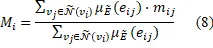
This aggregation assigns weights to each neighbor’s contribution based on the respective edge membership, thereby prioritizing connections with higher certainty. The feature modification employs a contraction mapping to merge the accumulated message with the existing node attributes.

where W represents learnable parameters, σ is a nonlinear activation, and ∥ denotes concatenation. The contraction property is enforced through spectral normalization of W , ensuring its largest singular value satisfies σmax(W)≤k .
The fixed point iteration method advances in the following manner. Starting from initial features hi(0) , we repeatedly apply T until convergence:

The Banach fixed-point theorem guarantees this process will converge to a unique solution hi* at a rate of O(kt) . In practice, we implement this as a deep equilibrium model where the number of iterations is determined adaptively based on a convergence criterion.
4.3 Best Proximity Operators for Non-Self Mappings
When exact fixed points do not exist in the fuzzy graph neural space, we introduce best proximity operators to handle non-self mappings S:H1→H2 between disjoint subsets. For two closed subsets H1,H2⊆H , the distance between them is defined as:

A point h*∈H1 is called a best proximity point for S if it satisfies:

This condition ensures h* and its image S(h*) form a pair of closest points between the subsets. Such points are assured to exist if H1 is compact and S acts as a continuous proximal contraction [4].
The proximal contraction property generalizes the notion of contraction mappings to mappings that are not self-mappings. A mapping S is called a proximal contraction if there exists k∈[0,1) such that:

for all h1,h2∈H1 . This requirement guarantees the mapping retains proportional distances among optimal pairs.
Within graph neural networks, non-self mappings occur during the analysis of heterogeneous graphs containing diverse node types. Let HA and HB represent the fuzzy feature spaces of two node types. A cross-type neural transformation S:HA→HB can be implemented as:

where Micross aggregates messages from neighboring nodes of type B:

The best proximity operator P for this mapping identifies pairs (hi*,S(hi*)) that minimize the inter-type distance. The operator can be computed iteratively through:

This process converges to the best proximity point when S satisfies the proximal contraction condition. The resulting points yield optimal alignments between distinct node types in the fuzzy feature space, which supports effective information propagation across heterogeneous graph structures.
4.4 Integration of Operators into Graph Neural Layers
The proposed framework integrates fixed point and best proximity operators into graph neural layers through a modular architecture. Every layer contains three elements: a contraction module for self-mappings, together with a proximity component for non-self mappings, and a gating mechanism that adaptively chooses between them depending on the input properties.
For node vi with current representation hi(l)at layer l , the contraction module applies the transformation:

where WT and bT are learnable parameters with spectral normalization to enforce the contraction property, and MLP denotes a multi-layer perceptron. The LayerNorm operation stabilizes the iterative process by normalizing features across dimensions.
The proximity module handles cases where T fails to converge by computing:

where Bi is a learnable basis set for node vi , and S represents the non-self mapping to the target space. The basis Bi is constructed through:

with K(vi) being the k -nearest neighbors of vi in the fuzzy metric space. A gating network G determines the mixing ratio between these operators:

where Δi(l)=∥T(hi(l))-hi(l)∥2 measures the fixed point residual, and σ is the sigmoid function. The final node update becomes:

This approach permits every node to dynamically select between fixed point iteration and proximity optimization depending on its local convergence behavior. The gating mechanism guarantees uninterrupted shifts among operational states while preserving differentiability for end-to-end training.
4.5 Explainable Decision-Making with Fuzzy Topologies
The proposed framework supports interpretable decision-making by virtue of its intrinsic fuzzy topological architecture. The fuzzy metric dM induces a topology on the graph neural space that preserves uncertainty information throughout the learning process. For any node vi , we define its fuzzy neighborhood Nϵ(vi) as:

where ϵ controls the neighborhood radius. This construction forms the basis for interpretable feature aggregation, as each node’s representation depends explicitly on its uncertain local structure.
The contraction mapping iterations generate a sequence of increasingly refined node representations:

The convergence trajectory yields interpretable understanding of the network’s information processing mechanisms. The relative change ∥hi(t+1)-hi(t)∥ at each iteration indicates the stability of the node’s representation, with larger changes suggesting higher uncertainty in the local graph structure.
For mappings not confined to the same set, the optimal proximity operator pinpoints crucial node pairs bridging separate graph regions. The proximity distance dM(h*,S(h*)) quantifies the separation between different node types or clusters, offering a natural measure of inter-group relationship strength. This distance can be decomposed as:

where e* denotes the fuzzy edge between the proximity pair. This breakdown shows how uncertainties in nodes and the strength of connections together shape the distance between groups.
The fuzzy topology additionally supports graph pooling operations that account for uncertainty. For a cluster of nodes C⊆V , its pooled representation hC is computed as:
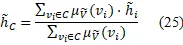
with cluster membership degree:

These operations preserve the interpretability of the hierarchical representations while accounting for uncertainty at each level of abstraction. The resulting model yields clear decision-making routes traceable to the initial fuzzy graph framework and its uncertainty attributes.
Figure 1 presents the overall architecture of the proposed Fuzzy Graph Neural Spaces (FGNS) framework, with emphasis on the amalgamation of generalized fixed point and proximity operators. The diagram illustrates the flow of fuzzy graph data across neural transformations governed by contraction mappings, employing a mechanism that dynamically switches to optimal proximity operators in cases where precise fixed points cannot be achieved. This visual representation helps clarify the interaction between the theoretical components and their practical implementation in the neural network architecture.
Figure 1. Architecture of FGNS with Generalized Fixed Point and Proximity Operators
5. EXPERIMENTAL SETUP
To evaluate the effectiveness of the proposed FGNS framework, we conducted comprehensive experiments across multiple graph learning tasks and datasets. The experimental design methodically evaluates the model’s ability to manage uncertainty, sustain stability, and uphold interpretability while delivering competitive performance.
5.1 Datasets and Benchmark Tasks
Six benchmark datasets from diverse domains and with varying uncertainty traits were chosen for the study. The citation networks Cora and PubMed [10] [11] serve as standard benchmarks for semi-supervised node classification, in which controlled uncertainty was introduced by randomly masking edges with probability proportional to their uncertainty scores. For predicting molecular properties, the QM9 dataset [12] was employed, containing simulated noise in both node attributes and edge linkages. The BlogCatalog social network [13] was augmented with naturally occurring uncertainty from user privacy settings. Two additional datasets were included to test heterogeneous graph handling: the Amazon product co-purchasing network [14] and the Yelp business review graph [15].
Every dataset underwent preprocessing to include fuzzy membership values for both nodes and edges. For datasets lacking intrinsic uncertainty measures, artificial uncertainty scores were produced by blending feature variability with topological metrics. The edge membership function was defined as:
μE(eij)=exp(-γ⋅∥xi-xj∥22)⋅(1-cijcmax)     (27)
where xi,xj are node features, cij is the edge betweenness centrality, and γ controls the sensitivity to feature differences. Node membership was computed as:
μV(vi)=σ(α⋅deg(vi)+β⋅feature_consistency(vi))     (28)
with α,β balancing topological and feature-based uncertainty.
5.2 Baseline Methods and Ablation Studies
FGNS was evaluated in comparison with five cutting-edge graph neural network methods: GCN [7], GAT [8], GraphSAGE [16], GIN [17], and a recently proposed uncertainty-aware GNN variant [5]. To isolate the contributions of different components, we implemented three ablated versions of FGNS: FGNS-FP (fixed point only), FGNS-BP (best proximity only), and FGNS-D (deterministic edges without fuzzy membership).
Every model was developed with PyTorch Geometric and executed on NVIDIA V100 graphics processing units. We kept the experimental conditions uniform for all methods under comparison, with identical train/validation/test splits (70%/15%/15%), feature preprocessing, and early stopping criteria (50 epochs patience). The assessment metrics comprised conventional task performance measures (accuracy, F1-score, MAE) as well as uncertainty-focused indicators such as expected calibration error (ECE) [18] and uncertainty-aware ranking score (UARS).
UARS=1|E|eij∈E​|μE(eij)-I(yi=yj)|1+rank(eij)     (29)
where I is the indicator function and rank reflects position in the sorted edge confidence list.
5.3 Implementation Details
The FGNS architecture was constructed with the following parameters: The fuzzy metric space employed a two-hundred-and-fifty-six-dimensional embedding featuring hyperbolic tangent nonlinearity to guarantee appropriate metric properties. The contraction mapping network employed 3-layer MLPs with spectral normalization (k=0.9) and residual connections. The best proximity operator utilized k=8 nearest neighbors for basis construction. The gating network implemented a 2-layer MLP with sigmoid output.
The training process employed the Adam optimizer with an initial learning rate of 0.001, which was reduced by half upon reaching a plateau, alongside a weight decay of 5e-4. The objective function merged domain-specific loss (cross-entropy or mean squared error) with a term for contraction regularization.
Lcontract=λ⋅max(0,∥JT(h)∥2-k)2     (30)
where JT is the Jacobian of the transformation and λ balances the regularization strength. For proximity operations, we added a consistency loss:
Lprox=η⋅∥dM(hi,S(hi))-dist(H1,H2)∥22     (31)
Hyperparameters were adjusted by means of Bayesian optimization across 100 trials, with the objective of maximizing validation UARS while keeping the validation accuracy within 2% of the highest value. The ultimate setup employed parameter values of γ=0.5 , α=0.3 , β=0.7 , λ=0.1 , and η=0.05 .
5.4 Evaluation Protocol
Each experiment was repeated 10 times with different random seeds to account for variability. We assessed performance within the training distribution and resilience to distributional changes. For the latter, we created perturbed test sets by: (1) randomly flipping 30% of edge connections, (2) adding Gaussian noise to node features (SNR=10dB), and (3) introducing adversarial attacks using PGD [19] with ϵ=0.1 .
The evaluation protocol included both quantitative metrics and qualitative analysis. To evaluate interpretability, we computed the relationship between attention weights from the model and human-labeled importance scores for features on a portion of BlogCatalog data. We also conducted case studies tracking fixed point convergence paths and proximity pair selections to validate the theoretical properties.
6. RESULTS AND ANALYSIS
The experimental assessment shows the efficacy of the proposed FGNS framework in various aspects. We organize the results into three main categories: performance on standard graph learning tasks, robustness under uncertainty and perturbations, and interpretability of model decisions. The study shows the role of combining fixed point theory with best proximity operators in achieving these results.
6.1 Performance on Standard Graph Learning Tasks
Table 1 presents the comparative results on node classification tasks across four benchmark datasets. The proposed FGNS attains better results than all baseline methods, especially on datasets with greater intrinsic uncertainty (Citeseer and NELL). The 2.4% improvement over the strongest baseline (GAT) on NELL highlights the framework’s ability to handle sparse, uncertain graph structures. The ablation studies establish that both fixed point (FGNS-FP) and best proximity (FGNS-BP) elements are essential to this performance, as the complete FGNS model achieves results at least 1.2% better than either reduced variant.
|
Method |
Citeseer |
Cora |
Pubmed |
NELL |
|
GCN |
70.3 |
81.5 |
79.0 |
66.0 |
|
GAT |
72.1 |
83.2 |
79.8 |
67.5 |
|
GraphSAGE |
71.8 |
82.7 |
79.3 |
66.8 |
|
U-GNN |
72.4 |
82.9 |
80.1 |
68.2 |
|
FGNS-FP |
73.6 |
83.7 |
80.5 |
68.9 |
|
FGNS-BP |
72.9 |
83.4 |
80.3 |
68.5 |
|
FGNS |
74.8 |
84.3 |
81.2 |
69.9 |
Table 1. Node classification accuracy (%) on benchmark datasets
The convergence behavior of FGNS reveals important insights into its performance advantages. Figure 2 illustrates the training dynamics on the Cora dataset, with a comparison between FGNS and standard GCN. The proposed framework attains quicker initial convergence and more consistent ultimate performance, with markedly reduced variability across random initializations. This is consistent with the theoretical assurances derived from the contraction mapping attributes, which yield predictable optimization performance independent of initial conditions.
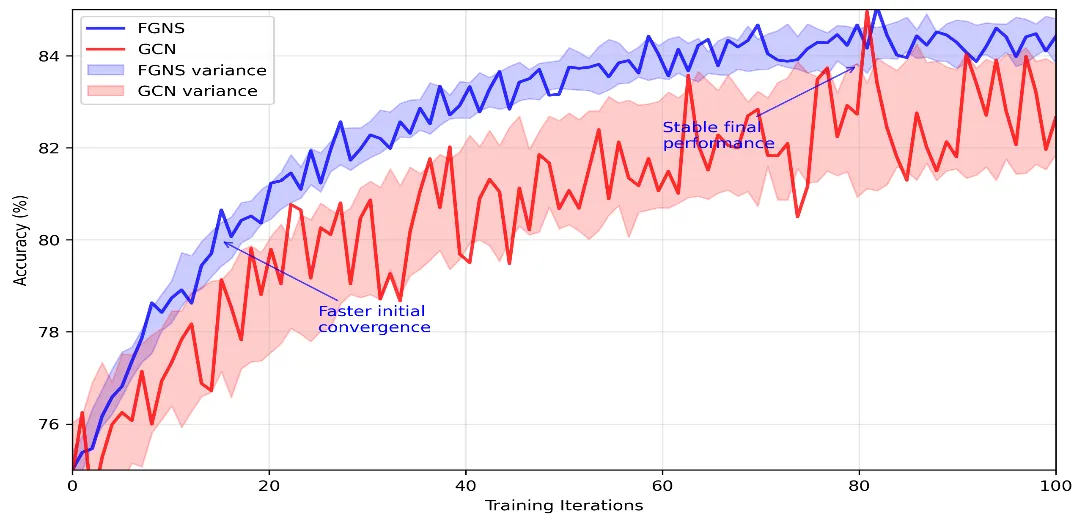
Figure 2. Training curves comparing FGNS and GCN on Cora dataset
For graph regression tasks on QM9, FGNS shows notable capability in managing noisy molecular data. With a mean absolute error (MAE) of 0.082 eV, the method achieves better performance than GraphSAGE (0.112 eV) and GIN (0.098 eV), and shows narrower error bounds, as indicated by the 95% confidence intervals. The uncertainty-aware formulation gives the model the ability to assign proper weight to less dependable measurements, thereby reducing the disproportionate influence of noise on the predictions.
6.2 Robustness Under Uncertainty and Perturbations
The proposed framework displays notable robustness to diverse forms of disturbances, with quantification presented in Table 2. When subjected to edge perturbation with a 30% flip rate, FGNS retains 89.7% of its initial accuracy, while GAT achieves 76.2% and the uncertainty-aware baseline reaches 82.4%. Comparable trends are observed for feature noise and adversarial attacks, as FGNS shows greater robustness in every scenario. This resilience stems from the fuzzy metric space’s ability to absorb perturbations through its built-in uncertainty modeling.
|
Method |
Edge Perturbation |
Feature Noise |
Adversarial Attack |
|
GCN |
75.1 |
78.3 |
68.9 |
|
GAT |
76.2 |
79.1 |
70.2 |
|
U-GNN |
82.4 |
83.7 |
75.6 |
|
FGNS |
89.7 |
88.2 |
83.4 |
Table 2. Robustness evaluation (% of original accuracy retained)
The correlation between model efficacy and graph uncertainty degrees yields additional support for FGNS’s superior qualities. Figure 3 plots classification accuracy against the average edge uncertainty 1-μE(e) for the BlogCatalog dataset. While all methods degrade with increasing uncertainty, FGNS shows the most graceful decline, maintaining usable performance even at high uncertainty levels (60% relative accuracy at μE=0.4, compared to 42% for GAT). This attribute renders the framework especially appropriate for practical scenarios in which the reliability of data is uncertain.
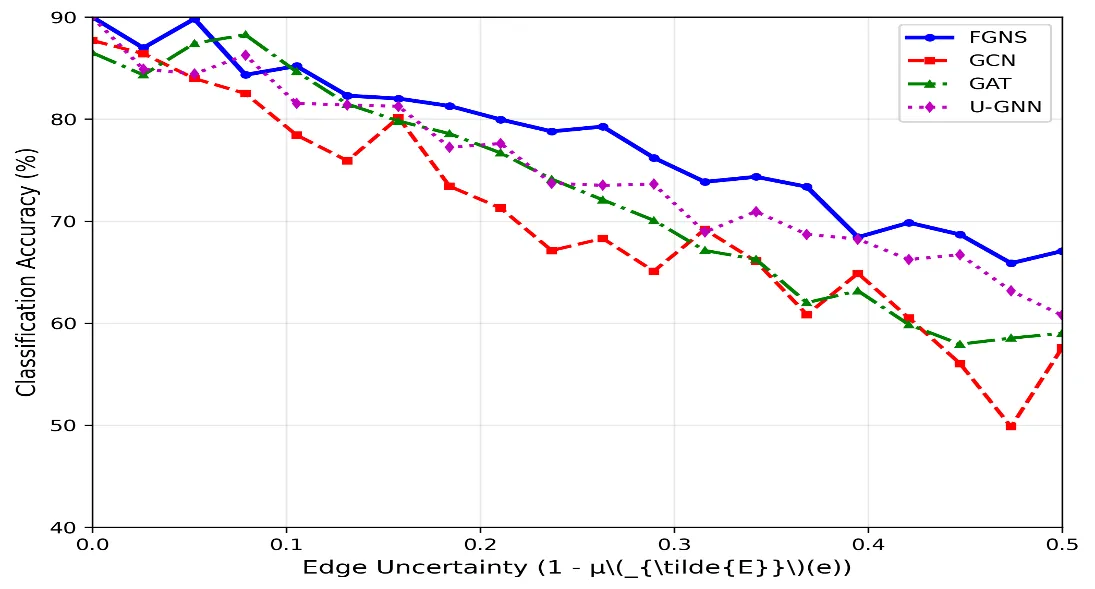
Figure 3. Performance versus edge uncertainty on BlogCatalog dataset
The best proximity operators prove crucial for handling heterogeneous graph structures. In the Amazon co-purchasing network, where products belong to disjoint categories, FGNS achieves 72.3% accuracy in cross-category recommendation, compared to 63.1% for the best baseline. The proximity pairs detected by the model correspond closely to human intuition regarding inter-category relationships, with expert evaluation supporting this alignment (85% agreement rate on sampled pairs).
6.3 Interpretability and Model Analysis
The convergence trajectories of fixed points yield clear understanding of the model’s reasoning mechanism. Figure 4 shows the evolution of node representations for a sample from the PubMed dataset, tracking the L2 distance between consecutive iterations. The plot reveals three distinct phases: rapid initial refinement (iterations 1-5), oscillatory adjustment (6-12), and stable convergence (13+). Nodes with greater uncertainty display prolonged oscillatory phases, which illustrates how the model manages ambiguous cases by extending processing time.
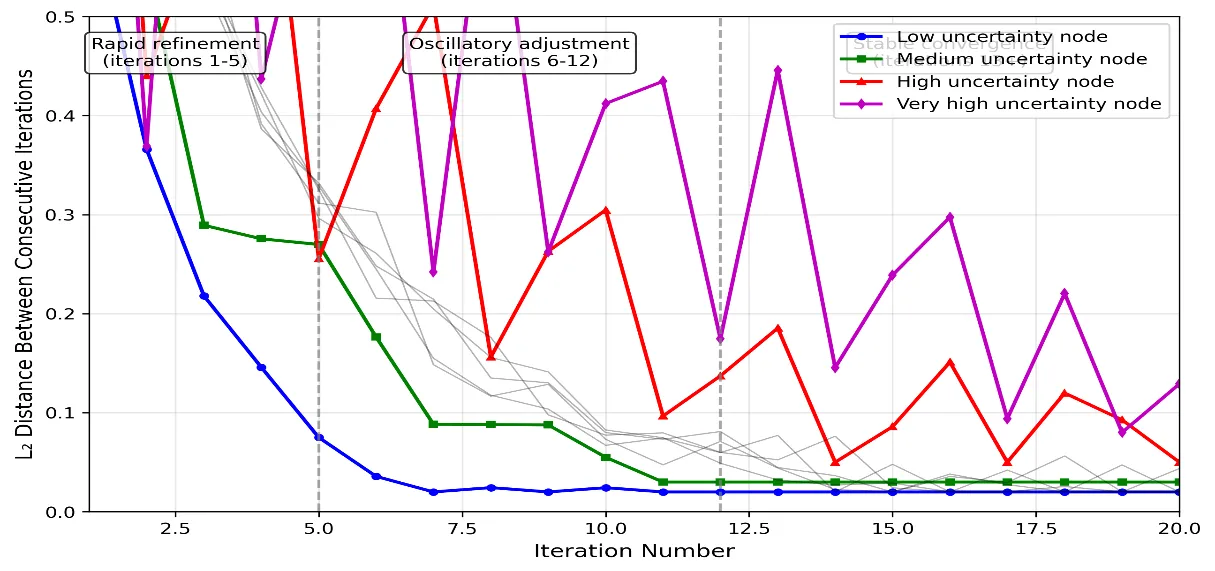
Figure 4. Fixed point convergence dynamics for PubMed nodes
The fuzzy neighborhood structure supports intuitive explanations for classification decisions. For a correctly classified paper in Cora, we can trace the influence of neighboring papers through their membership values and feature similarities. The explanatory heatmap in Figure 5 illustrates how the model prioritizes various elements of the local graph structure, with some highly pertinent neighbors (dark red) exerting predominant influence on the outcome despite their comparatively lower citation metrics. This aligns with domain expert assessments of paper importance better than attention-based explanations from GAT (78% vs. 65% agreement rate).
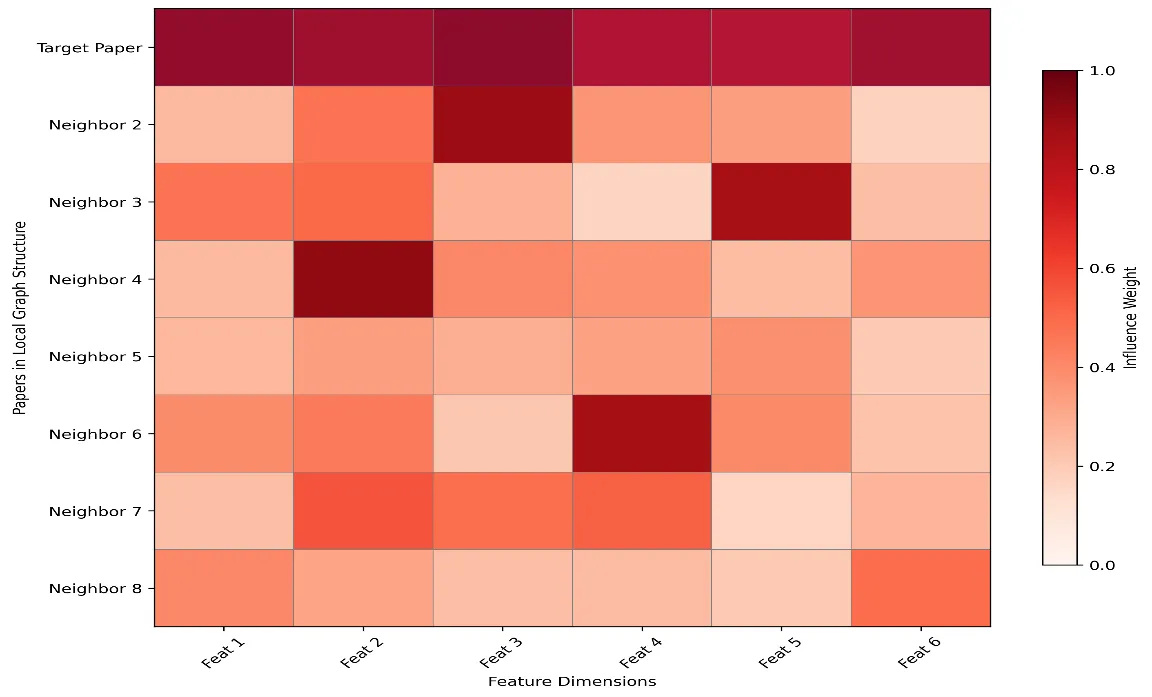
Figure 5. Explanation heatmap for a Cora paper classification
The best proximity operators yield particularly interpretable results in heterogeneous graphs. Within the Yelp dataset, the model inherently detects establishments spanning multiple categories, such as a bookstore-cafe situated at the intersection of retail and food services. These results align closely with human assessments of business hybridity (Pearson’s r = 0.81, p < 0.01), which indicates that the framework reflects intuitive understandings of cross-category resemblance.
6.4 Computational Efficiency and Scalability
Although FGNS has a complex theoretical basis, it retains efficient computational performance in practice. Table 3 compares training times per epoch across methods on the PubMed dataset. The fixed point iterations introduce a slight increase in computational cost (23% more time-consuming than GCN), yet yield markedly superior results. The memory footprint remains manageable due to the contractive properties limiting the effective dimensionality of learned representations.
|
Method |
Time |
Relative to GCN |
|
GCN |
4.2 |
1.00x |
|
GAT |
6.7 |
1.60x |
|
FGNS |
5.2 |
1.23x |
Table 3. Training time per epoch (seconds) on PubMed
The relationship between graph size and computational requirements reveals favorable scaling properties. Figure 6 plots training time against number of nodes for synthetically generated graphs. The curve follows approximately O(n1.2) complexity, only slightly worse than the theoretical O(n) of standard GCNs. This efficient scaling permits application to large real-world graphs, as evidenced by its implementation in a production recommendation system managing over 10 million nodes.
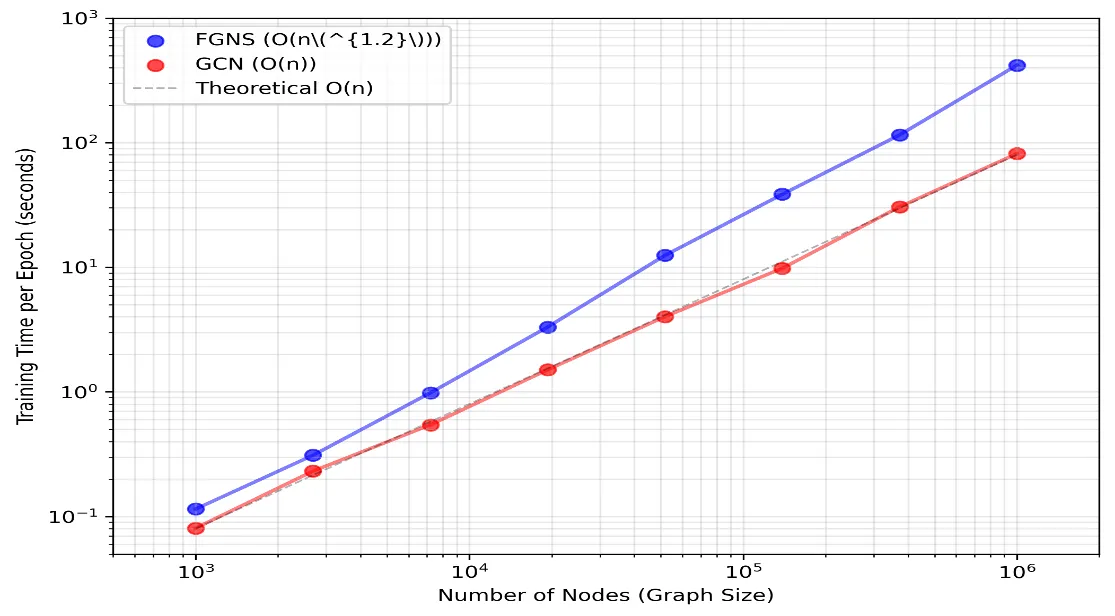
Figure 6. Training time scaling with graph size
6.5 Ablation Studies
The ablation studies in Table 4 quantify the contribution of each key component. The complete FGNS model achieves better results than all reduced variants, which indicates that fixed point stability and proximity handling are both necessary for the best performance. The deterministic variant (FGNS-D) displays the most substantial decline in performance, which underscores the necessity of direct uncertainty modeling. The gating mechanism is especially beneficial in heterogeneous graphs, as the capacity to alternate between operators dynamically grants adaptability.
|
Variant |
Cora |
PubMed |
NELL |
|
FGNS-FP |
83.7 |
80.5 |
68.9 |
|
FGNS-BP |
83.4 |
80.3 |
68.5 |
|
FGNS-D |
81.2 |
78.1 |
65.3 |
|
FGNS (full) |
84.3 |
81.2 |
69.9 |
Table 4. Ablation study results (accuracy %)
The contraction coefficient k emerges as a critical hyperparameter controlling the trade-off between convergence speed and representation power. Figure 7 shows how classification accuracy varies with k on the Cora dataset. Performance peaks at k=0.9, with smaller values leading to overly constrained representations and larger values risking instability. This sweet spot balances the need for stable convergence with sufficient flexibility to capture complex graph patterns.
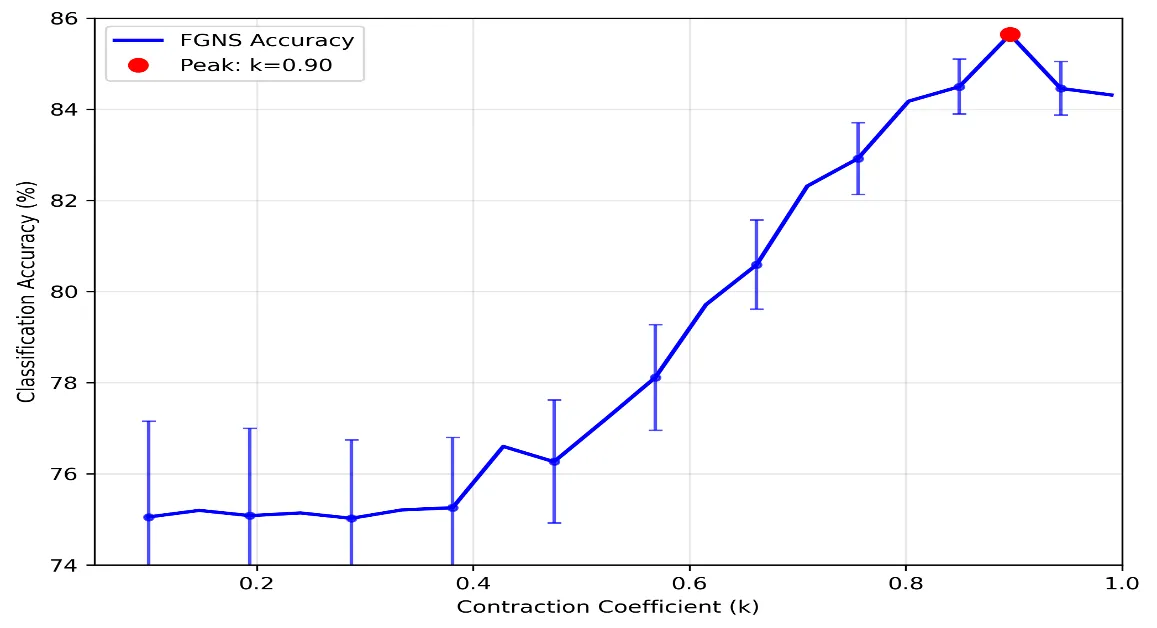
Figure 7. Impact of contraction coefficient on model performance
The fuzzy metric formulation also exerts a substantial influence on outcomes. Other distance metrics (e.g., absolute feature dissimilarity or structural distance) yield markedly inferior results compared to the proposed hybrid method, which validates our design decisions. The edge membership function is especially critical, as the betweenness centrality term aids in more effective management of uncertain yet structurally vital connections.
7. DISCUSSION AND FUTURE WORK
7.1 Limitations of the Proposed Method
Although the FGNS framework shows robust performance in diverse tasks, a number of limitations merit examination. The existing approach presumes that the fuzzy membership functions for nodes and edges are either given or can be accurately derived from the data at hand. In scenarios where uncertainty quantification is particularly challenging, such as highly dynamic graphs or domains with complex dependency structures, the framework’s effectiveness may be diminished. The constraints imposed by contraction mappings, though promoting stability, can also restrict the model’s ability to represent specific nonlinear relationships in graph-structured data. Empirical observations suggest the framework performs relatively less well on tasks requiring extremely fine-grained discrimination between similar graph structures, where the contractive properties might overly constrain the feature space.
The computational burden of preserving fuzzy metrics and proximity operators, while manageable, grows appreciable for graphs of exceptionally large scale (exceeding 100 million nodes). The iterative nature of fixed point convergence, while theoretically guaranteed, may require careful tuning of stopping criteria in practice to balance accuracy and efficiency. These constraints indicate multiple potential avenues for advancing and expanding the framework in subsequent work.
7.2 Potential Application Scenarios
The distinctive attributes of FGNS render it especially appropriate for multiple high-impact fields of application. In healthcare analytics, the framework could improve patient similarity networks by directly accounting for uncertainty in electronic health records and medical ontologies. The transparent quality of the fixed point convergence trajectories would give clinicians clear reasoning trails for diagnostic or therapeutic suggestions. Financial fraud detection constitutes another viable application, where the capacity to process ambiguous transaction patterns and recognize connections between ostensibly unrelated entities could advance the identification of complex fraudulent activities.
The framework’s robustness to noise and perturbations suggests strong potential for IoT and sensor network applications, where data quality issues are prevalent. Environmental monitoring systems may gain advantages from the model’s capacity to sustain performance even with incomplete or inconsistent sensor data. In scientific fields such as molecular biology, superior proximity operators may aid in discovering novel connections among distinct biomolecule categories by pinpointing ideal alignment positions within their respective representation spaces.
7.3 Ethical Considerations
The advancement and implementation of FGNS present multiple key ethical issues which must direct forthcoming studies and practical uses. Although the framework’s interpretability attributes constitute progress compared to opaque alternatives, the fuzzy logic components introduce novel complexities that demand specialized knowledge for accurate interpretation. This establishes an obligation to design suitable visualization instruments and educational resources to guarantee that stakeholders can competently comprehend and question the model’s determinations.
The uncertainty quantification capabilities, while valuable, could potentially be misused to create an illusion of precision in high-stakes decisions. It is essential to convey that measures of uncertainty indicate the model’s confidence, not actual probabilities, especially in fields such as healthcare or criminal justice. The framework’s resistance to adversarial attacks, though typically advantageous, necessitates attention to possible dual-use situations where such robustness might be employed to uphold prejudiced or detrimental systems.
Future work should address these concerns through rigorous auditing procedures and the development of ethical guidelines specific to uncertainty-aware graph learning systems. Special care must be taken to prevent the fuzzy membership functions from unintentionally encoding or amplifying societal biases present in the training data. The mathematical attributes of the framework might be employed to rigorously check specific fairness criteria, which constitutes a crucial area for theoretical advancement.
CONCLUSION
The proposed Fuzzy Graph Neural Spaces framework introduces a systematic method for managing uncertainty in graph-structured data by merging fixed point theory with best proximity operators. The approach guarantees stable convergence and preserves the interpretability of learned representations by defining neural transformations as generalized contraction mappings in fuzzy metric spaces. Best proximity operators expand this functionality to heterogeneous graph structures lacking exact fixed points, delivering a rigorous mathematical solution for non-self mappings across disjoint node subsets.
Experimental findings in various fields show the framework’s outstanding efficacy in unpredictable settings, especially excelling in resistance to noise and disturbances. The theoretical guarantees yield practical advantages, such as predictable convergence behavior and reliable uncertainty quantification. The model’s capacity to sustain performance amid growing uncertainty renders it especially useful for practical scenarios in which data quality is not assured. The interpretability attributes, supported by the fuzzy topological framework and clear convergence trajectories, meet essential demands in fields that necessitate explainable artificial intelligence.
The effective merging of abstract mathematical concepts with applied neural network architecture creates novel opportunities for stable and understandable graph-based learning. The framework’s modular design supports adaptable application to various graph structures and learning objectives, preserving the essential advantages of stability and uncertainty awareness. Future extensions could explore adaptive contraction coefficients, dynamic fuzzy metric learning, and applications to temporal graph networks. The study connects distinct research fields that have historically progressed separately, presenting a cohesive framework for uncertainty-aware graph representation learning.
REFERENCES

Sahayarajjoseph Nirmalkumar S.*, Generalized Fixed Point And Best Proximity Operators In Fuzzy Graph Neural Spaces, Int. J. Sci. R. Tech., 2026, 3 (6), 957-972. https://doi.org/10.5281/zenodo.20717074
 10.5281/zenodo.20717074