

We use cookies to ensure our website works properly and to personalise your experience. Cookies policy
Department of Pharmacy, JES’s SND College of Pharmacy, Babhulgaon (Yeola), India
Plant-derived “herbal” compact powders are marketed widely, yet the scientific literature on their formulation, mechanical behaviour and safety is thin and fragmented. To critically review ten candidate materials (rice starch, arrowroot starch, kaolin, aloe vera powder, rose petal powder, multani mitti, sandalwood powder, beetroot powder, cosmetic-grade mica and jojoba oil) for use in a pressed facial powder, and to propose a reproducible development and evaluation framework. A non-systematic narrative review based on web-accessible sources searched on 16 October 2026; no PRISMA process was followed. Direct evidence on herbal pressed powders is limited to a few small formulation studies with weak mechanical characterisation. Rice starch has the strongest cosmetic-powder evidence, kaolin and aloe have authoritative safety assessments, and the botanical powders (rose, sandalwood, beetroot) have mainly indirect or compositional evidence. Natural origin brings variability in composition, colour, odour, microbial load and, for some materials, allergenic potential. A mechanically acceptable compact is unlikely to be achieved with these ten materials alone; a binder and lubricant system must be developed. Powder-flow, oil-absorption, moisture, compact-strength, pay-off, microbiological, stability and supervised skin-compatibility testing are described, with caution against transferring pharmaceutical limits to cosmetics. Herbal compact powder is a plausible but unproven formulation concept; claims of superiority, efficacy or universal safety are not supported by current evidence.
1.1 Cosmetics and herbal cosmetics
In India a cosmetic is defined in the Drugs and Cosmetics Act, 1940 (clause (aaa) of section 3), and the Cosmetics Rules, 2020 apply to products so defined [1]. “Herbal”, “natural”, “organic” and “plant-derived” are marketing or descriptive terms with no single legal or scientific definition across jurisdictions. In this review, plant-derived means an ingredient obtained from a plant by physical processing; mineral ingredients (kaolin, multani mitti, mica) are not plant-derived and are given no botanical names; conventional products are those built on talc, synthetic fillers and synthetic or inorganic pigments. Natural origin does not by itself establish safety, efficacy, sustainability or superiority: the independent safety-review programme for cosmetic ingredients, for example, evaluates natural and synthetic substances by the same data requirements [2].
Plant-based cosmetic preparations have a long traditional history in South Asia, including the use of clays, sandalwood and rose; however, traditional use is not evidence of cosmetic performance and is treated here as background only.
1.2 Facial powders and compact powder
Facial powders provide oil absorption, mattifying, slip, light coverage and colour evening. Loose powder is an unbound fine powder; pressed or compact powder is a powder blend (usually containing a binder phase) compressed into a pan; foundation powder additionally carries enough pigment and covering agent to act as a base. Compact powders must resist breakage in transport yet release enough powder on a puff (pay-off), which is a trade-off between cohesion and release. Patent literature describes conventional pressed powders as fragile, prone to crumbling on impact, and traditionally strengthened with wet (ester/oil) and dry binders [3]. Starch-based fillers such as rice starch have a long record in face powders, including as partial talc substitutes in loose powders [4].
Functional components of a pressed powder are: absorbents/fillers (starches, clays) for oil uptake and bulk; slip agents (mica, lubricants such as metal stearates†); binders (dry binders and liquid binders, i.e., oils/esters) for cohesion; pigments for shade; and emollients for skin feel. Replacing conventional ingredients with plant-derived ones is attractive but each substitution changes particle size, moisture, density and compaction behavior.
2. Review Scope and Literature-Search Approach
This is a narrative review, not a systematic review; no PRISMA protocol was followed. Searches were run on 16 October 2026 through a general web-search tool that returns web pages, repository records and some journal landing pages. It did not provide direct access to PubMed, Scopus or Web of Science queries, and full texts were often unavailable; many statements therefore rely on abstracts or repository summaries. Principal terms included: herbal compact powder; pressed powder binder compaction; rice starch face powder; arrowroot starch characterization; kaolin CIR safety; multani mitti composition; sandalwood oil safety; betalain stability; Rosa damascena phenolics; mica cosmetic safety; jojoba oil safety; powder flow Carr Hausner USP 1174; Cosmetics Rules 2020; IS 3959; ISO 17516.
Direct literature on herbal compact powder was limited to a formulation report on a semi-herbal anti-acne compact [5] and general herbal-powder flow and compaction studies [6,7]. For most ingredients the evidence is indirect (food, pharmaceutical or loose-powder cosmetic contexts) and this is stated in each subsection. Industrial web pages and patents were used only to understand practice, not as evidence of performance.
3. Rationale for herbal compact powder
Consumer interest in plant-derived products and in alternatives to talc and synthetic polymers drives development of starch- and botanical-based powders [3,4]. Potential advantages are renewable raw materials, pleasant sensory properties and consumer acceptability, but these are potential, not demonstrated, for pressed powders.
The principal scientific problems are as follows. First, herbal powders are often poorly flowable and poorly compressible, and their compaction behaviour depends on the plant part and composition [7]; in a study of nineteen medicinal plant powders, composition affected compaction while all powders showed poor flow and compressibility, leading the authors to recommend granulation for tableting [7]. Excipient choice can substantially improve the flow of herbal powders [6]. Second, binder type and concentration, and pressing pressure, directly control compact quality [3]. Third, therapeutic-sounding claims (anti-inflammatory, antioxidant, anti-acne, brightening) for botanical powders in a rinse-off-free, low-percentage, dry matrix are rarely supported by cosmetic-use evidence; the one herbal compact report found reported antimicrobial effects attributed to garlic and nutmeg extracts in laboratory tests, not clinical anti-acne benefit [5].
4. Ingredient-by-ingredient review
Each subsection follows the requested structure (A identity; B composition; C function; D suitability for compression; E evaluation; F safety; G conclusion). Evidence labels: direct (pressed or loose cosmetic powder), indirect (other applications), none retrieved. Statements marked † are author knowledge awaiting citation.
4.1 Rice starch / rice powder (Oryza sativa L., Poaceae)
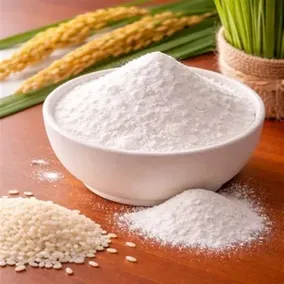
A. Identity. Starch from the endosperm of rice grain; commercial cosmetic grades are often cleaned, sieved or sterilised and sometimes cross-linked/modified (a different INCI material). Rice starch has been used as a partial or total talc substitute in face powders [4].
B. Composition. Predominantly starch with small granules; a cosmetic grade described in the literature has particle size below 10 µm [4]. Modified grades are marketed with 7–11 µm particles, but those figures come from supplier literature and are not peer-reviewed evidence.
C. Function. In loose face powders a rice starch grade provided oil absorption without absorbing skin moisture, with a smooth feel and acceptable stability relative to talc-based powders [4]. Reported oil absorption relates to specific surface area and porosity (industry trade report; supplier data, low evidential weight).
D. Suitability for compact. Small, fairly spherical-to-polyhedral granules aid slip and uniform packing†; however, starch is hygroscopic†, deforms plastically only modestly, and without an oil/ester binder tends to give weak compacts†. Fine particles can reduce flow†.
E. Evaluation. Identity (microscopy/FTIR†), particle-size distribution (laser diffraction), LOD, bulk/tapped density, oil absorption, microbial limits (TAMC/TYMC), pH of a defined dispersion (e.g., 10% w/v†).
F. Safety. Generally low irritation concern, but microbial load is a risk because starch supports growth when moist†; inhalation of fine dust should be controlled in manufacturing†.
G. Conclusion. Strongest cosmetic-powder evidence among the botanicals (direct, loose powders) [4]; pressed-powder performance remains to be established.
4.2 Arrowroot starch (Maranta arundinacea L., Marantaceae)
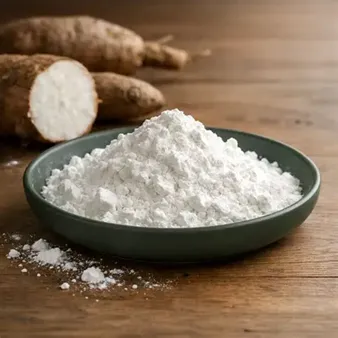
A. Identity. Starch from rhizomes (“arrowroot”). Adulteration or substitution with other tuber starches (e.g., cassava, other Curcuma or Canna starches) is a known authenticity concern†.
B. Composition. One study reported starch purity above 99%, amylose above 40%, granule sizes of 29–126 µm and a B-type crystalline pattern [8]; another reported A-type X-ray diffraction, predominantly oval, spherical and irregular granules, and low moisture absorbance [9]. These crystallinity reports conflict, which probably reflects differing origin, varieties or methods; the supplier and batch must therefore be characterised, not assumed.
C. Function. Absorbent/bulking and silky slip are plausible†; no peer-reviewed cosmetic performance study was retrieved (evidence indirect, from food-starch characterisation).
D. Suitability. Granules larger than rice starch [4,8] may reduce smoothness and compactness†; blending with finer powders would be necessary.
E. Evaluation. Microscopy (granule morphology), laser diffraction, XRD only if crystallinity matters, LOD, density, flow, oil absorption, microbial limits, authenticity (microscopy, DNA or marker methods†).
F. Safety. Low concern; main risks are microbial and substitution.
G. Conclusion. Characterisation data exist for food use [8,9]; cosmetic compaction evidence is lacking.
4.3 Kaolin (mineral; hydrated aluminium silicate)
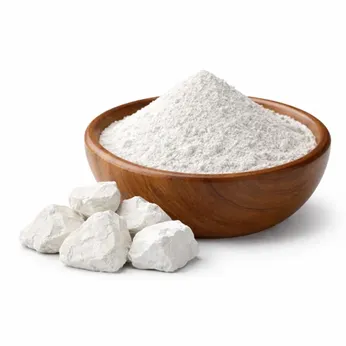
A. Identity. Naturally occurring clay mineral (kaolinite-rich); no botanical name. A recent expert-panel assessment of eight clay ingredients, including kaolin, concluded that kaolin is safe in cosmetics at present practices of use and concentration [10].
B. Composition. Layered aluminosilicate with little lattice substitution; poorly crystalline varieties may show some substitution [10]. Mineral impurities (quartz, iron oxides) and trace elements vary by deposit†.
C. Function. Absorbent and bulking agent, mild opacity; widely used in powders, which is consistent with industry practice (not independently measured here).
D. Suitability. Good compressibility and cohesion contribution in pressed powders, and compatibility with most botanical powders†. Plate-like particles can increase hardness; excess may cause dryness.
E. Evaluation. Mineralogy (XRD), particle size, LOD, pH of dispersion, heavy-metal/trace-element screening, crystalline silica (quartz) content†, microbial limits, oil absorption.
F. Safety. Inhalation of fine dust and crystalline silica impurity are the key hazards†; skin safety is favourable per the expert-panel conclusion [10].
G. Conclusion. Best-supported mineral filler for the matrix; grade control (quartz, metals, microbial) is essential.
4.4 Aloe vera powder (Aloe vera (L.) Burm.f., syn. A. barbadensis Mill., Asphodelaceae)
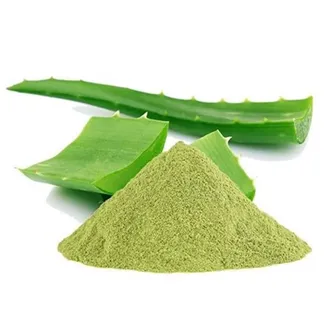
A. Identity. Powder from dried leaf gel/juice (spray- or freeze-dried†). INCI names include Aloe barbadensis leaf powder/juice. Botanical author citation varies between sources; confirm with a taxonomic database before submission.
B. Composition. Polysaccharides, sugars, salts and, in whole-leaf or poorly decolourised material, anthraquinones. The CIR Expert Panel concluded that anthraquinone levels in several A. barbadensis preparations are well understood and can conform to an industry level of 50 ppm [11].
C. Function. Skin conditioning/humectancy is the usual claim; in a dry pressed powder at low percentage there is no evidence of a measurable benefit (none retrieved).
D. Suitability. Spray-dried aloe is typically hygroscopic and may cake†, lowering flow and promoting microbial growth; only low levels with moisture control are plausible.
E. Evaluation. Identity (e.g., marker polysaccharide or HPLC†), anthraquinone content, LOD, water activity, microbial limits, pesticide/heavy-metal screening.
F. Safety. Contact sensitisation is rare but possible; anthraquinone control per CIR conclusions [11].
G. Conclusion. Safety framework exists [11]; functional benefit in a compact is unproven and hygroscopicity is a formulation risk.
4.5 Rose petal powder (Rosa spp., e.g., Rosa damascena Mill., Rosaceae)
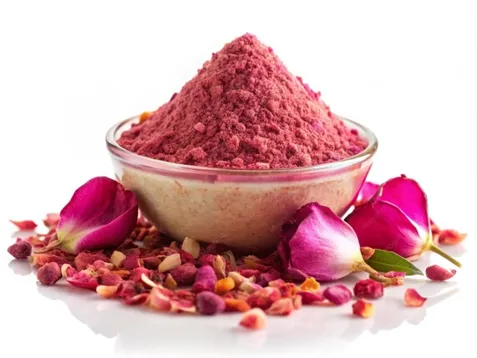
A. Identity. Dried, ground petals; the species and cultivar must be stated.
B. Composition. Petals contain phenolics and flavonoids (e.g., kaempferol and quercetin glycosides, ellagitannins, phenolic acids) [12]. Total phenolic content and antioxidant capacity (DPPH, ABTS, FRAP, CUPRAC) vary with growing conditions and extraction [13,14]; for example, water extracts of petals from organic plantations showed the highest phenolic and flavonoid contents in one study [14]. These are in vitro extract data, not evidence for dry-powder performance.
C. Function. Mild colour/fragrance and sensory contribution†; antioxidant activity is plausible but unproven in this matrix.
D. Suitability. Fibrous, low-density plant powder lowers bulk density and flow and weakens compacts†; moisture and microbial load are higher than for minerals†.
E. Evaluation. Botanical authentication (microscopy, TLC/HPLC fingerprint), particle size, LOD, microbial limits, pesticide and heavy-metal screening, colour stability.
F. Safety. Allergen and fragrance-component content must be assessed if used for scent; microbial and pesticide risk.
G. Conclusion. Only low-level use as colour/sensory modifier is defensible; antioxidant claims need data on the actual powder.
4.6 Multani Mitti / Fuller’S Earth (Mineral)
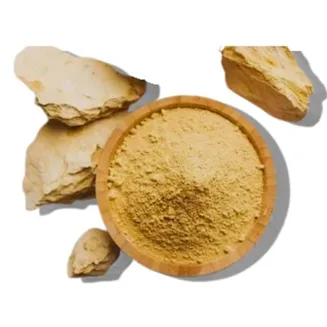
A. Identity. A fuller’s earth clay from the Indian subcontinent. A 1961 mineralogical study of “Khairpur” multani mitti found it consistent with palygorskite (attapulgite) and estimated free quartz at 2.75% (±0.25%) [15]; a recent report instead describes it as montmorillonite/smectite/bentonite-type [16]. Composition therefore depends on deposit and supplier.
B. Composition. Hydrous aluminium/magnesium silicates with variable calcite, quartz and iron content†. pH, colour and swelling differ strongly between palygorskite- and smectite-dominated clays†.
C. Function. Strong absorbent capacity is documented in general; a recent study reports enzyme-inhibition activity of multani mitti relevant to ageing but this is biochemical screening, not cosmetic efficacy [16].
D. Suitability. Highly absorbent and moisture-sensitive; swelling smectites can harden or crack compacts and interact with oils; pigmented tint (cream to brown) affects shade.
E. Evaluation. XRD mineralogy, cation-exchange/swelling index†, particle size, LOD, pH, oil absorption, heavy metals (As, Pb), crystalline silica, microbial limits (soil-derived spores).
F. Safety. Geogenic heavy metals, quartz, soil microorganisms, inhalation; can dry sensitive skin†.
G. Conclusion. A source-variable material; a defined mineralogical specification is a prerequisite for any compact study.
4.7 Sandalwood powder (Santalum album L., Santalaceae)
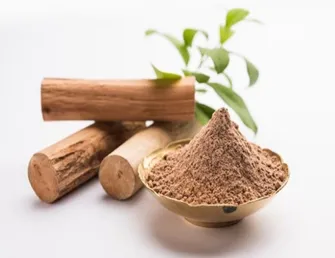
A. Identity. Heartwood powder. Species authentication is critical: substitutes (other Santalum species, Pterocarpus santalinus, Adenanthera pavonina or dyed wood) are commonly encountered†. Conservation status and legal trade restrictions on S. album must be checked before sourcing†.
B. Composition. The volatile oil (not the powder) contains over 100 constituents with α-santalol as the major component [17]. Oil content of powder varies with heartwood age and processing†.
C. Function. Fragrance and traditional “cooling” use; for the oil, low acute oral and dermal toxicity and occasional irritation or sensitisation in humans are reported [17]. No data on powder performance in compacts were retrieved.
D. Suitability. Woody fibre reduces flow and compaction†; oil-bearing powder can act as a minor binder or cause tackiness†.
E. Evaluation. Authentication (microscopy, GC–MS of santalols†), volatile-oil content, particle size, LOD, microbial limits, pesticide/heavy-metal screening, odour profile over storage.
F. Safety. Sensitisation potential (the oil is a recognised patch-test allergen†); safety conclusions for the oil are drawn from a review that itself described toxicity data as limited [17].
G. Conclusion. Mainly a fragrance/sensory additive; high sourcing and adulteration risk; use only authenticated material at low levels.
4.8 Beetroot powder (Beta vulgaris L., Amaranthaceae)
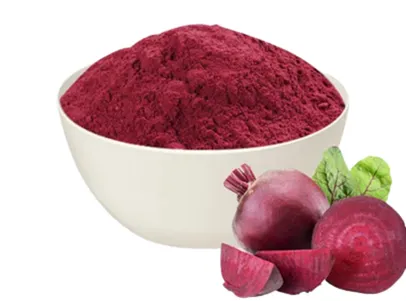
A. Identity. Dried, ground beet root; used as a natural red/pink colourant.
B. Composition. Betalains: red betacyanins (mainly betanin) and yellow betaxanthins (vulgaxanthin I); root betalain concentrations of 200–2100 mg/kg fresh weight have been summarised in a review [18]. Betalains are water-soluble, nitrogen-containing pigments [19].
C. Function. Colour contribution. Stability is limited: temperature, pH, water activity, oxygen, light, chelating agents and storage conditions all affect degradation [19,20]. Antioxidant activity of betalains is reported in pre-clinical work [18] but is not evidence of cosmetic benefit.
D. Suitability. Hygroscopic sugar-rich powder†; contact with moisture or alkaline/metal-containing components promotes colour loss and caking†. Staining of skin and puff must be tested.
E. Evaluation. Colourimetry (CIE Lab*), betalain assay (UV–vis/HPLC), LOD, water activity, stability under light/heat, microbial limits.
F. Safety. Generally food-recognised; skin-contact data are limited (none retrieved).
G. Conclusion. A feasible tint at low levels but chemically unstable; mineral pigments will probably be needed for reproducible shade.
4.9 Cosmetic-grade mica (mineral; potassium aluminium silicate, e.g., muscovite)
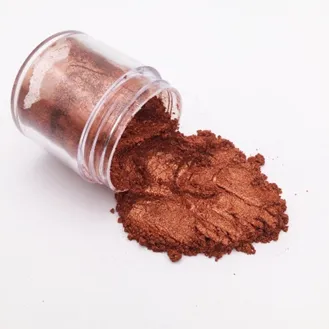
A. Identity. Layered phyllosilicate mineral (sericite is fine-grained mica); no botanical name. Ethical sourcing and supply-chain transparency are recognised concerns, and heavy-metal contamination and irritation potential of naturally sourced mica have driven calls for stricter assessment [21].
B. Composition. Aluminosilicate with variable trace elements; a Bangladeshi river-sand mica study combined elemental profiling, toxicological, antimicrobial and sensory evaluation to support cosmetic suitability [21]. Coated (e.g., metal-oxide) micas have different properties†.
C. Function. Slip, sheen and light diffusion; flake-like particles reduce friction and improve spread†.
D. Suitability. Platy particles improve slip and adhesion but can lower compact cohesion when used in excess†; often balanced with binder.
E. Evaluation. XRD/XRF elemental profile, particle size (flake dimension), heavy metals (Pb, As, Cd, Hg†), microbial limits, optical properties; inhalation-relevant particle-size screening.
F. Safety. Dust inhalation in manufacturing; trace-element contamination; sourcing ethics [21].
G. Conclusion. Useful sensory/optical filler with source-dependent quality; a certificate of analysis including trace elements is required.
4.10 Jojoba oil (Simmondsia chinensis (Link) C.K.Schneid., Simmondsiaceae)
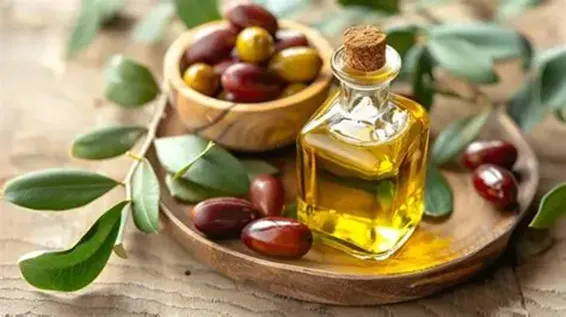
A. Identity. Liquid wax obtained from seeds; INCI Simmondsia chinensis seed oil. It is not a triglyceride oil but a liquid wax ester, available as refined or pure grades [22].
B. Composition. Long-chain wax esters conferring high oxidative stability [22]. Hydrogenated jojoba is a different, solid material [22].
C. Function. Emollient and potential liquid binder. A study of jojoba oil and hydrogenated jojoba oil reported non-comedogenic and hypoallergenic behaviour in preliminary tests [22]; a clinical review of jojoba in dermatology exists (cited secondarily; verify) [23]. Binder performance in pressed powder must be tested.
D. Suitability. Small oil fractions wet particles and increase cohesion†, but excess leads to hard, “waxy” or glossy caps and reduced pay-off, a problem described for liquid binders in general [3].
E. Evaluation. Identity (GC of wax esters†), acid and peroxide values (oxidation), colour/odour, refractive index†, microbial limits (oil is anhydrous), contaminants.
F. Safety. Contact dermatitis case reports exist†; rancidity is low risk compared with triglyceride oils but must be monitored.
G. Conclusion. Good candidate for liquid binder/emollient; optimal level to be established experimentally.
5. Master Ingredient Comparison
Table 1 consolidates the ingredient-by-ingredient findings of Section 4 so that the ten candidates can be compared against the same attributes.
Table 1: Master Comparison of the Ten Candidate Ingredients
| Ingredient | Source / scientific name | Main constituents | Primary function | Proposed role in compact | Raw-material tests | Finished-product attributes affected | Safety / quality concerns | Evidence | Refs |
|---|---|---|---|---|---|---|---|---|---|
| Rice starch | Oryza sativa L., grain | Starch; <10 µm grades reported | Oil absorption, slip | Absorbent/filler, talc partner | PSD, LOD, microscopy, TAMC/TYMC | Oil uptake, feel, flow | Microbial; fine dust | Direct (loose) | [4] |
| Arrowroot starch | Maranta arundinacea L., rhizome | Starch, >40% amylose in one study | Bulking, slip | Secondary filler | Microscopy, PSD, LOD, authenticity | Smoothness, compact strength | Adulteration; conflicting crystallinity data | Indirect | [8,9] |
| Kaolin | Mineral | Hydrated aluminium silicate | Absorbent, opacity | Matrix filler | XRD, PSD, LOD, trace metals, quartz | Hardness, coverage | Silica/dust; metals | Direct (safety) | [10] |
| Aloe vera powder | Aloe vera leaf | Polysaccharides, anthraquinones (trace) | Skin conditioning (claimed) | Minor additive | Identity, anthraquinones, aw, TAMC | Caking, microbial | Hygroscopic; anthraquinone limit | Limited | [11] |
| Rose petal powder | Rosa spp. petals | Phenolics, flavonoid glycosides | Colour, scent | Sensory modifier | Authentication, LOD, TAMC, pesticides | Density, flow, colour | Variability; microbial | Limited/in vitro | [12–14] |
| Multani mitti | Mineral (palygorskite or smectite) | Hydrous Al/Mg silicates | Absorbent | Absorbent | XRD, swelling, metals, quartz | Hardness, cracking | Source variability; metals | Limited | [15,16] |
| Sandalwood powder | Santalum album L. heartwood | Santalols (in oil) | Fragrance | Sensory additive | Authentication, oil content, GC–MS† | Odour, flow | Adulteration; sensitiser | Limited (oil) | [17] |
| Beetroot powder | Beta vulgaris L. root | Betanin, vulgaxanthin | Colourant | Natural tint | CIE Lab*, betalain assay, aw | Shade stability | Fading; hygroscopic | Indirect | [18–20] |
| Mica | Mineral (muscovite etc.) | K–Al silicate | Slip, sheen | Optical filler | XRF/XRD, trace metals, PSD | Slip, adhesion, cohesion | Metals; ethics; dust | Limited | [21] |
| Jojoba oil | Simmondsia chinensis seed | Wax esters | Emollient, binder | Liquid binder | Acid/peroxide value, GC† | Cohesion, pay-off | Dermatitis (rare); oxidation | Limited | [22,23] |
6. Formulation development and preparation
6.1 Objectives and ingredient selection
A pressed herbal powder must balance smooth texture, oil absorption, adhesion, flow into the pan, compact strength, pay-off, coverage, colour uniformity, crack resistance, stability and skin compatibility. These goals conflict: more binder raises strength but reduces pay-off and gives a waxy surface [3]. Selection criteria are function, particle size, moisture, compatibility, supplier specification, safety and reproducibility. The ten listed ingredients alone are unlikely to yield a mechanically satisfactory compact: only jojoba oil acts as a binder, and its sufficiency is untested. A dry binder/lubricant (e.g., magnesium stearate†) is therefore included below as an optional, non-outline ingredient; natural binder alternatives to silicones are an active research area [3].
6.2 Illustrative 100 g formulation-development framework
Table 2 translates the reviewed ingredients into an illustrative 100 g starting framework for experimental design.
Table 2: Illustrative 100 G Framework
| Ingredient | Role | Starting point (g) | Range | Justification | Main quality concern | Basis |
|---|---|---|---|---|---|---|
| Rice starch | Absorbent/filler | 20.0 | TBE | Fine, oil-absorbing, talc-partner [4] | Moisture, microbes | [4] |
| Arrowroot starch | Secondary filler | 10.0 | TBE | Slip; larger granules [8] | Authenticity | [8,9] |
| Kaolin | Matrix filler | 25.0 | TBE | Cohesion, opacity; safety assessed [10] | Quartz, metals | [10] |
| Mica | Slip/sheen | 25.0 | TBE | Slip, optics [21] | Trace metals | [21] |
| Multani mitti | Absorbent/tint | 5.0 | TBE | Oil uptake [15,16] | Source variability | [15,16] |
| Aloe vera powder | Additive | 1.0 | TBE | Claim-driven only | Hygroscopic | [11] |
| Rose petal powder | Sensory | 2.0 | TBE | Colour/scent | Low density, microbes | [12–14] |
| Sandalwood powder | Fragrance | 2.0 | TBE | Fragrance [17] | Sensitiser, authenticity | [17] |
| Beetroot powder | Tint | 1.0 | TBE | Natural red [19,20] | Fading | [19,20] |
| Jojoba oil | Liquid binder/emollient | 3.0 | TBE | Wax ester stability [22] | Excess → waxy cake [3] | [22] |
| Magnesium stearate (optional, not in outline) | Dry binder/lubricant | 6.0 | TBE | Needed for cohesion/release† | Hydrophobic patches | † |
| Total | 100.0 |
6.3 Preparation method (proposed, not experimentally validated)
1. Procurement/documentation: certificates of analysis, botanical voucher or mineral data, lot traceability.
2. Authentication and QC of each lot (Section 8).
3. Drying of hygroscopic botanical powders only if LOD exceeds the specification; avoid heat for beetroot and sandalwood volatiles†.
4. Sieving/particle-size control through a defined mesh (e.g., 100–150 mesh†) to remove fibre and agglomerates.
5. Separate weighing to ±0.1%.
6. Geometric dilution and blending: minor, coloured or pigmented components are diluted stepwise into fillers; low-shear dry blending; then optional micronising.
7. Binder phase: disperse jojoba oil on the dry blend (spray or fine mixing) to a uniform “damp-free” blend; avoid aqueous binders because water raises microbial and cracking risk. If an aqueous binder is chosen, a controlled drying step, water-activity check and preservative/microbial control are mandatory.
8. Granulation/agglomeration: only if flow into the pan is inadequate; re-sieve.
9. Filling and compression into pans at a controlled pressure (pressed powders in the literature were pressed at about 1000–2000 psi in one study [3]); record dwell time and pan fill weight.
10. Conditioning (24 h at controlled RH†), packaging, QC testing, and batch documentation with replicate batches for reproducibility.
A simple powder blend is a loose mixture; a true pressed compact needs sufficient interparticle cohesion and a defined geometry. Adding water to a dry formulation changes risk profile (hydrolysis, caking, microbial growth) and must be justified.
Table 3 lists the in-process controls that accompany these steps, and Table 4 summarises the main compatibility challenges expected between components.
Table 3: Process Steps and In-Process Controls
| Step | Control | Acceptance basis |
|---|---|---|
| Raw material | Identity, LOD, TAMC/TYMC | Specification (to be set) |
| Sieving | Residue on sieve | Defined |
| Blending | Content uniformity by colour/assay | Defined |
| Oil addition | Visual/lump-free; density | Defined |
| Pressing | Fill weight, pressure, thickness | ±range set in development |
| Release | Section 8 tests | Predefined criteria |
Table 4: Compatibility and Formulation Challenges
| Pair/Issue | Challenge | Mitigation (hypothesis) |
|---|---|---|
| Starch + moisture | Caking, microbial growth | LOD/aw control, packaging |
| Smectite/palygorskite clays + oils | Hardening, oil binding | Test binder level |
| Beetroot + clays/metals | Colour loss | Add inert tint, test pH |
| Botanicals + low density | Poor flow, weak cohesion | Limit level, sieve, granulate |
| Mica + excess | Reduced cohesion | Optimise binder |
7. Formulation optimization
A staged DoE is proposed: (i) screening (fractional factorial) of filler ratios, binder level and pressing pressure; (ii) mixture design for filler/absorbent composition; (iii) response-surface optimisation of binder level, lubricant level and compression pressure; (iv) confirmation batches in triplicate. Particle size and moisture are covariates. Predefined desirability criteria are set before experiments; no optimum is claimed here. Table 5 outlines the independent variables and responses proposed for this design.
Table 5: Proposed DoE Variables and Responses (Proposal)
| Independent variable | Response | Method | Justification |
|---|---|---|---|
| Binder (jojoba) level | Breaking strength, pay-off | Texture analyser, gravimetric | Controls cohesion vs release [3,24] |
| Lubricant level | Pay-off, adhesion | Puff transfer | Release vs strength |
| Compression pressure | Hardness, cracking | Penetration/drop | Densification [3] |
| Filler ratio (rice:kaolin:mica) | Oil absorption, slip | Gravimetric, tribology | Function |
| Botanical level | Flow, colour | CI/HR, Lab* | Variability [6,7] |
8. Evaluation parameters
Methods below are adapted or proposed for herbal compact powder unless a standard is cited. Observation conditions (D65 light, defined background, reference sample) must be standardised†.
8.1 Organoleptic and physical evaluation
Purpose: detect defects and batch differences. Method: visual and tactile assessment against a retained reference by trained panel; record colour (CIE Lab* ΔE), odour, smoothness, grit, homogeneity, surface finish, cracks. Limitations: subjective; instrument colourimetry reduces bias.
8.2 Particle-size distribution and morphology
Sieve analysis (coarse), optical microscopy, laser diffraction and SEM where justified (e.g., to examine agglomeration or starch granule morphology). Granule size differs widely between starches [4,8,9]; size influences flow, texture and compaction. Limitation: dispersion method affects laser-diffraction results.
8.3 Powder flow
1. Angle of repose θ = tan⻹(h/r) (°).
2. Bulk density ρb = m/V0; tapped density ρt = m/Vf (g/mL).
3. Carr’s index CI = 100 × (V0 − Vf)/V0 = 100 × (ρt − ρb)/ρt (%).
4. Hausner ratio HR = V0/Vf = ρt/ρb.
Example: ρb = 0.40 g/mL, ρt = 0.50 g/mL gives CI = 20% and HR = 1.25. USP <1174> describes these methods; Carr’s scale classes CI ≤10% excellent to >38% very poor [25,26]. These scales were developed for pharmaceutical powders and are not cosmetic acceptance limits; cosmetic pressed powders may need a degree of cohesion. Compendial indices can be non-discriminating for small differences, and powder-rheometer measures may be more sensitive [27]; herbal powder flow improved with formulation in one study [6].
8.4 Moisture
Loss on drying (e.g., 105 °C to constant mass†) gives total volatiles; water activity (aw, sealed chamber hygrometer†) indicates microbially available water. They are not interchangeable: a clay may hold much water at low aw. Moisture sorption isotherms or exposure at defined RH show uptake; high moisture risks caking, cracking and microbial growth.
8.5 Oil absorption capacity
Gravimetric or spatula rub-out titration with a defined oil (e.g., ASTM D281† / ISO 787-5†): OAC = (mass oil / mass powder) × 100. It is influenced by surface area, porosity and the oil used [4]. Laboratory oil absorption ≠ sebum-control performance on skin, which requires instrumental sebum measurement under ethical approval.
8.6 Adhesion, spreadability, pay-off, application
Separate tests: adhesion (mass retained on a standard substrate after defined brush-off), spreadability (area covered by a standard mass), pay-off (mass transferred per standard puff strokes), uniformity/coverage (image analysis, colourimetry), wear/transfer (in-vivo or substrate tests). They are not interchangeable.
8.7 Compact strength
Breaking/penetration strength (probe penetration “cake strength” on a texture analyser is used industrially [24]), drop test from fixed height onto a hard surface, visual cracking/crumbling scoring. Methods must be standardised (probe, speed, pan, temperature) before formulations are compared. Strength depends on pressure and binder content [3].
8.8 pH
pH is measured on a defined aqueous dispersion (e.g., 10% w/v in purified water, stirred and allowed to settle†, calibrated meter), not on dry powder. A single pH range does not guarantee skin compatibility. BIS IS 3959 prescribes limits for skin powder including pH; check the current text [28].
8.9 Microbiological quality
TAMC, TYMC and specified organisms are assessed using the ISO methods series referenced by ISO 17516:2014, which sets microbiological limits applicable to cosmetics and notes that low-risk products need not be routinely tested [29]. Botanicals and clays carry high bioburden, so raw-material testing, hygienic manufacture (GMP) and risk-based control are needed. Do not apply universal limits; follow the applicable current standard.
8.10 Skin compatibility and safety
Start with ingredient-level safety dossiers (e.g., CIR conclusions for kaolin and aloe [10,11]), exposure and impurity assessment, then validated non-animal methods where available†, followed by justified, ethics-approved, supervised human patch testing with adverse-event recording. Small panels cannot prove universal safety, and informal self-testing is not acceptable.
8.11 Stability
Table 6: Stability Design (Proposal)
| Parameter | Method | Conditions/Interval | Reason |
|---|---|---|---|
| Appearance, colour, odour | Visual, Lab* | Ambient, 40 °C, 75% RH†; 0,1,2,3 mo | Fading (beetroot), odour |
| Moisture | LOD, aw | As above | Caking, microbes |
| Oxidation | Peroxide/acid value of binder | 40 °C | Rancidity |
| Flow, pay-off | CI/HR, transfer | As above | Handling |
| Compact | Strength, cracking, drop | As above | Hardening, breakage |
| Light | Light chamber | Defined dose | Pigment fading |
| Microbiology | TAMC/TYMC | 0 and end | Safety |
| Packaging | Pan/lid/foil compatibility | Real-time | Moisture ingress |
8.12 Additional studies
Sebum-control (sebumeter, human study with ethics approval), colour consistency (instrumental), application uniformity (image analysis), sensory acceptability (trained or consumer panels), transfer resistance, packaging performance. Table 7 brings the evaluation parameters of Sections 8.1–8.12 together in a single reference table.
Table 7: Master Evaluation Table. (a/P = Adapted/Proposed Method.)
| Parameter | Objective | Principle | Method summary | Formula/unit | Interpretation | Key limitation | Ref/standard |
|---|---|---|---|---|---|---|---|
| Organoleptic | Defects | Visual/instrument | Panel + Lab* | ΔE | vs reference | Subjective | A/P |
| PSD | Size/shape | Sieve, laser, SEM | Defined dispersion | µm | Smoothness, flow | Method-dependent | [4,8,9] |
| Angle of repose | Flow | Cone geometry | Funnel method | θ (°) | Qualitative | Variable | [25] |
| Bulk/tapped density | Packing | Volume/mass | Tap cylinder | g/mL | Density | Tap protocol | [25] |
| Carr’s CI | Compressibility | Density ratio | Calculation | % | Pharma scale | Not cosmetic limit | [25,26] |
| Hausner ratio | Cohesion | V0/Vf | Calculation | – | Pharma scale | Same | [25,26] |
| LOD / aw | Moisture | Gravimetric / hygrometer | Oven; chamber | %; aw | Stability risk | Not equivalent | A/P† |
| Oil absorption | Sebum capacity | Gravimetric | Titration | g/100 g | Higher=more | Not skin sebum | [4] |
| Adhesion/spread/pay-off | Performance | Transfer | Substrate/puff | g; cm² | Compare formulas | Method design | A/P |
| Compact strength | Integrity | Penetration/drop | Texture analyser | N | Higher=harder | Must standardise | [24] |
| pH | Compatibility | Dispersion pH | 10% w/v | pH | Reference only | Medium-dependent | [28] |
| Microbial | Safety | Plate counts | ISO series | CFU/g | Limits per standard | Raw material load | [29] |
| Skin safety | Tolerance | Patch/other | Ethics-approved | Score | No universal claim | Small n | [10,11] |
| Stability | Shelf behaviour | Storage | Table 6 | Various | Trend | Short ≠ shelf life | A/P |
9. Advantages and limitations
Table 8 compares herbal and conventional compact powders and notes the caveat attached to each potential advantage.
Table 8: Herbal vs Conventional Compact Powder (Critical Comparison)
| Aspect | Potential for herbal | Conventional | Caveat |
|---|---|---|---|
| Raw material | Renewable plant fillers | Talc, synthetic polymers | Natural ≠ safer |
| Texture | Starch silkiness [4] | Established | Pressed data lacking |
| Consistency | Variable (colour, odour, composition) [8,9,15,16] | More controlled | Needs specification |
| Microbes | Higher bioburden† | Lower† | Risk-based control [29] |
| Contaminants | Heavy metals, pesticides, allergens | Lower for refined grades† | Testing |
| Compact strength | Poor intrinsic cohesion [6,7] | Optimised | Binder needed [3] |
| Claims | Often unsupported [5] | Often similar | Substantiate |
| Cost/sourcing | Authentication cost | Stable supply | — |
10. Safety and regulatory considerations (India)
Table 9 lists the principal regulatory sources, with caveats on what could not be verified, and Table 10 lists the main hazards with proposed mitigation.
Table 9: Regulatory Sources and Caveats
| Topic | Source | Note |
|---|---|---|
| Definition/scope | Drugs and Cosmetics Act, 1940 (sec. 3(aaa)); Cosmetics Rules, 2020, G.S.R. 763(E), 15 Dec 2020 [1] | Rules apply to cosmetics so defined; they came into force on publication [1]. Check current amendments on the CDSCO site. |
| Product standard | BIS IS 3959:2023 Skin powder (face and body powders) [28] | BIS lists requirements such as fineness, moisture/volatiles and pH; whether it is mandatory for a given product under the Rules must be confirmed from the Rules/BIS notification. |
| Infant powders | BIS IS 5339 [30] | Not applicable to adult face powder; sources disagree on revision year (2021 vs 2023). |
| Microbiology | ISO 17516:2014 [29] | International standard; a revision appears listed as under publication (Oct 2026), verify. |
| Colourants/ingredients | Cosmetics Rules schedules and BIS lists | Not retrieved; verify permitted colourants. |
| Labelling, GMP, claims | Cosmetics Rules, 2020 | Detailed rule numbers not retrieved. |
The Rules cover import, manufacture, labelling, sale and distribution of cosmetics; provisions for imported cosmetics (e.g., import registration) must not be assumed to describe domestic manufacture requirements. Claims should remain cosmetic (appearance, oil control) and avoid therapeutic (acne treatment) language; therapeutic claims may bring a product under drug provisions†. Human testing requires ethics approval and informed consent†.
Table 10: Hazards and Mitigation
| Hazard | Mitigation |
|---|---|
| Microbial contamination | Raw-material limits, GMP, [29] |
| Heavy metals/pesticides | Supplier CoA, ICP-MS†, pesticide screening |
| Inhalation of fines | Dust control, particle-size monitoring, crystalline silica screening |
| Allergens (sandalwood, fragrance) | Authentication, minimal use, labelling [17] |
| Adulteration | Microscopy, markers |
| Oxidation | Peroxide value monitoring [22] |
| Colour fading | Stability testing [20] |
11. Research gaps and future perspectives
Established gaps (from this review): no standard protocol for herbal compact powders; few direct comparisons of botanical vs conventional fillers; no supplier-independent raw-material specifications for multani mitti or arrowroot [8,9,15,16]; poor understanding of particle–compact relationships for botanicals [6,7]; no validated sebum-control or wear studies; scarce stability and packaging data; limited contaminant monitoring data; no skin-compatibility studies of such compacts.
Proposed opportunities (hypotheses): DoE-based comparative trials with talc and starch controls; standardised compact-strength protocol; supplier specifications with trace-element and bioburden limits; risk-based safety assessment per ingredient; consumer sensory studies; life-cycle sustainability assessment.
Table 11: Gaps and Proposed Solutions
| Gap | Proposed solution |
|---|---|
| No standard evaluation | Consensus protocol, inter-laboratory study |
| Variable raw materials | Mineralogical/botanical specifications |
| Unknown binder need | DoE with jojoba and alternatives [3] |
| Limited safety data | Ethics-approved compatibility studies |
| Unsupported claims | Substantiation per claim |
CONCLUSION
Selected plant and mineral materials can plausibly contribute absorbency, slip, bulk, colour and sensory qualities to a pressed powder, with rice starch and kaolin having the best relevant evidence [4,10]. Because botanical powders are variable, hygroscopic and microbially vulnerable, ingredient-specific testing, a deliberate binder/lubricant system and DoE-based optimisation are essential, together with flow, mechanical, microbiological, stability and ethically conducted safety assessment. Current evidence does not show herbal compact powder to be superior, universally safe, clinically effective or ready for commercialisation.
REFERENCES

Gauri Kumavat, Amit Kode, Amruta Bhingare, Herbal Compact Powder: Natural Ingredients, Formulation Development, Evaluation Parameters, Safety, Regulatory Considerations and Future Perspectives, Int. J. Sci. R. Tech., 2026, 3 (11), 475-489. https://doi.org/10.5281/zenodo.24154016
 10.5281/zenodo.24154016