

We use cookies to ensure our website works properly and to personalise your experience. Cookies policy
Department of Pharmaceutical Chemistry, JES's SND College of Pharmacy, Babhulgaon (Yeola), India
Intellectual Property Rights (IPR) are legal protections for intangible creations of the mind, granting creators temporary exclusivity over inventions, creative works, brands and designs in exchange for public disclosure or societal benefit. This review provides a comprehensive analysis of the concept, evolution and contemporary challenges of IPR. It examines the core categories of IP — patents, copyrights, trademarks, trade secrets, industrial designs and geographical indications — along with the theoretical justifications for protecting them (incentive, natural rights, utilitarian and personality theories). It surveys the international legal architecture governing IP, from the 19th-century Paris and Berne Conventions through the WTO’s TRIPS Agreement, which globalized minimum IP standards and tied them to trade, and it considers enforcement through civil, criminal, administrative and border-control mechanisms. Methodologically, the paper is a literature-based review of work from 2015–2025, including WIPO publications, the Berne Convention (1886) and WTO-TRIPS provisions. The incentive theory remains the dominant justification for IPR, suggesting that exclusive rights are needed to prevent easycopying of innovations. Key findings indicate a paradox: while IPR protection has expanded globally, enforcement has become more complex due to digital technologies, 3D printing and AI-generated content, and overprotection, where multiple IP laws protect the same subject matter, disturbs the balance between creator and society. Contemporary tensions include digital piracy, the uncertain authorship status of AI-generated content, patent trolls, pharmaceutical access versus patent monopolies, and biopiracy affecting indigenous knowledge. In the Indian context, lowawareness and delayed registration (2–3 years for patents) remain critical bottlenecks. The paper suggests reforms including compulsory licensing under Article 31 of TRIPS, fast-track patent examination and IPR literacyprogrammes. It closes by noting the system’s core unresolved conflict —incentivizing innovation versus ensuring public access —and points to open-source movements, blockchain registries and emerging AI-specific frameworks as signs of howIP lawis adapting.
Intellectual Property (IP) refers to creations of the human mind —inventions, literaryand artistic works, designs, symbols, names, and images —that are given legal recognition and protection much like physical property, even though they lacka physical form. The core challenge IP law solves is economic: ideas and creative works are inherentlynon-rivalrous (my reading a poem doesn’t stop you from reading it too) and often non-excludable (once published, it’s hard to stop others from copying it). Left unregulated, this makes creative and inventive work vulnerable to free-riding —competitors can copy an invention or a work without bearing any of the cost of developing it [12].
To solve this, legal systems create artificial scarcity: a government grants the creator a time-limited, exclusive right to control howtheir creation is used, copied, sold, or distributed. This exclusivity is the mechanism, not the goal —the underlying aim (at least in most legal traditions) is to strike a balance between two competing interests:
Private incentive: rewarding creators and inventors so they have reason to keep innovating and creating.
Public benefit: eventually returning that knowledge to the public domain, allowing broader society to build on it (which is why patents and copyrights expire, while trade secrets don’t require
disclosure at all).
This dual nature —a private right serving a public purpose —is what distinguishes IP from ordinary property law, and it explains many of the field’s built-in limitations: patents require public disclosure of the invention, copyright includes “fair use” carve-outs, and both eventually lapse into the public domain.
IP rights are typically categorized bywhat they protect rather than treated as one uniform right — an invention, a brand, and a novel are protected by entirely different legal instruments (patents, trademarks, and copyright respectively), each with different registration requirements, durations, and scope. The sections that followexamine each of these regimes individually, the international treaties that harmonize themacross borders, and the tensions the system faces as it’s stretched to cover newterrain like AI-generated works and digital piracy.
Territorial nature: IP rights are granted on a country-by-country basis. A patent granted in the US gives no protection in India —this is why international treaties (Paris, Berne, TRIPS) matter: they don’t create a single “global IP right,” but they force member countries to extend baseline protections and treat foreign creators the same as their own nationals (the “national treatment” principle) [1, 2, 3].
Registration vs. automatic protection: Not all IP rights work the same way. Copyright arises automatically the moment a work is created and fixed (no registration needed, though registration helps with enforcement). Patents and trademarks, by contrast, require formal registration and examination by a government office before protection exists [3].
Bundle of rights, not a single right: Owning IP isn’t one right —it’s a bundle. Acopyright owner, for example, holds separate rights to reproduce, distribute, publicly perform, publicly display, and create derivative works, and these can be licensed or sold off individually (e.g., a novelist can sell film rights while keeping print rights).
IP as a tradeable asset: Because these rights are legally recognized property, they can be bought, sold, licensed, mortgaged, or used as collateral —this is what makes IP central to business valuation, especially for tech and pharma companies where physical assets are minimal but IP portfolios are worth billions.
Distinction from physical property enforcement: Infringement of IP doesn’t deprive the owner of the item itself (unlike theft) —the original creator still has their invention or work. This is part of why IP lawhad to develop distinct enforcement logic (injunctions, damages calculated on lost licensing revenue or profits, rather than simple restitution).
Not absolute or permanent: Every major IP right is deliberately time-limited or condition-limited (patents ~20 years, copyright life+70, trademarks indefinite but only with continued use) —this expiration is a design feature, not a flaw, ensuring the public domain keeps growing.
In the 21st century, the economy is driven not by physical assets but by intangible ideas. An innovation, a brand, or a piece of art holds more economic value than tangible property. This intangible propertyis termed Intellectual Property.
Intellectual Property Rights (IPR) are the legal rights granted to persons over the creations of their minds. It gives the creator an exclusive right over the use oftheir creation for a certain period of
time. According to the World Intellectual Property Organization (WIPO), IPR is a tool to promote creativityand innovation by ensuring that creators benefit fromtheir work [10].
IPR is divided into two main branches: Industrial Property, which includes patents for inventions, trademarks, industrial designs and geographical indications; and Copyright, which covers literary and artistic works. In brief, it includes patent, copyright, trademark, design and trade secret [10] .
The need for IPR arises from the easily copyable nature of intellectual creations. Without legal protection, there would be no incentive to invent. Astrong IPR regime encourages Research&Development, ensures consumer protection from counterfeit products, and helps in economic development.
At the same time, the current IPR system is under stress. Digitalization has made piracy rampant, enforcement across borders is weak, and legal systems are often slowto adapt. In India, lack of awareness among SMEs and startups and a long pendency period for patent grant are major issues.
Hence, this reviewaims to provide a structured literature review of Intellectual Property Rights, its types, importance, challenges of overprotection and infringement, and the way forward for a balanced system.
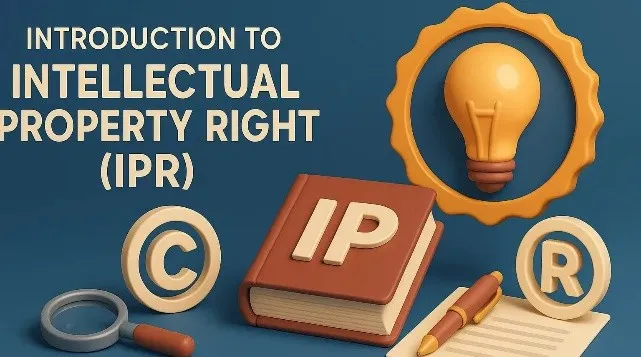
Figure 1: Intellectual Property Rights (IPR).
4. Aim, objectives and need for the study
4.1 Aim
To provide a comprehensive understanding of Intellectual Property Rights (IPR) —their legal foundations, categories, international governance framework, and the contemporary challenges reshaping the field —in order to build a clear, well-rounded picture of howIP lawfunctions and why it matters in a modern, innovation-driven economy.
4.2 Objectives
(1) To examine the theoretical justifications underlying IP protection (incentive, natural rights,
utilitarian, and personality theories).
(2) To analyze the major categories of IP —patents, copyrights, trademarks, trade secrets, industrial designs, and geographical indications —and their distinct legal characteristics.
(3) To study the international legal architecture governing IP, including the Paris Convention, Berne Convention, TRIPS Agreement, and WIPO treaties.
(4) To evaluate enforcement mechanisms available to IP holders across civil, criminal, administrative, and border-control domains.
(5) To identifyand assess contemporary challenges facing the IP system —digital piracy, AI-generated content, patent trolls, access to medicines, and biopiracy.
(6) To criticallyappraise the IP system’s core tension between incentivizing innovation and preserving public access to knowledge.
4.3 Need for the study
Rapid technological change: The rise of AI, biotechnology, and digital distribution has outpaced existing IP frameworks, creating legal gray areas (e.g., can an AI-generated work be copyrighted? Who owns AI training data?) that demand fresh scholarly and policy attention.
Economic significance: IP-intensive industries account for a substantial share of global GDP and trade, making a solid grasp of IP lawessential for businesses, policymakers, and innovators alike [13, 14] .
Global trade interdependence: With TRIPS binding all WTO members to common IP standards, understanding this framework is critical for anyone engaged in cross-border trade, licensing, or technology transfer.
Equity concerns: Ongoing debates over pharmaceutical patents and public health access, and the treatment of indigenous traditional knowledge, make it necessary to critically examine whether current IP structures serve global equityor entrench existing imbalances [15].
Policy relevance: Governments and international bodies are activelyrevising IP law (AI-specific frameworks, compulsory licensing debates, copyright term extensions), so an up-to-date study helps inform sound, balanced policymaking.
Educational gap: IP concepts are often scattered across legal, economic, and technical disciplines
—a consolidated studybridges these silos into a single accessible reference.
5. Literature review
The principal scholarlyand institutional sources informing this review are summarised in Table 1, organised by author, year, focus area and key contribution.
Table 1: Summary of Key Literature on Intellectual Property Rights
| Author(s) / Source | Year | Focus area | Key contribution / finding |
|---|---|---|---|
| Landes&Posner [12] | 2003 | Law&Economics | Foundational economic framework applying cost-benefit analysis across patents, copyright and trademarks |
| Fisher, W. [19] | n.d. | IP theory | Systematizes utilitarian, Lockean, personality and social-planning justifications for IP |
| Woodmansee, M. [21] |
1984 | Copyright history | Traces the historical/social construction of “authorship” in 18th-century Europe |
| Boyle, J. [22, 23] | 2003, 2008 |
Critical IP theory | “Second enclosure movement” —critiques one-directional IP expansion privatizing the intangible commons |
| Correa, C. M. [8] | 2007 | TRIPS Commentary | Detailed legal analysis of TRIPS obligations and flexibilities |
| Gervais, D. [9] | 2008 | TRIPS Commentary | Drafting history and interpretive analysis of the TRIPS Agreement |
| Drahos, P. (&Braithwaite) [72, 74] |
2000– 2003 |
International Political Economy |
Documents “forumshifting” strategy —moving IP negotiations from WIPO to WTO/FTAs to favor developed-countryinterests |
| Maskus, K. E. [25] | 2019 | Development Economics |
Examines IP’s uneven effects on technology-importing vs. exporting economies |
| Benkler, Y. [27] | 2006 | Commons-Based Production |
Shows large-scale innovation (open source, Wikipedia) occurring without traditional IP exclusivity |
| Economides, N. [26] | 1988 | Trademark Economics |
Frames trademark rationale around consumer search-cost reduction, distinct from innovation incentive |
| Lerner, J. [83] | 2009 | Empirical Economics | Surveyshowing inconsistent empirical evidence on IP-innovation causality |
| U.S. Copyright Office [62, 63] |
2025 | AI&Copyright | Confirms human-authorship requirement; addresses fair use for AI training data |
RESEARCH METHODOLOGY
6.1 Type of Research
This study adopts a doctrinal (black-letter) legal research methodology, supplemented by analytical and critical approaches. Doctrinal research focuses on systematically examining legal texts, principles, and doctrines to build a coherent, structured understanding of the lawas it stands
—rather than collecting newempirical data through surveys, experiments, or fieldwork. This is the standard and most widelyaccepted method in legal scholarship, particularly suited to a study whose goal is synthesis and explanation rather than testing a specific empirical hypothesis [28, 30, 31].
6.2 Nature of the Study
This is a library-based / desk research study —meaning all material is drawn from existing published sources (primary legal texts and secondaryscholarly commentary) rather than original data collection. It is descriptive-analytical in design: it first describes the existing legal framework accurately, then analyzes and critically evaluates that framework against the objectives set out earlier.
6.3 Sources of Data
Primary sources:
International treaties and conventions (Paris Convention, Berne Convention, TRIPS Agreement, WIPO Copyright Treaty)
National statutes (e.g., USPatent Act, Copyright Act, Lanham Act; India’s Patents Act, Copyright Act; equivalent EU regulations/directives)
Case lawand judicial decisions illustrating how courts interpret key doctrines Official reports and data from international bodies (WIPO, WTO, USPTO, EUIPO) Secondarysources:
Peer-reviewed journal articles and law reviewcommentary Academic books and treatises (e.g., Landes&Posner, Correa, Gervais) Institutional and think-tank reports
Reputable news and legal-industry publications for tracking recent developments
6.4 Method of Analysis
The studyproceeds in three analytical stages:
Descriptive stage —laying out what the law currently says (categories of IP, treatyobligations, enforcement mechanisms).
Comparative stage —contrasting approaches across jurisdictions or legal traditions where relevant (e.g., US “fair use” vs. EU “fair dealing”; common lawvs. civil lawtreatment of moral rights).
Critical/evaluative stage —assessing whether the current framework achieves its stated goals, using the theoretical lenses established in the Literature Review (economic efficiency, equity, access, innovation incentive).
6.5 Scope and Delimitation
The studycovers the seven major IP categories and the principal international instruments governing them, with illustrative rather than exhaustive jurisdictional comparison (primarily US, EU, and international/WTO frameworks, with references to developing-country perspectives where relevant to equity debates). It does not attempt an exhaustive survey of every national IP statute, nor does it involve primary empirical research such as surveys of rights-holders, litigation outcome statistics, or economic modeling.
6.6 Limitations
Reliance on secondary literature means findings reflect existing scholarly consensus (and disagreement) rather than neworiginal data.
Rapidlyevolving areas (especially AI and copyright) mean some analysis may be superseded by subsequent legislation or case law.
The comparative element is illustrative, not a full comparative-lawstudy, given the breadth of jurisdictions with distinct IP regimes.
6.7 Ethical Considerations
As a purelydoctrinal/library-based study, no human subjects, primary data collection, or confidential information is involved; the primary ethical obligation is accurate representation and
proper attribution of all cited legal and scholarlysources.
6.8 Research design classification
This study is best classified as qualitative, non-empirical, exploratory-cum-descriptive research — “exploratory” because it maps a broad field to identify key debates and gaps, and “descriptive” because it systematicallylays out the legal architecture as it currently exists, rather than testing a hypothesis through quantitative measurement [40].
6.9 Sampling of literature (non-random, purposive)
Because this is a literature-based study rather than a survey, “sampling” refers to source selection, not respondent selection. Sources were selected purposively —prioritizing foundational/seminal works (heavily cited across the field), official primarylegal instruments, and recent (post-2020) scholarship to ensure currencyon fast-moving issues like AI and copyright [46] .
6.10 Triangulation across source types
To reduce bias from relying on any single type of source, the study triangulates across three source categories —(a) binding legal instruments, (b) academic/theoretical commentary, and (c) empirical economic reports (USPTO, EUIPO) —so that legal, theoretical, and economic perspectives each check and supplement one another [41].
6.11 Citation and referencing standard
A consistent academic citation style (this reviewhas used a simplified author-date/footnote hybrid) should be applied uniformlyif the work is formalized further —commonly OSCOLA (Oxford Standard for Citation of Legal Authorities) for law-specific work, or APA/Chicago if submitted in a broader social-science context [38, 39] .
6.12 Validity and reliability in doctrinal research
Unlike quantitative research, doctrinal validity is assessed by accuracy of legal interpretation (correctly stating what the law says) and reliability by consistency of interpretation across similar legal provisions —essentially, would another competent researcher examining the same primary sources reach the same descriptive conclusions [28].
6.13 Use of comparative method (specific technique)
Where jurisdictions are compared, the study uses the functional comparative method —asking not “is the law worded the same?” but “does the lawachieve the same function?”(e.g., USfair use and EU fair dealing both serve the function of balancing exclusivitywith permitted uses, even though their legal tests differ substantially) [35, 36, 37].
6.14 Timeframe of the study
The reviewreflects the state of IP lawand scholarship as of 2026, with particular attention to developments from 2020 onward given how much the field has shifted around AI and digital platforms in that window; readers should independently verify currency for time-sensitive legal questions.
6.15 Distinction from socio-legal/empirical alternatives
The methodology section explicitly notes what this study is not —it is not socio-legal research (which would studyhowlawfunctions in society through interviews, surveys, or field observation)
and not statistical/econometric research (which would test correlations, e.g., between patent strength and innovation rates, using regression analysis) —flagging these as natural directions for future empirical follow-up work.
7. Conceptual framework: categories of intellectual property
7.1 Patents
Definition/subject matter: A patent protects an invention —a newproduct or process offering a newway of doing something or a newtechnical solution to a problem [43] .
Eligibility criteria: Must be novel (not previously disclosed anywhere), involve an inventive step (non-obvious to a person skilled in the field), and be capable of industrial application [43] .
Rights conferred: Exclusive right to make, use, sell, or import the invention.
Duration: Typically20 years from the filing date, subject to periodic renewal/maintenance fees.
Key limitation: Full public disclosure is required in the patent application —the “quid pro quo” of protection in exchange for adding to public technical knowledge.
Exceptions: Compulsory licensing (government-authorized use without the patent holder’s consent, typicallyfor public health emergencies); research/experimental use exemptions in many jurisdictions [65] .
Because the features described above operate within national legal systems, it is instructive to compare how theyappear in practice in different jurisdictions.
Because patent rights are territorial, the same invention can be treated quite differently depending on where protection is sought. To make this concrete, three jurisdictions are set side by side below: India, the United States and Australia. All three belong to the international IP framework discussed in Section 8, and, as the table shows, they share the same basic patent term and core exclusionary rights. The differences lie mainly in pharmaceutical termextension, the types of patent available, and the administrative upkeep required [11, 80, 81, 82].
Table 2: Comparison of Key Patent Features in India, the United States and Australia
| Feature | India | United States | Australia |
|---|---|---|---|
| Granting authority |
Indian Patent Office (Office of the Controller General of Patents, Designs and Trade Marks) | United States Patent and Trademark Office (USPTO) |
IP Australia |
| Governing legislation |
Patents Act, 1970 | Title 35 of the United States Code (Patent Law) |
Patents Act 1990 |
| Standard term | 20 years counted from the filing date |
20 years counted from the filing date |
20 years counted from the filing date |
| Term extension for medicines |
No general extension beyond the 20-year term |
Available in defined cases for certain pharmaceutical products | Available for pharmaceutical substance patents, taking the maximum to 25 years |
| Rights of the owner |
To stop others from making, using, offering for sale, selling or importing the invention without consent | To stop others from making, using, offering for sale, selling or importing the invention without consent | To stop others from exploiting the invention without consent (including making, selling, offering, using and importing it) |
| Territorial reach | India only | The United States, its territories and possessions |
Australia only |
| Upkeep of the patent |
Renewal fees must be paid to keep the patent in force |
Maintenance fees must be paid on utility patents |
Renewal fees must be paid to keep the patent in force |
| Categories of patent |
Product patents and process patents |
Utility, design and plant patents |
Standard patents; innovation patents (closed to new applications after 25 August 2021) |
Source: complied by the author from the Patent Acts, 1970 (India), 35 U.S.C. (United States) and the Patents Act 1990 (Australia), and the websites of the respective patent offices. [11, 80, 81, 82]
7.1.2 Interpretation of the Comparison
Common ground. Each country measures the standard patent term as twenty years from the date of filing, in line with the minimum standard set by the TRIPS Agreement. The holder in each case can prevent unauthorised commercial exploitation of the invention, although the statutory wording of the exclusive rights varies slightly between the three laws.
Pharmaceutical extension as the main divergence. Medicines take years of clinical testing and regulatory approval, which shortens the period during which a patent can actuallybe commercialised. The United States and Australia respond byallowing extra termfor qualifying pharmaceutical patents, with Australian lawcapping the total at twenty-five years. India does not grant a comparable general extension, which is consistent with the access-to-medicines concerns discussed in Section 10.
Variety of patent types. India recognises patents for products and for processes. The United States separates utility, design and plant patents, so that functional inventions, ornamental appearance and newplant varieties each have their own route. Australia offers standard patents; its shorter-term innovation patent is no longer open to newfilings (last filing date: 25 August 2021; existing innovation patents remain in force until they expire), which illustrates how a country can retire a protection tier when policy goals change.
Keeping a patent alive. None of the three systems grants protection permanently on payment of a single fee. Periodic renewal or maintenance fees are charged, and non-payment allows the patent to lapse, returning the invention to the public domain earlier than the nominal term.
7.1.3 Key Points
Patent protection is territorial: it operates onlywithin the territory of the granting country.
An Indian patent does not give automatic rights in the United States or Australia, and the reverse is also true.
Protection abroad requires separate applications in each country of interest, either filed directly or routed through international mechanisms such as the Patent Cooperation Treaty (PCT) described in Section 8.
7.1.4 Concluding Remark
Taken together, the three systems show that harmonisation under TRIPS has produced a shared baseline, a twenty-year term and similar exclusionary rights, while leaving each state room to shape pharmaceutical extension, patent categories and fee structures according to its own policy priorities.
Having compared howpatents are protected across jurisdictions, the discussion turns from the protection of inventions to the protection of original creative works. Copyright follows a different logic: protection arises automatically once a work is fixed, rather than through examination and registration.
7.2 Copyright
Definition/subject matter: Protects original works of authorship fixed in a tangible medium — literary, musical, dramatic, artistic works, films, sound recordings, software.
Eligibility criteria: Originality (independently created, minimal creativity) and fixation (recorded in some perceivable, stable form). Notably, copyright protects expression, not the underlying idea, fact, or method.
Rights conferred: Economic rights (reproduction, distribution, public performance, adaptation) and, in many jurisdictions, moral rights (attribution, integrityof the work).
Duration: Life of the author plus 50–70 years, varying byjurisdiction (life+70 in the US/EU, life+50 as the Berne Convention minimum).
Key limitation: Arises automatically upon fixation —no registration required, though registration assists enforcement and provides evidentiary benefits in some countries (e.g., US statutory damages).
Exceptions: Fair use (US, flexible multi-factor test) or fair dealing (UK/Commonwealth, enumerated specific purposes) permitting limited unlicensed use for criticism, education, news reporting, etc.
7.3 Trademarks
Definition/subject matter: Distinctive signs —words, logos, sounds, colors, shapes —that distinguish the goods/services of one business from another [42].
Eligibility criteria: Distinctiveness (capable of identifying source) and non-descriptiveness (cannot merely describe the product itself); must not be confusingly similar to existing marks.
Rights conferred: Exclusive right to use the mark in commerce for the registered goods/services, and to prevent others from using confusinglysimilar marks.
Duration: Indefinite, provided the mark remains in active use and registration is periodically renewed (typicallyevery 10 years).
Key limitation: Rights are tied to actual use in commerce in most systems —a mark that falls into disuse can be cancelled (“abandonment”).
Exceptions: Nominative fair use (referring to a trademarked product by name for identification, comparison, or commentary purposes).
7.4 Trade Secrets
Definition/subject matter: Confidential business information providing competitive advantage — formulas, processes, customer lists, algorithms.
Eligibility criteria: Information must be secret (not generally known), have commercial value because of its secrecy, and be subject to reasonable steps to maintain confidentiality.
Rights conferred: No exclusive “ownership” right as such —rather, legal recourse against misappropriation (theft, breach of confidence, industrial espionage).
Duration: Indefinite, but protection ends the moment secrecy is lost —including through independent discovery or lawful reverse engineering.
Key limitation: No registration or disclosure requirement, but also no protection if someone else legitimately discovers the same information independently.
7.5 Industrial Designs
Definition/subject matter: The visual/ornamental features ofa product —shape, pattern, configuration, or ornamentation —as distinct from its functional aspects [44] .
Eligibility criteria: Novelty and (in many jurisdictions) individual character/originality of the visual appearance.
Rights conferred: Exclusive right to prevent unauthorized copying or imitation of the design’s appearance.
Duration: Typically10–25 years depending on jurisdiction, often in renewable terms.
7.6 Geographical Indications (GIs)
Definition/subject matter: Signs identifying goods as originating from a specific place, where a given quality, reputation, or characteristic is essentially attributable to that geographic origin.
Eligibility criteria: Ademonstrable link between the product’s qualities and its geographic origin (soil, climate, traditional method).
Rights conferred: Collective right (not usually held by a single entity) to prevent use of the indication by producers outside the designated region or not meeting the specified standards.
Duration: Indefinite, as long as the qualifying conditions continue to be met.
7.7 Emerging Sui Generis Regimes
Plant Variety Protection: Protects new, distinct, uniform, and stable plant varieties (governed internationally by the UPOV Convention), typically for 20–25 years [45] .
Semiconductor/Integrated Circuit Layout Designs: Protects the three-dimensional topographyof semiconductor chips, typically for 10 years.
7.8 Comparative overview of the main IP types
Table 3 compares the main IP types in terms of registration requirement, typical duration and renewability, drawing on the category descriptions above.
Table 3: Comparison of the Main IP Types: Registration, Duration and Renewal
| IP type | Registration required? | Typical duration | Renewable? |
|---|---|---|---|
| Patent | Yes | 20 years from the filing date | No (fixed term, with maintenance fees) |
| Copyright | No (arises automatically on fixation) |
Life of the author plus 50–70 years, varying by jurisdiction |
No |
| Trademark | Yes (registration confers exclusive rights) |
Indefinite, provided the mark remains in use |
Yes (typically every10 years) |
| Trade secret | No | Indefinite, until secrecy is lost | Not applicable |
| Industrial design | Yes | 10–25 years depending on jurisdiction |
Often in renewable terms |
| Geographical indication |
Varies byjurisdiction | Indefinite, while the qualifying conditions continue to be met |
Not applicable |
8. International legal framework
8.1 Why International Frameworks Exist
IP rights are inherently territorial —a patent or trademark registered in one country provides no automatic protection elsewhere. As trade, publishing, and technology crossed borders far faster than national lawcould keep pace, countries began negotiating treaties to establish minimum shared standards and mutual recognition, rather than leaving each country’s IP lawto develop in total isolation.
8.2 Paris Convention for the Protection of Industrial Property (1883)
The oldest major IP treaty, covering patents, trademarks, and industrial designs (not copyright) [2].
Introduced two foundational principles still in use today:
National treatment: each member country must give foreign applicants the same IP protection it gives its own nationals.
Right of priority: once you file an application in one member country, you get a window (12 months for patents, 6 months for trademarks/designs) to file in other member countries while keeping your original filing date —critical for inventors seeking protection in multiple countries without simultaneous filing.
Administered todayby WIPO; has over 175 member states.
8.3 Berne Convention for the Protection of Literary and Artistic Works (1886)
The foundational copyright treaty, built on the same national-treatment principle as Paris [3] .
Established that copyright protection is automatic upon creation/fixation —no registration or formalities required, a major departure from the US’s earlier registration-based system (the US didn’t join Berne until 1989).
Set a minimum copyright term of life of the author plus 50 years —manycountries (US, EU) now exceed this with life+70.
8.4 WIPO Convention (1967)
Established the World Intellectual Property Organization itself as a UN specialized agency, consolidating administration of the Paris and Berne unions under one roof [4].
WIPO’s mandate: promote IP protection worldwide through treaty administration, technical cooperation, and dispute resolution services —but WIPO itself has no enforcement power over member states; it’s a coordinating and administrative body, not a court.
8.5 TRIPS Agreement (1994) —the pivotal instrument
Negotiated as part of the Uruguay Round that created the WTO; annexed to the WTO’s founding Marrakesh Agreement [1, 6].
What changed: unlike WIPO treaties (largely aspirational, weak enforcement), TRIPS ties IP compliance to WTO membership itself —a country that violates TRIPS can face trade sanctions through the WTO’s binding dispute settlement mechanism. This gave IP lawreal teeth internationally for the first time.
Scope: sets binding minimum standards across copyright, trademarks, geographical indications, industrial designs, patents (including plant varieties), integrated circuit layouts, and trade secrets —essentially incorporating and extending the Paris and Berne standards, then adding enforcement obligations.
Built-in flexibilities: recognizing that uniform standards disadvantage developing countries, TRIPS includes:
Article 31 compulsory licensing: governments can authorize use of a patent without the owner’s consent under specific conditions (e.g., public health emergencies), with compensation to the patent holder [1]
Transition periods: developing and least-developed countries were given extended timelines to come into full compliance (least-developed countries have had this repeatedlyextended, most recently for pharmaceutical patents).
Doha Declaration on TRIPS and Public Health (2001): clarified that TRIPS “does not and should not prevent members from taking measures to protect public health,” directly affirming the right to issue compulsory licenses for medicines —a response to the HIV/AIDS access-to-medicines crisis[65].
8.6 WIPO Copyright Treaty (WCT)&WIPO Performances and Phonograms Treaty (WPPT), both 1996
Known collectively as the “WIPO Internet Treaties” —extended copyright protection into the digital environment [5].
Addressed issues Berne never anticipated: protection of computer programs and databases as literary works, digital rights management (anti-circumvention provisions), and rights over digital transmission/making available online.
Formed the template many countries used to draft their own digital copyright laws (e.g., the US DMCA implements WCT obligations domestically).
8.7 Madrid System (Madrid Agreement 1891 + Madrid Protocol 1989)
A single international trademark application system: file once through WIPO, designate multiple membercountries, and manage renewals centrally —dramatically simplifying what would otherwise require separate applications in each country.
Does not create a single “international trademark” —each designated country still examines and grants (or refuses) protection under its own law; Madrid just streamlines the filing process.
8.8 Patent Cooperation Treaty (PCT, 1970)
Similarly streamlines patent filing: a single international application, followed by an international search and preliminary examination, before the applicant chooses which specific countries to pursue (“national phase entry,” typically due 30–31 months from the priority filing date).
Like Madrid, PCT doesn’t grant a “world patent” —it simplifies and delays the cost offiling separately in each jurisdiction.
8.9 Regional Frameworks
European Union: EU Trademark and Community Design systems provide unified protection across all EU member states via a single application (European Union Intellectual Property Office, EUIPO); the European Patent Convention (separate from the EU) allows a single application via the European Patent Office (EPO) that then matures into a bundle of national patents.
African Regional IP frameworks: ARIPO (Anglophone Africa) and OAPI (Francophone Africa) provide similar regional filing systems.
8.10 The Overall Architecture
The picture that emerges is layered: WIPO-administered treaties (Paris, Berne, WCT/WPPT) set baseline substantive standards and procedural conveniences (Madrid, PCT), while TRIPS — administered by the WTO, not WIPO —is what actually forces near-universal compliance through its link to trade sanctions. This dual-institution structure (WIPO for standard-setting and administration, WTO/TRIPS for enforcement leverage) is somewhat unusual as far as international lawregimes go, and is itself a subject of scholarly debate over which institution should really be driving global IP policy.
The “TRIPS-Plus” phenomenon: Beyond TRIPS’s baseline standards, many countries —especially the USand EU —negotiate bilateral or regional free trade agreements containing IP provisions that go further than TRIPS requires (longer copyright terms, data exclusivity for pharmaceuticals, stronger anti-circumvention rules). Critics call these “TRIPS-Plus” provisions, arguing theyuse trade leverage to lock in higher IP standards that developing countries never agreed to at the multilateral level and that bypass the flexibilities WTO members fought hard to preserve.
8.11 Forum shifting
Scholars have observed that when negotiations stall in one international body, powerful states often shift the debate to a more favorable forum —e.g., moving from WIPO (where developing countries have more collective voice) to the WTO (TRIPS) in the 1990s, and more recentlyto bilateral trade agreements or plurilateral deals (like the Anti-Counterfeiting Trade Agreement, ACTA) where fewer countries need to agree, and rules can be set with less resistance [72, 74, 75] .
8.12 Special and Differential Treatment (S&DT)
Beyond simple transition periods, TRIPS contains broader “special and differential treatment” provisions recognizing that developing and least-developed countries need different obligations, technical assistance, and technology-transfer incentives —reflecting a broader principle found throughout WTO agreements, not unique to TRIPS [1] .
8.13 TRIPS Council and ongoing negotiation
The WTO’s TRIPS Council is a standing body where member states continue to negotiate implementation issues, reviewnational compliance, and handle disputes —TRIPS isn’t a static, one-time agreement but an evolving framework subject to ongoing interpretation and (occasionally) amendment, such as the 2017 amendment formalizing a mechanism for countries without pharmaceutical manufacturing capacity to import generic medicines made under compulsory license elsewhere [1] .
8.14 Dispute Settlement Understanding (DSU) mechanics
When a WTO member believes another member is violating TRIPS, it can bring a claim through the WTO’s Dispute Settlement Body —involving a panel process, an option to appeal, and ultimately the possibility ofauthorized trade retaliation (tariffs) if the losing party doesn’t comply. This is the specific mechanism that gives TRIPS its “teeth” compared to WIPO treaties, which have no equivalent binding dispute process [50] .
8.15 Rome Convention (1961)
Predates the WIPO Internet Treaties and protects “neighboring rights” —the rights of performers, producers of phonograms, and broadcasting organizations —distinct from the rights of the original author/composer. Often overlooked but foundational for the music and broadcasting industries.
8.16 Nairobi Treaty and Olympic symbol protection (1981)
Anarrower but illustrative example ofhowspecific international interests (in this case, the International Olympic Committee) secured dedicated treatyprotection for a single symbol — showing howthe treaty system can be used for highly targeted protections beyond the general IP categories.
8.17 Singapore Treaty on the Lawof Trademarks (2006) and Patent Law Treaty (2000)
Rather than setting substantive standards, these treaties harmonize the procedural aspects of filing trademark and patent applications across countries, reducing administrative friction and cost for applicants filing in multiple jurisdictions.
8.18 China’s evolving role
Historically criticized as an IP “safe haven” for infringement, China has in recent years become one of the largest patent-filing countries in the world and has strengthened domestic IP enforcement
—illustrating howa country’s relationship to the international IP framework can shift dramatically
as its own domestic innovation economy matures (a pattern also seen historically in the USand Japan).
8.19 Investor-state dispute settlement (ISDS) and IP
Some investment treaties allowforeign investors to challenge a country’s IP policy decisions (e.g., patent revocations, compulsory licenses) directly through international arbitration rather than the WTO system —a controversial parallel enforcement track that has occasionally clashed with a
country’s public-health or competition policy goals (e.g., pharmaceutical company challenges to national patent decisions).

Figure 2: Categories of Intellectual Property Covered Bythe International Legal Framework.
9. Enforcement of intellectual property rights
9.1 The TRIPS “General Obligations” Baseline (Article 41)
Before any specific remedytype, TRIPS Article 41 sets overarching requirements for how enforcement procedures must work, regardless of which route (civil, criminal, administrative) is used: procedures must be fair and equitable, not unnecessarily complicated or costly, not subject to unreasonable time limits, and must allow for judicial reviewof administrative decisions. This baseline exists because a country could technically “have” IP enforcement laws on the books while making themso slow, expensive, or opaque that they’re useless in practice —Article 41 was designed to prevent that loophole [47] .
9.2 Burden of Proof Nuances
In most jurisdictions, the rights-holder (plaintiff) bears the burden of proving infringement. However, TRIPS Article 34 creates a specific exception for process patents: if a patented process produces a new product, and an identical product appears on the market, the burden can shift to the defendant to prove they didn’t use the patented process —recognizing that proving exactly how a competitor manufactured something is often practically impossible for the patent holder to establish directly [52].
9.3 Provisional/Interim Measures in Practice
Beyond the general concept of injunctions, TRIPS Article 50 specifically allows ex parte provisional measures —meaning a court can order an immediate freeze or seizure before even notifying the alleged infringer, when delay would likely cause irreparable harm or evidence would likely be destroyed. This is particularly used in counterfeit goods cases, where notifying the target in advance would simply let them move or hide the goods before authorities can act [47].
9.4 Calculating Damages —the Three Methods in Practice
Lost profits: rights-holder must showwhat they would have earned absent the infringement (requires proving causation —that this specific infringement caused this specific loss, which can be evidentiallydifficult).
Infringer’s profits (unjust enrichment): easier in some ways, since it only requires showing what the infringer earned, not what the rights-holder lost —but the infringer may argue some of their profit came from their own marketing/effort, not the infringement itself.
Reasonable royalty: a court-constructed hypothetical —what would a willing licensor and willing licensee have agreed to in an arm’s-length negotiation before the infringement began? This is often the fallback when neither lost profits nor infringer’s profits can be reliably calculated, and is common in patent litigation specifically.
9.5 Statutory Damages as a Practical Enforcement Tool
In the US, copyright statutory damages can range roughly from $750 to $30,000 per work infringed (up to $150,000 for willful infringement) without the rights-holder needing to prove actual financial loss at all —this exists specifically because actual damages from things like a single pirated song download are often trivially small or hard to quantify, and Congress wanted a meaningful deterrent regardless [53].
9.6 Ex Officio Border Action
TRIPS Article 58 allows customs authorities to act ex officio —on their own initiative, without waiting for a rights-holder to file a formal application —when they have reason to suspect goods are counterfeit or pirated. This matters because many rights-holders, especially smaller ones, don’t have the resources to monitor every shipment; ex officio powers let customs catch obvious cases (e.g., a shipment labeled as containing a famous luxury brand’s goods, shipped from a known counterfeit-manufacturing region) without prior registration [47] .
9.7 De Minimis Exception (Article 60)
Border measures don’t have to apply to small, non-commercial quantities of goods in a traveler’s personal luggage —a deliberate carve-out preventing customs enforcement from being weaponized against ordinary travelers bringing home a small number of items for personal use, keeping enforcement focused on commercial-scale trafficking [47].
9.8 Comparative Enforcement Intensity—Illustrative Jurisdictional Notes
United States: Heavy reliance on statutory damages and a well-developed private civil litigation system; the International Trade Commission (ITC) offers a separate, fast-track venue specifically for blocking infringing imports at the border via Section 337 investigations [53, 55].
European Union: The IP Enforcement Directive (2004/48/EC) harmonizes minimum civil enforcement standards across all EU member states, including a right to information (compelling infringers to disclose their supply chain) that goes beyond what TRIPS requires [54].
China: Historically criticized for weak enforcement, China has since established specialized IP courts (Beijing, Shanghai, Guangzhou, from 2014 onward) with judges specifically trained in technical patent and technology disputes —a structural reform aimed at improving enforcement credibility [48, 56].
9.9 The “Whac-a-Mole” Problem in Digital Enforcement
Site-blocking and takedown enforcement face a structural weakness: infringing content or sites frequently reappear under new domains, hosts, or mirror sites almost immediately after being taken down —meaning digital enforcement is often a continuous, resource-intensive process rather than a one-time fix, which is part of why rights-holders increasingly favor going after payment processors and ad networks funding piracy sites (a “follow the money” strategy) rather than only chasing the sites themselves.
9.10 Enforcement Asymmetry as a Practical Reality
Large rights-holders (major studios, pharmaceutical companies, luxury brands) typically have dedicated legal and brand-protection teams actively monitoring and enforcing their rights globally, while individual creators or small businesses often cannot afford to enforce their IP rights even when infringement is clear —a practical gap between the formal availability of enforcement mechanisms and actual access to them, which is itself a recurring theme in critical IP scholarship (see Boyle, cited earlier).
10. Contemporary issues and challenges
10.1 Digital Piracy
The core problem: Digital files can be copied perfectly, instantly, and distributed globally at near-zero marginal cost —a fundamentally different economics than physical piracy (counterfeit goods still require manufacturing and shipping).
Evolution of piracy methods: From early peer-to-peer file-sharing (Napster, BitTorrent) to today’s streaming/IPTV piracyservices and “cyberlocker” hosting sites —enforcement has had to continuously adapt as the technology shifts.
Industryresponse: Legal streaming services (Spotify, Netflix) have arguably done more to reduce piracy than litigation alone, by making legal access cheap and convenient —a market-based rather than purely legal solution that scholars increasingly point to as evidence that piracy is partly a pricing/access problem, not just a legal-enforcement problem.
Ongoing tension: Site-blocking and takedown regimes (discussed in Enforcement) remain a constant cat-and-mouse game, since newmirror sites and domains reappear quickly after old ones are shut down.
10.2 Artificial Intelligence and Copyright
This is currently the fastest-moving and most legally unsettled area in IP:
Training data disputes: Multiple ongoing lawsuits (against AI companies including OpenAI, Meta, Stability AI, and others) center on whether training generative AI models on copyrighted text/images/code without a license constitutes infringement, or falls under fair use as “transformative” use. Courts across the USand elsewhere have reached mixed and evolving conclusions, and this remains actively litigated [57, 59, 60] .
Authorship of AI-generated works: The USCopyright Office has taken the position that works must have human authorship to be copyrightable —purely AI-generated output, without sufficient human creative control, generally cannot be copyrighted. Other jurisdictions (e.g., the UK, under limited “computer-generated works” provisions) have taken more permissive stances, creating jurisdictional divergence [62] .
AI and patents: A parallel debate exists over whether an AI system can be listed as an “inventor” on a patent —most patent offices (including USPTO and EPO) have so far required a human inventor, rejecting applications naming AI systems alone as inventor [64].
Deepfakes and personality rights: AI-generated likenesses of real people (voice, image) raise related but distinct legal questions under “right of publicity” or personality rights law, rather than traditional copyright —an area where legislative responses are still emerging.
10.3 Patent Trolls / Non-Practicing Entities (NPEs)
The business model: Entities that acquire patents (often broad or vaguely written ones) not to build products, but purelyto license or litigate against companies that arguably infringe them—using the high cost of patent litigation as leverage to extract settlements even from companies that might ultimately win at trial.
Economic critique: Critics argue NPEs impose a “innovation tax” —diverting resources from actual R&D into defensive litigation and settlements —while defenders argue NPEs provide liquidity to inventors (especially small inventors) who lackresources to enforce or commercialize patents themselves.
Policy responses: Reforms like the US America Invents Act (2011) introduced post-grant review procedures partly aimed at making it easier to invalidate low-quality patents that fuel troll litigation; “loser pays” fee-shifting proposals have also been debated as a deterrent.
10.4 Access to Medicines and Pharmaceutical Patents
The core tension: Patent protection is meant to incentivize the enormous R&D investment required for new drugs, but the resulting monopoly pricing can put life-saving medicines out of reach, especially in lower-income countries.
Historical flashpoint: The HIV/AIDS crisis in the 1990s–2000s brought this tension to global attention, ultimately producing the Doha Declaration (2001) affirming the right to compulsory licensing for public health [65].
COVID-19 revival: The pandemic reignited this debate sharply —proposals for a temporary TRIPS waiver on COVID-19 vaccine patents were debated extensively at the WTO, exposing continuing disagreement between pharmaceutical-producing and pharmaceutical-importing countries over how to balance innovation incentives against emergency access needs [66] .
Data exclusivity as a parallel issue: Beyond patents themselves, “data exclusivity” provisions (protecting clinical trial data from being used by generic manufacturers for a period, separate from patent term) have become another TRIPS-Plus flashpoint in trade negotiations.
10.5 Biopiracy and Traditional Knowledge
The problem: Indigenous and traditional communities have long cultivated knowledge ofplant properties, agricultural techniques, and medicinal uses —but because this knowledge is often orally transmitted, collectivelyheld, and generations old, it doesn’t fit neatly into Western IP frameworks built around individual authorship and novelty.
Notable disputes: Cases involving patents granted on traditional uses of neem, turmeric, and basmati rice (later challenged and in some cases revoked) illustrate howcompanies have sometimes patented knowledge already known and used by traditional communities, prompting accusations of“biopiracy.” [71]
Policy response: The WIPO Intergovernmental Committee (IGC) has spent over two decades negotiating a possible international instrument for protecting traditional knowledge, genetic resources, and traditional cultural expressions —progress has been slow given deep disagreement between developed and developing countries over the right approach [16] .
Nagoya Protocol (2010): A related instrument under the Convention on Biological Diversity, requiring “access and benefit-sharing” agreements when genetic resources (and associated traditional knowledge) are used commercially—a partial, adjacent solution operating outside the core IP treaty system [67] .
10.6 Copyright Term Extension Debates
Repeated extensions of copyright duration (e.g., the USCopyright Term Extension Act of 1998, extending terms by20 years, sometimes called the “Mickey Mouse Protection Act” by critics given the timing relative to early Disney characters entering the public domain) have drawn sustained criticism from scholars (Boyle, Lessig, and others) who argue these extensions primarilybenefit existing rights-holders and corporate estates rather than incentivizing newcreation, while shrinking the public domain [68, 69].
Defenders argue term extensions maintain international harmonization (matching the EU’s life+70 standard) and continue rewarding long-lived creative franchises.
10.7 Platform Liability and Intermediary Responsibility
Ongoing debate over how much responsibility online platforms (social media, marketplaces, app stores) should bear for IP infringement by their users —ranging from the US’s relatively platform-protective safe-harbor model (DMCA) to the EU’s more platform-responsible approach under the Copyright Directive (Article 17, requiring platforms to prevent unauthorized content from appearing, not just remove it after notice) [32, 70].
10.8 3D Printing and Physical-Digital Convergence
As 3D printing technology matures, digital design files for physical objects (from simple parts to complex products) raise newquestions about how patent and design-right infringement applies when the “copying” happens at the point of printing by an end consumer, rather than at a traditional manufacturing/distribution stage.
11. Critical analysis
11.1 Framing the Core Tension
Everysection of this reviewultimately circles backto one structural tension: IP lawgrants private exclusivity to serve a public purpose (more innovation, more creative output, more accessible knowledge over time). Critical analysis means asking, honestly, whether the current balance actually achieves that public purpose —or whether it has drifted toward serving rights-holder interests at public expense. This section weighs both sides rather than declaring a winner, consistent with the evenhanded approach used throughout this review.
11.2 The Case for Strong IP Protection
Investment security: Industries with enormous upfront R&D costs and easily-copied outputs (pharmaceuticals, semiconductors, film) argue they simply wouldn’t invest without strong, enforceable exclusivity —the cost of developing a newdrug runs into billions of dollars, but the marginal cost of copying the resulting pill is nearly zero.
Economic contribution data: As shown in the economic data cited in Section 4, IP-intensive industries account for a substantial share of GDP, employment, and exports in major economies (US, EU data cited earlier) —suggesting the system is, at minimum, correlated with significant economic activity [13, 14] .
Predictability for licensing/trade: Strong, harmonized IP standards (via TRIPS) reduce uncertainty for cross-border investment and technology transfer —a company is more willing to license technology into a country if it trusts that country’s courts will enforce that license.
Brand trust and consumer protection: Trademark protection specifically has a strong consumer-welfare justification distinct from the innovation-incentive story —it reduces search costs and prevents consumer deception, a rationale even IP-skeptical critics rarely challenge.
11.3 The Case for Narrower/Weaker IP Protection
“IP maximalism” critique (Boyle et al.): The historical trend has been one-directional —longer terms, broader subject matter, stronger enforcement —driven disproportionately by concentrated industrylobbying rather than anyprincipled recalibration of the innovation/access balance.
Copyright term extensions (Section 10) are the clearest example: extending protection retroactively on existing works cannot possibly incentivize their creation, since they were already
created [22, 23].
Development economics concerns (Maskus et al.): Strong IP protection may benefit technology-exporting economies while disadvantaging technology-importing developing countries, who face higher costs for accessing patented medicines, agricultural technology, and educational materials without necessarily gaining reciprocal benefit, since they hold relatively few patents themselves [25].
Empirical skepticism: Some empirical literature complicates the simple “stronger IP = more innovation” assumption —commons-based, collaboratively-produced work (open-source software, Wikipedia) demonstrates large-scale innovation and creation occurring without traditional IP exclusivity as the primary incentive, suggesting the incentive story is not universally necessary [83] .
Access and equity harms: The access-to-medicines and biopiracy debates (Section 10) show concrete cases where IP protection has produced serious harm—delayed access to HIV/AIDS treatment, COVID-19 vaccines, and disputed patents over traditional knowledge alreadyknown to indigenous communities.
Enforcement asymmetry: As discussed in the Enforcement section, large rights-holders can enforce their IP rights effectively, while individual creators, small businesses, and developing-countryactors often cannot —meaning the formal protections look symmetric on paper while functioning asymmetrically in practice.
11.4 AMiddle Ground: Built-In Flexibilities
It’s worth noting the IP system isn’t monolithic —TRIPS itself contains the flexibilities discussed in Section 8 (compulsory licensing, transition periods, the Doha Declaration), and most copyright systems include fair use/fair dealing exceptions. The critical question raised throughout the literature isn’t “should IP exist at all” (a fairlymarginal position) but “is the current calibration of scope, duration, and enforcement intensity actually optimal, or has it overshot due to unequal bargaining power in international negotiations (forum shifting, TRIPS-Plus provisions, discussed in Section 8)?”
11.5 The AI Moment as a Live Test Case
The ongoing AI copyright litigation (Section 10) is, in a sense, this whole debate playing out in real time: courts are being asked directly whether unlicensed use of copyrighted material for a transformative technological purpose deserves fair-use protection, or whether it constitutes exploitation that undermines the very creators the system is meant to incentivize. The market-competition standard emerging from cases like NYT v. OpenAI —where courts increasingly ask whether the AI’s output competes with the original work’s market —is itself an attempt to operationalize exactlythe incentive-vs-access balance this section has been describing.
11.6 Whose Interests Get Represented in IP Policymaking?
A recurring theme across the critical literature is that IP policyis often negotiated between well-resourced institutional actors —governments, large corporations, industry associations — with individual creators, consumers, and traditional/indigenous communities frequently underrepresented in the rooms where standards are actually set (WTO negotiations, bilateral trade talks). This representational gap helps explain whycritics see the system’s evolution as skewed even when each individual rule, in isolation, might seem reasonable.
11.7 Assessment
On balance, most serious scholarship —even work critical of specific features like term extension or TRIPS-Plus provisions —does not argue for abolishing IP protection outright; the economic logic for some form of exclusivity remains broadly persuasive. The more substantive disagreement is over calibration: how long protection should last, how broad its scope should be, how aggressively it should be enforced, and how much flexibility developing countries and marginalized creators should retain. This review’s own position, consistent with its evenhanded aim, is to lay out that calibration debate clearly rather than resolve it —recognizing it as an active, legitimate policy question rather than a settled one.
RESULTS
12.1 On the Structure of the IP System
The reviewconfirms that IP lawis not a single unified right but a bundle of distinct legal regimes (patents, copyright, trademarks, trade secrets, industrial designs, geographical indications, and emerging sui generis categories), each with different eligibilitycriteria, durations, and rights conferred —and that products increasingly drawon multiple overlapping regimes simultaneously (“IP stacking”).
12.2 On International Governance
Findings confirm a two-track institutional architecture: WIPO-administered treaties (Paris, Berne, WCT/WPPT) set substantive standards and procedural conveniences, while the WTO’s TRIPS Agreement is what actually drives near-universal compliance, because it is the only instrument backed by binding trade-sanction enforcement through the WTO Dispute Settlement Understanding. This explains why TRIPS, despite being younger than Paris or Berne, has had outsized influence on global IP harmonization [2, 3, 5, 50].
12.3 On Enforcement
The review finds a structural asymmetry between formal and practical enforcement access: while civil, criminal, administrative, border, and ADR mechanisms exist on paper for all rights-holders, well-resourced actors (major studios, pharmaceutical firms, luxury brands) can access and sustain enforcement effectively, while individual creators, small businesses, and developing-country actors frequently cannot —a gap noted consistently across the critical literature (Boyle and related scholarship) [22].
12.4 On Contemporary Challenges
Findings show that the areas of greatest current legal uncertainty are precisely those the 20th-century treaty frame work did not anticipate: generative AI training and authorship (still being actively litigated as of 2026, with courts converging on a market-competition standard for fair use), traditional knowledge protection (still unresolved after two decades of WIPO IGC negotiation), and pharmaceutical access during global health emergencies (revisited sharply during COVID-19 despite the Doha Declaration’s earlier attempt to settle the question) [16, 60, 65] .
12.5 On the Economic Contribution of IP
Official economic data (USPTO, EUIPO-EPO) confirms IP-intensive industries represent a very large and growing share of GDP, employment, and exports in major economies —but the empirical academic literature on whether stronger protection specifically causes more innovation remains mixed and inconclusive, particularly outside a fewsectors like pharmaceuticals, and even there the effect appears smaller than commonly assumed in policy discourse [13, 14, 83].
12.6 On the Core Normative Tension
The review’s central finding, consistent across every section, is that IP law’s foundational trade-off —private incentive versus public access —has not been definitively resolved by scholarship or policy, and current disagreement centers not on whether IP protection should exist, but on its proper calibration: termlength, scope, enforcement intensity, and flexibility for developing countries and marginalized creators.
12.7 On Representation in Policymaking
A consistent pattern across the literature reviewed is that IP standard-setting has historically occurred in venues (WTO negotiations, bilateral trade agreements) where well-resourced institutional actors have disproportionate influence, relative to individual creators, consumers, and traditional/indigenous communities —a finding that helps explain the historically one-directional (“maximalist”) trend in IP expansion documented in Sections 10 and 11.
The principal findings of the review are summarised in Table 4.
Table 4: Key Findings of the Review
| Area | Finding |
|---|---|
| Legal structure | Multiple distinct regimes, increasinglyoverlapping/stacked |
| International governance | TRIPS drives compliance; WIPO sets standards |
| Enforcement | Formal mechanisms exist for all rights-holders, but practical access is asymmetric in favour of well-resourced actors |
| Contemporary challenges | Greatest uncertainty in generative AI, traditional knowledge and pandemic-era access to medicines |
| Economic contribution | IP-intensive industries form a large share of GDP; the causal link between stronger protection and innovation is mixed and inconclusive |
| Core normative tension | Unresolved; debate centres on calibration of IP protection rather than its existence |
| Representation in policymaking | Standard-setting dominated by well-resourced institutional actors |
DISCUSSION
13.1 Purpose of This Section
Where the Results section stated what the reviewfound, this Discussion interprets what those findings mean —situating themagainst the theoretical frameworks from the Literature Review, and drawing out implications that aren’t obvious from the findings alone.
13.2 Interpreting the Two-Track Governance Finding
The fact that TRIPS (a trade instrument) rather than WIPO (the dedicated IP institution) drives global compliance is not incidental —it reveals that IP policy is fundamentally trade policy in practice, not purelya specialized legal/technical domain. This matters because trade negotiations optimize for reciprocal market access and leverage, not necessarilyfor the innovation/access balance IP theory is supposed to serve. The “forum shifting” pattern discussed earlier (moving contentious IP debates from WIPO, where developing countries have more collective voice, into trade venues where leverage matters more) is a direct consequence ofthis structural fact, not a separate observation —it follows naturally once IP enforcement is tied to trade sanctions.
13.3 Interpreting the Enforcement Asymmetry Finding
The gap between formal and practical enforcement access complicates the standard incentive-theory justification for IP. If the theory is that exclusivity rewards creators for their investment, but only well-resourced creators can actually realize that reward through effective enforcement, then the system may be functioning as intended mainly for a subset of rights-holders —large corporations and institutional players —while individual creators and small innovators receive comparatively weaker practical protection despite formally equal rights. This doesn’t necessarily invalidate the incentive theory, but it does suggest the theory’s real-world payoff is unevenly distributed in ways the theory itself doesn’t account for.
13.4 Interpreting the Mixed Empirical Innovation Evidence
Perhaps the most consequential finding for policy is that the empirical linkbetween stronger patent protection and more innovation is weaker and more inconsistent than the political rhetoric around IP typically assumes. This doesn’t mean patents don’t matter —pharmaceuticals remain a partial exception —but it does mean claims like “we need even stronger IP protection to spur innovation” deserve more empirical scrutiny than they usually receive in trade negotiations or domestic policy debates. This finding aligns with, and helps explain, why critical scholars like Boyle argue that IP expansion has often outpaced its actual justification.
13.5 Interpreting the AI Litigation as a Structural Stress Test
The ongoing AI copyright cases are significant not just as legal news, but as a live demonstration of how the entire IP framework handles genuinely novel technology. The market-competition standard courts are converging toward —asking whether AI outputs substitute for the original work’s market —is essentially an attempt to operationalize the incentive/access balance through case-by-case judicial reasoning, rather than through updated legislation. This is notable: it suggests that when the treaty and statutory framework doesn’t anticipate a technology, enforcement pressure shifts to courts, who must improvise a workable standard from existing doctrine (fair use) built for very different circumstances (e.g., photocopying, parody, quotation) decades earlier.
13.6 Reconciling the “Existence vs. Calibration” Finding
The observation that scholarly debate centers on calibration rather than existence is, in one sense, reassuring —it suggests broad consensus that IP protection serves a real function. But it also means the genuinely hard questions (how long should protection last? Howshould developing countries’ flexibilities be preserved against TRIPS-Plus pressure? Howshould traditional knowledge be recognized?) don’t have a simple resolution available from first principles —they require ongoing, contested, political negotiation, which is precisely why bodies like the WIPO IGC have spent over two decades without resolving traditional-knowledge protection.
13.7 Limitations of This Review’s Conclusions
As a doctrinal/desk-based study (per the Methodology section), this review’s conclusions rest on synthesizing existing scholarship and primary legal texts rather than generating newempirical data. Its assessment of “mixed” innovation evidence, for instance, reflects the state ofpublished economic literature as of the mid-2020s —an area still actively researched, where new studies could shift the balance ofevidence in either direction. Similarly, the AI litigation discussion reflects an actively evolving legal landscape (as of 2026) that will likely have moved further by the time this review is read.
13.8 Practical Implications
For policymakers: The mixed innovation evidence suggests caution before further strengthening IP protection (e.g., additional TRIPS-Plus commitments) without clear, sector-specific empirical justification.
For businesses: The enforcement-asymmetry finding suggests smaller firms should weigh ADR and administrative routes (cheaper, faster) over full litigation where possible.
For international bodies: The AI litigation stress test suggests updated treaty language may eventually be needed, rather than leaving generative AI’s treatment to accumulate ad hoc through individual court rulings across different jurisdictions.
CONCLUSION
14.1 Restating the Purpose
This review set out to build a comprehensive, evenhanded understanding of Intellectual Property Rights —their legal foundations, categories, international governance, enforcement mechanisms, and the contemporary pressures reshaping the field. Returning to the objectives set out in Section 4, each has been substantively addressed:
Theoretical justifications (incentive, natural rights, utilitarian, personality) were examined in the Literature Review and revisited critically in the Critical Analysis section.
Major IP categories were mapped in detail in the Conceptual Framework, including their eligibility criteria, duration, and key exceptions.
International governance was traced from the Paris and Berne Conventions through TRIPS, revealing the two-track architecture (WIPO for standard-setting, WTO for enforcement leverage) that defines how global IP compliance actually works.
Enforcement mechanisms were surveyed across civil, criminal, administrative, border, and digital domains, revealing a persistent asymmetry between formal availability and practical access.
Contemporary challenges —AI and copyright, patent trolls, access to medicines, biopiracy —were shown to be the areas where the 20th-century treaty architecture is most visibly strained.
The core tension between innovation incentive and public access was shown, through both Results and Discussion, to remain unresolved —not because scholarship has failed to studyit, but because it is a genuinely contested distributive and political question, not a technical one with a single correct answer.
14.2 What This Review Adds
Rather than treating IP law’s various dimensions —economic, doctrinal, international-political, and critical —as separate silos (as much specialized scholarship tends to), this reviewhas attempted to synthesize them into a single coherent account, showing how, for example, the enforcement-asymmetry finding connects directly to the forum-shifting pattern in international governance, and howboth connect backto the same underlying representational imbalance in how IP standards get set.
14.3 Key Takeaways
IP protection is not a monolithic, self-justifying institution —it is a deliberatelyengineered, imperfect compromise between competing social goals, and reasonable people continue to disagree about where exactly that compromise should sit.
The empirical case for ever-stronger IP protection is weaker than commonly assumed in political and trade rhetoric —this doesn’t mean IP protection is unjustified, but it does mean specific proposals to strengthen it further deserve scrutiny rather than being taken as self-evidently pro-innovation.
The system’s newest stress points —AI, traditional knowledge, pandemic-era medicine access — all involve situations the original 19th- and 20th-century treaty architecture did not anticipate, and courts and international bodies are still working out, in real time, how existing doctrine should stretch to cover them.
Institutional power imbalances in how IP rules get negotiated (forum shifting, TRIPS-Plus provisions, underrepresentation of individual creators and indigenous communities) help explain why IP protection has historicallyexpanded more often than it has contracted, independent of whether each individual expansion was well justified on its own terms.
14.4 Recommendations
For policymakers:
Approach further IP-strengthening proposals (longer terms, broader scope, additional TRIPS-Plus commitments) with the same empirical scrutinyapplied to any other economic policy, rather than assuming stronger protection automatically yields more innovation.
Continue and strengthen TRIPS flexibilities (compulsory licensing, transition periods) rather than allowing them to be eroded through bilateral and plurilateral forum shifting.
Prioritize concluding the WIPO IGC negotiations on traditional knowledge and genetic resources, given over two decades ofunresolved deliberation.
For international institutions (WIPO, WTO):
Consider whether existing treaty frameworks need updating —rather than leaving courts to improvise doctrine —specifically for generative AI training, authorship, and inventorship questions.
Improve institutional mechanisms for including individual creators, smaller businesses, and indigenous/traditional communities in standard-setting processes historically dominated by well-resourced institutional actors.
For businesses and rights-holders:
Recognize that formal IP rights and practical enforcement capacity are different things —smaller entities should weigh lower-cost routes (ADR, administrative proceedings, cease-and-desist) over litigation where feasible.
Approach IP strategy (portfolio-building, licensing, “stacking”) with awareness of the overlapping regimes mapped in the Conceptual Framework section.
For future research:
More rigorous, sector-specific empirical work is needed on the actual causal relationship between IP protection strength and innovation output, given howmixed and contested current findings remain.
The AI copyright litigation wave (2025–2026 and ongoing) merits continued tracking as case law develops into settled doctrine —or triggers legislative intervention.
Comparative empirical study ofhowwell TRIPS flexibilities (compulsory licensing, transition periods) have actually functioned in practice across different developing countries would help evaluate whether the “middle ground” flexibilities discussed in Section 10 are working as intended.
14.5 Final Reflection
Intellectual property rights sit at the intersection of law, economics, technology, and ethics —and their evolution has always tracked the technological and economic disruptions of their era, from the printing press (prompting the Statute of Anne) to industrialization (prompting the Paris Convention) to digitization (prompting the WIPO Internet Treaties) to, now, artificial intelligence.
There is little reason to expect this pattern to stop: the coming decade will likely bring further doctrinal and treaty-level adjustment as courts, legislatures, and international bodies continue working out howa system built incrementally over more than a century should handle challenges its original architects could not have foreseen [79].
REFERENCES


Saumitra Ambardekar, Pranav Kulkarni, Pranjal Deore, Amaan Shaikh, Intellectual Property Rights: A Comprehensive Review of Concepts, International Legal Framework, Enforcement and Contemporary Challenges., Int. J. Sci. R. Tech., 2026, 3 (11), 949-972. https://doi.org/10.5281/zenodo.24390339
 10.5281/zenodo.24390339