

We use cookies to ensure our website works properly and to personalise your experience. Cookies policy
Department of Geography, School of Earth Science, HNB Garhwal University, Srinagar, Uttarakhand
The Scheduled Caste (SC) population continues to experience multidimensional socio-economic deprivation despite constitutional safeguards and targeted welfare interventions. This study examines the socio-economic status of the Scheduled Caste population in Kot village, Jammu district, Jammu and Kashmir, focusing on occupation, income, literacy, social constraints, and awareness of government welfare schemes. The study employs a mixed-methods approach, combining primary data collected from 55 Scheduled Caste households through structured interviews and field observations with secondary data from the Census of India (2011) and government reports. Quantitative analysis using simple statistical tools and SPSS reveals that a majority of SC households are engaged in traditional and informal occupations, with nearly half earning between 5,000 and 10,000 rupees per month, indicating widespread economic vulnerability. Although literacy levels in Kot village are higher than the national SC average, educational attainment remains largely confined to the matric and secondary levels, with very limited participation in higher education. The study further finds that caste-based discrimination persists, as reported by over two-thirds of respondents, and awareness as well as utilisation of government welfare schemes remains low. The findings highlight significant gaps between policy intent and on-the-ground outcomes, underscoring the need for targeted, locally responsive interventions to promote inclusive rural development and social justice among Scheduled Caste communities.
The Scheduled Caste (SC) population in India represents one of the most historically marginalised social groups, having endured centuries of social exclusion, occupational immobility, and institutionalised discrimination within the caste-based hierarchical structure of Indian society. Classical scholarship traces the roots of untouchability and caste oppression to deeply embedded social norms that systematically denied SC communities access to land ownership, education, political power, and social dignity [1,2]. These entrenched inequalities necessitated constitutional intervention following India’s independence, leading to the incorporation of provisions to ensure equality, social justice, and affirmative action for the Scheduled Castes [3]. From a demographic perspective, Scheduled Castes constitute a substantial proportion of India’s population, accounting for approximately 16.6 per cent, according to the Census of India (2011). Their spatial distribution exhibits considerable regional variation, with a predominance in rural areas where economic activities are largely confined to agriculture, casual labour, and informal employment sectors [4,5]. This rural concentration, combined with limited access to productive assets and institutional credit, has reinforced persistent income poverty and economic vulnerability among SC households [6,7]. Education has been widely recognised as a critical instrument for social mobility; however, Scheduled Castes continue to lag behind non-SC populations in literacy rates, educational attainment, and participation in higher education [8,9]. Although reservation policies have improved enrolment levels, structural barriers such as poor-quality schooling, economic constraints, early entry into the labour force, and caste-based discrimination within educational institutions hinder meaningful educational outcomes [9,10]. These educational disadvantages translate directly into labour-market outcomes, in which SC workers remain disproportionately represented in low-paying, insecure, and informal occupations [11]. Health and well-being indicators further reflect the multidimensional nature of deprivation experienced by the Scheduled Castes. Empirical evidence suggests higher levels of infant mortality, malnutrition, and lower life expectancy among SC populations compared to socially advantaged groups [12]. Data from the National Family Health Survey indicate that disparities in maternal health, child nutrition, sanitation, and access to healthcare services remain significant, particularly in rural and peri-urban areas [13,14]. These outcomes are not solely a function of income poverty but are also shaped by social exclusion, residential segregation, and discriminatory access to public services [15].In response to these persistent inequalities, the Indian state has implemented a range of policy interventions, including reservation in education and public employment, political representation through reserved constituencies, targeted welfare schemes, and protective legislation such as the Scheduled Castes and Scheduled Tribes (Prevention of Atrocities) Act, 1989. While these measures have contributed to improvements in literacy, political participation, and income levels among sections of the SC population, the benefits have been uneven across regions, gender, and sub-castes [15,16]. Evaluations of policy effectiveness highlight gaps in implementation, limited monitoring, and the persistence of caste-based discrimination in both public and private spheres [17]. The post-liberalisation period has further altered the socio-economic landscape for the Scheduled Castes. Economic restructuring, urbanisation, and the expansion of the service sector have created new employment opportunities; however, SC populations often remain concentrated in precarious and informal jobs due to skill mismatches and discriminatory hiring practices [18,19]. At the same time, increased political mobilisation, social movements, and Dalit assertion have enhanced visibility and agency among SC communities, contributing to shifts in social consciousness and democratic participation [20,21].In light of these dynamics, a systematic and empirical analysis of the Scheduled Caste population is crucial to understanding evolving patterns of inequality, assessing the effectiveness of state interventions, and identifying region-specific development challenges. Such an inquiry is particularly relevant within the framework of inclusive growth, social justice, and the Sustainable Development Goals, which emphasise reducing inequalities and ensuring that marginalised populations are not left behind [22,23,24]. At the state and district level, the demographic composition of Scheduled Castes (SCs) reveals significant variation across spaces, reflecting localised historical and socio-economic processes. In the Jammu district of the Union Territory of Jammu and Kashmir, the Scheduled Castes constituted approximately 24.7% of the total population, according to the 2011 Census, indicating a substantial presence that shapes the region's social structure [25]. At a more granular level, Kot village in the same district exhibits an even higher concentration of SC population: out of a total population of 11,561, 4,930 individuals (about 42.64%) belonged to the Scheduled Castes, making SCs the predominant social group in the village [26]. These figures suggest that rural pockets within the district may contain disproportionately high SC populations compared to broader district averages, underscoring the need to consider micro-level heterogeneity in understanding caste demographics and formulating targeted policies [26].
1.2 Study Area:
Kot village is located in the Jammu Tehsil of Jammu District, Jammu and Kashmir, India. It is located 12 kilometres from Jammu and serves as the district and sub-district headquarters for Kot village. The village's overall geographical area is 1385.7 hectares. Kot's total population is 11,561 people. There are around 2,245 dwellings in Kot village. Jammu is the nearest town to Kot, located approximately 25 kilometres away. Kot village is situated in the subtropical plains of Jammu.
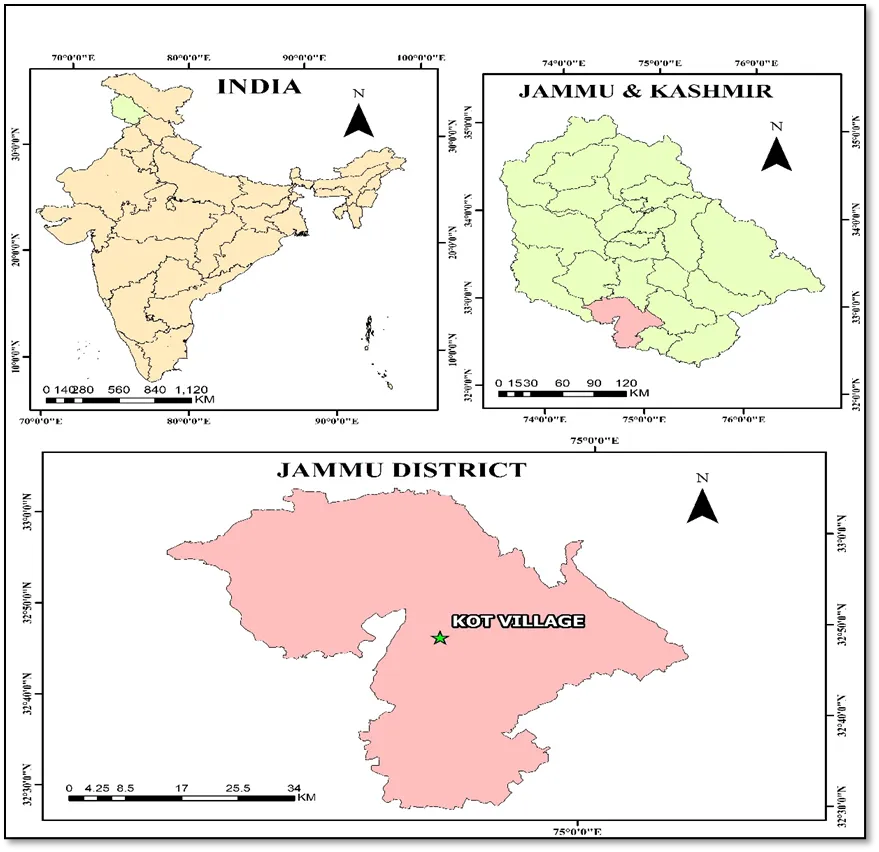
Fig. 1: Location map of the study area
1.3 Objectives:
1.4 Methodology:
The present study employs a mixed-methods research design, combining primary and secondary data to assess the socio-economic status of the Scheduled Caste (SC) population in Kot village, Jammu district. Primary data were collected through a field-based household survey conducted in Kot village. A total of 55 Scheduled Caste households were selected using purposive sampling, as the study focused exclusively on the SC population. Data were collected through structured interview schedules, personal interviews, and direct field observation. The interview schedule included variables related to demographic characteristics, education, occupation, income, housing conditions, access to basic amenities, and awareness and utilisation of government welfare schemes. Qualitative information on social conditions, livelihood challenges, and exclusionary practices was also recorded during field interactions. Secondary data were obtained from institutional sources at the central, state, and district levels, including the Census of India (2011), the Jammu district data section (2011), the Scheduled Castes Sub Plan (SCSP) documents, government reports, statistical abstracts, and district-level publications. These sources were used to contextualise village-level findings within broader regional and policy frameworks. For data analysis, both qualitative and quantitative techniques were employed. Qualitative analysis was employed to interpret information gathered through observation and open-ended interview responses, to understand the ground realities of SC households. Quantitative analysis was conducted using simple statistical methods, including percentages, means, and cross-tabulations. For this purpose, the household-level data were coded and entered into SPSS.SPSS was used for data processing, tabulation, and graphical representation, ensuring accuracy and systematic analysis of the primary data. The integration of qualitative insights with SPSS-based quantitative analysis enhanced the robustness of the study. It provided a comprehensive understanding of the socio-economic status of the Scheduled Caste population in Kot village.
1.5 Results and Discussions:
The results section presents the perceptions of people from 55 households of the scheduled caste regarding the different questionnaires, in line with the paper's four objectives. The article explains people's perceptions step by step, in line with its objective.
|
Particulars |
Total |
Male |
Female |
|
Total no. of houses |
2245 |
- |
- |
|
Population |
11,561 |
6,339 |
5,222 |
|
Child (0-6) |
1,296 |
726 |
570 |
|
Schedule Caste |
4,930 |
2,578 |
2,352 |
|
Literacy |
77.98 % |
83.13% |
71.78% |
|
Total workers |
3,432 |
3,054 |
378 |
|
Main workers |
2,903 |
0 |
0 |
|
Marginal workers |
529 |
445 |
84 |
Table 1: Socio-Economic Condition of Kot Village
Source: Census of India,2011
1.5.1 Occupational structure of the SC population in Kot village
To understand the village's occupational structure, we identify households' occupations and incomes, thereby determining the economic structure of the scheduled caste population living in Kot village. The demographic features of Kot village are listed in the table below to provide an overview of the village's demographic structure. In Kot village, most villagers belong to the Scheduled Caste (SC) community, which constitutes 42.64% of the total population.
Table 2 illustrates the occupational structure of the Scheduled Caste (SC) population in Kot village, based on a primary survey conducted in 2025 that covered 55 households. The analysis reveals a predominance of low-income and informal occupations among the SC households, reflecting their vulnerable socio-economic status. Traditional labour constitutes the largest occupational category, engaging 22 households, which accounts for 40 per cent of the total.
|
S.no |
Occupation |
No. of Households |
Percentage |
|
1 |
Govt. Service |
7 |
12.72 |
|
2 |
Private Job |
15 |
27.27 |
|
3 |
Traditional Labours |
22 |
40 |
|
4 |
Agricultural Workers |
5 |
9.09 |
|
5 |
House Maid |
6 |
10.90 |
|
|
Total |
55 |
100 |
Table 2: Occupation Structure of the SC population in Kot village
Source: Primary survey, 2025
This indicates a heavy dependence on manual and casual labour, often characterised by job insecurity and low wages. Private jobs form the second major source of livelihood, with 15 households (27.27 per cent) engaged in this sector. However, such employment is largely informal in nature and lacks social security benefits. Government service employment is comparatively low, accounting for only 7 households (12.72 per cent), highlighting the limited access of the SC population to stable, secure formal-sector jobs. Agricultural workers represent 5 households (9.09 per cent), suggesting declining dependence on agriculture, possibly due to limited landholdings and reduced agricultural opportunities. Additionally, 6 households (10.90 per cent) are engaged as housemaids, reflecting gendered employment patterns and the prevalence of domestic work among SC women. Overall, the occupational structure of the SC population in Kot village is dominated by traditional labour and informal private-sector employment, with minimal representation in government services. This occupational pattern underscores persistent socio-economic marginalisation, limited employment diversification, and restricted access to secure and dignified livelihoods. emphasising the need for targeted skill development, education, and inclusive employment policies.
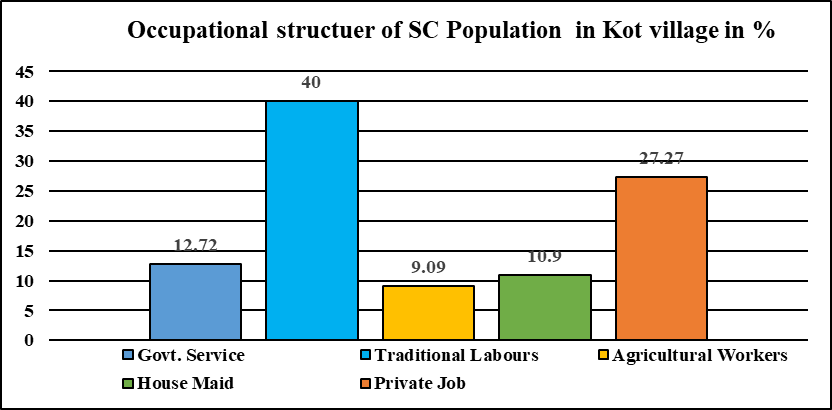
Fig.2: Occupational structure of the SC Population in Kot village in %
|
Income Group(Rupee) |
No of households |
Percentage |
|
0-5000 |
13 |
23.63 |
|
5000-10000 |
26 |
47.27 |
|
10000-15000 |
11 |
20 |
|
Above 15000 |
5 |
9.09 |
|
Total |
55 |
100 |
Table 3: Monthly Income of the Respondents in Kot village
Source: Primary survey, 2025
The table presents the monthly income distribution of the 55 Scheduled Caste households surveyed in Kot village, Jammu district. The analysis reveals a clear concentration of households in the lower income brackets, reflecting the economically vulnerable condition of the SC population in the study area. Nearly half of the households (47.27%) fall within the ₹5,000–10,000 income group, making it the dominant category. This indicates that a majority of SC households survive on low and unstable earnings, largely dependent on wage labour, small-scale agriculture, or informal employment. A significant proportion of households (23.63%) earn less than ₹5,000 per month, highlighting the prevalence of extreme economic deprivation and subsistence-level livelihoods. Approximately 20.0% of the households fall within the ₹10,000–15,000 income group, indicating limited upward mobility among a small section of the SC population. Only 9.09% of households report monthly incomes above ₹15,000, indicating that economically secure households constitute a very small segment of the village’s SC population. Overall, the income distribution reflects pronounced economic inequality and widespread low-income conditions among Scheduled Caste households in Kot village. The dominance of lower-income groups underscores the need for targeted livelihood enhancement programmes, skill development initiatives, and the effective implementation of welfare schemes to improve income security and socio-economic well-being for the SC population.
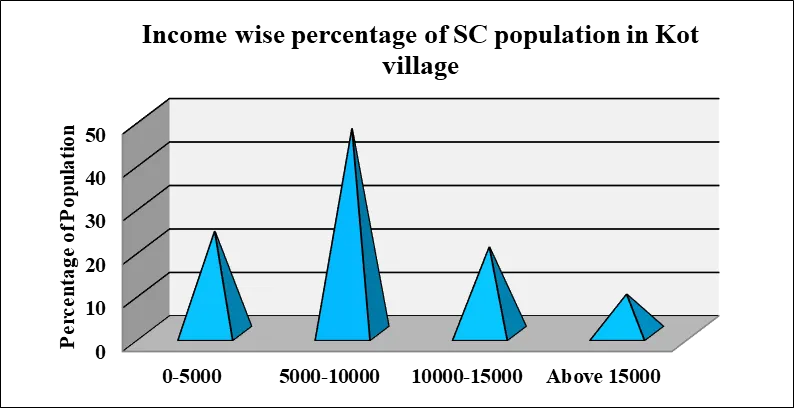
Fig. 3: Income-wise percentage of the SC population in Kot village
1.5.2: Literacy rate of the SC population of Kot village
Literacy is a crucial indicator of social, economic, and cultural development, as it helps reduce poverty and unemployment, enhances employment opportunities, and improves the standard of living. It also promotes social mobility and participation in developmental processes. Among various social groups, the Scheduled Caste population has historically been among the most disadvantaged. As a result of long-standing social and economic marginalisation, the literacy rate and living conditions of the Scheduled Castes remain significantly lower than those of other social groups, continuing to constrain their overall development. In India, the literacy rate is calculated according to the Census of India definition, using the population aged 7 years and above.
Literacy Rate (%) = (Total Population of age above seven year\Number of Literates above seven years of age ×100
|
Schedule Caste literacy |
India (2011 census) |
Kot village 2011 |
|
Total |
66.1 |
77.98 |
|
Male |
75.2 |
83.13 |
|
Female |
56.5 |
71.78 |
Table 4: Literacy rate of India and Kot village in percentage
Source: Census of India,2011
Education level of respondents
Education is a significant indicator of social mobility and, thereby, a better index of human development. In terms of rural society, it is an important variable, for it helps us to map the degree of transformation that has occurred. At the same time, in the rural sector of the district, the percentage of the total scheduled caste who are literate
|
S.No |
Literate |
Total |
Illiterate |
Total |
||
|
|
Matric |
Secondary Pass |
Graduate |
|
|
|
|
No. of Households |
23 |
16 |
3 |
42 |
13 |
55 |
|
Percentage (%) |
41.81 |
29.09 |
5.4 |
76.36 |
23.63 |
100 |
Table 5: Household-wise Literacy status of SC population in village Kot
Source: Primary survey, 2025
The table presents the educational attainment of Scheduled Caste (SC) households surveyed in Kot village of Jammu district. The findings indicate a relatively higher proportion of literate households; however, the level of educational attainment remains largely confined to lower stages of schooling. Of the total 55 SC households, 42 (76.36%) are literate, while 13 (23.63%) are illiterate. Among the literate households, the majority have educational attainment up to the matric level, accounting for 23 households (41.81%), followed by households with secondary passes, accounting for 16 households (29.09%). This pattern suggests that while basic education has reached a considerable section of the SC population, progression beyond secondary education remains limited. Only 3 households (5.40%) have members who are graduates, indicating very low participation in higher education. The low level of graduate attainment reflects constraints such as economic hardship, limited access to higher education institutions, and early labour-market entry. Overall, the table shows that although literacy levels among SC households in Kot village are relatively encouraging, the quality and level of education remain low, with higher education accessible only to a marginal section. This educational structure has direct implications for occupational mobility, income levels, and overall socio-economic development, underscoring the need for targeted educational interventions and support mechanisms for Scheduled Caste communities.
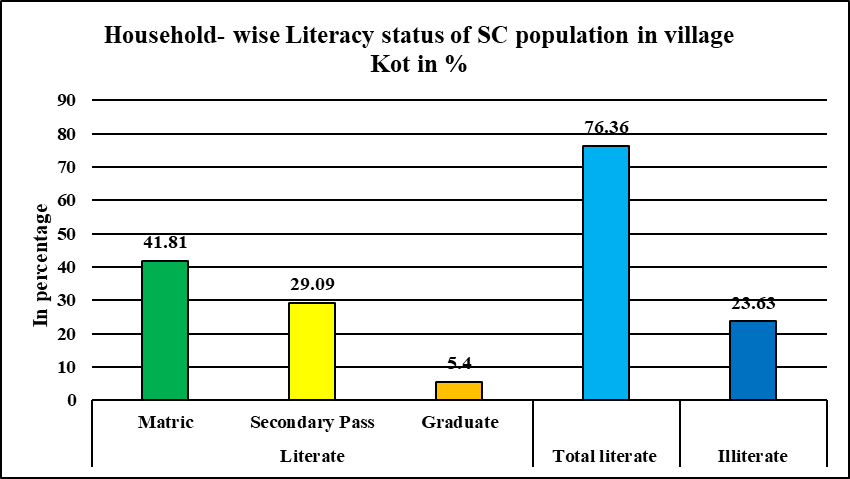
Fig. 4: Household-wise Literacy status of SC Population of village Kot in%
1.5.3 Social constraint faced by the respondent in Kot village :
The author used ‘caste-based discrimination’ as an indicator of social constraint to understand the discrimination faced by people in Kot village from the higher caste people who lived in that area. This primary questionnaire helps to know the actual ground reality of that area, and how much caste-based discrimination is faced by people of the SC population.
|
S.No. |
Caste-based discrimination faced by the respondent |
Frequency |
Percentage |
|
1 |
Yes |
37 |
67.27 |
|
2 |
No |
18 |
32.72 |
|
Total |
55 |
100 |
Table 5: Caste-based discrimination faced by the respondents of Kot village
Source: Primary survey, 2025
The table illustrates the extent of caste-based discrimination experienced by Scheduled Caste (SC) respondents in Kot village, Jammu district. The findings reveal that caste-based discrimination remains a significant social issue in the study area. Of the 55 SC respondents, 37 (67.27%) reported experiencing caste-based discrimination, while 18 (32.72%) stated they had not. The high proportion of respondents acknowledging discriminatory experiences indicates the continued prevalence of social exclusion and unequal treatment in everyday social, economic, and institutional interactions. The persistence of caste-based discrimination, despite constitutional safeguards and social welfare measures, highlights the deep-rooted nature of caste hierarchies at the village level. Such discriminatory practices adversely affect access to education, employment opportunities, social participation, and overall quality of life of Scheduled Caste households. Overall, the table underscores that social marginalisation remains a critical challenge for the SC population in Kot village. The findings emphasise the need for effective implementation of anti-discrimination laws, social awareness programmes, and inclusive development policies to promote social justice and equality at the grassroots level.
1.5.4 Government policies related to the upliftment of the study area and its implementation:
The Jammu and Kashmir Scheduled Castes, Scheduled Tribes & Backwards Classes Development Corporation Limited was established in 1986 as a wholly owned corporation of the Government of Jammu and Kashmir. Registered under the Companies Act, 1956, it functions as a non-profit organisation with the primary objective of promoting the socio-economic and educational upliftment of Scheduled Castes, Scheduled Tribes, and Backwards Classes. The Corporation focuses on generating self-employment opportunities to enable economic independence and self-reliance among its target groups. The major schemes by JKUT for SC people are mentioned below :
The Bank Tie-Up Scheme is designed to support Scheduled Caste beneficiaries who are permanent residents of Jammu and Kashmir, living below the poverty line (BPL), and who are not defaulters on any loans from financial institutions. Under this scheme, beneficiaries can establish income-generating units with a project cost of up to ₹1.00 lakh. Loan proposals are sponsored to banks under the Service Area Approach. A subsidy of up to 50% of the project cost, subject to a maximum of ₹10,000 per beneficiary, is provided under Special Central Assistance (SCA) to the Scheduled Caste Sub-Plan (SCSP). At the same time, the remaining amount is financed through bank loans [27].
In collaboration with the National Scheduled Castes Finance and Development Corporation (NSFDC), New Delhi, the Corporation offers educational loans to students of target groups for pursuing professional and technical courses in India and abroad.
Key Features of the Scheme:
The Corporation implements various skill development and vocational training programmes to enhance the employability and self-employment potential of the Scheduled Castes. These programmes are organised with financial support from NSFDC or other agencies. The Corporation bears 100% of the training cost, ensuring accessibility for economically weaker sections [29].
The J&K State Advisory Board for Development of Scheduled Castes was reconstituted vide Government Order No. 1434-GAD of 2010 dated 10 December 2010. The Board serves as an advisory body, responsible for recommending policy measures to promote the welfare and development of the Scheduled Castes. It does not directly implement developmental schemes and is supported through non-plan funds for administrative purposes. To date, no specific Acts, bylaws, or executive orders governing its functioning have been issued [30].
To enhance educational attainment, the Social Welfare Department of Jammu and Kashmir implements the Pre-Metric and Post-Metric Scholarship Schemes. These schemes provide financial support to Scheduled Caste students to reduce dropout rates and promote higher education [31].
|
S. no |
Awareness about the Government Schemes |
No of Households |
Percentage |
|
1 |
Listen to the scheme |
18 |
32.72 |
|
2 |
Fully aware of the scheme |
12 |
21.81 |
|
3 |
Availing the benefits |
8 |
14.54 |
|
4 |
Have no Idea about the scheme/programme |
17 |
30.93 |
|
|
Total |
55 |
100 |
Table 6: Household-wise Opinion of people regarding the Benefits provided by the government policies
Source: Primary survey, 2025
The table shows the level of awareness and utilisation of government welfare schemes among the Scheduled Caste (SC) households surveyed in Kot village, Jammu district. The findings indicate varying degrees of awareness, with limited translation of awareness into actual benefit utilisation. Of the total 55 SC households, only 12 (21.81%) reported being fully aware of the government schemes meant for their welfare. A slightly higher proportion, 18 households (32.72%), had heard about the schemes but possessed only partial or superficial knowledge regarding eligibility criteria, application procedures, and benefits. This suggests that information dissemination remains inadequate and fragmented. Notably, only 8 households (14.54%) were actually availing the benefits of government schemes, highlighting a substantial gap between awareness and effective access. In contrast, a considerable segment of households, 17 (30.93%), reported having no idea about any government scheme or programme, reflecting persistent information asymmetry and social exclusion. Overall, the table reveals that despite the existence of multiple welfare schemes for the Scheduled Castes, low awareness and weak institutional outreach significantly limit their impact at the village level. The findings underscore the need for improved awareness campaigns, simplification of procedures, and proactive involvement of local institutions to enhance scheme accessibility and coverage among the SC population.
CONCLUSION
The study reveals that the Scheduled Caste population of Kot village continues to face structural socio-economic disadvantages despite its substantial demographic presence. The occupational structure is dominated by traditional labour and informal private employment, with limited representation in government services, reflecting restricted access to secure and dignified livelihoods. Income analysis reveals widespread economic vulnerability, with a significant proportion of households concentrated in low-income brackets, thereby reinforcing cycles of poverty. While literacy levels among the SC population in Kot village are relatively higher than the national SC average, educational attainment remains shallow, with minimal progression to higher education. This constrains occupational mobility and income diversification. Socially, the persistence of caste-based discrimination, as reported by a majority of respondents, indicates that constitutional safeguards and legal provisions have not fully translated into lived social equality at the grassroots level. The assessment of government welfare schemes further demonstrates a significant gap between the availability of schemes and their effective utilisation. Limited awareness, procedural complexity, and weak institutional outreach have restricted the impact of development programmes. Overall, the study underscores that socio-economic marginalisation of Scheduled Castes in rural Jammu is not merely an outcome of economic poverty but is deeply intertwined with educational deficits, occupational insecurity, social exclusion, and governance gaps. Addressing these challenges requires an integrated, village-specific, and rights-based development approach.
RECOMMENDATIONS:
Based on the findings of the study, the following recommendations are proposed:
These measures, if implemented holistically, can improve the socio-economic conditions of Scheduled Caste communities and advance inclusive rural development in Jammu district.
REFERENCES


Amit Sharma*, Swati Naithani, B. P. Naithani, Socio-Economic Status Of The Scheduled Caste Population In Village Kot, Jammu District (Jammu & Kashmir), Int. J. Sci. R. Tech., 2026, 3 (6), 1090-1101. https://doi.org/10.5281/zenodo.20757150
 10.5281/zenodo.20757150