

We use cookies to ensure our website works properly and to personalise your experience. Cookies policy
1Department of Zoology and Wildlife Biology, Government Arts College, Udhagamandalam 643 002, The Nilgiris, Tamil Nadu, India
2Department of Wildlife Biology, Government Arts College, Udhagamandalam 643 002, The Nilgiris, Tamil Nadu, India
3Bombay Natural History Society, Vulture Programme, Vulture Conservation Breeding Centre, Bhopal 462 044, Madhya Pradesh, India
Human–wildlife conflict is a growing conservation and livelihood concern in landscapes where agricultural areas occur in close proximity to wildlife habitat. This study assessed the spatial patterns of wildlife visits, crop depredation, economic losses, mitigation measures and farmers’ perceptions in the Kotagiri landscape of the Nilgiris, southern India. The study was conducted across three categories of human habitation: an enclosure village, a forest-fringe village and a village located farther from the forest boundary. Questionnaire surveys were conducted with 100 farmers between April and September 2016, complemented by field observations of crop damage and mitigation measures. A total of 509 wildlife visits were recorded, with the highest frequency in the forest-fringe village (253), followed by the enclosure village (193) and the distant village (63). Gaur (Bos gaurus) recorded the highest number of visits (132), followed by wild boar (Sus scrofa, 125), bonnet macaque (Macaca radiata, 112) and Asian elephant (Elephas maximus, 85). Wildlife damaged 30.45 acres of agricultural land, with the greatest damage recorded in the fringe village (19.40 acres). Estimated crop losses totalled ?20.91 lakh, of which ?13.57 lakh occurred in the fringe village and ?7.34 lakh in the enclosure village. Commercial vegetable crops contributed substantially to economic losses, while beetroot recorded the lowest Crop Economic Benefit Index (CEBI = 0). Farmers employed eight major mitigation measures, with battery-powered fencing perceived as the most effective, although it involved high annual maintenance costs. Agricultural land close to forest boundaries was the most frequently identified perceived driver of conflict, while forest protection was the most preferred solution. The findings demonstrate that human–wildlife conflict in the Kotagiri landscape is spatially heterogeneous and influenced by wildlife species, forest proximity and cropping patterns. Effective management should therefore combine habitat protection with species-specific, economically feasible crop-protection measures and community participation.
Human–wildlife conflict (HWC) is an increasing conservation and livelihood concern arising from the spatial and resource overlap between wildlife and human populations. Habitat fragmentation, agricultural expansion, infrastructure development and increasing human populations have intensified interactions between wildlife and people, particularly around protected areas and forest boundaries. Such interactions can generate economic losses, affect human safety and welfare, and undermine local support for wildlife conservation [1-3]. Crop depredation is one of the most widespread forms of HWC and can substantially affect rural livelihoods. Wildlife may cause losses through direct consumption, trampling and destruction of crops, while farmers may incur additional costs through guarding fields and installing protective measures. These impacts are particularly important for smallholder farming communities whose livelihoods depend heavily on agricultural production [4-6]. Contemporary research also emphasizes that crop-raiding conflicts cannot be understood solely from the amount of crop lost; farmers' perceptions, experiences and responses are important components of the conflict process [7].
In India, crop depredation by large and medium-sized mammals, including Asian elephant (Elephas maximus), gaur (Bos gaurus), wild boar (Sus scrofa) and primates, has been widely documented. Crop damage is particularly prevalent along the boundaries of protected areas, where agricultural lands and wildlife habitats occur in close proximity [8-10]. Recent studies from southern India have further demonstrated that human–megaherbivore interactions vary spatially and are influenced by landscape characteristics, crop diversity, water availability, habitat conditions and the extent of forest–agriculture interfaces [11-12]). The consequences of HWC extend beyond direct crop losses. Repeated wildlife incursions can influence farmers' attitudes towards wildlife and conservation authorities and may increase the adoption of costly or labour-intensive mitigation measures. Importantly, perceptions of conflict are influenced by social, economic and ecological factors and may not always correspond directly to the magnitude of measured damage [2,13]. Consequently, understanding local perceptions and the effectiveness and costs of mitigation measures is essential for developing locally appropriate strategies for coexistence.
The Nilgiri landscape of Tamil Nadu, part of the Western Ghats, represents an important setting for examining these interactions because forest habitats and intensively cultivated agricultural areas occur in close proximity. Human–wildlife interactions involving elephants, gaur, wild boar and other species have been documented in the region. Recent research in the Nilgiri Biosphere Reserve has shown that human–elephant conflict varies spatially and is associated with both ecological and anthropogenic characteristics of the landscape [14]. Although numerous studies have examined HWC in forest-fringe areas, comparatively less attention has been given to simultaneously comparing wildlife occurrence, crop damage, economic losses and farmers' responses among settlements situated at different distances from forest boundaries. Such comparisons are important because the intensity of wildlife interaction may depend not only on proximity to forest habitat but also on cropping patterns and the economic value of cultivated crops. The original study identified this gap and proposed comparison among enclosure, fringe and more distant villages in the Kotagiri Forest Range.
Understanding these spatial differences is particularly important for designing effective mitigation strategies. Farmers may employ fencing, guarding, noise-based deterrents and other locally developed measures, but their effectiveness, cost and suitability can vary according to the species involved and local environmental conditions. Recent research similarly indicates that mitigation effectiveness is strongly context dependent and that community perceptions should be incorporated into conflict-management planning. Therefore, the present study investigated HWC in and around the Kotagiri Forest Range of the Nilgiri North Forest Division, Tamil Nadu, across three categories of human habitation: (i) an enclosure village, (ii) a forest-fringe village, and (iii) a village located farther from the forest boundary. Specifically, we assessed wildlife visitation, crop depredation, spatial and temporal patterns of crop damage, economic losses, crop-specific vulnerability, mitigation measures and their costs, and local perceptions regarding the causes and management of HWC. By integrating ecological, economic and social dimensions, this study aims to improve understanding of how the spatial relationship between forests and agricultural settlements influences human–wildlife conflict and to provide a basis for developing context-specific mitigation strategies that support both rural livelihoods and wildlife conservation.
The study was conducted in and around the Kotagiri Forest Range of the Nilgiri North Forest Division, Tamil Nadu, southern India. The Nilgiris, popularly known as the “Blue Mountains,” form an important part of the Nilgiri Biosphere Reserve and the Western Ghats. The district covers approximately 2,542.49 km² and has a highly varied topography, with elevations ranging from about 300 to 2,700 m above mean sea level. The present study was undertaken in the Upper Nilgiris at approximately 1,500 m above sea level. The landscape is characterized by a mosaic of montane shola forests, grasslands, plantations and agricultural lands. Shola forests occur mainly in sheltered valleys and moist depressions above approximately 1,500 m, interspersed with high-elevation grasslands. However, much of the original vegetation has been modified by plantations and agricultural expansion. Tea plantations and cultivated crops such as potato, cabbage, carrot, beetroot, radish and beans are prominent features of the agricultural landscape. The close proximity of these cultivated areas to forest habitats provides considerable opportunity for wildlife movement into human-use areas. The region experiences both Southwest and Northeast monsoons, with annual rainfall generally ranging from 1,500 to 3,000 mm. The climate varies considerably with elevation and season, with summer temperatures generally ranging from 21–25°C and winter temperatures occasionally declining to approximately 2°C. The Nilgiris also forms an important watershed of the Western Ghats, with numerous perennial streams and drainage systems supporting both natural ecosystems and agricultural activities. The Upper Nilgiris supports a diverse assemblage of wildlife, including gaur (Bos gaurus), Asian elephant (Elephas maximus), wild boar (Sus scrofa), sloth bear (Melursus ursinus), as well as several other mammals and birds. The region also supports several endemic and threatened species associated with the shola–grassland ecosystem.
For the present study, three categories of human habitation were selected based on their spatial relationship with forest habitat: (i) an enclosure village (Bangalabody), (ii) a forest-fringe village (Kil-Kotagiri), and (iii) a village located farther from the forest boundary. This design enabled comparison of wildlife visits, crop depredation, economic losses and farmers’ responses across settlements experiencing different degrees of proximity to forest habitat. The study therefore provided an opportunity to examine the spatial variation in human–wildlife conflict in a landscape where wildlife habitats and agricultural livelihoods occur in close proximity.
3.1 Crop damage estimation
The crop damage was estimated using Questionnaire Method. The affected villages were immediately visited for questionnaire survey in and around Kotagiri Taluk. The questionnaire comprised both “Precise and closed” and “Broad and open ended” questions. The survey was conducted for six months from April to September 2016. Totally One hundred persons were interviewed for this study which includes enclosure village (Bangalobody n=27), Fringe village (Kil-kotagiri n=33) and Far away village (Kotagiri n=40). The questionnaire had two sets of information viz. “Precise and closed” this set of question had asked for direct answers from the respondent such as Name, Place, Occupation, Cropping pattern, etc.,. 2. “Broad and open ended” set of questionnaire giving opportunity to the respondent to express their views freely without and inhibition [15].
Assessment of factors affecting on crop damages
Various factors that are affecting on crop damage issues were collected from the affected people through questionnaire method. The variables such as movement of wild animals, water availability, fodder availability, population status of wild animals and etc. were asked to the respondents in order to understand the factors affecting on wild animals damage with respect to three destination villages from the forest boundary.
3.2 Ranking crops damaged by wild animals
By pooling crop damage intensities, crop economic loss caused by different wild animals and number of personnel involved in cropping in three different locations namely the villages surrounded by forests, the villages that are abutting with forest boundary and the villages located far away from the forest boundary. The intensities were ranked either ascending or descending order in order to rank crop damage locations in the focused study areas.
3.3 Evaluation of effectiveness of mitigating measures
Considering the magnitude of implications of human wildlife conflicts it is priority to develop effective preventive and mitigation strategies to avoid losses on both sides (i.e., man and animal) [16-18]. The effectiveness of mitigating measures used against wild animal’s crop damages by the local people was assessed by questionnaire survey method [19]. Foot survey was also made in order to record effectiveness of various mitigating measures used against wild animal’s crop damages across the forest division. The variables such as cost involved for installation and annual maintenance, frequency of visits and damages caused by various wild animals and etc. used to evaluate on effectiveness of various mitigating measures.
3.4 Understanding People’s perception on HWC
Questionnaire method was deployed to record people’s perception on HWC. The variables such as distance between crop fields and forest boundary, encroachment status, loss of habitat due to fragmentation and migration of wild animals were gathered in order to understand the reason for conflict in the people’s point of view. Totally One hundred personnel were interviewed for the study in three different localities in and around the Katagiri taluk of the Nilgiris.
3.5 Assessment of Crop Economic Benefit Index (CEBI)
Totally 100 members were interviewed to assess the Crop Economic Benefit Index. Information such as Total area of the land holding, Name of the crops growing, Mean expenditure per acre (E), Expected revenue per acre (Râ‚‘â‚“), Actual return per year per acre (Râ‚c), Total loss per year per acre (Lₜₒₜ) due to crop damage by Wild animals and Compensation status per acre was collected from the land owners (Samson and Ramakrishnan, 2020).
Crop Economic Benefit Index (CEBI) was estimated by using the using the below calculation,
CEBI= Rex- (E+Ltot)
(Rac+C)
4.1 Wild-animal visits to human habitations
A total of 509 wildlife visits were recorded across the three types of human habitation during the study period. The highest number of visits occurred in the fringe village (Kil-Kotagiri; n = 253), followed by the enclosure village (Bangalabody; n = 193) and the village located farther from the forest boundary (n = 63). Six mammalian taxa and birds were recorded visiting the sampled settlements. Among the recorded species, Gaur (Bos gaurus) had the highest number of visits (n = 132), followed by wild boar (Sus scrofa, n = 125), bonnet macaque (Macaca radiata, n = 112), and Asian elephant (Elephas maximus, n = 85). Sloth bear (Melursus ursinus) was recorded 26 times, while black-naped hare (Lepus nigricollis) and birds accounted for 11 and 18 visits, respectively. Elephant visits were recorded exclusively in the enclosure village, whereas gaur occurred across all three habitation categories. Wild boar was recorded in the fringe and distant villages but not in the enclosure village.
4.2 Extent and spatial distribution of crop damage
Wildlife-associated crop damage was recorded in the enclosure and fringe villages, whereas no crop damage was recorded in the village located farther from the forest boundary. The total area affected by wildlife damage was 30.45 acres, comprising 11.05 acres in the enclosure village and 19.40 acres in the fringe village. Gaur caused the greatest recorded crop damage (10.50 acres), followed by wild boar (6.30 acres), bonnet macaque (6.60 acres) and Asian elephant (6.20 acres). Sloth bear accounted for 0.85 acres of damage.
The spatial pattern varied among species. Gaur damaged crops in both enclosure and fringe villages, while elephant and sloth bear damage was restricted to the enclosure village. Wild boar damage was recorded only in the fringe village. These patterns corresponded broadly with the distribution of wildlife visits among the three habitation categories.
4.3 Crop composition across habitation types
Eleven crop types were recorded among the 100 surveyed farmers. Crop composition differed between habitation categories. Farmers in the enclosure village predominantly cultivated rain-fed food crops, including sorghum, foxtail millet, little millet and finger millet. In contrast, farmers in the fringe and distant villages cultivated mainly irrigated commercial vegetables, including radish, potato, cabbage, beans and carrot. This difference in cropping pattern is relevant to the economic consequences of wildlife damage because the fringe village had a greater concentration of commercial vegetable cultivation.
4.4 Temporal pattern of crop damage
Crop damage was recorded throughout much of the year, although the frequency varied among months and habitation categories. In the enclosure village, reported damage ranged from 3 to 21 incidents per month, whereas the fringe village recorded between 10 and 32 incidents per month. The distant village recorded substantially fewer incidents, with monthly values ranging from 2 to 21, and no damage was recorded during June–August in the available dataset. The results indicate that human–wildlife conflict was not restricted to a single season and that the fringe village experienced comparatively greater pressure during several months of the study period.
4.5 Economic losses due to crop depredation
The questionnaire survey of 100 farmers estimated a total crop loss of ₹20.91 lakh attributable to wildlife depredation. The greatest economic loss was recorded in the fringe village (₹13.57 lakh), where commercial vegetable crops predominated, whereas the enclosure village recorded a loss of ₹7.34 lakh. No crop-loss value was recorded for the distant village in the supplied dataset.Among individual crops, cabbage accounted for the highest estimated loss (₹4.75 lakh), followed by beans (₹4.32 lakh), jackfruit (₹3.27 lakh), potato (₹2.38 lakh) and sorghum (₹1.63 lakh). The remaining losses were distributed among foxtail millet, little millet, finger millet, beetroot, radish and carrot.
4.6 Crop Economic Benefit Index
The Crop Economic Benefit Index (CEBI) varied among crops. Beetroot recorded a CEBI value of 0, indicating the most severe economic impact among the crops evaluated using this index (Table 1 & Fig 1). Other crops had values ranging from 0.59 for radish to 0.88 for beans. Jackfruit had a CEBI of 0.72, sorghum 0.80, foxtail millet 0.67, little millet 0.66, finger millet 0.82, potato 0.71, cabbage 0.70 and carrot 0.64. Overall, the economic consequences of wildlife damage were greater in the enclosure and fringe villages than in the village located farther from the forest boundary.
|
S. No |
Common Name of the crops |
Scientific name of the crops |
Mean expenditure per Acre (Rs) (E) |
Expected Revenue Per/Acre (Rs)(Rex) |
Total loss Per Acre (Rs) (Ltot) |
Actual return Per Acre (Rs) (Rac) |
Compensation Paid/Acre (Rs) (C) |
Crop Economic Benefit Index (CEBI)= (E-Rex+Ltot)/(Rac+C) |
|
1 |
Jack |
Artocarpus heterophyllus |
23,000 |
1,20,000 |
36,333 |
83,667 |
0 |
0.72 |
|
2 |
Solam |
Zea mays |
30,000 |
1,70,000 |
19,757 |
1,50,243 |
0 |
0.80 |
|
3 |
Theani |
Setaria italic |
28,000 |
1,00,000 |
13,161 |
86,839 |
0 |
0.67 |
|
4 |
Samai |
Panicum sumotrance |
28,000 |
80,000 |
20,000 |
60,000 |
0 |
0.66 |
|
5 |
Ragi |
Eleusine coracana |
30,000 |
1,80,000 |
12,000 |
1,68,000 |
0 |
0.82 |
|
6 |
Beet root |
Beta vulgaris |
10,000 |
50,000 |
40,000 |
10,000 |
0 |
0 |
|
7 |
Radish |
|
18,000 |
85,000 |
40,500 |
44,500 |
0 |
0.59 |
|
8 |
Potato |
Solanum tuberosum |
50,000 |
2,00,000 |
23,800 |
1,76,200 |
0 |
0.71 |
|
9 |
Cabbage |
Brassicca oleracea |
35,000 |
1,50,000 |
31,666 |
1,18,334 |
0 |
0.70 |
|
10 |
Beans |
Phaseolus vulgaris |
20,000 |
2,00,000 |
27,000 |
1,73,000 |
0 |
0.88 |
|
11 |
Carrot |
Daucus carota |
40,000 |
1,50,000 |
37,000 |
1,13,000 |
0 |
0.64 |
Table 1. Crop Economic Benefit Index (CEBI) of various damaged by wild animals
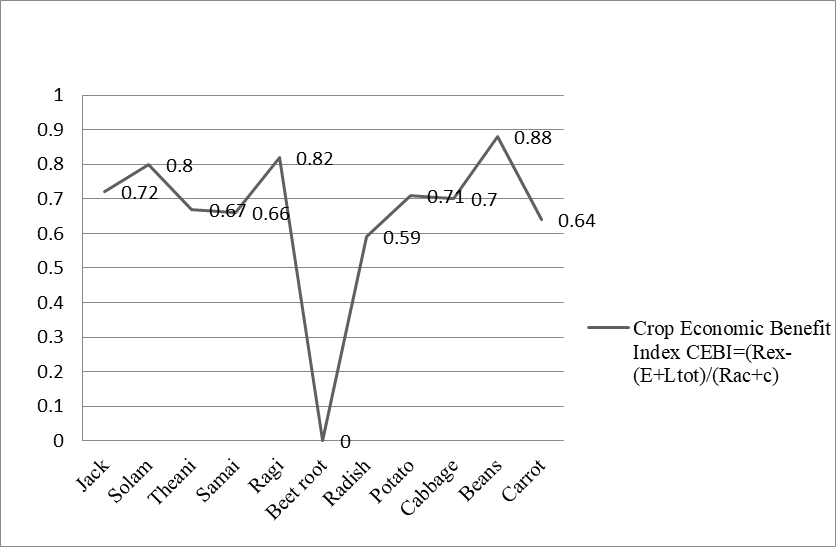
Figure 1. Crop Economic Benefit Index (CBEI) value of crops to the farmers.
4.7 Mitigation measures adopted by farmers
Farmers used eight types of mitigation measures to reduce crop depredation: local instruments producing noise, ordinary fencing, night guarding, human-generated sounds, saree fencing, wood fencing, barbed-wire fencing and battery-powered fencing. Wood and barbed-wire fencing were commonly used across the study area, whereas the range of mitigation measures was greater in the enclosure and fringe villages. Installation costs were highest for local-instrument fencing (₹42,000 per acre), followed by barbed-wire fencing (₹10,421 per acre) and ordinary fencing (₹7,636 per acre). Annual maintenance costs were highest for battery fencing (₹7,941 per acre), followed by ordinary fencing (₹4,272 per acre), barbed-wire fencing (₹3,157 per acre) and wood fencing (₹2,000 per acre). Damage-related costs were highest for battery fencing (₹3,382 per acre), followed by barbed-wire (₹2,842 per acre) and wood fencing (₹2,389 per acre).
4.8 Farmers’ perception of mitigation effectiveness
Among the 100 respondents, battery-powered fencing was perceived as the most effective mitigation measure (25.4%), followed by barbed-wire fencing (23.9%) and human-generated sounds (12.4%). Wood fencing was reported by 10.4% of respondents, while night guarding and saree fencing were considered effective by 7.0% and 5.5%, respectively. Local noise-producing instruments and ordinary fencing accounted for 11.4% and 4.0% of responses.
Perceived drivers of human–wildlife conflict Respondents identified several factors contributing to human–wildlife conflict. Agricultural land located close to the forest was the most frequently reported factor (21.1%), followed by deforestation (16.8%), migration (15.7%), reduced food availability within the forest (12.4%) and increased animal populations (8.1%). Searching for food, climatic change, perceived predator threats, loss of water sources and increasing exotic weeds accounted for smaller proportions of responses.
These responses suggest that local perceptions of human–wildlife conflict involved a combination of landscape-level factors, resource availability and human activities rather than a single underlying cause.
4.9 Community-preferred solutions
Forest conservation was the most frequently proposed solution, with 40% of respondents identifying protection of forest areas as an important measure for reducing conflict. Other proposed measures included reducing human disturbance within forests (14%), improving water and food availability (12%), avoiding wood cutting (12%), maintaining cleaner surroundings (12%) and reducing predator-related disturbance (10%). Overall, the results demonstrate a spatially heterogeneous pattern of human–wildlife conflict around the Kotagiri forest landscape. Wildlife visits and crop damage were concentrated particularly in the fringe and enclosure settlements, where agricultural activities occurred in close proximity to forest habitat. The economic burden was correspondingly greater in these settlements, particularly where commercially valuable vegetable crops were cultivated. At the same time, local responses emphasised forest conservation, reduction of human disturbance and improved resource availability as important components of conflict mitigation.
5.1 Spatial variation in human–wildlife conflict
The present study demonstrates clear spatial variation in wildlife interactions and crop depredation across the three habitation categories in the Kotagiri landscape. A total of 509 wildlife visits were recorded, with the highest number occurring in the forest-fringe village (253), followed by the enclosure village (193) and the village located farther from the forest boundary (63). The concentration of wildlife visits and crop damage in settlements closer to forest habitat supports the importance of the forest–agriculture interface in shaping human–wildlife interactions. Similar patterns have been documented elsewhere, where agricultural fields located adjacent to protected or forested areas experience greater wildlife incursions because cultivated crops provide readily accessible and nutritionally attractive resources [8, 5,3]. The pattern was, however, species-specific. Gaur recorded the highest number of visits overall (132), followed by wild boar (125), bonnet macaque (112) and Asian elephant (85). Gaur contributed substantially to crop damage in the fringe village, whereas elephant visits were particularly concentrated in the enclosure village. This difference suggests that wildlife responses to human-dominated landscapes are influenced by species-specific habitat use, movement patterns and resource requirements. Large herbivores such as elephants and gaur may use agricultural landscapes differently depending on habitat configuration, seasonal movements and availability of preferred food resources. Thus, proximity to forests alone may not adequately explain the occurrence of conflict; the ecological characteristics and movement behaviour of individual species also need to be considered. The particularly high number of wildlife visits recorded in the fringe village is consistent with the expectation that settlements situated directly along forest boundaries experience greater exposure to wildlife. The fringe landscape represents an interface where natural habitat and agricultural resources occur in close proximity, potentially facilitating repeated movement of animals between forest and cultivated areas. However, because the present study did not directly quantify animal movement routes or activity periods, the proposed explanation that animals use nearby forests as daytime refuge and enter fields during early morning and evening should be considered an ecological interpretation rather than a directly tested mechanism.
5.2 Influence of cropping pattern on conflict
An important finding of the study was the marked difference in cropping patterns among the three habitation categories. Farmers in the enclosure village primarily cultivated rain-fed food crops such as sorghum, foxtail millet, little millet and finger millet, whereas farmers in the fringe and distant villages cultivated irrigated commercial vegetables, including radish, potato, cabbage, carrot and beans. This difference is important when interpreting the economic consequences of crop depredation. Although the distant village recorded relatively few wildlife visits and no substantial crop-loss estimates compared with the other two locations, its cultivation of commercial crops indicates that crop value and wildlife exposure operate as separate components of economic vulnerability. In the fringe village, the combination of high wildlife visitation and commercial vegetable cultivation resulted in the greatest economic burden. The total estimated crop loss was ₹20.91 lakh, of which ₹13.57 lakh occurred in the fringe village and ₹7.34 lakh in the enclosure village. These findings demonstrate that the economic severity of HWC cannot be inferred solely from the number of wildlife visits; the type and economic value of crops exposed to wildlife are also critical. The greater economic loss associated with commercial vegetable crops is particularly relevant in the Nilgiri landscape, where intensive cultivation of high-value vegetables occurs alongside forest habitats. Previous studies have similarly emphasized that the consequences of crop depredation depend not only on the frequency of wildlife incursions but also on crop type, market value and the dependence of households on agricultural production [4,7]. Consequently, conflict-management programmes should consider both wildlife exposure and agricultural economics when identifying priority areas for intervention.
5.3 Species-specific patterns of crop damage
Gaur was the major contributor to crop damage in the present study, accounting for approximately 10.50 acres of damaged agricultural land, followed by wild boar (6.30 acres), bonnet macaque (6.60 acres) and elephant (6.20 acres). The dominance of gaur and wild boar in crop depredation is consistent with their ability to exploit agricultural landscapes and consume a broad range of plant resources. Wild boar are particularly important agricultural pests because of their omnivorous and opportunistic feeding behaviour and their capacity to exploit cultivated crops. Their predominantly crepuscular and nocturnal activity can also make crop depredation difficult to observe directly [21]. The present study identified beetroot as the crop with the lowest Crop Economic Benefit Index (CEBI = 0), indicating particularly severe economic consequences relative to the index used in the study. The dissertation attributed much of the beetroot damage to wild boar, potentially reflecting the attractiveness of below-ground crops to this species. However, because direct feeding observations were not used to quantify species-specific damage to beetroot, this explanation should be regarded as a plausible interpretation rather than a demonstrated feeding preference. The frequent involvement of wild boar in agricultural damage is consistent with previous observations that the species is highly adaptable and capable of exploiting a wide variety of agricultural crops [21]. Their ability to forage in cultivated fields, combined with their behavioural adaptability, makes wild boar an important species to consider in crop-protection planning.
5.4 Temporal pattern and exposure to crop depredation
Crop damage occurred across multiple months of the study period, but the magnitude varied among habitation categories. The fringe village consistently experienced comparatively high levels of reported damage during several months. This temporal variation may reflect seasonal changes in crop availability, wildlife resource availability and agricultural activity. Wildlife may be more likely to enter cultivated areas when preferred resources within natural habitats are less available or when agricultural crops provide abundant and easily accessible food. However, the present dataset does not directly measure seasonal food availability within the forest or the relationship between crop phenology and wildlife movement. Therefore, future studies incorporating phenological data, natural food availability, rainfall and animal movement would be valuable for identifying the mechanisms responsible for seasonal variation in crop depredation.
5.5 Economic consequences of crop depredation
The economic component of HWC was particularly pronounced in the fringe village. The estimated total crop loss of ₹20.91 lakh illustrates that wildlife depredation can represent a substantial economic burden for farming communities. Cabbage, beans, jackfruit and potato accounted for some of the highest monetary losses. The greater financial impact in the fringe village appears to be associated with the combination of frequent wildlife visits and cultivation of commercially valuable crops. These findings highlight an important distinction between frequency of conflict and severity of conflict. A settlement may experience fewer wildlife incursions but still suffer substantial economic consequences if high-value crops are affected. Conversely, frequent wildlife visits may have relatively lower economic consequences where crops have lower market value. Effective HWC assessment should therefore integrate both ecological indicators, such as wildlife visitation and frequency of damage, and economic indicators, such as crop value and household-level losses.
5.6 Mitigation measures and associated costs
Farmers in the study area employed several mitigation measures, including local noise-producing devices, ordinary fencing, night guarding, human-generated sounds, saree fencing, wood fencing, barbed-wire fencing and battery-powered fencing. The widespread use of multiple measures indicates that farmers actively invest labour and financial resources to reduce crop losses. Barbed-wire fencing and local instrument fencing required relatively high installation expenditure, whereas battery fencing involved comparatively high annual maintenance costs. Although battery fencing was perceived by respondents as the most effective mitigation measure, its higher maintenance requirements and recurring damage may reduce its long-term economic feasibility for some farmers. Similarly, physical barriers such as barbed-wire and wood fencing involve substantial initial investments but may provide longer-term protection depending on the species involved and maintenance conditions. These findings reinforce the importance of evaluating mitigation measures not simply according to perceived effectiveness but also according to installation cost, maintenance requirements, durability and species-specific effectiveness. A mitigation method that is highly effective but financially unsustainable may not provide a practical long-term solution for smallholder farmers.
5.7 Farmers’ perceptions and underlying drivers of conflict
Agricultural land located close to forest areas was identified by respondents as the most important perceived driver of HWC (21.1%), followed by deforestation (16.8%), migration (15.7%) and reduced food availability inside forests (12.4%). These responses demonstrate that local communities perceive HWC as a consequence of broader landscape and resource-use changes rather than simply an increase in wildlife abundance. The prominence of agricultural land near forests is particularly consistent with the spatial pattern observed in the study, where wildlife visits and crop damage were concentrated in the enclosure and fringe settlements. Deforestation and reduced availability of food resources within forests were also perceived as important drivers, suggesting that local communities recognize changes in habitat and resource availability as factors influencing wildlife movement into agricultural areas. Importantly, these are community perceptions and should not be interpreted as independently demonstrated causal relationships. Nevertheless, such perceptions are highly relevant to conflict management because farmers' attitudes and willingness to participate in conservation programmes are influenced by their experiences and understanding of the causes of conflict [2,13].
5.8 Implications for human–wildlife conflict management
Forest protection was the most frequently proposed solution by respondents, indicating substantial local recognition of the importance of maintaining natural habitats. This finding is consistent with the broader principle that reducing habitat degradation and maintaining adequate natural resources can contribute to reducing wildlife dependence on agricultural resources. However, habitat protection alone may not eliminate conflict in landscapes where agriculture and wildlife habitat will inevitably remain adjacent. The results instead support a site- and species-specific approach to HWC management. In the enclosure village, where elephant visits were particularly prominent, mitigation strategies should prioritize elephant movement and crop-protection measures. In the fringe village, where overall wildlife visitation and crop losses were highest, integrated measures targeting gaur, wild boar and other frequently damaging species may be more appropriate. In addition, interventions should consider the economic value of crops and the financial capacity of farmers to maintain protective infrastructure.
CONCLUSION
Overall, the study demonstrates that human–wildlife conflict in the Kotagiri landscape is spatially heterogeneous and influenced by the interaction between forest proximity, wildlife species, crop type and local agricultural practices. The forest-fringe village experienced the greatest wildlife visitation and economic losses, while the enclosure village experienced substantial elephant-related interactions. Gaur, wild boar and bonnet macaque were major contributors to wildlife visitation and crop damage, while beetroot showed the lowest CEBI value among the crops evaluated. The findings indicate that HWC management should move beyond a uniform approach and instead integrate landscape-level habitat protection, species-specific mitigation, economically viable crop-protection measures and community participation. Protecting forest resources was strongly supported by local respondents, but this should be complemented by practical measures to reduce wildlife access to vulnerable crops. Such an integrated approach is likely to provide greater benefits for both agricultural livelihoods and long-term wildlife conservation in the Kotagiri landscape.
REFERENCES


Jesudass Beulahbah1, Balasundaram Ramakrishnan2*, Arockianathan Samson3, Spatial Variation In Human Wildlife Conflict (HWC), Crop Depredation And Economic Losses Along A Forest Agriculture Gradient In The Nilgiris, Southern India, Int. J. Sci. R. Tech., 2026, 3 (8), 1115-1125. https://doi.org/10.5281/zenodo.22207662
 10.5281/zenodo.22207662