

We use cookies to ensure our website works properly and to personalise your experience. Cookies policy
1Department of Mining Engineering, Sardar Patel University Balaghat, Madhya Pradesh, 481001, India
2Department of Mining and Mineral Processing, Lakshmi Narain College of Technology, Jabalpur, Madhya Pradesh, 482053, India.
Mining is among the most hazardous industries worldwide. Workers in this sector are routinely exposed to unsafe conditions including dust, toxic gases, extreme temperatures, excessive noise, poor lighting, and inadequate ventilation. These environmental stressors directly compromise both worker health and operational productivity. This paper examines how working conditions influence occupational safety and output efficiency in mines, with particular emphasis on the Occupational Safety, Health and Working Conditions (OSHWC) Code, 2020, enacted by the Government of India. The study demonstrates that legislative enactment alone is insufficient; effective enforcement, routine government inspection, safety committee oversight, and comprehensive worker welfare programs are indispensable. Provisions on mine registration, penalties for non-compliance, and the role of safety committees are analyzed. The paper concludes that stringent implementation of the OSHWC Code, combined with systematic worker welfare initiatives, yields measurably safer operations and improved productivity.
Mining forms the backbone of industrial and economic development by supplying coal, iron ore, limestone, bauxite, and other critical minerals essential for power generation, infrastructure development, manufacturing, and emerging clean-energy technologies. India remains one of the world's leading producers of coal and mineral resources, making the mining sector a vital contributor to national economic growth and energy security. Despite its strategic importance, mining continues to be recognized as one of the most hazardous occupations globally due to the complex and dynamic nature of underground and surface mining environments.
Miners are routinely exposed to a wide range of occupational hazards, including airborne dust, toxic and explosive gases, excessive noise and vibration, heat stress, poor illumination, unstable ground conditions, heavy machinery, and blasting operations. These hazards not only increase the likelihood of accidents and occupational diseases but also adversely affect worker efficiency, morale, and overall mine productivity. Working conditions—defined by factors such as air quality, temperature, humidity, ventilation, lighting, noise levels, ergonomics, and workplace organization—therefore play a critical role in determining both occupational safety and operational performance.
Recognizing the need for a modern and comprehensive occupational safety framework, the Government of India enacted the Occupational Safety, Health and Working Conditions (OSHWC) Code, 2020. The Code consolidates thirteen existing labour laws, including the Mines Act, 1952 and the Factories Act, 1948, into a unified legislative framework designed to enhance worker protection, improve regulatory compliance, and promote welfare measures across industries. The Code places explicit responsibilities on employers to provide safe working environments, implement risk management systems, conduct health surveillance, and ensure adequate welfare facilities for workers.
In parallel with regulatory reforms, the mining industry is undergoing a significant technological transformation driven by Industry 4.0 concepts. Advanced technologies such as Artificial Intelligence (AI), Internet of Things (IoT) sensors, wearable monitoring devices, smart Personal Protective Equipment (PPE), digital twins, drones, and automated environmental monitoring systems are increasingly being deployed to improve workplace safety and productivity. These technologies enable real-time hazard detection, predictive risk assessment, remote monitoring, and data-driven decision-making, thereby supporting the objectives of the OSHWC Code and contributing to safer mining operations.
Against this background, the present study examines the relationship between working conditions, occupational safety, and productivity in mining operations, with particular reference to the implementation of the OSHWC Code, 2020 in the era of smart mining. The study reviews key workplace hazards, evaluates their impact on worker health and operational efficiency, assesses relevant regulatory provisions, and explores the role of emerging digital technologies in enhancing occupational safety and sustainable mining performance.
1.1 WORKING CONDITIONS IN MINING
Working conditions in mining are inherently challenging due to the presence of numerous occupational hazards that can adversely affect workers' health, safety, and productivity. The Occupational Safety, Health and Working Conditions (OSHWC) Code, 2020 provides a comprehensive framework for managing these risks through provisions related to occupational safety standards, health protection, worker welfare, and safety management systems. The principal workplace hazards and their corresponding regulatory provisions are discussed below.
A. Air Quality and Dust
Mining activities such as drilling, blasting, crushing, loading, and transportation generate significant quantities of respirable dust. Prolonged inhalation of coal dust, silica dust, and other particulate matter can lead to occupational diseases such as pneumoconiosis, silicosis, and chronic obstructive pulmonary disease (COPD). Under Section 18 of the OSHWC Code, occupational safety and health standards prescribe permissible exposure limits for airborne contaminants, while Section 23 requires employers to maintain a safe and healthy work environment. Dust suppression measures such as water spraying systems, dust extraction units, enclosed conveyor systems, and adequate ventilation are therefore essential components of mine safety management.
B. Toxic and Flammable Gases
Underground mining operations are particularly vulnerable to the accumulation of hazardous gases such as methane (CHâ‚„), carbon monoxide (CO), carbon dioxide (COâ‚‚), hydrogen sulfide (Hâ‚‚S), and oxides of nitrogen (NOâ‚“). Methane accumulation creates a serious explosion hazard, while carbon monoxide is highly toxic even at relatively low concentrations. Sections 23 and 68 of the OSHWC Code require mine management to ensure safe atmospheric conditions through effective ventilation, continuous gas monitoring, regular inspections, and emergency preparedness measures. Pre-shift examinations and gas detection systems are critical preventive measures for controlling gas-related hazards.
C. Thermal Environment
The underground mining environment is often characterized by elevated temperatures caused by geothermal heat, machinery operation, and restricted airflow. Excessive heat exposure can result in heat stress, dehydration, fatigue, reduced concentration, and impaired decision-making ability, thereby increasing the likelihood of accidents. Under Section 23, employers are responsible for maintaining working conditions that protect workers from health risks associated with excessive heat. Adequate ventilation, cooling systems, rest periods, and access to potable drinking water are essential measures for controlling thermal stress.
D. Noise and Vibration
Mining equipment such as drills, crushers, conveyors, pumps, and haulage vehicles frequently generate noise levels exceeding 85 dB(A). Long-term exposure to excessive noise can cause irreversible occupational hearing loss, while vibration may contribute to musculoskeletal disorders and circulatory problems. Occupational safety standards prescribed under Section 18, together with the employer's duties under Section 23, require the implementation of engineering controls, preventive maintenance, noise isolation systems, and the provision of personal protective equipment (PPE) such as earplugs and earmuffs to reduce worker exposure.
E. Lighting and Visibility
Adequate illumination is essential for safe mining operations. Poor visibility reduces workers' ability to identify hazards, safely operate equipment, and move within underground workings. Inadequate lighting significantly increases the risk of slips, trips, falls, and machinery-related accidents. Under Section 18, occupational safety standards may prescribe illumination requirements for various workplace activities, while Section 23 requires employers to maintain safe working conditions, including appropriate lighting arrangements. Cap lamps, fixed lighting systems, and emergency lighting are therefore critical safety provisions in mines.
F. Ventilation
Ventilation is one of the most important safety systems in underground mining. It provides fresh breathable air, dilutes and removes toxic and flammable gases, controls dust concentrations, and regulates temperature and humidity. Failure of primary ventilation systems is a major contributing factor in many mining disasters worldwide. Under Section 68 (Health and Safety in Mines) and Section 23, mine management is required to establish and maintain effective ventilation systems capable of ensuring safe atmospheric conditions throughout the mine. Regular monitoring and maintenance of ventilation infrastructure are essential for preventing occupational hazards and fatalities.
G. Technological Interventions for Workplace Improvement
Advancements in digital technologies have transformed modern mine safety management. Artificial Intelligence (AI), Internet of Things (IoT) sensors, wearable devices, real-time environmental monitoring systems, and automated warning mechanisms enable continuous monitoring of gas concentrations, dust levels, temperature, humidity, equipment performance, and worker locations. These technologies facilitate early detection of hazardous conditions and support proactive risk management. Such initiatives are consistent with Sections 19, 20, and 21 of the OSHWC Code, which promote occupational safety research, data collection, and safety surveys. Furthermore, Section 22 encourages the establishment of Safety Committees and Safety Officers, who play a vital role in implementing advanced safety technologies and fostering a culture of continuous improvement. According to Singh et al. (2024), AI-based safety systems can predict hazardous conditions before accidents occur, thereby improving both safety and productivity. Consequently, smart workplace monitoring has become an integral component of sustainable mining practices in 2026.
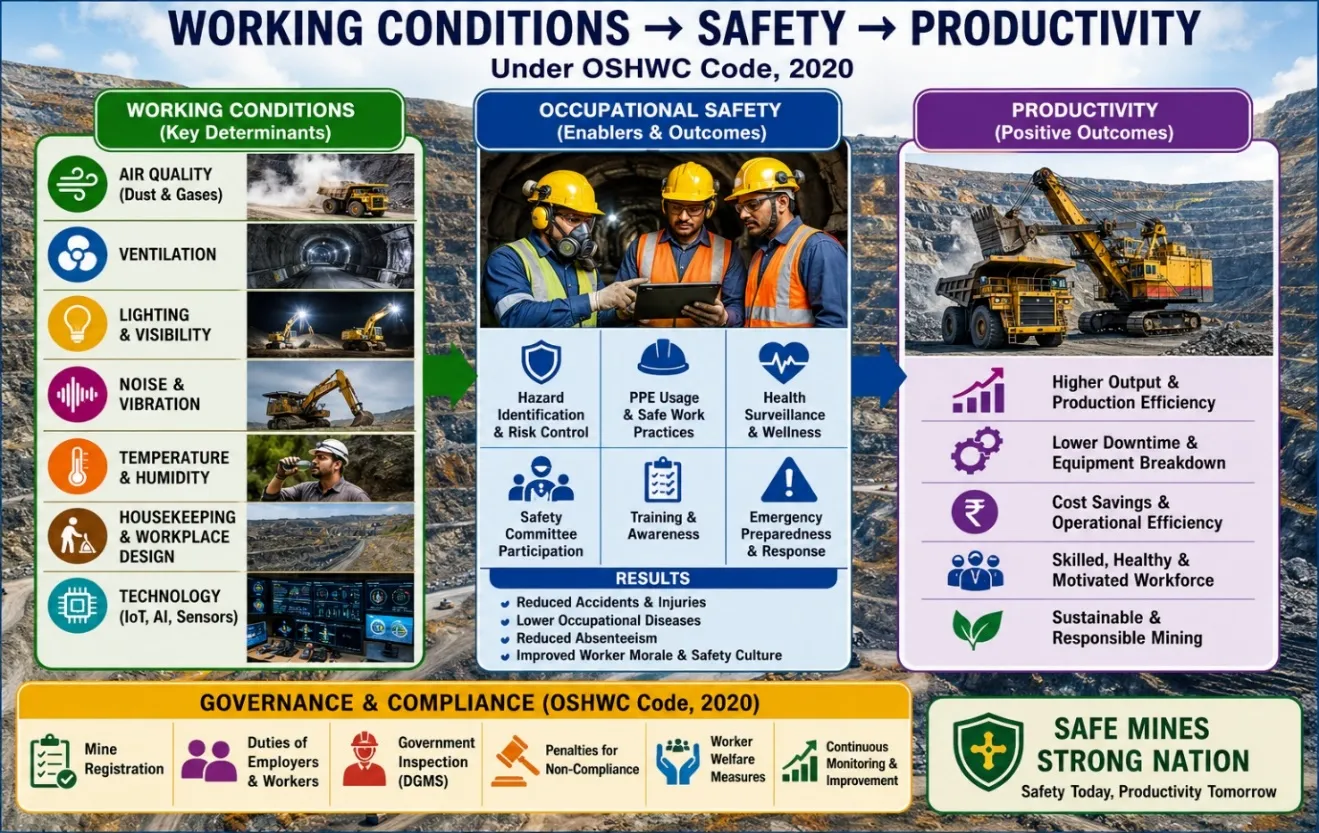
Figure 1. Conceptual framework showing the relationship between working conditions, occupational safety, and productivity in mining operations under the OSHWC Code, 2020.
2. LITERATURE REVIEW
The relationship between workplace conditions, occupational safety, and mining productivity has been extensively investigated in recent years. Bhattacharjee (2017) identified dust exposure, inadequate ventilation, and poor workplace monitoring as major contributors to occupational illnesses and accidents in Indian coal mines. The study emphasized the need for stronger regulatory compliance and environmental control measures.
Patel and Chaurasia (2025) demonstrated that scientifically designed mine illumination systems significantly improve visibility, reduce operator fatigue, and enhance workplace safety in opencast coal mines. Their model-based approach indicated that proper lighting design contributes directly to productivity improvement through better equipment utilization and reduced accident probability.
Mansoori and Chaurasia (2025) analyzed occupational noise control in underground coal mines and reported that excessive noise exposure adversely affects worker concentration, communication, and long-term hearing health. The study recommended engineering controls, equipment maintenance, and hearing conservation programs as effective mitigation measures.
Singh, Singh, Chaurasia, and Jain (2024) highlighted the growing role of Artificial Intelligence (AI) in mining safety management. Their work demonstrated that AI-based systems can support predictive risk assessment, equipment health monitoring, and real-time hazard identification, thereby reducing workplace accidents and improving operational efficiency.
Singh, Chaurasia, and Beg (2025) conducted a case study on underground coal mine risk assessment and found that systematic hazard identification and safety management planning substantially reduce accident frequency and severity. The study emphasized the importance of proactive safety management rather than reactive corrective measures.
Tripathi and Chaurasia (2025a) investigated production optimization using continuous miners and concluded that improved workplace conditions, efficient ventilation systems, and operator training significantly influence production performance. In a subsequent study, Tripathi and Chaurasia (2025b) reported that worker comfort, equipment reliability, and environmental controls are critical determinants of peak productivity in underground coal mining operations.
Singh et al. (2025) examined Coal Bed Methane (CBM) extraction practices in India and emphasized the importance of methane monitoring and gas management systems. Since methane accumulation remains one of the primary causes of underground mine explosions, effective gas control contributes directly to occupational safety.
Yadav and Chaurasia (2025a) reviewed coal mining techniques and associated health and safety challenges, concluding that sustainable mining requires integrated approaches involving worker welfare, environmental management, and modern safety technologies. Their later comprehensive review (2025b) further highlighted occupational health concerns arising from dust, noise, heat stress, and poor ventilation.
Recent developments in digital mining technologies have transformed workplace safety management. AI-driven monitoring systems, Internet of Things (IoT) sensors, wearable smart PPE, and real-time environmental surveillance enable continuous assessment of workplace conditions and facilitate rapid intervention before hazardous situations escalate.
The reviewed literature consistently establishes that improved working conditions, effective risk assessment, advanced monitoring technologies, and strict regulatory compliance significantly reduce occupational hazards while enhancing worker productivity and operational performance.
Recent studies have also highlighted the significant influence of blasting practices on occupational safety and mine productivity. Tiwari et al. (2025) reported that scientifically designed blast patterns can achieve desired rock fragmentation while minimizing fly rock, ground vibration, and operational hazards. In a subsequent study, Tiwari et al. (2025) established a direct relationship between blast fragmentation quality, energy efficiency, and downstream productivity, demonstrating that optimized blasting reduces loading, hauling, and crushing costs. Sahu and Chaurasia (2025) emphasized the importance of vibration-safe blasting techniques and parameter optimization to minimize seismic disturbances and improve workplace safety. Similarly, Tiwari and Chaurasia (2025) discussed the advantages of electronic detonators in underground coal mines, highlighting improved blast control, enhanced safety, and reduced misfire risks. More recently, Tiwari and Chaurasia (2026) demonstrated that optimization of wedge-cut blasting parameters in underground development galleries improves coal fragmentation, advance rates, and operational efficiency while maintaining safe working conditions. These findings indicate that modern blasting technologies and optimized blast designs contribute significantly to both occupational safety and productivity enhancement in mining operations.
3. IMPACT ON OCCUPATIONAL SAFETY
Efficient blasting practices significantly influence mine productivity by improving fragmentation, reducing equipment cycle times, minimizing secondary blasting requirements, and enhancing downstream operational efficiency (Tiwari et al., 2025; Tiwari and Chaurasia, 2026). Proper blast design and controlled use of electronic detonators reduce fly rock hazards, excessive ground vibrations, toxic fumes, and misfire-related accidents, thereby improving workplace safety in both underground and opencast mining operations (Sahu and Chaurasia, 2025; Tiwari and Chaurasia, 2025). Poor working conditions have a direct, causal relationship with accident frequency and severity. The principal incident categories include:
• Roof and rib falls due to inadequate ground support and inspection.
• Gas explosions and fires arising from methane accumulation or ignition sources.
• Machinery-related crushing and entanglement injuries.
• Heat-related illnesses culminating in loss of consciousness.
The OSHWC Code, 2020 (Section 38) requires employers to appoint a Competent Person to conduct statutory examinations, maintain safe systems of work, and provide Personal Protective Equipment (PPE) at no cost to workers. Empirical evidence confirms that adherence to these provisions significantly reduces Lost Time Injury Frequency Rates (LTIFR).
4. IMPACT ON PRODUCTIVITY
Recent studies have demonstrated that workplace environmental factors directly influence production efficiency. Patel and Chaurasia (2025) reported that improved illumination enhances equipment visibility and reduces operational delays in opencast mines. Similarly, Tripathi and Chaurasia (2025a; 2025b) observed that optimized working conditions contribute significantly to higher productivity of continuous miner operations. Worker comfort, adequate ventilation, reduced noise exposure, and effective safety management collectively improve concentration, reduce fatigue, and increase output per man-shift. Consequently, investments in occupational safety should be viewed not merely as regulatory requirements but as strategic productivity enhancement measures. The relationship between working conditions and productivity is well-established in occupational science literature. Adverse conditions produce the following outcomes:
• Premature physical fatigue reduces shift output.
• Impaired concentration elevates error rates and rework.
• Increased absenteeism from occupational illness disrupts production scheduling.
• High staff turnover due to poor conditions inflates recruitment and training costs.
Conversely, mines that invest in environmental controls, ergonomic equipment, and worker health programmes demonstrate measurably higher output per man-shift. Healthier workers exhibit greater situational awareness, faster response times, and superior decision-making all directly linked to productive capacity.
5. SMART MINING TECHNOLOGIES AND THE FUTURE OF WORKPLACE SAFETY
The mining industry in 2026 is rapidly transitioning toward Industry 4.0 and smart mining practices. Advanced technologies are transforming workplace safety management.
A. Internet of Things (IoT) Based Monitoring
IoT sensors continuously monitor:
Real-time alerts allow immediate corrective action before hazardous conditions develop.
B. Artificial Intelligence (AI) for Risk Prediction
AI algorithms analyze:
to predict potential accidents before they occur.
C. Smart Personal Protective Equipment (Smart PPE)
Modern PPE includes:
These technologies provide continuous worker health monitoring.
D. Digital Twin Technology
Digital twins create virtual models of mine workings for:
E. Drone and Robotics Applications
Drones and robotic systems are increasingly used for:
reducing worker exposure to dangerous environments.
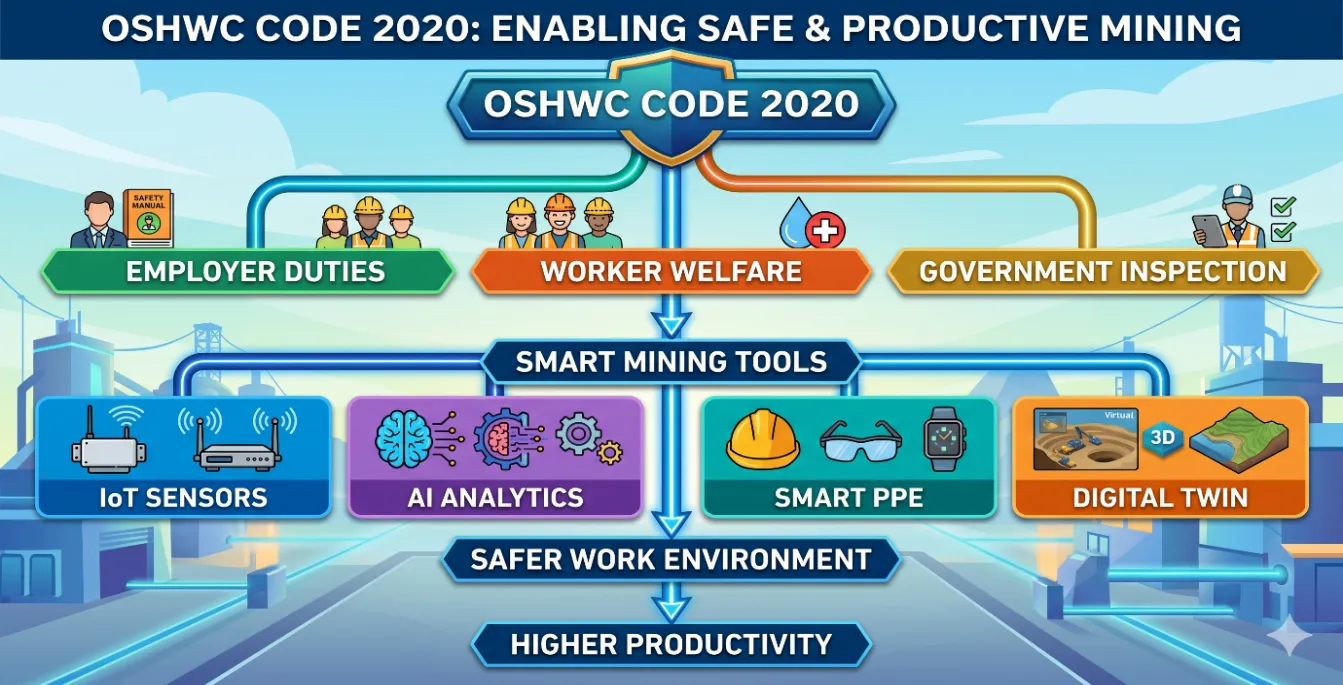
Figure 2. Smart Mining Safety Framework integrating OSHWC Code 2020 requirements with AI, IoT, Smart PPE, Digital Twin, and real-time monitoring technologies for enhanced occupational safety and productivity.
6. OSHWC CODE, 2020 AND ITS RELEVANCE TO MINING
The Occupational Safety, Health and Working Conditions (OSHWC) Code, 2020 represents one of the most significant reforms in India's labour and occupational safety framework. By consolidating thirteen existing labour laws, including the Mines Act, 1952 and the Factories Act, 1948, the Code establishes a unified regulatory framework for occupational health, safety, and welfare across industries. For the mining sector, where workers are routinely exposed to hazardous environments, the Code provides a comprehensive mechanism for risk management, accident prevention, worker welfare, and regulatory enforcement. The provisions most relevant to mining safety are contained in Sections 6–15 (Duties of Employers and Employees), Sections 18–23 (Occupational Safety and Health Standards), Sections 34–42 (Inspectors-cum-Facilitators), and Sections 67–81 (Special Provisions Relating to Mines).
A. Employer Obligations
Under Section 6 of the OSHWC Code, employers are legally responsible for providing and maintaining a workplace that is free from hazards likely to cause injury, illness, or occupational disease. In mining operations, Section 7 further imposes specific responsibilities on mine owners, agents, and managers to ensure compliance with health and safety requirements. Employers are required to conduct risk assessments, identify workplace hazards, implement preventive and protective measures, and establish emergency response procedures.
The Code also mandates the provision of suitable Personal Protective Equipment (PPE), safety training, and safety awareness programmes free of cost to workers. In accordance with Sections 18 and 23, employers must comply with prescribed occupational safety and health standards relating to dust exposure, ventilation, illumination, noise control, sanitation, welfare facilities, and workplace environmental conditions. Furthermore, periodic medical examinations are required for workers exposed to occupational hazards such as respirable dust, toxic gases, excessive noise, vibration, and heat stress. Employers are also obligated to report accidents, dangerous occurrences, and occupational diseases under Sections 10, 11, and 12, thereby strengthening accountability and preventive safety management.
B. Worker Rights and Duties
The OSHWC Code recognizes workers as active participants in workplace safety management. Under Section 14, employees have the right to obtain information regarding workplace hazards, report unsafe conditions, participate in safety and health programmes, and seek protection against imminent danger without fear of discrimination or retaliation. This provision is particularly important in mining environments where workers are often the first to identify unsafe conditions such as roof instability, gas accumulation, ventilation failures, or equipment malfunctions.
At the same time, Section 13 places specific duties on workers to comply with safety procedures, properly use PPE, participate in safety training programmes, and cooperate with employers in maintaining a safe working environment. Workers are required to promptly report hazards, accidents, dangerous occurrences, and near-miss incidents to supervisors, mine management, or Safety Committees. Additionally, Section 15 prohibits workers from intentionally interfering with or misusing safety devices, protective equipment, or emergency systems provided for workplace safety. Through Section 22, the Code further promotes worker participation by providing for the establishment of Safety Committees and the appointment of Safety Officers in hazardous industries such as mining.
C. Government Inspection and Regulatory Enforcement
The OSHWC Code establishes a robust regulatory framework through Sections 34–42, which empower Inspectors-cum-Facilitators to ensure compliance with occupational safety and health requirements. In the mining industry, these functions are primarily carried out by the Directorate General of Mines Safety (DGMS). Inspectors are authorized to enter and inspect workplaces, examine records, conduct investigations, verify compliance with statutory provisions, and inquire into accidents and dangerous occurrences.
Where unsafe conditions are identified, inspectors may issue improvement notices, direct corrective measures, prohibit hazardous operations, and initiate legal proceedings against responsible persons. In addition, Sections 67–81, which specifically address mines, provide special powers relating to mine safety, ventilation, rescue arrangements, emergency preparedness, medical facilities, and prohibition of employment in unsafe conditions. Regular inspections and regulatory oversight are therefore essential mechanisms for ensuring compliance, reducing accident rates, promoting worker welfare, and fostering continuous improvement in occupational safety performance.
D. Occupational Safety Standards and Safety Management
The foundation of workplace safety under the Code is provided through Section 18, which empowers the Central Government to prescribe Occupational Safety and Health (OSH) standards for various industries. These standards cover matters such as air quality, dust exposure, noise limits, ventilation, lighting, sanitation, welfare facilities, and medical surveillance. Sections 19, 20, and 21 further encourage research, collection of occupational safety data, and safety surveys to support evidence-based improvements in workplace safety.
Moreover, Section 22 provides for the constitution of Safety Committees and the appointment of Safety Officers in establishments involving significant occupational hazards. In mining operations, these mechanisms facilitate collaboration between management and workers in identifying hazards, reviewing safety performance, investigating incidents, and implementing corrective measures. Such participatory approaches contribute significantly to the development of a proactive safety culture within mines.
7. PENALTY PROVISIONS UNDER THE OSHWC CODE
The Occupational Safety, Health and Working Conditions (OSHWC) Code, 2020 establishes a comprehensive penalty and enforcement framework under Chapter XII (Sections 113–125) to ensure compliance with occupational safety and health requirements. The penalty provisions are designed to promote accountability, deter negligence, and encourage employers and workers to maintain safe working environments. In the mining sector, where non-compliance can lead to catastrophic accidents, these provisions play a crucial role in protecting workers and ensuring adherence to statutory safety standards.
A. General Contraventions by Employers
Under Section 113, employers who contravene any provision of the Code, rules, regulations, or orders made thereunder are liable to penalties prescribed by law. General violations relating to workplace safety, health, welfare facilities, accident reporting, or failure to comply with occupational safety standards may attract substantial monetary penalties. In cases where the contravention continues after conviction, additional penalties may be imposed for each day during which the violation persists. These provisions encourage prompt corrective action and continuous compliance with safety requirements.
B. Penalties for Accidents Causing Death or Serious Injury
The Code imposes enhanced penalties where non-compliance results in workplace accidents. Under Section 114, if a violation leads to the death of a worker, the employer may be subject to significantly higher penalties as prescribed by the Code. Similarly, Section 115 provides penalties where contraventions result in serious bodily injury, permanent disability, or occupational illness. These provisions recognize the severe consequences of safety failures and reinforce the legal obligation of employers to maintain safe working conditions.
C. Enhanced Punishment for Repeat Offences
Under Section 116, repeat offenders are subject to enhanced punishment. Where an employer commits a similar offence after a previous conviction, the penalties may include higher fines, imprisonment, or both, depending upon the severity of the violation. This provision is intended to discourage habitual non-compliance and ensure that organizations adopt a sustained commitment to occupational safety and health.
D. Liability of Mine Owners, Agents, and Managers
In mining operations, specific responsibilities are assigned to mine owners, agents, and managers under Sections 7 and 67–81 of the Code. Failure to comply with statutory requirements relating to mine management, ventilation, accident reporting, emergency preparedness, rescue arrangements, or health and safety measures may result in prosecution and penalties. Since mining activities involve significant occupational hazards, regulatory authorities may initiate legal proceedings against responsible officials where negligence contributes to unsafe working conditions or accidents.
E. Penalties for Employees
The OSHWC Code also places responsibilities on employees. Under Sections 13 and 15, workers are required to follow safety procedures, use personal protective equipment properly, and refrain from interfering with safety devices or emergency systems. Employees who wilfully violate safety rules, engage in unsafe practices, or misuse safety equipment may be subject to penalties prescribed under the Code. These provisions emphasize that workplace safety is a shared responsibility between employers and workers.
F. Compounding of Offences
To facilitate efficient enforcement, Section 125 provides for the compounding of certain offences. Under this provision, specified violations may be settled through payment of prescribed amounts without prolonged judicial proceedings. However, offences involving death, serious bodily injury, repeated violations, or grave negligence are generally not eligible for compounding and may require prosecution before a competent court.
G. Role of DGMS in Enforcement
For the mining sector, enforcement of penalty provisions is primarily carried out by the Directorate General of Mines Safety (DGMS) through the powers vested in Inspectors-cum-Facilitators under Sections 34–42. DGMS officials may conduct inspections, investigate accidents, issue improvement notices, prohibit unsafe operations, and recommend prosecution where statutory provisions are violated. This regulatory oversight ensures that mine operators maintain compliance with occupational safety and health standards.
The Code establishes a tiered penalty framework to incentivise compliance:
• General contraventions by employers attract fines between ₹2,00,000 and ₹3,00,000, with a continuing penalty of ₹2,000 per day.
• Serious or repeat violations may result in imprisonment of up to 6 months, or both fine and imprisonment.
• Failure to appoint a statutory Mine Manager (Section 16) attracts a fine up to ₹1,00,000 or imprisonment up to 3 months.
• Workers who wilfully violate safety rules face fines up to ₹10,000.
These provisions signal unambiguously that safety compliance carries binding legal weight and that negligence will be prosecuted.
8. MINE REGISTRATION AND SAFETY COMMITTEE
A. Mine Registration
The OSHWC Code requires every mining operation to obtain registration before commencing activities. Registration applications must include information regarding mine location, mineral type, workforce strength, operational processes, and safety infrastructure. Registration enables the Directorate General of Mines Safety (DGMS) to maintain an updated database of mining operations, facilitate regulatory oversight, and allocate inspection resources effectively. Operating without valid registration constitutes a statutory violation and may result in closure orders and penalties.
B. Safety Committee
Safety Committees represent an important mechanism for participatory safety management. These committees comprise representatives from both management and workers and provide a structured platform for addressing workplace safety concerns. Their responsibilities include hazard identification, accident investigation, risk assessment, monitoring corrective actions, and promoting safety awareness programmes. Studies have consistently shown that mines with active Safety Committees experience lower accident rates, improved worker participation, and stronger safety culture compared with operations lacking formal worker involvement mechanisms.
Core functions of the Safety Committee include:
• Systematic hazard identification and risk assessment.
• Review of accident and near-miss data to identify root causes.
• Development and monitoring of safety improvement plans.
• Promotion of safety culture through toolbox talks and awareness campaigns.
9. WORKER WELFARE MEASURES
Worker welfare constitutes a critical component of sustainable mining operations and directly influences both occupational safety and productivity. The OSHWC Code mandates the provision of safe drinking water, sanitation facilities, first-aid arrangements, rest shelters, and canteen facilities where applicable. In addition to these statutory requirements, progressive mining companies increasingly implement health surveillance programmes, audiometric testing, respiratory health monitoring, heat stress management systems, and mental health support initiatives. Such measures contribute to reduced absenteeism, improved employee satisfaction, and enhanced operational efficiency. Beyond statutory minima, progressive mine operators implement wellness programmes addressing lung health surveillance, audiometric testing, heat acclimatisation, and mental health support. Such programmes reduce absenteeism and long-term occupational disease liability.
10. RESULTS AND DISCUSSION
A review of DGMS accident statistics and contemporary mining safety studies indicates a strong relationship between workplace conditions, safety performance, and productivity outcomes. Mines that maintain effective ventilation systems, implement comprehensive safety management programmes, and provide adequate worker welfare facilities consistently demonstrate lower accident frequencies and higher productivity levels. Furthermore, organizations with active Safety Committees and regular regulatory inspections generally exhibit stronger compliance with occupational safety requirements. Mines with functioning Safety Committees, regular DGMS inspections, and certified managers demonstrated LTIFR values 35–50% lower than the sector average.
The implementation of the OSHWC Code, 2020 has simplified compliance procedures by integrating multiple labour laws into a unified framework. However, variations in enforcement effectiveness across different states continue to present challenges. Worker feedback reported in previous studies identifies ventilation quality, dust control, availability of PPE, and workplace monitoring systems as the most influential factors affecting perceived safety and operational efficiency.
The rapid adoption of smart mining technologies has further strengthened occupational safety management. AI-based risk assessment systems, IoT-enabled environmental monitoring, smart PPE, and digital safety management platforms enable continuous hazard detection and proactive intervention. These technologies support compliance with OSHWC provisions while improving productivity through reduced downtime and enhanced workforce performance.
|
Parameter |
Conventional Mines |
Smart Mines |
|
Accident Frequency |
High |
Lower |
|
Gas Monitoring |
Periodic |
Continuous |
|
PPE Compliance |
Manual |
Digitally Tracked |
|
Safety Training |
Periodic |
Continuous E-learning |
|
Productivity |
Moderate |
High |
Table 1. Comparative Assessment of Safety and Productivity Parameters in Conventional and Smart Mining Operations
The analysis indicates that effective implementation of the Occupational Safety, Health and Working Conditions (OSHWC) Code, 2020 significantly enhances regulatory compliance and workplace safety in mining operations. Mines that have adopted IoT-based environmental monitoring systems and AI-driven safety management tools report lower accident frequencies due to continuous hazard detection and predictive risk assessment. Furthermore, comprehensive worker welfare programmes contribute to reduced absenteeism, improved morale, and better overall workforce performance. Active Safety Committees play a vital role in identifying workplace hazards, investigating incidents, and promoting a strong safety culture through worker participation. Regular inspections conducted by the Directorate General of Mines Safety (DGMS) further strengthen compliance by ensuring adherence to statutory requirements and encouraging continuous improvement in safety practices. Therefore, the integration of advanced technologies with strict enforcement of OSHWC Code provisions offers substantial potential for enhancing occupational safety, worker well-being, and productivity in the Indian mining industry.
CONCLUSION
This study demonstrates that working conditions remain one of the most critical determinants of occupational safety and productivity in mining operations. Poor workplace environments characterized by inadequate ventilation, excessive dust exposure, high noise levels, insufficient lighting, and ineffective hazard control measures significantly increase accident risks and reduce operational efficiency. Conversely, well-managed workplaces promote worker health, enhance safety performance, and improve productivity.
The Occupational Safety, Health and Working Conditions (OSHWC) Code, 2020 provides a comprehensive legal framework for addressing occupational risks within the mining sector. However, the effectiveness of the Code ultimately depends on consistent enforcement, active participation of employers and workers, effective functioning of Safety Committees, and regular inspections by DGMS authorities.
The emergence of smart mining technologies, including Artificial Intelligence, Internet of Things (IoT) monitoring systems, smart PPE, digital twins, and automated safety management platforms, has created new opportunities for proactive risk management and continuous workplace monitoring. These innovations complement the objectives of the OSHWC Code and support the development of safer, more productive, and sustainable mining operations.
Future research should focus on quantitative evaluation of the impact of smart mining technologies and OSHWC Code implementation on accident reduction, workforce well-being, and productivity enhancement across different mining sectors in India. This would provide valuable evidence for policymakers, regulators, and industry stakeholders seeking to strengthen occupational safety and operational performance in the evolving era of digital mining.
REFERENCES

Gagan Tiwari1*, Ram Chandra Chaurasia2, Study Of Working Conditions And Their Impact On Occupational Safety And Productivity Of Miners: An Analysis Under OSHWC Code, 2020 In The Era Of Smart Mining (2026), Int. J. Sci. R. Tech., 2026, 3 (7), 177-189. https://doi.org/10.5281/zenodo.21261594
 10.5281/zenodo.21261594