

We use cookies to ensure our website works properly and to personalise your experience. Cookies policy
Appasaheb Birnale college of Pharmacy Sangli, Maharashtra India. 416416
A common ingredient in ancient Ayurvedic formulations for the treatment of inflammatory illnesses is Gardenia gummifera Linn (Dikmali), a medicinal plant that yields resin. The traditional history, phytochemical profile, pharmacological data, formulation development, standardisation issues, and clinical potential of Dikmali Churna are all rigorously examined in this paper. According to phytochemical analyses, it contains iridoids, flavonoids, terpenoids, triterpenes, and phenolic chemicals, all of which work together to support its purported antioxidant and anti-inflammatory properties. Preclinical research shows that important inflammatory pathways are modulated, such as NF-?B signalling regulation, pro-inflammatory cytokine suppression, and partial inhibition of cyclooxygenase activity. Clinical evidence is still scarce and mostly exploratory, despite experimental models supporting its therapeutic value in both acute and chronic inflammation. The requirement for standardised formulations and thorough validation is highlighted by difficulties with quality control, batch-to-batch consistency, pharmacokinetic characterisation, and long-term safety evaluation. Pharmaceutical technology advancements present chances to improve stability and bioavailability, making integration into contemporary dosage forms easier. All things considered, G. gummifera is a viable option for evidence-based herbal therapy that merits interdisciplinary study to facilitate clinical translation and integration into integrative medicine frameworks.
1.1 Inflammation and the need for safer anti-inflammatory agents
A highly controlled biological reaction, inflammation is started to defend the body from infection, tissue damage, or damaging stimuli. Coordinated immune cell activation, the release of pro-inflammatory mediators including prostaglandins, chemokines, and cytokines, and the activation of transcription factors like AP-1 and NF-κB are all involved. Acute inflammation is necessary for tissue repair, but chronic conditions like rheumatoid arthritis, diabetes, cardiovascular disease, neurological diseases, and some types of cancer are directly caused by prolonged or unchecked inflammation. NSAIDs, corticosteroids, and biologic agents are examples of current pharmacological interventions that effectively reduce inflammation. However, long-term use of these medications is often linked to side effects such as gastrointestinal bleeding, cardiovascular toxicity, immunosuppression, and metabolic disorders. These drawbacks highlight the critical need for safer anti-inflammatory drugs that can modulate several inflammatory pathways with less damage, especially for long-term, chronic illnesses. [1,2, 3]
1.2 Role of traditional medicine in inflammation management
Long before synthetic anti-inflammatory medications were developed, traditional medical systems like Ayurveda relied on medicinal herbs to treat inflammatory conditions. In contrast to traditional single-target treatments, plant-based medications frequently have pharmacological effects that concurrently impact immune modulation, oxidative stress, and inflammatory mediators. Numerous medicinal plants have been demonstrated to improve endogenous antioxidant defences, reduce pro-inflammatory cytokines (TNF-α, IL-1β, and IL-6), and inhibit the cyclooxygenase and lipoxygenase pathways. The use of experimental pharmacology, phytochemical analysis, and mechanistic research to validate traditional treatments has drawn more attention from scientists in recent decades. The integration of traditional medicine into contemporary drug discovery is supported by this evidence-based approach, especially when it comes to finding new, safer anti-inflammatory leads and adjunct medicines.[4, 5]
1.3 Gardenia gummifera Linn (Dikmali): traditional relevance and scope of the review
Gummifera Gardenia Linn, also called Dikmali, is a medicinal plant that yields oleo-gum-resin and is widely utilised in Ayurvedic formulations. According to traditional Ayurvedic texts, Dikmali is used to treat inflammatory swellings, arthritis, skin conditions, respiratory issues, and metabolic disorders because of its shothahara (anti-inflammatory), vedanasthapana (analgesic), and deepana (digestive stimulant) qualities. Iridoid glycosides, triterpenoids, flavonoids, and resinous compounds have all been found in phytochemical studies; several of these chemicals are known to have anti-inflammatory and antioxidant properties. According to preliminary experimental research, these components may work by blocking oxidative stress pathways and inflammatory mediators. In addition to identifying research gaps pertaining to standardisation, formulation development, and clinical validation, the current review attempts to critically gather and evaluate the body of literature on the ethnomedicinal uses, phytochemistry, pharmacological evidence, and safety aspects of Gardenia gummifera.[6]
2. Traditional Medicinal Background of Gardenia gummifera Linn
2.1 Ethnobotanical and ethnopharmacological context
The resin-producing plant Gardenia gummifera Linn (family Rubiaceae) is found across India's dry deciduous woods, especially in Madhya Pradesh, Maharashtra, Karnataka, Telangana, and portions of Andhra Pradesh. According to ethnobotanical records, the main medicinal component utilised in traditional systems is the oleo-gum-resin extracted from leaf buds and young shoots. In contrast to leaves or roots, the resin is prized for its stability, extended shelf life, and concentrated bioactive components, making it appropriate for repeated medical use and long-term preservation.[7]
Dikmali is frequently used to treat inflammatory swellings, musculoskeletal discomfort, wounds, digestive disorders, cough, piles, and skin infections, according to ethnopharmacological surveys carried out in rural and tribal areas. While the resin is carefully administered internally in powdered form, traditional healers frequently apply it externally as a paste for localised swellings or wounds. Significantly, a historic awareness of polyherbal synergy is shown in the fact that Dikmali is rarely given alone; instead, it is typically mixed with other therapeutic plants. Combination therapy is consistent with contemporary ethnopharmacological theories, which hold that multi-component treatments work on multiple biological pathways concurrently.[8]
Rather than isolated or anecdotal use, these ethnobotanical observations have been repeatedly documented in standard open-access compilations of Indian medicinal plants and folk medicine, demonstrating Gardenia gummifera's long-standing therapeutic value.[8]
2.2 Historical and cultural significance of Dikmali Churna in traditional systems
Dikmali is mentioned in reputable Ayurvedic classics like Indian Materia Medica and Dravyaguna Vijnana. Its qualities include krimighna (antimicrobial), deepana (digestive stimulant), vedanasthapana (analgesic), and shothahara (anti-inflammatory). In the past, Dikmali Churna, a powdered form of refined resin, was used to treat painful swellings, respiratory issues, digestive insufficiency, and chronic inflammatory illnesses.[9]
Dikmali was not a common home cure, but rather a powerful medical ingredient. Prior to internal administration, cleansing (śodhana) is emphasised in classical accounts, suggesting an early understanding of safety and toxicity issues. Dikmali was used topically in traditional medicine to treat infected wounds, joint swellings, and abscesses. It was frequently combined with oils or herbal juices. Its therapeutic versatility is highlighted by its dual internal and exterior use throughout medical traditions.Therapeutic persistence, a known sign of true pharmacological efficacy in ethnopharmacology, is reflected in the numerous accounts of Dikmali found across centuries of Ayurvedic and ethnomedical literature.[10]
2.3 Preparation methods and traditional formulations
The gathering of oleo-gum-resin is the first step in the traditional preparation of dikmali. Next, contaminants like dust and pieces of bark are removed. In order to lessen irritating effects and improve therapeutic efficiency, Ayurvedic scriptures place a strong emphasis on purifying techniques. Dikmali Churna is made by drying and finely powdering the resin after it has been purified. Depending on the illness, the powder is taken orally with the proper adjuvants (anupana), such as honey, ghee, or warm water. It is thought that these adjuvants enhance tolerance, absorption, and digestion. Additionally, dikmali is used in polyherbal remedies for respiratory, digestive, and inflammatory conditions.[10]
The resin has historically been applied externally as pastes, ointments, and medicated oils to heal wounds, skin infections, and localised swellings. It's interesting to note that current open-access pharmaceutical research that describe topical gels based on dikmali closely mimic these conventional dose forms, indicating a continuity between ancient knowledge and modern formulation techniques. These methods of preparation show an early comprehension of safety optimisation and route-specific medication distribution.[11]
2.4 Reported therapeutic uses beyond anti-inflammatory effects
Dikmali has long been utilised for a variety of therapeutic purposes in addition to its well-established role in the control of inflammation. These include respiratory ailments like bronchitis and cough, oral and dental issues, wound healing, some skin diseases, and digestive disorders like indigestion, colic, and appetite loss. Folk healers also discuss its cleansing and antibacterial qualities.[12]
Antioxidant activity and first antibacterial and cytotoxic assessments of Gardenia gummifera extracts are reported in open-access experimental and review research. These results offer molecular justification for its conventional non-inflammatory use, especially in wound healing and infection-related disorders. However, the majority of the information that is now available is restricted to preliminary screenings and in vitro assays; controlled clinical investigations are conspicuously lacking. This disparity emphasises the necessity of thorough pharmacological validation and safety assessment prior to more extensive therapeutic use.[13]
3. Phytochemical Profile of Gardenia gummifera Linn
3.1 Identification of key bioactive compounds
The oleo-gum-resin of Gardenia gummifera Linn is chemically rich and comprises several kinds of secondary metabolites, according to phytochemical studies. The presence of iridoids, flavonoids, terpenoids, triterpenes, resins, glycosides, and phenolic substances is regularly reported by preliminary phytochemical screening and comprehensive analytical investigations. Among them, iridoid glycosides are thought to be the most distinctive components of the genus Gardenia and are frequently linked to antibacterial, anti-inflammatory, and antioxidant properties.[8]
|
Phytochemical Class |
Representative Compounds |
Reported Biological Activity |
Analytical Method Used |
|
Iridoids |
Geniposide (reported in genus), related iridoid glycosides |
Anti-inflammatory, antioxidant |
HPLC, HPTLC |
|
Flavonoids |
Quercetin derivatives, flavonoid glycosides |
Cytokine modulation, NF-κB inhibition |
TLC, HPTLC |
|
Terpenoids |
Triterpenes, resinous terpenoid fractions |
Anti-inflammatory, antimicrobial |
GC-MS, TLC |
|
Phenolic compounds |
Phenolic acids |
Antioxidant, membrane stabilization |
Spectrophotometry, HPLC |
|
Resin components |
Oleo-gum-resin fractions |
Topical anti-inflammatory, wound healing |
Gravimetric, chromatographic profiling |
Table1: Phytochemical constituents of gardenia gummifera Linn and their reported biological activities
The resin's flavonoids and phenolic chemicals have been found to have membrane-stabilizing and free-radical scavenging properties, which may explain its historical application in inflammatory and wound-healing situations. According to reports, Dikmali's terpenoids and triterpenes have antibacterial, analgesic, and anti-inflammatory qualities in related plant species.
When applied externally, resinous fractions, which make up the majority of the crude medication, are thought to contribute to topical activity and prolonged release of bioactive chemicals. Gardenia gummifera's historic use as a polyherbal component is supported by open-access phytochemical reviews and experimental investigations that highlight that the plant's medicinal effect is probably attributable to the combined action of these numerous phytoconstituents rather than a single isolated ingredient.[14]
3.2 Variation in phytochemical content based on geography, harvesting, and processing
Geographical location, climate, soil type, harvesting season, and processing techniques all affect Gardenia gummifera's phytochemical makeup. Resin yield, colour, consistency, and chemical profile vary noticeably between samples taken from various parts of India, according to ethnobotanical and pharmacognostic investigations. While samples from comparatively moist places exhibit qualitative differences in phenolic and flavonoid content, plants living in dry deciduous forest zones often generate resin with higher quantities of resinous and terpenoid chemicals.[11]
Harvesting time is particularly important since the phytochemical content of resin collected at various phases of leaf bud and shoot development can differ. The stability and concentration of bioactive substances can be greatly impacted by traditional Ayurvedic procedures, which place a strong emphasis on purifying (sodhana) and regulated drying. Thermolabile components like phenolics and iridoids may degrade due to improper processing or extended storage. The lack of consistency in commercially accessible Dikmali samples is highlighted by open-access pharmacognostic and standardisation research, which raises questions about batch-to-batch consistency. To guarantee repeatable therapeutic efficacy, these variances highlight the need for standardised collecting, processing, and quality-control procedures.[15]
3.3 Analytical techniques employed for compound isolation and characterization
The phytochemical profile of Gardenia gummifera has been examined using a variety of traditional and contemporary analytical methods. To discover important types of substances such alkaloids, flavonoids, terpenoids, glycosides, and resins, preliminary screening usually entails qualitative chemical testing. For additional characterisation, chromatographic and spectroscopic methods come next. For fingerprint profiling and quality control of Dikmali samples, thin-layer chromatography (TLC) and high-performance thin-layer chromatography (HPTLC) are frequently utilised. These techniques are especially useful for evaluating batch-to-batch variation and identifying adulteration. Iridoids and phenolic substances have also been separated and tentatively identified using high-performance liquid chromatography (HPLC).[17]
While mass spectrometry (MS) helps determine molecular weight, spectroscopic methods like nuclear magnetic resonance (NMR), Fourier-transform infrared spectroscopy (FT-IR), and UV-visible spectroscopy are used to verify structural characteristics of isolated molecules. The combination of spectroscopic characterisation and chromatographic fingerprinting, according to open-access studies, offers a reliable method for standardising Dikmali and encourages its use in evidence-based herbal compositions.[16]
4. Mechanisms of Anti-Inflammatory Action
4.1 Molecular targets, inflammatory pathways, and synergistic actions of Gardenia gummifera constituents

Fig: Proposed molecular mechanism of Anti-inflammatory action: Dikmali Resin Extract
4.1 Molecular targets, inflammatory pathways, and synergistic actions of Gardenia gummifera constituents
The combination of iridoids, flavonoids, terpenoids, triterpenes, and phenolic chemicals in Gardenia gummifera Linn is thought to be responsible for its anti-inflammatory properties. These phytoconstituents are known to affect important inflammatory pathways, especially by suppressing the release of inflammatory mediators and partially inhibiting prostaglandin synthesis mediated by cyclooxygenase (COX) [1]. Additionally, flavonoids and phenolic compounds help by decreasing the synthesis of nitric oxide in activated immune cells and downregulating pro-inflammatory cytokines such TNF-α, IL-1β, and IL-6. [18]
The nuclear factor kappa B (NF-κB) pathway, a key regulator of inflammatory gene expression, has been shown to be inhibited by a number of plant-derived chemicals found in dikmali. NF-κB inhibition has a wide-ranging anti-inflammatory effect by reducing the expression of COX-2, inducible nitric oxide synthase (iNOS), and inflammatory cytokines. Instead of inhibiting a single enzyme, the churna formulation allows for the simultaneous distribution of various drugs, enabling additive or synergistic interactions across numerous molecular targets. [19]
4.2 Experimental evidence and comparison with conventional anti-inflammatory drugs
G. gummifera extracts have been shown in vitro to display antioxidant activity and reduce nitric oxide generation, aiding the regulation of oxidative stress associated with inflammation. Significant reductions in both acute and chronic inflammatory responses have been shown in in vivo evaluation utilising carrageenan-induced paw oedema and cotton pellet-induced granuloma models, suggesting anti-exudative and anti-proliferative actions. G. gummifera has moderate anti-inflammatory activity when compared to traditional non-steroidal anti-inflammatory medicines (NSAIDs), but preclinical research suggests that it may have a better safety profile. G. gummifera acts through multi-pathway regulation, which makes it more appropriate for long-term treatment of chronic inflammatory disorders than NSAIDs, which predominantly work through severe COX inhibition and are linked to gastrointestinal side effects. Dikmali Churna's traditional use and pharmacological significance are further supported by the synergistic activity of several phytoconstituents.[20, 21, 22].
5. Pharmacological and Toxicological Studies
5.1 Summary of preclinical studies demonstrating efficacy and safety
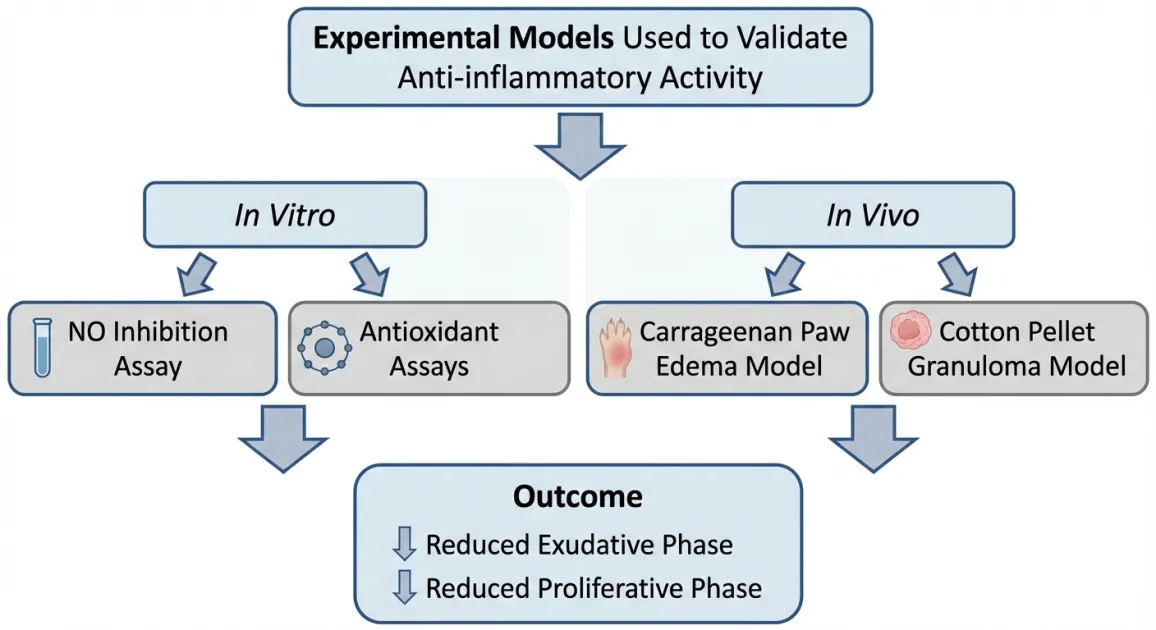
Fig: Experimental models used to validate anti-inflammatory activity
Gardenia gummifera Linn's anti-inflammatory and antioxidant capabilities have been the main focus of preclinical pharmacological research utilising conventional experimental paradigms. The injection of resin extracts has been shown to significantly reduce both acute and chronic inflammatory responses in in vivo investigations using carrageenan-induced paw oedema and cotton pellet-induced granuloma models, validating conventional claims of efficacy. Antioxidant processes may be involved in the observed anti-inflammatory benefits, according to in vitro studies that also show suppression of nitric oxide generation and free-radical scavenging capacity[23]
G. gummifera shows pharmacological efficacy at levels that do not cause overt toxicity in experimental animals, according to available preclinical evidence, suggesting a respectable margin of safety for conventional usage. These results, however, are still restricted to short-term research and need more confirmation.[22]
5.2 Dose–response relationships and pharmacokinetics
A concentration-dependent decrease in inflammatory parameters is suggested by dose-response analyses of Gardenia gummifera extracts in animal models, with moderate doses yielding the best results. No consistent improvement in efficacy has been seen at larger doses, suggesting a potential plateau effect common to multi-component herbal formulations.
There is a dearth of pharmacokinetic information unique to G. gummifera or its particular bioactive components. One major disadvantage is that the majority of studies do not discuss absorption, distribution, metabolism, or elimination patterns. Pharmacokinetic characterisation is lacking, which limits dose optimisation and makes it more difficult to apply preclinical findings in clinical settings.[24]
5.3 Toxicity profiles and potential side effects
There are few toxicological assessments of Gardenia gummifera, but they indicate that at therapeutically relevant concentrations, there is little acute toxicity in experimental models. Relative safety in short-term usage is shown by preliminary cytotoxicity and acute toxicity investigations that show no appreciable behavioural abnormalities or death. The purifying (sodhana) of the resin before internal administration is also emphasised in traditional Ayurvedic writings, indicating early awareness of potential irritating or poisonous consequences if incorrectly handled.Despite these findings, there aren't enough comprehensive investigations on chronic and subchronic toxicity. Long-term therapeutic application should be done with caution due to the lack of research on potential side effects associated with extended use, reproductive toxicity, genotoxicity, and herb–drug interactions.[22, 24]
5.4 Gaps in current pharmacological knowledge and research needs
Gardenia gummifera's anti-inflammatory activity is supported by preclinical studies, although there are still substantial gaps in its pharmacological assessment. Standardised extracts, pharmacokinetic data, and well-designed longterm toxicity and clinical investigations are all lacking. Moreover, there are few mechanistic investigations that precisely connect particular phytoconstituents to identified molecular targets.In order to determine efficacy, safety, and dose recommendations, future research should concentrate on standardised formulation development, thorough toxicological profiling, pharmacokinetic characterisation, and controlled clinical trials. To translate the traditional use of Dikmali Churna into evidence-based medicinal applications, these gaps must be filled.[25]
6. Standardization and Quality Control of Dikmali Churna
6.1 Challenges in standardizing traditional herbal formulations
Due to the inherent heterogeneity in raw material quality, geographical source, harvesting season, and traditional processing methods, standardising traditional herbal formulations like Dikmali Churna is extremely difficult. It is challenging to identify a single active principle responsible for the therapeutic benefits of herbal formulations since they contain complex combinations of bioactive chemicals, unlike synthetic medications. Consistency between batches is further complicated by differences in Gardenia gummifera's resin output, colour, texture, and chemical makeup. Furthermore, batch-to-batch unpredictability and other quality issues result from traditional methods' frequent lack of accurate documenting of processing conditions.
The possibility of adulteration, substitution, and contamination with additional plant materials, heavy metals, pesticides, or microbiological load is another significant obstacle. These problems can have a major impact on efficacy and safety, underscoring the necessity of standardisation procedures that have been scientifically confirmed.[26]
6.2 Parameters for quality assessment (e.g., marker compounds, purity, potency)
Instead of depending only on one marker compound, a number of characteristics must be evaluated in order to evaluate the quality of Dikmali Churna. Initial identity tests are performed using pharmacognostic factors such foreign matter content, organoleptic qualities, and macroscopic and microscopic features. To evaluate purity and stability, physicochemical characteristics such as ash levels, extractive values, moisture content, and pH are crucial.
Chemical standardisation uses chromatographic techniques to identify and quantify marker molecules or distinctive phytochemical signatures. Iridoids, phenolic chemicals, and resinous fractions are frequently utilised as reference indicators for Dikmali, even though a definite single marker compound has not been widely identified. Assays for biological potency, like tests for anti-inflammatory or antioxidant activity, can help evaluate functional quality.[27]
6.3 Methods for ensuring batch-to-batch consistency
Standard operating procedures (SOPs) that address raw material procurement, collecting time, purification (sodhana), drying, pulverisation, and storage conditions can be used to establish batch-to-batch consistency. Before formulation, plant material must be authenticated using botanical and chemical techniques. To guarantee chemical uniformity between batches and identify adulteration, analytical methods like TLC and HPTLC fingerprinting are frequently used. To meet safety regulations, routine testing for pesticide residues, heavy metals, and microbiological load is also crucial. Reproducibility and product dependability are largely dependent on the implementation of Good Manufacturing Practices (GMP) and in-process quality controls.[28]
6.4 Regulatory perspectives and guidelines for herbal product standardization
For herbal medicines, regulatory frameworks are placing an increased emphasis on quality control and scientific validation. In India, official criteria for the identification, purity, potency, and safety of herbal raw materials and formulations are provided by guidelines published by the Ministry of AYUSH and the Ayurvedic Pharmacopoeia of India (API). These recommendations call for thorough chromatographic, physicochemical, and pharmacognostic analysis.
In order to guarantee safety, effectiveness, and consumer confidence, the World Health Organisation (WHO) has developed recommendations for the quality control and standardisation of herbal medicines on a global scale. For Dikmali Churna to be widely accepted as a standardised, evidence-based herbal medicine appropriate for inclusion into contemporary healthcare systems, compliance with these regulatory criteria is crucial. [29]
7. Formulation Development and Modern Pharmaceutical Approaches
7.1 Advances in formulation technology to enhance bioavailability and stability
The poor and variable bioavailability of phytoconstituents due to their resinous nature, low water solubility, and susceptibility to degradation is one of the main obstacles in converting traditional formulations like Dikmali Churna into contemporary treatments. Technological developments in pharmaceutical formulation offer ways to get beyond these restrictions. To improve the solubility, absorption, and stability of herbal extracts, methods such particle size reduction, solid dispersion systems, lipid-based carriers, phytosomes, and nanoemulsions have been investigated.
Gardenia gummifera extracts can be encapsulated in polymeric or lipid carriers to improve therapeutic consistency by shielding bioactive components from first-pass metabolism and environmental deterioration. Additionally, these methods allow for precise dosage and controlled release, both of which are critical for long-term treatment of chronic inflammatory diseases.[22]
7.2 Integration of Gardenia gummifera extracts into modern dosage forms
Gardenia gummifera extracts can now be added to standardised dose forms like tablets, capsules, and topical treatments thanks to advancements in pharmaceutical development. Compared to conventional powders, solid oral dose forms increase patient compliance, dosing accuracy, and shelf life. To guarantee consistency and stability, standardised extracts can be compressed into tablets or packed into capsules with the proper excipients.
Given the historic external usage of Dikmali for inflammatory swellings and skin disorders, topical preparations, such as gels, lotions, and ointments, are especially pertinent. By minimising systemic exposure and increasing local bioavailability, contemporary topical administration techniques can lower the risk of side effects. These formulations are in line with both current treatment requirements and conventional use patterns. [24]
7.3 Potential for combination therapies with other anti-inflammatory agents
Gardenia gummifera Linn has a multi-target anti-inflammatory profile that includes regulation of inflammatory signalling pathways, cytokine modulation, partial cyclooxygenase inhibition, and antioxidant action. Its utility in combination therapy with other anti-inflammatory drugs is strongly supported pharmacologically by this broad mechanism. Combining herbal medications with complimentary mechanisms—like strong antioxidant or immunomodulatory activity—may produce additive or synergistic effects that improve overall efficacy while lowering the dosage needed for individual components.
Additionally, G. gummifera may be useful when combined with traditional non-steroidal anti-inflammatory medicines (NSAIDs), especially in cases of chronic inflammation. These combinations may make it possible to lower NSAID dosages, which could lessen the negative effects of long-term NSAID therapy on the gastrointestinal tract and heart.
The idea that multi-component herbal formulations can influence inflammatory pathways without necessarily interfering with the primary pharmacodynamic effect of synthetic medications is supported by ethnopharmacological and pharmacological research. Despite this therapeutic promise, there are currently insufficient systematic studies assessing pharmacokinetics, long-term safety, and herb-drug interactions. Before routine therapeutic application, controlled preclinical and clinical studies are necessary to determine the best dose regimens, safety margins, and clinical relevance of such combination treatments.[30,3]
7.4 Intellectual property and commercialization aspects
Because Gardenia gummifera and its traditional uses are part of established indigenous knowledge, the creation and commercialisation of herbal formulations like Dikamali Churna face special intellectual property (IP) issues. Therefore, it is usually not allowed to directly patent the plant or its acknowledged therapeutic uses. Standardised extracts, novel processing techniques, sophisticated dosage forms, creative combinations, and particular medicinal uses backed by scientific data, on the other hand, can be eligible for patent protection.
The creation of protectable intellectual property (IP) through process patents, formulation patents, and usage patents is made possible by modern pharmaceutical research, especially when conventional knowledge is converted into therapeutically relevant, standardised, and scientifically validated products. In addition to helping to combat biopiracy, databases like the Traditional Knowledge Digital Library (TKDL) direct innovators toward patentable advancements rather than the rediscovery of existing usage.From a commercialisation standpoint, as long as quality, safety, and efficacy are proven, regulatory frameworks increasingly encourage the incorporation of standardised herbal medicines into mainstream healthcare. Market approval and customer acceptance depend on adherence to national or international regulatory norms, pharmacopoeial standards, and Good Manufacturing Practices (GMP). In order to successfully commercialise Dikmali-based products while guaranteeing the ethical use of traditional knowledge and benefit-sharing with local people, academia, industry, and regulatory bodies must work together strategically. [31,32,33]
8. Clinical Evidence and Therapeutic Potential
8.1 Overview of clinical trials or case studies involving Dikmali Churna or its extracts
There is little and mostly exploratory clinical data particularly assessing extracts from Gardenia gummifera or Dikmali Churna. The majority of the human evidence that is currently available comes from traditional case reports, small-scale observational studies, and the use of Dikmali in polyherbal formulations rather than as a stand-alone intervention. These reports lack standardised outcome measurements, randomisation, and rigorous research design, although they typically indicate symptomatic improvement in inflammatory disorders. The lack of large-scale randomised controlled trials that solely evaluate Dikmali Churna in indexed literature to date emphasises how preliminary the available clinical data is.[24]
8.2 Efficacy in specific inflammatory conditions (e.g., arthritis, dermatitis)
Dikmali-containing formulations may be helpful in chronic inflammatory illnesses such arthritis, inflammatory swellings, and several dermatological disorders, according to traditional clinical use and scant observational data. Because of its anti-inflammatory and analgesic qualities, it has been shown to reduce joint pain, swelling, and stiffness in disorders connected to arthritis. Because of its combination anti-inflammatory and antibacterial properties, topical administration of Dikmali-based formulations in dermatological applications has been linked to improvements in inflammatory skin disorders.However, it is challenging to ascribe Gardenia gummifera's clinical efficacy exclusively because these findings are mostly indirect and formulation-dependent. There is still a need for carefully monitored research aimed at particular indications.[5]
8.3 Patient compliance, acceptability, and safety in clinical settings
When administered in accordance with conventional guidelines, Dikmali Churna is generally found to be well tolerated from the standpoint of clinical practice. Patient compliance may be impacted by taste, odour, and dosing nuisance problems with oral preparations, especially in long-term therapy. Acceptability and adherence are enhanced by contemporary dose forms such topical treatments and capsules. Traditional or limited clinical use has not consistently shown any major adverse effects; nonetheless, comprehensive safety monitoring is absent. In clinical settings, conclusive findings of long-term safety and herb-drug interactions are limited by the lack of organised pharmacovigilance data.[29]
8.4 Limitations and future directions for clinical research
The absence of high-quality clinical evidence is the main obstacle to evaluating Dikmali Churna's medicinal potential. The majority of the information that is currently accessible is anecdotal or comes from non-standard formulations. Standardised extracts, precise dosing schedules, verified clinical outcomes, and suitable control groups should be the main topics of future clinical studies.To determine effectiveness in certain inflammatory disorders, examine long-term safety, and analyse potential interactions with traditional anti-inflammatory medications, well-designed randomised controlled trials are necessary. It will be necessary to close this gap between traditional use and contemporary clinical validation in order to incorporate Dikmali Churna into evidence-based practice.[11]
9. Socioeconomic and Environmental Considerations
9.1 Impact of sourcing Gardenia gummifera on biodiversity and sustainability
Concerns about sustainable harvesting and biodiversity conservation are raised by the growing therapeutic demand for Gardenia gummifera Linn. Uncontrolled or excessive extraction can negatively impact plant health, regeneration, and long-term population stability because the oleo-gum-resin is the main component used in medicine. Overharvesting may lead to local depletion and ecological imbalance in areas where the plant grows naturally in dry deciduous forests. Therefore, to reduce environmental effect and guarantee the species' long-term availability, sustainable sourcing methods such as seasonal harvesting, regulated resin tapping, and cultivation-based supply systems are crucial.[34]
9.2 Economic importance for local communities and traditional practitioners
For rural and indigenous groups, where the gathering, processing, and trading of medicinal plant materials provide household income, Gardenia gummifera has significant economic importance. In order to preserve ethnomedical knowledge across generations, traditional practitioners and local collectors are essential to the identification, harvesting, and preparation of Dikamali. Although there may be prospects for employment due to the commercial demand for Dikamali-based items, the advantages are frequently divided unevenly, with primary collectors receiving little financial return. In addition to promoting established healthcare institutions, strengthening value chains through fair-trade practices, capacity building, and community-based businesses can improve economic sustainability.[35]
9.3 Ethical considerations in bioprospecting and benefit-sharing.
Important ethical questions about bioprospecting and intellectual property rights are brought up by the use of Gardenia gummifera in contemporary pharmaceutical research. Dikmali's ethical use necessitates acknowledging indigenous contributions and preventing biopiracy because it is based on traditional knowledge systems. International agreements like the Nagoya Protocol and the Convention on Biological Diversity (CBD) place a strong emphasis on fair access to genetic resources and the distribution of benefits resulting from their usage. To ensure ethical commercialisation and social justice in the development of Dikmali-based therapies, transparent benefit-sharing procedures, community permission, and cooperation with traditional knowledge holders are crucial.[36,37]
CONCLUSION
1. Summary of key findings from traditional to modern contexts
This review focuses on Gardenia gummifera Linn (Dikmali), a medicinal plant that has long been used to treat inflammatory and associated conditions in traditional systems, especially Ayurveda. Its use as Dikmali Churna and in polyherbal preparations is emphasised in traditional s pharmacological studies show anti-inflammatory, antioxidant, and associated biological properties in preclinical animals, providing initial scientific confirmation. The existence of iridoids, flavonoids, terpenoids, and phenolic substances is revealed by phytochemical research, providing a mechanistic foundation for its conventional medicinal uses. However, the majority of the information currently available is preclinical, highlighting the need for careful interpretation and additional validation.[24]
2. Importance of multidisciplinary approaches for validation and development
A multidisciplinary strategy combining ethnopharmacology, phytochemistry, pharmacology, toxicology, pharmaceutical technology, and regulatory science is needed to translate Gardenia gummifera from traditional medicine to evidence-based treatments. While contemporary analytical and pharmacological techniques allow for the discovery of bioactive components, mechanism-based validation, and safety evaluation, ethnobotanical knowledge offers guidance for therapeutic relevance. To guarantee the reproducibility, standardisation, and worldwide acceptability of Dikmali-based goods, regulatory frameworks and quality-control techniques are equally crucial. These integrative methods are essential for connecting conventional wisdom with contemporary drug development processes.[29]
3. Recommendations for research priorities and clinical translation
The creation of standardised Gardenia gummifera extracts and formulations, backed by strong quality-control criteria and batch-to-batch consistency, should be the main focus of future research. To establish safe and efficient dosage schedules, comprehensive pharmacokinetic and long-term toxicological research is necessary. Crucially, to determine clinical efficacy, safety, and therapeutic placement, well planned clinical trials concentrating on particular inflammatory diseases are necessary. To enable logical clinical translation, research on herb–drug interactions and formulation-based bioavailability enhancement should also be undertaken.[26]
4. Potential role of Gardenia gummifera Linn in integrative medicine
Gardenia gummifera has potential as a supplemental agent in integrative medicine, especially for chronic inflammatory disorders requiring long-term therapy, due to its multi-target anti-inflammatory profile, traditional acceptance, and new scientific findings. If safety and efficacy are confirmed by science, their usage in conjunction with traditional medicines may bring advantages in terms of tolerability and comprehensive disease management. Dikmali-based products may make a significant contribution to integrative healthcare systems that blend traditional knowledge with contemporary medical practice with more study, ethical sourcing, and regulatory compliance.[22,16]
REFERENCES


Pruthviraj Kadam*, S. A. Tamboli, A Review On “From Traditional Medicine To Standardized Formulations: Anti-Inflammatory Properties Of Gardenia Gummifera Linn (Dikmali) Churna.”, Int. J. Sci. R. Tech., 2026, 3 (7), 805-817. https://doi.org/10.5281/zenodo.21530545
 10.5281/zenodo.21530545