

We use cookies to ensure our website works properly and to personalise your experience. Cookies policy
Department of Pharmacognosy, Delight College of Pharmacy, Koregaon Bhima, Pune, Maharashtra, India – 412216.
Sore throat is a common complaint associated with throat pain, irritation, dryness, cough and difficulty in swallowing. Herbal medicines have traditionally been used for respiratory and throat-related complaints and contain diverse bioactive constituents. This review discusses the proposed development of a herbal sore-throat candy containing Vasaka leaves, guava leaves, pomegranate peel, rose petals, ginger, honey, Pippali and lemon. The review covers the causes and symptoms of sore throat, herbal ingredients, reported pharmacological properties, their possible role in sore-throat management, formulation and preparation, evaluation parameters, advantages, limitations, packaging, storage and future prospects. Individual ingredients have reported antimicrobial, antioxidant, anti-inflammatory, analgesic, antitussive or soothing properties in traditional, experimental or clinical literature. However, these findings should not be interpreted as proof of efficacy of the complete candy unless the finished formulation is specifically tested. Proper standardization, quality control, stability testing, microbiological evaluation and safety assessment are required for further development.
Sore throat is a common health problem that may occur due to infections, inflammation, allergy, environmental irritation, or excessive use of the voice. It is generally associated with throat pain, irritation, difficulty in swallowing, dryness and cough. Most uncomplicated cases are self-limiting; however, symptomatic treatment is commonly used to provide relief from throat discomfort [1,2].
Interest in herbal medicines has increased because medicinal plants contain biologically active compounds that may show antimicrobial, antioxidant and anti-inflammatory properties. Traditional medicinal plants used for sore-throat conditions have demonstrated antimicrobial activity in experimental studies [3]. Honey is traditionally used for cough and throat discomfort, and a systematic review and meta-analysis reported improvement in upper respiratory tract symptoms and reductions in cough frequency and severity compared with usual care [4].
Ginger contains gingerols and related compounds that have been investigated for biological activities. A systematic review of meta-analyses reported effects on inflammatory and oxidative-stress markers, although these findings mainly concern systemic ginger supplementation rather than a specific throat-candy formulation [5]. A herbal sore-throat candy is a convenient dosage form in which selected herbal ingredients can be incorporated into a palatable, slowly dissolving preparation. The development of such a formulation requires suitable ingredient selection, standardization, preparation, quality evaluation, packaging and stability assessment.
1.NEED AND IMPORTANCE OF HERBAL SORE-THROAT CANDY:
Sore throat can cause pain, irritation, dryness, itching, difficulty in swallowing and cough. In uncomplicated cases, treatment is commonly aimed at reducing symptoms and providing comfort. A slowly dissolving candy or lozenge can provide a convenient dosage form for local oral and throat exposure.
Clinical research has investigated botanical lozenges for chronic pharyngitis, although evidence from one botanical product cannot be directly extrapolated to the proposed formulation [6]. Honey also has supportive clinical evidence for symptomatic relief of upper respiratory tract symptoms and cough [4].
A herbal sore-throat candy may offer convenience, palatability and ease of administration while allowing selected medicinal plants to be combined in one dosage form. However, herbal origin does not automatically establish safety or therapeutic effectiveness. The final product requires appropriate physical, chemical, microbiological, stability and safety studies.
1.CAUSES AND SYMPTOMS OF SORE THROAT:
Causes: Viral infections are common causes of acute sore throat and may occur with cough, runny nose or other respiratory symptoms [1,2]. Group A Streptococcus is an important bacterial cause of acute pharyngitis, particularly in children and adolescents [2,7]. Allergens, cigarette smoke, air pollution, dust, chemical fumes and dry air can contribute to throat irritation. Prolonged voice use can cause throat discomfort and hoarseness. Gastroesophageal reflux may contribute to chronic throat irritation in some individuals [8].
Symptoms: Common symptoms include throat pain or soreness, irritation and dryness, painful or difficult swallowing, throat redness or inflammation, cough, hoarseness, fever, swollen neck lymph nodes, runny or blocked nose and general tiredness. Symptoms alone do not always distinguish viral from bacterial infection; clinical assessment and appropriate testing may be needed in suspected streptococcal disease [2,7].
2.HERBAL INGREDIENTS USED IN THE FORMULATION:
The proposed formulation contains Vasaka leaves powder, guava leaves powder, pomegranate peel powder, rose petal powder, fresh ginger juice, honey, Pippali powder, sugar and lemon premix. Vasaka contains quinazoline alkaloids including vasicine and vasicinone [9]. Guava leaves contain phenolic and flavonoid constituents [10,11]. Pomegranate peel is rich in polyphenols, tannins, ellagitannins and punicalagin [12]. Rose contains flavonoids and other bioactive constituents [13]. Ginger contains gingerols and shogaols [5]. Honey contains sugars, organic acids and phenolic compounds and has clinical evidence for cough relief [4]. Pippali contains alkaloids including piperine and piperlongumine [14]. Lemon contains flavonoids and phenolic acids [15].
Types Of Coughs:
Ingredients:
Table 1: Ingredients
| Ingredient Category | Specific Ingredient | Weight (gm) |
Weight (gm) | Percentage (%) | Role of formulation |
|---|---|---|---|---|---|
| Candy Base (88%) | Sugar | 6.00 g | 6,000mg | 60.0 % | Sweetener |
| Honey | 2.00g | 2,000mg | 20.0% | Natural demulcent | |
| Fresh Ginger Juice |
0.50 g | 500mg | 5.0% | Anti-inflammatory | |
| Lemon Premix | 0.30 g | 300 mg | 3.0 % | Preservative | |
| Herbal Active Blend (12%) | Vasaka Leaves Powder | 0.30 g | 300 mg | 3.0 % | Cough relief Agent |
| Guava Leaves Powder | 0.25 g | 250 mg | 2.5 % | Anti-microbial | |
| Pomegranate Peel Powder | 0.25 g | 250 mg | 2.5 % | High Anti- oxidant | |
| Rose Petal Powder | 0.25 g | 250 mg | 2.5 % | Natural cooling | |
| Pippali Powder | 0.15 g | 150 mg | 1.5 % | Bio-enhancer | |
| Total | 10.00 g | 10,000 mg | 100 % |
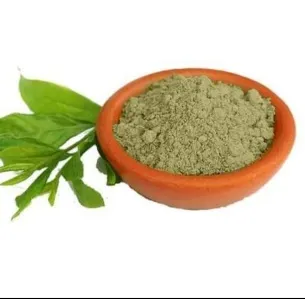
4.PHARMACOLOGICAL PROPERTIES OF THE INGREDIENTS:
4.1 Vasaka Leaves Powder:[9]
• Description:
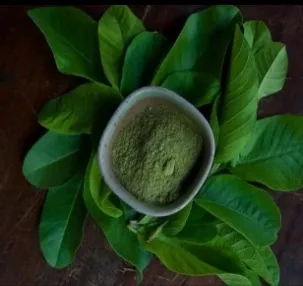
4.2 Guava Leaves Powder: [10,11]
The Powder: Prepared by shade-drying and crushing
mature leaves, the final powder features a greenish-brown to olive-green color a mild earthy aroma, and a slightly astringent.
4.3 Pomegranate Peel Powder: [12]
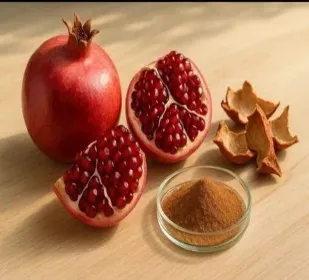
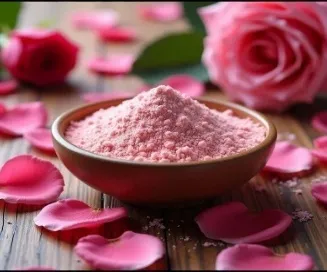
Figure 3: Pomegrante Powder
4.4 Rose Petal Powder: [13]
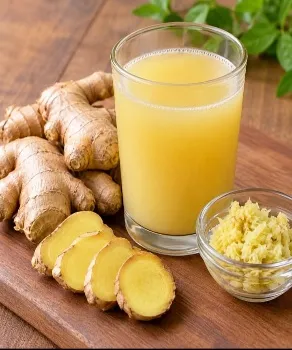
Figure 4: RosePetal Powder
4.5 Fresh Ginger Juice: [5]
yellowish-brown outer surface and yellowish-white inner portion. It has a characteristic strong aroma and pungent, warm taste.

Figure 5: Fresh Ginger Juice
4.6 Honey: [4]
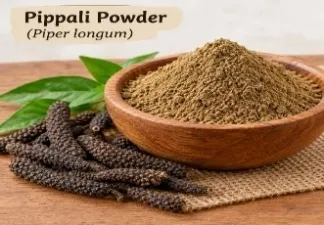
4.7 Pippali Powder:[14]
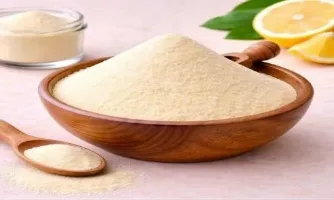
Figure 7: Pippali Powder
4.8 Lemon Premix:[15]
Sour taste. Fig.8:Lemon Premix
Approximate Nutritional Value of 1 Herbal Candy (10gm):
Table 2: Nutritional Value
| Nutrient | Approximate Value |
|---|---|
| Energy | 30 – 33 kcl |
| Carbohydrates | 7.5 – 8.0 g |
| Sugar | 7 – 7.5 g |
| Protein | < 0.2 g |
| Fat | < 0.1 g |
| Dietary fibre | 0.2 – 0.4 g |
| Moisture | Variable |
| Sodium | Very low |
ROLE OF HERBAL INGREDIENTS IN SORE-THROAT MANAGEMENT:
Herbal ingredients may have a supportive role in throat preparations because several contain compounds with antimicrobial, antioxidant, anti-inflammatory, analgesic or soothing properties. Vasaka and Pippali have traditional associations with respiratory complaints. Guava leaves, pomegranate peel, rose and ginger provide sources of phytochemicals with reported biological activities. Honey has comparatively useful clinical evidence for symptomatic relief of cough in upper respiratory tract infections [4].
A study of traditional herbs used for sore throat reported antimicrobial activity in several plant extracts, including Adhatoda vasica [3]. However, laboratory activity of an extract does not establish clinical efficacy of a finished candy. The complete proposed combination requires formulation-specific testing.
1.HERBAL CANDY FORMULATION AND PREPARATION:
1. Clean selected plant materials to remove dust and foreign matter.
2. Dry leaves, pomegranate peel and rose petals under suitable conditions; powder and sieve separately.
3. Accurately weigh and uniformly mix the herbal powders.
4. Prepare the sugar base by dissolving sugar with a suitable small quantity of water and concentrating under controlled heating
5. Add honey with appropriate mixing while avoiding unnecessary prolonged heating.
6. Gradually incorporate the herbal powder mixture and mix uniformly.
7. Add fresh ginger juice and lemon premix at the selected processing stage and mix thoroughly.
8. Transfer the mass into suitable moulds or form uniform candy pieces.
9. Cool and solidify under clean, dry conditions.
10. Pack in a suitable moisture-protective package and store under controlled conditions.
2.EVALUATION OF HERBAL SORE-THROAT CANDY:
1.Appearance:
2.Oranoleptic Evaluation: `
3.Weight variation:
4.Hardness:
5.Friability:
6.Moisture content:
7. pH:
8. Disintegration/dissolution Time:
9.Stability study:
Preliminary Phytochemical Test of Herbal Ingredients:
Table 3: Preliminary Phytochemical Test of Herbal Ingredients
| Ingredient | Important constituents | Chemical test | Positive result |
|---|---|---|---|
| Fresh Ginger Juice (Zingiber Officinale) | Gingerols Shogaols Volatile oil | Ferric chloride test (Gingerols) | Greenish/blue/Color may indicate phenolics |
| Volatile oil test | Characteristic aromatic odour | ||
| Vasaka leaves powder (Adhatoda vasica) | Alkaloids flavonoids Tannins |
Dragendorff’s test (Alkaloids) | Orange / brown PPT |
| Mayers test (flavonoids) | Cream PPT | ||
| Guava leaves powder (Psidium guajava) |
Tannins Flavonoids Phenolics |
Ferric chloride test (Tannin) | Greenish / blue –black color |
| Shinoda test-Flavonoid | Pink / red color | ||
| Pomegranate Peel Powder (Punica granatum) | Tannins Phenolics Flavonoids |
Ferric chloride test (Tannins) | Blue /green colour |
| Alkaline reagent test (Flavonoids) | Yellow colour | ||
| Rose Petal Powder (Rosa spp.) | Flavonoids Tannins Phenolics |
Ferric chloride test (Tannins) | Green / blue colour |
| Shinoda test (Flavonoids) | Pink / red colour | ||
| Pippali Powder (Piper longum) | Alkaloids Volatile oil Phenolics |
Dragendorffs test (Alkaloids) | Orange PPT |
| Mayer’s test (flavonoids) | Cream PPT | ||
| Sugar | Sucrose | Molisch test | Violet ring |
| Reducing sugar after hydrolysis | Fehlings test | Brick-red PPT | |
| Lemon premix | Citric acid | Acidic reaction/pH test | Acidic Ph |
| Citrate | Calcium chloride test | White calcium citrate PPT under suitable conditions |
1. ADVANTAGES OF HERBAL SORE-THROAT CANDY:
1. Convenient and easy-to-administer dosage form.
2. Slow dissolution can provide prolonged contact with the mouth and throat.
3. Portable and easy to handle.
4. Provides an opportunity to combine several herbal ingredients in one dosage form.
5. Honey, lemon and rose may improve flavour and palatability.
6. Provides scope for formulation optimization and development as a patient-friendly oral preparation.
8. LIMITATIONS:
1. Clinical evidence for the complete formulation may be limited.
2. Phytochemical composition of herbal materials can vary with species, origin cultivation.
3. Standardization of multiple herbal constituents can be challenging.
4. Strong or bitter herbal flavours may reduce palatability.
5. Moisture and heat can affect candy texture and stability.
6. Herbal raw materials may carry microbial contamination if not properly processed and tested.
7. Sugar-containing formulations may not be suitable for everyone and may require reduced-sugar alternatives.
8. Natural ingredients can still cause adverse effects or interactions.
9. The final product should not replace appropriate medical assessment or treatment for severe or persistent throat disease.
9. STORAGE AND PACKAGING:
The candies should preferably be packed individually or in a suitable moisture-resistant container. Possible materials include aluminium foil, blister packs, moisture-resistant laminated pouches, food-grade plastic containers or suitable glass containers. Packaging should be clean, non-toxic, compatible with the formulation and protective against moisture, light, air, contamination and physical damage.
The product should be stored in a cool, dry and clean place away from direct sunlight and excessive heat. The container should remain tightly closed. During stability studies, colour, odour, taste, hardness, moisture, weight and microbiological quality can be monitored. Labeling should include product name, ingredients, net quantity, batch number, manufacturing date, expiry/best-before date, storage conditions, manufacturer details, directions for use and 4 appropriate precautions.
10. FUTURE PROSPECTS:
Future work may include optimization of ingredient quantities and processing conditions; authentication and standardization of herbal raw materials; quantitative estimation of marker phytoconstituents; antioxidant, antimicrobial and anti-inflammatory studies; long-term and accelerated stability studies; improved moisture-protective packaging; reduced-sugar or sugar-free versions where appropriate; safety and interaction studies; and well-designed clinical studies of the complete finished formulation.
CONCLUSION :
Sore throat is a common condition associated with throat pain, irritation, dryness, cough and difficulty in swallowing. Herbal medicines provide a source of diverse bioactive compounds and have traditionally been used for respiratory and throat-related complaints. The proposed herbal sore-throat candy combines Vasaka leaves, guava leaves, pomegranate peel, rose petals, ginger, honey, Pippali and lemon in a convenient oral dosage form.
The selected ingredients have reported antioxidant, antimicrobial, anti-inflammatory, analgesic, antitussive or soothing properties in different types of evidence. Honey has comparatively useful clinical evidence for symptomatic relief of cough in upper respiratory tract infections. Nevertheless, pharmacological findings for individual ingredients cannot be considered direct evidence that the complete candy is effective. The final formulation requires appropriate standardization, physical and chemical evaluation, microbiological testing, stability assessment and safety studies.
Overall, herbal sore-throat candy represents a potentially useful plant-based dosage-form concept that combines traditional herbal ingredients with a convenient, palatable preparation. Further evidence-based research is necessary before specific therapeutic claims can be made.
REFERENCES

Nutan V. Gogade, Vishakha B. Kasbe, Dr. Sampat D. Navale, A Review on Herbal Sore-Throat Candy: Formulation, Pharmacological Properties and Evalution, Int. J. Sci. R. Tech., 2026, 3 (11), 1139-1146. https://doi.org/10.5281/zenodo.24469358
 10.5281/zenodo.24469358