View Article

  • Formulation and Evaluation of Piperazine Citrate Medicated Candy for Pediatric Drug Delivery

  • 1Department of Pharmaceutics, Dr. Babasaheb Ambedkar Technological University, Pune, Maharashtra, India-

    2Department of Pharmaceutical Chemistry, Delight College of Pharmacy, Koregaon Bhima, Pune, Maharashtra, India- 412216.

    3Department of Pharmacognosy, Delight College of Pharmacy, Koregaon Bhima, Pune, Maharashtra, India, 412216.

Abstract

Pediatric drug delivery is a significant challenge in pharmaceutical formulation development because children often experience difficulty swallowing conventional dosage forms such as tablets and capsules. Poor palatability and unpleasant taste may further reduce patient compliance and affect the successful administration of medication. Medicated candy represents a promising alternative dosage form that combines acceptable taste, convenience, and ease of administration. The present review focuses on the formulation and evaluation of Piperazine citrate medicated candy as a potential drug delivery system for pediatric patients. Piperazine citrate is an anthelmintic agent used in the treatment of certain intestinal worm infections. Incorporating this drug into a palatable candy formulation may improve acceptability and encourage better medication compliance among children. The formulation involves the selection of suitable excipients, including sweetening agents, flavouring agents, and a suitable candy base, while maintaining drug stability and uniformity. Various evaluation parameters, such as appearance, weight variation, hardness, moisture content, drug content uniformity, in-vitro drug release, taste acceptability, and stability studies, are important for assessing the quality of the developed formulation. Special attention should be given to dose accuracy, pediatric safety, and appropriate packaging to prevent accidental consumption. This review highlights the potential advantages, formulation considerations, evaluation methods, and challenges associated with Piperazine citrate medicated candy. Overall, this dosage form may offer a patient-friendly approach to pediatric anthelmintic therapy; however, its effectiveness, safety, stability, and suitability require systematic investigation and appropriate pharmaceutical evaluation before clinical use.

Keywords

Piperazine citrate, medicated candy, pediatric drug delivery, anthelmintic, formulation, evaluation, patient compliance

Introduction

× Popup Image

Taking oral medicines can be challenging for children, particularly when they have difficulty swallowing tablets or capsules or find the taste of a medicine unpleasant. The limited availability of dosage forms designed specifically for different pediatric age groups can make medicine administration even more difficult. Therefore, the development of pediatric formulations requires careful consideration of factors such as age, dose flexibility, taste, excipient safety and the caregiver’s ability to administer the medicine correctly.1, 2, 3

Medicated candies and lollipops have attracted attention as possible alternatives to conventional oral dosage forms. These formulations combine a sweetened base with an active pharmaceutical ingredient and may help improve taste and make medicine administration more acceptable to children. They may also allow the formulation to remain in contact with the oral cavity for a longer period. However, drug release and the amount of medicine received may vary depending on whether a child sucks, chews or swallows the product. Such differences need to be considered during formulation development to ensure consistent drug delivery and acceptable use. Another important concern is accidental ingestion. Since medicated candies may resemble ordinary confectionery, they must be clearly labelled, appropriately packaged and stored safely out of children’s reach.

Piperazine citrate is an anthelmintic agent that has historically been used to treat intestinal nematode infections. However, its suitability for a new pediatric formulation must be assessed in accordance with current treatment guidelines, relevant product information and established safety requirements. Previous use of the drug alone is not sufficient to establish an appropriate dose or demonstrate the safety of a newly developed dosage form. The literature considered in this review includes a brief report proposing the formulation of a Piperazine citrate lollipop. Nevertheless, the available information does not provide sufficient evidence to confirm its clinical effectiveness, long-term stability or safety in children.

The present review discusses the potential of Piperazine citrate medicated candy as a pediatric oral dosage form, with particular attention to its formulation, evaluation and key development challenges. It also highlights the need for further research to establish the product’s quality, stability, dose consistency and safety before it can be considered suitable for pediatric use. This review is based on existing literature and does not present new experimental findings or recommend a therapeutic dose.1, 3, 7

Types of Candy Used in Pharmaceutical Formulation:-

In pharmaceutical technology, different types of candy can be used as potential carriers for medicated formulations. The selection depends on the drug's stability, taste, dose, manufacturing method, and intended patient population.
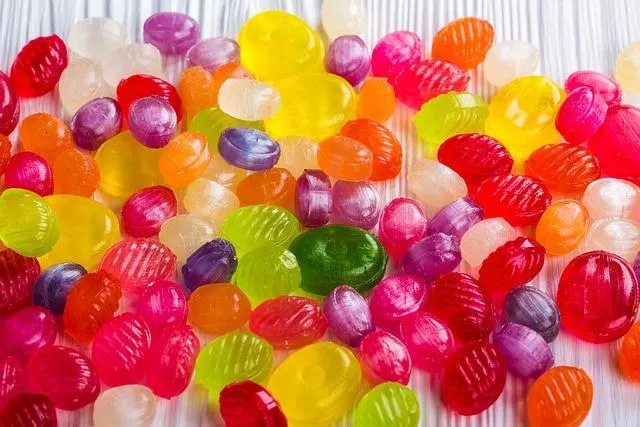
figure

Figure None: Hard Candy

1. Hard Candy

Hard, glassy candy prepared by heating sugar or other sweeteners to a high temperature and cooling the mixture. It dissolves slowly in the mouth. Its suitability for pediatric drug delivery depends on choking risk, drug stability during heating, and the required dose.8, 11
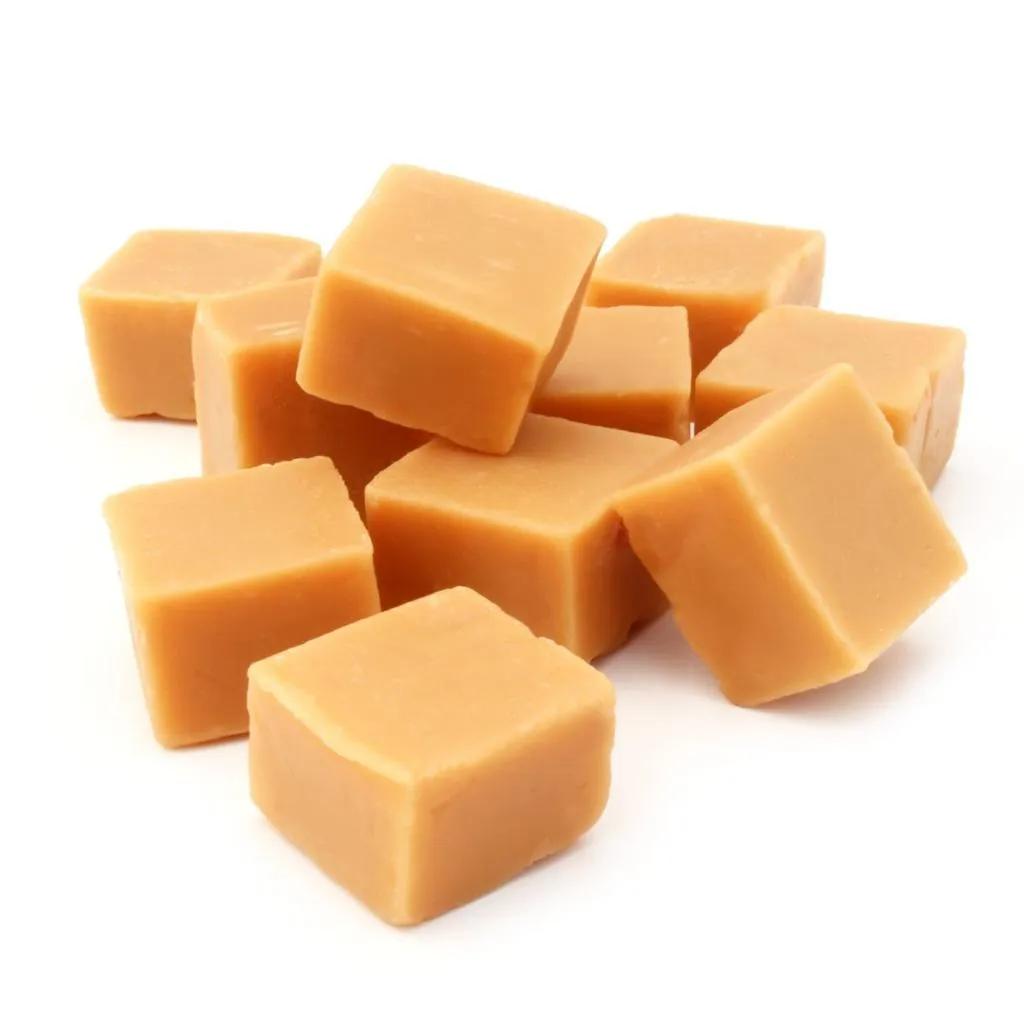
figure

Figure None: Soft Candy

2. Soft Candy

A soft, chewy preparation containing sugar or sweeteners, with ingredients such as fats, milk solids, or syrups depending on the formulation. It may be suitable for drugs requiring lower processing temperatures, provided drug stability and dose uniformity are established.9

Formulation Methods of Candy

1. Hard Candy Method

The hard candy method involves heating sugar and glucose syrup at a high temperature until the required concentration and consistency are obtained. The mixture is then cooled to an appropriate temperature before adding suitable flavors, colors and active pharmaceutical ingredients, particularly those that may be affected by heat. The prepared mass is poured into moulds and allowed to cool until it becomes hard and solid. Finally, the candies are removed from the moulds and packed in suitable packaging to protect them from moisture and environmental factors.

Steps involved:

1. Preparation of sugar syrup.

2. Heating the syrup to achieve the desired concentration.

3. Cooling the mixture to a suitable temperature.

4. Addition of compatible flavours, colours and active ingredients.

5. Pouring the mixture into suitable moulds.

6. Cooling, solidification and packaging of the candies.

Limitation: The high temperature used during preparation may cause the degradation of heat-sensitive drugs, potentially affecting their stability and effectiveness.15, 17

2. Soft Candy Method

The soft candy method involves mixing sweeteners, syrups and other suitable ingredients to form a thick, soft and workable mass. The mixture is heated until the desired consistency is achieved and then cooled under controlled conditions. Suitable flavours and compatible active pharmaceutical ingredients are incorporated at an appropriate stage of the process. The prepared mass is subsequently shaped into the required form and allowed to stabilize before being packed in suitable packaging.

Steps involved:

1. Mixing of sweeteners, syrups and other required ingredients.

2. Heating the mixture until the desired consistency is obtained.

3. Controlled cooling of the prepared mass.

4. Addition of compatible active ingredients and flavours.

5. Shaping and conditioning of the soft candies.

6. Packaging to maintain product quality during storage.

Limitation: Changes in moisture content during storage may affect the texture, consistency and stability of soft candies.16

Formulation Table:-

Sr. No. Ingredients Uses
  Piperazine citrate It is the active ingredient intended to provide anthelmintic action against susceptible intestinal worms.
  Sucrose It adds sweetness to the candy and helps give it the required bulk and solid structure.
  Liquid glucose It helps prevent sugar crystals from forming and gives the candy a smoother texture.
  Citric acid It adds a slightly sour taste and balances the sweetness of the candy.
  Flavour It makes the candy more pleasant to taste and helps reduce the unpleasant taste of the drug.
  Colour It gives the candy an appealing and consistent appearance.
  Purified water It helps dissolve the ingredients during preparation and is largely removed during heating.

Evaluation Tests of Hard Candy:-

1. General Appearance

The prepared hard candy is inspected visually to check its colour, shape, transparency, and surface finish. It is also examined for cracks, air bubbles, rough surfaces, and other visible defects. This test helps determine whether the candy has a uniform and acceptable appearance.15, 17, 18

2. Weight Variation Test

In this test, individual candies are weighed using an analytical balance, and their weights are compared with the average weight of all the tested units. This helps identify variations in the weight of the prepared candies.

The average weight is calculated using the following formula:

Average Weight=(Total Weight of Candies)/(Number of Candies)

Weight Variation (%)=(Initial Weight-Average Weight)/(Average Weight ) ×100

This test helps ensure consistency in the weight of individual candy units. The acceptable limits should be defined according to the product specifications.18, 19, 20

3. Hardness Test

The hardness of the candy is measured using a suitable hardness tester or texture analyzer. The test determines the force required to break or deform the candy under specified conditions.

It helps assess whether the candy is strong enough to withstand handling, transportation, and packaging without becoming too brittle or difficult to use.15, 17, 18

4. Moisture Content

Moisture content is determined using a suitable method, such as loss on drying or Karl Fischer titration, depending on the formulation and the required accuracy.

This test is important because excess moisture can make the candy sticky and may affect its texture, appearance, and stability during storage.

5. Drug Content Estimation

For medicated hard candy, a known quantity of the sample is dissolved or extracted using a suitable solvent. The amount of active pharmaceutical ingredient present in the sample is then measured using an appropriate analytical technique, such as UV-visible spectrophotometry or high-performance liquid chromatography (HPLC).

This test helps determine whether the candy contains the expected amount of the drug.16, 18, 21

6. Content Uniformity

Content uniformity is evaluated by testing individual candy units separately to determine the amount of drug present in each unit. A suitable validated analytical method is used for the analysis.

The test ensures that the drug is distributed uniformly throughout the prepared batch and that each candy contains the intended dose. However, uniform weight alone does not guarantee uniform drug content.18, 19, 20

7. In-Vitro Drug Release Test

In this test, the medicated candy is exposed to a suitable release medium under controlled experimental conditions. Factors such as temperature, agitation, medium composition, and sampling time are selected according to the properties and intended use of the formulation.

The amount of drug released at different time intervals is measured using an appropriate analytical method. The results help determine the rate and extent of drug release from the candy.

The testing method should be selected according to the intended dosage form and its behaviour during use, as conventional tablet dissolution methods may not be suitable for every type of hard candy.16, 18

8. Stability Studies

Stability studies are carried out by storing the prepared candy under specified temperature and humidity conditions for a defined period. Samples are examined at regular intervals for changes in appearance, moisture content, drug content, degradation products, and other important quality parameters.

These studies help determine whether the formulation maintains its quality during storage and provide information needed to establish an appropriate shelf life.16, 22

9. Stickiness and Surface Characteristics

The surface of the candy is examined for stickiness, crystallization, deformation, and any tendency to adhere to the packaging material.

This test helps evaluate the candy's handling properties and its suitability for packaging. It also provides useful information about the physical stability of the formulation during storage.15, 17, 18

10. Palatability Assessment

Palatability testing is performed to understand the taste and overall acceptability of the medicated candy. Depending on the study design, factors such as taste, texture, sweetness, and ease of acceptance may be considered.

Since the formulation is intended for pediatric use, any assessment involving children must follow appropriate ethical guidelines, obtain informed consent from parents or legal guardians, and include suitable safeguards for the participating children.16

Storage of Hard Candy:-

Hard candy should be stored in a cool, dry place in a tightly closed, moisture-resistant container to preserve its quality, hardness, and stability throughout its shelf life.

1. Temperature: The candy should be stored at a controlled room temperature and protected from excessive heat, as high temperatures may affect its shape and texture.

2. Humidity: High humidity should be avoided because hard candy can absorb moisture from the surroundings, making its surface sticky and affecting its physical properties.23, 24, 25

3. Packaging: Suitable airtight containers or moisture-resistant wrappers should be used to protect the candy from moisture and maintain its quality during storage.23, 25, 26

4. Protection from Light: The candy should be kept away from direct sunlight and excessive light, especially when the active pharmaceutical ingredient is sensitive to light.27, 28

5. Protection from Contamination: The product should be stored in clean, closed packaging to prevent contamination by dust, microorganisms, and other unwanted substances.

6. Avoidance of Temperature Fluctuations: Sudden changes in temperature should be avoided because they may cause moisture condensation, which can affect the candy's texture, appearance, and stability.

Packaging of Hard Candy:-

Packaging is an important part of hard candy preparation because it helps maintain the product's quality, appearance, stability, and safety during storage and transportation. In the case of medicated hard candy, suitable packaging is also necessary to protect the active pharmaceutical ingredient from environmental factors and maintain the quality of the dosage form.

Types of Packaging Used for Hard Candy:-

1. Individual Wrappers: Each candy is wrapped separately using moisture-resistant material. This helps prevent the candies from sticking together and protects them from moisture and external contamination.

2. Blister Packaging: Hard candies can be packed in individual blister cavities made from suitable plastic materials with an appropriate protective backing. This type of packaging helps protect each unit from physical damage and environmental exposure.

3. Plastic Containers: Well-closed containers made from food-grade or pharmaceutical-compatible plastic can be used to store hard candy. They provide protection against dust, moisture, and physical damage during handling and storage.

4. Glass Containers: Glass containers with suitable closures can be used to store hard candy because glass provides a good barrier against moisture and generally has low chemical interaction with the product. However, the possibility of breakage must be considered.

5. Laminated Packaging: Laminated films consist of multiple layers of packaging materials that provide protection against moisture, oxygen, and light, depending on their composition. They are useful when additional protection is needed to maintain the quality and stability of the candy.

Ideal Requirements of Hard Candy Packaging:-

An ideal packaging material for hard candy should:

  • Protect the candy from moisture and excessive humidity.
  • Prevent contamination from dust, microorganisms, and other external substances.
  • Maintain the candy's shape, hardness, and surface appearance.
  • Provide sufficient protection during handling, transportation, and storage.
  • Be compatible with the candy ingredients and the active pharmaceutical ingredient.
  • Help preserve the quality and stability of the product throughout its intended shelf life.25,26,27

CONCLUSION

Piperazine citrate medicated candy is a promising area for pharmaceutical research, particularly for exploring alternative dosage forms for pediatric patients. However, it is still a proposed formulation concept, and sufficient published evidence is not yet available to establish a finalized formula or confirm its safety and effectiveness in children. Before developing the formulation, the appropriate indication, recommended dose, equivalence of the drug salt, suitability of excipients, manufacturing method, quality standards, stability, packaging, and regulatory requirements must be carefully evaluated. Further research and validation are necessary before the product can be considered suitable for pediatric use. The proposed candy should not be administered to children unless its safety, quality, appropriate dosing, and regulatory requirements have been adequately established.

CONFLICT OF INTEREST

The authors declare no conflict of interest.

ACKNOWLEDGMENT

The authors sincerely thank Ms. Prajkta A. Kate for her valuable guidance, constructive suggestions, and careful review of the manuscript. Her feedback and corrections helped improve the quality of this review article.

REFERENCES

  1. Meyers RS. The past, present, and future of oral dosage forms for children. J Pediatr Pharmacol Ther. 2024; 29 (1):22-31. doi: 10.5863/1551-6776-29.1.22.
  2. Zajicek A, Fossler MJ, Barrett JS, Worthington JH, Ternik R, Charkoftaki G, et al. A report from the pediatric formulations task force: perspectives on the state of child-friendly oral dosage forms. AAPS J. 2013; 15 (4):1072-81. doi: 10.1208/s12248-013-9511-5.
  3. European Medicines Agency. Guideline on pharmaceutical development of medicines for paediatric use [Internet]. Amsterdam: European Medicines Agency; 2013 [cited 2026 Oct 29]. Document No. EMA/CHMP/QWP/805880/2012 Rev. 2. Available from: https://www.ema.europa.eu/en/scientific-guidelines/pharmaceutical-development-medicines-paediatric-use
  4. Rathod M, Sul S, Poharkar S, Pandhare Y, Muneshwar M. Development and in-vitro evaluation of candy based medicated lollipops: a novel system of drug delivery. J Drug Deliv Ther. 2018; 8 (4):196-204. doi: 10.22270/jddt.v8i4.1764.
  5. Mistry P, Batchelor H. Evidence of acceptability of oral pediatric medicines: a review. J Pharm Pharmacol. 2017; 69 (4):361-76. doi: 10.1111/jphp.12610.
  6. US Food and Drug Administration. Over-the-counter medicines: what's right for you? [Internet]. Silver Spring (MD): US Food and Drug Administration; [cited 2026 Oct 29]. Available from: https://www.fda.gov/drugs/understanding-over-counter-medicines/over-counter-medicines-whats-right-you
  7. Trivedi BM, Patel LD, Patel MM, Patel RP. Formulations and release studies on Piperazine citrate pediatric pearls. Indian Drugs. 1986;23 (8):455-7. Available from: Google Scholar search.
  8. Ozel B, Kuzu S, Marangoz MA, Dogdu S, Morris RH, Oztop MH. Hard candy production and quality parameters: a review. Open Res Eur. 2024;4:60. doi: 10.12688/openreseurope.16792.1.
  9. Karaiskou SG, Kouskoura MG, Markopoulou CK. Modern pediatric formulations of soft candies in the form of a jelly: determination of metoclopramide content and dissolution. Pharm Dev Technol. 2020; 25 (1):20-7. doi: 10.1080/10837450.2019.1609499.
  10. Tangso KJ, Ho QP, Boyd BJ. Confectionery-based dose forms. Curr Drug Deliv. 2015; 12 (1):56-62. doi: 10.2174/1567201811666140821112637.
  11. Parepalli S, Madhusudan Rao Y, Shraavan Kumar Y. A review on hard candy formulation: key ingredient and solution for candy processing problems. Am J PharmTech Res. 2015;5 (2). Available from: https://ajptr.com/articles/AJPTR52010/galleys/816f141d003b5.
  12. European Medicines Agency. Guideline on pharmaceutical development of medicines for paediatric use [Internet]. Amsterdam: European Medicines Agency; 2013 [cited 2026 Oct 29]. Document No. EMA/CHMP/QWP/805880/2012 Rev. 2. Available from: https://www.ema.europa.eu/en/scientific-guidelines/pharmaceutical-development-medicines-paediatric-use
  13. Umashankar MS, Dinesh SR, Lakshmi KS. Chewable lozenge formulation—a review. Int Res J Pharm. 2016; 7 (4):1-8. Available from: https://irjponline.org/index.php/irjp/article/view/1411.
  14. Gosavi JD, Kazi SN. Formulation and evaluation of medicated lollipop using calcium carbonate. Int J Pharm Sci Res. 2026;17 (10):3113-25. doi: 10.13040/IJPSR.0975-8232.17 (10).3113-25.
  15. Ozel B, Kuzu S, Marangoz MA, Dogdu S, Morris RH, Oztop MH. Hard candy production and quality parameters: a review. Open Res Eur. 2024;4:60. doi: 10.12688/openreseurope.16792.1.
  16. Karaiskou SG, Kouskoura MG, Markopoulou CK. Modern pediatric formulations of soft candies in the form of a jelly: determination of metoclopramide content and dissolution. Pharm Dev Technol. 2020;25 (1):20-7. doi: 10.1080/10837450.2019.1609499.
  17. Souiy Z, Amri Z, Sharif H, Souiy A, Cheraief I, Hamden K, et al. The use of D-optimal mixture design in optimizing formulation of a nutraceutical hard candy. Int J Food Sci. 2023;2023:7510452. doi: 10.1155/2023/7510452.
  18. Ali MY, Qureshi MS, Hamed M, Das B, Rao KP. Design and evaluation of nimesulide lozenges for pediatrics. Res J Pharm Technol. 2010;3 (3):818-20. Available from: https://www.rjptonline.org/AbstractView.aspx?PID=2010-3-3-35.
  19. United States Pharmacopeial Convention. General chapter 905: uniformity of dosage units [Internet]. Rockville (MD): United States Pharmacopeial Convention; [cited 2026 Oct 29]. Available from: https://doi.usp.org/USPNF/USPNF_M99694_01_01.html.
  20. International Council for Harmonisation of Technical Requirements for Pharmaceuticals for Human Use. ICH Q6A: specifications—test procedures and acceptance criteria for new drug substances and new drug products: chemical substances [Internet]. Geneva: ICH; [cited 2026 Oct 29]. Available from: https://www.ema.europa.eu/en/scientific-guidelines/ich-q6a-specifications-test-procedures-and-acceptance-criteria-new-drug-substances-new-drug-products-chemical-substances.
  21. International Council for Harmonisation of Technical Requirements for Pharmaceuticals for Human Use. ICH Q2 (R2): validation of analytical procedures [Internet]. Geneva: ICH; 2023 [cited 2026 Oct 29]. Available from: https://www.ema.europa.eu/en/scientific-guidelines/ich-q2r2-validation-analytical-procedures.
  22. International Council for Harmonisation of Technical Requirements for Pharmaceuticals for Human Use. ICH Q1A (R2): stability testing of new drug substances and products [Internet]. Geneva: ICH; [cited 2026 Oct 29]. Available from: https://www.ema.europa.eu/en/scientific-guidelines/ich-q1a-r2-stability-testing-new-drug-substances-drug-products.
  23. Ergun R, Lietha R, Hartel RW. Moisture and shelf life in sugar confections. Crit Rev Food Sci Nutr. 2010;50 (2):162-92. doi: 10.1080/10408390802248833.
  24. Ozel B, Kuzu S, Marangoz MA, Dogdu S, Morris RH, Oztop MH. Hard candy production and quality parameters: a review. Open Res Eur. 2024;4:60. doi: 10.12688/openreseurope.16792.1.
  25. World Health Organization. Good storage and distribution practices for medical products [Internet]. Geneva: World Health Organization; 2020 [cited 2026 Oct 29]. Available from: https://www.who.int/publications/i/item/978-92-4-000182-4.
  26. US Food and Drug Administration. Container closure systems for packaging human drugs and biologics [Internet]. Silver Spring (MD): US Food and Drug Administration; [cited 2026 Oct 29]. Available from: https://www.fda.gov/regulatory-information/search-fda-guidance-documents/container-closure-systems-packaging-human-drugs-and-biologics.
  27. International Council for Harmonisation of Technical Requirements for Pharmaceuticals for Human Use. ICH Q1A (R2): stability testing of new drug substances and products [Internet]. Geneva: ICH; [cited 2026 Oct 29]. Available from: https://www.ema.europa.eu/en/scientific-guidelines/ich-q1a-r2-stability-testing-new-drug-substances-drug-products.
  28. International Council for Harmonisation of Technical Requirements for Pharmaceuticals for Human Use. ICH Q1B: photo stability testing of new drug substances and products [Internet]. Geneva: ICH; [cited 2026 Oct 29]. Available from: https://www.ich.org/page/quality-guidelines.
  29. Trivedi BM, Patel LD, Patel MM, Patel RP. Formulations and release studies on Piperazine citrate pediatric pearls. Indian Drugs. 1986;23 (8):455-7. Available from: https://accounts.eurekamag.com/research/005/482/005482066.php

Reference

  1. Meyers RS. The past, present, and future of oral dosage forms for children. J Pediatr Pharmacol Ther. 2024; 29 (1):22-31. doi: 10.5863/1551-6776-29.1.22.
  2. Zajicek A, Fossler MJ, Barrett JS, Worthington JH, Ternik R, Charkoftaki G, et al. A report from the pediatric formulations task force: perspectives on the state of child-friendly oral dosage forms. AAPS J. 2013; 15 (4):1072-81. doi: 10.1208/s12248-013-9511-5.
  3. European Medicines Agency. Guideline on pharmaceutical development of medicines for paediatric use [Internet]. Amsterdam: European Medicines Agency; 2013 [cited 2026 Oct 29]. Document No. EMA/CHMP/QWP/805880/2012 Rev. 2. Available from: https://www.ema.europa.eu/en/scientific-guidelines/pharmaceutical-development-medicines-paediatric-use
  4. Rathod M, Sul S, Poharkar S, Pandhare Y, Muneshwar M. Development and in-vitro evaluation of candy based medicated lollipops: a novel system of drug delivery. J Drug Deliv Ther. 2018; 8 (4):196-204. doi: 10.22270/jddt.v8i4.1764.
  5. Mistry P, Batchelor H. Evidence of acceptability of oral pediatric medicines: a review. J Pharm Pharmacol. 2017; 69 (4):361-76. doi: 10.1111/jphp.12610.
  6. US Food and Drug Administration. Over-the-counter medicines: what's right for you? [Internet]. Silver Spring (MD): US Food and Drug Administration; [cited 2026 Oct 29]. Available from: https://www.fda.gov/drugs/understanding-over-counter-medicines/over-counter-medicines-whats-right-you
  7. Trivedi BM, Patel LD, Patel MM, Patel RP. Formulations and release studies on Piperazine citrate pediatric pearls. Indian Drugs. 1986;23 (8):455-7. Available from: Google Scholar search.
  8. Ozel B, Kuzu S, Marangoz MA, Dogdu S, Morris RH, Oztop MH. Hard candy production and quality parameters: a review. Open Res Eur. 2024;4:60. doi: 10.12688/openreseurope.16792.1.
  9. Karaiskou SG, Kouskoura MG, Markopoulou CK. Modern pediatric formulations of soft candies in the form of a jelly: determination of metoclopramide content and dissolution. Pharm Dev Technol. 2020; 25 (1):20-7. doi: 10.1080/10837450.2019.1609499.
  10. Tangso KJ, Ho QP, Boyd BJ. Confectionery-based dose forms. Curr Drug Deliv. 2015; 12 (1):56-62. doi: 10.2174/1567201811666140821112637.
  11. Parepalli S, Madhusudan Rao Y, Shraavan Kumar Y. A review on hard candy formulation: key ingredient and solution for candy processing problems. Am J PharmTech Res. 2015;5 (2). Available from: https://ajptr.com/articles/AJPTR52010/galleys/816f141d003b5.
  12. European Medicines Agency. Guideline on pharmaceutical development of medicines for paediatric use [Internet]. Amsterdam: European Medicines Agency; 2013 [cited 2026 Oct 29]. Document No. EMA/CHMP/QWP/805880/2012 Rev. 2. Available from: https://www.ema.europa.eu/en/scientific-guidelines/pharmaceutical-development-medicines-paediatric-use
  13. Umashankar MS, Dinesh SR, Lakshmi KS. Chewable lozenge formulation—a review. Int Res J Pharm. 2016; 7 (4):1-8. Available from: https://irjponline.org/index.php/irjp/article/view/1411.
  14. Gosavi JD, Kazi SN. Formulation and evaluation of medicated lollipop using calcium carbonate. Int J Pharm Sci Res. 2026;17 (10):3113-25. doi: 10.13040/IJPSR.0975-8232.17 (10).3113-25.
  15. Ozel B, Kuzu S, Marangoz MA, Dogdu S, Morris RH, Oztop MH. Hard candy production and quality parameters: a review. Open Res Eur. 2024;4:60. doi: 10.12688/openreseurope.16792.1.
  16. Karaiskou SG, Kouskoura MG, Markopoulou CK. Modern pediatric formulations of soft candies in the form of a jelly: determination of metoclopramide content and dissolution. Pharm Dev Technol. 2020;25 (1):20-7. doi: 10.1080/10837450.2019.1609499.
  17. Souiy Z, Amri Z, Sharif H, Souiy A, Cheraief I, Hamden K, et al. The use of D-optimal mixture design in optimizing formulation of a nutraceutical hard candy. Int J Food Sci. 2023;2023:7510452. doi: 10.1155/2023/7510452.
  18. Ali MY, Qureshi MS, Hamed M, Das B, Rao KP. Design and evaluation of nimesulide lozenges for pediatrics. Res J Pharm Technol. 2010;3 (3):818-20. Available from: https://www.rjptonline.org/AbstractView.aspx?PID=2010-3-3-35.
  19. United States Pharmacopeial Convention. General chapter 905: uniformity of dosage units [Internet]. Rockville (MD): United States Pharmacopeial Convention; [cited 2026 Oct 29]. Available from: https://doi.usp.org/USPNF/USPNF_M99694_01_01.html.
  20. International Council for Harmonisation of Technical Requirements for Pharmaceuticals for Human Use. ICH Q6A: specifications—test procedures and acceptance criteria for new drug substances and new drug products: chemical substances [Internet]. Geneva: ICH; [cited 2026 Oct 29]. Available from: https://www.ema.europa.eu/en/scientific-guidelines/ich-q6a-specifications-test-procedures-and-acceptance-criteria-new-drug-substances-new-drug-products-chemical-substances.
  21. International Council for Harmonisation of Technical Requirements for Pharmaceuticals for Human Use. ICH Q2 (R2): validation of analytical procedures [Internet]. Geneva: ICH; 2023 [cited 2026 Oct 29]. Available from: https://www.ema.europa.eu/en/scientific-guidelines/ich-q2r2-validation-analytical-procedures.
  22. International Council for Harmonisation of Technical Requirements for Pharmaceuticals for Human Use. ICH Q1A (R2): stability testing of new drug substances and products [Internet]. Geneva: ICH; [cited 2026 Oct 29]. Available from: https://www.ema.europa.eu/en/scientific-guidelines/ich-q1a-r2-stability-testing-new-drug-substances-drug-products.
  23. Ergun R, Lietha R, Hartel RW. Moisture and shelf life in sugar confections. Crit Rev Food Sci Nutr. 2010;50 (2):162-92. doi: 10.1080/10408390802248833.
  24. Ozel B, Kuzu S, Marangoz MA, Dogdu S, Morris RH, Oztop MH. Hard candy production and quality parameters: a review. Open Res Eur. 2024;4:60. doi: 10.12688/openreseurope.16792.1.
  25. World Health Organization. Good storage and distribution practices for medical products [Internet]. Geneva: World Health Organization; 2020 [cited 2026 Oct 29]. Available from: https://www.who.int/publications/i/item/978-92-4-000182-4.
  26. US Food and Drug Administration. Container closure systems for packaging human drugs and biologics [Internet]. Silver Spring (MD): US Food and Drug Administration; [cited 2026 Oct 29]. Available from: https://www.fda.gov/regulatory-information/search-fda-guidance-documents/container-closure-systems-packaging-human-drugs-and-biologics.
  27. International Council for Harmonisation of Technical Requirements for Pharmaceuticals for Human Use. ICH Q1A (R2): stability testing of new drug substances and products [Internet]. Geneva: ICH; [cited 2026 Oct 29]. Available from: https://www.ema.europa.eu/en/scientific-guidelines/ich-q1a-r2-stability-testing-new-drug-substances-drug-products.
  28. International Council for Harmonisation of Technical Requirements for Pharmaceuticals for Human Use. ICH Q1B: photo stability testing of new drug substances and products [Internet]. Geneva: ICH; [cited 2026 Oct 29]. Available from: https://www.ich.org/page/quality-guidelines.
  29. Trivedi BM, Patel LD, Patel MM, Patel RP. Formulations and release studies on Piperazine citrate pediatric pearls. Indian Drugs. 1986;23 (8):455-7. Available from: https://accounts.eurekamag.com/research/005/482/005482066.php

Photo
Prajkta A. Kate
Corresponding author

Department of Pharmaceutical Chemistry, Delight College of Pharmacy, Koregaon Bhima, Pune, Maharashtra, India- 412216.

Photo
Yash Kailas Tambe
Corresponding author

Department of Pharmaceutics, Dr. Babasaheb Ambedkar Technological University, Pune, Maharashtra, India-

Photo
Sampat D. Navale
Co-author

Department of Pharmacognosy, Delight College of Pharmacy, Koregaon Bhima, Pune, Maharashtra, India, 412216.

Yash K. Tambe, Prajkta A. Kate, Dr. Sampat D. Navale, Formulation and Evaluation of Piperazine Citrate Medicated Candy for Pediatric Drug Delivery, Int. J. Sci. R. Tech., 2026, 3 (11), 707-714. https://doi.org/10.5281/zenodo.24217157

More related articles
Formulation And Evaluation Of Medicated Lip Balm F...
Smita S. Mane, Vijayakumar Kale , Nikita M. Mote, Mahesh Thakare ...
Formulation And Evaluation Of Colour Changing Glyc...
Pooja Balkrishna Rasal, Sushil Dagadu Patil, Shwetali Pansare, Sa...
Analytical Method Development And Validation For T...
Samruddhi Bornare, Usha Jain, Pratiksha Badhe, Nitin Jain...
A Review on Analytical Methods of Diethylcarbamazine Citrate and Levocetirizine ...
G. M. Srimyvizhy, S. Aruna, M. Sasirega, L. Deepana, K. B. Ilango, J. Abinaya, G. Kalpana...
Medication Safety And Pharmacovigilance In Children And Older Adults: A Comprehe...
Ganesh Chavan , Vitthal R. Gawade, Vijay R. Pawar, Rushikesh Gadekar , Komal Jadhav ...
Related Articles
A Comprehensive Review On Medicated Caffeine Infused Chewing Gum For Enhancing A...
Deepeshkumar R. Thakare, Tushar A. Deshmukh, Kundan H. Narkhede, Jay I. Patil, Harshal V. Patil, Har...
Effect of Different Buffer Components on IgG4 Stability...
Ravi Kumar LELLA, Srinivas Bezawada, Pemra Ozbek, Halil ?brahim Özdemir, Aykut Demirkiran, ?efik Ö...
Formulation And Evaluation Of Medicated Lip Balm For Specific Pathologies (Chapp...
Smita S. Mane, Vijayakumar Kale , Nikita M. Mote, Mahesh Thakare , Aniket D. Trupkane ...
More related articles
Formulation And Evaluation Of Medicated Lip Balm For Specific Pathologies (Chapp...
Smita S. Mane, Vijayakumar Kale , Nikita M. Mote, Mahesh Thakare , Aniket D. Trupkane ...
Formulation And Evaluation Of Colour Changing Glycerine Soap Using Butterfly Pea...
Pooja Balkrishna Rasal, Sushil Dagadu Patil, Shwetali Pansare, Sapna Raut...
Analytical Method Development And Validation For Tofacitinib Citrate And Baricit...
Samruddhi Bornare, Usha Jain, Pratiksha Badhe, Nitin Jain...