

We use cookies to ensure our website works properly and to personalise your experience. Cookies policy
Sri Dharmasthala Manjunatheshwara College of Ayurveda and Hospital, Hassan, Karnataka
Snake bite is a serious health problem in the tropics, including India, resulting in considerable mortality and disability. According to the World Health Organization, millions of cases of snake bite are reported every year, a considerable number of cases are not reported. Ayurveda is a compendium of fundamental principles and treatments that have all been tried and verified by our acharyas. In Ayurveda, the branch of Agada Tantra is responsible for the study of the diagnosis and treatment of poisons, including snake envenomation. There are a number of antitoxic formulations known as Agada yogas in the literature, however these are not explored to their full potential in the current practice. Sarvakarmika Agada mentioned in Sarpavisha chikitsa (Treatment of snake poison), is a polyherbal formulation used in the treatment of Vyandhara Sarpa Visha (Hybrid snake poisoning). Since it contains upavishas (minor potency poisons) it substantiates the use of sthavara vishas (plant poison) as prativisha for jangama visha (poison). This article gives a critical review on the formulation observing the drugs in the formulation and their karma.
Ayurveda is a traditional system of medicine practiced in India, representing a healing tradition that endured for centuries. The science of Ayurveda comprises Ashtangas, which denotes the eight specialized branches and Agada tantra is one among them. Literally, the terms "gada" mean a disease and "agada" any agent that makes the body free from disease. It explains toxicity from an Ayurvedic perspective and mentions a number of Vishaghna yogas, or antitoxic compositions. For centuries Visha Vaidyas (ethnomedical healers) across different regions widely practised Agadatantra, resulting in evolution of numerous formulations reflecting local therapeutic knowledge and experience. These are useful for managing toxicity and may be suggested in a number of pathological situations, including infectious disorders. Visha chikitsa Even though many agada yogas are mentioned in the classics for the treatment of poison, most of them are unexplored. Sarvakarmika agada is one among them, that contain minimal, easily available ingredients that is yet unavailable for practice.
The World Health Organization has estimated that there are 5 million snake bites, which account for 2.7 million envenomings every year. According to existing statistics, between 81,000 and 138,000 deaths are recorded annually. Snake bites have been responsible for as many as 400,000 amputations and other disabilities. Many cases of snake bites do not get recorded, especially when the victims receive their medical attention from other non-medical sources. Therefore, it is assumed that many cases of snake bites do not get recorded. Snake bites, despite being responsible for mortality and disabilities, have been considered a neglected issue under the WHO1.
Vyandhara sarpas are considered as hybrid snakes, where they are the born by the copulation between sarpa or sarpa with other species of reptiles. They are said to possess sammishra lakshana (combined features) of their parental species which may also contribute to their tridosha nature. This in turn specifies the importance of urgency in its management2.
Sarvakarmika Agada is mentioned in Ashtanga Hridaya, Uttarasthana, Sarpavisha pratishedam adhyaya under the context of Vyandhara Visha Chikitsa. It is a poly herbal formulation comprising of 6 drugs. It is named so because of its wide range utility for all chikitsa karmas including pana, nasya, anjana, lepa, etc3.
AIM AND OBJECTIVES:
To review Sarvakarmika agada with respect to Vyandhara Sarpavisha based on the action of its ingredients as described in various classical texts.
MATERIALS AND METHOD:
Several classical texts including the Charaka Samhita, Susruta Samhita, the Ashtanga Hridya, the Ashtanga Sangraha, the Bhavapraksha Samhita, and other textbooks on Dravyaguna Vigyana and Agadatantra were referred.
Sarpavisha, agada yogas, vyandhara sarpa, sarpavisha chikitsa etc. were used as key words in the Medline and PubMed database search.
|
SL.NO |
PLANT |
BOTANICAL NAME |
FAMILY |
PART USED |
|
1 |
KARAVEERA4 |
Nerium indicum |
Apocynaceae |
Flower, Root |
|
2 |
ARKA5 |
Calotropis procera |
Asclepiadaceae |
Flower, Root |
|
3 |
LANGALI6 |
Gloriosa superba |
Colchicaceae |
Rhizome |
|
4 |
KANA7 |
Piper longum |
Piperacea |
Fruit |
|
5 |
PATHA8 |
Cissampelos pariera |
Menispermaceae |
Rhizome |
|
6 |
MARICA9 |
Piper nigrum |
Piperacea |
Fruit |
Table 1
|
PLANT |
RASA |
GUNA |
VEERYA |
VIPAKA |
KARMA |
|
KARAVEERA |
Katu, Tikta, Kashaya |
Laghu, Tikshna |
Ushna |
Katu |
Kapha vata shamaka Vrana laghava, kushtagna, Vranapaham, Krimigna, Kandugna |
|
ARKA |
Katu, Tikta |
Laghu, Ruksha, Tikshna |
Ushna |
Katu |
Kapha vata shamaka Kushtagna, Krimigna, Vranaropaka, Vishagna, Deepana, Rakthapittagna, Sangrahi |
|
LANGALI |
Tikta, Katu, Kashaya |
Laghu, Ruksha Tikshna |
Ushna |
Katu |
Vata kapha shamaka, pittakara Kushtagna, Sophagna, Arshogna, Vranagna, Shoolagna, Krimigna, Bastisoolahara, Garbhapati |
|
KANA |
Katu |
Laghu, Tikshna, Snigdha |
Anushna |
Madhura |
Kapha vata shamaka Deepana, Krimigna, Kushtagna, Pramehahara, Rechani, Amagna |
|
PATHA |
Tikta |
Laghu, Tikshana, |
Ushna |
Katu |
Vata kapha shamaka Chardigna, Kushtagna, Jwaragna, Dahasamaka, Kandugna, Vishagna, Krimigna, Vrana hara |
|
MARICA |
Katu |
Laghu, Tikshna, Sookshma |
Ushna |
Katu |
Kapha vata shamaka, pittakara Deepana, Krimigna, Shoolagna, Swasagna, Hridrogahara |
Table 2
Method of preparation: All the ingredients are taken in equal quantity, powdered separately in a khalva yantra, sieved through a cloth and mixed together into a homogenous mixture. It is then made into kalka by bhavana in kanjika and rolled into gutika form. As specific dose is not mentioned in the literature, the general pharmacological dosage can be applied accordingly10.
Mode of administration: It can be taken as Pana (oral medication), Nasya (nasal drops), Anjana (collyrium), Lepa (application), etc.
Indication: It is indicated specially in vyandhara sarpa (hybrid snakes) dashta where there is sannipatika dosha dushti.
Anupana: There is no specific anupana mentioned in classics.hence Suitable anupana may be selected considering the condition of the patient and mode of administration.
RESULTS:
Sarvakarmika Agada is a classical formula containing 6 drugs – Karaveera, Arka, Langali, Kana, Patha, Maricha, and Kanjika as bhavana Dravya. Its action on snake bite can be explained based on rasa panchaka (pharmacological properties) of the drugs.
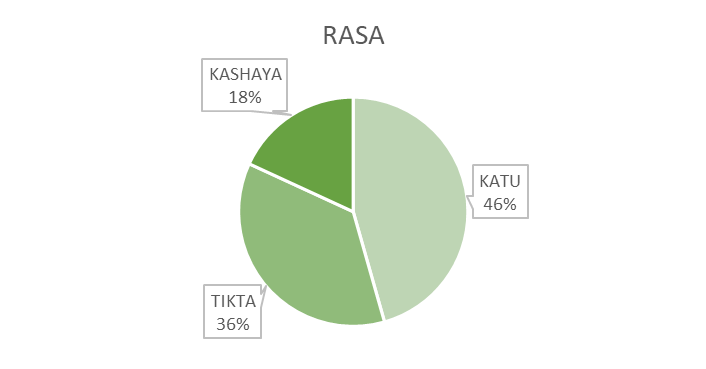
1.Rasa:
Most of the Drugs in the formulation has katu (pungent), tikta (bitter), kashaya (astringent) rasa.
hence possessing kapha dosha shamaka effect. (Ch.Su.1/66)11.
According to Acharaya Susruta katu rasa is agneya rasa, whereas tikta and Kashaya are Soumya rasas. aiding in pitta shamana property. (Su.Su.42/7) 12.
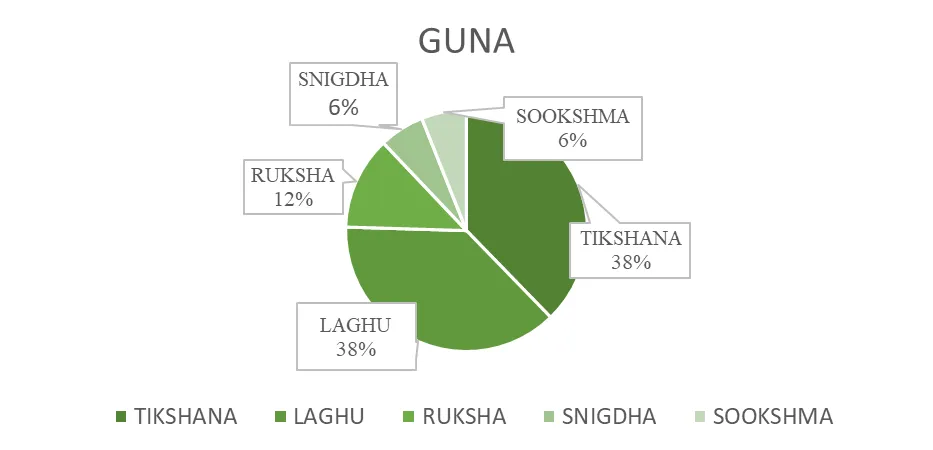
2. Guna:
Sarvakarmika Agada majorly has laghu, tikshna, ruksha gunas accompanied by sookshma and Snigda gunas which plays a great role in kapha vata shamana.
Laghu guna having agni, vayu, akasha mahabhutas aids in kaphashamana.
Tikshna guna mainly comprising of agni and vayu mahabhuta exhibits sroto shodana action. It is kapha vata hara in action. (Ah.su.1/18- Hemadri) 13.
Ruksha guna with predominance of vayu and agni mahabhutas exhibits kaphahara property thereby reducing kleda.
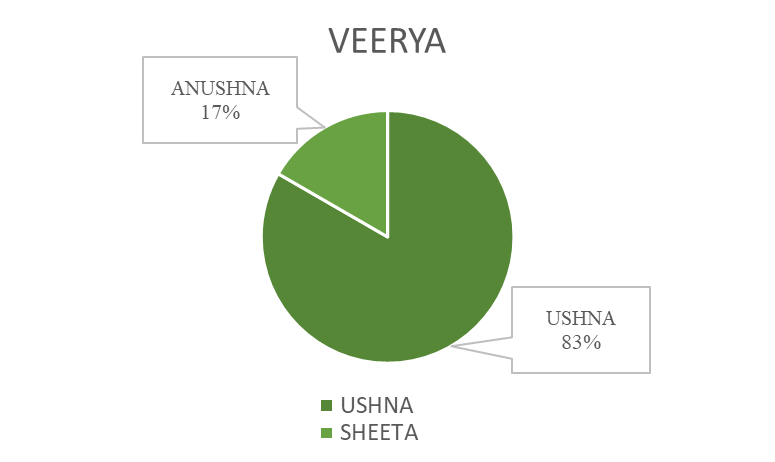
3.Veerya:
Among the 6 drugs 5 are ushna veerya pradhana. Ushna veerya is mainly kapha vatahara (Ah.Su.9/18) 14. It can induce swedana and does kapha vilayana, thereby clearing the dosha from the srotas (As.Su.17/16) 15
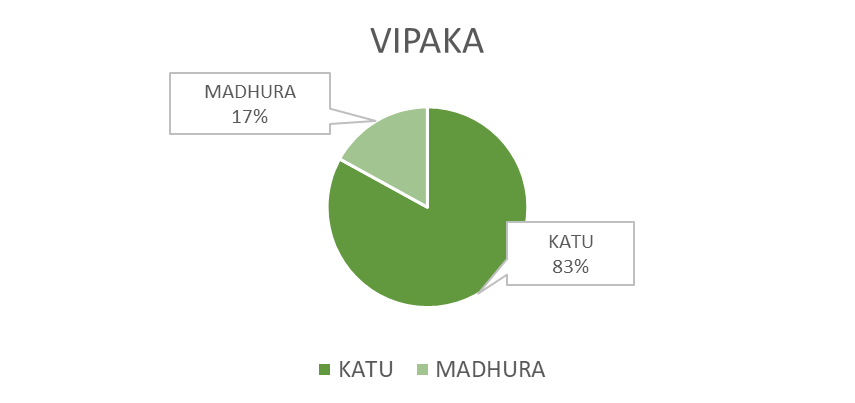
4.Vipaka:
Majority of the drugs in Sarvakarmika agada are of katu vipaka. having predominance of Agni, Vayu and Akasha mahabhuta. it imparts laghuta and is kaphashamana action. (Su.su.40/10-20) 16
5. Dosha – Karma:
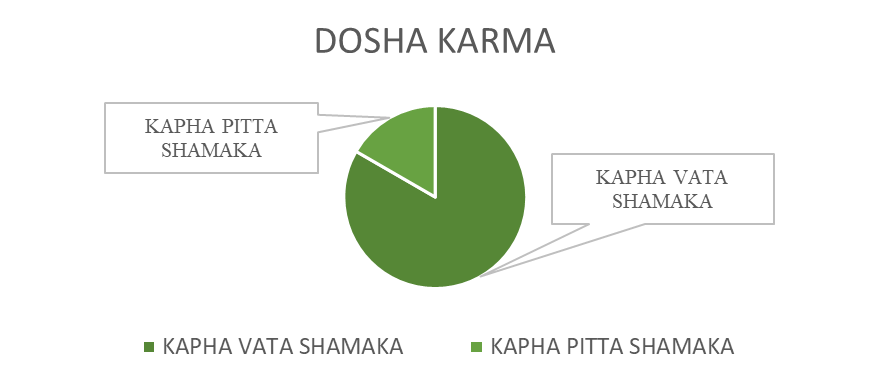
Most predominant dosha karma among the drugs is kaphavata shamana, followed by kapha pitta shamana It helps in srotomukha vishodana (open the blocked channel), by removing kapha from the srotas.
6. Karma:
Drugs have different karmas like Kushtagnam, Krimignam, Kandugna, Dahagna, Vishagna, Shoolaghna, and Vrana hara properties which altogether helps to decrease the effects of visha / complications of visha.
DISCUSSION:
Ayurveda is one of the oldest traditional sciences which has a vast collection of formulations compiled and time tested by Acharyas. Over the time, many of these formulations were lost, only a smaller fraction remained and fewer were brought into practice. Agadas yogas are the category which underwent a major decline. Sarpavisha chikitsa is a context where maximum numbers of agada yogas are mentioned. Vyandhara sarpas are considered hybrid snakes, inheriting sammishra lakshana from more than one parent lineage, the resulting envenomation is understood to be of tridoshaja, more specifically, sannipatika in presentation. Among the whole ayurveda classics, we can only find a few references where treatment for such sarpa is mentioned. Sarvakarmika is one among them.
Sarvakarmika agada is a poly herbal formulation containing minimal drugs which are easily available. Among the 6 ingredients mentioned in the yoga there are three upavisha except kana, patha and maricha. Here the action is not to neutralize the poison but to counteract the poison. Visha stays in the dashtasthana (site of bite) for shatamatra kala (time taken to blink the eyes 100 times) and later enters the raktavaha srotas(blood) and thereafter to the whole body. Hence, we require medicines with gunas similar to that of visha, but are capable of overshadowing the effect of it. Acharya Charaka has mentioned this concept by using plant poison to counteract animal poison and vice-versa17. In this formulation upavisha might be acting in this same principle. Hence the properties of the upavisha-containing drugs in this formulation appear to serve exactly that function.
Vyandhara bites are sannipathika in nature. The formulation with its kapha vata shamaka and kapha pitta shamaka property could be a drug of choice here. The predominance of katu, tikta, and kashaya rasa of Karaveera, Arka, Langali, Patha, and Maricha, along with the madhura-vipaka of Kana, converges on a strong kapha-shamaka effect. The predominant laghu, tikshna, and ruksha guna along with sookshma qualities, extends this action toward srotoshodhana. Five among the six drugs are ushna in virya, alluring to its kapha-vata hara action. This can also facilitate swedana and kapha vilayana thereby assisting in mobilising and expelling toxins from the channels. Considering doshagnatha, 83% of the ingredients are kapha vata shamaka and 17% are kapha pitta shamaka. Considering karmukata – Kushtaghna karma helps in reducing skin manifestations due to poison, Krimighna reduces microbial growth over the wound sites, Vranaropaka aids in healing the ulcers at the bite sites. Shoolagna and shophagna karmas helps in reduction of pain and swelling associated with the bite. Vishagna propery aids in reducing the toxin load in blood. Thus, the concept of prativisha prayoga in classics can be substantiated based on rasa panchaka of the formulation.
Amla kanji that has underwent fermentation has a higher acidic pH and have higher penetration capacity. It acts as a vehicle for faster action of the drug.
All together this formulation exhibits an overpowering action on the visha.
CONCLUSION
Sarvakarmika agada is a polyherbal formulation, with its constituents exhibiting kapha vata shamana along with pitta shamana actions which could subside tridosha dushti caused by the visha. Ushna veerya and katu vipaka enhances srotoshodana, making easy path for the pharmacodynamics of the drug. Dravya karmukatha helps to deal with the localised effects and further complications from poisoning. All the 6 drugs and kanjika together are having high penetrating action. As vyanthara sarpa damsha shows Tridosha dushti lakshana, this agada pacifies the symptoms effectively.
The name indicates ‘Sarvakarmika’, it can be used for all karmas like pana, nasya, anjana, lepa etc. there are formulations where ‘sarvakarmika’is mentioned in its phalashruthi. But in this agada it might be named so becuase of swatantra yukti. This exclusivity highlights the importance of this yoga and also opens door for future researches. Additional in-depth experimental and clinical studies are required for better use in the field of snakebite care.
Declaration by Authors
Ethical Approval: Not Applicable
Acknowledgement: None
Source of Funding: None
Conflict of Interest: The authors declare no conflict of interest.
REFERENCES



Anjana R. Nath*, Arya Subhash, Aishwarya Mallasure, A Review On Sarvakarmika Agada, Int. J. Sci. R. Tech., 2026, 3 (8), 231-237. https://doi.org/10.5281/zenodo.21833554
 10.5281/zenodo.21833554