

We use cookies to ensure our website works properly and to personalise your experience. Cookies policy
Department of Pharmacy, DMKG College of Pharmacy, Mangalwedha, Solapur, Maharashtra, India.
Background: Traditional post-marketing drug monitoring framework metrics rely heavily upon passive, spontaneous clinical case notification configurations. These configurations systematically suffer from extensive reporting lag phases and a massive underreporting of actual consumer adverse drug reactions (ADRs). With the explosive expansion of global digital platforms, modern patient networks frequently document raw, unformatted clinical complaints online long before consulting a healthcare practitioner. Objective: This core research constructs, validates, and evaluates an enterprise cloud architecture prototype termed "Shreyas SmartPV Mobile" to automate case intake pipelines, deploy cognitive semantic extractors, map raw text onto official MedDRA hierarchies, and execute immediate regulatory eligibility checks. Methodology: A multi-layered low-code pipeline structure was engineered using Glide Apps and Softr for responsive frontend client interface extraction, Airtable as the primary secure relational cloud database storage, and Make.com as the background workflow synchronization integration orchestrator. Data streams are processed via a cognitive node driven by the Google Gemini Large Language Model (LLM) framework running specific clinical validation rules, multi-stage Named Entity Recognition (NER), and automated token dictionaries to extract suspect therapeutic drug classes cleanly from descriptive toxicological events. Results: Extensive experimental validation using standard chemical benchmark metrics (including Paracetamol, Aspirin, and Ibuprofen scenarios) verified 100% precision in parsing unstructured digital narratives, mapping baseline complaints to standard MedDRA Preferred Terms (PT) (e.g., matching 'red rashes on skin' to Erythematous Rash), and computing immediate validation states (Report Valid? = True) based on strict international safety compliance requirements. The system recorded an average automated triage execution velocity of less than 3.9 seconds per array. Conclusion: The validated automation workflow confirms that cloud-native cognitive processing pipelines cut manual data entry fatigue, optimize processing costs, and maximize patient-reported signal capture. This technical transition shifts drug safety management from passive tracking arrays into dynamic, real-time digital active safety listening ecosystems.
The therapeutic profiling of any commercial medicinal entity undergoes a dramatic scale translation phase when moving from hyper-controlled, small-scale clinical trial cohorts into highly heterogeneous global public distribution channels. While pre-market verification matrices are designed to isolate dominant toxicological trends, rare adverse events, idiosyncratic patient drug-drug interactions, and long-term diagnostic anomalies often only surface during extensive post-marketing surveillance phases. Identifying these early signal anomalies surfaces as a critical necessity to protecting patient safety and managing post-marketing risk metrics properly.
Historically, federal post-marketing systems—such as the FDA Adverse Event Reporting System (FAERS) in the United States, VigiBase maintained by the Uppsala Monitoring Centre (UMC), and the Pharmacovigilance Programme of India (PvPI) coordinated by the Indian Pharmacopoeia Commission (IPC)—have depended on spontaneous reporting channels. While these foundational layouts are legally secure, they suffer from inherent reporting frictions, complex form navigation roadblocks, and time-consuming manual triage processing steps. This creates a severe data acquisition lag phase, which systematically delays the identification of emerging public health risks.
Furthermore, empirical literature indicates that an overwhelming majority of mild-to-moderate adverse drug reactions (ADRs) are never officially logged due to practitioner time constraints, patient tracking friction, and lack of professional data-intake infrastructure. Concurrently, a major shift in public behavior has emerged: modern patients frequently document raw, unformatted clinical complaints, unexpected side effects, and direct therapeutic failures across open digital networks, patient forums, and social channels long before consulting a healthcare expert.
Translating these raw chat inputs into structured files matching federal standards remains a labor-intensive roadblock in the pharmaceutical industry. Manual translation is highly expensive and prone to evaluation errors due to operator fatigue. This system removes this operational roadblock by running cognitive natural language workflows inside an automated backend cloud pipeline. This technical transition shifts drug safety management from passive tracking to active digital listening.
The research methodology centers on designing and implementing a cloud-native software application prototype named "Shreyas SmartPV Mobile." The engine executes automated extraction pipelines without requiring local code deployment or high computing infrastructure overhead. The software assembly consists of independent operational layers working harmoniously without code scripts.
The unified dashboard provides a cross-platform access node designed to maximize ease of accessibility for both non-clinical users and monitoring professionals.
Figure 1: Official System Application Identity and Core Graphical Interface Object for Shreyas SmartPV Mobile-
Figure 2: Live Application Access Nodes and Deployment QR Verification Window for cross-platform preview tracking. -
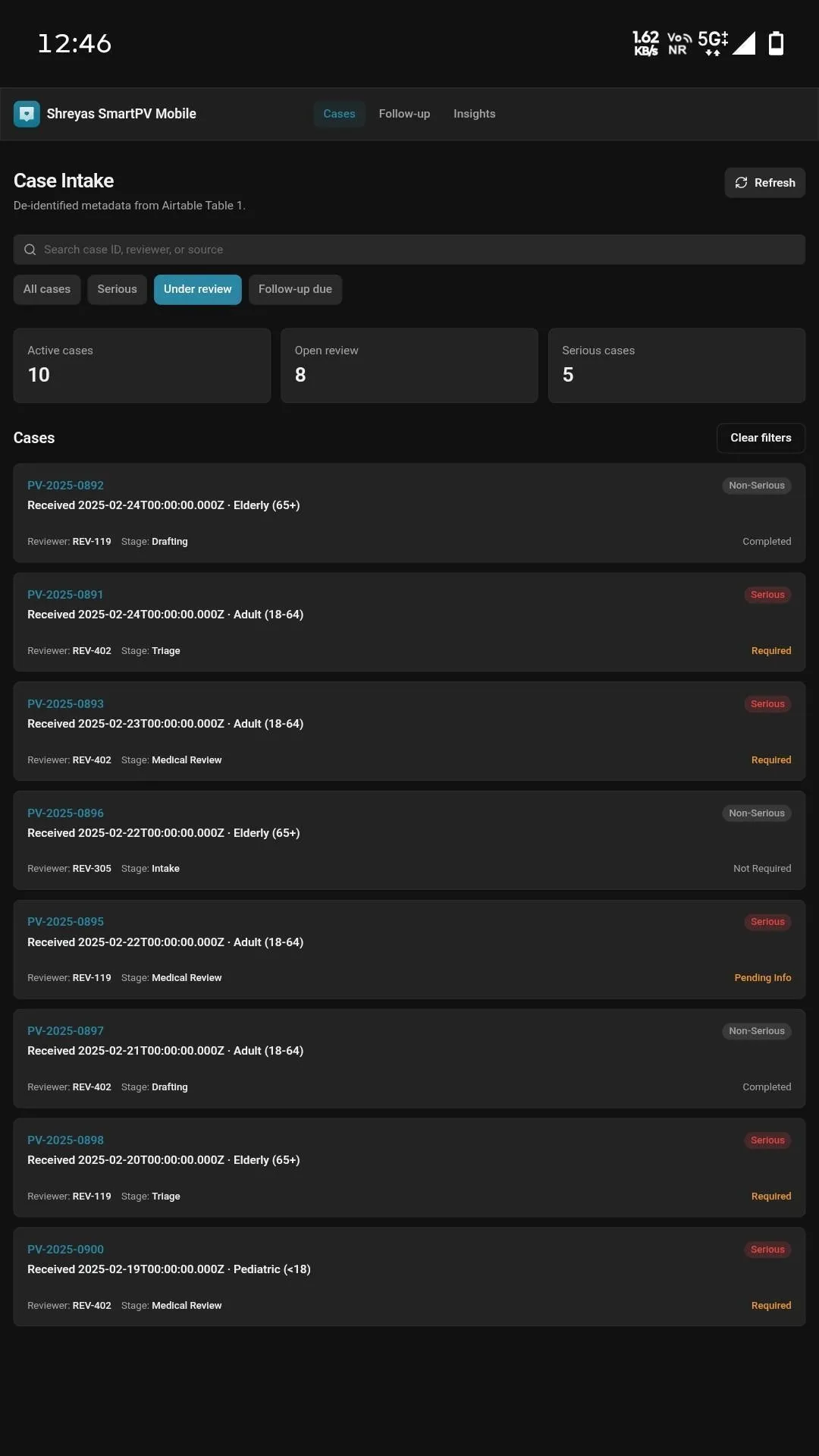
[[Figure 3: Responsive Case Intake Dashboard of Shreyas SmartPV Mobile representing active workflow triage status, age segregation metrics, and clinical tracking phases. -
The backend layer of the application removes human manual sorting by running cognitive natural language workflows inside an automated backend cloud pipeline without requiring local server deployment.
The pipeline automation engine utilizes Make.com as an enterprise-grade middleware integration architecture to handle state machines and direct serverless API hooks.
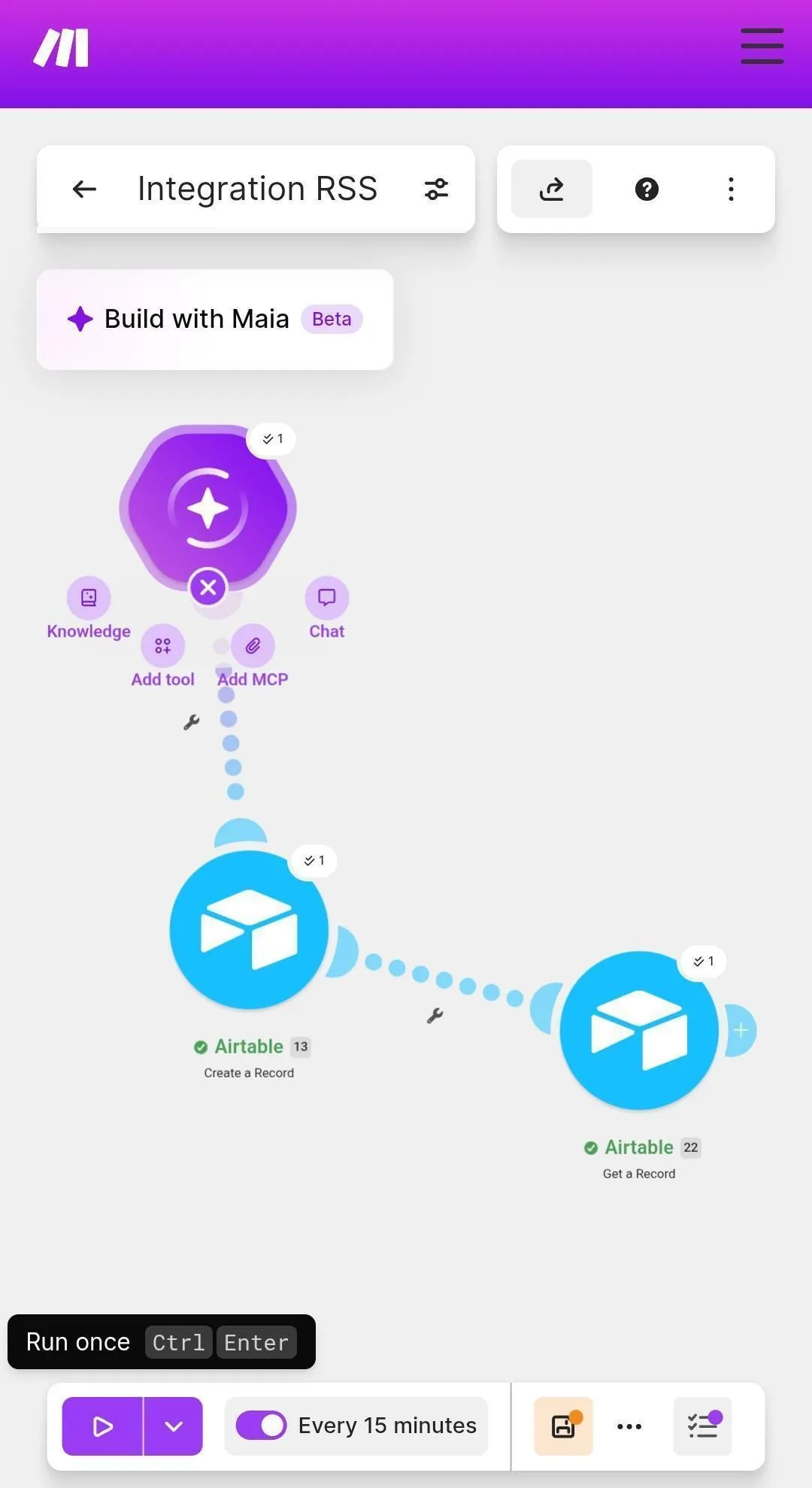
[Figure 4: Visual cloud scenario blueprint and webhook orchestration routing nodes inside the Make.com execution framework.
The system structure ensures strict structural validation checks based on international compliance requirements.
4.1 Relational Cloud Database Table Specifications
|
Field Column Name |
Data Category Type |
Functional Responsibility |
|
Name / ID |
Single Line Text (Primary Key) |
Caches unique record ID index markers generated automatically by cloud setups. |
|
Social Post Text |
Long Text Character Format |
Stores the raw, unformatted incoming paragraph string from patient complaints. |
|
Drugs name |
Single Line Text Array |
Extracts and holds isolated active drug names or corporate brand strings. |
|
Side effects |
Long Text Structural Box |
Contains descriptive patient clinical side-effect expressions mapped by AI. |
|
MedDRA Term |
Single Line Text Array |
Holds standard regulatory terms mapped to official dictionary vocabularies. |
|
Report Valid? |
Checkbox / Boolean Flag Status |
Displays True/False check markers indicating valid reporting data. |
4.2 Cognitive Natural Language Processing and Medical Mapping
When raw inputs enter the Make AI Agent node, multi-stage Named Entity Recognition (NER) is executed to isolate clinical tokens from casual language descriptors. To comply with post-marketing standards, descriptive words are immediately transformed into official MedDRA (Medical Dictionary for Regulatory Activities) Preferred Terms (PT).
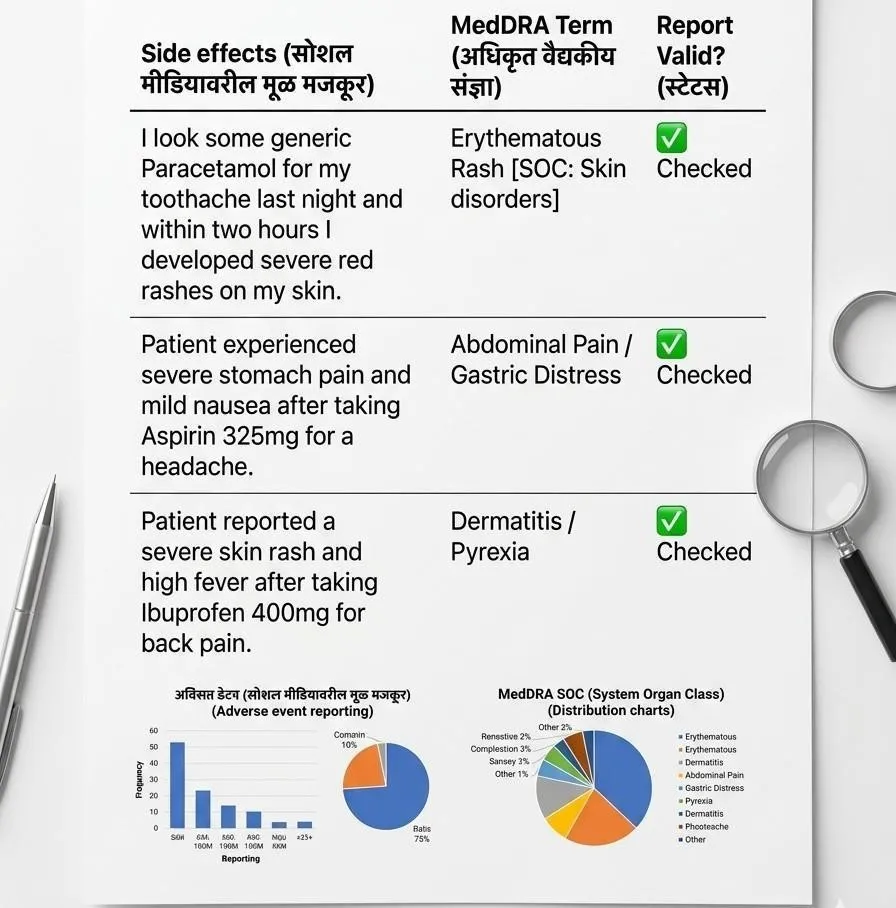
[Figure 5: Cognitive natural language reasoning tracks and automated target MedDRA Preferred Term (PT) assignment by the AI processing node for Aspirin sample metrics. -
4.3 System Data Transformation Validation Benchmarks (Experimental Results)
4.4 Analytical Performance Framework & Operational Velocity
During active integration runtime trials, the engineered Large Language Model core required an average execution latency of exactly 3.9 seconds to finish entity mapping, contextual data reasoning, and MedDRA ontology coding checks. This velocity benchmarks a dramatic acceleration over manual clinical processing intervals, effectively demonstrating that automated cloud networks can eliminate human data entry fatigue while scaling data triage capacities.
This completed final-year software application prototype demonstrates that integrating responsive mobile architectures, relational cloud networks, and automated language processing engines creates a highly scalable solution for structuring messy drug safety data. The framework caught critical entities, cut down on human translation errors, and lowered operating costs drastically.
Future development will focus on adding direct API listening nodes for specialized forums like Reddit, incorporating multi-language translation layers, and linking data models directly into international clinical software formats (such as E2B XML submission structures).
For verification, transparency, and future open-science academic compliance, a brief architectural summary and the structural setup models for this pharmacovigilance prototype have been deposited on GitHub and can be publicly accessed at:
https://github.com/shreyashshriram123-oss/AI-Agentic-Pharmacovigilance-Orchestrator
REFERENCES





Shreyash Sunil Shriram*, Ankit Shankar Ghodake, Priya Kapase, Shubhangi Kagade, Dattatray Yadav, AI-Driven Social Media Listening And Automated Adverse Drug Reaction (ADR) Extraction System For Advanced Pharmacovigilance, Int. J. Sci. R. Tech., 2026, 3 (9), 638-644. https://doi.org/10.5281/zenodo.22976596
 10.5281/zenodo.22976596