

We use cookies to ensure our website works properly and to personalise your experience. Cookies policy
Department Of Child Health Nursing, Little Flower College Of Nursing, Monvila Trivandrum, Kerala India
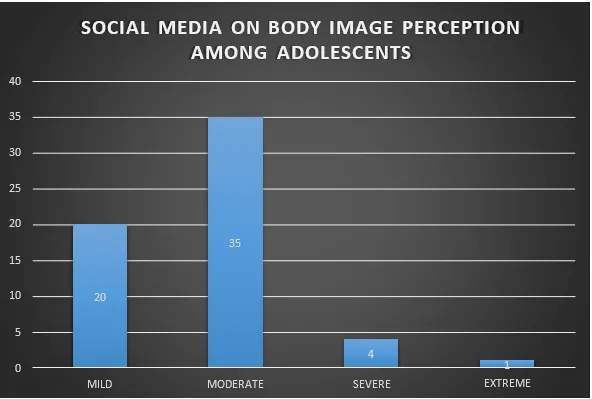
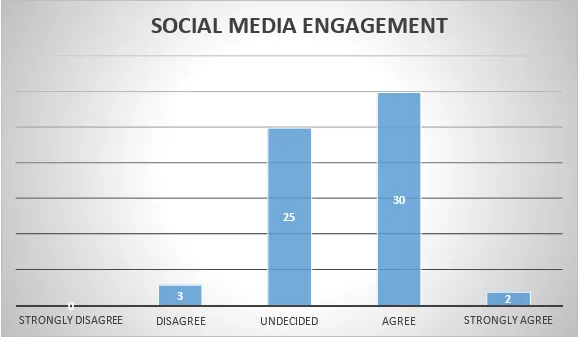
The rapid growth of social media has significantly influenced the lives of adolescents, particularly shaping their self-image and perceptions of physical appearance. This study explores the impact of social media on body image perception among adolescents, a critical age group undergoing physical, emotional and psychological development. With constant exposure to idealized and digitally altered images online, many adolescents begin to internalize unrealistic beauty standards, leading to increased body dissatisfaction. In this study, the objective is to assess the impact of social media on body image perception among adolescents. A descriptive approach was used and samples consisted of 60 participants from Govt. Higher Secondary School Pallithura. The tool used were self-structured demographic questionnaire, Likert Scale to assess Body Image Perception, Modified Social Media Engagement Scale for Adolescents. The chi square test was used to assess the association between body image perception and socio-demographic variables. The result shows that 33% (20) of samples has mild impact, 59% (35) has moderate impact, 6% (4) has severe and 2% (1) has extreme impact on body image perception due to social media use. On the basis of Modified Social Media Engagement Scale, among the total samples 50% (30) agrees, 42% (25) were undecided, 5% (3) disagrees, 3% (2) strongly agrees and 0% strongly disagrees with the statements.
Adolescence is a crucial developmental stage characterized by rapid physical, emotional, and psychological changes. During this period young people begin to form their sense of identity and self-worth, including their perceptions of their bodies. In recent years, the explosive growth of social media platforms such as Instagram, TikTok, and snap chat has dramatically transformed the way adolescents interact with others, present themselves, and view the world around them. These visual centric and highly interactive platform often revolve around sharing idealized lifestyles, perfectly edited photos and filtered images, which can strongly shape how adolescents perceive their own bodies.
As adolescents spend more time in online, they are continuously exposed to a stream of content that celebrates a narrow range of body types usually lean, muscular, blemish-free and conventionally “attractive”. These pervasive images set an unrealistic beauty standard that most adolescents cannot achieve naturally, often leading them to compare themselves unfavourably with others. Research indicate that this persistent social comparison can negatively impact body image, leading to feelings of inadequacy, low self- esteem and body dissatisfaction.
BACKGROUND
Over the past decade, social media has transformed how adolescents communicate, socialize, and view themselves. Platforms like Instagram, TikTok, and Snapchat are popular among youth, where appearance-focused content is often emphasized and rewarded through likes, comments, and shares. Multiple studies have shown a strong link between social media use and negative body image. Adolescents are particularly vulnerable due to the developmental changes and identity formation that occur during this stage. During this period, they become more aware of their body appearance and often compare with others. Positive body image leads to confidence and healthy behaviour and negative body image leads to body dissatisfaction, low self – worth.
PROBLEM STATEMENT
An exploratory study on the impact of social media on body image perception among adolescents in selected school, Trivandrum district with a view to develop Self - Instructional Module.
OBJECTIVES
Primary objective
To assess the impact of social media on body image perception.
Secondary objectives
To assess the use of social media among adolescents
To find out the association between body image perception with socio- demographic variables.
To suggest measures for promoting positive body image awareness among adolescents.
METHODOLOGY
A descriptive study was carried out among adolescents of selected school in Trivandrum district, Kerala on July 2025. A total 60 samples of age group 14-19 years were selected for the study.
RESEARCH DESIGN: Descriptive research design.
SETTING OF THE STUDY: This study was conducted in 10th – 12th standard students in Govt. Higher Secondary School, Pallithura, Trivandrum Kerala.
SAMPLE SIZE: 60 students
TOOL FOR DATA COLLECTION:
SECTION A: Self structured questionnaire of socio demographic data. SECTION B: Self structured Likert scale for body image perception.
SECTION C: Modified social media engagement scale for adolescents.
HYPOTHESIS
There is a significant association between use of social media and body image perception among adolescents.
DATA COLLECTION PROCEDURE
Self-structured questionnaire of sociodemographic data and Likert scale of body image perception and modified social media engagement scale for adolescent were chosen for this study.
DATA ANALYSIS
The analysis of data involves the translation of information collected during the course of study into interpretable and meaningful information. The data obtained was tabulated in master sheet. Analysis and interpretation were done using descriptive and inferential statistics.
RESULTS
Sociodemographic Characteristics of the Participants
A total of 60 participants were included in the study. Females constituted 53% (n = 32) of the sample, while males accounted for 47% (n = 28). The majority of participants (70%, n = 42) were aged 16–17 years, followed by 27% (n = 16) aged 14–15 years and 3% (n = 2) aged 18 years or older. More than half of the participants (51%, n = 31) belonged to nuclear families, 42% (n = 25) to joint families, and 7% (n = 4) to single-parent families. Most participants resided in rural areas (80%, n = 48), whereas 20% (n = 12) were from urban areas.
Regarding anthropometric characteristics, 60% (n = 36) of the participants had a height between 160 and 175 cm, 35% (n = 21) were less than 160 cm, and 5% (n = 3) were taller than 175 cm. Similarly, 42% (n = 25) weighed between 50 and 60 kg, 41% (n = 25) weighed less than 50 kg, and 17% (n = 10) weighed more than 60 kg.
Social Media Use
Nearly half of the participants (48%, n = 29) reported spending 1–3 hours per day on social media, while 35% (n = 21) spent less than 1 hour and 17% (n = 10) spent more than 3 hours daily. Instagram was the most frequently used social media platform (75%, n = 45), followed by YouTube (18%, n = 11), Snapchat (4%, n = 2), and other platforms (3%, n = 2).
With respect to the type of content viewed, lifestyle-related content was the most commonly accessed (42%, n = 25), followed by fitness-related content (30%, n = 18), other content (20%, n = 12), and beauty-related content (8%, n = 5).
Body Image Perception
Assessment of body image perception using the Likert Scale showed that the majority of participants (59%, n = 35) experienced a moderate impact on body image perception. Mild impact was reported by 33% (n = 20), severe impact by 6% (n = 4), and extremely severe impact by 2% (n = 1).
Social Media Engagement
Based on the Modified Social Media Engagement Scale, 50% (n = 30) of the participants agreed with statements indicating higher social media engagement, 42% (n = 25) were undecided, 5% (n = 3) disagreed, and 3% (n = 2) strongly agreed.
Association Between Sociodemographic Variables and Body Image Perception
Chi-square analysis revealed no statistically significant association between body image perception and selected sociodemographic variables, including age, sex, family type, time spent on social media, and the most frequently used social media platform (p > 0.05)
DISCUSSION
The present study was to assess the impact of social media on body image perception among adolescents was conducted in Government Higher Secondary School, Pallithura in Trivandrum District. A self-instructed Likert Scale on Body Image Perception and Modified Social Media Engagement Scale (MSMES-A) was used to collect data’s from the samples. The first objective of the study was to assess the impact of social media on body image perception among the samples. The result shows that 33% (20) of samples has mild impact, 59% (35) has moderate impact, 6% (4) has severe and 2% (1) has extreme impact according to Likert Scale on Body Image Perception. The second objective of the study was to assess the use of social media among adolescents. The tool used were Social Media Engagement Scale for Adolescents (SMES-A). The result shows that among the total samples 50% (30) agrees, 42% (25) were undecided, 5% (3) disagrees, 3% (2) strongly agrees and 0% strongly disagrees with the statements. The third objective of the study was to find the association between body image perceptions with selected socio-demographic variables. The result shows that out of 60 samples, 33% (20) of samples has mild impact, 59% (35) has moderate impact, 6% (4) has severe and 2% (1) has extreme impact. The selected demographic variables include age, sex, type of family, time spend on social media, most used social media platform. Among them there is no statistically significant association between these demographic variables with body image perception at 0.05 level of significance. The fourth objective of the study was to suggest measures to promote positive body image perception among adolescents, particularly in the context of increasing social media influence and societal pressure regarding physical appearance. As they are in a critical developmental stage where self-image and identity are actively forming, making them highly vulnerable to external influences that negatively impact their body perception.
CONCLUSION
The relationship between social media and body image among adolescents is a growing concern in today’s digital age. Repeated exposure to idealized images and appearance–focused content can negatively impact adolescent’s self-perception and contribute to body dissatisfaction. The study concluded that there is no statistically association between body image perceptions with socio-demographic variables.
NURSING IMPLICATION
NURSING PRACTICE: Nursing care for adolescents affected by negative body image due to social media exposure must be holistic, youth centered and preventive in nature. It involves building a trusting relationship with adolescents to encourage open communication about their self-perceptions and emotional well-being.
NURSING EDUCATION: Nurses should educate adolescents on the impact of digitally altered content and encourage critical thinking about the images they consume on social media.
NURSING ADMINISTRATION: This study helps to conduct develop and implement strategies to promote healthy body image and prevent psychological distress among adolescents.
NURSING RESEARCH: This study helps the nurse researcher to develop a strategy for conducting project regarding assessing the impact of social media on body image perception among adolescents. Further studies could be undertaken to promote positive body image perception.
LIMITATIONS
RECOMMENDATIONS
DECLARATION
Declaration of originality
We hereby declare that this manuscript entitled “An exploratory study on the impact of social media on body image perception among adolescents of selected school, Trivandrum district with a view to develop Self-Instructional Module” is an original work carried out by us and has not been published or submitted for publication elsewhere in any form.
Ethical approval and consent
Ethical approval was obtained from the institutional ethics committee of Little Flower College of Nursing, Monvila, Trivandrum. Written informed consent was obtained from all the participants prior to data collection.
Conflict of interest
The authors declare that there is no conflict of interest.
Funding
This research received no specific grant from any funding agency in the public, commercial or not for profit sectors.
ASSESSMENT OF IMPACT OF SOCIAL MEDIA ON BODY IMAGE PERCEPTION
ASSESSMENT OF SOCIAL MEDIA ENGAGEMENT AMONG ADOLESCENTS
ASSOCIATION OF BODY IMAGE PERCEPTION WITH SELECTED DEMOGRAPHIC VARIABLES
|
Sl No |
Variables |
Critical Value |
Chi Square Value |
Degree Of Freedom |
Inference |
|
1. |
Age |
10.75 |
12.59 |
6 |
Na** |
|
2. |
Sex |
6.32 |
7.81 |
3 |
Na** |
|
3. |
Type Of Family |
9.52 |
12.59 |
6 |
Na * |
|
4 |
Time Spend On Social |
7.14 |
12.59 |
6 |
Na ** |
|
4. |
Most Used Social Media Platform |
14.17 |
16.91 |
9 |
Na* |
TABLE 1: Association between body image perception and selected demographic variables.
REFERENCES

Karthika R.*, Meera R. Nair, Aleena T. George, Angel Shajan, An Exploratory Study On The Impact Of Social Media On Body Image Perception Among Adolescents, Int. J. Sci. R. Tech., 2026, 3 (7), 1043-1048. https://doi.org/10.5281/zenodo.21675812
 10.5281/zenodo.21675812